Albert CamusBiblio.com
3 905 résultats
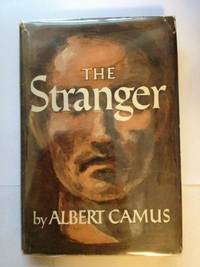
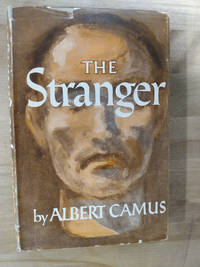
1946010926B<p>Book is in Near Fine condition; lightest dust soiling to top of text block small bookseller's label at lower right of inside front cover no other defects noted. No marks to interior binding square and tight. Jacket is in Very Good- condition; light rubbing especially along edges chips at spine ends and leading corners 4 small closed tears significant chip center top of front panel price clipped. See photos.</p> Knopf hardcover
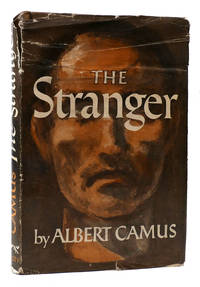
1967142601160005Alfred A. Knopf 1967. Hardcover. Good. Hardcover with dust jacket. ORIGINAL 1967 PRINTING. Dust jacket and cover show light edge wear rubbing to corners and edges. A stamp on front endpaper. Pages are clean and unmarked. Slightly tanned. Binding is tight hinges strong.; 100% Satisfaction Guaranteed! Ships same or next business day! Alfred A. Knopf hardcover
1989G0606014268I5N00Demco Media 1989. Unknown. Acceptable. Readable copy. Pages may have considerable notes/highlighting. ~ ThriftBooks: Read More Spend Less.Dust jacket quality is not guaranteed. Demco Media unknown
19461771577202Alfred A. Knopf New York 1946. Hardcover. Acceptable. Former library book; Readable copy. Pages may have considerable notes/highlighting. ~ ThriftBooks: Read More Spend Less.Ex-Library copy with typical library marks and stamps. Dust jacket in acceptable condition. Later printing. Cover and binding are worn but intact. A reading copy in fair condition. 11th printing. Wear and fading on the boards. Tape binding. Text is clean. Secure packaging for safe delivery.Dust jacket quality is not guaranteed. Alfred A. Knopf, New York hardcover
19739780394447483-2025Knopf 1973. Hardcover. New/New. <p><strong>Author:</strong> Albert Camus Stuart Gilbert</p><p><strong>Publisher:</strong> Knopf</p><p><strong>Binding:</strong> Hardcover</p><p><strong>ISBN:</strong> 9780394447483</p><p><strong>Release Date:</strong> 1973</p><p><strong>Number Of Pages:</strong> 155</p><p><strong>Details:</strong> This edition of Albert Camus's profound work delves into themes of existentialism absurdism and the human condition making it a vital read for anyone interested in philosophy and literature. The narrative follows Meursault a man who navigates life with emotional detachment ultimately leading to a confrontation with the absurdity of existence. Readers will gain insight into the complexities of human emotions societal expectations and the search for meaning in a seemingly indifferent universe. Camus's unique perspective challenges conventional morality and prompts readers to confront their own beliefs about life and death.<br /><br />With clean and well-preserved pages this first American edition features a sturdy binding and an illustrated dust jacket that adds to its collectible value. The thoughtful presentation makes it an excellent addition to any library whether for study or personal enjoyment. Students and professionals alike will appreciate how this text stimulates critical thinking and discussion around existential themes equipping them with a deeper understanding of both literature and philosophy.</p> Knopf hardcover
Q-0394700023Vintage 1954-09-12. Paperback. New. In shrink wrap. Looks like an interesting title! Vintage paperback
1993Q-0679420266Alfred A. Knopf 1993-01-01. Hardcover. New. In shrink wrap. Looks like an interesting title! Alfred A. Knopf hardcover
1989Q-0881032476Turtleback Books 1989-03-13. School & Library Binding. New. In shrink wrap. Looks like an interesting title! Turtleback Books unknown
0075478129.Gpaperback. Good. Access codes and supplements are not guaranteed with used items. May be an ex-library book. paperback
0679420266.Ghardcover. Good. Access codes and supplements are not guaranteed with used items. May be an ex-library book. hardcover
1948173237New York: Knopf 1948. First Edition; Third Printing. Hardcover. Very Good in a Very Good dust jacket. Rubbing along panel edges. 1 inch open tear at top of front gutter and front flap fold. Light bumping at top of front panel. Knopf hardcover
1989G0606014268I3N10Turtleback Books 1989. Library Binding. Good. Disclaimer:A copy that has been read but remains in clean condition. All pages are intact and the cover is intact. The spine may show signs of wear. Pages can include limited notes and highlighting and the copy can include previous owner inscriptions. An ex-library book and may have standard library stamps and/or stickers. At ThriftBooks our motto is: Read More Spend Less.Dust jacket quality is not guaranteed. Turtleback Books unknown
1946202000326Knopf New York 1946. First edition. <b>Condition</b>: Very good in good dust jacket. Book has light toning from age discoloration along top edges but it does not bleed onto pages. Dust jacket has several tears and nicks creasing along spine. $2.00 indicated on dust jacket. Tan/beige cloth with maroon lettering on spine.<br /><br />Jacket design by Warren Chappell. Translated by Stuart Gilbert.<br /><br />The story of an ordinary man unwittingly drawn into a senseless murder on an Algerian beach. The classic novel of the absurd.<br /> Alfred A. Knopf hardcover
0785937447.Gleather_bound. Good. Access codes and supplements are not guaranteed with used items. May be an ex-library book. hardcover
1999BN158431Gallimard 1999. 1999. Hardcover. Théâtre récits nouvelles Preface par Jean Grenier Edition etablie et annotee par Roger Quilliot <br/><br/>Théâtre récits nouvelles Preface par Jean Grenier Edition etablie et annotee par Roger Quilliot Albert Camus Gallimard hardcover
196217133<p>like new pb</p> Bibliotheqe de la Pleiade paperback
1991ANAIS-1557784124Paragon House 1991-01-01. paperback. Good. 8.2X5.4X0.8. Buy with confidence. Excellent Customer Service & Return policy. Paragon House paperback
1557784124.Gpaperback. Good. Access codes and supplements are not guaranteed with used items. May be an ex-library book. paperback
1991SONG1557784124Brand: Paragon House 1991-01-01. paperback. Used: Good. 0.00x0.00x0.00. Buy with confidence. Excellent Customer Service & Return policy. Brand: Paragon House paperback
1997BN272032Rowohlt Taschenbuch 1997. 1997. Softcover. Unter dem Zeichen der Freiheit <br/><br/>Unter dem Zeichen der Freiheit Albert Camus Rowohlt Taschenbuch paperback
0140180265.Gpaperback. Good. Access codes and supplements are not guaranteed with used items. May be an ex-library book. paperback
155778387X.Gpaperback. Good. Access codes and supplements are not guaranteed with used items. May be an ex-library book. paperback
1976318000New York: Alfred A. Knopf 1976. First American Edition; First Printing. Hardcover. Very Good in a Very Good dust jacket. Owner personalization inked on FEP. Small closed tears on top front and rear panels and bottom front gutter. Light chipping on spine crown.; 279 pages. Alfred A. Knopf hardcover
19751370Knopf 1975 NY: Knopf 1975. First American Edition. First printing. Hardbound. Very Fine/Very Fine. 0.0. 1st Edition. Hardcover. Fine/Fine. Knopf hardcover
5222ALBERT CAMUS 1913-1960. Camus was a Nobel Prize-winning French author best known for his absurdism and works like The Stranger and The Plague. TMS. 5pgs. 1945. N.p. A lengthy typescript in French by Albert Camus. It concerns the Spanish Civil War 1936 to 1939. This manuscript was Camus’s preface to the book L’Espagne Libre Paris: Calman-Lévy 1946. Writing just after World War II in which he took an active role in the resistance against the Nazis Camus muses back on the Spanish Civil War often called a “dress rehearsal for World War IIâ€. Camus felt personally connected to the Spanish Civil War since his mother was Spanish. The English translation of his writing is as follows: “It has been nine years now that the men of my generation have carried Spain in their thoughts. Nine years that they carry like a serious wound. That experience has given them their first taste of defeat and the insight really a surprise from which they have barely recovered that you could be in the right and yet be beaten that force could suppress the spirit and that there were times where courage was not rewarded. No doubt that explains why to so many men all over the world the Spanish drama felt like a personal tragedy some realizing that this was the first battle in a war for which neither qualities nor flaws had prepared us. But those very same ones who did not don the mantle of prophecy came to feel with anguish that this war was theirs to the degree that it was a war of liberty. For it was in fact that a war of liberty. We found out about it in the papers even if it was a badly intentioned paper. There are things that today one doesn’t speak about anymore but that back then were fresh and bloody history. And we at least have not forgotten that the Spanish Civil War started out as a general’s rebellion against the democratic institutions that a people had just given themselves liberally. We have not forgotten that this general sent Moorish troops against the people of his country in the name of Christ and German-Italian legions invoking the Holy Spain. In the indignation that overcame us in 1931 despite the warning signs there was the feeling that an injustice had just been committed that had to disappear as quickly as possible if one didn’t want it to remain on Europe’s flank like a sore that was going to fester and grow wider. But the injustice still was to receive its reward that this world always reserves for it. Agencies published the Italian legions’ victorious communiques at the same time as the non-intervention ones. The Spanish Republic firm in its rightfulness teetered in its power and at first with rage then with pain that filled us all started to give birth to anguished amazement that has not left us all these years at the spectacle of an injustice that gradually took on an immense scale of history and that found itself sanctioned both by the defeat of a people and by the cowardice of the world. This world nevertheless perseveres in calling legal what has been established while we continue in vain to call legal what has been given consent. Of all the reasons that the Spanish war has continued to haunt us many undoubtedly have vanished today. The cruelty of that struggle seems to us almost natural after five years of indescribable violence. But you can see what remains: the passion of a people and the spectacle of injustice that was never repaired. The hostilities have been suspended the darkness of the dictatorship has dissipated and so we continue to carry Spain in our thoughts. At the other end of the continent a patch of night yet reminds us of the reasons for this war and of the fact that we were wrong believing it to be finished just as we were wrong nine years ago not believing that it had started. But vanquished courage and injustice consecrated by history are commonplace in this world. And maybe as far as Spain is concerned our indignation would be less strong if we had a better conscience. How would it be when we cannot forget that France is not the only one to respond to some of the assassinations that shook what was left of the European conscience. The death of Frederic Garcia Lopez thus seems to us less tolerable than others. We had entered a period where every free man could reasonably expect that he would one day stand facing guns of execution. We are still in that period and it is natural that a free man justifiably prepares himself or at least takes this likelihood into account when he calculates his chances and his convictions. Lorca’s death was in the order of things in the dirty order in which we have since lived. And the Granada execution put men on alert that they had entered serious times meaning times where poets could be shot by those whom their existence contradicted. At least some of us have seen it that way and are preparing ourselves instead of complaining. But we have to believe that we were not yet prepared enough. For we needed to go further yet do our part of the assassinations and see Antonio Machade die as he was leaving a democratic concentration camp. Some years later and Companys was liberated by a French Marechal to be executed at leisure. How will we be able to forget All of this has colored in red and in black a face that of Spain that we already carry in ourselves but that we can no longer heal. That is why since Barcelona was taken there is an absence in us an emptiness a sense of waiting. In this world that we call liberated there is a country from which we obstinately avert our gaze for it speaks to us of injustice and remorse. We would like peace but it won’t let us have it. Yet would our heart be as anxious if this subjugated land was not at the same time the land of great passion and grandeur No doubt I have my personal reasons of choice. Based on blood Spain is my second home. And in this greedy Europe in this mechanized world where passion is met with derision half my blood has been pondering its exile for seven years and wants to find the only land again where I feel at ease the only land where people know how to unite to a higher degree of necessity the love of living and the desperation of living. But it is not just a personal reaction that rules the hope for a free Spain. All of Europe’s intelligent minds also turn to Spain as if they felt that this sad country held some of the royal secrets that Europe is desperately trying to figure out right through a long list of wars revolutions eras of mechanics and spiritual adventures. In fact what would prestigious Europe be without poor Spain What more staggering has it invented than this powerful and magnificent Spanish summer light where extremes are wed where passion can be indulgent as well as ascetic where death is a reason to live where you bring seriousness to dance and lightheartedness to sacrifice where nobody can tell the border between life and dreams between comedy and truth. While the Western world tears itself up to discover syntheses and formulas Spain offers them up freely. But it can only furnish them in the effort of insurrections the terrible breathing of its liberty. Homeland of revolutionaries the only country where anarchy has been able to establish itself as a powerful organized party its greatest works are calls toward the impossible. In each one the world is accused yet at the same time glorified. Europe and the world for what they now need to find can really no longer do without Spain. But Europe and the world do and in such a natural way that it is hard to believe. But that is the way it is and nothing apparently is of any use but the testimony of the free man. The indignation will last through the ages we know that now. For the last twelve years many Ubu Fathers rose up and we at first laughed about them but they put irresistible mechanisms in the service of their mediocre follies. And these Ubu Fathers were masters long enough that at their defeat men were still blind. You have to believe it at least since we let the latter continue their parade in what was the country of Cervantes. For the past seven years the grotesque has been the only Spanish product to manifest itself there. And we who know the value of the grotesque when it has a police we support that it continue gagging the people of the revolution and that above Spain the windmills of stupidity and cruelty keep turning. And not only do we support the grotesque but we also sign treatise with them. The democrats are hungry and honor does noy count for much when you can have some oranges. The lasting smell of those oranges will mingle with the memory of Machade and Companys. Too bad if in the end we have a change of heart. Why get upset The realists say that this does not concern us that you have to leave people to take care of their own business and that finally we didn’t fight for Spain but against Germany. Democracy from all it seemed means not to worry about others. But we learned that democracy means no borders. Misunderstood in one place it is threatened altogether. And we know better than the realists why we fought. We fought so that free men could look at each other without shame and so that each man would be in charge of his own happiness and would judge himself without carrying the constricting weight of others’ humiliation. That man today can feel himself or actually be free as long as this land of liberty stays entrusted to an arbiter. Every time a man somewhere in the world is weighed down with chains we are at the same time bound. Freedom must be for all or for no one. That is the only formula of democracy that is worth the sacrifice. Here at least in the following pages the testimony of some men who feel they are still not quite free. It is the work of those who have not signed commercial treatise and who will continue to make do without oranges. And there is no doubt their testimony is symbolic. It has to be. But in this world without memory it is good that some believe in faithfulness. They perhaps will help one day to forgive what in the rage in their hearts they could not prevent. Albert Camus 1945â€. This weighty and heartfelt piece was published as Camus’s preface to the book L’Espagne Libre Paris: Calman-Lévy 1946 which also included contributions by Jean Cassou Jean Camp and others. It has been much quoted over the years even inspiring the title of a recent book on the Spanish Civil War. One page is yellowed and there are corrections and cross-outs one quite large throughout in Camus’s handwriting. unknown books