ALBERT CAMUSABAA

3 905 résultats
5221ALBERT CAMUS 1913-1960. Camus was a Nobel Prize-winning French author best known for his absurdism and works like The Stranger and The Plague. AM. 5pgs. N.d. 1946. N.p. An autograph manuscript draft of Albert Camus’s famous “The Crisis of Man†or “The Human Crisis†speech. Camus delivered this landmark speech at Columbia University on March 28 1946 during his only trip to the United States. Asked to talk about the French sensibility Camus delivered a compelling meditation about the Second World War and the crisis facing all humanity. The tone is both stirring and thought-provoking. Camus had been a resistance fighter during the war and his experiences obviously color his speech particularly in his descriptions of atrocities committed during the war. In 2016 Columbia held an event to commemorate the 70th anniversary of Camus’s speech. There actor Viggo Mortensen read Camus’s speech to a sold-out crowd in the Miller Theatre – the same venue where Camus had spoken. Even three-quarters of a century after its debut “The Crisis of Man†remains relevant and timely and people continue to reflect on it today. This manuscript is Camus’s draft of the speech. As such it differs in some places from the version he actually delivered. The manuscript is written in French. The English translation is as follows: “When it was suggested to me to do lectures at the EUDA the United States I felt scruples and hesitated. I am not of the age to give lectures and It was in the reflex as well as the categorical affirmation since I don’t show myself in person at what is generally held to be the truth. Having taken notice of my scruples they gave the very polite response that the important thing was not that I have a personal opinion. What was important was that I would in a way bring to France the various elements of information that would permit my audience to form an opinion. As to what about it was proposed that I tell my listeners about the current state of French theater literature and even philosophy. I responded that it might be at least as interesting to speak about the extraordinarily hard work of the French railroad workers and the…of which the miners from the North seem to work. I was told patiently that you should never force your talent and that it was good that the specialists were treated by those who were suspicious of them and that since I had been interested in literary questions for a long time and thus certainly knew nothing about railroad switches it was only natural that I would be asked to speak about literature rather than the railroad. I understood right away. And I agreed in short to speak of what I knew and to give an idea of France. That is precisely why I chose to speak neither of literature nor of the theater. Because literature theater philosophy and maybe even the hard work of railroad workers and mail carriers intellectual research and the hard work of an entire people are only the reflections of a fundamental questioning of a struggle for life and for man reflections that for us make up the entire problem of the time. The French feel that man is quite threatened and that he cannot go on believing a certain idea of man who is not…And that is why out of loyalty to my country I chose to speak of my…And even if it were a matter of speaking about what I knew I did not believe I could do better than retrace as clearly as possible the spiritual experience of people of my generation because that experience has had the whole…of the world crisis and because it may bring a faint shimmer and faith to the destiny of the railroad workers and an aspect of today’s French sensibility. How did that happen In this world that is deprived of value in this desert of the heart where we live what did this revolt mean It made men who say no out of us. But at the same time we were men who say yes. We said no to this world to its essential absurdity to the abstractions that threatened us to the culture of death that was being prepared for us. By saying no we affirmed that things had been like that for long enough that there was a limit that could not be passed. But at the same time we affirmed everything that was beyond that limit; we affirmed that there was something in us that defended the scandal and that was impossible to humiliate too long. And of course that was a contradiction but one that had to make us reflect. We thought that this world was and would continue to be without any real value. But then again there we were fighting against Germany. The men of the Resistance whom I met and who read Montaigne on the trains where they carried their tracts showed at least to us that one could not understand the skeptics while having a notion of honor. But consequently through the simple fact of living of hoping and of fighting we affirmed something. But some thing had a general value – did it extend beyond the thoughts of the individual – did it seem to serve as a rule of conduct The answer is simple. The men I am talking about accepted their death at the start of their revolt. And that death proved that they were sacrificing themselves for the good of a pay-off that went beyond their personal existence and thus their individual destiny. What these revolutionaries defended against an enemy destine was a value that is shared by all men. – When the men were tortured in front of their concierge when the nights were purposefully chopped up when mothers saw themselves forced to condemn their children to death and when the just were buried like hogs these revolutionaries decided that something inside of them was being denied to them that did not belong to them alone but was a common bond where the men found their solidarity all ready. Yes that was the big lesson of these terrible years when the wrong done to a student in Prague would touch a blue-collar worker in a suburb of Paris and when the blood spilled on the banks of a central-European river would bring a Texas farmer to spill his on the soil of the Ardennes that he had never seen before. And that in itself was absurd and crazy impossible almost anyway to imagine. But that absurdity at the same time carried in it the lesson that we were all in a collective tragedy and what was at stake was our common dignity a feeling of communion with each other that was crucial to defend and to maintain. Aside from that we knew how to act and we learned how the individual in the most absolute moral denouement again can find enough values to rule his conduct. For if that communication between individuals in the mutual recognition of their dignity was the truth then it was that communication that had to be helped. And in order to maintain that communication it meant people had to be free because there is nothing in common between a master and a slave and you cannot talk and communicate with someone who is subservient. Yes servitude is a form of silence the most terrible of all. And in order to maintain that communication we had to make sure that injustice would disappear because there is no contact between one who is oppressed and one who profits from it. Envy too is in the domain of silence. And in order to maintain that communication we had to banish lying and violence for someone who lies closes himself off from other people and someone who tortures and uses force imposes the ultimate silence. Aside from the negation of the simple movement of our revolt we also drew moral strength from liberty and sincerity. 2 This crisis then is based on the impossibility of persuasion. People live and can do so only because of the notion that they have something in common where they can always meet. You always believe that by speaking humanely to a person you can get a humane reaction. Yet we have also discovered this: there are people you cannot persuade. It was impossible for a victim in concentration camps to even begin to explain to the SS who were beating her that they shouldn’t do it. The Greek mother whom I have mentioned could not persuade the German officer that the terrible choice he put her in was just impossible. It’s because the SS or the German officer didn’t represent a person anymore or persons but an instinct that had been elevated to an idea or a theory. Passion even if murderous would have been preferable. Because passion has an end and another passion another scream from the heart or flesh can convince it. But a person who is capable of caring sincerely about the ears that he himself has previously torn that man is not impassioned he is mathematical and no one can stop or convince him. 3This crisis is also about the replacement of natural objects with print that is to say the increase of bureaucracy. Contemporary man more and more puts an abstract and complicated machine between himself and nature which throws him back into solitude. When there is no more bread tickets appear. The French have only 1200 calories of nutrition a day but they have at least six different pieces of paper all stamped a hundred times. And it is like that all over the world where bureaucracy has not ceased to multiply. To come to America from France I used a lot of paper in both countries. So much paper that I suspect I could have printed this lecture on some of it and have it copied here without even having to show up. With the help of paper offices and functionaries we are creating a world where human warmth disappears where nobody can touch anybody else unless it is through the maze of what is called formalities. The German officer who flattered my comrade about his wounded ears thought he could do so because he had torn them and it was part of his job as a functionary so consequently that couldn’t be bad. To summarize one only dies or loves or kills anymore by permit. That is what you call at least I think so a good organization. 4 The crisis is also about the replacement of the real person with the political person. Individual passions are no longer possible only collective passions meaning abstract passions. We are all introduced to politics by agreeing or by force. What counts is not that you respect or spare the suffering of a mother but that a doctrine triumphs. And human pain is no longer a scandal but only a numeral in an addition whose terrible sum total cannot be calculated yet. 5 It is clear that all these symptoms are replicated in one single one which is at once the cult of effectiveness and that of abstraction. This is why today’s European knows only solitude and silence. And that is because he cannot join others with their values that they have in common. Since he is no longer defended by human respect based on his values the only alternative open to him from now on is to be victim or else executioner.†This highly-significant manuscript is in fine condition overall. It has some crossouts red pencil underlining light toning a couple of folded corners horizontal folds on every page and a small stain on the third page. unknown books
1940149802N.p.: N.p. 1940. Draft English language script of Camus' 1944 play. Ribbon copy typescript on onionskin circa 1940s largely faithful to the 1947 Stuart Gilbert English translation "Caligula and Cross Purpose" but with modifications made apparently for a smaller production. The adaptation includes the removal of incidental characters patricians knights poets guards and servants with their dialogue frequently merged with that of secondary characters the creation of an added "porch" set piece utilized to retain some dialogue otherwise lost the the simplification or removal of more elaborate set pieces and other minor editorial changes. <br/><br/>No information regarding the date or location of the production or intended production nor the translator or editor of this typescript is known.<br/><br/>Begun in 1938 and subject to numerous revisions "Caligula" was finally published in 1944 by Editions Gallimard first jointly with "The Misunderstanding" then alone later the same year. Part of Camus' "Cycle of the Absurd" with the 1942 novel "The Stranger" and the 1942 essay "The Myth of Sisyphus." The play premiered at the Theatre-Hebertot Paris September 9 1945 directed by Paul Oettly starring Gerard Philipe Michel Bouquet and Margo Lion.<br/><br/>Caligula third Roman Emperor Gaius Julius Germanicus after having been missing for three days following the death of his sister and lover Drusilla returns with a belief in 'absolute logic' which incurs the humiliation torture and murder of as many men and women as he can seeking 'total freedom' and leading to his own assassination. <br/><br/>Set in 41 AD Rome. <br/><br/>Beige title wrappers. Title page present with credits for playwright Albert Camus. 80 leaves with last page of text numbered IV--19. Ribbon copy typescript on onionskin rectos only. Pages 5.5 x 8.5 inches Near Fine with light wrinkling on first two leaves wrapper 6.5 x 9.5 inches Very Good plus with splitting on bottom half of spine bound internally with three gold brads. N.p. unknown books
195778825Düsseldorf, Karl Rauch Verlag GmbH, 1957. Origi.Pappband mit Schutzumschlag, 8°, 136 Seiten.
Albert Camus La caduta. , Garzanti 1966, Copertina e prime pagine, fino alla n17 scollate, presenti lievi fioriture su piatti interni. Pagine in buone condizioni ma lo stato della rilegatura è precario Mediocre (Poor) . <br> <br> <br> 220<br>
1956WN6448New York: Alfred A. Knopf 1956. Blue cloth spine with gilt lettering and brown paper boards with star ornaments. Top edge stained red. Owner bookplate on front pastedown. Some light foxing to endpapers. Unpriceclipped dust jacket has sunned spine and light soiling. A major work translated from the French from a great post-war author. First American Edition. Cloth Backed Boards. Good/Fair. 12mo - over 6¾" - 7¾" tall. Trade. Alfred A. Knopf Hardcover books
1946192354Alfred Knopf: New York 1946. First American Edition. Hardcover. Good. First American Edition. Beige cloth boards have minor wear with light dust soiling. Clean has a good binding old name and address Asheville NC is written inside on the front pastedown- no other marks or notations. 154 pages. Foxed endpapers. Alfred Knopf: New York hardcover books
16882Albert Maquet . The Invincible Summer - Albert Camus Critical Biography New York George Braziller Inc 1958. 1st Edition . 1st printing .Hardcover with dustjacket. An in depth critical Literary & Philosophical memoir of the 1957 Nobel Prize Winner ALBERT CAMUS: by Albert Maquet. size: 5 3/4" by 8 1/2". In very good condition. unknown books
1987156940London: Folio Society 1987. 1st ed. thus. Nice copy. octavo. hardback in original cloth xv 248pp. illusts. No slip-case o/w a very nice copy Folio Society hardcover
1987164612London U.K.: The Folio Society 1987 The book is sleeved in a slipcase which has a bit of wear. The book itself has a little wear and some light spotting on the page edges. There is a sticker on the first page. 248 pages. Books listed here are not stored at the shop. Please contact us if you want to pick up a book from Newtown. Hardcover. Very Good/No Dust Jacket. Illus. by Linda Kitson. The Folio Society unknown
19931593202282Easton Press 1993. Unknown. Very Good. Missing dust jacket; May have limited writing in cover pages. Pages are unmarked. ~ ThriftBooks: Read More Spend Less.This book shows minimal sign of wear to the cover binding or pages. Clean Collectible Condition. Gift Quality. Secure packaging for safe delivery.Dust jacket quality is not guaranteed. Easton Press unknown
B9781167616471New. unknown
9788532640000VOZES. new. � um livro para quem quer estabelecer um primeiro contato com a filosofia ou para aquele que deseja sistematizar seu conhecimento pois permite um acesso facilitado ao pensamento de grandes fil�sofos e de suas respectivas obras. Com uma estrutura clara e objetiva os autores selecionaram as 100 obras que marcaram a reflex�o filos�fica desde a Antiguidade destacando os aspectos mais importantes de cada uma seu contexto hist�rico e filos�fico as problem�ticas essenciais teses desenvolvidas e conceitos chaves. VOZES unknown
FR14165Couverture défraîchie.
197829766Jacques Damase Couverture souple Paris 1978
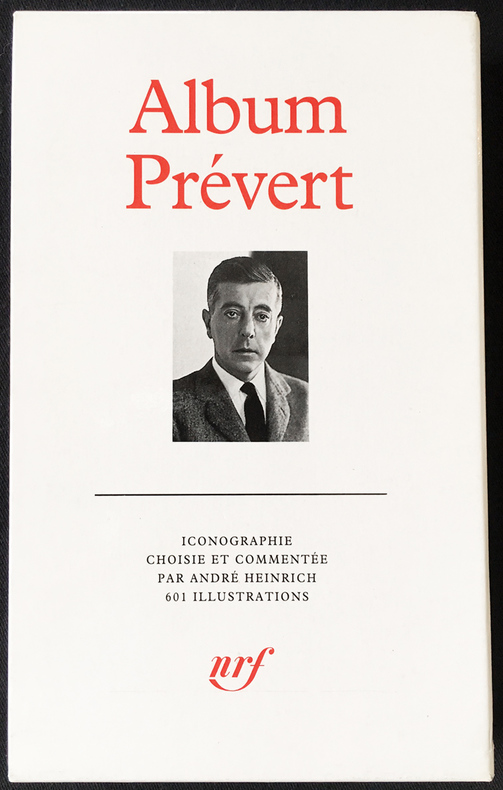
19921051Bibliothèque de la Pléiade, Gallimard, Paris 1992. 1 volume de 448 pages, in-12, relié cuir souple, rhodoïd, étui blanc cartonné illustré. 601 illustrations en noir. Album n°31 de la Bibliothèque de la pléiade. Très belle et riche iconographie autour d'un poète majeur du XXeme siècle.
2015ABE-1752955924563COLLECTION ITINERAIRES DU SAVOIR-IN 8-544 PAGES-JAQUETTE-(25A)
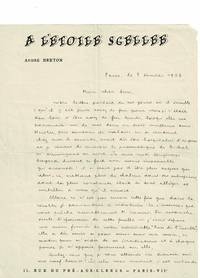
195375729Paris 1953. Fine. Paris 8 janvier 1953 21 x 27 cm 1 pages et quelques lignes sur un feuillet Unpublished handwritten signed letter from André Breton addressed to critic Charles Estienne; one page and a few lines in black ink on a paper from the à l'étoile scellée gallery. Two transverse folds from having been sent a small corner missing in the upper right margin. Very beautiful letter giving an account of the death of one of André Breton's dearest friends and of his quarrel with Albert Camus. Breton tells his friend about the death of the Surrealist Czech artist Jindich Heisler: Your letter spoke of those days where it seemed that there was only just enough fire to live: on Monday there was far from enough fire when it reached me: one of my two or three best friends Heisler taken suddenly unwell on his way to mine on Saturday had to be hospitalised urgently and I had just received the pneumatic from Bichat telling me of his death. The event no less inconceivable than accomplished left me distraught for a long time: there was no-one more exquisite than he putting more warmth into everything he did the most constant of which was to lighten and embellish those whom he loved. The two poets were indeed very close: Heisler participated alongside Breton in the launch of Néon in 1948 and supported him during a period of depression accompanying him with other friends to the Île de Sein. The beginning of 1953 was overshadowed by the death of Jindich Heisler 4 January. Loyal among the faithful he lived entirely for Surrealism according to Breton who pays tribute to his activity as a leader: This is how he was between 1948 and 1950 the soul of Néon and until his last moments the greatest bearer of projects that as if by magic his talent gave him the means to achieve. Henri Béhar André Breton In this letter laden with pain Breton suddenly makes reference to L'Homme révolté by Albert Camus published two years earlier: Come on it is not yet the time in the rebellion that I will succeed in introducing the measure that M. Camus kindly preaches to us. The two writers met in New York at the end of March 1946 when Camus was invited to the United States for a conference tour as a representative of Combat. The two agree on the best way to preserve the testimony of certain men free from ideological distortions. They dream of a kind of pact by which people of their calibre would commit to not join any political party to fight against the death penalty to never claim any credit whatsoever. ibid. With other intellectuals they founded the Rassemblement démocratique révolutionnaire RDR in 1948; but the idyll ended a couple of years later in the autumn of 1951 when Camus published Lautréamont et la banalité an extract from his Homme révolté which was published later. Breton was extremely hurt and responded to him in an article entitled Sucre jaune in Arts: This article . testifies to the part of Camus for the first time for an indefensible moral and intellectual position. . He only wants to see a guilty adolescent in Lautréamont whom he - in his capacity as an adult - must discipline. He goes as far as to find him in the second part of his work: Poésies a deserved punishment. According to Camus Poésies would be but a mass of laborious banalities . It could still be worse if the destitution of these views did not intend to promote the most suspect thesis in the world which is that absolute revolt can generate only the taste for intellectual enslavement. This is a completely gratuitous ultra-defeatist statement which must incur even more contempt than its false demonstration. Thus two years later Breton still holds out against Camus' crime of lese-majesty towards that which Breton constructed as the father of surrealism but even more this allusion to Camus' pacifist philosophy bearing witness to the incompatibility between a thought of moderation and a poetry of revol unknown
br. Il libro ricostruisce il percorso che porta Camus a cercare una via di uscita dall'assurdo e dalle conseguenze nichiliste in esso implicate. Sulle forme e sugli esiti del superamento dell'assurdo verte la parte centrale del saggio, volta ad analizzare la struttura dialettica della rivolta, l'ambiguo nesso che si viene a creare tra rivolta e movimento rivoluzionario, il risultato totalitario derivante da un uso costante e metodico della violenza. Nella messa a punto di una politica basata sull'idea di limite si riassume la scelta antistoricista e antiassolutista di Camus. Nel sottolineare la funzione cruciale che l'opposizione tra totalitarismo e federazione svolge nel socialismo antiautoritario dello scrittore, il saggio intende mostrare come la suddetta antitesi, col suo carico di istanze antisovraniste, resti un tema costante, destinato a giocare un ruolo di rilievo nel modo stesso in cui Camus affronta la questione algerina.
20070861Grancher 2007 Broché - Couverture glacée illustrée éditeur 418 pages Très bon état 530 g
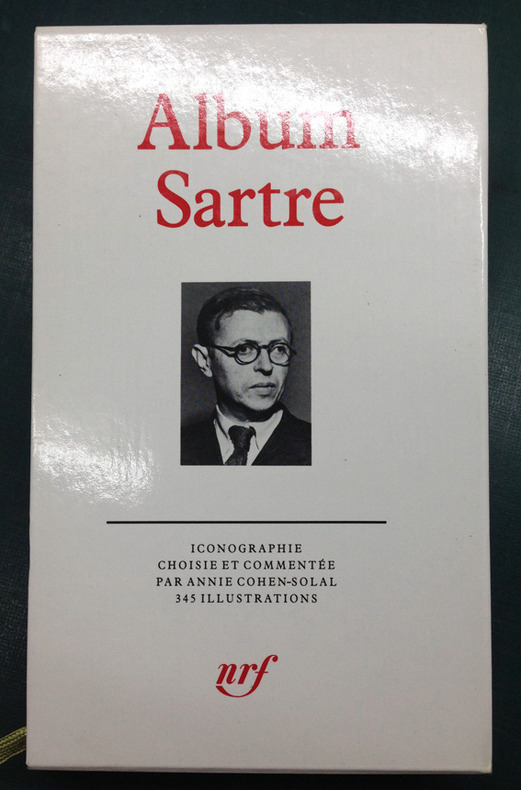
19911050Bibliothèque de la Pléiade, Gallimard, Paris 1991. 1 volume de 320 pages, in-12, relié cuir souple, rhodoïd, étui blanc cartonné illustré. 345 illustrations en noir. Album n°30 de la Bibliothèque de la pléiade.
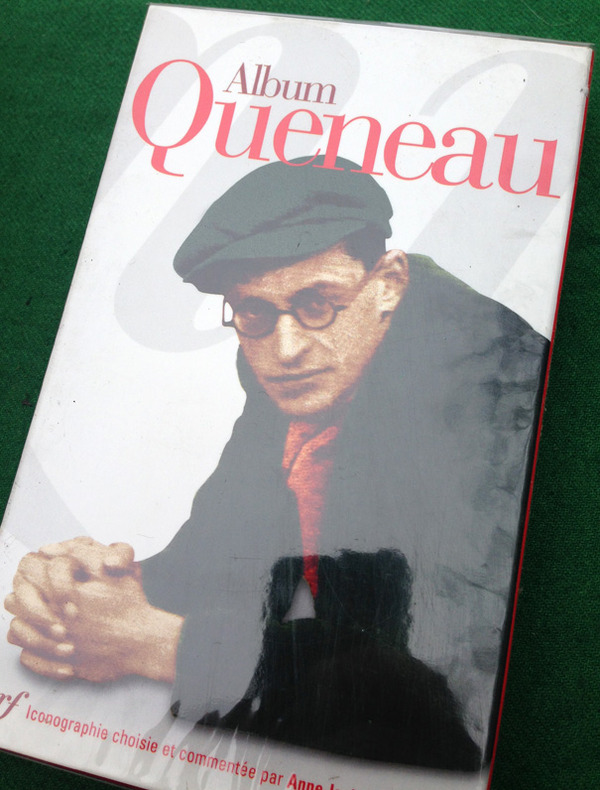
20021061Bibliothèque de la Pléiade, Gallimard, Paris 2002. 1 volume de 319 pages, in-12, relié cuir souple, rhodoïd, étui cartonné illustré en couleur. 321 illustrations en noir. Album n°41 de la Bibliothèque de la pléiade.
2994sans lieu ,sans date( vers 1930), in Folio en feuilles sous chemise cartonnée à rabats ,24 chansons illustrées au pochoir ,en doubles feuilles repliées (4p.) , une signature : Camus Joseph,chemise illustrée sur le 1er plat , listes des chansons sur les rabats interieurs Rare recueil de chansons gaillardes de marins, illustré par Bernard Roy ?.