3 895 résultats
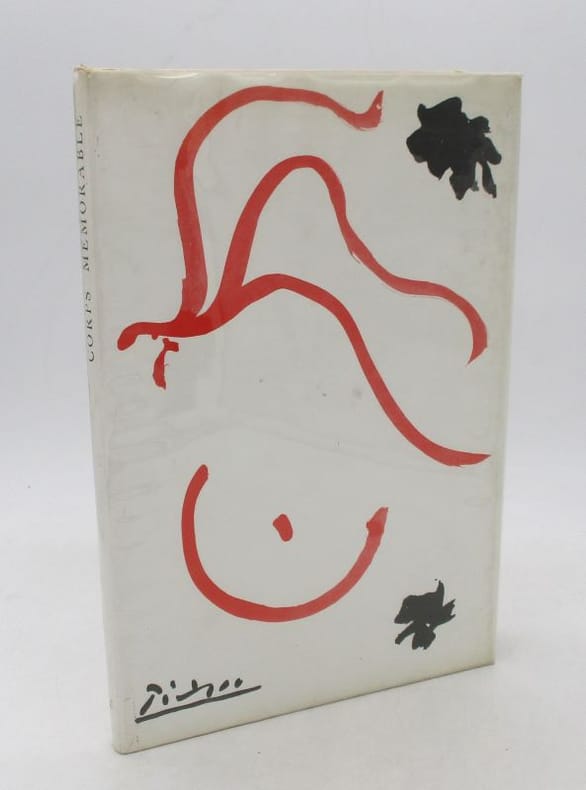
22554Paris, Seghers, 1957. In-4, 37 pp., cartonnage éditeur muet, jaquette originale illustrée, rhodoïd (2nd f. de titre et plusieurs planches débrochés, petits frottements, quelque taches au rhodoïd).
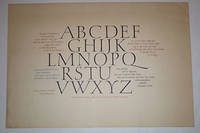
16-4939Frankfurt/M: 1959. Letterpress on card stock. 35.5 x52 cm.14" x 19 7/8" broadside. Philip Hofer. Broadside of an Alphabet with quotes by Douglas C McMurtrie Jean Cocteau and Emanuel Geibel about letters and the alphabet in a variety of languages. Calligraphed by Hermann Zapf and commissioned by Philip Hofer. Printed in 7 colors. The colophon line is in German and can be translated as "For Philip Hofer in Cambridge written by Hermann Zapf Frankfurt am Main 1959". Hermann Zapf pronounced “tsáff†born November 8 1918 was a German typeface designer who lived in Darmstadt Germany and was married to calligrapher and typeface designer Gudrun Zapf von Hesse.Zapf’s work which includes Palatino 1948 named after 16th century Italian writing master Giambattista Palatino and Optima 1952 a flared sans-serif released by Stempel in 1958. Zapf disliked its name which was invented by Stempel’s marketers has been widely copied often against his will. The best known example may be Monotype’s Book Antiqua which shipped with Microsoft Office and was widely considered a “knockoff†of Palatino. In 1993 Zapf resigned from ATypI Association Typographique Internationale over what he viewed as its hypocritical attitude toward unauthorized copying by prominent ATypI members.In 1935 Zapf attended an exhibition in Nuremberg in honor of the late typographer Rudolf Koch. This exhibition gave him his first interest in lettering. Zapf bought two books there using them to teach himself calligraphy. He also studied examples of calligraphy in the Nuremberg city library. In 1938 Zapf designed his first printed typeface for D. Stempel AG and Linotype GmbH of Frankfurt a fraktur type called Gilgengart.In 1976 the Rochester Institute of Technology offered Zapf a professorship in typographic computer programming the first of its kind in the world. He taught there from 1977 to 1987 flying between Darmstadt and Rochester. There he developed his ideas on digital typography further with the help of his connections in companies such as IBM and Xerox and his discussions with the computer specialists at RIT. Zapf used his experience to begin development of a typesetting program called the “hz-program†which Adobe Systems acquired and later incorporated in their InDesign program.Expertise by: Dominique COURVOISIERExpert de la Bibliothèque nationale de France. Membre du Syndicat Français des Experts Professionnels en œuvres d’art5 rue de Miromesnil 75008 Paris.Provenance: from the estate of Raymond Gid who died Sunday November 12 2000 in Paris. Born on November 25 1905 Raymond Gid became first known through his posters after having studied at les Beaux-Arts. As a film enthusiast he designed many movie posters for example Vampyr de Dreyer photomontage 1932 Le Silence de la mer by Melville 1949 Les Diaboliques by Clouzot 1955. But a meeting with Guy Levis Mano editions GLM editor and typographer soon directed Gid towards the book. In 1935 he publishes together with the photographer Pierre Jahan Devot Christ de Perpignan and Chats Chiens by Ylla. It is an intensive period of his life period: he meets Dufy Corbusier Hake Lurcat and receives the gold medal for a poster at the International exhibition of Paris 1937. He reacts to the Civil War in Spain with a poster " Help to the civil populations ". Together With Father Carre « bete-a-bon-Dieu » of the Resistance Raymond Gid began to design liturgical texts. Apocalypse Six an extract of the biblical text of Saint John appeard after the war. It is one of his major works composed in the Peignot typeface which was designed by Cassandre in 1937. He designs several post-war period posters for example Week of absent a simple Lorraine cross surrounded by barbed wire on a dark background. Right from the beginning of the symposiums in Lure Provence in 1954 Raymond Gid participates in discussions on typography particularly with Maximilen Vox Charles Peignot Roger Excoffon. Raymond Gid puts on page and illustrates the Dialogues of the Carmelite nuns by Bernanos 1954 then some pages in Caractere Noel 1955 dedicated to his friend Jan van Krimpen the creator of dutch type faces. He plays with the breathing of the text in the manner of Mallarme as in his Book of hours 1959 or his Apocalypse 1964 adapting medieval text to present day tastes. He also designs posters like those for the Club Mediterranee 1961 Bally 1976 or heavier fare like that of Amnesty International 1973. During his whole life Raymond Gid remained attached to the typographical arts. He liked to try out new characters in his compositions mixing them with his very free drawings as for example in Messidor published by the Imprimerie nationale 1989. Jean-Francois Porchez type designer; translated from french by Babelfish and cleaned up a bit. Links Art and Poster Bally posters Chicago Center for the Print Bally posters Poster Auctions International New York Catalogue from the personal exhibition at the Bibliotheque Forney Paris in 1992. Frankfurt/M: 1959 unknown
19922080502106409439Chiku ma shobo 1992. Soft Cover. Fine. Number of pages: 313p Chiku ma shobo paperback
19912111902161002621Chiku ma shobo 1991. Soft Cover. Fine. Number of pages: 313p Size: 19cm Chiku ma shobo paperback
19732091502135708594Kyuryudo 1973. Soft Cover. Fine. The book is in fine condition. Kyuryudo paperback
19782110502150301732Showa shuppan 1978. Soft Cover. Fine. Volume: 1 Showa shuppan paperback
19792091202132800834Kyuryudo 1979. Soft Cover. Fine. Number of pages: 81p Size: 28cm Number of books: 1 Kyuryudo paperback
19772110502150502958Mori Kai-sha 1977. Soft Cover. Fine. Volume: 1 Mori Kai-sha paperback
19532092902140310772Sogeisha 1953. Soft Cover. Fine. Number of books: 1 Sogeisha paperback
2091502133535338Tokyosogensha N.A. Soft Cover. Fine. Number of books: 1 Tokyosogensha paperback
19932081402109300444Chiku ma shobo 1993. Soft Cover. Fine. Volume: 1 Chiku ma shobo paperback
19452091502133520759Chiku ma shobo 1945. Soft Cover. Fine. Number of books: 3 Chiku ma shobo paperback
2083002115902749Fukutakeshoten N.A. Soft Cover. Fine. Number of pages: 217p Size: 16cm Fukutakeshoten paperback
19892091202132704061Kadokawashoten 1989. Soft Cover. Fine. The book is in fine condition. Kadokawashoten paperback
19962081002108600531Kyuryudo 1996. Soft Cover. Fine. Number of pages: 155p Size: 26cm Number of books: 1 Kyuryudo paperback
19322111902152900024Daiichishobo 1932. Soft Cover. Fine. Size: B6 size Daiichishobo paperback
19512082502113904658Shiromizu shakan 1951. Soft Cover. Fine. Number of books: 1 Shiromizu shakan paperback
19782091202132701760Iwanamishoten 1978. Soft Cover. Fine. The book is in fine condition. Iwanamishoten paperback
19802092902137503426Tokyosogensha 1980. Soft Cover. Fine. Size: A5 size Number of books: 1 book Tokyosogensha paperback
19522111902152901805Jinbunshoin 1952. Soft Cover. Fine. Size: B6 size Jinbunshoin paperback
1994636838(Berlin), Schmidt, (1994). 345 S. OBr. St. verso Tit. (Studienreihe Romania 8).
In-8° (cm. 19,2 x 14,2) , pp. 218 pp. + TAVOLA DOPPIA A COLORI (scenografia di Lilla de Nobili, extrait de "Vogue"), 4 LITOGRAFIE di COCTEAU b.n. f.t. Br. ed. con sovracc. edit. ill. a colori, a risvolti. Ds. e bordi appena bruniti dal sole, ma eccellente es. 30 nov. 1949, presses de Bouchy, litogr. di Mourlot fr., Impr. Kapp per la tavola in quadricromia.
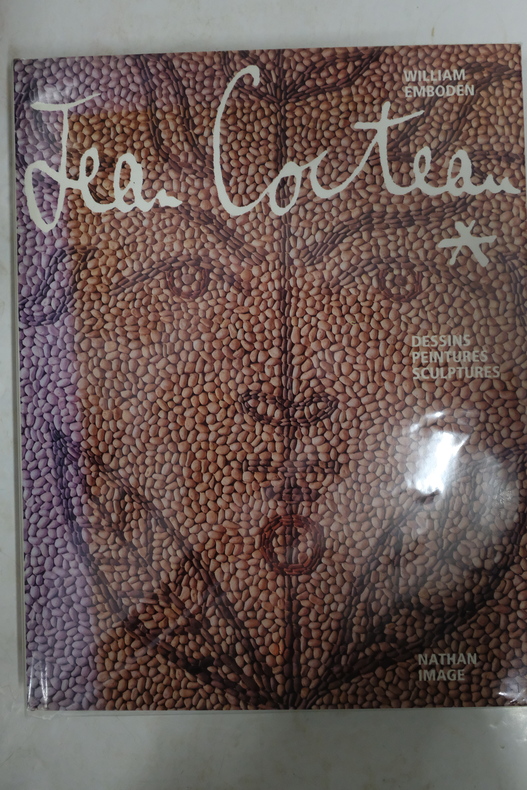
1989ART5677MBroché, 219 pages, paru en 1989 chez Nathan, livre en très bon état, quasi neuf.
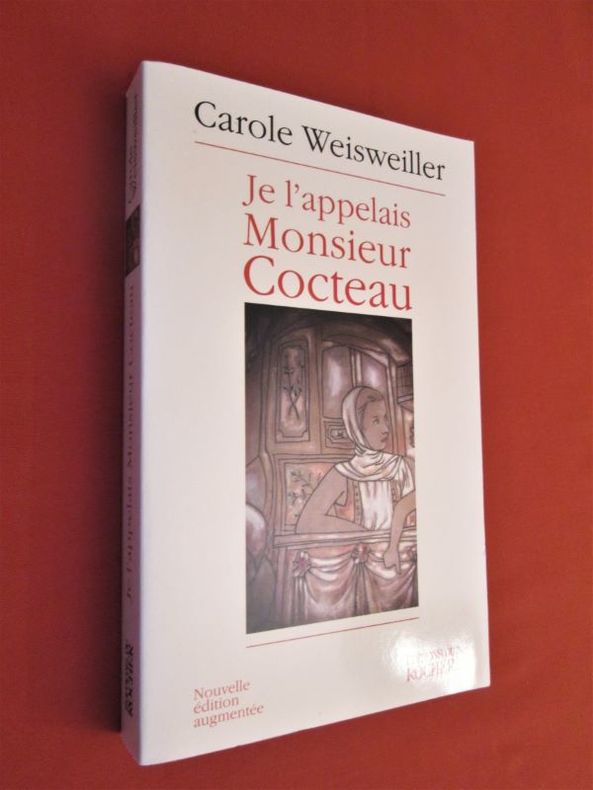
200327358Edition du Rocher, 2003.- Nouvelle édition augmentée. In-8 broché (22,5 x 14 cm), 311 pages, photographies hors-texte.-425g.L. - Excellent état.
70746Monaco, éd. du Rocher, 2003, nouvelle édition augmentée, in-8, cartonnage souple, couv. ill. coul. éd., 318 pp., très nb. photos en coul. et en noir, préface de Jean Marais, table des matières, Un biographie de Jean Cocteau avec en conclusion une image inconnue de ce grand humaniste. A déguster. Très bon état