Jean GENET - Jean COCTEAUBiblio.com
3 895 résultats
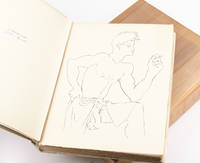
194791769n. l.: Paul Morihiens. n. 1947. Fine. One of a 9-copy issue of this celebrated clandestine novel with an original drawing by Cocteau Paul Morihien s. n. n. l. s. d. 1947 ; lettre : fin mars 1944 25 x 32.5 cm En feuilles sous chemise et étui First edition. One of 10 copies on vélin de Lana lettered G around which Genet has signed in blue ink signed by Genet at the limitation page most limited deluxe issue except for a unique copy. Complete with the loose leaf beginning with Une brusque lassitude.. With an autograph letter signed by Jean Genet on one page with customary fold marks from mailing published in Edmund White Jean Genet pp. 260-261. Illustrated with 29 erotic lithographs by Jean Cocteau and an original pencil drawing by Cocteau as well as a suite of the illustrations presenting some foxing on certain plates. Loose leaves in the publishers wrappers and laced slipcase with the upper board detached wood slipcase square spine with slide mechanism on the spine bearing the title and author engraved in red. An exceptional copy with a suite of the illustrations on Chine paper and an original drawing by Cocteau also featured in the book on p. 177. Also with an important autograph letter signed dating from late March 1944 written by Jean Genet to Maurice Toesca thanks to whom he avoided being sent to a concentration camp. Maurice Toesca a senior official at the Prefecture of Police as well as a prolific novelist biographer and literary critic had met Genet in 1944 on the request of Cocteau to secure his release: Sir Even had Monsieur Jean Cocteau not told me I would have understood the part you played in my release for you are poetrys representative at the Prefecture and my simple thanks would seem poor recompense for the marvellous gift you have given me. I am deeply sorry not to be able to offer you of all people a poem; but at least my heart is full of warm feeling toward you. Do not laugh Monsieur Toesca if you hear me speak of friendship it is still the finest thing I have to give. Please accept mine. Need I tell you again how desperate I was sunk in a darkness from which I no longer hoped to emerge and truly darkness it was for I had contemplated staking everything on an escape attempt whose most likely outcome was death the guards were terribly well armed! I tell you this nonetheless so that you may know my joy when the inspector came to announce my release. Monsieur Dubois was splendid; I should be glad if he could learn from you that I hold him in the deepest gratitude. My happiness is such that I could embrace everyone who helped bring this about. Monsieur Toesca it is a very thankful old thug who dares to shake your hand. translation our own Querelle de Brest was published clandestinely by Paul Morihien Jean Cocteaus secretary. Cocteau is responsible for the masterly and sensuous and unsigned illustrations. A portion of the five hundred and twenty-four copies printed were seized by the police the following year during a raid on the bookshop run by Morihien just steps from Cocteaus apartment at the Palais-Royal. After Genets wartime tribulations Cocteau came once more to his aid this time to spare him a life sentence: convicted for a third time and facing transportation to a penal colony Genet obtained a Presidential pardon through the intervention of Cocteau and Sartre. Querelle de Brest was adapted for the screen in 1982 by Rainer W. Fassbinder. A superb copy of this masterpiece a true cornerstone of homosexual and queer literary culture where the criminal underworld mingles with almost metaphysical ecstasy. [Paul Morihien]s. n. unknown
19442091202133212862Editions Rombaldi 1944. Soft Cover. Fine. Volume: 1 Editions Rombaldi paperback
192845975Paris.: Editions des Quatre Chemins. 1928. Original publisher's cream printed wrappers with red printed title and black printed text to upper cover and spine cloth-backed board chemise and matching box. Small 4to. 246 x 194 mm. Half-title printed title with copyright verso and Cocteau's text dated 'Décembre 1927' illustrated with 5 monochrome illustrations by de Chirico each recto only leaf with justification recto and 'Paru dans la même collection' verso and final leaf with achevé d'imprimer. A very fine example of the édition de tête with de Chirico's original etchings and corrected proofs by Jean Cocteau.From the edition limited to 3330 copies with this one of 10 from the édition de tête on Japon Impérial with de Chirico's etchings inserted loose each signed and numbered from the edition of 100 in pencil;; the book is also signed by Cocteau on the half-title and includes two leaves of printed text with manuscript corrections in ink by Cocteau.The two leaves with manuscript corrections feature text printed on pages 30 31 32 and 33. Cocteau has made manuscript excisions ellisions and additions which amount to substantial changes. In several instances the corrections differ even from the final published text which was completed in December 1927; the achevé d'imprimer gives a publication date of 'le Trente Mai Mil Neuf Cent Vingt-Huit'.Ciranna 3 / 4. Editions des Quatre Chemins. hardcover
LCS-1864083
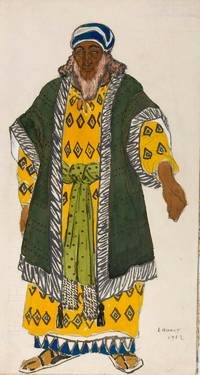
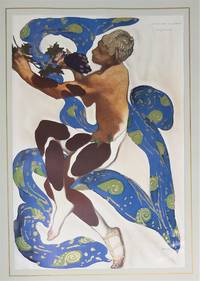
191355315Paris: Maurice de Brunoff 1913. Limited edition. Hardcover. Very good to fine condition. 1/80. Small Elephant Folio. 6 49pp. text 77 leaves plates 8pp. Uncut at fore- and bottom edges. Original gilt-stamped full vellum with gilt vignette on cover gilt lettering and ruling on spine. Top edge gilt. Laid in an original pochoir-highlighted watercolor signed and dated in pencil by the artist in lower right margin protected by modern mylar. Mounted photogravure frontispiece portrait of Leon Bakst with his facsimile signature below gravure. Title page printed in red and black. Limitation page with publisher's signature. Additional publisher's signature on verso of first front free endpaper. Historiated head- and tailpieces after Bakst. Chapter titles and initials printed in red.<br /> <br /> Lev Samoylovich Rosenberg Bakst painter and stage designer realized his greatest artistic success in the Alesandrinksy and Maryinsky theaters and later from 1901 to 1921 with Diaghilev at the Ballet Russe where he designed more productions than any other artist. Theater and costume designs for more than ten ballet works appear in this splendid deluxe edition containing 77 tipped-in plates all but one after Bakst 4 of them folding and 50 in full color with pochoir highlights. <br /> <br /> The striking plates of Leon Bakst's stage sets and costumes for the Ballet Russe are accompanied by synopses of the plays by Jean Cocteau for whom they were designed. Bakst’s brilliant control of color line and decoration give his stage pictures a visual rhythm. Color and chromatic combinations were used emotionally and sensuously. The splendid costumes are richly decorated with a myriad of motifs and decorative shapes. Captions for each plate on facing plates. <br /> Text in French. Covers with minor smudging interior in near fine to fine condition. Maurice de Brunoff hardcover
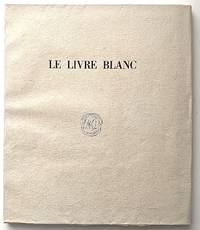
19282423Paris: Maurice Sachs and Jacques Bonjean 1928. First edition. 6 7-80 6 pp. Quarto. Folded wrappers title and monogram printed on front cover. Printed on Montval laid paper handmade by Gaspard Maillol by Ducros et Colas printers Paris. Slightest occasional spotting to leaves still a fine copy housed in a chemise and slipcase. <br /> <br /> One of 31 numbered copies printed of which ten were reserved for the author. The true and extremely rare first edition of one of Cocteau's most extraordinary and emblematic works. Published anonymously it is the first time Cocteau directly wrote on the subject of homosexuality- as Claude Arnaud notes in his definitive biography "this indirect praising of homosexual love experienced as 'one of the most mysterious workings of the divine masterpiece' was the kind of work that might once have helped the adolescent Cocteau to rise above opprobrium and secure his self-esteem." Cocteau never allowed his name to be directly attributed to the text of this book although later editions bore his preface and sometimes illustrations. As Frédéric Canovas writes "From the first edition to the last one published while he was still alive Jean Cocteau systematically refused to print his name on the cover of Le Livre Blanc: the text was to remain anonymous although Cocteau himself had not hesitated to demonstrate his intimate relationship to the book by illustrating it on several occasions and by adding a short manuscript note to the second French edition and a longer foreword to the English one. Indeed of all Cocteau's books Le Livre Blanc is probably one of his most confusing because of both its subject and its form or forms. Even today it remains difficult to consider this book. The critic finds himself lost among the multiple editions the various versions of the text and the many illustrations as well as the prefaces manuscript notes and frontispieces. Despite its nature as a confidential text. Le Livre Blanc has appeared in no less than 13 different editions from 1928 to the present. the first edition is anonymous bears no mention of the publisher's name and contains no illustrations. The printing was limited to 21 copies including 10 author's copies and is needless to say almost impossible to find today."<br /> <br /> Pia Les Livres de l'Enfer 812-813. Canovas "Jean Cocteau's Le Livre Blanc: Sex Text and Images" Word & Image 231:1-15 January 2007. Georgel Jean Cocteau et Son Temps 402. Young The Male Homosexual in Literature 709 for the English edition. [Maurice Sachs and Jacques Bonjean] unknown
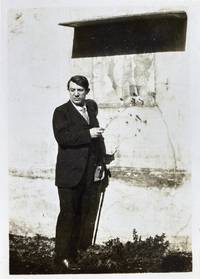
191778126Paris 1917. Fine. Paris 1917 6.30 x 8.60 cm une photographie Original photograph likely unique and unpublished of Pablo Picasso at the Casa di Marco Lucrezio Pompeii spring 1917 Paris 1917 63 x 86 cm one photograph Original photograph depicting Pablo Picasso in the spring of 1917 at the Casa di Marco Lucrezio in Pompeii holding a twig in front of a wall on which there is a Pompeian fresco. Contemporary silver print perhaps unique from Jean Cocteau's personal archives then the Maurice Sachs collection. Exceptional almost undiscovered and probably unpublished photograph taken by Jean Cocteau during the stay. On 16 April 1917 Picasso visits Pompeii accompanied by Jean Cocteau and Léonide Massine to prepare the ballet Parade the first work described as surrealist by Guillaume Apollinaire for the new season of Serge de Diaghilev's Ballets Russes. On his return this initiatory journey inspired his monumental painting: the Parade stage curtain a real visual signature of the ballet marking the beginnings of Picasso's neo-classical period and today preserved at the Musée national d'Art Moderne Georges Pompidou. Pierre Daix in his bibliography dedicated to the painter recounts the aesthetic shock caused by the discovery of the Pompeian frescoes: Giovanni Carandente to whom we owe the best studies on this trip highlights that Picasso was strongly struck by the animation and the sensuality that the cataclysm of the year 79 AD had brutally destroyed. If it is true as he wrote to Gertrude Stein that he immediately drew many Pompeian fantasies which are a little daring attracted as he was by the erotic elation that emerges from these licentious paintings . these memories settled in him to emerge with force thereafter. . Everything that had made up the Pompeian universe was preserved on the site as well as in the National Archaeological Museum of Naples . In its singularity this universe contributed to enriching Picasso's cultural heritage with something more alive more trembling than he had gained from his museum visits until then. He particularly loved the conciseness of the paintings: two or three years later the impressions felt in Pompeii were to translate into a real creative explosion a series of paintings which all bore traces of these never buried memories. This source was to remain alive until La Danse of 1925. Pierre Daix Picasso. Unique and early original photograph of Picasso taken and printed by his friend Jean Cocteau in a mythical place that will influence his aesthetic for the long-term. Provenance: Jean Cocteau's personal archives then the Maurice Sachs collection and Max-Philippe Delatte. unknown
191778126Paris 1917 | 6.30 x 8.60 cm | une photographie
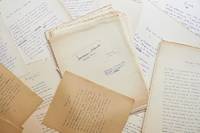
195283726Saint-Jean-Cap-Ferrat 1952. Fine. Saint-Jean-Cap-Ferrat août 1952 20.80 x 34 cm 52 pages Autograph manuscript by Jean Cocteau early version of the poetry collection Appogiatures - published in 1953 by Éditions du Rocher in Monaco - comprising 47 leaves of thick paper taken from a large drawing pad and 5 smaller leaves of thin paper written in blue ink and blue ballpoint pen. Numerous deletions and corrections. The leaves are numbered up to 25 including one number 8 bis and most bear a small cross or the mythical Cocteau star. The last leaf containing the poem titled ""Lettre"" is dated in the poet's hand August 15 1952. Also in Cocteau's hand the first leaf bears the final title above which is crossed out the initially envisaged title - Soucoupes volantes - the date 1952 and the place - St Jean Cap Ferrat; it also features a crossed-out dedication: ""À la mémoire de Baudelaire et de Max Jacob qui nous apprirent ces exercices de style."" While the collection clearly shows the influence of Baudelaire's Petits Poèmes en prose and Max Jacob's Le Cornet à dés this tribute was not retained in the published version and was replaced by a dedication to the publisher Henri Parisot. An exceptional ensemble containing 33 of the 51 published poems 11 texts rejected on the advice of publisher Henri Parisot and published in ""En marge d'Appogiatures"" uvres poétiques complètes de la Pléiade pp. 818-831 and 6 unpublished texts. David Gullentops in the edition of Jean Cocteau's uvres poétiques complètes in the Pléiade notes the existence of a second set of manuscripts and typescripts preserved at the Bibliothèque Historique de la Ville de Paris BHVP. He further indicates that he had access to no manuscript of the poem ""Lanterne sourde."" Yet this poem is indeed part of our ensemble which would thus be the first version of the collection envisioned by Cocteau. Jean Cocteau began writing this collection of poems in verse and prose commissioned by his friend the publisher Henri Parisot at the end of July 1952 while staying at Saint-Jean-Cap-Ferrat in Francine Weisweiller's Villa Santo-Sospir. The first version of the collection was completed in mid-August as attested by the two dates on our manuscript ""août 1952"" and ""15 août 1952"" and this entry in Cocteau's diary: ""J'ai terminé la mise au point des courts poèmes en prose pour Parisot. Il y en aura vingt-six à moins que le mécanisme continue ce que je ne souhaite pas car à la longue ces exercices d'écriture illustrés par Baudelaire et Max Jacob fatiguent."" Le Passé défini Tome 1 1951-1952 August 14 1952. Our ensemble would thus be a mixture of the first poems sent to Henri Parisot written with a pen and several added texts written with a ballpoint pen. This hypothesis is supported by the writing of the final title Appogiatures on the title page of our manuscript; Cocteau relates this change again in his diary dated August 29 1952: ""Ai . classé les poèmes pour Parisot sous le titre : Appogiatures."" Our early manuscript version contains significant variants concerning the titles of the poems; thus the poem ""Livre de bord"" was initially titled ""Le Spectacle"" likewise for ""Au poil"" for which Cocteau had previously chosen ""La langue française"" or ""Le tableau noir"" originally titled ""Le lièvre et la tortue."" The order of the poems was also considerably modified for printing: our ensemble shows that Cocteau wished to begin the collection with ""Le voyageur"" which would finally be replaced by ""Seul"" and moved to second position. Also noteworthy in our dossier is the presence of eight poems entirely in verse: these would be removed Appogiatures becoming a collection exclusively in prose. The ensemble heavily deleted and corrected also presents long passages suppressed in the published version for example this very beautiful extract from the poem ""Scène de ménage"" evoking the ""countess"" Francine Weisweiller: ""Et les larmes de la comtesse se disaient : nous sommes la mer. Et la mer se unknown
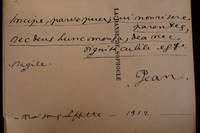
191245274Paris: Mercure de France 1912. Fine. Mercure de France Paris 1912 15 x 19 cm relié First edition one of 7 numbered copies on Hollande paper the only large paper copies this one no. 1 specially printed for Jean Cocteau's mother. Contemporary vellum Bradel binding by Dupré gilt date to foot of spine brown shagreen title label marbled endpapers and pastedowns covers and spine preserved. Light worming principally affecting the margins of some leaves. A moving and exceptional autograph inscription signed and dated by Jean Cocteau to his mother in Latin quoting a verse of Virgils Bucolics: Incipe parve puer : cui non risere parentes nec deus hunc mensa dea nec dignita cubili est. / Virgile. / Jean which in English is: Realise this child: the boy at whom his parents never smiled is fit neither to approach the table of the Gods nor the couch of a Goddess. A unique copy. With the publication of this third collection of poetry Cocteau a young prodigy then aged 23 was feted by artistic and literary circles. An intimate of Proust's a friend of Jacques-Emile Blanche a follower of Nijinski and Diaghilev and a disciple of Anna de Noailles his ambition was to unite in his own person all the talents that surrounded him. The Danse de Sophocle Dance of Sophocles a reference to the nude dance that the young and divine Sophocles did in Athens after the naval victory at Salamis reflects the ambition and the exaltation of the young Cocteau: novelist painter dancer poet he felt truly fit to approach the table of the Gods. As with all the best artists he was a link between God and Earth. In his biography Claude Arnaud dedicates a chapter The Living God to the psychology of the poet in this period: He was a piece torn from God one of the terrestrial organs through which this Being constantly evolving thought about and finally acted to improve his creation. Thus Cocteau broke free of his illustrious models and assumed his full artistic divinity which unfolded in this ecstatic collection witnessed by the eponymous poem: Thanks to you dear pride I wore the halo Given by the charming god of words Thanks to you I knew the frenetic struggles in which pen and paper the dreary pot of ink Are the ties of verses you want to shout You want to scream sing sigh laugh And which we must since they are in us and we feel them Let flow like beautiful blood. The inscription to his mother on the first of seven rare large paper copies is a witness to Cocteau's only real great influence: Eugénie Cocteau. A mother idolized by her son she was a profound influence on both the poet's life and his work marked by the omnipresence of the Oedipal figure. Claude Arnaud describes at length this filial outpouring coupled with an almost amorous attention.: only my love for you is rooted in something real the rest seems to be a bad dream'. One can hardly miss in this quotation from Virgil the incestuous ambiguity that bound Cocteau to his mother. One of the most desirable provenances for this extremely rare copy. Mercure de France hardcover
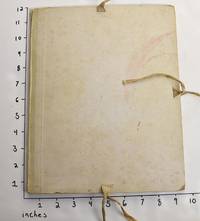
1934164033Paris: 4 Chemins 1934. Hardcover. VG- some age-toning to the extremities and some offsetting to two lithographs from text sheets touching them over time. Portfolio held together at spine only by a cloth strip at the top and the bottom. White stiff boards portfolio with three cloth ties. 12 printed text sheets including title page and limitation sheet and 10 pencil-signed and pencil-numbered bw lithographs. This extraordinary portfolio while diminutive in size is large in importance. The twelve text sheets are reproduced in Cocteau's handwriting presumably and the ten lithographs are all signed and numbered. This is set No. 44 out of 120 that were for sale and of an overall edition of 130 copies as stated on the limitation page which like all the text is in French. Some foxing to covers and light staining uniform age-toning to sheet edges. A few small dog-eared sheets and some light occasional foxing spots. Quite rare. Ties amd spine have been replaced and restored since phoiograph was taken using archival-quality materials by a leading bookbinder. 4 Chemins hardcover books
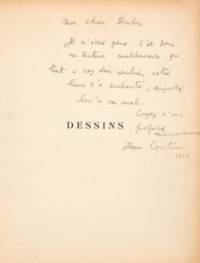
19242785Paris: Librairie Stock 1924. First edition. In very good conditon. First edition. 272 p. Inscribed to André Breton. <p><br /> Mon cher Breton // Je n'écris plus. C'est donc // un lecteur malheureux qui // tient à vous dire combien votre // livre l'a enchanté emporté // loin de son mal.<br /> // Croyez à ma // profonde // reconnaissance // Jean Cocteau // 1924.<p><br /> From the collection of Pierre Berge. Librairie Stock unknown
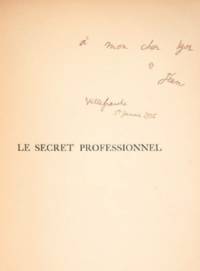
19252775Paris: Stock 1925. First edition. In original paper. Very good condition small restoration on the back. Illustrated with twelve color drawings by the author reproduced in facsimile. Very good condition small restoration on the back. Illustrated with twelve color drawings by the author reproduced in facsimile. Very good condition small restoration on the back. First edition. In original paper. 4 ff. 105 pp 3 ff. the last 2 blank 11 plates. <p><br /> Inscribed to to Igor Stravinsky: à mon cher Igor // Jean // Villefranche // 1er janvier 1926.<br /> <p><p><br /> The year 1926 corresponds to the period when the relationship between the musician and the writer was the most intense. At the end of the summer of 1925 Stravinsky had asked Jean Cocteau to compose a libretto for an opera-oratorio on the myth of Oedipus with the directive that the text be in Latin. The text was translated by the future cardinal Jean Daniélou. OEdipus Rex is one of the masterpieces of 20th century lyrical music.<br /> <p>. Stock unknown
19374425n.p. n.d. 1937 1937. A collection of typescripts of thirteen short stories by Lise Deharme with five signed drawings by Jean Cocteau. Some of the stories are drafts with manuscript or typed amendments and some in fair copy. Each story with its illustration is loosely inserted into a card folder. Also present is the original pink file which contained the stories and drawings. On the cover of this is inscribed in De harme's hand: "Lise Deharme 146 rue de Grenelle Paris VII. Quleque dessins de Cocteau". All housed in a custom made box with paper label to spine. Given their brevity and simplicity their subject matter and the nature of the drawings these stories were clearly intended for young children - she had two of her own Tristan and Hyacinthe. We have found no evidence of these stories and drawings being published. None of them is dated but we would tentatively suggest a date in the late 1930s or early 1940s. Deharme and Cocteau were corresponding regularly at this time and Deharme was working on a book of children's poems with photographs by Claude Cahun - published in 1937 as Le Coeur de Pic. Clearly Deharme was planning another book for children this time of stories and with drawings by another leading figure of the surrealist movement Jean Cocteau. � Lise Deharme 1898-1980 has tended to be written about as little more than a muse to the great surrealists Breton Cocteau Dali and Ernst. It is true that a chance meeting with André Breton in 1924 first drew her into the circle of the surrealists but by 1933 she was running the magazine Phare de Neuilly which brought together surrealist poems and short stories and political commentary. As well as editing the work of others Deharme wrote widely herself and collaborated extensively with other surrealists. Mention is made in the literature of her work with the artists Cahun and Leonor Fini but we have found no reference to a collaboration with Cocteau. Which makes this collection of unknown and unpublished illustrated stories especially important and exciting. 1. Muscade. La Petite Fille aux dix doigts. Single leaf with title in manuscript three typed leaves recto only and then a further two leaves with the story retyped leaves 270x210mm. Two drawings by Cocteau one in pencil on tracing paper signed "Jean" and the other in purple crayon on heavier drawing paper 420x280mm folded. On the verso of the larger drawing is written "Pour Lise Jean". 2. La véritable histoire du Petit Chaperon Rouge. Single leaf with title in manuscript. Two leaves with the story typed and the title in manuscript and one amendment in blue biro. Two further copies of the story typed. Drawing by Cocteau signed "Jean". Fraying to left edge of the drawing. 3. Le Nouveau Narcisse. Single leaf with title in manuscript. Two leaves with the story in typescript and two amendments in pencil. Drawing by Cocteau signed "Jean". 4. Le Vent. Single leaf with title in manuscript. Two leaves with the story in typescript and two amendments. Fair copy of the typescript on a single leaf. Drawing by Cocteau signed "Jean". 5. Couleur de rose. Single leaf with title in manuscript. Four leaves with the story in typescript and two amendments in blue ink. Fair copy of the typescript on four leaves. 6. La Chemise. Two leaves with the story in typescript. 7. La Belle Vie. Seven leaves with the story in typescript and numerous amendments in pencil. 8. Il etait une fois. Two leaves with the story in typescript and three amendments in pencil. Fair copy of the typescript on a single leaf. 9. Le Prince Feroce. Two leaves with the story in typescript. 10. Chansons du Soir. Two leaves with the story in typescript. 11. Histoire de Jules. Two leaves with the story in typescript and numerous amendments in blue ink. 12. La Porte Ouverte. Two leaves with the story in typescript. 13. Histoire de la petite Laurence. Two leaves with the story in typescript and five amendments in ink and type. n.p. n.d. [1937] unknown
1962D17822Monaco: Éditions du Rocher 1962. First Edition. Paperback. Near Fine. Inscribed and signed by Cocteau for editor Jean Denoël with a drawing at the front and signed by Picasso and Cocteau on the colophon. Among a number of copies on Rives reserved for collaborators from a total edition of 255. 24 original lithographs 11 of them hors-texte including the front wrapper and 2 double-page by Picasso printed in black by Mourlot. Folio contents loose as issued in original wrappers with cut-out design revealing title on front cover; 1/4 calf gilt-backed chemise and board slipcase split. Contents are fine. Prospectus laid in. "On the occasion of Picasso's 80th birthday Pierre Bertrand who was Cocteau's publisher assembled eleven of the poet's texts which reflected his friendship with Picasso. The latter illustrated these texts with 24 lithographs some of which are drawn in Cocteau-esque style "---Cramer 117; Monod 292; Bloch 1037-1060. <br/><br/> Éditions du Rocher paperback
1962D17822Monaco: Éditions du Rocher 1962. First Edition. Paperback. Near Fine. Inscribed and signed by Cocteau for editor Jean Denoël with a drawing at the front and signed by Picasso and Cocteau on the colophon. Among a number of copies on Rives reserved for collaborators from a total edition of 255. 24 original lithographs 11 of them hors-texte including the front wrapper and 2 double-page by Picasso printed in black by Mourlot. Folio contents loose as issued in original wrappers with cut-out design revealing title on front cover; 1/4 calf gilt-backed chemise and board slipcase split. Contents are fine. Prospectus laid in. "On the occasion of Picasso's 80th birthday Pierre Bertrand who was Cocteau's publisher assembled eleven of the poet's texts which reflected his friendship with Picasso. The latter illustrated these texts with 24 lithographs some of which are drawn in Cocteau-esque style "---Cramer 117; Monod 292; Bloch 1037-1060. <br/><br/> Éditions du Rocher paperback books
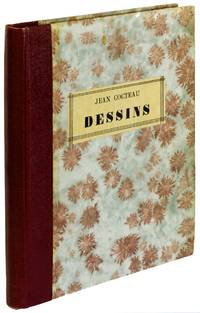
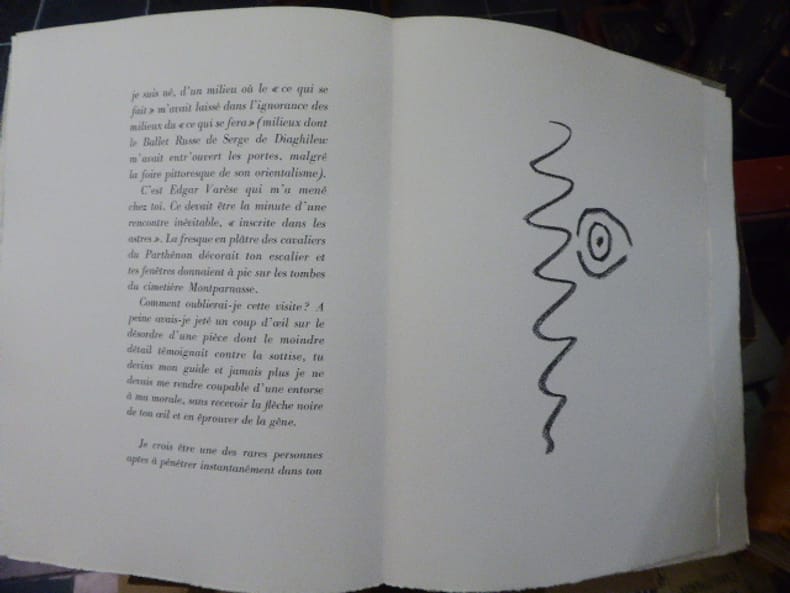
1924412274Paris: Stock 1924. Hardcover. Near Fine. First edition. Quarto. Quarter cloth and decorated papercovered boards with printed paper title label on front board. Modernist bookplate of Alex de Hass on rear pastedown moderate edgewear on the boards near fine. A collection of Cocteau's pen and ink drawings mostly portraits which was dedicated to Picasso.<br /> <br /> In October of 1946 Cocteau visited Amsterdam to attend the Dutch premiere of his famous film La Belle et la Bête. During this visit he was hosted by the Dutch songwriter and performer Alex de Haas. This volume has two large original drawings by Cocteau one on the front fly the other on the half-title each dedicated by Cocteau to de Haas.<br /> <br /> Additionally affixed to the front pastedown is an original gelatin silver photograph 9.25" x 6.5" of Cocteau speaking at a press conference in Amsterdam as well as a later color portrait of Cocteau from a magazine affixed on the copyright page. Additionally on the recto of the rear fly-leaf is an original drawing by the well-known Dutch caricaturist Eppo Doeve depicting de Haas paying homage to Cocteau on the stage of Tuschinski Theatre 28 October 1946. This copy is referenced in the Dutch literary journal De Parelduiker May 2007 pp.36-44. Stock hardcover
196294703Monaco: Editions du Rocher 1962. Signed limited folio edition of original lithographs by Pablo Picasso reproducing his major works between 1916 and 1961 and produced by Jean Cocteau upon the occasion of Picasso's 80th birthday. One of only 199 copies signed by both Picasso and Cocteau this is number 46. Folio loose leaves as issued in the original pictorial wrappers lithographic frontispiece and 22 original lithographs by Picasso 6 of which are full page and 2 of which are double-page. In fine condition. Housed in the original vellum-backed portfolio with gilt titles to the spine and original slipcase. Rare and desirable linking two great artists of the 20th century. Picasso and Cocteau met in 1916 towards the end of World War I at the height of Picasso's synthetic cubism period. The period marked the first use of collage in the history of fine art and the series depicted highly geometric and minimalist Cubist objects mainly pipes guitars and glasses. Picasso and Cocteau would later collaborate on several projects including the present volume which offers an overarching collection of Picasso's diverse periods from Cubism to Picasso's late years. Editions du Rocher hardcover books
192531775Paris: Librairie Stock 1925. First edition. Man Ray. Folio 22 leaves printed recto only with photogravure frontispiece by Man Ray. Loose as issued in printed wrappers. The frontispiece has left a transfer on the colophon leaf as is usual. A fine unopened copy. Housed in a newly made chemise of paper over boards with a morocco spine titled in silver ink housed in a matching paper over boards slipcase. For Cocteau the Angel Heurtebise was both his guardian and a demon; written during a feverish period of seven days this is one of his best known poems ".Your beauty angel of white lead caught in a photograph by an explosion of magnesium." from an English translation. Jean Cocteau collaborated on many photographically illustrated editions this was the first. This photogravure from a Rayogram is one of Man Ray's most subtle and beautiful. <br/><br/>Of a total edition of 300 numbered copies 25 were printed on Whatman 25 were printed on Hollande Van Gelder and 250 were printed on Vélin D'Arches. This is copy number 47<br/>printed on Hollande Van Gelder. Additionally this copy is SIGNED by Cocteau with his customary five point star and the following "Viens au ralenti folle etoile" slow down crazy star. <br/><br/> Librairie Stock hardcover books
192751371Paris Librairie Stock 1927 In-12, box bleu marine orn sur chaque plat d'un semis d'toiles se superposant partiellement pour former une composition gomtrique mosaque en box bleu et orange et en papier gris clair; dos sans nerfs portant le nom de l'auteur et le titre de l'ouvrage en petites capitales pousses loeser rouge; doublures et gardes de papier orange, tte lisse grise, non rogn, couverture illustre (Georges Leroux).Edition originale, illustre sur la couverture dune composition en couleurs de Christian Brard. Tirage limit 690 exemplaires numrots. Exemplaire du tirage courant enrichi de deux dessins originaux pleine page ddicacs l'crivain et pote Jean Desbordes (1906-1944), reprsentant chacun un personnage, l'un excut l'encre sur le faux titre par Jean Cocteau et sign Jean, l'autre ralis aux pastels rouge et noir par Christian Brard sur la page en regard, sign Christian. En juillet 1926, Jean Desbordes devint le secrtaire de Jean Cocteau et son compagnon pendant sept ans.
19522091202133206188Fequet et Baudier 1952. Soft Cover. Fine. Volume: 1 Fequet et Baudier paperback
15612Paris, Fernand Mourlot, 1958. Grand in-folio, en ff. non-paginé, sous couverture rempliée illustrée en couleurs et emboîtage éditeur en toile (base de l'emboîtage un peu déformé).
629086Imprimerie Artistique De Monaco Monaco 1962 Grand in-4 ( 380 X 285 mm ) de ( 6 ), 113, [114] pp., suivi de Lettre ouverte à Picasso, ( 14 ) pp., ( 2 ) ff. de justification et achevé d'imprimer, en feuilles sous couverture illustrée ajourée, chemise et étui. Première édition collective illustrée de 24 lithographies originales en noir de Pablo PICASSO dont 10 hors-texte ( la couverture avec partie ajourée, le frontispice, 2 à double page, 7 à pleine page )et 13 à mi-page.Tirage à 255 exemplaires, celui-ci un des 199 sur Rives pur chiffon à la forme ( N°115 ), ici signé au colophon au crayon gris par Jean COCTEAU et Pablo PICASSO. Très bel exemplaire.( Monod, Livres illustrés modernes, 2926 Bloch 1037-60 Mourlot 358-81 Cramer Books 117 ).
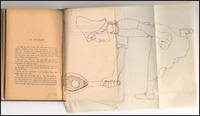
192712206Paris: Librairie Stock 1927. First Edition. Used; Like New/Used; Like New. 12mo. 94 pp. Original wrappers front cover illustrated by Christian Bérard bound into full crimson cloth with leather title to spine by James Macdonald New York. Inscribed by the author on the ffe "A Monsieur -- name erased / ce souvenir / de / Jean Cocteau / drawing of a star / 1927" and with an original drawing by Cocteau of a bending female tennis player with racquet and ball measuring 27 x 21 cm pasted along the left edge between pages 72 and 73 "Le Printemps" signed "Jean star" very lightly lower right folds small tears lower left edge else fine. <br><br><br />A nearly identical version of this drawing appears in Cocteau's 1923 volume of line cuts of his drawings "Sports Dessins" dedicated to Picasso with the apology: "Poets do not draw. They untie the knots in handwriting and then retie them differently." Librairie Stock hardcover books
913<br /><br /><p><b>BEAUTIFUL EXAMPLE OF THIS MAJOR LUXURY WORK ON BAKST'S ART THE FIRST ONE OF ITS KIND AND THE MOST IMPRESSIVE</b> especially attractive thanks to its art-déco publisher's binding here in great condition. It focuses on Bakst's costumes for Diaghilev's Ballets Russes together with a few set designs gathering most of his most famous creations. Interestingly it occasionally mentions the owner of the costume itself usually British or French.</p><p>Alexandre contributed a critical essay while the 24-year old Cocteau authored notes on the various ballets.</p><p>"Born in Russia in 1866 Léon Bakst belonged to that young generation of European artists who rebelled against 19th century stage realism which had become pedantic and literal without imagination or theatricality. There were no specialist trained theatre designers so painters like Léon Bakst turned their painting skills to theatre design. Bakst's fame lay in the ballets he designed for the Diaghilev Ballets Russes and huge pageant spectaculars for dancer and patron Ida Rubinstein. He died in 1924 but after nearly 100 years his magic is as potent as ever rediscovered by every generation. His influence was such that people who have never heard his name now see the world in a different way" V&A.</p><p><br /></p><p><i><u>Description</u></i><i><br />Folio 41.3 x 28.5 cm. Photographic portrait frontispiece title 4 ll. 50 pp. and 12 ll. 1 l. 77 tipped-in plates including 50 in colour some double-page entirely printed or mounted on grey papier d'Auvergne. <br />Original publisher's half vellum over marbled boards Bakst signature printed in white to upper board; very lightly soiled here and there small bumps at extremities small split to lower hinge.</i></p> De la More Press, Londres, for Maurice de Brunoff, Paris, 1913.