6 392 résultats
In 16, pp. 30. Br. ed. Interessante produzione della tipografia francescana di Gerusalemme, nata nel 1847 e tutt'ora esistente. Il salmo e' stato stampato in 8 lingue tra le quali l'arabo, l'ebraico, il copto etc.
In 4, pp. (24). Senza br. all'origine. Catalogo di questa fornita libreria di opere di carattere religioso, probabilmente collocata nella citta' di Cuneo (luogo di stampa). Le opere, teologiche, di predicazione ecc. portano in alcuni casi i commenti dei librai e in molti casi sono opere del XVIII ancora a magazzino.
In 8, pp. XII + 80. Br. ed. con danni al d. Raccolta di testi giuridici, perlopiu' francesi, offerti da questa libreria
In folio massimo, 14 cc. carta pesante porcellanata. Stampa tipografica a vari colori. Veline di protezione Tutta tela editoriale con titolo in oro al piatto anteriore. Segni d'uso e e rialzo della tela al piatto posteriore. Raro ed estremamente interessante saggio d'arte tipografica, che riproduce alcuni tra i piu' celebri proclami relativi ad avvenimenti della seconda guerra d'indipendenza. Esempio di virtuosismo tipografico realizzato tramite l'uso di vari colori di stampa in una stessa pagina e, addirittura, su di uno stesso carattere anche con marezzature a marmorizzature. In una singola pagina di stampa, vengono utilizzati fino a 5 diversi colori, alcuni dei quali vanno ad alternarsi anche su di una stessa lettera a formare l'effetto di marmorizzature. Molto probabilmente, l'occasione per quest'opera, realizzata sicuramente in pochissimi esemplari, fu data dalla fine della seconda guerra d'indipendenza e dalla ricorrenza dei 4 secoli dalla scoperta della stampa da parte di Gutemberg. Non datato ma, presumibilmente, risalente al 1862. In questa data la Tipografia Giuseppe Meucci di Livorno risulta presentare in occasione della Esposizione italiana agraria industriale artistica tenutasi in Firenze, un Album con lavori tipografici che, realisticamente, potrebbe essere questo. Esposizione italiana agraria industriale..., n. 7351. Manca a Opac Sbn.
In 16, pp. 168. Br. ed. con lievi segni d'uso. Catalogo di notevole interesse che racconta la produzione editoriale dei primordi di una delle piu' importanti case editrici italiane. Nata dalla precedente Pomba, la Utet viene fondata nel 1854 e viene ad affermarsi in particolare per le sue grandi opere enciclopediche e per l'edizione di classici. Il catalogo e' introdotto dalle grandi opere come l'enciclopedia agraria italiana, la Vita degli animali del Brehem, Il dizionario di cognizioni utili, le opere di Darwin, la Giurisprudenza italiana ecc. Segue poi il catalogo delle opere di fondo (opere risalenti a circa un ventennio prima) e segue con le opere in deposito.
In 16o, pp. 26. Aggiunta manoscritta alla carta bianca finale 'Aggiunta alle opere di classici autori'. Br. ed. muta. Riduzione del precedente catalogo generale pubblicato nel 1832 e contenente 1300 opere. Questa versione ridotta contiene un florilegio di circa 300 stampe, aumentato delle nuove acquisizioni. Interessante anche l'aggiunta ms. con tavole di Domenichino, Perugino ecc. Il catalogo contiene: Antichita' di Roma e altri luoghi; Roma moderna; Vedute di Roma; Paesaggi di vari autori: Pitture di: Andrea del Sarto, Annibale Carracci, Correggio, Peruzzi, Garofalo, Zampieri, Albani Guercino, Michelangelo ecc. Accanto ad ogni tavola o volume di tavole sono indicati i prezzi di vendita. Le incisioni sono opera di incisori come Volpato, Parboni, Testa, Morghen, Fontana ecc. La calcografia camerale venne fondata da Clemente XII nel 1738 all'atto dell'acquisizione del ricchissimo patrimonio di lastre calcografiche della Stamperia di De Rossi, patrimonio che stava per essere acquisito da compratori inglesi. Nel 1837 fu terminato poi il palazzo della Calcografia, opera del Valdier, architetto e direttore della calcografia.
Manifesto (cm 30,5 x 42 ca.). Grande stemma xilogr. e capolettera. Manifesto contenente prescrizioni circa l'attivita' degli stampatori tipografi: ciascun stampatore non potra' avere piu' di un apprendista. Questi dovra' avere almeno compiuto gli studi dell'Umanita' e sapere leggere e scrivere bene. A tale scopo ogni apprendista, prima di essere accettato, dovra' essere esaminato circa la sua abilita'. L'apprendista al torchio, inoltre, non potra' iniziare a lavorare se prima non avra' dato un esame di idoneita'. I lavoratori non potranno lasciare la bottega senza un preavviso di almeno 15 giorni e lo stesso varra' per il datore di lavoro che vuole licenziare un lavorante.
Manifesto (cm 30,5 x 39 ca.). Stemma xilogr. e capolettera. Data anticamente manoscritta al verso. Decisione a seguito della supplica presentata da Francesco Bernardo Bertolero in qualita' di sindaco dell'Universita' dei Librai e Stampatori circa la richiesta di prorogare di otto mesi la stampa della Regia Oratoria Parnassi. La proroga concessa sara' poi di sei mesi. Segue poi il prospetto della tassazione: 'considerata la qualita' della stampa in carattere minuto ben impresso, la qualita' della carta impressa e copiosita' di detta stampa si puo' tassare come si tassa d'ordine... se ligato in bazana... se in carta pecora... se in semplice cartone...'.
Manifesto cm. 30 x 73. Grande stemma xil. Supplica di Gio. BAttista Valetta per la conferma del privilegio della stampa di ogni documento regio. Nel fare cio' vengono ribadite le precedenti concessioni a partire da quella data a Giovanni Sinibaldo nel 1649 sino a quella data al padre del Valetta, Antonio nel 1688.
1764KC8048Venice: Remondini 1764. Hardcover. Very Good. Folio 315 x 240mm. 38pp. I-XXXVIII. Finely printed with decorative chapter headings and tail-pieces. Engraved printerÂ’s device of Remondini depicting bishop with putti carrying crozier and miter. Engraved vignette of muses on dedication page. Decorative paper covered boards; some minor soiling or staining joint repaired on title verso lacking first and last blanks otherwise complete and in good form with good wide margins. <br/><br/>Collection of poetic essays in song of Sister Maria Theresa Crocefissa 1645-1699 an Augustinian nun from Venice known for her long orations printed by the Remondini press. In the 16th century Venice was the marketplace of the world. Its location on the lagoon and its unique connections with the sea distinguished it as a cosmopolitan center among the great cities of the Renaissance. In this larger context commerce and trade played a central role in the development and achievements of music printing. The subject of this work is poems written as canzones and sonettoes or songs and little songs of Sister Maria Crocefissa. From an early age Maria Crocefissa was devoted to long poetic orations. Soon she was also engaged in self-punitive actions including wearing a hairshirt. At the age of 23 she experienced her first religious ecstasies. During these periods of trance some lasting well over a week she regressed into a childlike state that left her completely paralyzed. The presence of Maria Crocefissa in her Augustinian convent of San Girolamo brought about a series of supernatural episodes and mysterious sightings which interested the public. While she was still alive her papers were widely published. This particular title of her poems addressed to Girolama Gaudio is of utmost rarity not located in a contemporary library collection or market worldwide. From the Remondini press who by the second half of the 18th century were employing more than a thousand people in the Bassano del Grappa with hundreds of others busy in their local paper mills and selling their products in scores of countries making them perhaps the biggest publishers in Europe. Between 1751 and 1790 Remondini were granted more licenses for books than all the other Venice booksellers put together. Printed matter was a luxury and the Remondini press was known to employ refined typographical features to suit the tastes of buyers. In this work attention is paid to the decorative elements initials and layout of each page. Remondini hardcover books
1785EPL107London 1785. Paperback. Near Fine. Printed scripts of Syriac Armenian Arabic Samaritan Gothic Coptic Ethiopic Etruscan Saxon etc. Variations of English Greek and Hebrew and a leaf of floral devices with music and ship imprints on verso. Interesting specimen for those interested in typographic history. Size: 401 x 255mm. <br/><br/> paperback books
1764KC8048Venice: Remondini 1764. Hardcover. Very Good. Folio 315 x 240mm. 38pp. I-XXXVIII. Finely printed with decorative chapter headings and tail-pieces. Engraved printers device of Remondini depicting bishop with putti carrying crozier and miter. Engraved vignette of muses on dedication page. Decorative paper covered boards; some minor soiling or staining joint repaired on title verso lacking first and last blanks otherwise complete and in good form with good wide margins. <br/><br/>Collection of poetic essays in song of Sister Maria Theresa Crocefissa 1645-1699 an Augustinian nun from Venice known for her long orations printed by the Remondini press. In the 16th century Venice was the marketplace of the world. Its location on the lagoon and its unique connections with the sea distinguished it as a cosmopolitan center among the great cities of the Renaissance. In this larger context commerce and trade played a central role in the development and achievements of music printing. The subject of this work is poems written as canzones and sonettoes or songs and little songs of Sister Maria Crocefissa. From an early age Maria Crocefissa was devoted to long poetic orations. Soon she was also engaged in self-punitive actions including wearing a hairshirt. At the age of 23 she experienced her first religious ecstasies. During these periods of trance some lasting well over a week she regressed into a childlike state that left her completely paralyzed. The presence of Maria Crocefissa in her Augustinian convent of San Girolamo brought about a series of supernatural episodes and mysterious sightings which interested the public. While she was still alive her papers were widely published. This particular title of her poems addressed to Girolama Gaudio is of utmost rarity not located in a contemporary library collection or market worldwide. From the Remondini press who by the second half of the 18th century were employing more than a thousand people in the Bassano del Grappa with hundreds of others busy in their local paper mills and selling their products in scores of countries making them perhaps the biggest publishers in Europe. Between 1751 and 1790 Remondini were granted more licenses for books than all the other Venice booksellers put together. Printed matter was a luxury and the Remondini press was known to employ refined typographical features to suit the tastes of buyers. In this work attention is paid to the decorative elements initials and layout of each page. Remondini hardcover
1960151981(ca. 1960). 4to. Mit zahlreichen Schriftbeispielen u. Abbildungen. Je 8 Bl. Or.-Kart.
1988216089An International Cooperation of Typedesigners and Typemanufacturers, Printers and Typographers. 1989. Herausgegeben von Ekkehart SchumacherGebler. (München, Typostudio SchumacherGebler, 1988). 30 : 21,5 cm. 168 S. mit ausklappbaren Monatskalendarien. Text dreisprachig (englisch, deutsch, französisch). Orig.-Kart. mit Rinbuchheftung, eingesteckter Nadel zum Fixieren des Einbandes und Vorrichtung zum Aufhängen; gering gebräunt. [4 Warenabbildungen]
1954148973Schriftleitung von Fritz Genzmer. (Berlin 1954). Mit Illustrationen. 78 S., 1 Bl. Or.-Hldr.; etwas fleckig.
45611A Troyes Chez la Veuve Oudot 1751 in 12 (16x9) 1 volume reliure demi velin ivoire, dos lisse, pièce de titre de cuir noir, tranches teintées rouge, page de titre imprimée en vert et en noir, portrait gravé sur bois: Monsieur ou Madame Oudot, imprimé en vert, 6 feuillets non chiffrés de préface, 197 pages. Anne Claude Philippe de Pestels de Lévis de Tubières-Grimoard, comte de Caylus, 1692-1765. Troisième édition de ce recueil d'oeuvres badines et poissardes, d'anecdotes et de facétie, augmentée de deux textes nouveaux par rapport à la précédente édition de 1742. Bel exemplaire ( Photographies sur demande / We can send pictures of this book on simple request )
1946359351946 P., Editions Elzévir, 1946, in 8° broché, 97 pages ; couverture rempliée illustrée en couleurs (petits frottis).
1870_201801845New York, Published by Geo. E. Woodward, 1870 ; in-4 oblong (280 x 176 mm), 3-47 ff., reliure d'éditeur pleine percaline, coloris marron, dos lisse, 1er plat estampé et imprimé. Drawn and Arranged by Fred'k S. Copley. Engraved by Korff Bros.
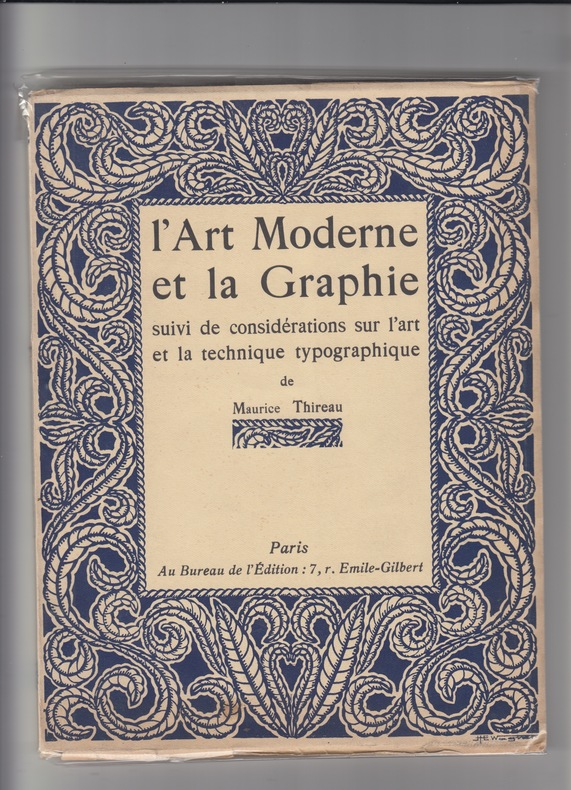
193053931930 Paris, chez l'auteur, 1930. Grand in-8 carré broché, couverture imprimée, 131-(6) pages.29 ill. n. et b.,10 dessins coul. de Reiter Laszlo. Les différentes écoles, cubisme, futurisme, surréalisme, etc..., leur influence sur l'art graphique.
New York, Published by Geo. E. Woodward, 1870; in-4 oblong (280 x 176 mm), 3-47 ff., reliure d'éditeur pleine percaline, coloris marron, dos lisse, 1er plat estampé et imprimé. Drawn and Arranged by Fred'k S. Copley. Engraved by Korff Bros.
35602131, Maestricht, A.A. M. Stols, 1930 ; in-8, broché, couv grise avec titre impr. sur étiquette. 22 pp., 22 ff. Superbe réalisation typographique composée en caractères Lutétia dessinés par J. van Krimpen, et tirée sur les presses de Stols. Tirage à 125 exemplaires sur Hollande Pannekoek.
176218193Cambridge J. Baskerville, 1762 ; grand in-12, maroquin rouge, dentelle d’encadrement des plats, dos très décoré et doré, roulette sur les coupes et d’intérieur, tranches dorées (reliure de l’époque), 202 ff. non chiffrés (coll. a, b, c, A-Z, Aa-Hh 6 ; A3, B-I 6, K 1).
Edizione originale. CON DEDICA Eccezionale esemplare impreziosito dalla firma autografa del primo chirurgo al mondo ad effettuare un trapianto di cuore. Alcune brevi lacerazioni perimetrali, nel complesso integro. Il poster, tirato in 1000 esemplari non numerati, si riferisce al primo trapianto di cuore nella storia della medicina, compiuto a Città del Capo in Sud Africa il 3 dicembre 1967 da Christiaan Barnard: il cuore di una ragazza di 25 anni, morta in un incidente stradale, venne impiantato su un uomo di 55. L’intervento ebbe successo ma il paziente subì il rigetto dell’organo e morì poche settimane dopo. Arengario S.B., Ed.912: manifesti azioni edizioni (Gussago 2019), n. 50
192672588(Hamburg, gedruckt von Hartung & Co.m.b.H. 1926). 12 S. Mit Buchschmuck. (22 x 17 cm). OBrosch. mit mont. Deckel-Titel.
1925166772Lpz., Druck Poeschel & Trepte, 1925. 4 Bl., Blaue Interimsbroschur, fadengeheftet, gr.8°. Bürger/Sonder/Wallmeier 54. - Horodisch 34. - Heider 47. Druckvermerk: "Dieses Büchlein wurde der Soncino-Gesellschaft in Berlin anlässlich der Jahresversammlung 1925 von der Schriftgiesserei H. Berthold gewidmet. Es wurde aus Frank-Rühl-Hebräisch und Antiqua Venetia gesetzt. Der Druck erfolgte in 200 numerierten Exemplaren bei Poeschel & Trepte in Leipzig. Das Schriftchen ist die Vorwidmung zu einer grösseren Abhandlung über Hebräische Typen und Schriftarten des verstorbenen Leipziger Oberkantors Rafael Frank, die die Schriftgiesserei H. Berthold den Mitgliedern der Soncino-Gesellschaft im Herbst dieses Jahres darzubieten gedenkt." Das vorliegende Exemplar trägt die Nummer 65. [3 Warenabbildungen] Softcover Umschlag und alle Seiten mit starken Feuchtigkeitsspuren.