Marquis De SadeBiblio.com
1 911 résultats
0099821605.Gpaperback. Good. Access codes and supplements are not guaranteed with used items. May be an ex-library book. paperback
1991DADAX0099821605Brand: Arrow Books Ltd 1991-09-05. paperback. New. 5.08x1.26x7.80. Buy with confidence. Excellent Customer Service & Return policy. Brand: Arrow Books Ltd paperback
1991SONG0099821605Brand: Arrow Books Ltd 1991-09-05. paperback. Used: Good. 5.08x1.26x7.80. Buy with confidence. Excellent Customer Service & Return policy. Brand: Arrow Books Ltd paperback
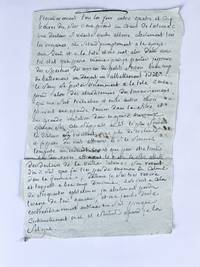
180185841Charenton 1801. Fine. ""I experience spasms a sort of shivering a lot of yawning disgust total despondency the blood rushes violently to my head then I feel dizzy spinning which makes me stumble and a thousand other things proving a great tension in the body and a great irritation in the nervous system."" Charenton 1801 15 x 22.80 cm un feuillet composé deux papiers encollés Original autograph letter by the Marquis de Sade consists of 27 lines of relatively tight handwriting. Most likely written to his wife as evidenced by the letter's origin from Sade's family. The letter is physically composed of two glued pieces of paper. On the verso the Marquis wrote 19 lines and scrupulously crossed them out - a few words and letters are still quite visible. Cited in Maurice Lever's biography 'Donatien Alphonse François marquis de Sade' Paris Fayard 1991 p. 631. On March 7 1801 Armand de Sade the Marquis's son received a letter from the Minister of Police Joseph Fouché notifying him that his father had been arrested yesterday and that handwritten pages from the novel 'La nouvelle Justine' Justine or the Misfortunes of Virtue had been found on his person: Nevertheless sensitive to your request for leniency and concerned to preserve the honor of your name I have decided to have your father transferred to the Charenton nursing home.. It should be noted that for Fouché Charenton an insane asylum was nothing more than a nursing home a prison. It should not be forgotten that a large proportion of the population of these asylums did not fit into the social and moral field and psychiatry has long had no other aim than to normalize to make them fit for social life. Contrary to what has been said Sade fits in perfectly. However as soon as he entered Charenton Sade's attitude led to his expulsion to Bicêtre the Bastille of scoundrels but his family succeeded in getting him back into the Charenton asylum. Charenton was not only the Marquis de Sade's last incarceration but also the last place he lived in where he died in 1814. The 19 lines scrupulously crossed out on the back of the leaf reveal a few words or letters; in this respect we can conjecture that it's a coded message which Sade was quite fond of for if censorship had been behind these erasures absolutely everything would have been yet the message clearly shows that almost everything has been conscientiously crossed out apart from a few words or letters. We can still make out a few of them: 'Nécessaire' 'à tous' 'ger' 'ue' 'quel' 'je trouve' 'de'. As for the letter itself it is remarkable for the homogeneity of its message. It is a lengthy complaint describing the physical ailments Sade has suffered. It is an account of the sum total of the symptoms that overwhelm the writer. In a hyperbolic style using among other figures of speech adverbs of intensity si tel très. Sade methodically spells out the violent pains his body is suffering with the whole of this violence constituting a system a structure in which all the parts are linked. In the writer's correspondence it can be said that each time he found himself incarcerated his letters mention uncontrollable physical attacks although we know of no other letter so uniform and systematic.The pain originates in the pit of the stomach radiating out to the periphery: head eyes legs all converging on vertigo loss of balance. .because that's what it's all about: Sade isn't suffering from any illness he's besieged by anguish whose ultimate meaning is vertigo the wavering of a reality from which his freedom to live as he pleases his freedom of movement and his name have been taken away. The loss of these fundamental elements of his existence sends Sade in turmoil. In addition and as regards the formation of these particular symtoms if we consider that the fulfillment of a certain sexual sadism is necessary to him the deprivation of this satisfaction turns this sadistic driv unknown
RO80245370Le Livre de Poche. Non daté. In-12. Broché. Etat d'usage, Couv. légèrement passée, Dos satisfaisant, Papier jauni. 476 pages. Tranches colorées en orange.. . . . Classification Dewey : 840.05-XVIII ème siècle
39409Paris, Gallimard, collection Blanche, 2003, in-4 broché, 79 pp, fac-similés de lettres de Sade. Edition Originale sur papier courant après les 61 numérotés sur vélin. TRES BON ETAT
1778919461778 - 1779 | 15.5 x 13.5 cm | Une feuille
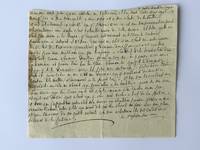
1778919461778. Fine. 1778 - 1779 15.5 x 13.5 cm Une feuille ENGLISH DESCRIPTION ON DEMAND Lettre autographe originale du Marquis de Sade écrite depuis la prison de Vincennes le 21 mai 1778 possiblement 1779 le dernier nombre se terminant en paraphe étant difficile à déchiffrer. Cette lettre a été écrite à l'épouse du Marquis de Sade Renée Pélagie le dernier paragraphe est adressé à sa mère la présidente de Montreuil responsable de son emprisonnement par lettre de cachet. La lettre s'achève juste par un paraphe comme souvent avec la correspondance de Sade. La lettre provient directement de la famille descendante de Sade. Une feuille de papier mal découpée en marge haute avec deux pliures au dos. 20 lignes d'une écriture serrée. Lettre dans laquelle Sade requiert son transfert dans une prison plus salubre avec des sorties journalières telle que Saumur ou Doullens. L'auteur évoque ses conditions difficiles et l'altération de sa santé provoquée par sa détention à Vincennes ainsi que l'existence d'un complot dont il serait ""la vache à lait de la police"". Les dernières lignes sont adressées à la présidente de Montreuil sa belle-mère : A vous que j'appelais autrefois ma mère . et se concluent avec cette opprobre : ""Qui m'eut dit que ce serait un jour avec mon sang et avec l'honneur de vos petits enfants que vous achèteriez le vil crédit du tribunal de police."" unknown
1956R300324696Le Terrain vague. 1956. In-8. Broché. Etat d'usage, Couv. légèrement passée, Dos abîmé, Papier jauni. 100 pages environ. 1er plat détaché, légèrement déchiré. Dos déchiré, léger manque en coiffe de pied.. . . . Classification Dewey : 94.4-Editions numérotées
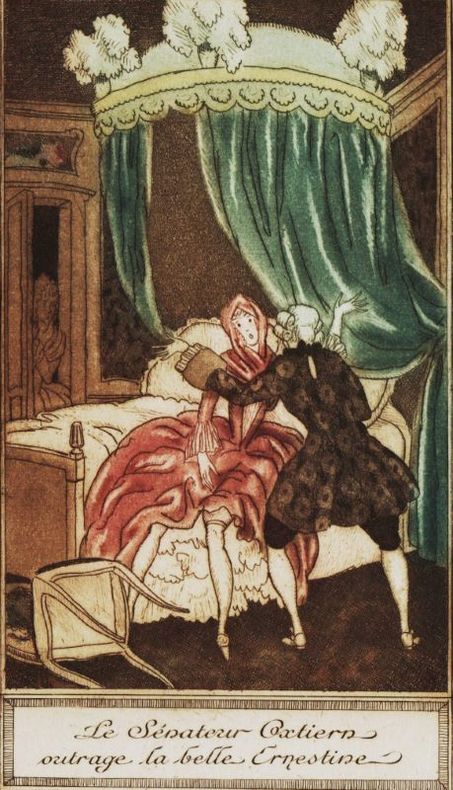
19264214Paris CABINET DU LIVRE 1926 1 10 eaux-fortes de Sylvain SAUVAGE. Paris, Au Cabinet du livre, Jean Fort Editeur, 1926, 2 tomes en 1 volume in-8, broché, couverture crème rempliée, titre imprimé en noir et en rouge, 158 pages.
1965R300329804Jean-Jacques Pauvert. 1965. In-12. Broché. Etat d'usage, Couv. convenable, Dos satisfaisant, Papier jauni. 163 pages. Quelques passages soulignés au crayon de couleurs dans le texte.. . . . Classification Dewey : 840-Littératures des langues romanes. Littérature française
180385841Charenton [1803-1808] | 15 x 22.80 cm | un feuillet composé deux papiers encollés
37077Paris : Fayard, 2005 - un volume (16,3x23,4cm) broché sous couverture illustrée, 128 pages illustrées de reproductions de lettres - bon état -
13079Editions Georges Artigues, Paris - Petit in-8 broché,XLVII+222 pp. - Edition originale tirée à 1740 exemplaires, celui-ci un des 1350 sur alfa mousse. Bel exemplaire en parfait état.
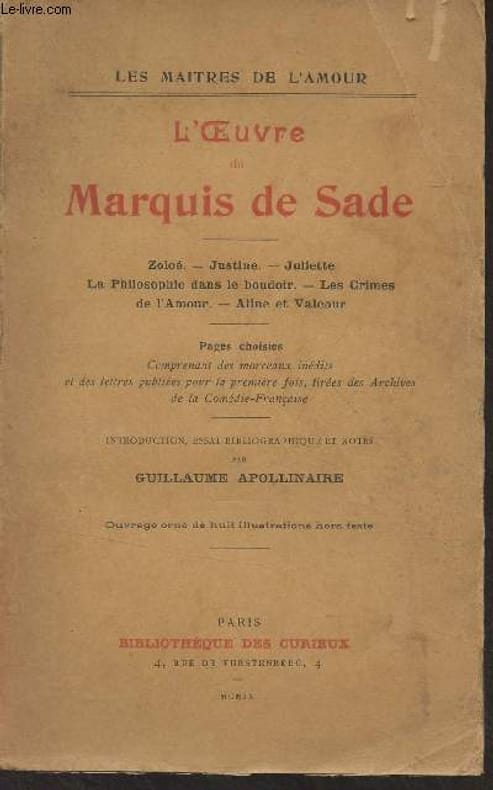
1909R300328285Bibliothèque des curieux. 1909. In-8. Broché. Etat d'usage, Couv. légèrement pliée, Dos plié, Papier jauni. 324 pages - quelques illustrations en noir et blanc hors texte et en frontispice. Mors fendus en coiffe de tête.. . . . Classification Dewey : 840-Littératures des langues romanes. Littérature française
1965R200089359EDITIONS FEMININES FRANCAISES. 1965. In-12. Broché. Bon état, Couv. convenable, Dos satisfaisant, Papier jauni. 190 pages.. . . . Classification Dewey : 840.091-XX ème siècle
1980R240165792Borderie. 1980. In-8. Relié toilé. Bon état, Couv. convenable, Dos satisfaisant, Intérieur frais. 137 + 107 pages - quelques gravures en noir et blanc hors texte.. . . . Classification Dewey : 704.948-Erotisme
1976R240163075Gallimard. 1976. In-12. Broché. Etat d'usage, Couv. défraîchie, Dos satisfaisant, Papier jauni. 312 pages.. . . . Classification Dewey : 190-Philosophie occidentale moderne
1972R240163078Union générale d'éditions. 1972. In-12. Broché. Etat d'usage, Couv. convenable, Dos satisfaisant, Papier jauni. 313 pages.. . . . Classification Dewey : 190-Philosophie occidentale moderne
83151Paris, Pierre Amiot, 1957. 14 x 19, 225 pp., broché + jaquette, très bon état.
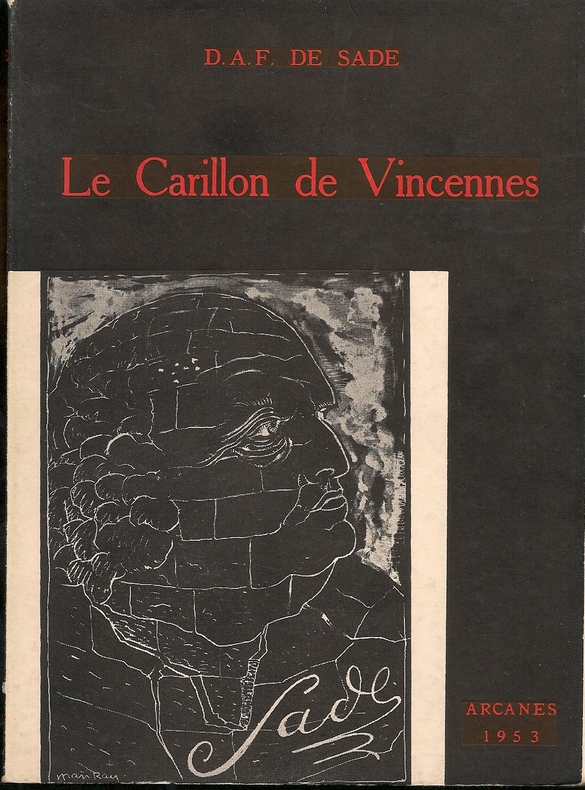
13078Editions Arcanes <Collection Humour Noir> Paris, Petit in-8 broché, couverturecartonnée illustrée, 105 pp. + 2 planches hors-texte - Tirage limité, exemplaire numéroté sur offset LIBERT 5n) 359/1000° - Bel exemplaire en parfait état.
1959RO80191952PAUVERT JEAN-JACQUES. 1959. In-12. Broché. Etat d'usage, Couv. défraîchie, Coiffe en tête abîmée, Intérieur frais. XLVI + 199 pages - coiffe en pied - Salissures sur le 1er plat.. . . . Classification Dewey : 840.05-XVIII ème siècle
1991RO20223365La Co. 1991. In-12. Broché. Bon état, Couv. convenable, Dos satisfaisant, Intérieur frais. 530 pages.. . . . Classification Dewey : 840-Littératures des langues romanes. Littérature française
1946R300162863Les éditions du point du jour. 1946. In-8. Broché. Etat d'usage, Couv. convenable, Dos satisfaisant, Papier jauni. 242 pages. Jaquette déchirée sur le 1er plat et le dos.. Avec Jaquette. . . Classification Dewey : 94.4-Editions numérotées
2014198892014 1 Médaille en bronze frappée par la Monnaie de Paris, poinçon à la corne d'abondance, 2014, 7.2 cm. de diamètre.