20 343 résultats
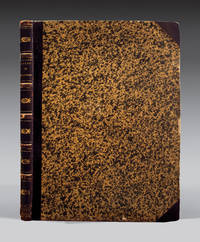
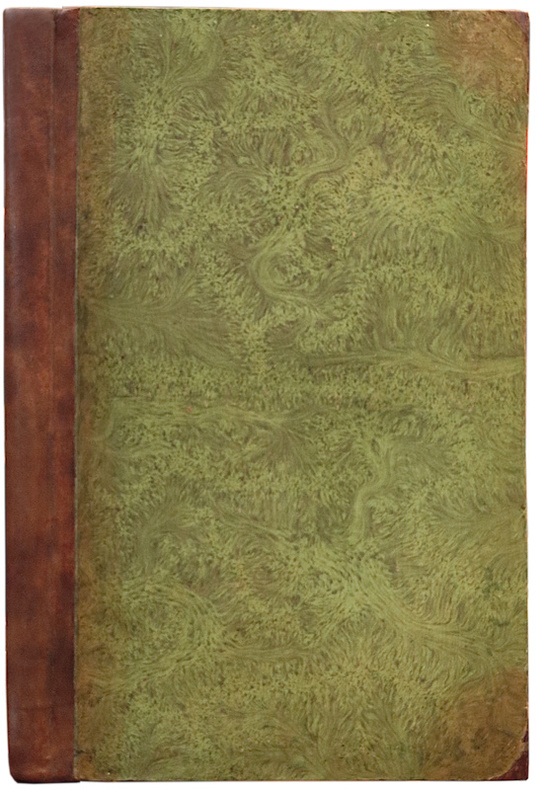
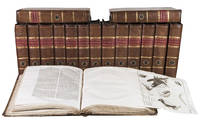
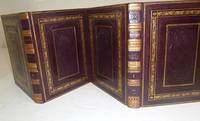
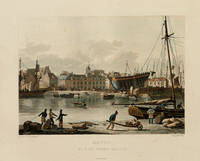
CA32<p>Paris J. F. Ostervald Imprimerie de Jules Didot l'Aîné 1823 1823-1825.</p><p>Folio 697 x 410 mm 2 ll. title and table 54 ll. of text 40 plates on large Indian paper each one mounted with printed title. Aubergine quarter-shagreen spine ribbed and decorated with gilt fleurons. <i>Contemporary binding.</i></p><p><b>First issue of the most sumptuous work published about the coasts and ports of Normandy in the reign of Charles X.</b></p><p>It was published in several parts. The first three were published under the title "<i>Voyage pittoresque dans les ports et sur les côtes de France</i>."</p><p><b>It was an atypical editorial adventure because two of the artists approached for the drawing of these exceptional plates were English: </b><i><b>Bonington</b></i><b>and</b><i><b>Copley Fielding</b></i><b> as well as many engravers such as </b><i><b>Thales </b></i><b>and </b><i><b>Théodore Fielding</b></i><b> who worked in Paris "</b><i><b>at this remarkable time for English watercolour art</b></i><b>".</b></p><p>Abbey <i>Travel</i> 92.</p><p><b>The magnificent iconography comprises 40 superb aquatints finely watercolored at the time</b> which represent various views of the Norman coasts. They were mounted at the time on thick paper and captioned.</p><p>The various views are dedicated to: <i>Rouen</i> 6 views; <i>Caudebec</i> 1 view; <i>Quilleboeuf</i>2 views; <i>Harfleur</i> 2 views; <i>Honfleur</i> 4 views; <i>Le Havre</i> 10 views; <i>Etretat</i>3 views; <i>Fécamp</i> 3 views; <i>Saint-Valéry-en-Caux</i> 1 view; <i>Pourville</i> 1 view; <i>Dieppe</i> 5 views; <i>Tréport</i>2 views.</p><p><b>This exquisitely watercolored set aesthetically and realistically presents scenes of everyday life of Norman marines and fishermen in sites that for some of them are now destroyed.</b></p><p>Prideaux mentions p. 276 that this book is the most important work by <i>Théodore Fielding.</i></p><p><b>The work was offered for sale under 4 different forms:</b> ordinary issue issue with proofs before the letters issue with proofs before the letters on Indian paper watercolored issue on very large paper.</p><p><b>Our copy belongs to the deluxe issue watercolored at the time on very large Indian paper.</b></p><p><b>It is one of the very few copies on very large paper and entirely untrimmed. </b></p><p>Measuring 598 mm it is by far larger than the <i>Abbey</i> copy.</p><p><b>A very pure copy untrimmed admirably watercolored</b><b> "</b><i><b>in which the quality of the coloring and engraving is exceptionally high</b></i><b>" preserved in its contemporary binding.</b></p><br /><br /><b><u>Français</u></b><p>In-folio 2 ff. titre et table 54 ff. de texte 40 planches sur grand papier indien chacune montée avec titre imprimé.</p><p>Demi-chagrin aubergine à coins dos à nerfs orné de fleurons dorés. <i>Reliure de l'époque</i>.</p><p>598 x 410 mm.</p><p><b>Premier tirage du plus somptueux des ouvrages publiés sur les côtes et ports de Normandie sous le règne de Charles X.</b></p><p>Il fut publié en plusieurs parties. Les trois premières parurent sous le titre " <i>Voyage pittoresque dans les ports et sur les côtes de France.</i> "</p><p><b>C'était une aventure éditoriale atypique car deux des artistes pressentis pour le dessin de ces planches exceptionnelles étaient anglais : </b><i><b>Bonington </b></i><b>et</b><i><b>Copley Fielding</b></i><b> ainsi que plusieurs des graveurs tels </b><i><b>Thales</b></i><b>et </b><i><b>Théodore Fielding</b></i><b> qui travaillaient à Paris "</b><i><b>at this remarkable time for English watercolour art</b></i><b>".</b></p><p>Abbey<i>Travel</i> 92.</p><p><b>L'iconographie de toute beauté comprend 40 superbes planches à l'aquatinte finement aquarellées à l'époque </b>qui représentent diverses vues des côtes normandes. Elles sont montées à l'époque sur papier fort et légendées.</p><p>Les diverses vues sont consacrées à : <i>Rouen</i>6 vues ; <i>Caudebec</i> 1 vue ; <i>Quilleboeuf</i> 2 vues ; <i>Harfleur</i> 2 vues ;<i>Honfleur</i> 4 vues ; <i>Le Havre</i> 10 vues ; <i>Etretat</i> 3 vues ; <i>Fécamp</i> 3 vues ; <i>Saint-Valéry-en-Caux</i> 1 vue ; <i>Pourville</i> 1 vue ; <i>Dieppe</i> 5 vues ; <i>Tréport</i> 2 vues.</p><p><b>L'ensemble aquarellé de façon exquise présente de manière à la fois esthétique et réaliste des scènes de la vie quotidienne de marins et de pêcheurs normands dans des sites maintenant détruits pour certains.</b></p><p>Prideaux souligne p. 276 que ce livre est le plus important ouvrage de <i>Théodore Fielding</i>.</p><p><b>L'ouvrage était proposé à la vente en 4 formes différentes </b>: impression ordinaire impression avant la lettre impression avant la lettre sur papier indien impression aquarellée sur très grand papier.</p><p><b>Notre exemplaire appartient au tirage de luxe aquarellé à l'époque sur très grand papier indien.</b></p><p><b>C'est l'un des rarissimes exemplaires sur très grand papier et entièrement non rogné</b><b>.</b> Mesurant 598 mm il dépasse de beaucoup l'exemplaire <i>Abbey</i>.</p><p><b>Exemplaire très pur à toutes marges admirablement aquarellé</b><b> "</b><i><b>in which the quality of the colouring and engraving is exceptionnaly high</b></i><b>" conserve dans sa reliure de l'époque.</b></p> hardcover
LCS-14448Orné de 40 somptueuses aquatintes aquarellées à l’époque. Magnifique exemplaire, absolument non rogné, très pur et admirablement aquarellé, conservé dans sa reliure de l’époque. Paris, J. F. Ostervald, Imprimerie de Jules Didot l’Aîné, 1823 (1823-1825). In-folio, 2 ff. (titre et table), (54) ff. de texte, 40 planches sur grand papier indien, chacune montée avec titre imprimé. Demi-chagrin aubergine à coins, dos à nerfs orné de fleurons dorés. Reliure de l’époque. 598 x 410 mm.
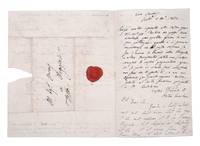
1823352339Cephalonia 1823. 3 pp. on a single sheet bifolium with address To Msgr Stevens Argostoli. 8vo. Small tear above signature from opening wax seal still present. Old docketing in French. 3 pp. on a single sheet bifolium with address To Msgr Stevens Argostoli. 8vo. A notable Byron letter showing his commitment to join the armed struggle in Greece just before he left Cephalonia for the Greek mainland. As is frequently the case Byron writes beneath a letter from Count Gamba whose sister was Byron's mistress Countess Guiccioli addressed "Caro Stevens". The correspondent George Stevens was a customs official at Argostoli on Cephalonia and a recipient of several letters from Byron in 1823.<br /> <br /> "P.S. Dear sir Gamba is half asleep and and sic don't know what he says. I do not suppose it to be Parry's Brigade - but whoever or whatever it be - if it came from the committee I will attend to it with all diligence. The boats had better be engaged because if this intelligence is not confirmed I must sail at any rate and even if it be I shall sail as soon as possible after communicating with the vessels on their voyage which if my instructions do not err or I for them are committed to my direction. I do not perceive however how a ship directed to Greece Continental from London can touch at Ancona in its propoer course unless it has continued to pass the Alps by Steam or a special wind of Providence added to a new Deluge. But whether correct or otherwise the repeat of our friend Count Delladecima believe that I am ever and truly ."<br /> <br /> Byron had been staying on Cephalonia since August. Edward Trelawny his opportunistic and self-aggrandizing sometime travelling companion had gone to Greece in September and was soon converted to another faction in the Greek struggle for independence. In November Byron was besieged by requests for money and a week after this letter would pledge large sums to the cause. Here he demonstrates a considerable flash of wit and knowledge of current technology as he reminds his correspondent of the realities of Italian geography and suggests Steam power or a new Deluge as the only possible explanation for a proposed itinerary Ancona is on the Adriatic far to the north of Cephalonia.<br /> <br /> As the representative of the London Greek Committee "Byron remained in Cephalonia with Pietro Gamba multiplying his Greek contacts and assessing information he was gathering as a prelude to action. When Prince Alexander Mavrocordatos who eventually became first president of independent Greece moved to Missolonghi in December he invited Byron to join him and his forces" ODNB. Byron and Gamba departed from Argostoli on 29 December 1823. Gamba's vessel was captured and briefly held by the Turks; Byron reached Missolonghion 4 January 1824.<br /> <br /> This letter was previously known only in an excerpt from the description in catalogue 44 of F. Naylor July 1878 incorrectly dated to May and lacking the name of the correspondent published in A Heart for Every Fate: Byron's Letters and Journals Vol. 10 1980 pp. 161-162.<br /> <br /> A CHOICE BYRON LETTER FROM JUST BEFORE HIS FATEFUL EXPEDITION TO MISSOLONGHI. Marchand 10:161-2 a partial transcription misdated to May 1823 unknown
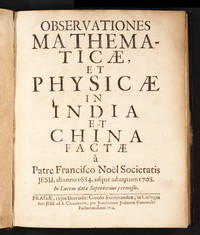
1710B5718<p>FROM PEKING TO PRAGUE</p><p>THE CHINESE ASTRONOMY OF FRANÇOIS NOËL</p><p>WITH A LARGE FOLDING STAR CHART OF THE SOUTHERN HEMISPHERE</p><p>4to 19.1 x 15.2 cm 133 pp. 1 pp. including full-page engraved Chinese Calendar p. 59 numerous woodcut diagrams and tables with woodcut Chinese letters a full-page engraved plate of astronomical observations verso of p. 133 and with 1 large folding engraved star chart for the epoch 1687 signed Balthasar van Westerhaut woodcut headpiece and initials. Bound in contemporary calf gold-tooled spine red sprinkled edges. Some rubbing and edge wear to spine and boards minor warning to covers. Contemporary annotations moderate browning in a few quires occasional minor toning small 3 mm. hole in chart not affecting images.</p><p>Rare first and sole edition of one of the few works published in Europe to record detailed first-person observations made at Jesuit astronomical observatories in China in the 17th century and one of the first works to convey information on Chinese observational data and astronomical traditions to a Western audience. Compiled by the Belgian-born polymath François Noël 1651-1729 the <em>Observationes Mathematicae et Physicae in India et in China</em> represents a full account of this Jesuit's astronomical career. The volume is illustrated with a large folding celestial chart of the southern skies incorporating observations Noël made at the Jesuit Colleges at Rachol in Goa Macao and Bahia in Brazil. Other illustrations include a full-page plate engraving the 1690 transit of Mercury Noël's observations of Jupiter and his method for recording magnetic inclinations for use in navigating by compass at sea as well as a full-page plate illustrating the Chinese Sexagenary calendar.</p><p>Noël's discussion of Chinese astronomy Chapter V not only serves as an introductory primer but also is a fastidious record of Chinese observational data collected by Noël from Chinese star catalogues and charts and he even retains information which was at odds with European observations. Noël produces a chart of the relevant Chinese calendrical characters the Ten Heavenly Stems and the Twelve Earthly Branches an engraving of the Sexagenary calendar a table of the 28 Chinese constellations a list of Chinese zodiacal signs with a chart comparing them to European signs. His extensive <em>Catalogus Latino-Sinicus</em> pp. 65-103 compares Chinese and European stellar nomenclatures. Here Noël lauds the "extreme antiquity of Chinese astronomy which began some 4000 years ago" but puzzles over the fact that the Chinese tradition records "many small stars which are no longer visible"; he dutifully records these numerous stars in the <em>Catalogus</em> but notes that "they are either very faint or perhaps made up" "<em>minimae aut fictae</em>" "<em>vel minimae vel fictae</em>" etc. Noël apologizes for not printing the Chinese characters for star names "because of the difficulty of having them cut in Europe" p. 67. Chinese weights and measures are also discussed.</p><p>In other chapters Noël offers his observations of Jupiter's satellites made while in Huai'an in 1689-90 including tables comparing his data to observations made by others in Nanjing and Paris as well as a description of 16 observations both telescopic and made with naked-eye instruments of lunar and solar eclipses he made in Goa Macau Siam Peking Shanghai Nanjing Huai'an Tshusima Island Trincomalee Sri Lanka etc. between 1684 and 1707. He provides an extensive list of his longitude and latitude observations for numerous locations in China and India which he made between 1687-1708 as well as readings from Bahia in Brazil including a table summarizing the longitude and latitude of more than 80 cities and towns in China. In his 13-page catalogue of some 350 southern stars ascensions declinations magnitudes for the epoch 1687 Noël cites the recent work of Riccoli Hevelius and Halley taking issue with several of their measurements; the folding <em>Mappa Stellarum Australium</em> engraved by Balthasar van Westerhaut illustrates the placement of southern stars as observed by Noël.</p><p>The work's final chapter includes Noël's extensive notes on the Comets of 1695 1701 and 1702 which he observed from Peking and Java meteorological curiosities he saw in Asia twilight unusual rainbows and planetary observations including an unusual visual aberration that occurred when he viewed Jupiter through a 13.5-foot telescope in Nanchang in 1694 this observation is illustrated aberrations he encountered in viewing Venus through a 40-foot telescope in 1697 and data from Jean de Fontenay's 1643-1710 observation in Canton of the 1690 transit of Mercury also illustrated here.</p><p>Interestingly the present example preserves contemporary annotations to Noël's catalogue of magnetic declinations and inclinations he made Chapter VIII using a magnetic needle during his 1706 journey from Portugal to India and his 1708 voyage from the Sunda Strait between Java and Sumatra westward to Brazil. The annotator has carefully underlined and enumerated Noël's 201 location readings apparently for incorporation into a larger table or chart he hoped would be useful in resolving the ongoing problem of pinpointing longitude in sea navigation. Halley had only recently published his groundbreaking map of magnetic variation in Atlantic waters 1701 and his world chart was still decades away from publication.</p><p>Noël joined the Society of Jesus at age 19 in 1670 and studied theology mathematics and astronomy at the University of Douai. He departed on his first Asia journey in 1684 hoping to join the Japan mission but the longstanding ban on Western missionaries by the Tokugawa shogunate foreclosed on this possibility. Noël instead spent two years learning Chinese at Macao before traveling to the Chinese mainland in 1687 where we traveled widely doing missionary work primarily related to the lower classes and abandoned women and children. He was a major figure in the Chinese Rites controversy and his role in this and other Jesuit Roman Embassies was the impetus for the various journeys recorded in the <em>Observationes Mathematicae et Physicae</em>. Known in Chinese as Wei Fangji Noël published widely on Chinese Confucian classics. He returned to Europe for good in about 1709 settling in Prague to teach mathematics at the Jesuit-staffed Charles-Ferdinand University under whose auspices he quickly published the <em>Observationes Mathematicae et Physicae</em>.</p><p>OCLC locates U.S. copies at the Library of Congress Adler Planetarium Boston College Michigan Princeton and Wisconsin.</p><p> De Backer Sommervogel V.1791.6; NBG xxxviii.174; Warner <em>Sky Explored</em> p. 194 incorrectly giving his nationality as Czech with star chart illustrated; Pfister I.414-19; J. Needham <em>Science and Civilization in China</em> III.454.</p> Joachim Joannes Kamenicky hardcover
179943266Lampsaque, , 1799. 2 vol. in-4 manuscrits de (241) et (269) ff., becquets dans le texte et sur un contreplat, demi-basane blonde à petits coins de vélin, dos lisse orné, pièces de titre en maroquin rouge et noir (reliure de l'époque).
JUINBB06<p>Paris J. F. Ostervald Imprimerie de Jules Didot l'Aîné 1823 1823-1825.</p><p>Folio 494 x 310 mm 1 l. 54 ll. of text 40 plates on large Indian paper each one mounted with printed title 1 l. of table. </p><p>Half-roan rebacked spine with raised bands and gilt fleurons. <i>Contemporary binding.</i></p><p><b>First issue of the most sumptuous work published about the coasts and ports of Normandy during the reign of Charles X.</b></p><p>It was published in several parts. The first three were published under the title "<i>Voyage pittoresque dans les ports et sur les côtes de France</i>."</p><p><b>It was an atypical editorial adventure because two of the artists approached for the drawing of these exceptional plates were English: </b><i><b>Bonington</b></i><b>and</b><i><b>Copley </b>Fielding</i> as well as many engravers such as <i>Thales </i>and <i>Théodore Fielding</i><b> who worked in Paris </b>"<i>at this remarkable time for English watercolour art</i>".</p><p>Abbey <i>Travel</i> 92.</p><p><b>The magnificent iconography comprises 40 superb aquatints finely watercolored</b> at the time which represent various views of the Norman coasts. They were mounted at the time on thick paper and captioned.</p><p>The various views are dedicated to: <i>Rouen</i>6 views; <i>Caudebec</i> 1 view; <i>Quilleboeuf</i> 2 views; <i>Harfleur</i> 2 views; <i>Honfleur</i> 4 views; <i>Le Havre</i>10 views; <i>Etretat</i> 3 views; <i>Fécamp</i> 3 views; <i>Saint-Valéry-en-Caux</i> 1 view; <i>Pourville</i>1 view; <i>Dieppe</i> 5 views; <i>Tréport</i> 2 views.</p><p><b>This exquisitely watercolored set aesthetically and realistically presents scenes of everyday life of Norman marines and fishermen in sites that for some of them are now destroyed.</b></p><p>Prideaux mentions p. 276 that this book is the most important work by <i>Théodore Fielding.</i></p><p>The work was offered for sale under 4 different forms: ordinary issue issue with proofs before the letters issue with proofs before the letters on Indian paper watercolored issue on very large paper.</p><p><b>Our copy belongs to the deluxe issue watercolored at the time.</b></p><p><b>A very pure copy untrimmed admirably watercolored</b>"<i>in which the quality of the coloring and engraving is exceptionally high</i>".</p><p><br /></p><p><u>FRENCH</u><br /></p><p>Paris J. F. Ostervald Imprimerie de Jules Didot l'Aîné 1823 1823-1825.</p><p>In-folio de 1 f. 54 ff. de texte 40 planches sur grand papier indien chacune montée avec titre imprimé 1 f. de table.</p><p>Demi-basane à coins dos à nerfs refait orné de fleurons dorés. <i>Reliure de l'époque</i>.</p><p>494 x 310 mm.</p><p><b>Premier tirage du plus somptueux des ouvrages publiés sur les côtes et ports de Normandie sous le règne de Charles X.</b></p><p>Il fut publié en plusieurs parties. Les trois premières parurent sous le titre " <i>Voyage pittoresque dans les ports et sur les côtes de France.</i> "</p><p><b>C'était une aventure éditoriale atypique car deux des artistes pressentis pour le dessin de ces planches exceptionnelles étaient anglais : </b><i>Bonington</i>et <i>Copley Fielding</i> ainsi que plusieurs des graveurs tels <i>Thales </i>et <i>Théodore Fielding</i><b> qui travaillaient à Paris</b> "<i>at this remarkable time for English watercolour art</i>".</p><p>Abbey <i>Travel</i> 92.</p><p><b>L'iconographie de toute beauté comprend 40 superbes planches</b> <b>à l'aquatinte finement aquarellées à l'époque</b> qui représentent diverses vues des côtes normandes. Elles sont montées à l'époque sur papier fort et légendées.</p><p>Les diverses vues sont consacrées à : <i>Rouen</i> 6 vues ; <i>Caudebec</i> 1 vue ; <i>Quilleboeuf</i> 2 vues ; <i>Harfleur</i> 2 vues ; <i>Honfleur</i> 4 vues ; <i>Le Havre</i> 10 vues ; <i>Etretat</i> 3 vues ; <i>Fécamp</i> 3 vues ; <i>Saint-Valéry-en-Caux</i> 1 vue ; <i>Pourville</i> 1 vue ; <i>Dieppe</i> 5 vues ; <i>Tréport</i> 2 vues.</p><p><b>L'ensemble aquarellé de façon exquise présente de manière à la fois esthétique et réaliste des scènes de la vie quotidienne de marins et de pêcheurs normands dans des sites maintenant détruits pour certains.</b></p><p>Prideaux souligne p. 276 que ce livre est le plus important ouvrage de <i>Théodore Fielding</i>.</p><p><b>L'ouvrage était proposé à la vente en 4 formes différentes</b> : impression ordinaire impression avant la lettre impression avant la lettre sur papier indien impression aquarellée sur très grand papier.</p><p><b>Notre exemplaire appartient au tirage de luxe aquarellé à l'époque.</b></p><p><b>Exemplaire très pur à toutes marges admirablement aquarellé</b> "<i>in which the quality of the colouring and engraving is exceptionnaly high</i>".</p> hardcover
LCS-17765Magnifique exemplaire, absolument non rogné, très pur et admirablement aquarellé. Paris, J. F. Ostervald, Imprimerie de Jules Didot l’Aîné, 1823 (1823-1825). In-folio de (1) f., (54) ff. de texte, 40 planches sur grand papier indien, chacune montée avec titre imprimé, (1) f. de table. Demi-basane à coins, dos à nerfs refait orné de fleurons dorés. Reliure de l’époque. 494 x 310 mm.
19972849HEYNE WILHELM 04/1997-02/2000. 1. softcover. Per Anhalter durch die Galaxis 101001056313035 HEYNE, WILHELM paperback
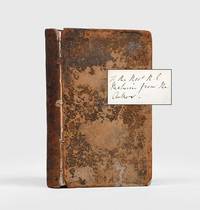
1816174164London: John Murray 1816. Inscribed by Byron to inspire his fellow writer and later by Maturin in memory of his friend Presentation copy of Childe Harold's Pilgrimage inscribed by Byron on the half-title "To the Revd R. C. Maturin from the Author". Following Byron's death in 1824 Maturin inscribed a quatrain from a contemporary poem by James Montgomery on the rear free endpaper in memoriam: "Friend after friend departs; / Who hath not lost a friend / There is no union here of hearts / That hath not here an end". Byron and Maturin enjoyed a warm literary friendship beginning in December 1815 when they were introduced by Walter Scott. That month Maturin sent Byron the manuscript for his Gothic tragedy Bertram. Byron adored the play writing to John Murray that he received the manuscript "late in the evening and read it through without being able to stop" Murray letter to Scott 25 December 1815. In a letter to Maturin he praised the work as "a very extraordinary production - of great & singular merit as a composition" 22 December 1815. Byron helped Maturin bring his work to the stage sending the manuscript to George Lamb with whom he managed the Drury Lane Theatre Lamb like Byron read the play by candlelight and "could not go to bed without finishing it". Despite his enthusiasm for Maturin's tragedy Byron found himself exiled from England from April 1816 and never saw the play performed. His Childe Harold was nonetheless an important influence on its success: "Bertram undoubtedly benefitted from the great popularity of Byron's Childe Harold's Pilgrimage the first two cantos of which had been published in 1812 for the hero of Maturin's play was spoken of by a number of contemporary critics as a 'Byronic figure'" Lougy p. 45. The play became Maturin's first critical and commercial success and his touching inscription at the rear of the volume reveals the gratitude and affection he felt for the poet. This copy of Childe Harold is from the 1816 edition of Byron's collected works. Vol. I of IV only duodecimo 165 x 106 mm. Engraved plate by Thomas Stothard with tissue facing p. 10. Contemporary unlettered calf. Housed in a custom brown quarter morocco folding box by the Chelsea Bindery. Book label of J. O. Edwards to front pastedown. Binding worn front joint cracked but cords firm contents clean. A good copy in unrestored condition. Robert E. Lougy Charles Robert Maturin 1975. unknown
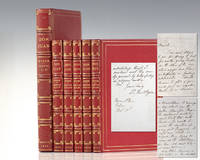
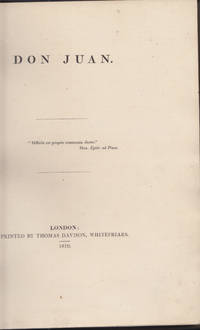
1819142573London: Thomas Davison i.e. John Murray 1819-1821 Cantos I-V Volumes I-II/John Hunt 1823-24 Cantos VI-XVI Volumes III-VI. Scarce complete first edition set of Byron's great work which was widely criticized as immoral upon publication and is now considered one of the greatest poems of the Romantics; from the library of American writer Erica Jong. Volume one was produced in quarto format and the subsequent 5 volumes in octavo Davison abandoned the quarto format after disappointing sales of the first volume six volumes uniformly bound in full morocco with gilt titles and tooling to the spine double gilt ruling to the front and rear panels gilt inner dentelles marbled endpapers all edges gilt. With an autograph letter signed by Lady Byron bound into the first volume. Written from Moore Place Esher the letter reads in part "Dear Sir I am much obliged to you for offering to look for another young Teacher in place of the one who is engaged but I have no difficulty in finding a Substitute. I should however be glad if you could find me an older master for a situation in Warwickshire - to manage a day-school on the Garden plan for Bogs - the emolument would not exceed 20 to 24 pounds with Board - He would be under the direction of a very good Clergyman - A single man would be preferred there being no room at the Schoolhouse for him - she must lodge at some distance. Lady Olivia Sparrow is still active in her charitable undertakings though I sometimes wish they were less governed by hasty feelings in religious matters. Yours truly A.I. Noel Byron Moore Place Esher Nov 19th." From the library of Erica Jong. Jong remains best known for her 1973 novel Fear of Flying which became famously controversial for its portrayal of female sexuality and figured prominently in the development of second-wave feminism. Written in the first person and narrated by its protagonist 29-year-old American poet Isadora Wing Fear of Flying was written in the throes of the Sexual Revolution of the 1970s and encapsulated the movement’s redefinition of female sexuality. In interviews Jong stated: “At the time I wrote Fear of Flying there was not a book that said women are romantic women are intellectual women are sexual—and brought all those things together… What Isadora is looking for is how to be a whole human being a body and a mind and that is what women were newly aware they needed in 1973.†The novel remains a feminist classic and has sold more than 20 million copies worldwide. Jong notable used a quotation from Don Juan as the epigraph in Fear of Flying "Alas! the love of women! it is known To be a lovely and a fearful thing; For all of theirs upon that die is thrown And if 'tis lost life hath no more to bring To them but mockeries of the past alone And their revenge is as the tiger's spring Deadly and quick and crushing; yet as real Torture is theirs -- what they inflict they feel. They are right; for man to man so oft unjust Is always so to women; one sole bond Awaits them -- treachery is all their trust; Taught to conceal their bursting hearts despond Over their idol till some wealthier lust Buys them in marriage -- and what rests beyond A thankless husband -- next a faithless lover -- Then dressing nursing praying -- and all's over. Some take a lover some take drams or prayers Some mind their household others dissipation Some run away and but exchange their cares Losing the advantage of a virtuous station; Few changes e'er can better their affairs Theirs being an unnatural situation From the dull palace to the dirty hovel: Some play the devil and then write a novel" Lord Byron Don Juan 1824. In fine condition. Scarce and with fine provenance. "The War and Peace of English poetry Don Juan contains an epic sweep that moves from Spain to the East and to Russia before ending in England… At the same time that Byron's broad canvas foretells the scope of the great 19th-century novels the poet's own sensibilities echo the picaresque 18th-century novels of his early reading Smollett and Fielding with their bawdy humor and sly inversions of vice and virtue. Unlike these prose narratives however Don Juan has no beginning middle or end. It draws us in not to learn 'what happens next' but to hear what this seductive confidential teasing voice is going to tell us" Eisler 610. When Cantos I through V appeared they did so without the name of either author or publisher on the title page. Publisher John Murray refused to print Byron's dedicatory poem which ridiculed English poet laureate Robert Southey and Byron refused to put his name on a censored publication. Because of Byron's change from his long-standing publisher Murray to John Hunt brother of writer Leigh Hunt midway through Don Juan complete first-edition copies with all cantos are scarce. Thomas Davison [i.e., John Murray] unknown
19611410971961. Avedon on Coward: "He was shallow but surface never got more perfect than that" Inscribed by Coward "For Jack Daugherty With Best Wishes Noël Coward"; additionally signed and dated by Avedon with his studio wet stamp verso. Richard Avedon's "fashion and portrait photographs helped define America's image of style beauty and culture for the last half-century " New York Times obituary. A pleasing inscription to American musician and producer Jack Daugherty 1930-1991 a trumpeter in Woody Herman's band probably best known for his later role in the development of the career of The Carpenters. Of Coward Avedon said: "Deep down - to the marrow of his bones - he was shallow but surface never got more perfect than that". Gelatin silver print portrait photograph 340 x 170 mm flush-mounted on board. Inscribed top right by Coward signed and dated bottom left by Avedon. Presented window-mounted in a white gold leaf frame with conservation acrylic glazing. Frame size 515 x 435mm. In good condition with the corners a tad creased. Stevens & Aronson Avedon: Something Personal. unknown
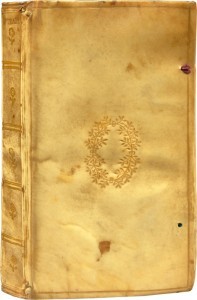
LCS-8131Noël Du Fail, le disciple de Rabelais. Magnifique exemplaire, grand de marges, parfaitement conservé dans son joli vélin doré de l’époque. Rennes, 1597. DU FAIL, Noël. Les Contes et discours d’Eutrapel. Rennes, pour Noël Glamet de Quinpercorentin, 1597. In-8 de (4) ff., 223 (la numérotation saute de 137 à 141 sans manque), (1) f., petit trou de vers en marge des 3 derniers ff. sans atteinte au texte. Relié en vélin doré souple, filet doré encadrant les plats, médaillon central avec un motif de feuillage, dos lisse orné, traces d’attaches, tranches dorées. Reliure de l’époque. 171 x 106 mm.
1778L72A782E8WD9Leiden Johannes Le Mair; 1778. 4to. Leeuwarden Jacques Alexandre de Chalmot Contemporary uniform half calf and sprinkled paper sides gold-tooled spines in compartments with a red morocco title label lettered in gold and a black oval with gold lettering detailing the parts letters included in each volume. With an allegorical frontispiece in volume 1 and a total of 153 folding copper engravings in the 16 volumes and a woodcut vignette at the end of volumes 1 8-11 13 and 15. 16 volumes. XXXVII 1 blank 565 1 blank; 566-1194; 2 1195-1902; 2 1903-2502; 2 2503-3170; 2 3173-3761 3; 2 3763-4370; VIII 1-749; 3 750-1495 1; 3 1498-2284 4; 3 2290-3031 1; 3 3034-3823 1; 3 3826-4540; 3 4542-528 A rare untrimmed and complete set of the most popular domestic encyclopaedia of the 18th century uniformly bound. This second edition is considerably enlarged and expanded: it is more than twice the size of the first edition has 9000 more pages and 73 more plates. Furthermore a continuation was written called Vervolg op M. Noël Chomel which added a further 9 volumes to the already hefty work.The encyclopaedia was originally published in French by Noël Chomel 1632-1712 as Dictionnaire oeconomique 1709. Chomel was an agronomist entrusted with the domestic management of the possessions of the abbey at Vincennes where he acquired all the knowledge necessary to write his encyclopaedia. The first Dutch version of the encyclopaedia translated and edited by Jacques Alexandre de Chalmot -1801 was published in 1743. The second edition appeared between 1768-1777 and was published a second time in 1778. Chalmot who was also the author of the Vervolg lists the sources he has used to complement Chomel's text in the introduction: for instance the works of Linnaeus Houttuyn Merian Van Leeuwenhoek Swammerdam Bufon Lobel Dodonaeus en Knoop. He also mentions the cooperation of Prof. Petrus Camper who has contributed many articles.Interestingly the Dutch edition also became popular in Japan. In the 18th century the Japanese came into contact with Western-European science via a Dutch trading post on the island of Deshima. Parts of the encyclopaedia were translated into Japanese between 1811 and 1845 under the title Koshei Shimpen. A small portion of the sprinkled paper on the front board of volume 11 has scraped off. Volume 15 has a small stain on the front. Volume 5 and 7 are missing the "bericht aan den boekbinder". Overall the set is in very good condition with only slight traces of use.l Sijs N. van der Verantwoording van de digitale uitgave van huishoudelyk woordenboek door Noël Chomel; STCN 21514368X ad 1 and 156926164 ad 2; cf. Brunet 6287; Goodman The Dutch impact on Japan 1640-1853 p. 129-130; Thiébaud Bibl. des ouvr. fr. sur la chasse pp. 202-4. ABE CAT Agriculture unknown
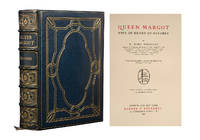
19076241London and New York: Harper & Brothers 1907. Fine. Quarto 9 3/8 x 7 3/8 inches; 238 x 188 mm. xviii 409 1 blank pp. Colored frontispiece and nineteen photogravure plates with tissues printed in red & brown extra-illustrated by the insertion of twenty-five engraved plates of which six are hand-colored. Bound ca. 1925 by Bayntun stamp-signed in gilt "Bayntun. Binder. Bath. Eng." on front turn-in. Full dark blue crushed levant morocco over beveled boards covers with elaborate gilt frames spine with five raised bands elaborately decorated and lettered in gilt in compartments gilt ruled board edges wide elaborate gilt turn-ins all edges gilt. Front doublure of red morocco surrounded by a frame of inlaid maroon morocco. Set into the front doublure are two very fine oval miniature paintings set under beveled glass within a double gilt frame. The upper miniature is of Margaret de Valois Queen Margot of Navarre. The lower miniature is of her spouse Henry III of Navarre later Henry IV of France. Both miniatures measure 3 3/16 x 2 1/2 inches; 81 x 63 mm. The rear doublure is of red morocco surrounded by a frame of inlaid maroon morocco. Blue watered silk end-leaves. A very fine example housed in its original felt-lined blue cloth clamshell case.<br /> <br /> Margaret of Valois 1553-1615 was a French Princess who became Queen of Navarre and France. Highly educated and a patroness of the arts Margaret would kind herself embroiled in political upheavals. Her marriage to Henry III of Navarre later Henry IV of France was organized to promote reconciliation between Catholics and Huguenots. However she would find herself at odds with her husband during continued religious tensions and unable to conceive an heir. Margaret also faced conflict with her brother Henry III. Eventually she would choose to side with the Catholic League survive prison annul her marriage and eventually live out her life in her an intellectual court pursuing her own scholarly devours. <br /> <br /> George Bayntun 1873-1940 was the founder of Bayntun Bindery. Trained by apprenticeship with the Taylor family Bayntun opened his own book bindery in 1894 dedicated to using traditional hand-crafted techniques and high-quality materials. The Bath-based firm acquired the Rivière Bindery also based in Bath in 1939 transforming into the "Bayntun-Riviere bindery" which is still in existence and family owned. Although named after the English miniaturist Richard Cosway 1742-1821 the desirable "Cosway Binding" with its jewel-like portrait miniature set into a fine binding was first developed at the turn of the century by J.H. Stonehouse director of London's Henry Sotheran Booksellers. Their miniatures were painstakingly crafted by the talented painter Miss C. B. Currie 1849-1940. As the style grew in popularity other publishing houses quickly began to reproduce this technique-each developing their own desirable take on the aesthetic-referred to as "Cosway style.". Fine. Harper & Brothers unknown
198850792Paris Dutrou 1988 In-8, 5 grandes feuilles plies en accordon et montes sur onglets, reliure crneaux avec quatre plats en polycarbonate; dos en PVC. Les deux plats extrieurs et les deux intrieurs sont ajours et fraiss diffremment: ceux de l'extrieur, traitrs comme des grilles orientales, laissent apparatre une partie des plats intrieurs qui eux-mmes permettent d'entrevoir les pages de gardes, le tout dans des couleurs blanches, rouges et orange; couverture imprime (Edgard Claes, 7 janvier 2019).Edition originale, illustre par Bertrand Dorny de 4 grandes eaux-fortes originales en couleurs estampes en relief, chacune signe par l'artiste et couvrant respectivement toute la surface de chaque grande feuille. Tirage limit 130 exemplaires numrots sur vlin d'Arches, signs par l'auteur et l'artiste. Un des 7 exemplaires accompagns sur le faux titre d'un grand collage original sign de l'artiste. Exceptionnelle reliure en polycarbonate de frre Edgard Claes, conue avec quatre plats ajours.
JD37176London Thomas Davison 1819-1824 first editions. Includes all 16 cantos of Byron's masterpiece printed anonymously complete in six volumes Vol. I Cantos I-II in 4vo with the remaining five volumes in 8vo half titles in volumes I and II Cantos I-II III-V errata slip bound at the end of volume 6 without advertisements bound in mid-20th Century blue half morocco with gilt borders spines gilt TEG marbled endpapers all spines with five raised bands this is one of the greatest works of the Romantic Period this his final masterpiece was begun in 1819 and was left unfinished at the time of his death in Greece in 1824. Occasional marginal foxing in volumes 1 2 and 4 else a beautiful set. London, Thomas Davison, 1819-1824, first editions. hardcover
1794006226Paris: Chez Bozérian. Chez Déterville. Didot Jeune 1794. Full Calf. Very Good. Stunning color plates accompanying three works contained in this large paper edition. Folio 33 by 25.5 cm. 153 pp. 12 color plates including frontis printed in color and finished by hand. Ten of these by Le Mire after Charles Eisen -- these relate to the principal work "Le Temple de Gnide" and also "Céphise et l'Amour". The two other plates are by Thomas after Le Barbier and these accompany "Arsace et Isménie". Scarce -- we could locate no other copies of the large paper edition and only three of the regular issue on OCLC First Search -- at the BNF North Carolina and Calouste Gulbenkan in Portugal. The calf is polished with gilt decoration of a band of Greek key and a rinceaux band within that one. On the spine the decoration includes a small hunt trophy motive and a bouquet in a basket both of which are repeated. Condition: binding with some scuffs and scratching and gilt border decoration slightly rubbed. Chez Bozérian. Chez Déterville. Didot Jeune unknown
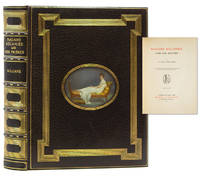
1901320726London and New York: Harper & Brothers 1901. First edition Number 370 of 600 copies signed. Illustrated. xiv 350pp. 4to. Full brown morocco with a Cosway style miniature on the upper cover of Madame Récamier reclining after Jacques-Louis David a.e.g. by Bayntun Riviere Bath England. Fine in brown cloth dropbox. First edition Number 370 of 600 copies signed. Illustrated. xiv 350pp. 4to. Harper & Brothers unknown
184821535London: WIlliam Smith 1848. Hardcover. Near fine. Two volumes in four extra-illustrated with the insertion of the illuminated plates from Humpheys' "Illuminated Illustrations of Froissart" in addition to the hand-colored plates of this edition. <br /> <p><br /> Dark green levant morocco spines in five compartments intricately gilt board tooled in gilt and blind inner dentelles gilt linen endpaper all edges gilt. Bindings signed The Knickerbocker Press and G. P. Putnam's Sons. <br /> <p><br /> The handcolored plates are heightened with gold and silver in imitation of the manuscript originals.<br /> <p><br /> A fine set handsomely bound with bright plates the spines showing only a pleasant lightening toward brown.<br /> <p>. WIlliam Smith hardcover
200044463Sans lieu chez l'Auteur et l'A 2000 In-8, reliure entirement en aluminium charnires doubles, plats orns d'une grande composition verticale sculpte dans la masse et travaille l'acide, avec sur le premier plat les noms de l'auteur et de l'artiste ainsi que le titre de l'ouvrage gravs en petites capitales; dos carr muet; gardes de daim velours bleu ciel, non rogn, couverture imprime. Etui (Alain Taral, 2013).Edition originale, constitue par le texte manuscrit recopi 15 exemplaires par l'auteur, accompagns chacun par Michel Roncerel d'un dessin original la mine de plomb, d'une gravure originale hors texte et de vignettes linograves. Le texte a t crit par Bernard Nol en pensant aux frottages de Michel Roncerel sur les schistes de Sgalirette. Tous les exemplaires ont t tablis sur papier vlin de Rives et signs par l'auteur et l'artiste. Exceptionnelle reliure d'Alain Taral.
STLE0027London Thomas Davison 1819-21 Cantos I-V u. John Hunt 1823-24 Cantos VI-XVI. 8° 215 x 125 cm. 6 Tle. in 3 Bdn. Tit. 2271 S. Cantos I & II; Tit. 2182 S. Cantos III IV & V; VII2 S. 1811 S. Cantos VI VII & VIII; 1511 S. Cantos IX X & XI; 168 S. Cantos XII XIII & XIV u. 1291 S. Cantos XV & XVI. Dekorative Halblederbände der Zeit m. reicher goldgepr. Rückenverzierung 2 Rüschildchen. Einbände leicht berieben Ecken bestoßen an den ob. Kapitalen etw. lädiert Band 1 mit unterlegtem Eckabriss Titelbl. u. Namenszug v. alter Hd. auf Nebentitel nur vereinzelt braunfleckig im Text sehr sauberes Exemplar. Bd. 1 Cantos I u. II erste Ausgabe im Oktavformat die übrigen Bände Cantos III-XVI in Erstausgaben. - Der erste Band im Jahr der Erstausgabe abweichend im Oktav- anstatt Quart-Foremat in Fortsetzungen. Blackwood's Magazine nannte es 'a filthy and impious poem' und Wordsworth schrieb 1820 dazu: I am convinced that Don Juan will do more harm to the English character than anything of our time. London, Thomas Davison 1819-21 (Cantos I-V) u. John Hunt 1823-24 (Cantos VI-XVI). unknown
1888g5899London: Vizetelly & Co. G: in Good condition without dust jacket. Boards lightly rubbed and bumped with slight lean to spine. Tissue guard missing from frontispiece. Rear endpaper missing. 1888. Reprint unexpergated edition. Brown decorated hardback cloth cover with gilt titles. 190mm x 130mm 7" x 5". 392pp. This seemingly insignificant book is from the Mermaid Series of Best Plays of the Old Dramatists belonged to Aubrey Beardsley. On the ffep a hand drawn bookplate by Aubrey Beardsley is pasted dated Xmas 1888. On the half title page there is the signature A V Beardsley Xmas 1888. On the reverse of the frontispiece in the top corner is an ink stamp BEARDSLEY. . Vizetelly & Co hardcover
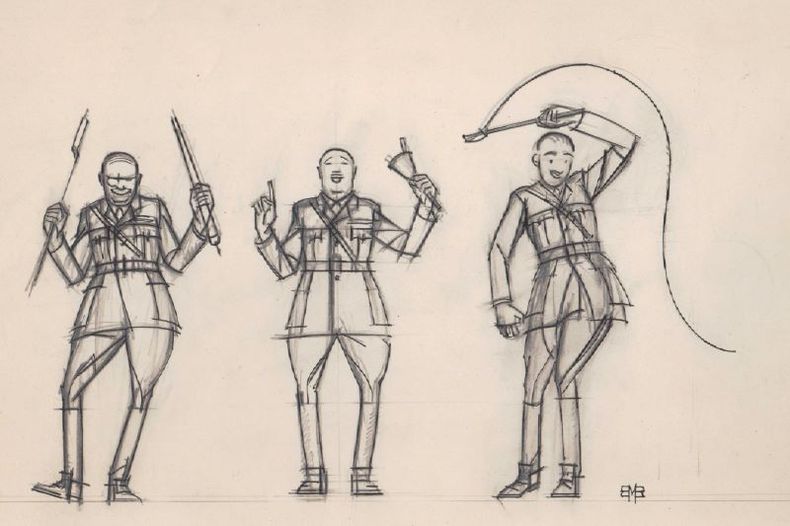
19206825Paris GRASSET 1920 1 20 dessins originaux de Bernard Boutet de Monvel, à la mine de plomb, préparatoires au livre "Le Général Bramble" de André Maurois, 1920, montés sur papier fort dans un étui, in-4, aux motifs Art Déco.
51-4180Paris: L'Artiste 1834. 4to. 27 x 20.5 cm. 2 vols. Elaborate contemporary Romantic binding with gilt and blind stamping. 308 308 pp. about 108 of 110 original graphic works. Missing appear to be 1834-1 Clerget and 1834-68 Alophe. Among the other works is the original lithograph by Delacroix: Le jeune Clifford trouvant le corps de son père 1834-104; Delteil no. 99 first state of 3; Young Clifford Finding the Body of his Father image of Shakespeare King Henry VI Part IICatalogued in "Les Estampes de L'Artiste 1831-1904" by Pierre Sanchez and Xavier Seydoux nos. 1834- 2 to 1834-110. Textes des grands écrivains romantique tel que Gérard de Nerval Théophile Gautier qui est rédacteur en chef de 1856 à 1859 Jules Janin Étienne Eggis Théodore de Banville Henri Murger Charles Monselet Champfleury Charles Baudelaire Joseph Méry Eugène Sue Alphonse Esquiros Hector de Callias entre autres.Illustrés de lithographies et de gravures sur bois des plus grands artistes de l'époque puisque le fondateur Hector Brame fut l'associé de Durand-Ruel et que le repreneur de la revue n'est autre qu'Armand Houssaye qui a voulu faire de cette revue un véritable musée de la gravure. Nos volumes comptent des gravures de :Thomas Gavarni Prout Deveria Alophe Préault Dessain Deroy Beaume Noël Johannot Debacq Roqueplan Gsell Livet Champin Perrières Perlet Champmartin Bellange Dreux Charlot Boulanger Guët Delaroche Raffet Brume Scheffer Carrier Newton Peroy Vernet Decamps Leroy Grenier pour le premier volume et Giraud Alophe Noël Roqueplan Debacq Lerac Grenier Decamps Lebreton Pingret Leroy Francis Dauzat Cattemole Gavarni Provost Jaime Frey Gigoux Gintrac Delacroix Leclerc Boulanger Bourge Charlier Wilkie. Le second volume est incomplet d'une gravure page 48. Par contre il contient deux gravures d'Eugène Delacroix. .Fondée en 1831 aux plus beaux jours de la révolution romantique la revueL'Artiste connut une longue vie se transformant et se renouvelant plusieurs fois au cours du XIXe siècle pour ne s'éteindre définitivement que dans les toutes premièresannées du XXe siècle. C'est dire que durant ses soixante-quatorze ans d'existence cetterevue porte un témoignage direct sur l'évolution des mouvements artistiques etlittéraires ayant joué souvent un rôle actif soit dans la légitimation de la modernité et de l'innovation soit au contraire dans la défense des principes proclamés et propagés par les organes officiels de l'Institut et du gouvernement. Paris: L'Artiste, 1834. unknown
1924355490714129London: Oxford University Press 1924. First Edition. Hard Cover. Dust Jacket. A History of Tennis Oxford: Oxford University Press 1924. First UK Edition. In Two Volumes. Illustrated with numerous plates and a large folding chart at rear of volume II. Bound in blind-panelled navy open weave buckram titled in gilt at the spine. The definitive history of Real Tennis 'La Paume' in two volumes. Both volumes are in fine condition in the VERY RARE ORIGINAL DUST WRAPPERS. Copies in D/W are almost un-heardof and I can find no other examples on sale at this time. The D/W on Volume I is in VG condition with a couple of closed tears and some inevitable browning to the spine. It is though complete. The D/W on Volume II is in good only condition as it is missing a large piece approximately half of the back panel. The back panel has no text on it so archival restoration would not be un-duly difficult. Supposedly limited to 820 copies the actual limitation is probably much smaller as it is rumoured that 100 were pulped in 1929 and perhaps as many as 380 copies were pulped in 1932. For the 2 Volumes in their Original Publishers Dust Wrappers Oxford University Press hardcover