MAUROIS (André). BOUTET DE MONVEL (Bernard).Livre Rare Book
21 236 résultats
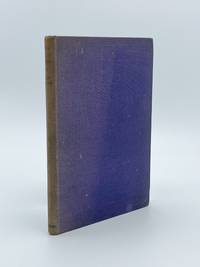
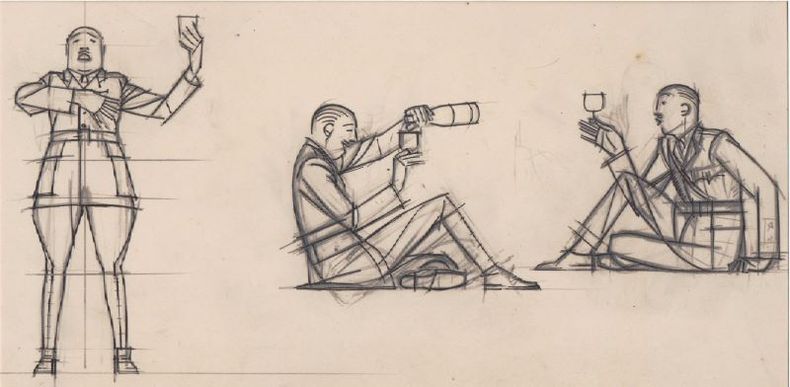
19206825Paris GRASSET 1920 1 20 dessins originaux de Bernard Boutet de Monvel, à la mine de plomb, préparatoires au livre "Le Général Bramble" de André Maurois, 1920, montés sur papier fort dans un étui, in-4, aux motifs Art Déco.
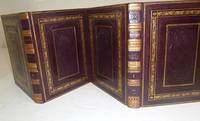
51-4180Paris: L'Artiste 1834. 4to. 27 x 20.5 cm. 2 vols. Elaborate contemporary Romantic binding with gilt and blind stamping. 308 308 pp. about 108 of 110 original graphic works. Missing appear to be 1834-1 Clerget and 1834-68 Alophe. Among the other works is the original lithograph by Delacroix: Le jeune Clifford trouvant le corps de son père 1834-104; Delteil no. 99 first state of 3; Young Clifford Finding the Body of his Father image of Shakespeare King Henry VI Part IICatalogued in "Les Estampes de L'Artiste 1831-1904" by Pierre Sanchez and Xavier Seydoux nos. 1834- 2 to 1834-110. Textes des grands écrivains romantique tel que Gérard de Nerval Théophile Gautier qui est rédacteur en chef de 1856 à 1859 Jules Janin Étienne Eggis Théodore de Banville Henri Murger Charles Monselet Champfleury Charles Baudelaire Joseph Méry Eugène Sue Alphonse Esquiros Hector de Callias entre autres.Illustrés de lithographies et de gravures sur bois des plus grands artistes de l'époque puisque le fondateur Hector Brame fut l'associé de Durand-Ruel et que le repreneur de la revue n'est autre qu'Armand Houssaye qui a voulu faire de cette revue un véritable musée de la gravure. Nos volumes comptent des gravures de :Thomas Gavarni Prout Deveria Alophe Préault Dessain Deroy Beaume Noël Johannot Debacq Roqueplan Gsell Livet Champin Perrières Perlet Champmartin Bellange Dreux Charlot Boulanger Guët Delaroche Raffet Brume Scheffer Carrier Newton Peroy Vernet Decamps Leroy Grenier pour le premier volume et Giraud Alophe Noël Roqueplan Debacq Lerac Grenier Decamps Lebreton Pingret Leroy Francis Dauzat Cattemole Gavarni Provost Jaime Frey Gigoux Gintrac Delacroix Leclerc Boulanger Bourge Charlier Wilkie. Le second volume est incomplet d'une gravure page 48. Par contre il contient deux gravures d'Eugène Delacroix. .Fondée en 1831 aux plus beaux jours de la révolution romantique la revueL'Artiste connut une longue vie se transformant et se renouvelant plusieurs fois au cours du XIXe siècle pour ne s'éteindre définitivement que dans les toutes premièresannées du XXe siècle. C'est dire que durant ses soixante-quatorze ans d'existence cetterevue porte un témoignage direct sur l'évolution des mouvements artistiques etlittéraires ayant joué souvent un rôle actif soit dans la légitimation de la modernité et de l'innovation soit au contraire dans la défense des principes proclamés et propagés par les organes officiels de l'Institut et du gouvernement. Paris: L'Artiste, 1834. unknown
1924355490714129London: Oxford University Press 1924. First Edition. Hard Cover. Dust Jacket. A History of Tennis Oxford: Oxford University Press 1924. First UK Edition. In Two Volumes. Illustrated with numerous plates and a large folding chart at rear of volume II. Bound in blind-panelled navy open weave buckram titled in gilt at the spine. The definitive history of Real Tennis 'La Paume' in two volumes. Both volumes are in fine condition in the VERY RARE ORIGINAL DUST WRAPPERS. Copies in D/W are almost un-heardof and I can find no other examples on sale at this time. The D/W on Volume I is in VG condition with a couple of closed tears and some inevitable browning to the spine. It is though complete. The D/W on Volume II is in good only condition as it is missing a large piece approximately half of the back panel. The back panel has no text on it so archival restoration would not be un-duly difficult. Supposedly limited to 820 copies the actual limitation is probably much smaller as it is rumoured that 100 were pulped in 1929 and perhaps as many as 380 copies were pulped in 1932. For the 2 Volumes in their Original Publishers Dust Wrappers Oxford University Press hardcover
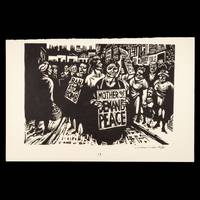
27106London: Collet’s Holdings Ltd. 1950. Later lettered paper portfolio 385mm tall cut lettering from the original folio pasted on foxed 4pp. letterpress long split along fold twelve linocuts on separate sheets very good examples. Limited to 300 copies signed by the artist this is number 88. In this example each linocut has been signed by the artist and dated '50/81 created in 1950 signed in 1981. Rare. ‘In this set of lino-cuts he illuminates the terrible fears and the impatient hopes of mankind in their daily struggle with the danger of war. They are a proud justification of the confidence of his Australian friends in his continuation of clear vision and optimism’ - James Boswell. Foreword to War or Peace. When Jack Lindsay saw Counihan’s powerful linocuts folio in London in 1950 he was moved to write a poem to accompany each of them. These poems along with reproductions of the Counihan originals together with some additional poems by Paul Eluard and Pablo Neruda were published later the same year again by Collet’s Holdings as a booklet titled Peace is Our Answer. Born in the aftermath of the Second World War the booklet bore a dedication to the Second World Peace Conference in Warsaw and the original linocuts from this folio War or Peace were exhibited there in Poland as well as Counihan’s 1951 exhibition in London DIMMACK Max. Noel Counihan. Melbourne: MUP 1974 p.49. Counihan returned to Melbourne in 1953 and exhibited these linocuts at Tye’s Gallery in a group exhibition with Vic O’Connor and James Wigley from 6 - 16 October that year. They received wide critical acclaim the review in The Age writes ‘If the War or Peace series of lino-cuts are not a convincing social indictment they succeed as art through brilliant disposition of black and white masses’. Counihan probably inscribed this set to Flora at the exhibition sets were priced at three guineas a folio. 'This folio of linocuts begins with a stark image of a mother cradling a child through the ruins left by war and ends with a group of stevedores striding confidently forward pointing to the future. Between these two images are ten linocuts all of which make clear Counihan’s political and artistic focus. Here is a work which stands full of humanism and the belief that humanity is yet to see its golden age. In these linocuts we can see all those European influences that drove the Neue Sachlichkeit movement in Germany. There is George Grosz Max Beckmann Otto Dix and especially Kathe Kollwitz.' - Monica Oppen Artists’ Books : an exhibition hosted by Rare Books 28 September – 25 November 2011. Monash University Library 2011 p. 3. In 1979 Melbourne private press publisher Richard Griffin produced a new edition of the work again titled War or Peace. It was a very different style of publication housed in a half-calf binding and matching slipcase in line with the emerging trend for deluxe editions rather that the plain wrappers of both the 1950s editions. The 1979 War or Peace is really a reissue of Peace is Our Answer as it contains reproductions of the original linocuts along with the various poems which Lindsay and others wrote inspired by the original linocuts. Of three publications this is the first and only to contain original graphics. The limitation of three hundred seems generous yet the work is known in only a handful of examples no doubt as the vast majority of folios were split up in fact even at Counihan’s own exhibitions the linocuts were for sale individually. The only collections we can locate the work in are the National Gallery of Australia and State Library of Victoria. The impact of the folio has been wide however due to the release of the 1950 and 1979 editions which reproduce the linocuts. This is the only set we have identified with the artworks individually signed by the artist. As they are dated 50 / 81 they were probably exhibited / sold at the time of the launch of Robert Smith's catalogue raisonné in 1981. A rare significant and influential work by one of Australia’s greatest social realists. Reference : SMITH Robert. Noel Counihan Prints 1931 – 1981. A catalogue raisonné. Sydney : Hale & Ironmonger 1981 pp. 59 - 67 all linocuts illustrated Smith 27 28 29 30 31 32 33 34 35 36 37 38 Collections: National Gallery of Australia State Library of Victoria MOADOPH unknown
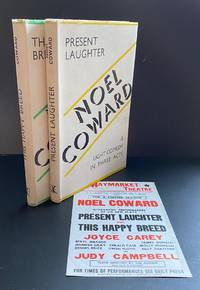
1943122334455741A 2 Vols. set : Both books are First UK printings and published by William Heinemann London in 1943. The books are signed by Noel Coward and all the cast : Joyce Carey and Judy Campbell on the initial blank and on the half-title: Gerald Case Beryl Measor Molly Johnson Billy Thatcher James Donald Dennis Price Gwen Floyd Meg Titheradge and also that of the Peggie Dear the stage manager. Loosely inserted is a rare advertising handbill flyer promoting the original West End production of these plays at the Theatre Royal Haymarket in London. Following a Provincial Tour 'Present Laughter' opened April 29th 1943 and 'This Happy Breed' opened April 30th 1943. Both productions played just over five months at the Haymarket Theatre. Both BOOKS are in Very Good or better condition. The wrapper has adhered in a very small area to the lower edge of the rear cover of 'Present Laughter'. A little toning and spotting to the text-blocks. Light offsetting to the blank end-papers with a little toning to the page edges due to the cheap quality of the war-time paper stock used. The WRAPPERS are in Very Good condition with a little edge-wear and some age related markings but are remarkable survivors. Both wrappers are protected in removable Brodart archival covers. Provenance: Matthew Bell 'Matt' props master whom the books were inscribed to by the author. In 2019 there was a revival stage production of 'Present Laughter at 'The Old Vic Theatre' for which Andrew Scott won the 'Laurence Olivier Award for Best Actor in a Leading Role in a Play'. A wonderful two volume set with such unique attributes. More images available on request. Ashton Rare Books welcomes direct contact. William Heinemann, London hardcover
19985Strasbourg, Hagemann et Cie, 1880. In-4, 211 pp., maroquin bordeaux de Popelin, frises et filets dorés en encadrement sur les plats cantonnés d'arabesques, fleurons et faisceaux de licteur surmontés de bonnets phrygiens dorés, dos à nerfs orné de caissons dorés, importante bordure intérieure ornée de dentelles dorées, tête dorée sur témoins, couverture conservée (habiles restaurations des mors, minuscules épidermures en marge du 2nd plat, quelques petites rousseurs et taches).
193798019London: Arthur Barker Ltd 1937. First edition first impression. The first edition was split into a small and large paper issue with variant dust jackets with this being the latter more desirable format. A scarce title especially so in the dust jacket. Quarto. Colour illustrations throughout by the author. Original green cloth spine lettered in gilt. With dust jacket. Spine rolled rubbing to cloth at lower edges and corners light occasional spotting. A very good copy in a slightly soiled jacket with light chipping to spine ends light spotting to rear panel and reinforcement paper to edges at verso. hardcover
193623843London: Dent 1936. First editions first printings. Original publisher's cloth Ballet Shoes in green cloth lettered and illustrated in white to the spine and Tennis Shoes in orange cloth lettered and illustrated in green. Neither volume is in dust wrapper. Both volumes are inscribed to the front endpaper by Noel Streatfeild to Rosalind. Ballet Shoes is inscribed: "To Rosalind from the person who wrote this book Noel Streatfeild 1940." Tennis Shoes is inscribed: "To Rosalind when she holds her own. Noel Streatfeild. Feb. 1940." A very good pair with rubbing marking and wear to the cloth. Ballet Shoes shows fading and soiling to the boards and spine with notable wear fraying and splitting to the spine ends and hinges. Tennis Shoes is rubbed and marked to the cloth with wear to the spine ends and corners and some darkening and soiling to the page edges. Contents toned with some spotting and handling marks. A charming association pair: the first two "Shoes" titles both first printings and both warmly inscribed by Streatfeild to the same recipient in 1940. Ballet Shoes the author's best-known and most enduring work is especially desirable signed and the presence here of a similarly inscribed copy of Tennis Shoes makes for a very appealing Streatfeild pairing. Dent hardcover
196448570Hengelo Netherlands Copenhagen Paris: The Situationist Times 1964. First edition. Softcover. Near fine condition. Quartos. Original illustrated stiff wraps with lettering in variant colors on covers protected by modern mylar.<br /> <br /> The Situationist International SI was formed by a group of international social revolutionaries from a variety of fields including avant-garde artists intellectuals and political theorists in 1957. The theoretical foundation was derived from so-called libertarian Marxism and avant-garde art movements like Dada and Surrealism. Its theoretical underpinnings relate to the concept of the spectacle as it was developed by Guy Debord in his book "The Society of the Spectacle."<br /> <br /> Jacqueline de Jong a Dutch artist and graphic designer had joined the movement in 1960 and advanced quickly into its Central Committee. She decided to start "a completely free magazine based on the most creative of the Situationist ideas" and published the first issue in 1962 a broad representation of the movement and its efforts to synthesize the diverse fields and theoretical disciplines into a comprehensive critique of advanced capitalism.<br /> <br /> Six issues of the magazine were published until 1967 before the student uprising of May 1968 leaving the seventh issue compiled but unpublished. The first two issues were co-edited by the French pataphysician Noël Arnaud. The magazines contained literary contributions artwork found objects and used quotations relating to such issues as topology politics and "spectacle culture." It was originally released in offset print and starting with issue # 4 switching to full color lithography printed to different quality paper of variant color and weight with text in English French and German.<br /> <br /> Issue one: 30 leaves. Includes an essay by Noel Arnaud an extensive certified transcript of the Criminal Court in Munich relating to accusations of production and distribution of lewd writings in the magazine "Spur" and public slander against Dieter Kunzelmann Helmut Sturm Heimrad Prem and Hans-Peter Zimmer including facts of the case and an answer of the court comics by R. Gasché and others a Proclamation for L'Internationale Situationiste! and other contributions. Small strip of sunning along top and foredge.<br /> <br /> Issue two: 32 leaves two folding. Includes a declaration concerning the conviction and imprisonment of the Situationist Uwe Lausen various contributions relating to the trial mentioned in issue one including the verdict and a reaction to the trial by Rodolphe Gasché artwork by Gail Singer and others a musical concept on two folding pages poetry by Marcel and Gabriel Piqueray among other contributions.<br /> <br /> Issue three International British Edition: 48 leaves. Includes an essay by Anton Ehrenzweig "Meditations on the Future of Art" artwork by Ann Hagen an extensive contribution on the patterns of Situological Aspects found in a the "Early Christian monuments in Scotland and b the "Principles of topological psychology" by Kurt Lewin with a mathematical analysis situs introduction by Max Brucaille and other contributions. Some light staining on front cover.<br /> <br /> Issue four: 184pp. Focusing on labyrinths this issue includes contributions Lech Tomaszewski by Italian artist Piero Simondo the Max Bucaille W. Lietzmann H. L. C. Jaffé the Dutch architect Aldo van Eyck Lars-Ivar Ringbom Julius Schwabe Gaston Bachelard Kalevalla A Finnish Myth and Franz Kafka An Imperial Message and James Joyce among other contributions. Profusely illustrated with drawings and photographs throughout.<br /> <br /> Issue five: 110 leaves. Articles by Asger Jorn "Mind and sense" and "Art and Orders" various contributions by Max Bucaille excerpts from the opera "The Labyrinth" by Jim Ryan "Kreisen Kreissegmenten und Wellenlinien etc." by F. van der Waals "Some mathematical aspects" by H. C. Doets drawings and poems by Karl Pelgrom and Jim Ryan and many other contributions. Editor's note at rear: "In this No. of the Situationist Times 5 do we try to open up the problem of the ring interlaced rings and consequently chains. Half an inch chip on edge of back cover.<br /> <br /> Issue six: 32 card stock leaves: Contains thirty-three full page original lithographs including cover in color and b/w by Pierre Alechinsky René Bertholo Martin Engelmann Maurice Henry Jacqueline de Jong Asger Jorn Peter Klasen Wilfredo Lam Lea Lublin Milvia Maglione Roberto Matta Lucio del Pezzo Antonio Saura Yasse Tabuchi and others. Cover by Ulf Trotzig. The Situationist Times unknown
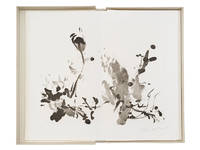
405184Liancourt: Bernard Dumerchez 2007. A fine copy with a few small soilmarks on box. Folio 25.25 x 14.5 inches; 640 x 368 mm. The complete portfolio with etching with aquatint printed in colors. Loose as issued in original portfolio; original cloth folding case titled on top and spine. LIMITED EDITION number 17 of 63 copies SIGNED BY NOËL AND WOU-KI from a total edition of 99. Printed on Vélin BFK Rives. <br /> <br /> Throughout his career Zao Wou-Ki merged Eastern and Western aesthetic traditions in his work retaining technical elements of Chinese painting styles while embracing European Modernism. Published in 2007 by Bernard Dumerchez Paris the Le jardin d’encre portfolio whose title translates to The Ink Garden demonstratesº Zao’s use of free-flowing brushstrokes which incorporate elements of traditional Chinese calligraphy to contemplate nature. The portfolio features a limited-edition etching and aquatint print on wove paper by Zao and a text by Bernard Noël both housed within the original cream-colored fabric-wrapped clamshell box.<br /> <br /> Reference: 'Zao Wou-Ki 1950 - 2010: 60 Years of Graphic Works Go Art Gallery' Udine 2012 p. 29 illustrated in color. Bernard Dumerchez unknown
1856R66464Parisiis [Paris] / Petit-Montrouge, apud Ludovicum Vivès / J.-P. Migne 1856-1878 (1963) / 1858 'Opera omnia' complete in 28 volumes: 26 volumes + 2 volumes of indices, text in latin, original 1856-1878-edition (except 'Indices'), Editio nova (second edition, the first of which was printed in 1740-1751 in Venice), 27cm., text printed in 2 columns, all vols. including the compendium are uniformely bound (cart.cover with marbled plates, gilt lettering & decorations on leather spines, marbled endpapers) except for the indices (vols.27-28, anastatic reprint of the Paris 1878-edition: Bruxelles, Culture et civilisation, 1963, 29cm., full cloth), few foxing, small library stamp at titlepages, nice set in a beautiful binding, to which is added: 'Summa seu Compendium' by Fr.Noel (complete in 2 volumes, original Migne-edition of 1858), [Opera omnia: cfr. De Backer & Sommervogel, VII col.1680 no.24, Suarez Franciscus S.J., Grenada 1548 - Lisbon 1617 / Compendium: cfr. De Backer & Sommervogel V col.1793 no.12, Franciscus Noel, Hestrud 1651 -Lille 1729], R66464
1981864ROGNER & BERNHARD 1981-85. Schweiz!. softcover. Per Anhalter durch die Galaxis 171192205211 ROGNER & BERNHARD paperback
8681P., Imprimerie royale, 1694 (LA HIRE), 1692 (observatons physiques et mathématiques envoyées des INDES et de la CHINE), 1694 (Observations faites à la CHINE), un volume in 4 (20cm x 26cm) relié en plein veau marbré, dos orné de fers dorés (fleurs de lys), ARMES DE LOUIS XIV sur les plats, tranches rouges (reliure de l'époque), 8pp., 202pp. (mal chiffrés 302), figures dans le texte (LA HIRE) ; (3), 113pp. (observations physiques et mathématiques envoyées des INDES et de la CHINE ; 20pp. (observations faites à la CHINE)
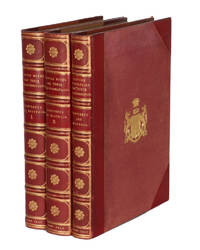
18494505034London: Wm. S. Orr & Co and William Smith 1849. Three volumes quarto profusely illustrated with full-page plates exquisitely hand-coloured; uniformly bound in half morocco richly gilt all edges gilt with the gilt arms of the Barons Sherborne. <p><p>A very fine copy in a grand binding with excellent provenance of this remarkable collaboration an exquisite work of Victorian natural history. As one of the pre-eminent entomologists of the Victorian period John Obadiah Westwood 1805-1893 served as collaborator editor and consultant on many entomological publications. He was a prodigious author and researcher publishing some four hundred scientific papers and some twenty books as well as making numerous contributions to works by other authors. In 1833 he was one of the founding members of the Entomological Society and he became honorary life president in 1883 and a fellow of the Linnaean Society. It was for his study of Australian species that Anthony Musgrave author of the Bibliography of Australian Entomology 1775-1930 named the period 1831-1861 "The Westwoodian Period" in recognition of his great service during these years to Australian entomology Musgrave p. 345. </p> <p>Henry Noel Humphreys 1810-1879 was an accomplished illustrator and scholar in numerous subjects. In addition to his entomological texts Humphreys wrote works on ancient Greek and Roman coins archaeology and the art of writing and printing enriching even these simplest texts with exquisite chromolithographs printed by Owen Jones. He was inspired to embark on this ambitious planned survey of British insects following a trip to Italy. In the Preface he likened the person in the fields unacquainted with natural history to one placed in a library and unable to read. "He cannot read in the beautiful book of nature when in the summer it opens its brightest leaves". </p> <p>A contemporary review in The Lancet noted: The plates exquisitely drawn by Mr. Humphreys represent the insect in its three great stages-as the caterpillar the chrysalis and the butterfly or moth -all hanging side by side on the plants which furnish their ordinary food. The transformation thus seems to take place under the eye; and the metamorphoses are associated in the mind without any effort." In response to Humphreys' claim that "Entomology is a branch of knowledge more easily acquired than many imagine. The individual beauty of the insects in every stage the ease with which they are preserved and the comparative facility with which a complete collection of British species may be formed particularly of butterflies of which we number scarcely more than eighty distinct species render it a task of easy attainment" the same reviewer wryly noted "Mr. Humphreys throws out a suggestion which has perhaps a touch of the butterfly Utopia in it but which is ingenious and deserves trial."</p> </p> . Provenance: Each volume with the gilt arms of the Barons Sherborne with links to Australia through the Duttons of Anlaby South Australia; and the bookplate of Princess Despina Mary Karadja 1868-1943 poet writer on spiritualism founder of the White Cross Union and wife of the envoy to the Ottoman empire Jean-Constantin Karadja a distinguished diplomat and noted book collector. Wm. S. Orr & Co and William Smith unknown
1985LIQ-4228Vence, Editions Chave 1985. In-plano en feuilles, plats en bois (texte inséré dans le premier plat sous plexiglas), dos et rabats de toile écrue.
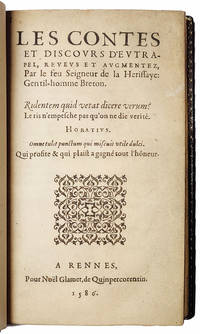
1586208<p>"Un text en prose de la force de Villon" Sainte-Beuve</p><p>8vo 159x92 mm. 2 223 recte 219 1 leaves. Collation: 2 A-Z8 Aa-Dd8 Ee4. Typographic ornament on the title page. Full burgundy morocco gilt spine with five raised bands double blind-ruled fillet on the panels inside gilt dentelle gilt edges Pagnant. A very good copy.</p><p>Original edition second issue first: 1585 of the author's final collection of stories. This second issue is identical to the first including in the pagination errors but for the title page that was reset.</p><p>Noël Du Fail contributed to what literary historians termed the Golden Age of French Renaissance narrative fiction. In this respect he is part of a trio including Marguerite de Navarre and Bonaventure Des Périers. Du Fail might be regarded as a Renaissance sociologist then the <em>Contes d'Eutrapel</em> throws considerable light on the manners and general life of the day and there is frequent mention of contemporaries e.g. Girolamo Cardano's visit to the Paris medical faculty. The fantasies of Rabelais' stories and the psychology of Marguerite's characterizations have been replaced in Du Fail by a kind of Balzacian observation and recording of detail. If one views Du Fail's work as a whole it is clear that he wanted to unshackle himself from the conventions of narrative fiction especially the constraints of a sustained plot in order to criticize more directly contemporary socio-political developments. That he straddles two social backgrounds as country gentleman and lawyer gives us an inside to the thematic tensions that characterize his work: past and present city and country decadence and utopia Catholic and Protestant conservatism and social criticism cf. M.-C. Bichard-Thomine <em>Noël Du Fail conteur</em> Paris 2001 pp. 161-184.</p><p>Noël Du Fail born at the Manoir de Chateau-Létard near Rennes in Brittany studied law in Paris and saw military service in Italy in the army of François I participating in the battle of Cérisolle in 1544. He then lectures law at various French universities: Angers Poitiers Bourges and others. Beginning in 1547 he published a series of miscellaneous stories <em>Propos rustiques</em> some fictional others drawn from life incorporating into them wider reflections on society in the manner of Rabelais and Montaigne. Estienne Pasquier writing to Ronsard in 1555 speaks of him as a 'singe de Rabelais'. This is a completely uncritical remark for though Du Fail is an evident admirer of Rabelais and frequently refers to him in his books his style is his own and only resembles that of his master in a few peculiarities. His second collection of stories was published in 1548 under the title of <em>Baliverneries</em>. At that time he started his career as a lawyer judge and politician. He became councillor to the Parlement de Bretagne but was excluded from it in 1573 for his Protestant faith. Reinstate in 1576 he resumed his career and retired a year after the publication of <em>Eutrapel</em> cf. A J Krailsheimer <em>Three sixteenth-century conteurs</em> Oxford 1966 pp. 137-49.</p><p>That the name of the printer on the title page Noël Glamet and the place of printing Rennes were fictitious was clearly shown by L. Loviot <em>L'imprimeur des 'Contes d'Eutrapel'</em> in: "Revue des livres anciens" II 1917 pp. 312-313 who assigned the first and all subsequent sixteenth-century editions of the <em>Contes d'Eutrapel</em> to the Parisian press of Jean Richer.</p><p>"Né vers 1520 Noël Du Fail assez gros gentilhomme terrien a quelque soixante-cinq ans lorsqu'il donne les <em>Contes et Discours d'Eutrapel</em>. Voilà plus de trente-cinq années qu'il est sagement fixé après une jeunesse peut-être mouvementée dans la Haute-Bretagne où il est né. Voilà presque le même temps qu'il est marié; le même encore qu'il exerce à Rennes des fonctions de conseiller d'abord au Présidial puis au Parlement: en cette année 1585 il est sur le point de prendre sa retraite. Les <em>Contes et Discours d'Eutrapel</em> sont l'œuvre d'un homme qui a vécu: 'le feu seigneur de la Hérissaye.'. Notre homme est alors tourmenté par la goutte. Il est en relations difficiles avec nombre de ses voisins pour des motifs d' 'opinions' religeuses. L'état de la France et notamment de la noblesse française le préoccupe très fort. Les <em>Contes et Discours</em> ne sont pas exempts de traces de désarroi. Si l'homme a de l'expérience l'écrivain non plus n'en manque pas. Les <em>Contes et Discours d'Eutrapel</em> apparaissent comme une 'rentrée' près de quarante ans après deux livrets facétieux <em>Propos rustiques</em> and <em>Baliverneries</em> … Œuvre d'un vieillard qui recrée à sa table le monde où il a vécu - et souvent aussi un monde plus ancien plus ou moins mythique dont il aime à vanter l'innocence - les <em>Contes et Discours d'Eutrapel</em> sont essentiellement un livre descriptif. On peut même parfois déplorer chez Du Fail une tendance a épuiser le réel: ce désir de rivaliser avec le foisonnement des choses par le foisonnement des mots est une de ses façons çà ou là un peu scolaires d'être 'rabelaisien'. Mais quelques excès n'ôtent rien au fait qu'il est excellent observateur et peintre … Le theme qu'il aime d'abord c'est celui de la vie domestique. Les <em>Contes et Discours</em> présentent donc une riche galerie de femmes - car la femme incarne la maison. Du Fail insinue qu'elle se complaît fort à cet empire. Voyez plutôt ce guerrier si brave pourtant sur les champs de bataille gêné chez lui dans ses plaisirs par une épouse 'la plus avaricieuse et chiche qui fust au pays n'osant manger son soûl de peur que la terre ne luy defaillist' et prompte même à lui infliger des coups de bâton. Le ton d'une maison est donné par les dames de céans: leurs petites jalousies dès qu'il s'agit par exemple de parures ou de préséances le banc à l'église sont assez pour allumer la guerre avec les voisins car le malheureux époux ne peut qu'épouser la querelle de sa femme voudrait-elle faire battre ciel et terre - comme il arrive. Si l'on veut réconcilier les maris il faut commencer par apaiser ces dames. Mais la femme est bien excusable de s'identifier à la maison et d'y faire ainsi sentir son règne. Car c'est elle qui assure la vie de tous soigne les malades accomplit les rites du voisinage et de l'hospitalité donne les ordres aux domestiques veille aux 'buees' et au 'menu mesnage'. Plus: les temmes et elles seules 'gaignent leur vie' par leur continuel travail à la quenouille - dans toutes les classes de la société - et sans doute ce détail importe … Les données concernant l'alimentation sont bien plus nombreuses. Elles permettent d'abord d'admirer la belle unité des pays français dès le XVIe siècle en ce domaine de base. Tout comme à Metz ou aux bords du Rhône s'opposent ici les viandes au 'pot' - qui sont l'ordinaire - et les viandes friandes: 'pièce tremblante' de bœuf ou bien sûr volailles rôties à la broche dans les grandes occasions. Le fond de l'alimentation est là encore le pain tenu pour sacré en tout cas pour toujours précieux et que le maître veille à ne pas laisser gas-Bretagne comme ailleurs la maison a ses provisions de 'chair': 'andouille à la cheminee' 'jambon au charnier'; il semble que ces provisions soient plus ou moins considérées comme la propriété de la femme et que lorsque le mari se rue en cuisine cela soit jugé comme un larcin à son épouse. Du Fail confirme aussi en cette fin de siècle la généralisation de l'usage du vin objet d'un culte quasi mystique: c'étaient les anciens qui buvaient du cidre; aujourd'hui même les Bretons ont leurs crus - diversement appréciés - et ainsi l'habitude du 'vin de coucher' qu'on a vue partout répandue transparaît même dans les locutions courantes. Sur ce chapitre du régime les <em>Contes et Discours d'Eutrapel</em> apportent toutefois deux notations plus originales. C'est ainsi qu'Eutrapel est décidé à appliquer le conseil du Gargantua et à 'souper' le soir plus copieusement qu'il ne 'disne' sur les dix ou onze heures du matin: l'habitude devait donc être à l'inverse. Surtout Du Fail insiste à plusieurs reprises sur la nécessité de solidement manger. Habitant une terre déjà septentrionale les Français ne peuvent pas sans grande imprudence se contenter de nourritures légères … Le noble auteur des <em>Contes et Discours d'Eutrapel</em> est qu'il le veuille ou non un lettré - comme Tahureau comme Montaigne. En art il mêle aux goûts du gentilhomme breton ceux que l'humaniste a contractés dans sa jeunesse. Il prend parti dans les débats de son époque se montrant partisan résolu des modernes dont il ne réprouve que les excès. Comme tant d'hommes de son temps il aime à se poser des 'questions de nature' à élucider patiemment les choses par le 'discours'. Si au long de sa vie de Conseiller à Rennes il a surtout lu des livres de jurisprudence outre bien entendu tous nos recueils de 'contes' le vieil homme qu'il est maintenant prend goût de plus en plus aux ouvrages de 'curiositez'. Mais son 'encyclopédisme' n'a nullement le caractère parcellaire parfois ludique qu'il revêt chez un Cholières ou un G. Bouchet. Ceux-ci - le second surtout - emploient souvent le discours à des élucubrations très théoriques étrangères à leur expérience d'hommes. Esprit profondément sérieux convaincu de la mission éclairante et si l'on ose dire récapitulatrice de la raison humaine Du Fail lui ne s'intéresse en fin de compte qu'à la conduite de la vie à la morale . La structure même des <em>Contes et Discours d'Eutrapel</em> le montre bien: leur dernier chapitre annonce et décrit 'la retraite d'Eutrapel' de sorte que tous les propos viennent confluer dans la définition d'un art de vivre - art de vivre sur lequel il n'y a pas grand chose à dire puisqu'il se résume à suivre gaîment nature et à accomplir les devoirs de son état on vient de dire ceux du gentilhomme mais chaque situation a les siens dans une 'médiocrité' à l'antique qu'éclaire la lumière de l'Evangile … Ainsi bien des contradictions latentes dans les <em>Contes et Discours d'Eutrapel</em> montrent que nous sommes parvenus à une limite. Si un écrivain veut débattre de sciences ou d'idées commenter les expériences de sa vie pourquoi ne rompt-il pas franchement les liens avec le genre narratif Qu'il supprime la rencontre des devisants l'accréditation globale ou successive des propos. Du même coup l'obligation de plus en plus artificielle d'être 'facétieux' s'évanouira pour lui. Il aura quitté le vieux genre narratif. Et il aura inventé l' 'essai'. A moins de cent lieues de Du Fail et exactement dans les mêmes années Montaigne - ou bientôt même Le Poulchre - aura eu cette simple audace tirant les conséquences logiques de l'évolution du genre. C'est sans doute parce que Du Fail est déjà un vieil homme attaché depuis sa jeunesse à la tradition des 'contes' qu'il n'a pas franchi le pas …" G.-A. Pérouse <em>Nouvelles françaises du XVIe siècles. Images de la vie du temps</em>Genève 1977 pp. 311-341.</p><p><em>Index Aureliensis</em> 157.018; A.Cioranesco <em>Bibliographie de la littérature française du seizième siècle</em> Paris 1959 no. 8691. J. Betz <em>Répertoire bibliographique des livres imprimées en France au 16e siècle Rennes: Glamet</em> liv. 19 Baden-Baden 1975 no. 2.</p> Noël Glamet de Quinpercorentin [i.e. Jean Richert]
178035911France 1780. Line engraving. Proof before title state ii/iv. Image size: 16 11/16 x 12 11/16 inches. An impressive proof impression of this famous portrait of George Washington and one of the first accurate likenesses of the General to be produced in Europe.<br/> <br/>This is a remarkably rare proof impression of this fascinating portrait of George Washington and one of the earliest European prints to produce an accurate likeness of this celebrated American hero. Public curiosity for prints of Revolutionary heroes was not limited to America but spread to the English and European print shops where an inquisitive audience clamored for a glimpse of the key figures of the war. One of the first correct likenesses of Washington to make its way over to Europe was Charles Wilson Peale's magnificent painting. At this time Peale had executed a number of similar portraits of Washington and so it is impossible to determine which exact painting was taken to France. The inscription on Le Mire's print informs us that Le Paon based his portrait on a painting of Washington he saw in the collection of the Marquis de Lafayette. This verifies since Washington's countenance and stance in Le Paon's portrait and Le Mire's engraving echo Peale's fine portraits. Washington's face and uniform are identical as are his stance and gestures; his hand cupped inside his vest was used repeatedly by Peale in his series of works on the General. A very similar companion portrait of Lafayette was also executed by Le Paon and Le Mire which makes the link between Peale's painting and this image almost definitive. By adding a more complicated composition Le Mire's has converted Peale's simplified portrait to suit European taste. Washington is cloaked in the grand tradition of French portraiture. A simple background has been changed to show a military encampment and the scattered papers act as a symbol of his involvement in the Revolution. The inclusion of a horse and groomsman shows the more decorative style of French portraiture and the complex composition and meticulous details combine to create an image that reflects the taste of its European audience. In his hand Washington holds a copy of the Declaration of Independence and the Treaty of Alliance and he stands on a mound of shredded British conciliatory bills. This engraving is an indicator of Washington's image in Europe; he is pictured as a powerful military and political leader and a genteel figure whose sagacity and expertise over threw British rule in America.<br/> <br/>Hart Catalogue of Engraved Portraits of Washington 31 ii/iv; Wick George Washington an American Icon p.28-33; Fowble Two Centuries of Prints in America 1680-1880 no.81; Cresswell The American Revolution in Drawings and Prints no.229; Baker 21. unknown books
1931189678Paris & New York: Harrison & Minton Balch and Company 1931. With original artwork First Rose edition extra limited issue letter C of five copies only on imperial japan vellum signed by the illustrator each containing four original colour drawings by the surrealist artist Sir Francis Cyril Rose from a limited edition of 725. Rose 1909-1979 was vigorously championed by Gertrude Stein who famously said of him "Rose is a rose is a rose". His wife Frederica Lady Rose 1910-2002 became a well known travel writer notably on Corsica under the name of Dorothy Carrington. Rose was however a noted homosexual and their marriage ended by a divorce in 1966. Quarto. With 25 illustrations of which five full-page by Sir Francis Cyril Rose printed in collotype by Daniel Jacomet most with tissue-guard and four original illustrations in gouache ink and crayon. Publisher's deluxe red morocco by Huser of Paris spine lettered in gilt triple gilt fillet to turn-ins gilt edges. Housed in a morocco-entry paper slipcase. Joints expertly restored a little rubbed internally fine. A very good copy. hardcover
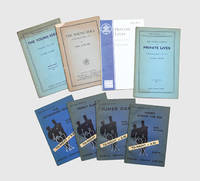
1924178399London & New York: Samuel French 1924-1971. Ex Libris Noël Coward First Samuel French acting editions and one later printing of Private Lives each play with the author's elegant art deco bookplate combining the masks of comedy and tragedy into a single persona. The bookplate was designed by Gladys Calthrop 1894-1980 who worked as a set and costume designer on many of the original productions of Coward's plays including Private Lives 1931 Design for Living 1933 and Present Laughter 1943. The plays later passed into the collection of Geoffrey A. Johnson Coward's close friend and US representative with his ownership stamps. Johnson 1930-2021 cast over 100 Broadway shows including Cats The Phantom of the Opera and Les Misérables. He first met Coward in 1961 when Johnson worked as the stage manager for the Broadway production of Coward's Sail Away. The two went on to work together until Coward's death in 1973. Johnson acted as a trustee of the Noël Coward Foundation and was the Life President of the Noël Coward Archive Trust. Hands Across the Sea Family Album The Astonished Heart and Fumed Oak were part of the Tonight at 8.30 series. This was a cycle of ten one-act plays which stared Coward and Gertrude Lawrence. Each of these plays has a "Tonight at 8.30" sticker on the front cover. 8 works octavo. With 7 photographic plates. Original wrappers lettered in black. Housed in a custom black cloth flat-back box with chemise by the Chelsea Bindery. Library stamp of W & G Foyle Music & Drama Dept. to front panel of The Young Idea UK edition. Wrappers a little toned chips to spine and head of front panel of The Young Idea US edition a few closed tears faint damp stain at head of The Young Idea UK edition Hands Across the Sea and Fumed Oak slightly cockled: a very good set. hardcover
198632296Lille, Alain Buyse / Gérard Duchêne / Gérard Durozoi, 1986-1995. Ensemble de neuf numéros de la revue "Pièces" (qui en a compté dix, regroupant 165 travaux de Sérigraphies) : en feuillets sous coffret cartonné et titré (35 x 25,5 cm).- Le premier numéro de la revue est tirée à 100 exemplaires, le nôtre étant l'un des 10 premiers (signé E. A.), toutes les planches y sont signées de leurs auteurs : Vera Molnar, Marcel Alocco, Arden Quin, René Bonargent, Philippe Boutibonnes, Jean-Luc Coatalem, Danie Deleuze, Pierre Dhainaut, Martine Diemer, Jochem Gerz, Jacques Herold, Joël Hubaut, André Lambotte, Jean-Pierre Le Goff, Ghérasim Luca, Pierre Tual). Les 8 numéros suivants ont chacun une sérigraphie signée. Le second n° est tiré à 130 ex., celui-ci le n° 86 dont seule est signée la planche originale au pochoir de Gérard Duchêne, et comporte 17 sérigraphies des artistes : Pierrette Bloch, Yves Buin, Pierre Buraglio, Max Charvolen, Eddy Devolder, Jean-François Dubreuil, Gérard Duchêne, Gérard Durozoi et Dominique Grisor, Shirley Jaffe, Jean Mazeaufroid, Jean Messagier, Alberto Parres, Gérard Pascual, Jeanpyer Poels, Patrick Saytour, Pierre Tilman, Endre Tot.- Le troisième n° est tiré à 155 exemplaires, celui-ci le n° 113 : Alain MARTIN (signée). Annick Blavier & Pierre Vandrepote / Michel Butor & James GUITET / Marie-Line Debliquy / Eugénie DUBREUIL / Gaspar Hons / Charles Juliet / Jean LE GAC / Baudouin LUQUET / Pascal Mahou / Alain MARTIN / Jean MAS / Georges Merillon / Patrick ROUSSEAU / Gérard TITUS CARMEL / Luc Van Malderen / BEN Vautier.- Le quatrième n° est tiré à 180 ex. : Arthur Aeschbacher, Mireille Andrès, Jean l'Anselme et Ch. Zeimert, Yves Brochard et Claude Darras, Pierre Buraglio et Anne Deguelle, Michel Butor, Stig Dagerman, Noël Dolla, Danièle Gibrat, Bernard Guerbadot, Monique Kissel, François Martin, Bernard Messing, Patrick Raynaud, James Sacré.- Le cinquième n° est tiré à 190 ex., celui-ci le n° 149 : Gilles ARNOULT. ANTOINE / Gilles Arnoult / Philippe Compagnon / Gérard DUCHÊNE et Gérard DUROZOI / Christian Hibon / Gervais Jassaud / Joël KERMARREC / Jean-Clarence Lambert / Jean-Philippe Mattern / Françoise Paressant / Rémy Penard / Yves POPET / Joan RABASCALL et Pierre Restany / Herbert Titz / Jacques VILLEGLÉ / Marie Redonnet.- Le sixième n° est tiré à 180 ex., celui-ci le n° 103 : ARMAN & Lepage / Brochard & Darras / Alain BUYSE / Tom Drahos / Paolo Faber / Bernard Lallemand / Jacques Lizène / Baudouin LUQUET / Paul Marie / Jean Mazeaufroid / Bernard Messing / Vera MOLNAR / Raphaël MONTICELLI / François MORELLET / Christine O'Loughlin / Hervé TÉLÉMAQUE / André Théval.- Le septième n° est tiré à 180 ex. : Jean-Jacques OSTIER. Andreu ALFARO / Alin Anseeuw / Waldo BALART / Jeanne Bresciani / Jean-Pierre Broux / Sara GIBERT / Sonia Guérin / Robert Guillermet / Bernard HEIDSIECK / Carlos KUSNIR / Eugéne LEROY / Daniel NADAUD / Jean-Jacques Ostier / Mehdi QOTBI / Joan RABASCAL / Michel SOHIER / Dirk Verhaegen / Francesc Vidal.- Le huitième n° est tiré à 200 ex. : Ramon Alejandro, Arden-Quin, Octavio Blasi, Louis Bouchard, H. Braun-Vega, Peter Downsbrough, Joachin Ferrer, Ruth Francken, Shirley Jaffe, Fernand Leduc, Jonier Marin, Gregory Masurovsky, Ricardo Mosner, Jean Noël, Antoni Segui, Charles Semser, Hugh Weiss, Zuka.- Le neuvième n° est tiré à 200 ex., celui-ci le n° 87 : Véronique Bigo, Florent Chopin, Chema Cobo, Patrice Delva, Gérard Duchêne, Esther Ferrer, Joël Hubaut, Pascale Lefebvre, Claide pasquer, Rémy Pénard, Philippe Richard, Gérard Serée, Wim Smits, Nancy Sulmont, Léonid Tishkov, Antonio Tocornal, Mateo Vinas-Martin.- /// On joint cinq sérigraphies insérées dans une carte double (24,2 x 16,2 cm), dont l'une, dessinée par Philippe Richard, est écrite par Alain Buyse pour une bonne année 1995.- Superbe état pour les neuf revues sous coffrets, rare.
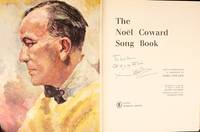
06691London: Michael Joseph 1953. Dear Mr. Bricusse."<br /> A Superb Noël Coward Association Copy with Telegram and Telephone Message to Leslie Bricusse<br /> <br /> COWARD Noël Coward. The Noël Coward Song Book. With an introduction and annotations by Noël Coward. Illustrated in colour and black & white by Gladys Calthrop. Frontispiece portrait by Clemence Dane. London: Michael Joseph 1953.<br /> <br /> First edition. Large quarto 11 1/4 x 8 7/8 inches; 285 x 225 mm. 1-8 9-314 1 1 blank pp. Illustrated throughout with musical notation photographic reproductions and five inserted color plates including the frontispiece portrait.<br /> <br /> Publisher's original quarter yellow cloth over gray buckram boards front cover decoratively stamped in gilt spine lettered in gilt pale gray endpapers top edge stained yellow. A near fine copy in the original pictorial dust jacket jacket moderately worn at spine ends and corners with a few small chips and short tears but remarkably bright and attractive overall.<br /> <br /> Warmly inscribed by Noël Coward on the title-page: "To Leslie Bricusse with all my very best wishes Noël Coward"<br /> <br /> An exceptional theatrical association copy linking two generations of British musical theater sophistication: Noël Coward the defining wit and songwriter of the inter-war and postwar stage and Leslie Bricusse whose later successes would include Stop the World - I Want to Get Off Willy Wonka & the Chocolate Factory Doctor Dolittle Victor/Victoria and the Academy Award-winning "Talk to the Animals."<br /> <br /> Laid into the volume are two remarkable ephemeral survivals documenting direct contact between Coward and Bricusse: An original British Post Office telegram addressed to: "LESLIE BRICUSSE QUEENS THEATRE SHAFTESBURY AVENUE W1" Reading: "DEAR MR BRICUSSE YES AM VERY INTERESTED COULD YOU PLEASE COME SAVOY HOTEL ROOM 312 NEXT MONDAY 21ST YOURS SINCERELY = NOEL COWARD"<br /> <br /> An original Swiss telephone message slip from the Société de Banque Suisse Lausanne dated "5th January 70" noting:<br /> "Mr Noel Coward asks you to ring him back please."<br /> <br /> The inclusion of both the telegram and telephone memorandum transforms the volume from a merely inscribed copy into a small archive of personal and professional communication between Coward and Bricusse during the later years of Coward's life.<br /> <br /> The Noël Coward Song Book remains the great collected monument to Coward's songwriting career gathering together the lyrics and music to many of his most celebrated compositions including material from Bitter Sweet Private Lives Conversation Piece Ace of Clubs Pacific 1860 and his famed cabaret repertoire. <br /> <br /> The volume captures Coward at the height of his reputation as dramatist composer performer and arbiter of transatlantic sophistication.<br /> <br /> An outstanding association copy with unusually intimate accompanying material connecting two major figures of twentieth-century British musical theater. London: Michael Joseph, 1953 unknown
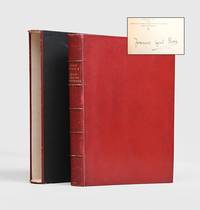
1943409156London: Heinemann 1943. From the Bart Auerbach Collection. Spine and portion of front cover faded the latter also spotted. 8vo. Original dark blue cloth. First edition. A dedication copy "To Hugh 'Binkie' Beaumont the play's producer inscribed by the playwright on the front free endpaper: "For Hugh from Noel Coward." .all Noel's plays had been presented in England since 1939 and through the war years by H. M. Tennent Ltd. which was exemplified in the attractive persuasive amusingly talkative person of Binkie' Beaumont. Violent and occasional business flare-ups excepted Noel and Binkie were more than friends: they were the deepest closest cronies." Cole Lesley 'Remembered Laughter: The Life of Noel Coward' NY 1976 p. 287. It was Beaumont who had persuaded Coward to return to the stage to act in a trio of plays - This Happy Breed was one - after the latter's nervous breakdown in 1937. <br /> <br /> Another dedication copy to Beaumont of This Happy Breed was in the sale of Masterpieces of Modern Literature: The Library of Richard Rechler Christie's NY 11 October 2002 lot 54. It was inscribed by Coward also on the front free endpaper: "For Binkie with love from Noel / See Dedication dear Hugh." BA. Heinemann unknown
18151717131815. GOUFFE Armand. Les jeux des jeunes garcons representes par un grand nombre d'estampes accompagnees de l'explication des regles de fables inedites et d'anecdotes. 24 engraved and coloured plates. Small oblong 4to 205 x 233 mm. red half-cloth with corners and marbled paper boards. Paris: Nepveu Libraire 1815. A delightful and complete set of twenty-four plates in exquisite contemporary hand colouring depicting young boys playing a variety of games. The plates are described in the Bibliotheque Nationale catalogue as being the work of Noel Jeune which he made to accompany the work by Armand Gouffé. In immaculate condition. Extremely rare. OCLC lists copies at NYPL and UCLA both with text. Provenance: Félicie Meunié d'Hostel 1843-1935 with her engraved bookplate. hardcover
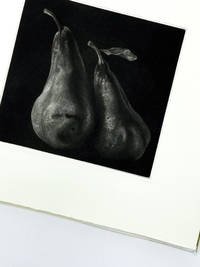
200345816Octon: Verdigris 2003. First edition. Fine. First printing of this limited deluxe edition poetic ode to a pair of pears illustrated in lovingly executed mezzotints - with original copper plate included in the original box. Judith Rothchild's and Mark Lintott's Verdigris press located in the south of France produces an eclectic selection of artist's books based around a variety of texts. For Wallace Stevens's poem of pear pondering Rothchild and Lintott have created a book that invites visual contemplation of its fruity subjects with weight added to the text by Rothchild's deeply set mezzotints. The plate included in this deluxe copy is of one of the larger illustrations and shows off the delicacy and precision involved in creating a mezzotint. An attractive production presented in both English and French. 10.5'' x 11.75'' book; 5.75'' x 5.5'' copper plate. Original stiff paper wrappers in green brown and yellow. Illustrated with nine black-and-white mezzotints of pears with three blind-embossed shapes of pears. Loose concertina textblock as issued with 20 panels printed one side only with tissue guards between each fold. With black-and-white mezzotint New Year's card numbered 17/70 and signed by Rothchild and Lintott loosely laid in. In original green yellow and brown clamshell box with original copper plate mounted to rear. A touch of rubbing to wrapper joints. Sharp and clean. Verdigris unknown