4 320 résultats
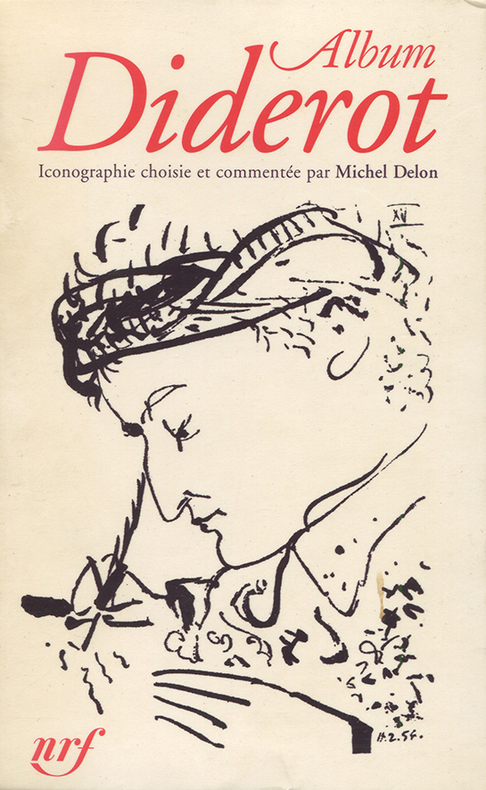
200430985Paris Gallimard, coll. "Bibliothèque de la Pléiade" 2004 1 vol. relié in-12, reliure éditeur souple, rhodoïd, étui en couleurs, 295 pp., nombreuses illustrations, index, bibliographie. A l'état de neuf.
27850Paris, Gallimard, Album de la Pléiade, 2004. In-12, 304 pp., reliure éditeur, bien complet de sa jaquette et de son étui. .
23479Reliure pleine peau de l'éditeur sous rhodoide et étui illustré, signet, 18X11 cm, 2004, 298 pages, nombreuses illustrations en noir et en couleurs, album illustré de la bibliothèque de la pléiade, éditions nrf Gallimard. Très bon état.
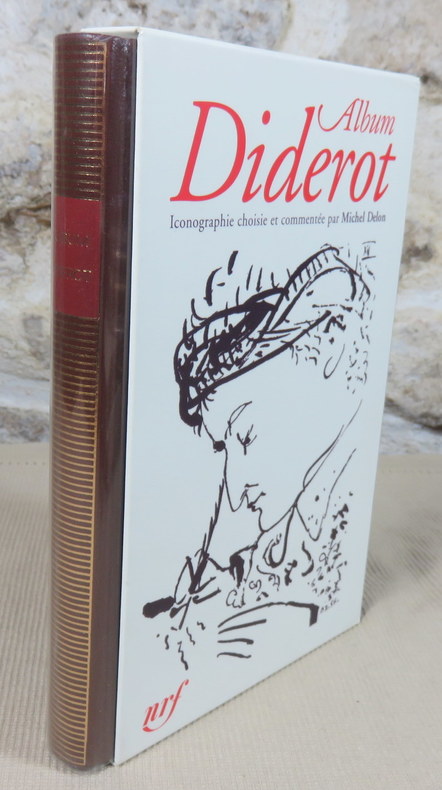
2004LIQ-7048P. Editions Gallimard “Pleiade” 2004. In-12° plein skivertex, rhodoïd et coffret illustré
ORD-3152Gallimard. 2004. In-12 cartonnage éditeur sous emboîtage, rhodoïd conservé, 298 pages, 256 illustrations en noir et en couleurs. Bel exemplaire.
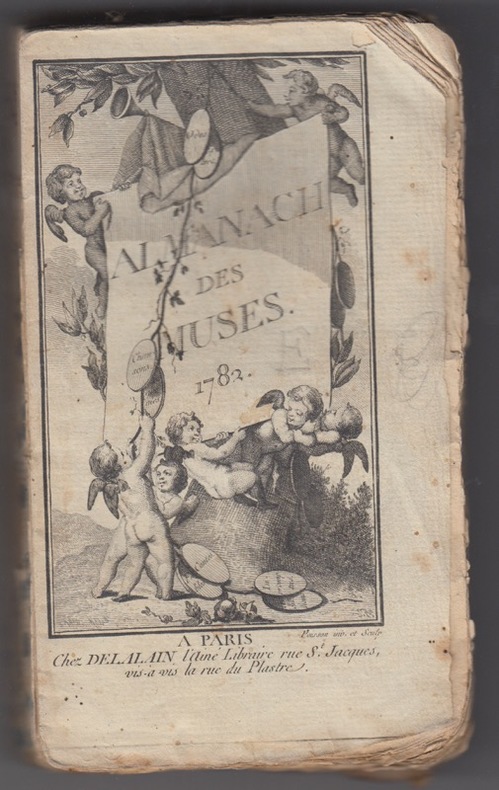
18139Paris - Delalain - 1782 - 1 volume in12 broche non rogne,sans couvertures,ni page de faux titre ,328p.+catalogue- exemplaire - Frontispice gravé - Calendrier - 4 planches de musique - Notice de tous les ouvrages de poésie qui ont paru en 1781 - Parmi les poètes : Berenger - Dorat - Fallet - Favart - Imbert - Lemierre - Mayet - Rivarol - Voltaire - Diderot -
1385753110.Ghardcover. Good. Access codes and supplements are not guaranteed with used items. May be an ex-library book. hardcover
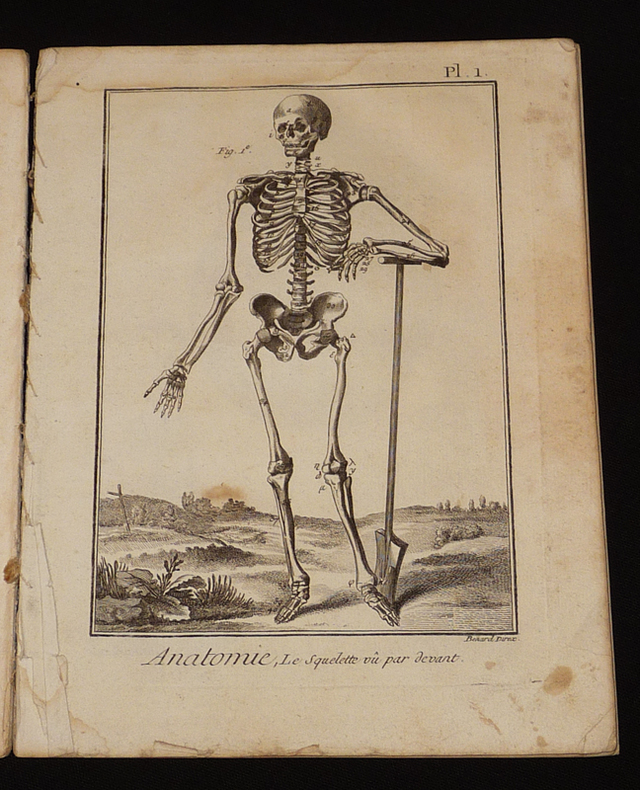
gg1944Broché "In-8 (20 x 26 cm), en attente de reliure, ""Anatomie, contenant trente-trois planches"" contenue dans le second volume du ""Recueil de planches pour la nouvelle édition du Dictionnaire raisonné des sciences, des arts et des métiers, avec leur explication"" de Diderot et d'Alembert, 56 pages de texte puis 33 planches ; page de titre manquante (avec les informations de date, éditeur, etc.), un feuillet volant et corps d'ouvrage divisé en deux parties, des rousseurs, mouillure en tête, en l'état, à relier. Livraison a domicile (La Poste) ou en Mondial Relay sur simple demande."
196022278Paris Chez L'auteur 1960 Plaquette In-8 96 pp
196333543Nancy Imprimerie Georges Thomas 1963 4 fascicules sur 4
122533Paris 1762. Folio 253 x 393mm. 20 pages of descriptive text & 40 loose plates with their accompanying text sheet. Slight browning to margins a little spotting otherwise very good. § The 11 plates and descriptive text for the entry of Antiquités from volume I of plates with 29 plates from the Supplementary Volume of Plates.Plates from Volume I are numbered 1-11 and plate 3 is a double plate.The 29 plates from the Supplementary volume are titled and often numbered. The first of these plates is entitled Judaiques and this is an unnumbered double plate. The second plate is entitled Babyloniennes et Egyptiennes and this is numbered. There are then four plates entitled Ruines de Palmyre and these are numbered 1-4. Four further plates on the Ruines de Baalbeck follow and these are also numbered 1-4 with one double plate. There are also two plates entitled Ruines de Athens and these are numbered. Thirteen plates are on the subject of Art and these are numbered 1-13 with 3 double plates. Two plates follow which are titled Aggleston and Catacombes de Naples. The last two plates are titled Colonne de Cussy numbered 1-2.Also with the relevant entries listed under Antiques in the Table Analytique et Raisonnée du Dictionnaire des Sciences Arts et Métiers. Vol I 1780.2 pages 516 & 785 from volume I of the Encyclopédie 1751 including L'exposition de divers sentimens de plusieurs nations sur l'antiquité de monde Architecture and Les Egyptiens5 pages 22 342 388 391 & 392 from volume III of the Encyclopédie 1753 including information on Les Chaldéens Les Chinois Sentiment de M.Marsham and further information on L'exposition de divers sentimens de plusieurs nations sur l'antiquité de monde2 pages 980 & 981 from volume IV of the Encyclopédie 1754 including Les arts & les sciences and Recherches de M.Freret sur les antiquités chinois2 pages 434 & 835 from volume V of the Encyclopédie 1755 including further information on Les Egyptiens and L'exposition de divers sentimens de plusieurs nations sur l'antiquité de monde1 page 46 from volume IX of the Encyclopédie 1765 including Maimonidès1 page 89 from volume XIII of the Encyclopédie 1765 including La population du monde dans les siecles reculés1 page 652 from volume IX of the Encyclopédie 1765 which includes Loix antiques des Visigoths under Antiques1 page 742 from volume XI of the Encyclopédie 1765 which includes information on Graveurs qui ont excellé à imiter l'antique under Antiques1 page 268 from volume XII of the Encyclopédie 1765 which includes information on Peinture Antique under Antiques2 pages 462 & 463 from volume I of the Supplément à l'Encyclopédie 1776 which includes Art du dessin under Antiques1 page 921 from volume II of the Supplément à l'Encyclopédie 1776 which includes Force & beauté d'expression under Antiques1 page 515 from volume III of the Supplément à l'Encyclopédie 1777 which includes Importance de l'étude des antiques pour les artistes under AntiquesWith some browning to a few leaves.A selection of relevant text entries are included with these plates. Of particular note are those on Antiquité by Edme Mallet Antiquité en architecture by Jacques-François Blondel and two articles on Antique one by Marc-Antoine Eidous.Although an abbot and primarily concerned with theology Mallet also wrote on history and literature. Having studied at the Barnabites College of Montargis Mallet became a key figure in the success of the Encyclopédie. Dying before the project was completed Mallet still managed to produce over a thousand articles. Although his views are often criticised as restricted and narrow-minded he acted as a safeguard for the project which could have been suspended if the religious articles had proved too controversial. His article on antiquities is a general overview whereas Blondel's contribution focuses on architecture. After studying with Gilles-Marie Oppenord Blondel earned a living as an engraver and writer. He became a well-regarded architect also publishing many of his lectures and contributing to major works such as Augustin-Charles d'Aviler's Cours d'Architecture 1737. Founder of the École des Arts he inspired many young architects such as his fellow encyclopédist Lucotte. Praised for his Traité de la Décoration des Edifices he was also an accomplished engraver of plates. He had already produced his own encyclopedia of architecture so was well-accustomed to the practises of the encyclopedist. With numerous creative abilities as displayed in his work at the Metz Cathedral he wrote nearly five hundred articles for the Encyclopédie. Marc-Antoine Eidous was a French writer and translator born in Marseilles. Despite his relatively basic education he was a tireless writer and translator focusing mainly on philosophy travel and agriculture. After serving as an engineer in the Spanish army he devoted much of his time to literature. Best known for his work on heraldry he contributed around 450 articles. His writing has been criticised for a lack of elegance but he gives a very clear summary of the antiquities in this entry.The plates include Greek and Roman architecture Judaic antiquities armour clothing furniture and many other subjects. Of particular note are the plates showing the Pantheon the Colosseum as it would have been when built and as a ruin the Arch of Constantine the Circus of Maxentius known as the Cirque de Caracalla until the 19th-century the forum in ruins Trajan's column before the bronze figure of St. Peter was added in 1587 and St. Peter's Basilica in Rome. Also displayed are some items of jewellery and ceremonial dress alongside other ornaments.There are over twice as many plates in the supplement. The suite begins with a double plate of Noah's Ark and covers the Tower of Babel the Pyramids and the Sphinx at Giza. Further plates are plans and reconstructions of Palmyra Baalbeck and Athens before the extensive 19th-century excavations. These are followed by depictions of the Apotheosis of Homer by Archelaus of Priene Achilles's shield the Roman Cussy-la-Colonne and many types of decorated chairs and lamps. Indeed two pages are dedicated solely to different types of sandal. With large and attractive illustrations such as that of the catacombs in Naples these plates of classical antiquity are particularly pleasing. hardcover books
17663142Amsterdam, Marc Michel Rey, 1766 ; in-4 ; plein veau fauche tacheté, dos à nerfs décoré, pièce de titre bordeaux, tranches rouges cirées (reliure de l'époque) ; VIII pp., 412 pp.
1179156706.Gpaperback. Good. Access codes and supplements are not guaranteed with used items. May be an ex-library book. paperback
1178561437.Gpaperback. Good. Access codes and supplements are not guaranteed with used items. May be an ex-library book. paperback
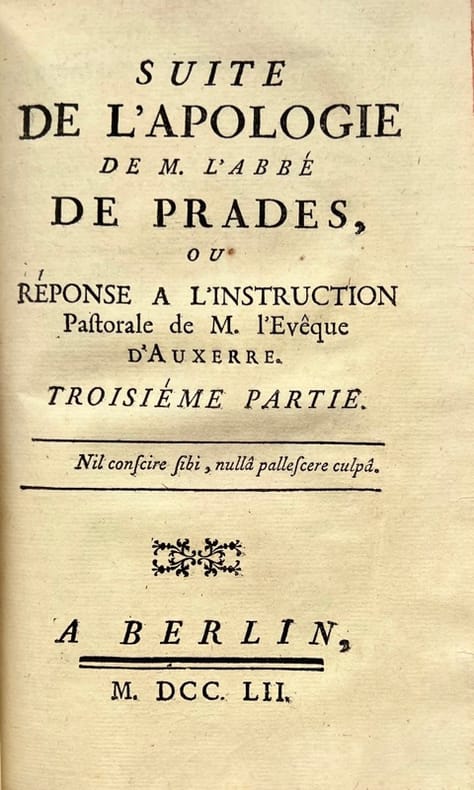
175242772A Amsterdam, , 1752. Apologie de Monsieur l'Abbé de Prades. Seconde partie. A Amsterdam, 1752.Suite de l'Apologie de M. l'Abbé de Prades, ou Réponse à l'instruction Pastorale de M. l'Évêque d'Auxerre. Troisiéme partie. A Berlin, 1752.3 parties reliées en 1 vol. in-8 de XLV-86 pp. ; 206-(1 f. blanc)-92 pp. ; (4)-108 pp., veau marbré, dos orné à nerfs, pièce e titre en maroquin rouge, tranches rouges (reliure de l'époque).
H-309-604Agone. Paperback. Good. Former library book. Ammareal gives back up to 15% of this item's net price to charity organizations. Agone paperback
BN105209Agone. Softcover. Apologies <br/><br/>Apologies Agone paperback
Mm 135x215 Collana "Saggi" - Brossura editoriale, 405 pagine. Libro in buono stato con legature ben salde. SPEDIZIONE IN 24 ORE DALLA CONFERMA DELL'ORDINE.
1755BOOKS075271I1755. HC. good mid-19th century binding black leather spine hardcover. B&W illustrations. From the "ENCYCLOPEDIA OR A SYSTEMATIC DICTIONARY OF THE SCIENCES ARTS AND CRAFTS." Over 80 plates bound with contents page following plates many are fold out - these plates most likely from the second volume of the Dictionaire raisonne des sciences. Full details and illustrations on a page on our website - please ask for link. unknown
175023631Sans lieu, sans nom, (vers 1750) In-4 (20 x 26 cm) demi basane havane marbrée moderne, dos lisse, filets dorés, tirage or, tranches rouges. 47 pages de texte sur deux colonnes et 63 planches, certaines sur double page ou dépliantes. (Reliure XXe, petite galerie de ver dans la marge supérieure).
1983LFA-126737266Publication annuelle de 289 pages, format 150 x 210 mm, brochée, G.U.E.L.F., bon état
1984LFA-126737267Publication annuelle de 237 pages, format 150 x 210 mm, brochée, G.U.E.L.F., bon état
571847Paris, Baudouin Editeur, 1979. In-folio broché.
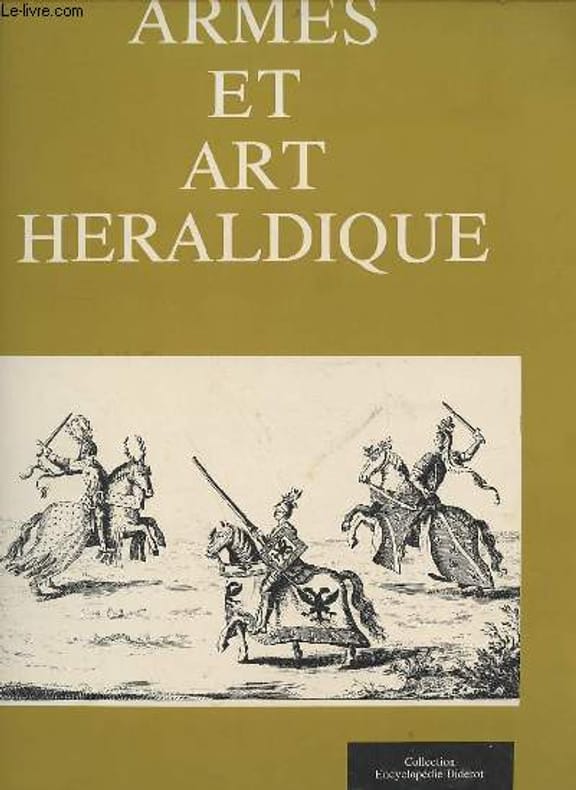
1979R160222927Baudouin. 1979. In-Folio. Broché. Bon état, Couv. convenable, Dos satisfaisant, Intérieur frais. 51 planches en noir et blanc avec notes explicatives tirées de l'encyclopédie Diderot.. . . . Classification Dewey : 34.1-Encyclopédie Diderot Alembert
122566Paris 1762. Folio 253 x 393mm. 21 pages of descriptive text & 2 loose plates with their accompanying text sheet. Slight browning to margins a little spotting otherwise very good. § The 2 plates and descriptive text for the entry of Armurier from volume I of plates. Plates are numbered 1-2.Also with the relevant entries listed under Armure in the Table Analytique et Raisonnée du Dictionnaire des Sciences Arts et Métiers. Vol I 17801 page 796 from volume VI of the Encyclopédie 1756 including Les ouvrages1 page 164 from volume III of the Supplément à l'Encyclopédie 1777 which includes information on Armuriers turcs à Constantinople13 pages 686-699 from volume I of the Encyclopédie 1751 which includes Armure en général under Armure2 pages 9 & 62 from volume VIII of the Encyclopédie 1765 which includes information on Le foldat obligé de tenir son armure dans la plus grande propreté and Les Romains under Armure1 page 34 from volume II of the Supplément à l'Encyclopédie 1776 which includes information on Bouclier que le comte de Saxe donne au foldat under Armure3 pages 157 383 & 933 from volume III of the Supplément à l'Encyclopédie 1777 which includes information on Armure dont le foldat devroit être couvert Le pique and Les anciens Grecs under ArmureWith some browning to a few leaves.These two plates display various medieval weapons and pieces of armour and include a scene with a mounted horseman and an archer and a second depicting a knight standing in full armour beside his camp. The text which accompanies this suite contains the main article on Armes contributed by Guillaume le Blond a French mathematician with a particular interest in weapons and weaponry. Further supplementary papers were contributed by Edme-François Mallet Marc-Antoine Eidous and Jacques-Nicolas Bellin. Le Blond and Bellin also contributed papers on Armée and Armure was written by Mallet. More detailed papers on Les Filets by Diderot La Hastair by Chevalier Louis de Jaucourt shields and Eidous's contribution on Le Fustibale a form of round sling are also found here among others. With articles by so many of the key Encyclopédists and eighteenth-century experts on weaponry including Louis-François la Roziere this is a very complete and impressive guide to the subject. unknown books