DIDEROT-Biblio.com
1 746 résultats
MN22520Éditios Marval 1945 París. 19x14. XV214 pgs. Firma de anterior poseedor. Leve falta en la parte inferior del lomo. 666656 Éditios Marval, 1945, París. unknown
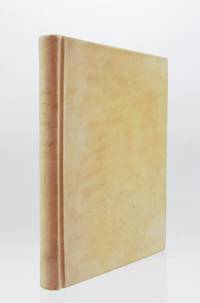
192275242Paris: Editions d'art Edouard Pelletan 1922. Fine. Editions d'art Edouard Pelletan Paris 1922 16 x 21 cm relié Edition illustrated with 7 original wood engravings by Jules Léon Perrichon and a portrait of Denis Diderot by Bernard Naudin one of 20 numbered copies on Japan paper deluxe copy. Bradel binding in full boards with overlapping flaps in vellum style endpapers and pastedowns of gold and silver effect paper covers and spine preserved top edge gilt on deckled edges contemporary binding. Fine copy well complete at rear with its duplicate suite on China paper of the original woodcuts and the double state of the frontispiece portrait. Editions d'art Edouard Pelletan hardcover
1926112632Paris : Ren Kieffer 1926. 205x143mm. demi-basane coins dos faux-nerfs auteur et titre dors plats papier marbr couverture conserve. Exemplaire numrot sur papier vlin 417/1000. 573 Ren Kieffer unknown
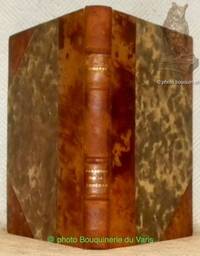
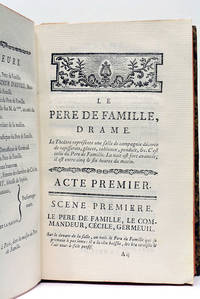
175937978à Amsterdam: Chez Marc-Michel Rey 1759. Fine. Chez Marc-Michel Rey à Amsterdam 1759 9 x 16.50 cm relié New edition after the first published in 1758. Full glazed blonde sheep binding. Spine with raised bands decorated with 4 fleurons in compartments; roulette at foot. Red morocco title label. Upper joint cracked. Corners slightly bumped. Headcap amateurishly restored. This play Diderot's second published work after Le Fils naturel in 1757 for which he was accused of plagiarizing Goldoni and which would not be performed until 1761 marks a remarkable turning point in the history of theater. Advocating a natural and realistic plot based on contemporary characters Diderot developing his ideas in the essay that follows the play invents bourgeois drama and definitively disrupts traditional dramaturgy. Chez Marc-Michel Rey hardcover
1498192475.Gpaperback. Good. Access codes and supplements are not guaranteed with used items. May be an ex-library book. paperback
1104253542.Gpaperback. Good. Access codes and supplements are not guaranteed with used items. May be an ex-library book. paperback
1165538156.Gpaperback. Good. Access codes and supplements are not guaranteed with used items. May be an ex-library book. paperback
91803Paris Duchesne & Delaine 1772. 8vo. 16 159 pp. Foxing. The title leaf is mounted in inner margin and the last leaf with paper repair in upper corner. Later 19th-centrury cloth binding gilt spine with black label edges shaved. Reprint first published in 1758. hardcover
1765901061765. 1765 Diderot Denis LE PERE DE FAMILLE COMEDIE EN CINQ ACTES ET EN PROSE Besancon: Fantet 1765 100pp Text in French 8vo Bound in contemporary vellum without boards; faded ink notation of title on spine With only minor soiling on covers else Fine. unknown
47042417like new. unknown
45468166like new. unknown
1758elala129Amsterdam i.e. Paris: Michel Lambert 1758. 1758. 2 Parts in 1. 8vo. pp. xxix 220; xii 195. contemporary mottled calf gilt back front joint cracked & tender chipping to spine ends. First Edition of the second of Diderots two dramatic works. "As one biographer of Diderot has remarked it is only in the eighteenth century that a situation like this would be likely to occur: a married mans unmarried mistress and his friend the bachelor of another mans wife are invoked as the twin inspirations of a play the purpose of which is to glorify the family." see Arthur M. Wilson Diderot p. 328 As with his first play Le Fils Naturel Le Père de Famille was printed with an additional text discussing theoretical aspects of the theatre and theatrical production here the Discourse on Dramatic Poetry with separate title and pagination. "In his several chapters Diderot dealt with such subjects as plot dialogue incident the different kinds of plays characterization division of a play into acts and scenes stage decorations costumes pantomime and gestures and most important of all the social function of the theatre The discourse embraced some of the greatest and most abiding themes - of the nature of genius and the criteria of taste; of the function of the artist; and most of all of the good the beautiful and the true. Nor was this all.Diderot also hoped that "all of the imitative arts would adopt a common purpose and one day co-operate with the laws in making us love virtue and hate vice."" Ibid. p. 331 Adams P1. Tchemerzine IV p. 448. Cioranescu 24151. 1st Edition. Amsterdam [i.e. Paris: Michel Lambert], 1758. unknown
0656908548.Ghardcover. Good. Access codes and supplements are not guaranteed with used items. May be an ex-library book. hardcover
96701Paris 1772. 3 ouvrages en 1 volume. 1. 16 pages. 159 pages. 2. 56 pages. 3. 2 feuillets. 80 pages. 185x125 Cm. Demi-veau de l'époque. Dos à nerfs orné. Coins et coiffes émoussés. Tranches rouges. Petits défauts au dos. 1. Importante édition de cette célèbre pièce de théâtre de Diderot qui fut l'un des théoriciens du "drame bourgeois" genre théâtral qui émergea au 18e siècle. Précédée d'une épître à la princesse de Nassau-Saarbruck elle fut amplement remaniée par l'auteur pour mettre en forme sa représentation et elle servit de modèle aux éditions ultérieures jusqu'à la fin du dix-neuvième siècle. 2. Rare édition de cette comédie initialement parue en 1739. L'écrivain Antoine de Ferriol de Pont de Veyle 1697-1774 est notamment resté célèbre pour son importante bibliothèque d'auteurs dramatiques. 3. Livret de cet opéra-comique de l'Anglais Thomas d'Hèle 1740-1780. Ecrit avec "beaucoup d'esprit" Larousse il fut mis en musique par Gretry. Relié avec "La Mère Coquette" de Philippe Quinault 120pp extraite d'une édition collective. Liste des piéces manuscrite sur le feuille de garde dérelié. Quelques pages jaunies. Rares taches et rousseurs. Quelques traces de plis. Exemplaire bien conservé. Paris, 1772. unknown
1020063297.Ghardcover. Good. Access codes and supplements are not guaranteed with used items. May be an ex-library book. hardcover
0282162259.Gpaperback. Good. Access codes and supplements are not guaranteed with used items. May be an ex-library book. paperback
2012570534.Gpaperback. Good. Access codes and supplements are not guaranteed with used items. May be an ex-library book. paperback
1017774552.Ghardcover. Good. Access codes and supplements are not guaranteed with used items. May be an ex-library book. hardcover
2002SKU0571372FLAMMARION 2002-09-12. Mass Market Paperback. Good. 4x0x6. Textbook May Have Highlights Notes and/or Underlining BOOK ONLY-NO ACCESS CODE NO CD Ships with Tracking FLAMMARION paperback
2002Q-2080711342FLAMMARION 2002-09-12. Mass Market Paperback. New. New. In shrink wrap. Looks like an interesting title! FLAMMARION paperback
elala3400‘Au Monomatapa’ i.e. Paris: Cazin 1781. Counterfeit Edition of this satirical libertine novel first: 1748. Set in Africa Diderot’s first full-length novel “combines an exotic and licentious plot with some adventurous philosophical explorationsâ€. New Oxford Companion to Literature in French The work would later give its author much cause for regret. Cohen-De Ricci 303n. Lewine 145n. Tchemerzine IV 430an. 2 Volumes. 12mo. pp. 4 p.l. 220; 2 p.l. 248. 7 engraved plates incl. frontis. contemporary mottled calf gilt backs spines rubbed & ends worn paper partly embrowned ‘Au Monomatapa’ [i.e. Paris]: [Cazin?, 1781?] unknown
194739236Paris: Editions du Val de Loire 1947. Two volumes complete. A wonderful example of art déco erotica like many books illustrated by Dulac with 38 explicit original color etchings. Edition limited to 298 numbered copies beautifully printed on Rives laid paper. THIS IS A SPECIAL COPY PRINTED FOR THE ARTIST AND SIGNED BY HIM. It includes THE ORIGINAL DRAWING FOR ONE OF THE ETCHINGS a hand-colored proof for another etching with colors very different from those eventually used and the 4-leaf 8-page appendix with the two planches refusées. Large 8vo. Loose as issued in original wraps. FINE AND BRIGHT in the original lightly worn board chemises and slipcase. <br/><br/> Editions du Val de Loire paperback
1881FB920 (1 & 2) /6A<p>Red leather spine and corners. Red marbled boards. Gilt lettering and banding on the spine. No 499 of a limited edition of 500. Dimensions are for one volume. Could be described as early humorous pornography <strong> In French</strong></p><p><strong><em>The Indiscreet Jewels</em></strong> or <strong><em>The Indiscreet Toys</em></strong> or <strong><em>The Talking Jewels</em></strong>; French: <strong><em>Les Bijoux indiscrets</em></strong> is the first novel by Denis Diderot published anonymously in 1748. It is an allegory that portrays Louis XV of France as Mangogul Sultan of Congo who owns a magic ring that makes women's vaginas "jewels" talk. The character of Mirzoza represents Louis XV's mistress Madame de Pompadour. Diderot portrayed Pompadour in a flattering light in <em>The Indiscreet Jewels</em> most likely to ensure her support for his <em>Encyclopedie.</em> <em>'Sultan Mangogul of Congo is bored with life at court and suspects his mistress Mirzoza of infidelity. A genie presents him with a magical ring that has unique properties. When the ring is rubbed and pointed at the vagina of any woman the vagina begins speaking about its amorous experiences to the confusion and consternation of its owner. The Sultan uses the ring about thirty times usually at a dinner or other social gathering and on these occasions the Sultan is typically visible to the woman. However since the ring has the additional property of making its owner invisible when required a few of the sexual experiences are recounted through direct observation as the Sultan makes himself invisible in the unsuspecting woman's boudoir.'</em></p><p><strong>Denis Diderot</strong> 5 October 1713 – 31 July 1784 was a French philosopher art critic and writer best known for serving as co-founder chief editor and contributor to the <em>Encyclopédie</em> along with Jean le Rond d'Alembert. He was a prominent figure during the Age of Enlightenment. Diderot initially studied philosophy at a Jesuit college then considered working in the church clergy before briefly studying law. When he decided to become a writer in 1734 his father disowned him. He lived a bohemian existence for the next decade. In the 1740s he wrote many of his best-known works in both fiction and non-fiction including the 1748 novel <em>The Indiscreet Jewels</em>. In 1751 Diderot co-created the <em>Encyclopédie</em> with Jean le Rond d'Alembert. It was the first encyclopedia to include contributions from many named contributors and the first to describe the mechanical arts. Its secular tone which included articles skeptical about Biblical miracles angered both religious and government authorities; in 1758 it was banned by the Catholic Church and in 1759 the French government banned it as well although this ban was not strictly enforced. Many of the initial contributors to the <em>Encyclopédie</em> left the project as a result of its controversies and some were even jailed. D'Alembert left in 1759 making Diderot the sole editor. Diderot also became the main contributor writing around 7000 articles. He continued working on the project until 1765. He was increasingly despondent about the <em>Encyclopédie</em> by the end of his involvement in it and felt that the entire project might have been a waste. Nevertheless the <em>Encyclopédie</em> is considered one of the forerunners of the French Revolution. Diderot struggled financially throughout most of his career and received very little official recognition of his merit including being passed over for membership in the Académie française. His fortunes improved significantly in 1766 when Empress Catherine the Great who heard of his financial troubles paid him 50000 francs to serve as her librarian. He remained in this position for the rest of his life and stayed a few months at her court in Saint Petersburg in 1773 and 1774. Diderot's literary reputation during his life rested primarily on his plays and his contributions to the <em>Encyclopédie</em>; many of his most important works including <em>Jacques the Fatalist Rameau's Nephew</em> <em>Paradox of the Actor</em> and <em>D'Alembert's Dream</em> were published only after his death.</p><p>The <strong>Age of Enlightenment</strong> also known as the <strong>Age of Reason</strong> or simply <strong>the Enlightenment</strong> was an intellectual and philosophical movement that dominated the world of ideas in Europe in the 17th and 18th centuries. The Enlightenment included a range of ideas cantered on the value of human happiness the pursuit of knowledge obtained by means of reason and the evidence of the senses and ideals such as liberty progress toleration fraternity constitutional government and separation of church and state. The Enlightenment has its roots in a European intellectual and scholarly movement known as Renaissance humanism and was also preceded by the Scientific Revolution and the work of Francis Bacon among others. Some date the beginning of the Enlightenment back to the publication of René Descartes' <em>Discourse on the Method</em> in 1637 featuring his famous dictum <em>Cogito ergo sum</em> "I think therefore I am". Others cite the publication of Isaac Newton's <em>Principia Mathematica</em> 1687 as the culmination of the Scientific Revolution and the beginning of the Enlightenment. European historians traditionally date its beginning with the death of Louis XIV of France in 1715 and its end with the 1789 outbreak of the French Revolution. Many historians now date the end of the Enlightenment as the start of the 19th century with the latest proposed year being the death of Immanuel Kant in 1804. Philosophers and scientists of the period widely circulated their ideas through meetings at scientific academies Masonic lodges literary salons coffeehouses and in printed books journals and pamphlets. The ideas of the Enlightenment undermined the authority of the monarchy and the Catholic Church and paved the way for the political revolutions of the 18th and 19th centuries. A variety of 19th-century movements including liberalism communism and neoclassicism trace their intellectual heritage to the Enlightenment. In France the central doctrines of the Enlightenment philosophers were individual liberty and religious tolerance in opposition to an absolute monarchy and the fixed dogmas of the Church. The Enlightenment was marked by an emphasis on the scientific method and reductionism along with increased questioning of religious orthodoxy—an attitude captured by Immanuel Kant's essay <em>Answering the Question: What is Enlightenment</em> where the phrase <em>Sapere aude</em> Dare to know can be found.</p> Gay & Douce. hardcover
A9781165572045New. unknown
A9781165547982New. unknown