14 797 résultats
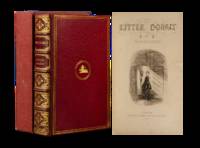
18576255London: Bradbury & Evans 1857. First edition. Near Fine. First issue with all twenty-one internal text flaws as noted by Smith. Octavo. 8 1/2 x 5 1/2 in; 216 x 138 mm. xii 625 1 blank pp. Forty engraved plates by "Phiz" H.K. Brown including frontispiece and engraved vignette title page. With an inserted preliminary leaf printed "With Water Colour Drawing on Calf Doublure by" signed Helen R. Haywood. Bound ca. 1930 by Rivière and Son stamp signed to upper doublure in full wine crushed morocco. Gilt French fillets. Gilt vignette to upper board. Five gilt ruled raised bands. Gilt lettered and decorated compartments. Original watercolor painting ca.1930 by Helen R. Haywood reproducing in color the Phiz plate "Flora's Tour of inspection" found opposite to page 519 on calf to upper doublure signed "HRH" at lower left corner with gilt rolled decorative borders. Red moire silk endpapers. Red moire silk to lower doublure with gilt rolled borders. All edges gilt. Neat ink inscription on front blank "Louise Dalton Kirk./from/Mother and Dad-/1936-." Expertly rebacked with the original spine panel laid down. Housed in the binder's original fleece-lined red cloth slipcase. A unique copy. <br /> <br /> With Amy Dorrit as his case study Dickens reveals how a parents' financial shortcomings can detrimentally affect their daughters' lives -- forcing women into unsafe or unsavory employment and preventing them from finding husbands or forming families of their own. And he suggests that only through goodness and self sacrifice can women rise up from these conditions. "On any other terms than those of allegory angelic Amy Dorrit would be squirmingly hard to swallow. As it is her goodness is indispensable to the story. Born in the Marshals debtor's prison she is the only character whose wishes are wholly unselfish and whose unbreakable will to love and be loved frees her metaphorically from every prison literal and social. All the other major characters are imprisoned by discontent by poverty by ignorance by personal ambition even by ill-judged kindness; but most conspicuously by an insatiable desire for money power and status" Stevenson. No other Dickens novel tackles more overtly the burdens women bear in the face of economic hardship nor so highly glorifies its female characters for their endurance. "Little Dorrit originally appeared in twenty numbers bound in nineteen monthly parts the last part forming a double number from December 1855 - June 1857. It was published in book form on May 30 1857" Smith.<br /> <br /> Helen Riviere Haywood 1908-1995 was an English painter children's book illustrator and writer best known for her foredge paintings. She came from a book-binding family: Haywood was the granddaughter Robert Riviere founder of the great bindery which executed this lovely binding and her uncle who also worked for the firm introduced her to foredge and double foredge painting. Between the 1930s-1970s she completed multiple commissions for Inman's Books a New York City based antiquarian book dealer. From her intertest in science anthropology and naturalism Haywood developed a keen attention to the world's natural elements; this talent for observation and specificity found its way into her artwork. "The Riviere Bindery was one of the most notable and prolific shops in London's West End from about 1840 through 1939" Princeton. Bath-based Bayntun Bindery acquired the firm in 1939 transforming into the "Bayntun-Riviere bindery" which is still in existence and family owned. <br /> <br /> <br /> Provenance: Louise Dalton Kirk 1936; Purchased by David Brass Rare Books from a private California collection 2007; sold to Randal Moscovitz 2008.<br /> <br /> Smith I 12. Eckel pp. 82-85. Near Fine. Bradbury & Evans unknown
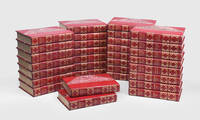
19003470Boston: Dana Estes & Company 1900. Edition Magnifique Limited Edition. Leather Bound. Very Good. Cruikshank Barnard and Darley. Cruikshank Barnard and Darley. Edition Magnifique Limited Edition. Leather Bound. 34 vol. Charles Dickens The Works of Charles Dickens.<br /> Edition Magnifique Limited Edition limited to 26 lettered copies of which this is letter Q. Printed on Japanese Vellum. Illustrated frontispiece in 2 states: black-and-white and hand-colored. Illustrated throughout by Cruikshank Barnard and Darley. Bound in 3/4 marbled levant leather binding with marbled boards and endpapers gilt detailing on borders. Top edges gilt raised bands on spine spine panel compartments beautifully embellished with floral gilt frames and motifs. Published Boston: Dana Estes & Company circa 1900.<br /> H: 9 1/4" W: 6 1/2" D: 1 1/4". Dana Estes & Company unknown
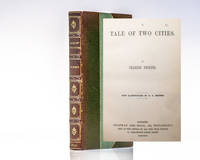
1859149304London: Chapman and Hall 1859. First edition first issue of one of Dickens' most enduring works. Octavo bound in three quarters morocco with gilt titles and tooling to the spine in six compartments within raised gilt bands all edges gilt illustrated with sixteen plates after H.K. Browne including the frontispiece and title vignette. In very good condition. The most famous and possibly the most popular of Dickens's novels A Tale of Two Cities shows a master of dramatic narrative extracting gold from the ore of history. If the bloody tableau of the French Revolution were not in itself sufficient for a dozen novels Dickens added to it a professional resurrectionist an authentic ogress and an antihero as convincingly flawed as any in modern literature. “Dickens had always admired Carlyle’s History of the French Revolution and asked him to recommend suitable books from which he could research the period; in reply Carlyle sent him a ‘cartload’ of volumes… So great was Dickens’ enthusiasm for the story that it had indeed ‘taken in possession’ of him… The force of the novel springs from its exploration of darkness and death but its beauty derives from Dickens’ real sense of transcendence from his ability to see the sweep of destiny†Ackroyd 858. The last of Dickens’ books to be illustrated by H.K. Browne “Phiz†with 16 engraved plates by him. “Browne for 23 years responsible for all the etchings which had so successfully embellished these Dickens’ books produced his last drawings for the present work… Bradbury and Evans the printers of all and publishers of five of Dickens’ works as issued in monthly parts had ceased to act in this dual capacity after completion of Little Dorrit… resulting in the return of Chapman and Hall as publishers of this and all succeeding works†Hatton & Cleaver 333. Chapman and Hall unknown
1859110251London: Chapman and Hall 1859. First edition first issue of one of Dickens' most enduring works with p. 213 misnumbered "113" the signature mark "b" at the foot of the plate list and the misspelling "affetcionately" on line 12 p. 134. Octavo bound in three quarters leather over marbled boards gilt titles and tooling to the spine raised bands marbled endpapers. Sixteen plates after H.K. Browne including frontispiece and title vignette. In near fine condition. Ownership signature. The most famous and possibly the most popular of Dickens's novels A Tale of Two Cities shows a master of dramatic narrative extracting gold from the ore of history. If the bloody tableau of the French Revolution were not in itself sufficient for a dozen novels Dickens added to it a professional resurrectionist an authentic ogress and an antihero as convincingly flawed as any in modern literature. “Dickens had always admired Carlyle’s History of the French Revolution and asked him to recommend suitable books from which he could research the period; in reply Carlyle sent him a ‘cartload’ of volumes… So great was Dickens’ enthusiasm for the story that it had indeed ‘taken in possession’ of him… The force of the novel springs from its exploration of darkness and death but its beauty derives from Dickens’ real sense of transcendence from his ability to see the sweep of destiny†Ackroyd 858. The last of Dickens’ books to be illustrated by H.K. Browne “Phiz†with 16 engraved plates by him. “Browne for 23 years responsible for all the etchings which had so successfully embellished these Dickens’ books produced his last drawings for the present work… Bradbury and Evans the printers of all and publishers of five of Dickens’ works as issued in monthly parts had ceased to act in this dual capacity after completion of Little Dorrit… resulting in the return of Chapman and Hall as publishers of this and all succeeding works†Hatton & Cleaver 333. Chapman and Hall hardcover
18591609040London: Chapman and Hall 1859. 1st Edition. Hardcover. Very Good. Original maroon cloth covers rebacked with matching leather spine. With Illustrations by H.K. Browne. 1859. First edition second state with title-page still dated 1859 but with corrected pagination on page 213 and no signature "b" on the list of plates. Octavo. i-viiviiiix-x 12-254 pp. Sixteen inserted plates including frontispiece and vignette title by Browne 'Phiz'. From the silk manufacturing family empire of George Courtauld signed and dated 1859 by George Courtauld unclear if the father or the son on the front free endpaper and with the bookplate of son or brother Sydney Courtauld on the front pastedown. A vestige of British history. Far more desirable with the original cloth instead of the far more common complete rebinding. Housed in a custom-made collector's slipcase. London: Chapman and Hall hardcover
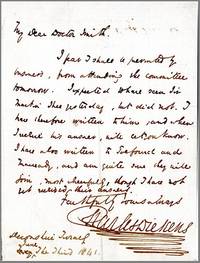
1841523271841. <p>1 Autograph letter signed to Dr. Thomas Southwood Smith 1788-1861. 1 page. Devonshire Terrace London 3 June 1841. 154 x 117 mm. Traces of mounting on blank verso light soiling along folds but very good. With:</p> <p> 2 Carte-de-visite photograph of Dickens by J. Gurney & Son. New York 1867. 107 x 64 mm. Photographer's logo on verso discolored and faded a few tiny spots but very good. Together 2 items.</p> <p> To his friend Thomas Southwood Smith physician and sanitary reformer regarding Smith's plan for founding a subscription sanatorium for middle-class Londoners; Dickens was an early supporter of Smith's scheme and served as a member of the Sanatorium's committee. Dickens letters relating to medicine are rare; this is the first one we have ever handled. This letter was not seen by the editors of Dickens's correspondence who were able only to record its existence from a listing in a 1909 dealer's catalogue; see House and Storey The Letters of Charles Dickens Vol. 2 p. 294.</p> <p> The letter reads:</p> <p> My Dear Dr. Smith I fear I shall be prevented by business from attending the committee tomorrow. I expected to have seen Sir Martin Shee yesterday but did not. I have therefore written to him; and when I receive his answer will let you know. I have also written to Talfourd and Macready and am quite sure they will join most cheerfully though I have not yet received their answers. Faithfully yours always Charles Dickens. Smith's Sanatorium described in its prospectus as "a self-supporting establishment for the lodging nursing and cure of sick persons of the middle classes of both sexes" opened at Devonshire House York Gate close to Dickens's house at Devonshire Terrace in April 1842. As he noted in this letter Dickens had written to the portrait painter Sir Martin Shee 1769-1850 president of the Royal Academy to ask whether Shee would consider supporting Smith's venture; Shee readily agreed for which Dickens thanked him in a letter dated 9 June see the online Charles Dickens Letters Project. The present letter also mentions Dickens's good friends judge and politician Thomas Noon Talfourd 1795-1854 to whom Dickens had dedicated The Posthumous Papers of the Pickwick Club and stage actor William Macready 1793-1873.</p> <p> The letter is accompanied by an 1867 carte-de-visite photograph of Dickens by J. Gurney & Son of New York most likely taken during Dickens's second American tour. </p> . unknown
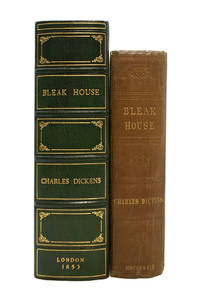
185369008London: Bradbury and Evans 1853. BROWNE Hablot Knight. . Bleak House. With Illustrations by H.K. Browne London: Bradbury and Evans 1853.<br> <br> Full Description:<br> <br> DICKENS Charles. Bleak House. With Illustrations by H.K. Browne London: Bradbury and Evans 1853.<br> <br> First edition with all first issue points as listed by Smith including "elgble" on page 19 line 6; "chair" on page 209 line 23; "counsinship" on page 275 line 22. The only two points not found are both only found in "Some copies" pg 230 not missing the 2; Page 620 "received". In the primary binding variant with "MDCCCLIII" stamped in gilt on the foot of the spine. But unlike Smith's variant mentioned this current copy is bound with the half-title. Octavo 8 x 5 inches; 217 x 140 mm. i-viiviii-xxixii-xivxvxvi 12-624. With forty engraved plates including the frontispiece and engraved title. Bound with half-title. With a note in Dickens' hand tipped in on front free endpaper reading "Bleak House and The East Wind."<br> <br> Original publisher's green fine diaper-grain cloth spine lettered in gilt covers blindstamped according to the primary stamping pattern and with variant "MDCCCLIII" in gilt at foot of the spine. Yellow coated endpapers. Edges uncut. Spine a bit sunned. Corners and head and tail of spine a bit bumped and some light chipping to head and tail of spine. Back outer joint at top of spine with a small repair to cloth. A tiny split to top front of outer spine joint. Cloth on spine a bit wrinkled. Binding slightly skewed. Plates a bit foxed and toned. Text overall very clean. A few pages opened rough not affecting text. Front pastedown with two previous owner's bookplates. Overall a very nice copy in a primary variant binding. Housed in a custom full morocco clamshell<br> <br> With the note in Dickens' hand tipped in to the front free endpaper reading "Bleak House and The East Wind." "The wind blowing in the east is a constant point of reference for Mr. John Jarndyce one of the novel's central characters and a beacon of social good. He deploys the phrase when his world is threatend by disorder or when he witnesses broader injustices. Easterly winds after all were believed to carry dirt and disease and were considered a real threat in Victorian Britain. Given the novel's preoccupation with physical environments and how these relate to individual and public health this small comments is in fact incredibly charged with meaning." Sotheby's<br> <br> "In Bleak House for the first time society is seen as an absurdity an irrelevance almost a madness. A dark force from which the real people must escape in order to create another society of their own. Dickens had been preparing for this novel all his life and despite the calamities. which had helped to provoke it in the first place . was even happy while he was writing it. It might even be said that Bleak House cured the very malaise which was responsible for its composition" Ackroyd 649-50.<br> <br> Smith Dickens I 10.<br> <br> HBS 69008.<br> <br> $7500. Bradbury and Evans unknown
193750747Bloomsbury: The Nonesuch Press 1937. Hardcover - as published. Complete Nonesuch Dickens in Very Good condition. Binding is tight and stable on all volumes and illustrations are complete throughout. Color illustrations present in Christmas Carol. Some fading and speckling to the spines. All black morocco leather labels intact. Includes 23 volumes of the works the Nonesuch Dickensiana a "Note on the Format" pamplet a staple bound " A Portrait in Natural Colour of the Nonesuch Dickens" and a clamshell containing the Martin Chuzzlewit frontispiece steel plate with the Chapman and Hall letter of authentication numbered 506. . The Nonesuch Press hardcover
190010271Var 1900. Unique. Hardcover. Very Good. Unique. Hardcover. Bookplate of renowned author and librettist Harry Bache Smith. Also bears armorial bookplate of Claire Mendel noted German Consul and collector.<br /> A bit of background on Lord Bateman: "An adaptation of the traditional ballad attributed to Thackeray British Library Catalogue with preface and notes by Dickens. George Cruikshank regaled a dinner of the Antiquarian Society with a rendition of the ballad. On "hearing Cruikshank mournfully intone the word's of the Turks' daughter to the imprisoned Lord. Dickens offered to polish it into an even more solemn absurdity. He told Cruikshank to ask his sister Fanny to take down the music and 'to be sure to mark the shades and the expression.' And although he kept his part in The Loving Ballad secret he not only wrote a burlesque introduction and notes but altered lines and substituted a new last verse." Johnson p. 260. It has also been suggested that Thackeray arranged the old ballad Dickens is thought to have contributed the 'scholarly' notes and Cruikshank provided the illustrations.<br /> This volume is comprised of four parts the first is an engraving of Thackeray of unknown origin the second is Dec. 1892 Harper's Magazine article by Anne Thackeray Richie considering the history of the story's origin and arguing that her father was responsible without Dicken's contribution. The third part is 4 mss pages in Harry Bache Smith exploring his Bateman holdings and its history and noting a direct contradiction to Richie's argument. Finally and notably there are 3 4-up fo leaves which appear to be maquettes of Cruikshank's illustrations for the 1939 first edition.no other such set is known to exist.<br /> An unusual and genuinely significant collection. Light shelf/edge wear age toning to some leaves creases to some two bookplates at front pastedown ephemera laid in else tight bright and unmarred. Full tan leather binding two raised bands gilt lettering and decorative elements dentelles marbled endpages. 8vo. np. Illus. b/w plates. comprised of three parts see below. hardcover
1843121293London: Chapman and Hall 1843-60. Early printings of all five of Charles Dickens' Christmas Books finely bound. Octavo 5 volumes bound in full calf with elaborate gilt tooling to the spine in six compartments within raised gilt bands black and green morocco spine labels lettered in gilt double gilt ruled panels gilt turn-ins and inner dentelles all edges gilt marbled endpapers. Illustrated with sixty-three engravings altogether four in color by Leech Maclise Stanfield Doyle and Landseer. In fine condition. An exceptional set. A Christmas Carol "may readily be called the Bible of Christmas It was issued about ten days before Christmas 1843 and 6000 copies were sold on the first day the number of reprintings have been so many that all attempts at the figures have been futile. Altogether 24 editions were issued in the original format" Eckel 110. "It was a work written at the height of Dickens’ great powers which would add to his considerable fame bring a new work to the English language increase the festivities at Christmastime and contain his most eloquent protest at the condition of the poor" John Mortimer. "Suddenly conceived and written within a few weeks A Christmas Carol was the first of Dickens’ Christmas books a new literary genre thus created incidentally it was an extraordinary achievement—the one great Christmas myth of modern literature." Chapman and Hall unknown
18371409508Chapman and Hall London 1837. 1st Edition. Hardcover. Very Good. First edition in book form. Otavo. MDCCCXXXVII 1837 stated on the title page. With 43 illustrations by R.Seymour and Phiz London including the second state of most of the Seymour plates the Phiz replacement plates for the Buss plates with captions instead of numbers below images and mixed early states of the remaining Phiz plates all prior to Phiz's major re-engravings with the early page numbers instead of the later captions and imprints below the images including simultaneous steels of the frontispiece and vignette title. As expected in the first edition in book form the text points are in the second state showing corrections. Some wear a few small tears on pages some darkening of pages foxing. Housed in a custom-made collector's slipcase. Smith Dickens I 3. HBS 36100. Chapman and Hall, London hardcover
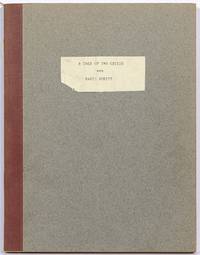
1938552364New York: The Columbia Broadcasting System Orson Welles and The Mercury Theatre on the Air 1938. Hardcover. Near Fine. Quarto. 94 mimeographed leaves printed rectos only. Bound or likely rebound at an early date with quarter canvas spine and thick card boards with typed title labels on front board and spine. Modest evidence of bookplate removal inside front board small chip at the corner of the label on the front board else very near fine. Adapted from the Charles Dickens novel. The Mercury Theatre on the Air produced 22 radio plays based on literary novels plays or short stories in 1938 this was the third play produced. Up until October 1938 all of the adaptations including this one were written by Orson Welles and John Houseman. Overwhelmed by the weekly deadlines Welles also starred in most of the dramas sometimes playing multiple parts they hired Howard Koch to assist - three weeks later they collaborated on The War of the Worlds - arguably the most famous dramatic radio broadcast in history. In A Tale of Two Cities Welles played both Sidney Carton and Dr. Alexandre Manette in this production. In the script page two is blank except for the word "Welles" - presumably Welles would deliver his introduction extemporaneously. The Mercury Theatre on the Air scripts are rare. OCLC locates a single copy of this script Dartmouth. (The Columbia Broadcasting System, Orson Welles and The Mercury Theatre on the Air) hardcover
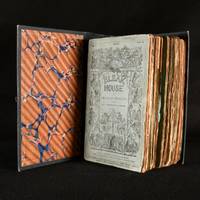
1852810P3London: Bradbury & Evans 1852-53. First edition. Paperback. Very Good. 9.5" by 6". Hablot Knight Browne; Phiz. An uncommon to find complete serial run of 'Bleak House' here in the original nineteen parts with original plates and advertising leaves. Complete as twenty parts bound in nineteen with XIX and XX being published as a double issue.Uncommon to find in the original parts.In a custom cloth portfolio in a very good condition.The serialisation ran from March 1852 to September 1853 across twenty issues. Each issue cost one shilling though the final double issue cost two shillings."Bleak House" is narrated by Esther Summerson describing her house of Bleak House where she goes to live under a new guardian Mr Jarndyce. At the heart of the novel is a long running legal case Jarndyce and Jarndyce in the Court of Chancery. The case surrounds a number of several conflicting wills written by the same person. This case was probably inspired by the Thellusson vs Woodford case a will which was read in 1797 and was contested and not determined until 1859. The novel actually held support a judicial reform in the form of the 1870s Judicature Acts.Complete with all plates by Phiz.Part I published in March 1852 containing chapters 1 to 4. Illustrated with two plates. Twenty-four pages of publisher's adverts to the front ten to the rear and adverts to the rear wrap. Bound with the two leaves of W. Mott's adverts to the rear and four leaves of Norton's Camomile Pills adverts to the rear. Wraps and the advertising leaves are detached but present.Part II published in April 1852 containing chapters 5 to 7. Illustrated with two plates. Eighteen pages of publisher's adverts to the front twenty pages to the rear and adverts to the rear wrap. Blue slip advertising Household Words bound before the text. Yellow slip advertising Ford"s Eureka Shirts bound in the rear. Part III published in May 1852 containing chapters 8 to 10. Illustrated with two plates. Sixteen pages of publisher's adverts to the front fourteen to the rear and adverts to the rear wrap. Blue slip advertising Household Words bound before the text. Slip for Marsland Son & Co's Griffin Crochet Cotton bound to the rear.Part IV published in June 1852 containing chapters 11 to 13. Illustrated with two plates. Twelve pages of publisher's adverts to the front eighteen leaves to the rear and adverts to the rear wrap including six leaves of yellow adverts from Stevens & Co. Slip for Marsland Son & Co's Griffin Crochet Cotton bound to the rear. Green slip advertising Household Words bound before the text. Bound with the 'Cheap Edition of the Works of Charles Dickens' slip called for before the plates.Part V published in July 1852 containing chapters 14 to 16. Illustrated with two plates. Twelve pages of publisher's adverts to the front sixteen to the rear and adverts to the rear wrap. Blue slip advertising Household Words bound before the text. Slip for Marsland Son & Co's Griffin Crochet Cotton bound to the rear. Wraps are detached but present pages 145 to end are detached but present.Part VI published in August 1852 containing chapters 17 to 19. Illustrated with two plates. Eight pages of publisher's adverts to the front fourteen to the rear and adverts to the rear wrap. Green slip advertising Household Words bound before the text. Slip for Marsland Son & Co's Griffin Crochet Cotton bound to the rear. Slip for The Oak Mutual Life Assurance & Loan Company bound to the rear. Bound with the yellow 'New Serial by Mr. Charles Lever' slip to the rear with an additional blue advert of the same loosely inserted.Part VII published in September 1852 containing chapters 20 to 22. Illustrated with two plates. Green slip advertising Household Words bound before the text. Twelve pages of publisher's adverts to the front twenty-four to the rear and adverts to the rear wrap. Slip for Marsland Son & Co's Griffin Crochet Cotton bound to the rear. Bound with the pink 'New Serial by Mr. Charles Lever' slip to the rear with an additional brown advert of the same loosely inserted.Part VIII published in October 1851 containing chapters 23 to 25. Illustrated with two plates. Twelve pages of publisher's adverts to the front six to the rear and adverts to the rear wrap. Green slip advertising Household Words loosely inserted. Part IX published in November 1852 containing chapters 26 to 29. Illustrated with one plate. Slip explaining the plate printing error bound after the plate as called for. Eight pages of publisher's adverts to the front fourteen to the rear and adverts to the rear wrap. Green slip advertising Household Words loosely inserted. Wraps and adverts are detached but presentPart X published in December 1852 containing chapters 30 to 32. Illustrated with three plates. Twenty pages of publisher's adverts to the front twenty to the rear and adverts to the rear wrap. White slip advertising Household Words loosely inserted. Poem addressed to the public by H. J. Curry bound to the front.Part XI published in January 1853 containing chapters 33 to 35. Illustrated with two plates. Sixteen pages of publisher's adverts to the front twenty-two to the rear and adverts to the rear wrap. Slip for Marsland Son & Co's Griffin Crochet Cotton bound to the rear. Pink slip for "Handley Cross" loosely inserted. Green slip advertising Household Words loosely inserted. White slip advertising "The Field" loosely inserted.Part XII published in February 1853 containing chapters 36 to 38. Illustrated with two plates. Sixteen pages of publisher's adverts to the front eight to the rear and adverts to the rear wrap. Slip for Marsland Son & Co's Griffin Crochet Cotton bound to the rear. Green slip advertising Household Words bound before the text. Wraps are detached but present.Part XIII published in March 1853 containing chapter 39 to 42. Illustrated with two plates. Sixteen pages of publisher's adverts to the front twelve to the rear and adverts to the rear wrap. Pink slip for "Handley Cross" bound before the text. Green slip advertising Household Words bound before the text. Eight advertising leaves for Groombridge & Sons to the rear. Wraps and adverts to the rear are detached but present. Part XIV published in April 1853 containing chapters 43 to 46. Illustrated with two plates. Eighteen pages of publisher's adverts to the front twenty-four to the rear and adverts to the rear wrap. Green advertising slip for Ali Ahmed's Treasure of the Desert present as is the advert for 'Frank Merryweather' "The Two Widows" and Griffin Crochet Cotton. The 'New Geographical and Educational Work' advert leaves are printed on a now faded pink paper. Blue slip advertising Household Words bound before the text.Part XV published in May 1853 containing chapter 47 to 49. Illustrated with two plates. Twelve pages of publisher's adverts to the front twenty to the rear and adverts to the rear wrap. Adverts for Mrs. S. C. Hall's 'A Descriptive Sketch' and Mayall's Daguerreotype Portrait Galleries present. Green slip advertising Household Words bound before the text. The 'A Descriptive Sketch' advert is particularly scarce.Part XVI published in June 1853 containing chapters 50 to 53. Illustrated with two plates. Twelve pages of publisher's adverts to the front ten to the rear and adverts to the rear wrap. Advert for Marsland's Manual to the rear. Blue slip advertising Household Words bound before the text. Advert for "The Anti-Slavery Reporter" present to the rear. Part XVII published in July 1853 containing chapters 54 to 56. Illustrated with two plates. Twelve pages of publisher's adverts to the front eight to the rear and adverts to the rear wrap. Blue slip advertising Household Words bound before the text. Green advert for 'The Field' present to the rear.Part XVIII published in August 1853 containing chapters 57 to 59. Illustrated with two plates. Blue slip advertising Household Words loosely inserted. Eight pages of publisher's adverts to the front twelve to the rear and adverts to the rear wrap. Adverts for 'Alison's History of Europe' and Treasures of the Desert present 'Treasures' advert printed on plain white paper the first on blue paper and is detached but present.Parts XIX and XX published in September 1853 containing chapters 60 to 67. Illustrated with four plates. Twenty pages of publisher's adverts to the front thirty-six to the rear and adverts to the rear wrap. Blue slip advertising Household Words bound before the text. Bound without the 'New Periodical Work.The Newcomers' slip to precede the 'Advertiser' to the front. Wraps and adverts are detached but present.Pagination is as follows: 24 32 10; 16 2 33-64 20; 16 65-96 14; 12 97-128 18; 12 129-160 16; 8 161-192 14; 12 193-224 24; 12 225-256 6; 8 257-288 14; 20 289-320 20; 16 321-352 22; 16 353-384 8; 16 385-416 12; 18 417-448 24; 12 449-480 20; 12 481-512 10; 12 513-544 8; 8 545-576 12; 20 577-624 7 viii-xvi 36pp In the original publisher"s paper wraps in a custom cloth portfolio. Externally generally smart. A little wear to the backstrips resulting in some loss. Light marks and spots to the wraps. Minor edge wear with some small closed tears. Faint tide mark to the front wrap of Part VI. Blind stamp to the head of the front wrap of Part XVII. Heavier age-toning to the wraps of Part XVIII. Prior owner"s ink inscription to the front wrap of Parts I VI VIII and XV. Wraps detached but present of Parts I V IX XII XV XVI and XIX/XX. Front wrap of Part XIII is detached but present. Rear wrap of Part II is detached but present. Adverts detached but present to Parts I II V IX XIV and XIX/XX. Rear wrap and adverts to the rear of Part XIII are detached but present.Label to the head of the front wrap of Part IV. Wraps and adverts of Part XI may detach with further handling. Adverts to the rear detached but present to Part XVI. Internally firmly bound textblock of Part XIX/XX is broken to the middle. Pages are lightly age-toned and generally clean with some spots. Plates are more age-toned and spotted. Tidemark to the plates of Part III VII and VIII. Pages 145 to end of text of Part V are detached but present. Green slip advertising Household Words in Part VIII is detached but present with some edge wear. Pink slip for "Handley Cross" in Volume XIII is chipped and with a closed tear. Advert for Hall"s work in Part XV is detached but present. Cloth portfolio with some light marks ribbon lies a bit worn with some loss. Portfolio in a very good condition. Very Good Bradbury & Evans paperback
1845141512London: Chapman and Hall/Bradbury & Evans 1845-48. Complete set of Charles Dickens' Christmas Books. Octavo 5 volumes original cloth with gilt titles and tooling to the spine and front panels all edges gilt. A Christmas Carol is an eleventh edition plates hand-colored recased by Morrell 1845; The Chimes: A Goblin Story is a sixth edition recased 1845; first edition of The Cricket on the Hearth second state of advertisement leaf spine repaired and new endpapers 1846; first edition of The Battle of Life with vignette title-page in fourth state without imprint Todd's E1 1846; first edition of The Haunted Man and the Ghost's Bargain Bradbury & Evans 1848. All but A Christmas Carol with additional vignette titles. In very good condition. A Christmas Carol "may readily be called the Bible of Christmas. It was issued about ten days before Christmas 1843 and 6000 copies were sold on the first day"Eckel 110. "It was a work written at the height of Dickens’ great powers which would add to his considerable fame bring a new work to the English language increase the festivities at Christmastime and contain his most eloquent protest at the condition of the poor" John Mortimer. "Suddenly conceived and written within a few weeks A Christmas Carol was the first of Dickens’ Christmas books a new literary genre thus created incidentally it was an extraordinary achievement—the one great Christmas myth of modern literature." Chapman and Hall/Bradbury & Evans hardcover
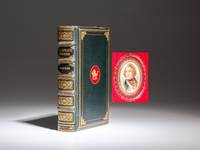
183718130London: Chapman and Hall 1837. First Edition Second State. Full leather. Near fine. First edition of The Posthumous Papers of The Pickwick Club by Charles Dickens in a stunning Cosway-Style Binding. Octavo xiv 2 609pp 7. Full green morocco over beveled boards title in gilt on the spine. All edges gilt. Five decorative raised bands gilt lettering and decorative compartments. Doublures with inlaid red morocco and gilt dentelles. Inset hand-colored portrait of Dickens after paintings by Daniel Maclise under glass with brass frame in front doublure. Bound by Sangorski & Sutcliffe for Charles J. Sawyer LTD of London. Front hinge reinforced with archival leather restoration almost indistinguishable. This work is the second issue of the text with the half-title the corrected "W" in Weller on the vignette title "loud knocking" on page 18 is slightly mutilated signature "E" present on pages 25 and 27 and pagination present for page 26. Solid text block light wear to edges of some leaves faint foxing. Complete with vignette title page frontispiece portrait and 41 illustrated plates by Robert Seymour and H.K. Brown "Phiz". Smith I 3 Hatton & Cleaver 3-88pp A beautiful Cosway-Style binding. The Cosway-style binding originated in London in the early 20th Century created by bookseller and Dickens scholar John Harrison Stonehouse. The style was named after Richard Cosway 1742-1821 the celebrated English miniaturist painter known for his delicate portrait work. Stonehouse commissioned Sangorski & Sutcliffe to create bindings that incorporated miniature watercolor portraits set into the covers under glass. These miniatures-painted on ivory by artists such as Miss C.B. Currie-were often portraits of the book's author a key character or a historical figure related to the text. Each was framed within the leather cover usually of richly gilt morocco and accompanied by elaborate tooling and jeweled ornamentation. The style became a hallmark of Edwardian luxury bookbinding. After the deaths of Sangorski 1912 and later Currie the tradition continued under Sutcliffe and later firms and "Cosway-style" came to denote any binding featuring such inset miniatures even when produced elsewhere. Chapman and Hall unknown
424301823-1895 Publisher and partner in Chapman and Hall sending "another little job for Clowes's. It is a very short one. I have written all needful instructions fro the printer. Will you let them have a few sheets of the same paper as before and direct them to pull three piles for me when revised as in the other instances and then to distribute. Speed will be a great convenience to m as my Reading time is fast drawing on and I want the book by me any hour." 1 side 8vo. Gads Hill Place Higham by Rochester Kent Saturday Night 1st September Chapman and Hall published the works of Charles Dickens Robert Browning and Elizabeth Barrett Browning among others. In 1880 Chapman turned his business into a limited company which he ran until his death. On 28th March 1870 three months before his death Charles Dickens signed an agreement with Frederic Chapman and Henry Trollope confirming their shared ownership of Dickens's copyrights. Chapman bought the remainder of those copyrights after Dickens's death; he also carefully cultivated Dickens' relatives Georgina Hogarth and Mary Dickens when they proposed to edit Dickens's letters. Dickens in fact made Chapman & Hall rich. William Clowes Ltd. is a British printing company founded in London in 1803 by William Clowes. It grew from a small one press firm to one of the world's largest printing companies in the mid-19th century. After separating from Catherine Dickens undertook a series of popular and remunerative reading tours which together with his journalism were to absorb most of his creative energies for the next decade in which he was to write only two novels. His first reading tour lasting from April 1858 to February 1859 consisted of 129 appearances in 49 towns throughout England Scotland and Ireland. Dickens's continued fascination with the theatrical world was written into the theatre scenes in Nicholas Nickleby and he found an outlet in public readings. In 1866 he undertook a series of public readings in England and Scotland with more the following year in England and Ireland. His books at this time were A Tale of Two Cities 1859 and Great Expectations 1861 both of which were resounding successes. unknown
1870ST18330London: Chapman and Hall 1870. FIRST EDITION in book form. 215 x 140 mm. 8 1/2 x 5 1/2. vii 1 blank 190 pp. Without the leaf of publisher's ads. <br/> VERY ATTRACTIVE SCARLET CRUSHED MOROCCO BY CEDRIC CHIVERS stamp-signed on rear turn-in ca. 1911 covers framed by one blind and two gilt fillets upper cover with INLAID PAINTED VELLUCENT ESCUTCHEON with the arms of the city of Rochester within a "tiled" gilt frame the inlay enclosed by Art Nouveau floral design incorporating a heart motif an onlaid citron morocco heart at the foot of the design three raised bands dividing the spine into two small compartments slightly larger compartment with gilt titling and an elongated compartment with inlaid vellucent and gilt escutcheon displaying the arms of the county of Kent within similar Art Nouveau tooling featuring an onlaid citron heart turn-ins ruled in gilt with dot cornerpieces leather hinges red watered silk endleaves all edges gilt. Frontispiece portrait engraved vignette title and 12 plates as called for by S. L. Fildes EXTRA-ILLUSTRATED with reproductions of a black & white portrait of Fildes and an engraved portrait of John Forster both taken from contemporary publications a reduced reproduction of the original green paper wrapper cover all three of these mounted in heavy stock frames additional calligraphed title page noting extra-illustrations 16 ORIGINAL ILLUSTRATIONS FOUR OF THESE WATERCOLORS 13 dry-point all but one mounted in heavy stock frames one drawn directly on heavy stock all captioned and all with tissue guards. Front flyleaf with embossed ex-libris of Dana C. Bradford. With "The Last Book" a seven-page excerpt from Forster's "Life of Dickens" mounted in frames at rear following a handwritten section title page. ◆Slight rippling of some of the inserted leaves text faintly yellowed because of paper stock as no doubt in all copies perhaps a whisper of wear to the binding but still and easily a very fine copy.<br/> <br/> In terms of content illustration binding and condition this item is obviously of very considerable appeal. Dickens' final unfinished novel "Edwin Drood" is a murder mystery that remains unsolved to this day. Set in a lightly fictionalized version of Rochester near which Dickens was living the plot involves a marriage engagement between the two orphans Drood and Rosa Budd made by their parents and distasteful to both of them. When Drood disappears suspicion falls heavily on Neville another orphaned young man who is in love with Rosa. Neville has the reader's sympathy and we can only hope that Drood's sinister and scheming uncle Jasper is the culprit. A distinguished artist who did many famous portraits in his later years Samuel Luke Fildes 1844-1927 began as an illustrator known especially for powerful black and white images of social realism; his career was measurably advanced by his selection as the artist to execute the plates in "Edwin Drood." Cedric Chivers opened his Bath bindery in the 1880s producing various kinds of fine decorative bindings but specializing in a "vellucent" binding based on the 18th century painted vellum work of Edwards of Halifax. Here he has used the vellucent technique to create the shields with the arms of Rochester and Kent inlaid on the cover and spine. The anonymous watercolors here are extremely attractive being skillfully done in pleasing colors. They are mostly depictions of the novel's localities generally in Rochester. Chapman and Hall unknown
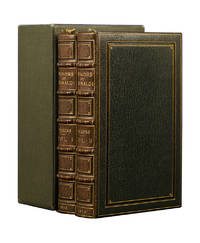
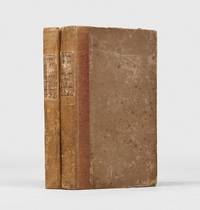
18386256London: Richard Bentley 1838. First edition. First issue with no border around final plate and correct page listing in list of "Embellishments." Two octavo volumes 7 1/2 x 4 5/8 inches; 191 x 117 mm. i-xix xx blank 288 pp; i-ix x blank 263 264 printers imprint. Engraved frontispiece portrait in volume I and twelve engraved plates by George Cruikshank. The frontispiece to each volume hand-colored volume I. "Joseph Grimaldi" & Volume II. "Grimaldi's kindness to the Giant". Extra illustrated by the insertion of forty-eight engraved plates eighteen of which are hand colored. Six of the hand colored plates are by F.W. Pailthorpe; six by Isaac Cruikshank and two by George Cruikshank--all three of these artists are famous Dickens illustrators. Bound ca. 1920 by Bayntun stamp-signed in gilt "Bayntun. Binder. Bath. Eng." on rear silk endleaves. Bound in full forest green crushed levant morocco covers triple-ruled in gilt surrounding a thin inlaid border of black morocco. Spines with five raised bands decoratively bordered in black and gilt in compartments gilt lettering gilt board edges and decorative gilt turn-ins. Front and back doublures of each volume with a superb figure and background inlaid in various colored morocco's. The four inlaid designs include "Gaby Grin The Eccentric Clown" and three other characters from the book. Green watered silk endleaves all edges gilt. Spines very slightly darkened otherwise very fine. Housed in the original fleece-lined green cloth slipcase. A spectacular example of a pair of early Bayntun bindings typical of the firm's first-rate work and use of the best materials. <br /> <br /> Joseph Grimaldi 1779-1837 was considered "the most celebrated of English clowns" famous for his pantomime skills Britannica. Purportedly an autobiography edited by Dickens scholars have debated the extent of his authorial role: Forster claims he wrote the introductory chapter Eckel says the last and Bentley argues a significant portion of the book. It is for a discerning reader to parse Grimaldi from Dickens nevertheless it makes for an entertaining read.<br /> <br /> George Bayntun 1873-1940 was the founder of Bayntun Bindery. Trained by apprenticeship with the Taylor family Bayntun opened his own book bindery in 1894 dedicated to using traditional hand-crafted techniques and high-quality materials. The Bath-based firm acquired the Rivière Bindery also based in Bath in 1939 transforming into the "Bayntun-Riviere bindery" which is still in existence and family owned. <br /> <br /> <br /> Gimbel B64. Eckel pp. 140-2. Richard Bentley unknown
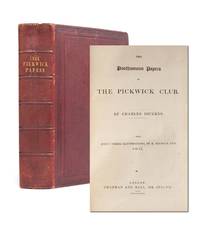
18375218London: Chapman and Hall 1837. First edition. Very Good . Bound in the publisher's full crushed purple morocco all edges gilt. Stamped in gilt on the spine and with blind rules on the boards and spine. With original yellow-coated end papers. Joints holding well although three short tears at the crown where it looks like someone pulled the book from a shelf at the crown causing three .5 inch tears. Inner hinges just starting but holding well. The book complete and entirely unrestored. Generally clean internally with less foxing near the plates than many copies. A Very Good copy rarely found in this deluxe format often used by Dickens for presentation copies.<br /> <br /> Collating xvi 609 1 complete with half title and 43 inserted plates. A few of Hatton and Cleaver's first issue points to the later half of text; all plates in the Phiz states and with the later Chapman & Hall imprints. Given that the early parts continued to be reprinted and corrected while the later parts were produced it is common for the cloth-bound or publisher's morocco-bound copies to have most the the earlier misprints corrected as here.<br /> <br /> Dickens' first novel showcasing his astounding talent for sketching charming sympathetic characters helped to launch his career. "Its main literary value and appeal was formed by its numerous memorable characters.The Pickwick Papers are mostly a series of humorous misadventures with a bit of satire that give some insight into the mores of Victorian society. You can witness Dickens here working on a few prototypes that will show up in later novels.you also see his social consciousness manifesting itself" Inverarity. An important early work that remains beloved by Dickens' fans for its sensationalism and humor. Very Good . Chapman and Hall unknown
1838166600Philadelphia: Lea & Blanchard successors to Carey & Co. 1839 though December 1838. Oliver in America First US edition of one of the best-known of all works of English fiction unrestored in the original quarter cloth. Oliver Twist was first serialized in Britain in Bentley's Miscellany from February 1837 to April 1839. Before serialization was complete the full novel was issued in Britain in book form in November 1838. The publishing history of the first US edition is complicated. Dickens's works did not have copyright protection in the US to his irritation and his novels were subject to rapid competing piracies. Lea and Blanchard made a payment of £50 to Dickens and £60 to his British publisher Richard Bentley in return for advance sheets of Oliver Twist to gain an advantage over other American publishers. From these advance sheets Lea and Blanchard issued a separate part serialization and planned a one-volume illustrated edition which was indeed the first printed in early December 1838. However delays in receiving Cruikshank's illustrations from Britain ensured the sheets of the one-volume edition were not published until 2 February 1839. Lea and Blanchard feared their competitors would publish first pirating copies of the British edition which were making their way over the Atlantic. They quickly printed this two-volume edition published on 19 December 1838 the title page post-dated 1839. 2 vols octavo. With 2 pages of preliminary advertisements in vol. I first state signed with an asterisk but not "1" and 16 pages in vol. II some copies have 12 pages without established priority. Original purple quarter cloth printed paper label to spines drab paper-covered sides. Housed in a brown half calf solander box. Contemporary ownership signature of one Joseph Hall to front free endpaper of each volume; recent bookplate of collector Peter Russell mounted to inside cover of box. Light sunning to spines slight wear to labels and corners contents a little browned and foxed as usual vol. I a little shaken pp. 155/6 of same with 80 mm closed tear affecting pagination and headline without loss pp. 81/2 of vol. II with 81 mm closed tear into text without loss. A very good copy. Gimbel A33; Walter Smith Charles Dickens: A Bibliography of his First American Editions 2012 pp. 83-7. See Kathleen Tillotson "The Philadelphia editions of 1838-9" in The Clarendon Edition of Oliver Twist 1966. hardcover
1894175950Boston: Houghton Mifflin Company The Riverside Press 1894. A handsome set The Large-Paper Edition number 301 of 500 sets: a very attractive edition of Dickens's collected works incorporating the illustrations of the first editions alongside scholarly commentary here handsomely bound. 32 vols octavo 221 x 151 mm. Illustrated throughout with engravings from the original designs by Brown Cruikshank Leech and others. Contemporary red half morocco spines lettered in gilt gilt floral blocking to compartments marbled sides top edges gilt others uncut. Spot of wear at head of spine of vol. I several leaves in vol. 13 chipped without loss to text otherwise contents fresh. An excellent set. unknown
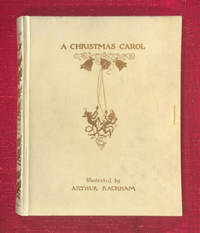
1911008394London Philadelphia: William Heinemann J.B. Lippincott 1911. Limited Edition . Hardcover. Near Fine. 4to - over 9¾ - 12" tall. RACKHAM Arthur 1867-1939. The deluxe edition & one of 525 copies signed by Arthur Rackham. In the publishers original gilt-stamped pictorial vellum a few faint surface soils to upper cover lacking the cloth ties. Spine gilt titles & illustrations. Internally illustrated endpapers limitation leaf with Rackham signature half title coloured frontis title with coloured illustration 8 ix-xv 1 2 3-147 pp 1 12 coloured plates by Arthur Rackham mounted on brown paper all with captioned tissue-guards illustrations 20 B&W illustrations within text t.e.g. others uncut pencil ownership inscription to fep Townsend occasional very faint edge browning but an excellent example of a title rarely found in as good a condition. 291230 mm 4to Riall p124. Latimore/Haskell p44 Through the intervention of four ghosts Ebenezer Scrooge is shown the spirit of Christmas! This the 1915 Arthur Rackham edition of A Christmas Carol presents Charles Dickens's classic Christmas novella accompanied by richly atmospheric illustrations. The book contains the complete text of Dickens's story first published in 1843 alongside Rackham's distinctive pen and ink drawings and colour plates which reinterpret the tale with dramatic often eerie visual intensity <br/> <br/> William Heinemann J.B. Lippincott hardcover
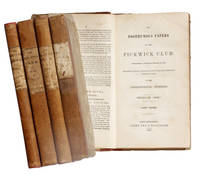
18365000622Philadelphia: Carey Lea & Blanchard 1836. Some spotting or staining; joints to vols 2 3 and 5 neatly repaired and strengthened at top and tail; new endpapers to vol. 5; boards a bit worn and spine labels rubbed with some loss of lettering. Five volumes small octavo; original quarter pink cloth and plain boards printed spine labels; preserved in separate folders contained together in a quarter morocco bookform slipcase. <p><p>Pickwick in its earliest book form: Dickens' first great work completed when he was just 24. This very scarce first American edition predated the English book edition at a time before any international forms of copyright a practice that was to cause its author great annoyance. The first four volumes of this Philadelphia edition were published between November 1836 and September 1837. The one-volume book edition in England was not issued until November 1837 with the fifth volume of this American edition appearing in December. </p> <p>Only about 1500 copies of the first volume were issued but as Dickens' popularity grew later volumes appeared in greater quantities and volumes 1 and 2 were re-issued. In this set once in the famous Suzannet collection of Dickens volume 1 is in its rare first state while volume 2 is in its second issue form.</p> <p>With this set is the letter from the Rosenbach Company offering it to Count de Suzannet the Dickens collector for the very substantial 1932 price of $585 citing the $600 made by a copy at Jerome Kern's 1929 sale. For the relationship between Rosenbach and Suzannet see Frank A. GIbson "A Great Bookseller" in The Dickensian Vol. 57 Issue 334 1 May 1961.</p> <p>Detailed summary: first issue of volume one no mention of 'part first' on title or spine label verso of title with note "Dickinson & Ward Printers" 2pp. advertisements at front listing only "Watkins Tottle" and two sections of 8pp. and 4pp. at end with advertisement for two further works by Boz on verso of final leaf of text p.220 second issue of volume two with 'part second' on title and spine label and 'sporting' on sixth line only volumes 3-5 each with advertisements 3: 4 pp. at front and 4 pp. at end 4: 4 pp. at front 5: 4 pp. at front and 14 pp. at end.</p> </p> . Provenance: Rosenbach Company New York; sold in 1932 to Count Alain de Suzannet Lausanne his bookplates and original Rosenbach offer letter; Sotheby's 22 November 1971 lot 26; Frank Fletcher decorative bookplate; Sotheby's 11 July 2002 lot 183; private collection Sydney. Carey, Lea & Blanchard unknown
1843924F19London: Chapman & Hall 1843 . Cloth. Good Only. 7" by 4.5". John Leech. The second edition of Charles Dickens's festive novella illustrated by John Leech and in the publisher's original cloth binding. The scarce second edition of this iconic work.The first run of 6000 copies sold out entirely between the 19th December and the 24th December 1843 with second and third editions quickly being made available before the New Year.Illustrated with a hand-coloured frontispiece and three further hand-coloured steel-engraved plates after John Leech. One plate is detached and loosely inserted. Collated complete.With the contemporary inscription of Ann Brown dated Jan. 1st 1844 to the front free endpaper.With two pages of advertisements to the rear.Retaining the original half title.Written by Dickens during a period when the British were re-evaluating past Christmas traditions and introducing newer customs such as Christmas cards and Christmas trees. The novella captured the zeitgeist of the mid-Victorian revival of the Christmas holiday. In the publisher's original cloth binding. Fraying and small losses of cloth to back strip head and tail. Back strip age toned. Bumping and small losses of cloth to board perimeters. Horizontal line of abrasion to centre of front board. Hinges strained and slightly tender. Inscription to front free endpaper. Internally text block divided into two between pages 64 and 65 with two central gatherings of sixteen leaves working loose and one plate detached and loosely inserted. Binding further tender between pages 128 and 129. Pages age toned most concentrated to title page. Small closed tear to title page head. Spotting and handling marks throughout. Good Only Chapman & Hall hardcover
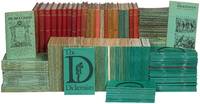
517731London: Chapman & Hall Ltd. for the Dickens Fellowship 2005. Unbound. Near Fine. Periodical. Vol. 1 Number 1 through Vol. 100 Number 3. 464 consecutive issues lacking only Vol. 15 No. 1 from 1919. A combination of single issues and 17 bound volumes with wrappers and ads bound in the rear. Single issues with light wear and soiling many with a brief inked note on the cover and mostly later issues with occasional cover stamp or internal inked checkmarks or marginal bracketing some spines sunned a couple of outliers with moderate wear or loss at the spine overall near fine. The bound volumes with some wear and soiling a couple of owner signatures or bookplate and several volumes heavily sunned overall the bindings are very good and sound and the magazines are bright and fresh. Also included are separately printed indexes for Volumes 68-100 1972-2004; volume number and year inked on cover occasional interior checkmarks. A remarkably large and well-preserved collection of this magazine for Dickens lovers spanning 100 years of scholarship. Chapman & Hall Ltd., for the Dickens Fellowship unknown