DICKENS, CharlesBiblio.com
14 797 résultats
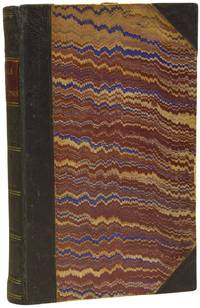
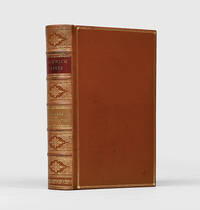
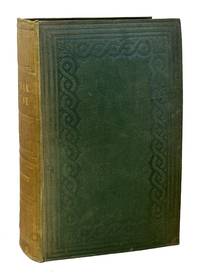
1839150477London: Chapman and Hall 1839. In publisher's deluxe binding bound from the parts First edition in the publisher's deluxe binding of half morocco bound from the original monthly parts with the stab-holes visible. Nicholas Nickleby followed the phenomenal success which Dickens reached with the Pickwick Papers. To secure Nickleby Chapman and Hall offered Dickens £150 a part a sum ten times greater than that which he had received for Pickwick. As with its predecessor the novel met with great public enthusiasm which has continued unabated: Dickens's biographer Peter Ackroyd stated that the novel "has some title to being the funniest novel Dickens ever wrote; it is perhaps the funniest novel in the English language" Ackroyd Dickens pp. 262. Upon the completion of the novel in monthly parts the novel was issued by the publishers in book form in three binding choices: in cloth in half morocco with marble edges and in full morocco with gilt edges. They also made available and advertised as such with an inset included with the final instalment of the part issue their binding services for the same three bindings for owners of the parts: cloth at 1s. 6d. half morocco at 4s. 6d. and full morocco at 6s. 6d. Kremers pp. 286-7. It is worth noting that for an owner of the parts to have their parts bound was much cheaper than to buy a copy of the new book-form issue - to purchase a book-form copy in half morocco would cost the purchaser £1 4s. 6d. four times as much as to bind up their parts. Copies bound from the parts as opposed to book-form copies can be distinguished by the presence of stab-holes in the gutter as here from the unstitching of the parts from their wrappers. For the book form clean sheets were printed without bearing these holes. The binding services continued to be offered long after publication both as the publisher bound up remaining first edition sheets for new issues apparently as late as 1857 for Nickleby and for private individuals to continue to make use of the binding services. The publishers offered the same binding services for future Dickens novels and so the individual who had the parts issues of earlier Dickens novels could commission bindings for multiple novels simultaneously. Minor variation in tooling cloth and morocco occurred over time for these bindings which can indicate earlier and later bindings though the full sequence and firm dates have never been established. The presence of morocco-grain cloth on this copy indicates that it was bound around the 1850s when Chapman and Hall begun to use morocco-grain cloth - they had until then predominantly used fine-diaper cloth. Octavo 209 x 134 mm. Engraved portrait frontispiece 39 engraved plates by Hablot Knight Browne Phiz. Original purple half morocco spine lettered in gilt spine bands with gilt floral roll and bordered with blind rules green morocco-grain cloth sides marbled endpapers and edges. Complete with half-title. Spine sunned and a little rubbed minor wear at tips binding firm and intact some light soiling to contents and minor browning to plates as usual short closed tear at fore edge of plate facing p. 238. A very good copy. Lars Kremers "A Comparative Bibliography of the Sheets and Publishers' Cloth Cases of the Demy Octavo Works of Charles Dickens 1837-1872" PhD thesis Curtin University November 2013. hardcover
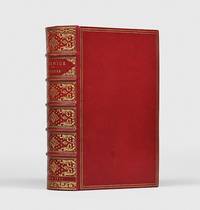
1837157782London: Chapman and Hall 1837. Handsomely bound and extra illustrated First edition a superb extra illustrated copy with the scarce suites of plates by Thomas Sibson and Frederick William Pailthorpe - neither of which are in the celebrated Suzannet and Vander Poel collections - in a particularly fine binding by Rivière whose work was renowned for "the quality of the materials the forwarding and in the delicacy of the tooling" ODNB. This copy includes the complete suite of Sketches of Expeditions from the Pickwick Club a series of ten unofficial illustrations first published in 1838 to accompany some of the "most striking scenes" of the novel. Also included is Pailthorpe's 1882 series 24 Illustrations to the Pickwick Club all hand-coloured described by Grego as "thoroughly in harmony with the first series of plates" by Phiz and Seymour p. 450. All of the original plates are also present in their early states as called for with no titles or imprints. The Pickwick Papers Charles Dickens's first novel transformed the obscure journalist into England's most famous writer within months. The first monthly instalment was issued in an edition of 1000 copies in April 1836. The work became a publishing sensation after the introduction of Sam Weller in chapter 10 the fourth instalment issued in July 1836 after which the publishers reprinted the earlier instalments so that readers could catch up. The serial was originally intended to be primarily a vehicle for the cartoons of Robert Seymour until he died by suicide after the first number was published. Robert William Buss then took over but he was inexperienced in steel engraving and had to be replaced. The final choice Hablot Knight Browne "Phiz" was to be Dickens's chosen collaborator for the next two decades. Octavo 270 x 129 mm. 112 engraved plates including etched vignette title page "Weller" no priority frontispiece 41 plates by Robert Seymour and Hablot Knight Browne Phiz with 2 additional plates by R. W. Buss. Late 19th-century red morocco by Rivière & Son spine lettered in gilt in floral compartments raised bands triple gilt filleting to sides floral gilt dentelles dark blue coated endpapers gilt edges. With original wrappers of part III bound in to rear. With bookplates of the barrister Herbert H. Smith to front pastedown and of Jeremy and Penny Martin to front free endpaper and faded ownership inscription of one Alex F. Little to engraved title page. Very minor rubbing to extremities light foxing to contents and offsetting from plates a bright and attractive copy with sharp hand-coloured plates. Podeschi H1137; Smith I.3. Joseph Grego Pictorial Pickwickiana: Charles Dickens and His Illustrators 1899. hardcover
AQ33584London: Jaques & Son Hatton Garden s.d. c. 1875 54 stiff printed paper cards backed in glazed lilac paper including a rule card and 'receive one counter from each player' card. Preserved within the rare publisher's two-part glazed cream box with front and rear of lower portion featuring a coloured title 'The characters of Charles Dickens. An interesting game' and illustration of Mr. Pickwick and an advertisement for another Jacques game 'Bumble Puppy' respectively. A crisp set with just occasional marking; some loss/splitting to box at edges. A late Victorian edition produced by Jaques of Hatton Garden of a rare card game for eight or fewer people consisting of 13 'quartettes of characters from the works of CHARLES DICKENS'. Of these 13 ten feature a drawing and description of a character from within one of the author's novels Oliver Twist Barnaby Rudge Curiosity Shop sic Chuzzlewit Pickwick Dombey & Son The Chimes Cricket on the Hearth The Haunted Man and Bleak House and three Little Dorrit David Copperfield and The Christmas Books feature text only and no illustration. 'Having sorted their cards the game is commenced by the player on the left of the dealer playing one of his cards…for example supporting a character in 'Bleak House' is played 'Smallweed' 'Mrs Bagnet' 'Jo' and 'Turveydrop' will form a trick which the last player may take.' The game is completed as the rule card explains when three tricks of four cards are held by the same player. The box containing this rare card game provides interesting details; in addition to the original pricing 'Price One Shilling' we can see from the price label of 'John E. Stafford' of Brighton that this was sold there for Eight and three quarter pence. OCLC locates just two examples of this rare game Chicago and Harvard; COPAC adds one further at Manchester. . Card dimensions: 650 x 930 mm. [Jaques & Son, Hatton Garden], [s.d., c. 1875] unknown
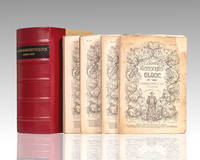
1840149070London: Chapman and Hall 1840-1841. First edition in the scarce original parts of this classic collection of short stories. Royal octavo 88 weekly parts as issued original white wrappers printed in black with wood-engraved title engraved frontispieces illustrated with wood-engravings and initials after George Cattermole & Hablot Knight Browne. Accompanied by a 4 page announcement by Chapman & Hall for the title. In very good to near fine condition. Housed in a custom half red morocco and tan cloth slipcase with folding chemise. Master Humphrey's Clock originally appeared in the form of a weekly periodical published between April of 1840 and December of 1841. Entirely written and edited by Dickens the magazine included both short stories and two novels The Old Curiosity Shop and Barnaby Rudge. Many of the short stories acted as frame stories to the novels and although Dickens' original artistic intent was to keep the short stories and the novels together he himself cancelled Master Humphrey's Clock before 1848 and described in a preface to The Old Curiosity Shop that he wished the story to not be tied down to the miscellany it began within. Most later anthologies published the short stories and the novels separately. However the short stories and the novels were published in 1840 in three bound volumes under the title Master Humphrey's Clock which retains the full and correct ordering of texts as they originally appeared. Chapman and Hall hardcover
1852002723Londion: Bradbury and Evans 1852. Three volume set of this early Dickens title dated 1852 1853 1854 respectively. All first editions/first issues in original reddish brown cloth. Marbled endpapers and all edges marbled. Backstrips stamped in gold lettering inside elaborate shield shaped ornamental design. Boards stamped in blind front and rear and gilt motif of Alfred reading to his mother in center on each cover. Each volume illustrated with frontispiece by W. Topham. Minor sunning to backstrips and volume III has two minute punctures to cloth at upper and lower backstrip. Minor wear to corners as usual and incidental age soiling to cloth. Former owner's bookplate in each volume reads: "J. Steele Coldstream Guards". Overall a superior set in the original cloth which is becoming much more difficult to find. Scans are available on request. Eckel p.127-9; Smith II p.75. Hardcover. Very Good. 16mo - over 5¾" - 6¾" tall. Bradbury and Evans Hardcover
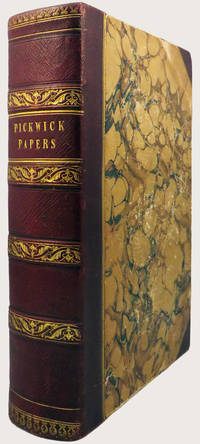
183726231London: Chapman and Hall 1837. First edition. Engraved frontispiece and title-page and with a plethora of engraved illustrations by R. Seymour and H. K. Browne ‘Phiz’. 8vo very handsomely bound in contemporary 3/4 dark wine morocco over marbled boards the covers with gilt rules the spine very beautifully decorated with wide raised bands elaborately gilt tooled and border with double gilt fillet lines head and tail caps with gilt rolls one compartment lettered in gilt. xiv 609 pp. A very attractive copy especially well preserved and in lovely condition. VERY HANDSOME FIRST EDITION IN PERIOD BINDING. “Pickwick was issued when Dickens’ name was just beginning to excite the attention of prescient publishers and be recognized by readers in search of entertaining novels . The publication of PICKWICK which ran through twenty numbers made for all time an English classic--a book representative of its age exhibiting the life and the ideals of an important class of English folk on the threshold of the Victorian era.<br> Now over a century and a half later PICKWICK holds its assured place in the literature of our tongue and among all its author’s works seems to have the best chance of achieving what is known as immortality. The book was an improvisation. Dickens was led by his genius and by the indulgence of his jocuse fancy into picturing all the popular life which his varied experience in and out of London had made familiar to him. And it is a book that appeals throughout life--to the child and to the person of late years.’ Gissing Like others of Dickens’ creations it is a masterpiece.<br> This is a wonderful copy in beautiful contemporary state. Chapman and Hall hardcover
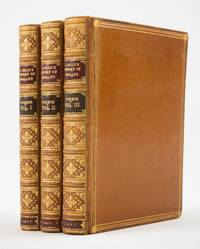
1852ST20685-1London: Bradbury & Evans 1852-54. FIRST EDITION in Book Form. 155 x 120 mm. 6 1/8 x 4 3/4". Three volumes. <br/> Very pleasing polished calf by Morrell stamp-signed on verso of front flyleaf covers with a French fillet border with rosette cornerpieces raised bands spine gilt in compartments with floral tools surrounded by a diamond of small stars with volute cornerpieces red and green morocco labels with gilt lettering turn-ins densely gilt with floral scrolls top edge gilt. Original gilt cloth bindings bound in. Each volume with a frontispiece by F. W. Topham. Front pastedown with the ex-libris of Ellen O'Neil Logan. Volume one half-title with ink inscription: "Florence Emily Lewis / Evelyn Waite Hauchen / from / her Godmama E. M. L. / 1858." Volume three half-title faintly inscribed: "Rosalie Burke / From her Papa / illegible 1852." Eckel pp. 128-30; Podeschi A-128. David Paroissien "History and Change: Dickens and the Past" in "The Oxford Handbook of Charles Dickens" pp. 484-99. Volume I with a narrow brown stain on upper cover a few light cover scuffs perhaps just a hint of wear to corners but the bindings quite handsome and very well preserved. First volume with two small tears not affecting text trivial spots otherwise entirely clean and fresh internally. A very pretty set.<br/> <br/> In an elegantly simple binding this is Dickens' only work of history which shows the same reforming anti-conservatism spirit so apparent in his fiction. The idea for the work was formed when Dickens was disturbed by the positive reception of a speech glorifying England's history at an 1843 fundraising dinner in London. The author wrote to a friend of his fear that his eldest son Charley might grow to believe this nostalgic and overly positive version of history. As he wrote to another friend he determined to write the present work to ensure that his son and other children did not place their "a ections on wrong heros sic or see the bright side of Glory’s sword and know nothing of the rusty one." DNB calls the result "intensely anti-aristocratic and anti-monarchical"; literary scholar David Paroissien writes that by praising and drawing attention to the stories of humbler heroes who challenged the people in power the work provides "a vigorous corrective to the habit of English sycophancy." The work was originally serialized in Dickens' "Household Words" newspaper from 1851-53 before being issued for the first time in its present form. The pleasing bindings are the work of the London bindery of W. T. Morrell established about 1861 as successor to the firm begun by Francis Bedford who in turn had taken over the famous bindery of Charles Lewis. Prideaux in her "Modern Bookbindings" says that Morrell at that time had a very large business that supplied "all the booksellers with bindings designed by his men" which were "remarkable for their variety and merit." The inscriptions in our copy suggest that as Dickens had intended it was given as a gift to at least two children. The attractive ex-libris indicate that this copy was later in the library of Ellen O'Neil Logan 1884-1977 a St. Louis heiress. Bradbury & Evans unknown
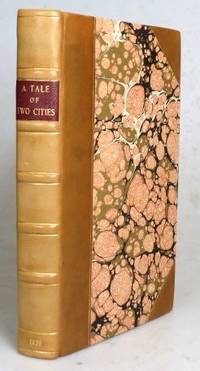
73436London: Chapman and Hall 1859. Classic Literature FIRST EDITION with the following first issue points; page 213 numbered 113; 'affectionately' misspelled on page 134; the name of 'Stryver' misspelt 'Striver' on plate at page 9. Signature 'b' is not noted on list of plates the later state. Octavo 22 x 14cm pp.254 engravings by H.K. Browne. Contemporary half navy calf over marbled paper-covered sides red morocco title label edges speckled red salmon-coloured drab endpapers. Contents clean throughout plates are particularly fresh with only light marginal spotting binding lightly rubbed with a few small cracks to head and tail at joints. A very good copy indeed. One of Dickens most accessible tales set at the time of the French Revolution; the fortunes of two men - Charles Darnay an exiled French aristocrat and Sydney Carton a disreputable but brilliant English lawyer - become entwined through their love for Lucie Manette. Drawn together to the streets of Paris their fate is played out under the vengeful shadow of La Guillotine. London: Chapman and Hall, 1859 unknown
185951265London: Chapman and Hall 1859. First edition first issue. 8vo. viii 2 254 pp. Later tan half calf over marbled boards spine with raised bands gilt lettered red label. Frontispiece engraved title vignette and 14 plates. Two plates repaired that opposite p. 137 with a restored area to the upper left corner not affecting the printed area the plate opposite p. 150 with a diagonal repaired tear occasional foxing slight sunning to the spine else very good. Smith 1 13. London: Chapman and Hall unknown
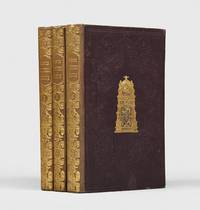
1840153415London: Chapman and Hall 1840-41. The pinnacle of Dickensian Gothic First edition in book form of what Gordon Ray describes as "the pinnacle of Dickensian Gothic" a particularly nice example in the original cloth. Ray goes on to note that Phiz H. K. Browne "is in excellent form" and that George Cattermole's "wonderful clutter of antiquarian or architectural detail is well suited to Dickens's chosen subjects". Master Humphrey was a publishing experiment on Dickens's part unique in his canon of issuing two novels together: The Old Curiosity Shop and Barnaby Rudge. The publication was issued in three forms in weekly parts monthly parts and the present book form copies in cloth upon completion. 3 vols tall octavo. Printed frontispieces and 194 woodcut illustrations of which 154 are by Browne 19 by Cattermole and 1 by Daniel Maclise. Original purplish vertical-ribbed cloth gilt lettered and decorated spines covers elaborately blindstamped front covers with gilt clock motif marbled edges and endpapers. Housed in green cloth pull-off case. A very sharp copy the spines uniformly sunned to tan and the contents clean. Eckel p. 67 ff; Ray The Illustrator and the Book in England from 1790 to 1914 60; Smith I 6. hardcover
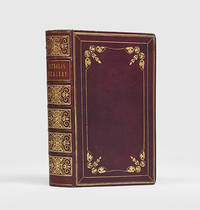
1839187854London: Chapman and Hall 1839. Prettily bound with extra plates First edition bound from the parts in an attractive contemporary binding and including an extra suite of plates by Kenny Meadows from his publication Heads from Nicholas Nickleby from Drawings by Miss La Creevy 1839. The complete suite shows 24 characters "selected at the period when their very actions define their true character" cited in Kitton p. 234. Writing after the successes of Pickwick Papers 1837 and Oliver Twist 1838 Dickens "did not want to lose either his reputation as a topical and polemical novelist or his fame as a comic one. So in Nicholas Nickleby he devised a plot capacious enough to include both aspects of his genius" Ackroyd p. 254. The novel was serialized from April 1838 to October 1839 and published in book form on 23 October. This copy has the first state frontispiece and initial four plates all with the imprint and the earlier readings "visiter" for "sister" p. 123 line 17 and "latter" for "letter" p. 160 line 6 up. Octavo 212 x 122 mm. Engraved portrait of Dickens after D. Maclise 39 plates by Phiz. Extra-illustrated with 24 plates of engraved character portraits by Kenny Meadows. Bound with half-title and with front wrapper from the original part XII. Contemporary dark red morocco spine lettered in gilt compartments densely tooled in gilt covers bordered with gilt frame enclosing floral corners floral gilt roll to turn-ins edges gilt. Engraved book label of Stephen Williamson. Hint of sunning to spine bright overall minor rubbing and wear splits to inner hinges occasional mark to contents browning from tissue guards to plates small marginal chip to p. 597. A very nice copy. Eckel pp. 64-6; Hatton & Cleaver pp. 131-60; Kitton pp. 233-4; Smith I 5. Peter Ackroyd Dickens 1990. unknown
1837168614London: Chapman and Hall 1837. Finely bound from the original parts First edition bound from the original monthly parts. The novel was Dickens's first great success and transformed him from an obscure journalist into England's most famous writer in a matter of months. It was first published in serial form from March 1836 to November 1837. This copy has the Buss plates which were later replaced by new designs by Phiz. Octavo 209 x 127 mm. Engraved frontispiece "Weller" no priority vignette title page and 41 plates by Seymour Buss and Phiz all in earlier states without captions. Early 20th-century tan calf by Riviere spine elaborately gilt in compartments red and green labels ruling to boards turn-ins gilt marbled endpapers edges gilt. Housed in a custom brown cloth slipcase. Extremities lightly rubbed occasional spot to contents. A very good copy. Hatton and Cleaver pp. 1 ff; Kremers pp. 54-69; Smith I.3. hardcover
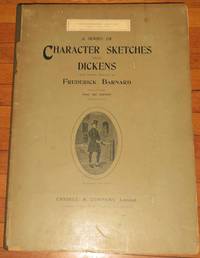
1885450001No date circa 1885. Large Folio set in six volumes. Extremely scarce no complete sets at auction. Each folio with six lithographs. Cassell and Company Ltd hardcover
AUTOGCHAPMAN AND HALL Book. Near Fine. Hardcover. 0 VOLUME LIMITED AUTOGRAPH SET BOUND IN HALF LEATHER includes: TALE OF TWO CITIES MARTIN CHUZZLEWIT GREAT EXPECTATIONS OLIVER TWIST PICKWICK PAPERS BLEAK HOUSE BARNEY RUDGE LITTLE DORIT UNCOMERCIAL TRAVELLER CHRISTMAS BOOKS CHRISTMAS STORIES OLD CURIOSITY SHOP SKETCHES BY BOZ DOMBEY AND SON DAVID COPPERFIELD OUR MUTUAL FRIEND AMERICAN NOTES PICTURES FROM ITALY NICHOLAS NICLEBY EDWIN DROOD HUMPHREY'S CLOCK A CHILD'S HISTORY OF ENGLAN. A beati8ful set. owner gift inscription illustrations with plates by Cruikshank Browne Leech et al. . CHAPMAN AND HALL Hardcover
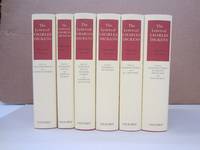
76656Oxford: The Clarendon Press 2002. The British Academy The Pilgrim Edition. Hardcover. near fine/near fine. Twelve Volume set. Octavo. 9 1/2" x 6 1/2". Volume One 1820-1839 Volume Two: 1840-1841 Volume Three: 1842-1843 Volume Four: 1844-1846 Volume Five: 1847-1849 Volume Six: 1850-1852 Volume Seven: 1853-1855 Volume Eight: 1856-1858 Volume Nine: 1859-1861 Volume Ten: 1862-1864 Volume Eleven: 1865-1867 Volume Twelve: 1868-1870. Fronitispiece in each volume. The volumes are in very nice condition and all volumes in dust jackets. The dust jacket of the spine of Volume Twelve has some light creasing. Charles Dickens began writting letters when he was 9 years old and he continued to write until the day before he died. The Clarendon Press hardcover
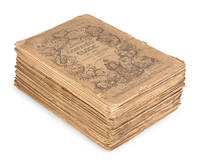
1840L1252<p>88 weekly parts with three frontispieces and numerous wood engravings in the text by George Cattermole Hablot K. Browne and others. Quarto 10 1/2" x 7" bound in publisher's 88 original pictorial weekly parts in printed white self-wrappers uncut housed green cloth slipcase and chemise. Eckel pp. 61-65; Hatton & Cleaver pp. 161-182 First edition first issue.</p><p>With preliminaries frontispiece title-page and Preface for the three volume edition present in numbers 26 52 and 88; addresses by the author in parts 9 80-83 and 87; a tipped in advertisement to pt. 62 for <em>Chambers's Journal of Literature Poetry Biography and Adventure</em>. Each weekly part was issued as a single folded sheet of 16 pages 4 of which formed the outer wrapper around 12 numbered pages of letterpress. "Of the four issues the weekly one is difficult to obtain in a clean condition and is therefore the costliest" Eckel. All 88 parts include front wrappers with an engraved design by George Cattermole which was engraved in wood by E. Landells. One of the first works to be published in both weekly and monthly parts</p><p><em>Master Humphrey's Clock</em> was a weekly periodical edited and written entirely by Charles Dickens and published from 4 April 1840 to 4 December 1841. It began with a frame story in which Master Humphrey tells about himself and his small circle of friends and their penchant for telling stories. Several short stories were included followed by the novels <em>The Old Curiosity Shop</em> and <em>Barnaby Rudge</em>. It is generally thought that Dickens originally intended <em>The Old Curiosity Shop</em> as a short story like the others that had appeared in <em>Master Humphrey's Clock</em> but after a few chapters decided to extend it into a novel. Master Humphrey appears as the first-person narrator in the first three chapters of <em>The Old Curiosity Shop</em> but then disappears stating "And now that I have carried this history so far in my own character and introduced these personages to the reader I shall for the convenience of the narrative detach myself from its further course and leave those who have prominent and necessary parts in it to speak and act for themselves."<br /><br />Master Humphrey is a lonely man who lives in London. He keeps old manuscripts in an antique longcase clock by the chimney-corner. One day he decides that he would start a little club called Master Humphrey's Clock where the members would read out their manuscripts to the others. The members include Master Humphrey; a deaf gentleman; Jack Redburn; retired merchant Owen Miles; and Mr. Pickwick from <em>The Pickwick Papers</em>. A mirror club in the kitchen <em>Mr. Weller's Watch</em> run by Mr. Weller has members including Humphrey's maid the barber and Sam Weller.<br /><br /><em>Master Humphrey's Clock</em> appeared after <em>The Old Curiosity Shop</em> to introduce Barnaby Rudge. After Barnaby Rudge Master Humphrey is left by himself by the chimney corner in a train of thoughts. Here the deaf gentleman continues the narration. Later the deaf gentleman and his friends return to Humphrey's house to find him dead. Humphrey has left money for the barber and the maid no doubt by traces of love that they would be married. Redburn and the deaf gentleman look after the house and the club closes for good.<br /><br />In the portion of<em> Master Humphrey's Clock</em> which succeeds The Old Curiosity Shop Master Humphrey reveals to his friends that he is the character referred to as the 'single gentleman' in that story.</p><p><strong>Condition: </strong></p><p>Some soiling and chipping a few soft creases some chipping and light soiling a few leaves becoming detached Slipcase with some rubbing to edges else very good in like slipcase.</p> Chapman and Hall paperback
1859332060London: Chapman and Hall 1859. First. hardcover. very good. Illustrated by H.K. Browne 8vo 19th century 3/4 calf with raised bands & leather spine labels over marbled boards. Marbled edges & end-papers. London: Chapman & Hall 1859. First Edition.<br/> <br/> The title page & frontispiece are foxed; other plates clean or very lightly foxed . Mixed issue with incorrect spelling of "affectionately" on p. 134 but missing "b" on list of plates & p. 213 correctly numbered.<br/> <br/> Chapman and Hall unknown
1853CD183London: Bradbury and Evans 1853 Illustrated with 40 plates by H.K. Browne "Phiz" including a frontispiece and vignette title page. First edition with all of the textual first issue points called for by Smith; in later issue binding bound in the same color cloth pattern and blind stampings as Dombey and Son with undated vignette title page. Publisher's olive green fine-diaper cloth boards stamped in blind with triple-ruled borders and chain-like frames with floral decoration in each corner spine stamped in blind and lettered in gilt and white endpapers likely variant endpapers as Smith calls for pale yellow endpapers. Very good with boards slightly bowed some toning to spine clean cloth with a touch of staining to foot of spine some very discrete glue repair to tears to cloth at foot of spine and along rear joint small ticket to front pastedown penciled ownership signature to front free endpaper and clean pages with very light occasional spotting to plates. Overall an attractive publisher's cloth copy. Smith I 10. Often regarded as one of Dickens' finest novels Bleak House follows the long-running Court of Chancery case Jarndyce v. Jarndyce a complicated lawsuit that involves almost every class of English society and heavily criticizes the moral shortcomings of the British judicial system. With Bleak House illustrator Hablot Knight Browne continued his experimental use of dark plates of which there are ten - a significant increase from the singular dark plates in his preceding two novels Dombey and Son and David Copperfield. Additionally Browne continues the use of horizontal illustrations in Bleak House another technique he began with Dombey with almost half of the illustrations here being in this layout. Bleak House is a Haycraft-Queen Cornerstone. First Edition. Hard Cover. Very Good. Illus. by Browne H.K. London: Bradbury and Evans hardcover
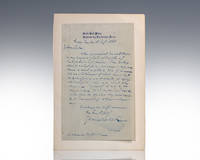
1860148395London 1860. Autograph letter signed by great Victorian novelist Charles Dickens. One page dated Friday 20th July 1860 on bifolium of Gad's Hill Place stationery and addressed to Sir Alexander Duff Gordon. Boldly signed by Dickens with his usual flourish. The letter reads in full "When you dined at Tavistock House you mentioned a school at Brighton of which you had a high opinion. I am looking about for a school for my two youngest boys and should be much indebted to you if you would tell me what manner of school this is that you commended---as for example for boys of what ages it is designed and what the charges are. Very possibly it may be too young a school for my purpose as I would rather place the boys where they could remain. But I am unwilling to throw a chance away. Do not mind how brief you answer. Yours faithfully Charles Dickens." From the date of the letter the children in question seem most likely to have been Henry Fielding Dickens born 1849 and Edward Bulwer Lytton Dickens born 1852. In near fine condition with mail folds and tipped at head to a backing sheet. The letter measures 4.5 inches by 7 inches. English writer and social critic Charles Dickens created some of the world's best-known fictional characters and is regarded by many as the greatest novelist of the Victorian era. His works enjoyed unprecedented popularity during his lifetime and by the twentieth century critics and scholars had recognized him as a literary genius. unknown
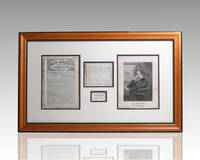
18411494281841. Rare autograph note by great Victorian novelist Charles Dickens. One page dated ninth June 1841 and signed in the third person to John Critchley Prince. The note reads in full "From Mr. Charles Dickens in payment of his subscription to Mr. Prince's Poems. With every friendly wish that can encourage and cheer him in his onward path. 1 Devonshire Terrace York Gate Regents Park Ninth June 1841." The recipient John Critchley Prince 1808-66 was a Lancashire-born poet and weaver known as the "Bard of Hyde" the "poet of the people" and the "factory bard." In 1840 he published his first book of poetry Hours with the Muses to which Dickens subscribed. Dickens and Prince became correspondents although little of their letters have survived with Dickens often praising the amateur poet encouraging his continued writing and offering him advice on publishing his work. Prince dedicated his Poetic Rosary 1851 to Dickens "as a sincere testimony of the high esteem in which his humanizing writings with their wide and generous sympathies are held by his obedient servant the author." In very good condition. Framed with one issue of Dickens's All the Year Round December 5 1874; No. 314 New Series to the left and an engraved portrait of Dickens to the right. The note measures 4 inches by 4.625 inches. The entire piece measures 30.75 inches by 19.5 inches. English writer and social critic Charles Dickens created some of the world's best-known fictional characters and is regarded by many as the greatest novelist of the Victorian era. His works enjoyed unprecedented popularity during his lifetime and by the twentieth century critics and scholars had recognized him as a literary genius. unknown
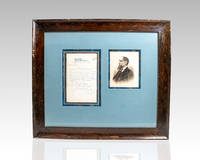
1867150124London 1867. Autograph letter signed by great Victorian novelist Charles Dickens to his biographer. One page dated Monday 7th October 1867 on Gad's Hill Place stationery and addressed to John Forster. Boldly signed by Dickens with his usual flourish. The letter reads in full "I have been very much interested and gratified by that pleasant Passage from Mr. Bigelow's letter concerning me. As you say you are going to write to him pray tell him as much and I assure him that I shall hope to become his friend on the other side of the Atlantic. Your affectionate Charles Dickens." The recipient John Forster 1812–1876 was a prominent Victorian literary critic and biographer best known for The Life of Charles Dickens a foundational work in nineteenth-century literary biography. As a close friend and confidant of Dickens Forster combined privileged access to personal papers with a documentary fact-driven approach that helped establish biography as a serious scholarly genre rather than a purely commemorative form. Double matted and framed with an engraved portrait of Charles Dickens. In very good condition. The letter measures 4.5 inches by 7 inches. The entire piece measures 20 inches by 17.5 inches. English writer and social critic Charles Dickens created some of the world's best-known fictional characters and is regarded by many as the greatest novelist of the Victorian era. His works enjoyed unprecedented popularity during his lifetime and by the twentieth century critics and scholars had recognized him as a literary genius. unknown
46300DICKENS Charles. Dealings with the Firm of Dombey and Son Wholesale Retail and for With Illustrations by H.K. Browne. 20 parts in 19 original pictorial wrappers. London: Bradbury and Evans October 1846 to April 1848. First edition in the original monthly parts with many of the advertisements called for by Hatton & Cleaverpp. 227-50. Wrappers somewhat soiled; backstrips with chipping and repairs; slightly torn; some plates rather browned; former owners' signatures on several parts otherwise a very good set in two handsome full morocco solander cases.Parts 1 4-8 12-14 18 have ads per Hatton & Cleaver. Part 2 lacks 2-page slip for "Punch." Part 3 lacks last 2 pages of Chapman and Hall ads; "Punch" slip; "The Atlas" 2 page ad; "Richard's Universal Daily Remembrance" 4 pp. Parts 9 lacks 2 page Dakin ad in back. Part 10 lacks "Gilbert's Dictionary" 8-page ad in back. Part 11 lacks 2 page slip in back. Part 15 lacks Jerrold slip. Part 16 lacks slip after plates. Part 17 lacks ads in back except for 8-page C. Cox catalogue. Parts 19/20 lacks slip after plates.In addition Part 6 ad "Valuable Education Works" is on light green paper unrecorded by Hatton & Cleaver. Part 14 is early printing according to Hatton & Cleaver: page 431 lacks page number; Page 426 line 9 lacks first word "if unknown
1844376046Leipzig: J. J. Weber 1844. First German-language edition translated by E. A. Moriarty. Frontispiece and 7 etched plates by John Leech uniform half-title for Weber's collected edition of Dickens's works in German. In 8s 6 x 4 1/4 in.; 152 x 110 mm. Publisher's cloth-backed green marbled boards gray endpapers marbled edges; extremities rather rubbed. Leech John. First German-language edition translated by E. A. Moriarty. Frontispiece and 7 etched plates by John Leech uniform half-title for Weber's collected edition of Dickens's works in German. In 8s 6 x 4 1/4 in.; 152 x 110 mm. The first German editions of Dickens' first two Christmas books. Not in the Gimbel collection and rare on the market. All of John Leech's illustrations for the original English edition including the four wood-engraved text vignettes are rendered as etched plates for this edition. Gimbel/Podeschi D4 for later collected German ed. but see note for this ed. J. J. Weber unknown
1846240414<p>London: Bradbury And Evans 1846-1848. True First Edition. Octavos. Fine. H. K. Browne -40 plates. Octavos. The paper wrappers of this set are unrepaired and remarkable free of breaks or spllitting. Three or four of the parts beginning at pt. 7 have discrete inked names at the top. <br /><br />IN MONTHLY PARTS. 20 parts in 19 monthly issues. Eckel p. 74ff.; Sadleir 687; Hatton & Cleaver pp. 225 ff. Matches the descriptions of this Parts Issue in Hatton & Cleaver with the following refinements: pt. 4 - in the rear ads no. 7 "Cheap and Elegant" appears in the first position; pt. 5 - the engraved plates are in reverse order and there is an insterted 4pp. advert. for the "Cheap Edition of the Works of Mr. Charles Dickens." here and not in pt. 6; pt. 6 - the engraved plates are reverse and it lacks the 1st rear ad for "Valuable Educations Works" ; pt. 9 - no alternative inset in the rear adverts present in some copies and p. 284 has the errrata reading of "Delight" for "Joy". ; pt. 10 includes Phiz's 1st horizontal plate at no. 20; pt. 11 - 2d state with "Capatin" corrected to "Captain"; pt. 12 - the date of '"October 1847" is in the earliest unbroken state; pt. 14 - 2d. state with page-number 431 and earliest issue of p. 426 with "if" omitted in line 9; pt. 15 - 16 Letts diary leaves quantitity varies among copies up to 18; pt. 17 rear ads all present but in the order of 3 4 1 2; pt. 19/20 has the preferrred two-line Errata not the later 8 lines.</p> Bradbury And Evans
1859241492London or New York 1859. A mixed set some with London imprints. Volumes I-IV & XIII Office 16 Wellington Street and some with New York Dix and Edwards Vols. VI & VII New York: McElbrath and Barker Vol. VIII etc. 20 vols. 8vo. Original green blind-stamped pebbled cloth. One volume slightly split rest very fresh. Bookplate of St. Paul's School ex dono plate of Mr. Francis F. Randolph small unobtrusive blind stamp on title pages. A mixed set some with London imprints. Volumes I-IV & XIII Office 16 Wellington Street and some with New York Dix and Edwards Vols. VI & VII New York: McElbrath and Barker Vol. VIII etc. 20 vols. 8vo. Household Words was considerably more popular in England than America and its publishing history in America is "almost absolutely dark as is the whole subject of periodical printing and 'arrangements' . The 1850's were years of copyright agitation in America and certainly no legally protective arrangements were possible to the English publishers before the journal was discontinued in 1859. And it is not surprising that the course of Household Words was not so brilliant in American as was that of its successor All the Year Round . It was partially a local work and not quite so interesting to an America as to an English reader; it had changed publishers too often; there was no legitimate arrangement between the English proprietors and the American publishers; it was sold at too high a price; it had been published by inexperienced people and therefore had not received proper publicity and promotion; and its lack of pictorial illustration made it unpopular with the masses" Buckler William E. "'Household Words' in America" in Papers of the Bibliographical Society of America vol. 45 pp. 160-66.<br /> <br /> Household Words was published every Wednesday from March 1850 to May 1859. unknown