1 094 résultats
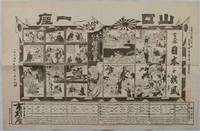
1902214563Japan. Meiji 35 1902. Striking black and white woodblock theatre poster depicting 18 dramatic scenes accompanied by a list of actors. Folded a few closed tears repaired on the reverse with archival washi red chop on reverse causing a little show-through at lower right. Overall very good. 45.5 x 71cm. Attractive black and white 1902 theatre poster advertising two performances on the 1 January 1902 of the Yamaguchi Theatre Group . The matinee performance starting at 9am was a patriotic play of five acts titled "Flag Fluttering Wind of Japan". The evening performance comprising six acts began at 5pm and appears to feature various kabuki plays under the title "Actors' Temperaments". <br> <br>The Yamaguchi Theatre Group was a part of the Shinpa 新派Theatre movement which incorporated both modern and traditional theatrical themes during Meiji period. This style and theme remains popular up till present day. Interestingly in this theatre group actors were all male playing both male and female roles. . unknown
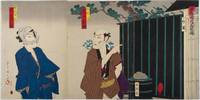
1892218409東京. Tokyo.: 福田熊治良. Fukuda Kumajiro. Meiji 25 1892. Three colour woodblock prints a triptych panels loose each 24 x 35.4cm Japanese text in red identifying the actors and in yellow identifying the roles in the upper left of two panels and program title in the top right of the third panel further text within in a red fish-shape in the lower right of the third panel some offsetting of red ink on the first panel but not affecting the main image slivers of affixing tape to the verso of each print some surface wear and abrasion mainly to the verso but the three images in very good bright condition. Dramatic depiction of the famous Kabuki actors Onoe Kikugorō V 1844-1903 as Yosaburô and Onoe Matsusuke IV 1843-1928 playing the role of Kômori Yasu in the 1892 staging of "Yowa Nasake Ukina no Yokogushi" commonly called "Kirare Yosa". <br> <br>Images such as these were collected by Kabuki fans of the day who bought woodblocks of their favourite actors and then had the prints made up into albums so that they could be enjoyed much in the way poster books and other fan memorabilia of famous movie stars is enjoyed today. <br> <br>The artist Toyohara Kunichika 1835-1900 was acclaimed as one of "The Three Greats of Meiji Ukiyo-e". Many stories surround him including his boast that he had moved 100 times which appears unlikely but this claim combined with his hard drinking womanising lifestyle and overall "live for the day" attitude all contributed to his colourful reputation. His work was very popular during his lifetime with his use of bright imported chemical dyes and his technique of focussing the image on the actors face combining to make up his individual style. see 'Time Present and Time Past: Images of a Forgotten Master' by Amy Reigle Newland. <br> <br>From the collection of the late John Caiger lecturer in Asian studies ANU. . 福田熊治良. [Fukuda Kumajiro]. unknown
2413723 February 1961. On letterhead of Highfield Lodge Wise Lane London NW7. The obituary of the recipient Andrew Block 1892-1987 in ‘The Private Library’ was subtitled ‘the doyen of booksellers’; his business was established in 1911. 2pp 12mo. In fair condition lightly aged and worn. Folded twice. Signed ‘Frank’. He is sending his list: ‘you’ll note how catholic my wants are’. He has been sent ‘5 guineas worth of book tokens. Do you accept these They were issued by Collets Hampstead.’ His ‘great wants’ are ‘the Comic Home Journals - the novel with ghost on the cover - the certain Ludgate and Boys Own Xmas Number’. He asks for the list to be returned once perused and ends by stating that he will ‘be in to see’ the recipient ‘If I finish midday one day’. 23 February 1961. On letterhead of Highfield Lodge, Wise Lane, London, NW7. unknown
26344‘Ivy Cottage Kentish Town / Novr 25 - /28 1828’. See his entry and that of his son in the Oxford DNB. The topic of this letter is referred to in the second volume of Dickens's edition of the son's life 1879. 3pp 12mo. Bifolium. In good condition lightly aged with strip of tape from mount adhering at edge of blank second leaf and two folds for postage. Addressed to ‘Dear Harley’ and signed ‘C Mathews.’ He begins by thanking him for his ‘kind enquiries’ and with regard to his son the actor Charles James Mathews writes that ‘Our dear good Charles thank God! is recovered and writes in excellent spirits from Florence. His disorder has been small pox! So much for vaccination! for of all the victims I have ever witnessed to that system he was the greatest - as his face was covered with frightful blotches for two years after inoculation.’ He claims that the ‘English Physician’ who attended the boy ‘hand no hesitation from the first in pronouncing it to be Small Pox’ but that ‘this was concealed from us’. ‘He accounts rationally for 3 weeks of silence - namely that he was blind. “The first reason will do.â€â€™ He has had ‘irksome work to play comforter to an almost broken hearted mother - and six nights per week to mimic gladness when the heart was sad’. He ends with renewed thanks for the ‘kind note which my wife equally appreciates’. ‘Ivy Cottage [Kentish Town] / Novr 25 - /28 [1828]’. unknown
2404512 June 1956. No place London. For information on Macqueen-Pope see his entry in the Oxford DNB. The present item is from his papers. Unsigned carbon copy of typed letter with ‘W. Macqueen-Pope’ typed below space for signature. 2pp 4to. Sixty-one lines of text. Text clear and complete on lightly aged and creased paper with slight water stain to one edge and damage to top left-hand corner from paperclip. The letter begins: ‘My Dear John / Re the toys which made Xmas long ago. One would want a picture of the men standing shoulder to shoulder down Ludgate Hill in the gutter selling the penny toys. These they carried on trays with a support round their necks. The toys were of all sorts - a list -’. A list of thirty-two lines follows beginning: ‘Little men taking off their tall hats when a string was pulled. / Little tortoises in boxes with glass tops which waggled their legs when moved.’ Ends with: ‘Little bits of metal like aeroplane propellors sic which rose in the air when pushed up a screwed rod. / Watchmen’s rattles - yellow and red. / Bulls eye lanterns.’ The recipient has followed each entry on the list with a tiny tick in ink. Macqueen-Pope continues with twenty-three lines listing ‘toys which have almost if not quite vanished - but which cost more than a penny - some as much as sixpence’. These include: ‘Tin palm tress sic bearing cocoanuts and a nigger smwarmed sic up it caught a cocoa nut in a try on his head and came down.’ and ‘The Wheel of Life - a circular tin affair looking like a round saucepan with no handle. It had slots in the side. Into the bottom went a spike. You put rolls of paper - with illustrations inside facing inwards you twirled it round looked through the slots and the pictures moved. This was the origin of the cinema.’ Also ‘Slap bangs which went off with a satisfying bang when dropped. Scared old men and made cyclists think they had a puncture.’ Postscript: ‘White mice and pigs made of sugar. Tiger nuts - locusts. Everlasting stick’. 12 June 1956. No place [London]. unknown
2455014 November 1957. ‘Guest Turn Royal Oak Dagenham’. On letterhead of ‘The Grand Old Timer Nat Travers / “The Pearly King Cockney Singing Comedian†/ Radio & Television Star’ 265 Bancroft Road Mile End E1 London. From the Macqueen-Pope papers. See his entry in the Oxford DNB. 1p foolscap 8vo. In fair condition lightly aged and creased. Begins: ‘Dear Mac Im going great and I dont use THE MIKE. I enclose Bill of Last Week / I first Worked 60 Years ago. Mac I want to get. to Broadcast. THIS. IS. Your. LIFE / I Started when I was 9 Year Old. Im now 82. Can anyone beat my Record.’ He gives details of booking at the ‘Metropoliton sic Music Hall Edgware Rd. I was first there. 1901. NOVEMBER 4 Weeks / Of cours sic I was There many Times. Mac you ought to try and get me on Television. or. Radio. I could do 1/4 or 1/2 Hour Show. you could be the one to ask me: I enclose your letter you wrote me 6 June 1956 not present’. Concludes: ‘I would like to hear from you. / Best Wishes & God Bless You / from your Old China Nat’. 14 November 1957. ‘Guest Turn, Royal Oak, Dagenham’. On letterhead of ‘The Grand Old Timer Nat Travers / “The Pearly Kin unknown
192882025Moscow: Russian Theater Society N.d. 1928. Octavo 23cm. Bifolium with cover portrait and 2pp text within a black border; final page blank but for imprint. Slightly toned; trivial wear at corners; Very Good or better. Text entirely in Russian cyrillic.<br /> <br /> A memorial tribute to the legendary Russian actor Maria Yermolova likely from context printed to be handed out at her funeral. The text within a black mourning border states: ".The lamp that long and brightly illuminated and warmed the lives of entire generations has gone out and today what contained this dazzling light will be buried in the ground. May this land be a comfort for the one who devoted all her great soul her incomparable art to the service of her people." translation ours with assistance from Goole Translate. Signed in type below text by V.I. Gradov as secretary of the Russian Theatre Society. <br /> <br /> Yermolova 1853-1928 is considered one of the greatest performers in the history of the Russian stage. In 1921 she became the first performing artist to be named "People's Artist of the Republic" the USSR's highest honor for artistic achievement. Not separately catalogued under subject or title in OCLC. Russian Theater Society unknown
19293178New York Graphic Society Greenwich CT 1929. 1st edition. Softcover Saddle-stapled. Very Good Condition. 20 pages. Previous owner's inscription in ink on cover w/ date April 18 1929. Quantity Available: 1. Category: Theatre; Pictures of this item not already displayed here available upon request. Inventory No: 3178. . New York Graphic Society paperback
22224'11th. 7bre. 11 September 1912. Lyric i.e. The Lyric Theatre Shaftesbury Avenue London. 2pp 16mo. Bifolium. In good condition lightly aged. At the time of writing Arnaud was delighting audiences at the Lyric in her first leading role that of 'Suzanne' in the musical 'The Girl in the Taxi'. Good firm signature. She writes: 'Cher Monsieur Thanks sic you very much for your nice letter. Certainly I will go to Mess. Foulsham and Banfield for a picture perhaps next week and then when they will be ready I give you one with great pleasure. Mes bien sincères salutations. Yvonne Arnaud.' The photographic studio of Frank Foulsham 1873-1930 and Arthur Clive Banfield 1875-1965 was active from the Edwardian period into the 1920s. '11th. 7bre. [11 September] 1912. Lyric [i.e. The Lyric Theatre, Shaftesbury Avenue, London]. unknown
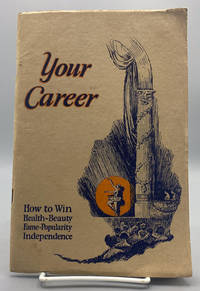
192917783<p>New York: Ned Wayburn Studios of Stage Dancing Inc. 1841 Broadway 1929 Two pieces of ephemera. Your Career is an octavo. 60 pp. Ned Wayburn is also an octavo. 4 pp. Unpaginated. 5.5 x 8 in. Rare first editions. OCLC records 4 copies in libraries worldwide of Your Career and no copies of Ned Wayburn.T. Your Career has publisher's beige wrapping with illustration of ballet dancer and title in blue and orange. Minor edgewear. Reproduced photographs throughout. Ned Wayburn printed on green laid paper folded once with copy of letter from Ned Wayburn to Miss Collebrusco inside. Both items are in near fine condition. . These itens encourage young dancers to train and pursue a dance career through the teaching and advice of Ned Wayburn. Your Career advises young women on how to prepare for a stage career as well as sharing information about Ned Wayburn's dance school. Ned Wayburn Dancing Courses includes dates and prices for summer courses. In the letter inside Weyburn encourages Miss Collebrusco enroll early in these classes before they fill up.</p> Ned Wayburn Studios of Stage Dancing, Inc., 1841 Broadway,
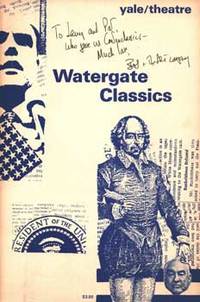
75-2130New Haven CN: Yale School of Drama 1974. 8vo. Soft covers. Very Good. 126 pp.Black and white plates throughoutPresentation copy signed by author to Larry Gelbart creator of MASH television show. There might be an additional charge due to the large size of the book. New Haven, CN: Yale School of Drama, 1974 paperback
48280668like new. unknown
48280668-nnew. unknown
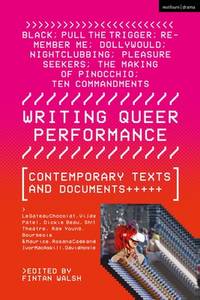
2025x-1350431508Bloomsbury Methuen Drama 2025. Hardcover. New. 224 pages. 9.21x6.14x1.00 inches. Bloomsbury Methuen Drama hardcover
2025x-1350431494Bloomsbury Methuen Drama 2025. Paperback. New. 224 pages. 9.21x6.14x1.00 inches. Bloomsbury Methuen Drama paperback
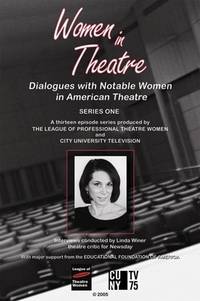
20061-0977307409Theatre Communications Group 2006. Hardcover. New. dvd edition. 7.50x5.25x0.50 inches. Theatre Communications Group hardcover
19283Without place or date. Ballet performed at the Empire Theatre London in 1898. In black and white on 34 x 23 cm shiny art paper. Possibly extracted from an unnamed periodical. Lightly aged and worn and ruckled from being laid down on paper backing. Tiny chip lost at foot. Sixteen female figures are shown in costumes representing newspapers from the 'Daily Mail' to 'The Sketch' and including 'Mdlle. Zangfretta as Fashion' around a central representation of a scene from the ballet featuring Adeline Genée as the Liberty of the Press. Mark Edward Perugini in his 'Art of Ballet' 1915 states of Genée that 'it was her performance as the Spirit of the "Liberty of the Press" in the famous Empire ballet "The Press" invented and designed by Mr. Wilhelm with the choreographic support of Mme. Lanner and music by Mons. Wenzel on February 14th 1898 that first marked her "and for many years to come" as a London "star." The ballet gave her scope for some wonderful and proved immensely popular. It was a novel idea artistically carried out and illustrated the history and power of the Fourth Estate. A number of charming coryphees were ingeniously attired as representatives of the various newspapers boys' costumes indicating the morning and girls' the evening journals. The venerable Times was typified by a man in the guise of Father Time with hour-glass and other symbols of his ancient office and accompanied by a retinue. Mme. Cavallazzi represented Caxton Father of the Printing Press; Mile. Zanfretta the Spirit of Fashion; and there were typical costumes for The Standard The Daily Telegraph The Globe The Daily Mail then two years old! The Illustrated London News who announced that she was " Established 1842 " The Illustrated Sporting and Dramatic News The Lady's Pictorial The Sketch The Referee and others too numerous to name. So popular did the ballet prove that this also ran for months and it was not until October of the same year that a new production " Alaska" was staged the scenario of which was by Mr. Wilhelm the choregraphy by Mme. Lanner and music by Mons. Wenzel.' See Image. Without place or date. [ Ballet performed at the Empire Theatre, London in 1898.] unknown
264483 November 1835; Victoria i.e. the Victoria Theatre London. See the two men’s entries in the Oxford DNB. 2pp 12mo. Bifolium. Aged and a little worn with short closed tear at head of the first leaf repaired with tape and the second leaf having a discoloration at one edge from tape used in mount. Signed ‘W. T. Moncrieff’. Casting interesting light on the production of melodramas in the ‘Surrey-side’ theatres. In an effort to induce him to collaborate with him on a production at the Victoria Theatre he begins: ‘My dear Cooke / Without wishing to interfere with any arrangement you may have made or may be contemplating to make - there can be no harm in my dropping a hint that the Proprietors here would be most happy to secure your Services at any time on your own terms - if at all within their means’. Such an arrangement would also please Moncrieff ‘as I have the idea of a Drama that I think very likely to prove quite as attractive as ever “My Poll and my Partner Joe†may prove.’ That play by J. T. Haines and with music by Jolly was a great success at the Royal Surrey Theatre in the same year. He ends by asking Cooke to ‘turn this over in hyour mind at your leisure and favor me with a line on the subject’. 3 November 1835; Victoria [i.e. the Victoria Theatre, London]. unknown
21220At head of first page: 'Copy January 16 1894'. A highly interesting letter from a leading Victorian dramatic critic Thomas describes himself in the letter as 'For five & twenty years . theatrical critic of the Daily news & the Graphic' who has 'served under at least thirteen editors' to a leading actor-manager Hare was knighted in 1907 on the subject of alleged editorial pressure on Fleet Street's theatre critics. 4pp 8vo. On four leaves. Aged and worn but with text complete and clear. Thomas has noted on the reverse of the last leaf: 'Letter to Hare about Grundy's Comedy An Old Jew produced at the Garrick Janry 6 1894.' Grundy wrote 'An Old Jew' for Hare who portrayed the main character Julius Sterne. Draft of long letter with numerous minor emendations. He was glad to read Hare's letter despite its 'lingering trace of the languor of the sick room'. 'To me so many years your senior it seems strange indeed to find you speaking of the close of your stage career. I can only say on that head that I hope to live to see you for many more years gathering fresh laurels'. On the subject of Grundy's play he states that he does not believe that 'the journalistic world has any claim to be exempt from the satire or even the extreme caricature which is freely allowed in the case of other classes. Literary cliques & côteries undoubtedly do exist as they existed in the days of Delatouche's Tour de Faveur & Delavigne's Comédiens and Scribe's Camaraderie'. He deplores critics who 'will now fall down & worship certain Scandinavian idols & their crude & offensive methods'. He cannot conceive of 'editors who give instructions to critics to denounce plays contrary to their real opinions'. He can 'only say that I have never met with any such editor. For five & twenty years I have been the theatrical critic of the Daily news & the Graphic & for some years of that time I occupied the same post on The Academy besides writing drama notices occasionally for other journals. Altogether I have served under at least thirteen editors and I can conscientiously affirm that never did any one of these attempt to entice me to speak ill of what I thought or might think a good paly or performance or vice versâ.' After some more observations he concludes: 'Depend upon it the whole thing will be forgotten ere long or remembered only to excite wonder that any sensible journalist of decent standing should have made a fuss about it'. At head of first page: 'Copy | January 16, 1894'. unknown
24581No date or place. 1947. London. From the Macqueen-Pope papers. See the two men’s entries in the Oxford DNB. MP is not named as the author but there is no doubt that he is. Item one has corrections in his hand. Both versions are simply titled ‘Will Fyffe’. The two versions exhibit a number of differences from one another. It is not clear where the obituary was published but it was probably the London magazine ‘Everybody’s’ for which MP contributed a weekly column. ONE: 4pp 4to double-spaced on four leaves. Autograph corrections to first sentence and an altogether more untidy effect including an additional passage on the last page which is correctly positioned in the second draft below suggest that this is an earlier draft. Begins: ‘It was a freak of fortune that made Will Fyffe into a music hall star instead of remaining on the legitimate stage where he had made his beginning as a small boy.’ Contains information not present in the second version including several astute assessments. For example: ‘Unlike Sir Harry Lauder the other great Scot of the Halls Will Fyffe was a realist. He could create a character and be it. It was not Will Fyffe at whom you gazed it was a gamekeeper a centenarian a Scots engineer on a steamship a guard on the Highland Railway - finding a report of the Battle of Waterloo in the lining of his ill fitting cap a country doctor a real country bumpkin the blacksmith at Gretna Green or the inebriated gentleman to whom Glasgow belonged on a Saturday night. He studied his types and he reproduced them magnificently. They were real people.’ Other topics include his mastery of make-up international popularity and ‘magnificent service’ in the First World War. TWO: 3pp 4to single-spaced on three leaves. More polished than One and with emendations deletions and recasting. Ends: ‘Our stage has lost one of its greatest artists and finest men. How fine an actor he was few knew although one celebrated critic glimpsed it when he wrote “Mr Fyffe has a sob here of which Garrick had bee proud.’ No date or place. [1947. London.] unknown
68-7158Grosse Pointe Michigan: Grosse Pointe Children's Theatre ca. 1960. Theatre Program. 8vo. Wraps. 12 pp. Very Good. Scarce. Grosse Pointe, Michigan: Grosse Pointe Children's Theatre, [ca. 1960]. paperback
59-3288London The Alhambra Theatre 1932. Program for "Waltzes from Vienna" a musical play featuring waltzes by Richard Strauss arranged by Hassard Short. 8vo. 7-3/8 x 9-7/8 inches. Stapled in printed wraps. With many cast photos and interesting contemporary advertisements. London, The Alhambra Theatre, [1932?]. paperback
17437Drafts without place or date. Covering letter to Poke dated 20 January 1951 without place . ONE: The earlier of the two drafts titled 'It Was Top of the Bill The Story of Music Hall. by W. Macqueen-Pope.' 14pp. 4to. Paginated 1-12 with two further pages carrying material to be inserted. With a few autograph emendations including an addition to the ending. Macqueen-Pope writes knowledgeably and with a passion for his theme which is that 'Music Hall reflected public taste even more accurately than did the "legitimate" Theatre because it was created by the people themselves. The basis of the Drama of the Theatre - was religion. The origin of Music Hall was the public house and the Tavern.' Among those discussed are Marie Lloyd Herbert Campbell Dan Leno Harry Champion George Robey. The article begins: 'Music Hall - real Music Hall - is dead. There is something called Variety which appears to flourish today but it bears no more resemblance to true Music Hall than "Othello" bears to "Oklahoma". It takes place on a stage it has a succession of "turns" but there the likeness ends.' TWO: Later version of the two drafts incorporating the emendations in the first. Same title. The ending reads: 'And there in the words of one of the remaining members of that class of real Londoners who made the Music Hall - the type that Chevalier Alec Hurley and Gus Elen showed on the Music Hall stage is the chief reason today why Music Hall is dead. Yet in a few artists it lingers on like its melodies refusing to die whilst there remains sic some individuals with their own style and not just truants from the Radio Studios - and there is still Gracie Fields . . . . she is Music Hall.' THREE: Typed carbon copy of letter to 'Dear Greville' from Macqueen-Pope: 'Here is the story of "Music Hall". It looks a bit long but it is a big subject and I hahve packed it full of stories. It is in a sense an epitome of my book "The Melodies Linger On" recently published by W. H. Allen Ltd - and so is in the news. I dont think anyone has told the real truth about Music Hall before - and why it died.' In a postscript he assures him that 'The bit about the bus conductor is the solemn truth.' Drafts without place or date. Covering letter to Poke dated 20 January 1951 [ without place ]. unknown
11-0907London: Half Moon Theatre ca.1980. Poster measuring 16 x 24 inches depicting policeman on a toilet. Very good. London: Half Moon Theatre, ca.1980. unknown
23192BBC Broadcast 1951; Printed Version in "London Calling" Issues 615-640 p.48. Typescript carbon Seven pages 4to good condition. the text as Macqueen-Pope typed it had a good crop of typos for example "we justvcllaed" for "we just called" some elision but just two annotations the correction of the spelling of "weasels" and change of a pub name from the Kings Head to the Cromwell Arms. A comprehensive and enthusiastic biography. With two Typed Letters Signed "Kay Fuller Talks Producer General Overseas Service" 29 March 1951 acknowledging receipt of he script "which I greatly look forward to reading" She has given up the "idea of inserting a song into your talk. The discs are so old and of such poor quality that we cannot risk them for short-wave transmission. It is most disappointing." She'll be in touch with a recording date. 6 April 1951 confirming the date of Macqueen-Pope's recording of the broadcast talk. BBC, Broadcast 1951; Printed Version in "London Calling", Issues, 615-640, p.48. unknown