3 731 résultats
50541Rochefort.Fleury.2 vols. demi-reliés.1845.468 et 528 p.Table.3 planches dépliantes.3 portraits.Jolie reliure.Rousseurs in-texte.
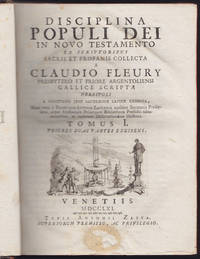
2637-01Venedig Zatta 1761. 2 Bde. in 1 geb. kl.-4°. XII 288; 3 Bll. 387 S. Mit 2 gest. Titelvign. Ldr. d. Zt. mit 2 Rückensch. u. Rückengoldpräg. Wurmgänge am Rü. ob. Kap. beschäd. Ecken tlw. gestaucht. Venedig, Zatta 1761. unknown
2014x-9048192455Springer Verlag 2014. Hardcover. New. 2014 edition. 330 pages. 9.25x6.25x1.00 inches. Springer Verlag hardcover
6504421Springer pp. 504 . Papeback. New. Springer unknown
2023x-9811918341Springer Nature 2023. Paperback. New. 324 pages. 9.25x6.10x0.69 inches. Springer Nature paperback
2022x-1786307707Wiley-ISTE 2022. Hardcover. New. 192 pages. 9.45x6.46x0.75 inches. Wiley-ISTE hardcover
1924103258Paris, Albin Michel 1924 4 volumes. In-8 20 x 12,5 cm. Reliures demi-basane verte, dos à nerfs, pièces de titre cuir havane, têtes dorées, XII-484-410-464-536 pp., nombreuses illustrations d’après les tableaux et les documents d’époque, tables des matières. Reliures légèrement frottées, accrocs en tête de dos, ensemble en bon état.
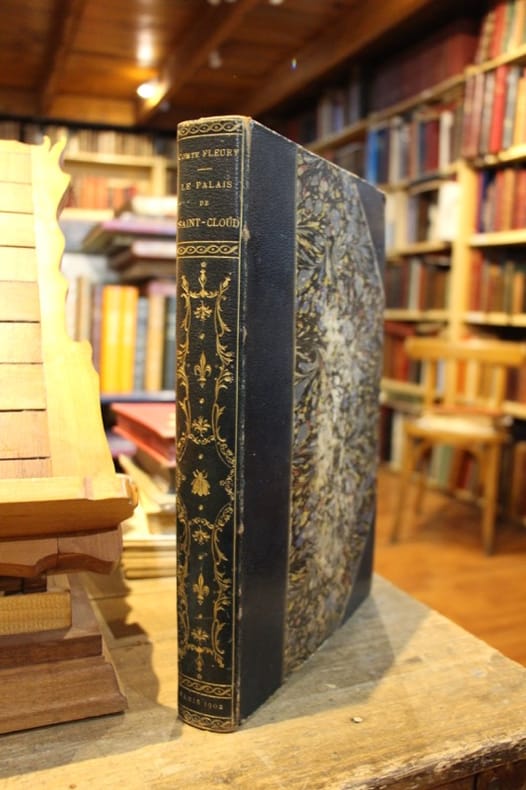
190248901Librairie Renouard - Henri Laurens, éditeur 1902 In-4 30 x 22 cm., Reliure demi-chagrin vert-émeraude à coins avec filets dorés, plats jaspés verts, dos lisse orné de motifs rococo, d’abeille et de fleurs de lys, auteur, titre et année dorés, tête dorée, frontispice et 8 gravures hors-texte sous serpente, 80 illustrations dans le texte, 312 pp. Coiffes, coins et bords frottés, intérieur frais. N323/ 1100 exemplaires numérotés de 1 à 1100. Bon exemplaire.
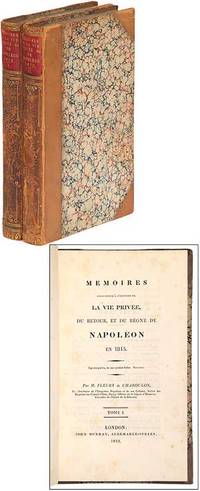
1820292261London: John Murray 1820. Hardcover. Very Good. First edition. Two volumes. Contemporary half calf and marbled paper covered boards red spine label gilt. Spine rubbed and nicked else very good. John Murray hardcover
1920002342D. Appleton and Company. Volumes I and II. Original publishers boards with gilt topstains. gift inscription on ffep in Volume I. . Near Fine. Hardcover. 1st Edition. 1920. D. Appleton and Company hardcover
2016ORA1DIFFERENCE 2016. Book. As New. Hardcover. 1st Edition. AS NEW FIRST EDITION HARDCOVER IN SLIPCASE WITH SHRINKWRAP. DIFFERENCE Hardcover
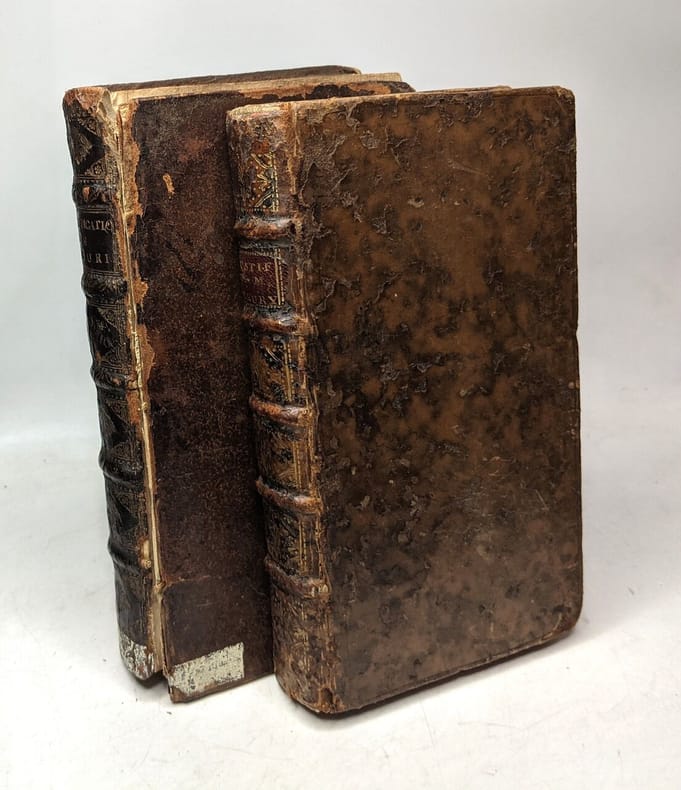
17616767France: np 1761. Hardcover. Very Good. Handwritten contents. Appears to be an original selection hence 'Extraits' in the title from the monumental "Histoire Ecclésiastique" written by Claude Fleury in the 1690's. Spine and title page note that this is Volume 2 only. Title page dated 1761. Hardcover 8vos. full calf raised bands and two leather and gilt title labels to spine marbled edges and endpapers. 453 pp. including table of contents in rear. Beautiful penmanship brilliantly aligned and ruled. Generally Very Good; corners worn; shallow chipping to spine ends; hinges drying up but still secure. Clean interior. WorldCat mentions a book with similar title as published in 1729 but it also says that it's just 52 pages. A truly one of a kind item -- sadly though this is Volume 2 only. np hardcover
1775G36<p>Some dam. To board edge/borer to p82</p> hardcover
2019x-1474419224Edinburgh Univ Pr 2019. Hardcover. New. 288 pages. 9.50x6.25x1.00 inches. Edinburgh Univ Pr hardcover
20141-3838175999Presses Académiques Francophones 2014. Paperback. New. 380 pages. French language. 8.66x5.91x0.86 inches. Presses Académiques Francophones paperback
20261001333472026. premier tome en bon état couverture défraîchie frottée intérieur globalement propre quelques rousseurs 1er plat du tome second détaché bords frottés intérieur globalement propre quelques rousseurs une note sur la page titre. in12. 2026. Relié. 2 volumes. unknown
174639458Chez Pierre-Jean Mariette | Paris 1746 | 10 x 17 cm | relié
17361001333471736 in12. 1736. Relié. 2 volume(s).
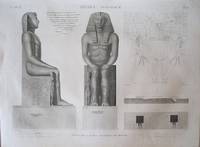
1977Middle East: Paris Impremerie de C.L.F.Pancoucke 1820-1829. Copper engraving showing one of the Colossi of Mnemnon Thebes from the second volume of the "Antiquities "of the "Description de l'Egypte" 2nd Edition; black & white; verso blank. Blind stamp of the publisher Panckoucke to margin. The image shows the statue reconstructed from the front and side sides showing the Greek graffiti carved on the massive legs of the statue and on the sides of the pedestal; with a detail of the carving of the Nile god Hapy from the side of his throne. The statue depicts Amenhotep III fl. 14th century BC in a seated position his hands resting on his knees and his gaze facing eastwards towards the river. Two shorter figures are carved into the front throne alongside his legs: these are his wife Tiy and mother Mutemwiya. Good dark impression; generally clean a few very minor spots. "Description de l'Egypte ou Recueil des observations et des recherches qui ont été faites en Egypte pendant l'expédition de l'armée française." When Napoleon Bonaparte invaded Egypt in 1798 he brought with him an entourage of more than 160 scholars and scientists. Known as the French Commission on the Sciences and Arts of Egypt these experts undertook an extensive survey of the country's archeology topography and natural history. . For four years more than 150 artists engineers linguists and scientists traveled throughout the country examining almost every aspect of ancient and contemporary Egypt. They recorded and measured in meticulous detail Egypt's topography flora and fauna and its ancient and contemporary architecture. A soldier who was part of the expedition found the famous Rosetta Stone which the French linguist and scholar Jean-François Champollion 1790-1832 later used to unlock many of the mysteries that long had surrounded the language of ancient Egypt. The Egyptian expedition ended with a total military failure. The French left Egypt in 1801 with the honors of war but defeated; yet military failure remains a significant event in the history of knowledge because it is the first time a military expedition was accompanied by a scientific expedition. In 1802 Napoleon authorized the publication of the commission's findings in a monumental multi-volume work that included plates maps scholarly essays and a detailed index. Publication of the original Imperial edition began in 1809 and continued to 1822 sold by subscription. It proved so popular that a second edition was published under the post-Napoleonic Bourbon Restoration. The "Royal edition" published in Paris by C.L.F. Panckoucke from 1820-1830. The Second edition consists of 11 or 12 volumes of plates in folio and 24 of text bound as 26 8vo. Brunet:II 617; Blackmer/Navari: 476 1st edition Middle East Antiquities Colossi of Memnon Paris Impremerie de C.L.F.Pancoucke 1820-1829 unknown
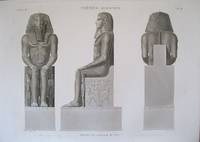
1976Middle East: Paris Impremerie de C.L.F.Pancoucke 1820-1829. Copper engraving showing one of the Colossi of Mnemnon Thebes from the second volume of the "Antiquities "of the "Description de l'Egypte" 2nd Edition; black & white; verso blank. Blind stamp of the publisher Panckoucke to margin. The image shows the statue from three sides and in a reconstructed condition The statue depicts Amenhotep III fl. 14th century BC in a seated position his hands resting on his knees and his gaze facing eastwards towards the river. Two shorter figures are carved into the front throne alongside his legs: these are his wife Tiy and mother Mutemwiya. The side panels depict the Nile god Hapy. Good dark impression; generally clean a few very minor spots. "Description de l'Egypte ou Recueil des observations et des recherches qui ont été faites en Egypte pendant l'expédition de l'armée française." When Napoleon Bonaparte invaded Egypt in 1798 he brought with him an entourage of more than 160 scholars and scientists. Known as the French Commission on the Sciences and Arts of Egypt these experts undertook an extensive survey of the country's archeology topography and natural history. . For four years more than 150 artists engineers linguists and scientists traveled throughout the country examining almost every aspect of ancient and contemporary Egypt. They recorded and measured in meticulous detail Egypt's topography flora and fauna and its ancient and contemporary architecture. A soldier who was part of the expedition found the famous Rosetta Stone which the French linguist and scholar Jean-François Champollion 1790-1832 later used to unlock many of the mysteries that long had surrounded the language of ancient Egypt. The Egyptian expedition ended with a total military failure. The French left Egypt in 1801 with the honors of war but defeated; yet military failure remains a significant event in the history of knowledge because it is the first time a military expedition was accompanied by a scientific expedition. In 1802 Napoleon authorized the publication of the commission's findings in a monumental multi-volume work that included plates maps scholarly essays and a detailed index. Publication of the original Imperial edition began in 1809 and continued to 1822 sold by subscription. It proved so popular that a second edition was published under the post-Napoleonic Bourbon Restoration. The "Royal edition" published in Paris by C.L.F. Panckoucke from 1820-1830. The Second edition consists of 11 or 12 volumes of plates in folio and 24 of text bound as 26 8vo. Brunet:II 617; Blackmer/Navari: 476 1st edition Middle East Antiquities Colossi of Memnon Paris Impremerie de C.L.F.Pancoucke 1820-1829 unknown
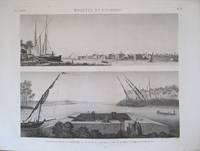
1972Middle East: Paris Impremerie de C.L.F.Pancoucke 1820-1829. 2 copper engraved views on 1 plate: View of the port town of Rosetta Rashid & a view of the fort at the entrance to the Nile from the first volume of the "Etat Modene "of the "Description de l'Egypte" 2nd Edition; 1822; black & white; verso blank. Blind stamp of the publisher Panckoucke to margin. The upper view shows the town of Rosetta on the banks of the Nile near which the Rosetta stone was found. The lower view shows the fort at the entrance to the Nile from above the battery. Good dark impression; some light foxing. "Description de l'Egypte ou Recueil des observations et des recherches qui ont été faites en Egypte pendant l'expédition de l'armée française." When Napoleon Bonaparte invaded Egypt in 1798 he brought with him an entourage of more than 160 scholars and scientists. Known as the French Commission on the Sciences and Arts of Egypt these experts undertook an extensive survey of the country's archeology topography and natural history. . For four years more than 150 artists engineers linguists and scientists traveled throughout the country examining almost every aspect of ancient and contemporary Egypt. They recorded and measured in meticulous detail Egypt's topography flora and fauna and its ancient and contemporary architecture. A soldier who was part of the expedition found the famous Rosetta Stone which the French linguist and scholar Jean-François Champollion 1790-1832 later used to unlock many of the mysteries that long had surrounded the language of ancient Egypt. The Egyptian expedition ended with a total military failure. The French left Egypt in 1801 with the honors of war but defeated; yet military failure remains a significant event in the history of knowledge because it is the first time a military expedition was accompanied by a scientific expedition. In 1802 Napoleon authorized the publication of the commission's findings in a monumental multi-volume work that included plates maps scholarly essays and a detailed index. Publication of the original Imperial edition began in 1809 and continued to 1822 sold by subscription. It proved so popular that a second edition was published under the post-Napoleonic Bourbon Restoration. The "Royal edition" published in Paris by C.L.F. Panckoucke from 1820-1830. The Second edition consists of 11 or 12 volumes of plates in folio and 24 of text bound as 26 8vo. Brunet:II 617; Blackmer/Navari: 476 1st edition Middle East Egypt Rosetta Rosette Rashid Farchel Paris Impremerie de C.L.F.Pancoucke 1820-1829 unknown
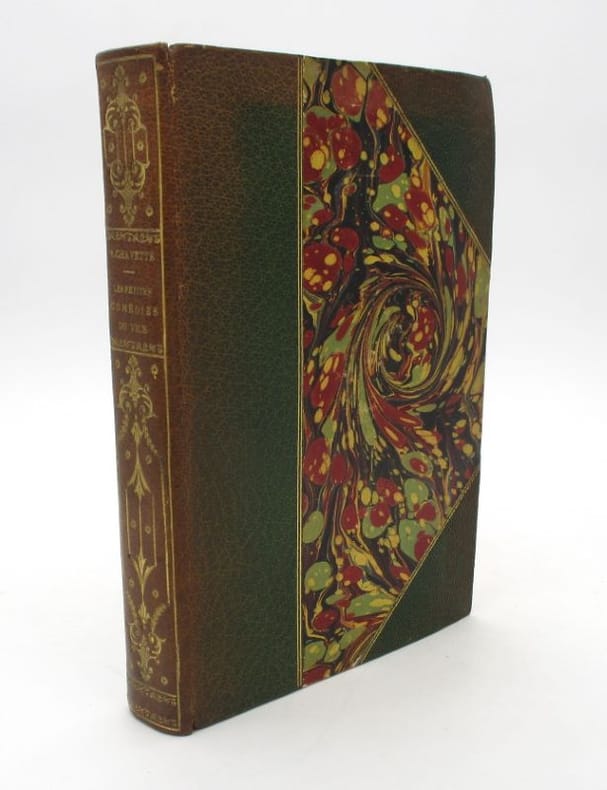
6871Paris, Lacroix, s.d. (1875). In-12 à grandes marges, non rogné, 323-(1) p., reliure demi-maroquin vert à coins, dos orné, vignettes dans le texte (Fleury), 7 planches hors-texte (dos insolé).
192550704Saint-Quentin, Paul Dupré, s.d. (1925-1926), 2 vol. pt in-4°, 290 et 348 pp, nombreuses illustrations dans le texte et hors texte par Paul Seret, index, brochés, dos abîmés recollés, intérieurs propres, état correct. Rare
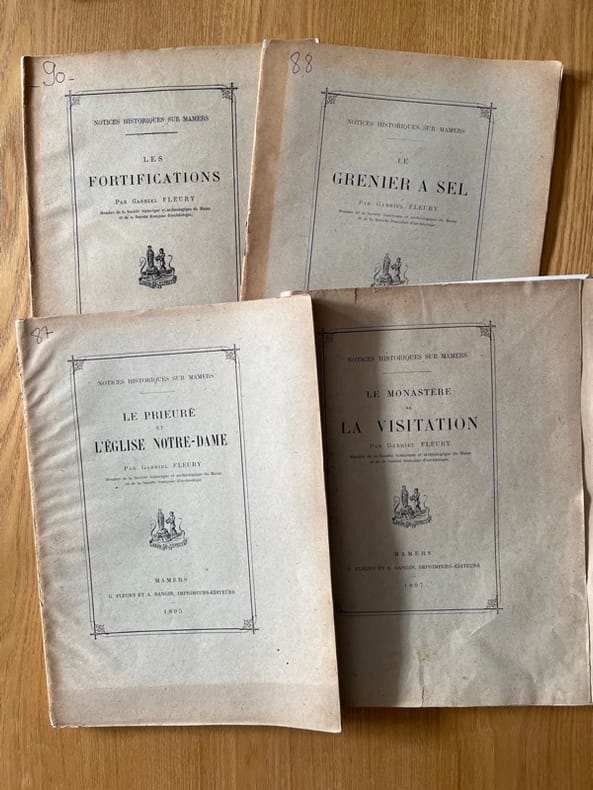
235118Mamers, Fleury et Dangin, 1887 - 1897 4 fascicules gr. in-8, broché. Petits trous de vers en marge inférieure de tous les fascicules.
197928Paris, Charles Gosselin, 1844 2 vol. in-12, III-518 pp. et 439-[2] pp., demi-veau cerise, dos lisses ornés, filets dorés et à froid (reliure de l'époque). Qqs rares rousseurs. Dos passés. Ex-libris A. G. du Plessis.