Mucha AlfonsMareMagnum

1 978 résultats
In 8° (19,5x13,5 cm); un foglio volante di (4) pp. Leggera piega al centro del foglio e per il resto esemplare in ottime condizioni di conservazione. Rarissima pubblicità teatrale per lo spettacolo che la grande attrice tearale e cinematografica francese, Sarah Bernhardt (Parigi, 22 ottobre 1844 – Parigi, 26 marzo 1923) tenne al Theatre de la Renaissance di Parigi. All’interno della brossure si trova anche la pubblicità per lo spettacolo che la Bernhardt avrebbe tenuto l’11 dicembre del 1898 al Teatro Paganini di Genova. La borossure pubblicitaria presenta un magnifico ritratto dell’attrice realizzato dal grande artista moravo, Alfons Maria Mucha (Ivancice in Moravia nel distretto di Brno, 24 luglio 1860 – Praga, 14 luglio 1939), considerato come il massimo esponente dell’Art Nouveau. L'attrice parigina Sarah Bernhardt (1844-1923) fu la figura più influente nella vita artistica di Mucha. Fu il suo primo poster per lei, Gismonda, a renderlo famoso e crebbe sia come uomo che come artista attraverso la sua collaborazione professionale e l'amicizia con la più grande personalità scenica dell'epoca. Mucha conobbe Sarah Bernhardt per la prima volta alla fine del 1894. La leggenda narra che nel giorno di Santo Stefano (26 dicembre) Mucha, allora umile illustratore, stava facendo un favore a un amico, correggendo le prove nel laboratorio di stampa di Lemercier, quando l'attrice chiamò la stamperia con una richiesta urgente di un nuovo poster per la sua partecipazione all’opera teatrale, Gismonda. Tutti i soliti artisti di Lemercier erano in vacanza, quindi disperato si rivolse a Mucha chiedendogli se se la sentiva di realizzare lui un poster. Nonostante la sua mancanza di esperienza nella progettazione di poster, Mucha colse l’opportunità e si mise subito al lavoro. Finito il manifesto lo presentarono insiema alla grande attrice che con grande stupore di Mucha, si entusiasmò per l’opera. Fu così che i manifesti “Gismonda” di Mucha tapezzarono tutta Parigi il mattino del 1° gennaio del 1895. Questa data è oggi celebre perché segna una rivoluzionare del design dei manifesti. La forma lunga e stretta, i sottili colori pastello e l'immobilità della figura quasi a grandezza naturale, introducevano una nota di dignità e sobrietà sorprendente per la sua novità. I manifesti diventarono immediatamente oggetti del desiderio per collezionisti, molti dei quali usavano metodi clandestini per ottenerli, corrompendo coloro che per lavoro applicavano i manifesti o semplicemente, uscendo di notte e tagliandoli dai cartelloni di nascosto. Felicissimo del successo di Gismonda, Sarah Bernhardt offrì immediatamente a Mucha un contratto per la produzione di scenografie, costumi e poster. In base a questo contratto, Mucha produsse altri sei poster per le sue produzioni: La Dame aux Camélias (1896), Lorenzaccio (1896), La Samaritaine (1897), Médée (1898), La Tosca (1898) e Hamlet (1899). Mucha applicò a questi manifesti lo stesso principio progettuale che aveva sviluppato per Gismonda: l'uso di un formato allungato con un'unica figura intera dell'attrice collocata in un'alcova poco profonda sollevata da terra come fosse una santa, tutte caratteristiche che si possono ritrovare in questa brossure. La collaborazione tra Mucha e Sarah Bernhardt fu, certamente, reciprocamente vantaggiosa. I poster di Mucha hanno immortalato l'immagine "divina" dell'attrice, consolidando il suo status iconico. Da parte sua, Bernhardt era così innamorata del lavoro di Mucha che dopo il 1896 fece uso dei suoi progetti per tutti i manifesti che pubblicizzarono i suoi tour americani. D’altra parte, il successo della Bernhardt ha promosso il lavoro di Mucha e lo ha aiutato ad assicurarsi un punto d'appoggio per realizzare la sua arte ed aprirgli nuovi mercarti, anche dopo il 1904 quando l’artista s'imbarcò sul transatlantico La Lorraine, diretto a New York ed continuò la sua carriera negli Stati Uniti. Le brossure pubblicitarie di Mucha, proprio per la loro funzione di fogli volanti usa e getta, sono rarissimi.
2003x-3540001093Springer Verlag 2003. Hardcover. New. 1st edition. 500 pages. 9.75x6.54x1.00 inches. Springer Verlag hardcover
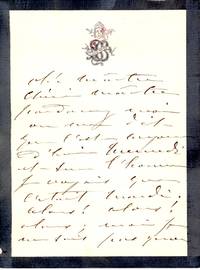
39567rather hysterically asking for forgiveness presumably for having mistaken an appointment "I thought it was Tuesday. So ! So ! So ; I do not know what to say to you to be forgiven. You have to comfort me because I have a real sorrow. Master master when do you want me. Tell me a very very kind word." 2 sides 8vo. on monogrammed mourning paper no place no date circa In 1882 in Paris Bernhardt met a Greek diplomat Aristide Damala known in France by his stage name Jacques Damala 1855-1889 who was 11 years her junior and notorious for his romantic affairs. She fell in love with him and insisted that her tour be modified to include a stop in St. Petersburg. Bernhardt invited Damala to give up his diplomatic post to become an actor in her company as well as her lover and before long they decided to marry. Without noticeable talent. Damala began taking large quantities of morphine and following Bernhardt's great success in Fedora Damala took every opportunity to criticize and humiliate her. She later discovered that he was using the money she gave him to buy presents for other women. In early December 1882 when she confronted him he declared that he was going to North Africa to join the Foreign Legion and disappeared. In early 1889 Damala reappeared at Bernhardt's door haggard ill and penniless. Bernhardt instantly forgave him and he continued to act sometimes with success particularly in a play by Georges Ohnet Le Maître des Forges in 1883. However his morphine addiction had worsened. In August 1889 Bernhardt learned that he taken an overdose of morphine in Marseille. She hurried to his bedside and nursed him until he died on 18 August 1889 at the age of 34. Transcription Cher maître chéri. Maître pardonnez-moi. On me dit que c'est aujourd'hui mercredi et sur l'homme. Je croyais que c'était mardi. Alors ! Alors ! Alors ; moi je ne sais pas quoi vous dire pour me faire pardonner. C'est vous qui devez me consoler car j'ai un réel chagrin. Maître maître quand voulez-vous de moi. Dites-moi un mot très très aimable sans cela je n'oserais jamais. Sarah Bernhardt Translation Dear beloved master. Master forgive me. I am told that today is Wednesday and about the man. I thought it was Tuesday. So ! So ! So ; I do not know what to say to you to be forgiven. You have to comfort me because I have a real sorrow. Master master when do you want me. Tell me a very very kind word otherwise I would never dare. Sarah Bernhardt unknown
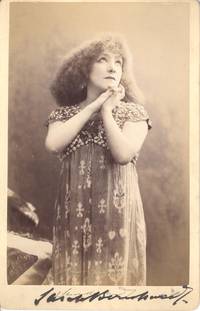
39573over a printed signature showing her three quarters length looking up with her hands clasped under her chin wearing an empire line dress 6½" x 4¼" no place no date circa unknown
28420to Valentine showing her three quarters length in profile wearing gipsy style clothes leaning over a large arrangement of flowers 6½" x 4¼" no place no date c. image slightly faded hardcover
34677showing her head and shoulders looking up romantically wearing costume with an elaborate flowered headdress made of beads and matching collar on her dress 10" x 8" no place laid down on card unknown
190842381Paris: Fasquelle 1908. Fine. Fasquelle Paris 1908 14.50 x 21 cm broché First edition one of 15 numbered copies on Hollande the only large paper copies. Foxing in the margins to the covers and some extended edges. A copy with good margins. Fasquelle unknown
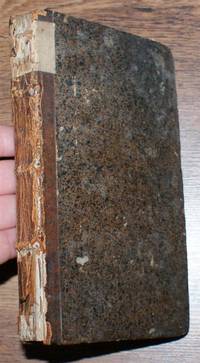
174802017101121Not given; printed by J.C. Tzschiedrich Frankfurt & Leipzig; Printed in Wittenberg 1748. First Edition. Hardcover. Fair Condition/No Dust Jacket. Full tile: Speculum sapientiae das ist Spiegel der Weissheit oder: curieuse chymische Geheimnisse vom Antimonio nebst einem Anhange von der Art Unterschied und Beschaffenheit derer antimonialischen Tincturen aus einem 150 jährigen Manuscript des beruhmten Leonhard Bernhardts von Lindenfels. Mirror of Wisdom or Curious chemical secrets of Antimony together with an appendix on the type difference and nature of tinctures made with antimony from a 150 year-old manuscript by the famous L B von L. Published Frankfurt ; Leipzig ptd. Wittenberg : publisher not identified ; J.C. Tzschiedrich. Contents: Title page; Vorbericht Foreword pp3-6; Analysis Antimonii Physico-chymico Rationalis pp7-152; Commentatio von denen Antimonialischen Tincturen pp Printer Error in pagination157-231; Anhang Appendix pp232-239. Quarter leather over cords on spine. Spine flaking. Boards worn at edges and corners. Nothing before folded main title. Main title has been tipped on to first page of foreword Vorbericht. Heavily darkened pages but text still clear. Text in German Gothic script with occasional Latin words and phrases. 239 pages. Text is in German. No dust jacket as published. Quantity Available: 1. Shipped Weight: under 1 kg. Pictures of this item not already displayed here available upon request. Inventory No: 02017101121. All our books music and maps are sent by a tracked mail service. Not given; printed by J.C. Tzschiedrich hardcover
035151Book. Very Good. 1pp single-sided from Bernhardt in Paris to Baruch in New York. She asks that he send her three copies of the Feb 17 New York World via ship as soon as possible and thanks him for doing so and for three Alphonse Mucha drawings. Simple content of the telegram aside Bernhardts connection to the doctor was significant. She was an enthusiastic believer in homeopathy traveling with a homeopathic remedy kit. Dr. Emmanual de Marney Baruch was a homeopath to prominent clients including the ballerina Helena Modjeska and the actor Sir Henry Irving. Neil Goulds book Victor Herbert: A Theatrical Life makes mention of Bernhardts particular connection to Baruch and her tendency to consult with him via telegraph from Paris. Staining at upper extremities two small missing chips at creases Size: 8 1/2" x 7". unknown
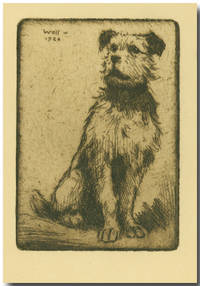
1925WRCLIT27830New Preston CT.: Bernhardt Wall 1925. Small quarto. Cloth backed boards spine label worn. Light rubbing at corners some minor marginal smudges to a few leaves else a very nice copy. Copy #6 of 150 numbered copies signed by the artist/publisher. Comprised of twenty-one original etchings printed from the plate. This copy bears Wall's 1926 pencil presentation inscription to Col. Marston E. Drake. The Drake firm was Wall's primary distributor at the time. WEBER p.36. Bernhardt Wall hardcover books
25240of the actress in various roles includes fine photo by Aime Thompson showing her in a tight military uniform wearing knee high riding boots and spurs together with three others by Melandri W.& D. Downey and Haute Coeur 6½"x 4" no date majority slightly faded with glue damage to the back of one unknown
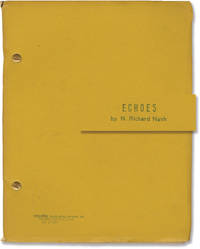
1972148014New York: Picket Productions 1972. Draft script for the 1973 play which premiered at the Bjijou Theater in New York. Not listed in the Internet Broadway Database but an early performance was reviewed by Clive Barnes for the New York Times on March 27 1973.<br/><br/>Playwright N. Richard Nash is best known for "The Rainmaker" 1954 adapted to the screen by Nash in 1956 and starring Burt Lancaster and Katharine Hepburn.<br/><br/>In "Echoes" Tilda Lynn Milgrim and Sam David Selby debate reality happiness and their sanity while in what appears to be an asylum. They are both under constant surveillance of the psychiatrist named "The Person" Paul Tripp.<br/><br/>Yellow Studio Duplicating Service titled wrappers with credits for playwright N. Richard Nash. Title page present dated 1972 with credits for playwright N. Richard Nash. 95 leaves with last page of text numbered 2-37. Mimeograph duplication rectos only. Pages Near Fine wrapper Near Fine bound with two gold screw brads. Picket Productions unknown books
1920WRCLIT57764New York: Etched by Bernhardt Wall 1920. 15 leaves. Small quarto 22 x 16.2 cm. Cloth tape backed boards etched pictorial label. One fore-tip nicked else a very good to near fine copy. First edition. One of 125 numbered copies signed by the artist/printer/publisher. Comprised of fifteen original copper-plate etchings by Wall plus the label printed in various colors. Wall's third "etched" book and the first to achieve commercial circulation and success. Wall dated his inscription in this copy "2.28.22." WEBER p.31. Etched by Bernhardt Wall hardcover books
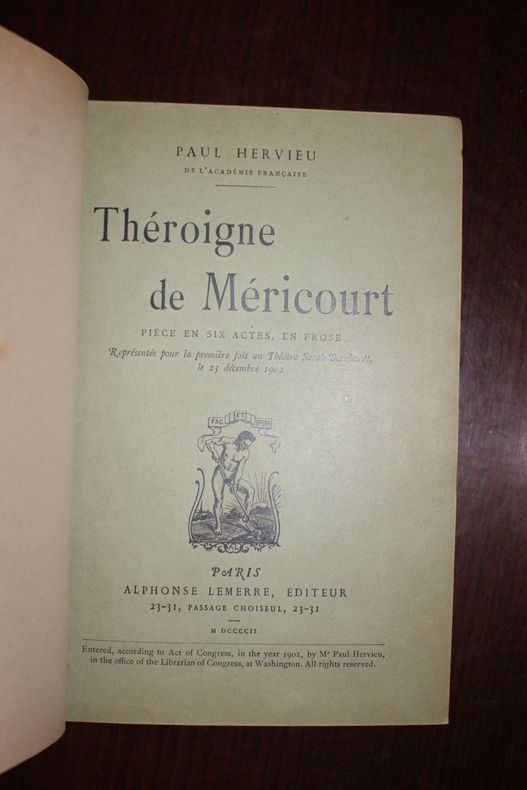
002804Paris, Lemerre, 1902. In-12, [8]-264p. Edition originale de cet pièce de théâtre, un des 10 japon du tirage de tête, ici le n°8, justifié par Lemerre. Cette pièce de théâtre, sur une des trois importantes féministes de la révolution, fut représentée pour la première fois au théâtre Sarah-Bernhardt le 23 décembre 1902, avec Sarah Bernhardt dans le rôle principal. Reliure signée Charles de Samblanx & Jacques Weckesser, plein maroquin, dos à nerfs orné d'un bonnet phrygien, tête dorée, couvertures et dos conservés. Petits frottis, mors supérieur légèrement fendillé en tête, non rogné. Très bel exemplaire.
190418578paris Beauchamp 1904 in-4 bradel demi-toile un volume, reliure Bradel demi-toile (half cloth-bound) verte grand in-quarto éditeur, dos long (spine without raised band) décoré et imprimé en vert fonçé, plats en plaquage de bois décoré en couleurs d'une fleur de chardon sur le premier plat, d'une cigogne sur le second, médaillon-portrait en ivoirine de Sarah Bernhardt dans Princesse lointaine d'après le tableau de Mucha sur le premier plat de couverture. tête lisse (top edge smooth) dorée (gilt top edge), gouttière et tranche de queue non rognées (no smooth fore-edge and edge of bottom), Textes sur papier vergé, portraits sur papier glacé fort. Portraits, autographes, notices biographiques illustrées de Paul Acker, Portraits humoristiques des célébrités contemporaines par Cappiello (14 lithographies originales hors-texte en couleur). Illustrations de Vogel, Ornement d'Habert-Dys, Orazi et Fraikin , non paginé [66] p.-[28] f. de planches, Janvier 1904 Paris Publication Octave Beauchamp (Imprimerie G. De Malherbe) Editeur,
1907LIQ-6907P. Charpentier et Fasquelle 1907. Fort in-8° demi maroquin chocolat, dos à 5 nerfs orné de motifs floraux dorés, p!èces de titres de maroquin jaune, tête dorée (quelques rousseurs uniquement sur les gardes).
190977989S. n. | s. l. 1909 | 9 x 14 cm | une feuille verso
BN66394Mit farbigem Glas arbeiten Bernhardt Hans-Rainer and Andelfinger Guido <br/><br/> unknown
19225097NNew York: Macaulay 1922. First Edition. Sarah Bernhardt’s novel about a young actress. “Is this fiction or is it the famous author’s thinly veiled story of her own triumphant career†About fine in a bright dust jacket with a couple of tiny chips and tears. The front panel of the dust jacket is a charming painting of a beautiful young actress taking a bow on stage holding a bouquet of flowers. Scarce in jacket. Macaulay unknown books
19225097NNew York: Macaulay 1922. First Edition. Sarah Bernhardt’s novel about a young actress. “Is this fiction or is it the famous author’s thinly veiled story of her own triumphant career†About fine in a bright dust jacket with a couple of tiny chips and tears. The front panel of the dust jacket is a charming painting of a beautiful young actress taking a bow on stage holding a bouquet of flowers. Scarce in jacket. Macaulay unknown
190842381Fasquelle | Paris 1908 | 14.50 x 21 cm | broché
2012BN27616Seehafen Verlag 2012. 2012. Hardcover. Antriebstechnik Instandhaltung Manövriereinrichtungen Schiffbau Schiffsdieselmotoren Schiffstypen Schiffsmaschinenbetrieb Handbuch der Schiffsbetriebstechnik Schiffsbetrieb Technik technologischen Veränderungen Schifffahrt Die zweite Auflage des Handbuch Schiffsbetriebstechnik gibt einen aktualisierten Überblick über das breite Spektrum der für den Schiffsbetrieb angewendeten Technik. Sie trägt den zahlreichen technologischen Veränderungen die sich in der Schifffahrt in der jüngeren Vergangenheit vollzogen haben besonders Rechnung und schließt so im Vergleich zu älteren Standardwerken bestehende Lücken. Mit dem "Handbuch Schiffsbetriebstechnik" schließt der Seehafen Verlag die Lücke die die beiden längst vergriffenenStandardwerke "Schiffsmaschinenbetrieb" Hrsg. Moeck und "Handbuch der Schiffsbetriebstechnik" Hrsg. Illies hinterlassen haben. Auf dem neuesten Stand der Technik beschreibt das neue "Handbuch Schiffsbetriebstechnik" bewährte technische Lösungen und bietet praktische Hilfestellungen und Lösungsansätze zur systematischen Fehlersuche bei Störungen und Unregelmäßigkeiten. Antriebstechnik Instandhaltung Manövriereinrichtungen Schiffbau Schiffsdieselmotoren Schiffstypen Schiffsmaschinenbetrieb Handbuch der Schiffsbetriebstechnik Schiffsbetrieb Technik technologischen Veränderungen Schifffahrt <br/><br/>Antriebstechnik Instandhaltung Manövriereinrichtungen Schiffbau Schiffsdieselmotoren Schiffstypen Schiffsmaschinenbetrieb Handbuch der Schiffsbetriebstechnik Schiffsbetrieb Technik technologischen Veränderungen Schifffahrt Die zweite Auflage des Handbuch Schiffsbetriebstechnik gibt einen aktualisierten Überblick über das breite Spektrum der für den Schiffsbetrieb angewendeten Technik. Sie trägt den zahlreichen technologischen Veränderungen die sich in der Schifffahrt in der jüngeren Vergangenheit vollzogen haben besonders Rechnung und schließt so im Vergleich zu älteren Standardwerken bestehende Lücken. Mit dem "Handbuch Schiffsbetriebstechnik" schließt der Seehafen Verlag die Lücke die die beiden längst vergriffenenStandardwerke "Schiffsmaschinenbetrieb" Hrsg. Moeck und "Handbuch der Schiffsbetriebstechnik" Hrsg. Illies hinterlassen haben. Auf dem neuesten Stand der Technik beschreibt das neue "Handbuch Schiffsbetriebstechnik" bewährte technische Lösungen und bietet praktische Hilfestellungen und Lösungsansätze zur systematischen Fehlersuche bei Störungen und Unregelmäßigkeiten. Antriebstechnik Instandhaltung Manövriereinrichtungen Schiffbau Schiffsdieselmotoren Schiffstypen Schiffsmaschinenbetrieb Handbuch der Schiffsbetriebstechnik Schiffsbetrieb Technik technologischen Veränderungen Schifffahrt Seehafen Verlag hardcover
42773showing her in the rold of the Duke of Reichstadt in 'the Aiglon' wearing uniform and seated on a rock 5½" x 3½" postmarked Herault 21st March 'L'Aiglon' was a play written by Edmond Rostand which was first performed on 15th March 1900 at the Théâtre Sarah-Bernhardt now the Théâtre de la Ville Place du Châtelet Paris. The title role was played by Sarah Bernhardt dressed as a man for the occasion. The actress's performance praised by audiences and the press alike was admired for the extreme sensitivity of her acting in the climactic moments of the drama. Everyone agreed that the role the actress's tragic performance and the character imagined by Edmond Rostand were a perfect match. 'L'Aiglon' marked a new stage in the actress's legend. unknown
1913006419New York: The Theatre Magazine 1913. First Edition. Cloth. Very Good /No Dustjacket. 12 issues bound by publisher into two green cloth volumes with dark green decoration on front board spines just a bit darkened clean internally with the bookplate of Jean and Lilly Dache Despres all of the original color covers bound in as well. The Theatre Magazine unknown books
192614759New Preston CT: Bernhardt Wall 1926. First Edition. Hardcover. Very good. In his introduction to this book Wall explains that he had purchase an old two-volume set of The Spectator at a secondhand bookstore when he was a child. The tale printed here was a favorite of young Bernhardt. It is supposedly Addison's translation of a story about a man who as a joke was wrapped up like a mummy and then placed in bed between two beautiful naked women who teased him all night long.<br /> <br /> Wall's illustrations for the story are cartoonish not unlike the work for many of his postcards. But there are two other etchings near the front of the book of an entirely different character dark and moody. In one a ghostly figure kneels on a grave and in another a man tortured after death tries to catch a fish in his teeth while his arms are restrained. Wall also includes portraits of Addison and Plato in this volume.<br /> <br /> Published in an edition of 150 copies this is number 10.<br /> <br /> 21 etched leaves including eight text plates. The title page is dated 1925 and the copyright is dated 1926. Wall was a prolific designer of humorous postcards in the early twentieth century some 5000 designs are attributed to him. Beginning in the 1920s he began producing short books entirely comprised of etchings—both text and illustrations were engraved on copper plates and printed by Wall in his shop in Connecticut. The subjects were intensely personal and the illustrations were iconoclastic. First edition first printing. Very good in paper-covered boards with a cloth spine. A sort of leather label is affixed around the spine at the top of the book. It is partially worn away possible with loss of the title. Signed by Wall on the limitation page. Bernhardt Wall hardcover