Aesop: PhaedrusABAA

38 résultats
1667WRCLIT79851Amsterdam: Johannem Janssonium à Waesberge & viduam Elizei Weyerstraet 1667. 62462204pp. Octavo 18.5 x 12 cm. Contemporary vellum short-title in manuscript on spine. Engraved frontis by Christopher Ganes and 103 engraved half-page illustrations in text. Vellum somewhat handsoiled and darkened bookplate frontis trimmed close along fore- edge short marginal tear in H2 without loss otherwise very good. First and only printing of this well- illustrated edition of the adaptations by the Latin fabulist Phaedrus of the Greek fables of Aesop as edited by Johannes Laurentius. Two engravings at pages 133 and 194 have been supplanted by other tipped in engravings. The Fables are followed by an "index vocabularum" and an "index rerum & verborum." BRUNET IV:588. Landwehr EMBLEM BOOKS Low Countries F143. Johannem Janssonium à Waesberge & viduam Elizei Weyerstraet hardcover books
16435227Trevigi: Girolamo Righettini 1643. Contemporary sheepskin parchment. 12mo. With 137 small woodcuts in text illustrating the fables including some repeats. 2 parts in 1 volume. Rare edition of the Italian translation by the philosopher Giulio Landi 1498-1579 of Aesop's fables and the Life of Aesop including no less than 400 animal fables some collected from other sources. The fables are illustrated with numerous small anonymous woodcuts that appeared for the first time in 1569 in the fables collected by Cesare Pavesi and became very popular through Landis translations of Aesop beginning in 1580. They have been attributed to Johann Krieger a German working in Italy where he was known as Giovanni Chrieger. Several woodcuts are repeated especially at the end for the fables taken from other sources. All fables close with a moral here called "Sentenza" intended for the instruction and amusement of the youth.With 2 holes in the last few pages some water stains throughout and some restorations with now discoloured tape. With the binding slightly stained partly detached from the bookblock and with 2 holes in the back board.l WorldCat 2 copies; cf. Fabula docet 14. Girolamo Righettini, unknown
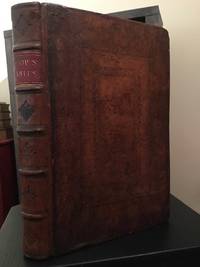
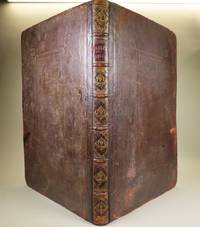
1692049<b>Folio 8-1/2 by 13 inches contemporary full brown calf Skillfully rebacked with blind-stamped spine raised bands red morocco spine label. First edition of former censor Roger L Estrange s classic version of Aesop s Fables with copper-engraved frontispiece portrait of L Estrange and fine copperplate frontispiece of Aesop. In 1690 John Locke was the first to suggest Aesop as a beginning book for children. Shortly thereafter Tory pamphleteer and onetime Surveyor of the Press Roger L Estrange was commissioned to produce this edition of fables likely the first compiled expressly for children. He included many other fabulists besides Aesop notably a selection from La Fontaine within 20 years of the first appearance of any of his fables in French. It is highly probable that this was their earliest appearance in English Muir 24. Simple and somewhat racy in style L Estrange s edition was continuously reprinted helping to popularize both Aesop and the genre of fables among children. The most extensive collection of fables in existence this compilation also includes a biography of Aesop an alphabetical table of the fables and fables by Barlandus Anianus Abstemius Poggius and La Fontaine DNB. Wing A706. Hodnett Aesop in England 63. A very attractive copy. </b> R. Sare, et al. hardcover
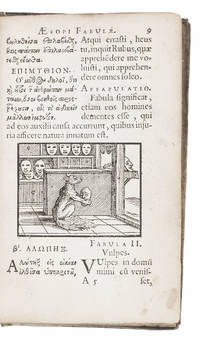
1653000384Amsterdam: Joannem Janssonium 1653. Period Calf. Fair. 12mo - over 6¾" - 7¾" tall. Amsterdam: Joannem Janssonium 1653 dated in apostrophic Roman numerals. Engravings. 12mo; full calf with some tooling see scan. Accompanied by two simple later handmade paper protective jackets. Rubbed soiling shelfwear; binding broken exposing interior of spine. Two previous owner's inscriptions on ffep Josephus Stephani Dedit Hosepho de Villis 1675; Matt Kenrid 1748. Fair to About Good. See scans. Also: 'Eae item quas Avienus carmine espresit. Accedit Ranarum & Murium Pugna Homero olim ascripta. Cum elegantisimis in utroque libello Figuris & utriusque Interpretatione plurimus in Iocisemendata. Exdecreto D.D. Hollandae Ordinum in ufum Scholarum.' Rare 17th century specimen of Aesop's fables published by 17th Century Amsterdam publisher Joannem Janssonium. Fables here presented in Greek and Latin on opposing pages with engraving illustrations. Fragile and precious example no doubt one for the children of the time judging from the illustrations. See scans. L51 <br/> <br/> Joannem Janssonium unknown
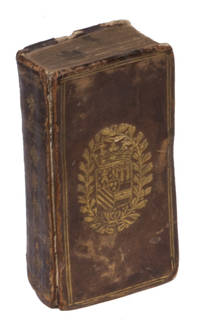
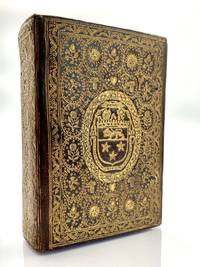
1623ABC_45188Paris: Jean Libert 1623. Contemporary French gold-tooled calf sewn on 2 supports each board with the coat-of-arms of Henri de La Tour 1555-1623 Duc de Bouillon and Prince of Sedan who married the daughter of William the Silent founding father of the Dutch Republic with a French Ducal crown the whole in a wreath of 2 laurel branches with berries the flat spine divided into 4 fields each with a central decoration gilt edges. Marbled paste-downs fine-toothed combed pattern in red blue and white. 16mo. With a woodcut decoration on the title-page and woodcut decorated initials in the text. Very rare 24º edition of 150 prose fables by Aesop and 43 verse fables by Babrius here called Gabrius in Greek and Latin on facing pages remotely based on the text of the illustrated humanistic editions published by Jean de Tournes in Lyons. While the existence of Aesop ca. 620-ca. 584 BCE as a story teller is attested in many early sources the canon that appears under his name contains fables passed down orally and rendered in literary form by many authors over the centuries. Babrius wrote verse fables shortly before 200 CE that were later rendered in Greek prose and added to the Aesop canon. Although the title-page indicates that the fables are illustrated the present edition never contains woodcuts: Libert apparently copied his title from one of the illustrated editions. He does include Maximus Planudess extensive account of Aesops life preceding the fables. Although the earliest European marbled papers appear to have been made in or around southern Germany they were not combed. Wolfe notes that the French first used marbled paper for bookbindings and the present paste-downs closely resemble his earliest example of combed marbled paper. The arms on the binding are quartered with an inescutcheon. The Counts of Auvergne had born the quartered arms of La Tour and the Counts of Auvergne with the inescutcheon of the Counts of Boulogne since 1389. With the Counts of Boulogne extinct the arms passed to another branch of the family descending to Henri de La Tour 1555-1623 who took the title Duc de Bouillon by marriage in 1591 and later inherited the title Vicomte de Turenne from his father. In 1595 he married Elisabeth van Oranje Nassau daughter of William the Silent 1533-1584. Their second son was the famous Marshal Turenne 1611-1675. Early owners inscription on title-page in ink. Lacking the last leaf of the index title-page cut short at the head not affecting the text and a small worm hole in the second half sometime affecting a letter in the first line but otherwise in good condition. Binding rubbed not affecting the arms and backstrip worn a few small chips and holes and hinges cracked.l KVK & WorldCat 2 or 3 copies; cf. Bodemann 29.2 similar 1570 De Tournes ed. Jean Libert, unknown
1632F6HD0MAV59JYLeiden 1632. 8vo. Joannes Maire Contemporary vellum sewn at three stations but with 2 tanned leather thongs laced through the joints each board with a panel stamp 59 x 50 mm of the Amersfoort coat of arms in a circular laurel wreath in a rectangle with winged angel heads in each corner in a frame of double filets. Most endpapers later. With Maire's woodcut "fac et spera" device on title-page Breugelmans Maire device 10 47 woodcut illustrations 5 x 6.5 cm by Christoffel van Sichem II in the text and 3 woodcut decorated initials 2 series. Set in Greek and roman types with extensive italic. 158 2 pp. Rare second edition one of three dated "1632" of a popular Greek and Latin school book edited by the famous Dutch neo-Latin poet humanist and Leiden Professor of Greek Daniel Heinsius 1580-1655 with 47 beautiful woodcut illustrations by Christoffel van Sichem II. Aesop's fables were prescribed by the States of Holland in the Hollandsche schoolordre of 1625 as one of the books to be read in the 3rd class. Christoffel van Sichem II ca. 1577-1658 the second of several woodcut artists in that family studied with Jacques de Gheyn and was one of the leading Dutch book illustrators in the first half of the 17th century. Although the book has no prize certificate or inscription and no owner's name the coat-of-arms of the city of Amersfoort on the binding of a school book strongly suggests a prize binding for a student at the Amersfoort Latin school. With an occasional contemporary manuscript note in Greek and Latin. With a small dark stain in the lower inside corner of the foot margin of many leaves not approaching the text and with very slight browning throughout but still in good condition. The vellum of the binding is dirty and slightly rubbed but also good.l Landwehr Emblem & fable books F025 2 copies; Hollstein XXVII Van Sichem II 31; for the panel-stamp: Spoelder Prijsboeken Amersfoort 1. hardcover
168730747London: H. Hills jun. for Francis Barlow 1687. Second Barlow Edition. Hardcover. Good . Folio 30.8 by 19.4 cm. 10 40 40 17 2-221 3: table pp; engraved title letterpress title engraved arms of the dedicatee William Cavendish Earl of Devonshire; engraved portrait of Aesop; 30 of 31 numbered full page copperplate engraved plates in the Life; 110 half page engraved plates accompany the fables. 18th-century paneled calf expertly rebacked retaining original backstrip borders and spine tooled in gilt. Light staining and scuffs to covers. Occasional light stains and smudges throughout mostly marginal; a few careful repairs at torn margins; professional repair at margin plate 2 just encroaching on printed surface; 3 cm perforation in plate Fable XII; moderate staining at plate Fable XLVIII; Text block good with otherwise clean plates complete but for the so-called 'indecent' or 'scandalous' plate 17 often defaced or lacking. A good or better copy handsomely bound.<br /> <br /> Second Barlow edition of these superbly illustrated Fables of Aesop first published in 1666. Each of the 110 fables include a half-page engraving text fable and moral in both French and Latin along with new captions in English by Aphra Behn. The English Life of Aesop is likely a reissue of the original sheets from the small-paper copies of the 1666 edition; the French Life is a new version. They are interspersed with thirty full-page plates mostly signed by Thomas Dudley the unsigned plates were engraved by Barlow. <br /> <br /> According to his contemporary the engraver and antiquary George Vertue Francis Barlow d. 1704 came from Lincolnshire and apprenticed in London to the portrait painter William Shepherd. Early and late in his career Barlow designed sets of natural history plates which were etched by Wenceslaus Hollar Richard Gaywood Jan Griffier and Francis Place. These prints proved to be an important source for artists and craftsmen of succeeding generations. Along with his engravings for Edward Benlowes's Theophilia 1652 the present suite of illustrations for Aesop's Fables are considered to be Barlow's finest. The preliminary drawings reside in the British Museum. While Barlow's house at "the Golden Eagle in New-Street near Shoo-lane" was burnt in the great fire the copper plates for the volume survived. ODNB.<br /> <br /> Provenance and annotations: "The Gift of Rich. Wesley Esq to his Son Garret Wesley Year of Christ 1741" entered in black ink at the front endleaf; Garret's entry appears beside the imprint at the title and his "cypher" substitution chart for Greek and English letters appears beneath the gift dediction. A later owner "E.R." has noted in pencil at the pastedown that this book belonged to R. and G. Wesley "ancestors of the Wellesley Family see the autographs for the letter afterwards to the Marquis Wellesley Revnd Dr Wellesley at whose sale I bought it." At the front pastedown is the bookplate of George Aiken Batchelder 1860-1936 who was Vice President E. H. Rollins & Sons Bonds San Francisco California. The bookplate partially obscures another note in pencil which appears to mention the absence of the 'indecent' plate. References: ESTC R22991; S. O'Connell "Barlow Francis" in: ODNB online; Press Reference Library Western Edition Notables of the West vol. I p. 163 International News Service 1913.<br /> <br /> Full title and imprint: AEsop's fables with his life: in English French and Latin. Newly translated. Illustrated with one hundred and twelve sculptures. To this edition are likewise added thirty one New figures representing his life. By Francis Barlow. London: Printed by H. Hills jun. for Francis Barlow and are to be sold by Chr. Wilkinson at the Black-boy against St. Dunstan's Church in Fleet-street Tho. Fox in Westminster-hall and Henry Faitborne at the Rose in St. Paul's Church-yard. M.DC.LXXXVII. 1687. H. Hills jun. for Francis Barlow hardcover
16687514<p>Engraved frontispiece portrait of Ogilby by P. Lombart after P. Lely engraved plate of Aesop among his animals and eighty-one engraved plates illustrating the fables by Cleyn most of which were cut by Hollar. The work first appeared in folio in 1665 with 82 fables each with its own full-page illustration save one plate representing two fables printed on a separate leaf with accompanying letterpress text. Hollar was responsible for 57 of the illustrations & the print depicting Aesop. Period debossed full calf with handsome recasing in a fine morocco. Engraved frontispiece portrait cut and mounted with small paper repair in the lower right corner of the image. Some browning and occasional foxing; a few short marginal tears or paper flaws. Title in red and black Portrait of Aesop Dedication to Charles II. 211 1 blank 82 engraved plates pages. Large folio 10.5 x 16.125 inches; 410 x 265 mm.<br /><br /><br /><br /><br /><br /><br /><br /><br /></p> Printed by Thomas Roycroft, for the Author hardcover
160275949Jean Moretus Ex officina plantiniana, apud Ioannem Moretum | Anvers 1602 | 8.20 x 12.60 cm | relié
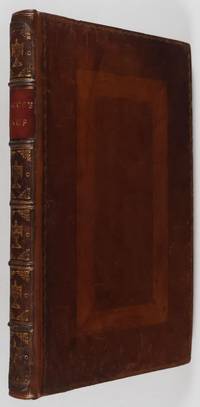
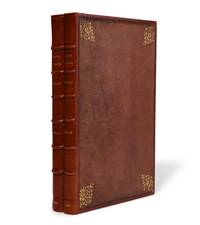
1668A-110<p>Volume I--Second Edition The Fables of Aesop Paraphras'd in Verse: Adorn'd with Sculpture. London: Printed by Thomas Roycroft for the Author 1668. Second edition with new title page a re-issue of the 1665 edition sheets. This volume contains the frontispiece engraved vignettes and initials missing Ogilby portrait and has all eighty-one full-paged plates in fabulous condition. Light yellowing/browning of initial few pages as regular. Volume II--Second Edition Aesopics or a Second Collection of Fables illustrated with sixty-eight full-paged plates in early issue before captions were added. Pages are remarkably clean without any browning. Large folio volumes both illustrated throughout; Wenceslaus Hollar 1607-1677 engraved eighty-eight of the illustrations for these works the others were executed by Dirck Stoop c. 1610-1686 and Francis Barlow c. 1626-1704. Both volumes are uniformly re-bound with original leather panels inset in full brick morocco bindings with gilt titles.</p> Thomas Roycroft for the Author, 1668 hardcover
160275949Anvers Antwerp: Jean MoretusEx officina plantiniana apud Ioannem Moretum 1602. Fine. Jean Moretus Ex officina plantiniana apud Ioannem Moretum Anvers Antwerp 1602 8.20 x 12.60 cm relié New Plantin press editions in portable format of these three works. Ruled throughout in red ink. Copy with the arms of Nicolas de Villars clerical councillor at the Parlement of Paris and treasurer of the Sainte-Chapelle later bishop of Agen. Contemporary full soft brown morocco a fanfare binding with the rare Duodo-type decoration: smooth spine gilt with six medallions each containing a flower gilt foliage border covers fully gilt with 24 medallions some emblematic sun heart acorn bouquet sheaf of wheat arms stamped in the centre edges gilt. Discreet restorations to joints corners and headcaps; upper and lower borders with minor wear to leather 0.5 cm; lacking ties; pinhole at head of spine. From the first title-leaf a wormhole in the lower margin extending through to the final leaves of the Fables of Aesop gradually diminishing. A magnificent copy of the utmost rarity. The singular decoration of this style of binding representing one of the pinnacles of the art of French bookbinding is today identified as Duodo after Pierre Duodo Venetian ambassador to Paris from 1594 to 1597. About 150 small volumes were uniformly bound for a portable library only part now known probably towards the end of his stay. It is unlikely he ever enjoyed these treasures which fell into oblivion for nearly two centuries. When they reappeared on the English market at the end of the eighteenth century they were mistakenly attributed to Marguerite de Valois an error that persisted until the 1920s. Although the name Duodo remains attached to this style of decoration another great collector commissioned similar bindings: Nicolas de Villars bishop of Agen. Duodos bindings are now well identified while those of Nicolas de Villars are considerably rarer on the market. While the spine here is very close to the Duodo examples with flowers and foliage borders though in a finer and denser design the covers show 24 medallions compared to only 14 on Duodo bindings and the tools employed are not limited to floral motifs but include a variety of emblems such as the sun and the heart. Jean MoretusEx officina plantiniana, apud Ioannem Moretum hardcover
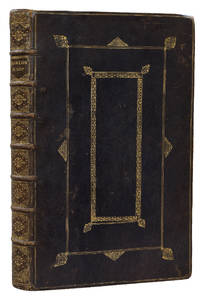
168747459London.: H. Hills jun. for Francis Barlow. 1687. Full contemporary midnight blue morocco by the 'Barlow's Aesop Binder' boards ruled in gilt to surround gilt tooled decorative panels with foliate decorative corner pieces banded spine with elaborate decorative tooling and title 'BARLOWs AESOP' gilt turn ins and board edges with gilt roll tool decoration marbled endpapers a.e.g. black morocco-backed velvet-lined buckram box. Folio. 372 x 242 mm. Engraved title printed title engraving with the Devonshire arms dedication leaf 'to the Right Honourable William of Devonshire' leaf 'to the Reader' engraved frontispiece and 31 engraved plates illustrating the 'Life of Aesop' and 110 half-page vignette engravings to the 'Fables'. A superlative large paper copy in a contemporary English binding by the Barlow's Aesop Binder of Barlow's undoubted masterpiece of English book illustration.This copy - printed on excellent paper - is in a beautiful contemporary binding the binding in a beautiful state of preservation by the ‘Barlow’s Aesop Binder’. Few bindings by the 'Barlow’s Aesop Binder' are known and the present copy identifiable by the lettering to the spine and the comparable decorative tooling is one of only a handful. Active in the 1680s and 1690s the bindery worked certainly for William and Mary although the identified copies of Barlow’s masterpiece from the bindery include too the Devonshire dedication copy from Chatsworth the Cracherode copy both these now at the British Library Pepys’ copy at Magdalene Cambridge the present copy and one other in a private collection in the US.This second edition of Francis Barlow's masterpiece adds 31 plates 32 including the frontispiece to illustrate the life of Aesop including the often mutilated 'obscene' plate here untouched and includes verse by Aphra Behn 1640 - 1689 commissioned especially for each of the 'Fables'. The unsigned plates are engraved by Barlow and the remainder by Thomas Dudley a student of Wenceslaus Hollar. Barlow himself drew and engraved all of the illustrations for the 'Fables' themselves.'The Ingenious Mrs. A. Behn has been so obliging as to perform the English Poetry which in short comprehends the Sense of the Fable and Moral: Whereof to say much were needless since it may sufficiently recommend it self to all Persons of Understanding.' Francis Barlow.'Francis Barlow was the first native English book illustrator - indeed the leading interpretative illustrator in England before 1800 . Otto Benesch of the Albertina Museum Vienna has called him 'one of the greatest illustrators of all time'.' Edward Hodnett.Complete copies of Barlow's work in good condition are scarce the present copy however a large paper example in its original binding by theh Barlow’s Aesop Binder printed on a different thick paper stock and entirely unsophisticated is of the utmost rarity. This is borne out if it is necessary to provide evidence by the fact that this copy featured in two sophisticated collections of illustrated books of the last 50 years: firstly that of Arthur and Charlotte Vershbow secondly that of Robert S. Pirie; the latter collector rarely if ever settled for second best and would certainly have bought another copy if he had found one. That he had to wait for the present copy is telling.Wing 703; see ‘English Restoration Bindings’ by Howard Nixon pg. 40 nos. 98 / 99; see 'Francis Barlow' by Edward Hodnett 1978. H. Hills jun. for Francis Barlow. hardcover
166648718London.: Printed by William Godbid for Francis Barlow and are to be sold by Ann Seile at the Black-Boy against St. Dunstan's Church in Fleetstreet and Edward Powell at the Swan in Little Britain. 1666. Full contemporary calf boards ruled in blind later spine with red morocco label with gilt title and blind rules in seven compartments marbled edges. Folio. 356 x 242 mm. Printed title within double rules engraved title by Barlow with central title within elaborate cartouche and surrounded by an eagle leopard boar fox wolf and lion leaf with large decorative woodcut inhabited ten-line initial and Barlow's dedication to Sir Francis Pruijan or Prujean leaf with Barlow's 'To the Reader' leaf with engraved frontispiece of Aesop with animals and additional engraving with text beneath 20 leaves with 'A Brief Prospect of the Life of Aesop' 16 leaves with 'La Vie d'Esope' 9 leaves with 'Aesopi Philosophice Fabulantis Vita' and Aesop's 110 fables illustrated with 110 engravings final leaves with 'La Table' and 'The Table' decorative woodcut initials and tail-pieces throughout; sheet size: 350 x 228 mm. A very rare large paper copy of the scarce first edition of Francis Barlow's undoubted masterpiece of English book illustration.By the time of the Restoration Francis Barlow had achieved a measure of success with his suites of prints of animals - engraved by the best such as Hollar Griffier and Place - and his decoration of houses and by the mid-1660s had contributed to the Aesop of Ogilby and Hollar. It is not entirely clear why he would wish to issue another edition of the Fables Hofer suggests a competitive nature and a different projected audience but by 1665 he had engraved a superb title it bears that date and by the time of publication in 1666 the date to the letterpress title had engraved a frontispiece of Aesop surrounded by animals and 110 half-page vignettes after his own drawings to illustrate the Fables. Each of the Fable engravings is accompanied by lines of verse by Thomas Philipott; the translations of Aesop's life into French and Latin was by Robert Codrington. Whatever Barlow's motivation the result is one of the most extensive and beautiful English illustrated books of the seventeenth century and one of the scarcest the scarcity often attributed to the loss of the sheets in the Great Fire of London. Large paper copies of this first edition are identifiable see ESTC through various issue points all present here but also as per Philip Hofer the transposition of some of Barlow's engravings. In the present copy the engraving for 'Fab. XLVIII' 'The Ant and Fly' is in fact that for 'Fab. XLXIX' 'The Ant and Grasshopper'. Hofer indicates too that the engravings for 'Fab. LXX' 'The Tortoise and Hare' and 'Fab. LXXI' The Young Man and His Cat' are also transposed however in the present copy they are not the margins headlines etc. conform to the remaining large paper leaves although 'The Young Man and His Cat' features the erroneous title 'The Nurse and Her Child' 'Fab. LXIX' albeit with the correct page number. Large paper copies also feature 'FINIS' beneath the signature Ppp at the foot of the leaf with the final engraving for 'FAB. CX' 'The Tortoise & Eagle'; in addition the spacing of the text in the large paper copy also suggests that the text on this leaf was reset.A second edition was published in 1687 with additional plates to illustrate the life of Aesop and with Philipott's verse replaced with new verse by Aphra Behn. A third edition was issued in 1703 and a posthumous French edition appeared in 1714 published in Amsterdam; Philip Hofer suggests that the third edition was really made up of unused sheets from the two earlier editions but with a new title and that the edition in French - it makes use of some of Barlow's plates - is not a Barlow edition.'This seventeenth-century polyglot English-French-Latin Aesop is handsomely illustrated with engravings after designs by Francis Barlow 1626 - 1702 an English painter renowned for his pictures of country life and field sports. He was perhaps the finest English draughtsman of animal scenes in the seventeenth century. Barlow who published the book at his own expense explains in his preface that he intends the work to contribute to the education of young people. This is the first edition; the relatively few copies known are all survivors of the Great Fire of London which swept over the printer's premises in 1666.' Early Children's Books and Their Illustration.'No artist has responded with more sensitivity and less sentimentality to the gentle grace of deer . The least of creatures the frog the hare the snake and the swallow and the least favoured of them the ass the boar and the wolf -- he draws them all with an intimacy charm and inviolable integrity never surpassed in an English book . '. Edward Hodnett.'Francis Barlow was the first native English book illustrator - indeed the leading interpretative illustrator in England before 1800 . Otto Benesch of the Albertina Museum Vienna has called him 'one of the greatest illustrators of all time'.' Edward Hodnett.This large paper issue of the 1666 Aesop is very scarce: while ESTC lists 17 copies for the small paper issue see ESTC R21542 it notes only two of the large: the copy at the Huntington and that at the Morgan Library and Museum New York; Harvard also holds a copy.ESTC R477463; see 'Francis Barlow' by Edward Hodnett 1978; see #9 in the Morgan Library and Museum's 'Early Children's Books and Their Illustration' 1975; see Philip Hofer's 'Francis Barlow's Aesop' printetd in the Harvard Library Bulletin Autumn 1948. Printed by William Godbid for Francis Barlow, and are to be sold by Ann Seile at the Black-Boy against St. Dunstan's Church in F hardcover