SEBILLOT Paul:Livre Rare Book
1 208 résultats
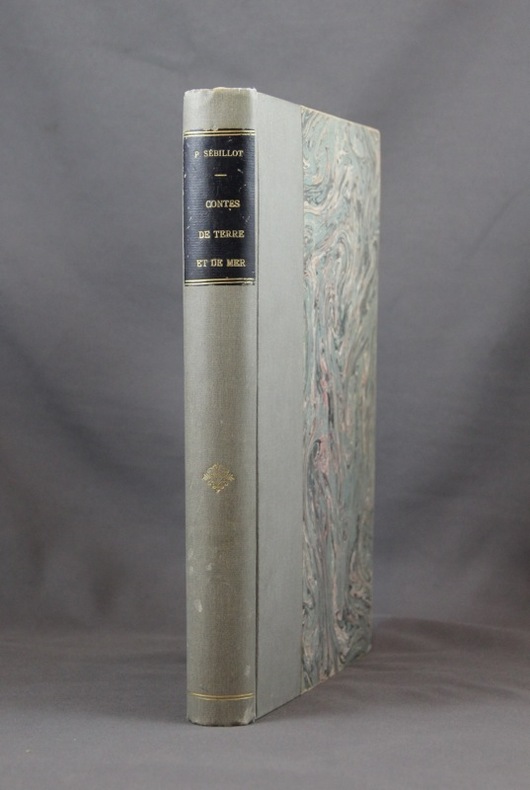
18833873Paris, G. Charpentier, 1883. In-4 de 247 p., [1 f. ]. Demi-percaline grise, dos lisse orné, pièce de titre noir, couverture conservée. Belle condition.
180925427Paris: Imprimerie Impériale 1809. Fine. Imprimerie Impériale Paris 1809-1829 53.50 x 70 cm une feuille Original unshaved full-page etching from the Imperial edition of the Description de l'Égypte or Recueil des observations et recherches faites en Égypte pendant l'expédition française publié par les ordres de Sa Majesté l'Empereur Napoléon le Grand A Collection of the observations and research carried out in Egypt during the French expedition published on the orders of his Majesty the Emperor Napoleon the Great'.Produced between February 1802 and 1830 on the orders of Naopleon Bonaparte and published between 1809 and 1828 1000 copies were printed and distributed to institutions on vergé paper with an 'Égypte ancienne et moderne' watermark visible when held up to the light. Light marginal spotting not touching image otherwise in very fresh fine condition. An engraving from the Description de l'Egypte one of the masterpieces of French printing and the birth of a new field: Egyptology. A gigantic survey of Egypt at the time of Bonaparte's conquests in 1798 and 1799 the work is divided into 13 volumes of engravings making up 892 plates of which 72 colored as well as presenting the splendors of the Egypt of the Pharaohs in 9 volumes. The other volumes discuss natural history and present a fascinating portrait of Coptic and Islamic Egypt as it was seen by Bonaparte's Eastern Armies. The Egyptian campaign' militarily a disaster demonstrates through the engravings of the Description d'Egypte the scientific success it nonetheless became thanks to the 167 expert members of the Commission of the Sciences and Arts of the Institut d'Egypte Egyptian Institute who followed Napoleon's army. The Institut gathered together in Egypt the mathematician Monge the chemist Berthollet the naturalist Geoffroy Saint-Hilaire as well as numerous artists engineers architects and doctors. They were tasked with re-discovering modern and ancient Egypt and displaying its natural treasures as well as the know-how of its inhabitants.This edition the so-called Imperial edition of the plates for the Description de l'Egypte was printed in four large formats two of which were specially created for it and christened Moyen-Egypte and Grand-Egypte. A special press was built to print it the process extending over 20 years from 1809 to 1829. The Imperial edition proved so popular that a second edition this time in black and white and without the Egypte ancienne et moderne watermark known as the Royal Edition was published during the Restoration by the printing house of C.-L.-F. Panckoucke Paris.The engravings of the Description d'Egypte owe a great deal to Baron Dominique-Vivant Denon illustrator diplomat collector and later Director of the Musée Napoléon the Louvre. His exploration of the South of Egypt gave Bonaparte the idea of sending the experts of the Institut there thus creating a faithful and complete portrait of the area. This was the research gathered together from 1802 in the mammoth Description de L'Egypte.Denon embarked on this story of archeological exploration at the age of 51 reaching first Alexandria and then Cairo before exploring Upper Egypt. Along with the members of the Institut d'Egypte the Natural History Museum's painter H.J. Redouté brother of Pierre-Joseph Redouté author of Roses the mineralogist Dolomiue and the draughtsman Joly Denon then explored the Nile Delta and Lower Egypt. When however he joined the 21st Light Infantry Regiment as it marched across Upper Egypt in pursuit of the retreating Mameluks in November 1798 he found himself the only civilian. In the very midst of the battle itself he reeled off sketches of the works of art that peppered his path right up to the threshold of the Sudan. He said that he had crossed a country that is apart from its name entirely unknown to Europeans and therefore everything was worth describing Voyages dans la Basse et la Haute Egypte pendant les campagnes Imprimerie Impériale unknown
180925431Paris: Imprimerie Impériale 1809. Fine. Imprimerie Impériale Paris 1809-1829 70 x 53.50 cm une feuille Original unshaved full-page etching from the Imperial edition of the Description de l'Égypte or Recueil des observations et recherches faites en Égypte pendant l'expédition française publié par les ordres de Sa Majesté l'Empereur Napoléon le Grand A Collection of the observations and research carried out in Egypt during the French expedition published on the orders of his Majesty the Emperor Napoleon the Great'.Produced between February 1802 and 1830 on the orders of Naopleon Bonaparte and published between 1809 and 1828 1000 copies were printed and distributed to institutions on vergé paper with an 'Égypte ancienne et moderne' watermark visible when held up to the light. Light marginal spotting not touching image otherwise in very fresh fine condition. An engraving from the Description de l'Egypte one of the masterpieces of French printing and the birth of a new field: Egyptology. A gigantic survey of Egypt at the time of Bonaparte's conquests in 1798 and 1799 the work is divided into 13 volumes of engravings making up 892 plates of which 72 colored as well as presenting the splendors of the Egypt of the Pharaohs in 9 volumes. The other volumes discuss natural history and present a fascinating portrait of Coptic and Islamic Egypt as it was seen by Bonaparte's Eastern Armies. The Egyptian campaign' militarily a disaster demonstrates through the engravings of the Description d'Egypte the scientific success it nonetheless became thanks to the 167 expert members of the Commission of the Sciences and Arts of the Institut d'Egypte Egyptian Institute who followed Napoleon's army. The Institut gathered together in Egypt the mathematician Monge the chemist Berthollet the naturalist Geoffroy Saint-Hilaire as well as numerous artists engineers architects and doctors. They were tasked with re-discovering modern and ancient Egypt and displaying its natural treasures as well as the know-how of its inhabitants.This edition the so-called Imperial edition of the plates for the Description de l'Egypte was printed in four large formats two of which were specially created for it and christened Moyen-Egypte and Grand-Egypte. A special press was built to print it the process extending over 20 years from 1809 to 1829. The Imperial edition proved so popular that a second edition this time in black and white and without the Egypte ancienne et moderne watermark known as the Royal Edition was published during the Restoration by the printing house of C.-L.-F. Panckoucke Paris.The engravings of the Description d'Egypte owe a great deal to Baron Dominique-Vivant Denon illustrator diplomat collector and later Director of the Musée Napoléon the Louvre. His exploration of the South of Egypt gave Bonaparte the idea of sending the experts of the Institut there thus creating a faithful and complete portrait of the area. This was the research gathered together from 1802 in the mammoth Description de L'Egypte.Denon embarked on this story of archeological exploration at the age of 51 reaching first Alexandria and then Cairo before exploring Upper Egypt. Along with the members of the Institut d'Egypte the Natural History Museum's painter H.J. Redouté brother of Pierre-Joseph Redouté author of Roses the mineralogist Dolomiue and the draughtsman Joly Denon then explored the Nile Delta and Lower Egypt. When however he joined the 21st Light Infantry Regiment as it marched across Upper Egypt in pursuit of the retreating Mameluks in November 1798 he found himself the only civilian. In the very midst of the battle itself he reeled off sketches of the works of art that peppered his path right up to the threshold of the Sudan. He said that he had crossed a country that is apart from its name entirely unknown to Europeans and therefore everything was worth describing Voyages dans la Basse et la Haute Egypte pendant les campagnes Imprimerie Impériale unknown
182649705Chez L. de Bure, Libraire - Nepveu, Libraire 1826 2 volumes. In-8 20,5 x 13 cm. Reliure de l’époque plein veau marbré, dos lisse orné de filets et de motifs néo-classiques dorés, coupures ornées à chaud, 12 gravures hors-texte sous serpente, CXXX-226-370 pp. Tome I, 1er mors interne du fendu, et coiffes usées, dos frottés, coins émoussés, rousseurs éparses et minimes. Assez bon exemplaire.
1885fl1019Liseux Isidore Relié 1885 RARE. In-12 (11.5x17.5 cm), reliure demi-chagrin noir, titre doré au dos lisse à cinq nerfs, couverture conservée, (XVII)-57 pages, littéralement traduit pour la première fois, texte italien en regard, un des 120 exemplaires numérotés sur Vergé de l'édition privée, n°19 ; coiffes et coins à peine frottés, intérieur très frais, bel état pour cet ouvrage rare. Livraison a domicile (La Poste) ou en Mondial Relay sur simple demande.
1874RO80207974A. Franck. 1874. In-12. Broché. Etat d'usage, Couv. défraîchie, Dos très frotté, Intérieur acceptable. 178 pages. Plats légèrement frottés. Quelques rousseurs sur les tranches.. . . . Classification Dewey : 398.2-Conte populaire
18791266218Erfurt, Berlin u.a., C. Villaret u.a., 1856 - 1879. Zus. etwa 780 S. Neuer Lwdbd (etwas braunfleckig bzw. gebräunt).
188346402723Paris, Lisieux, , 1883 ; in-12, demi-maroquin citron, coins, filets dorés aux bords, tête dorée. (Reliure de l’époque) VII pp., 114 pp., 1 f.Jolie édition imprimée par Charles Unsinger et qui ne fut tirée qu’à 150 exemplaires numérotés sur beau papier vergé.C’est un recueil de 86 pièces gaillardes où certains ont vu la patte de Félix Nogaret. Le volume parut d’abord en 1782 sous le titre : Etrennes gaillardes dédiées à ma commère, à l’enseigne de Gibraltar, chez les Moines. - Gay II, 184. Bel exemplaire bien relié.
1810011245PARIS CHEZ CHAUMEROT 1810 2 volumes grand in-12 de XVI + 327 + 370 pages + 108 pages de l' ouvrage de GREGORY : LEGS D' UN PERE A SES FILLES de 1775 traduit sur la quatrième édition , , dans une belle reliure maroquin vert foncé , dos plats richement ornés , les bords des plats des reliures sont richements ornés , seconde édition , 2 pages de titre gravés , bien complet des 16 gravures hors-texte sous serpentes , quelques taches et rousseurs , quelques frottements à la reliure , autrement bons exemplaires . Bon Couverture rigide
1881132811881 un volume, reliure demi-chagrin rouge in-octavo Editeur (binding half shagreen in-octavo), dos 5 nerfs (spine with raised bands) décoré or (gilt decoration) filets or (gilt line) et à froid (blind-stamping decoration) fers spéciaux (caissons) (between the raised bands specials blocking stamps), reliure signée : Charles Magnier - titre frappé or (gilt title) - percale rouge sur les plats, cartonnage éditeur à plaques spéciales à froid monochromes (editor hard-back percale with specials covers editor for the cover), tête lisse (top edge smooth), toutes tranches lisses (all smooth edges) dorées (all edges gilt), orné de trés nobreuses illustrations in et hors-texte (in text and full page engraving) en noir par Léonce Petit, infimes rousseurs sur la page de titre mais parfait pour le reste (lightly redness marks), 305 pages, 1881 Paris PLON et Cie Imprimeurs Editeurs,
180925376Imprimerie Impériale | Paris 1809-1829 | 53.50 x 70 cm | une feuille
180926302Imprimerie Impériale | Paris 1809-1829 | 53.50 x 71 cm | une feuille
180926343Imprimerie Impériale | Paris 1809-1829 | 53.50 x 71 cm | une feuille
180926344Imprimerie Impériale | Paris 1809-1829 | 53.50 x 71 cm | une feuille
180926345Imprimerie Impériale | Paris 1809-1829 | 53.50 x 71 cm | une feuille
180926348Imprimerie Impériale | Paris 1809-1829 | 53.50 x 71 cm | une feuille
180926389Imprimerie Impériale | Paris 1809-1829 | 53.50 x 71 cm | une feuille
180926390Imprimerie Impériale | Paris 1809-1829 | 71 x 53.50 cm | une feuille
1879001509Paris Quantin 1879
187718430Paris Garnier 1877 1 in-4 demi-chagrin un volume, reliure demi-chagrin bleu-marine in-quarto (binding half shagreen in-quarto ), dos 5 nerfs (spine with 5 raised bands) - titre frappé or (gilt title) avec filets or, filet or en place des nerfs et en tête et en pied, entre nerfs à caissons dorés, ornés de fleurons dorés avec rinceaux dorés aux angles dans un encadrement de triple filets dorés, plats de percale bleu-marine decorée à froid à plaque spéciale editeur à triple filets à froid en encadrement, toutes tranches lisses, Edition illustrée de 180 vignettes in -texte en noir par Tony Johannot, C. Boulanger, Roqueplan, Fragonard Pere etc. et de nouveaux dessins hors texte par Staal, LII + 589 pages, [1880] Paris Garnier Frères Editeur,
181718763paris Pillet 1817 in-8 demi-velin 2 volumes, reliure demi-velin blanc (half vellum) in-octavo (21,3 x 13,5 cm), dos long (spine without raised band), pièce de titre (label of title) avec filet or (gilt line) sur fond noir, pièce de tomaison (label of numbering) avec filet or (gilt line) sur fond chocolat, papiers peignés aux plats, toutes tranches lisses (all edges smoothes), orné d'un portrait de l'auteur en frontispice (frontispiece) en noir et de 10 gravures hors-texte en noir par Marillier, (VIII + 508) + 653 pages, 1817 à Paris : Pillet Editeur,
1878dl389Charpentier G. Relié 1878 10 volumes in-8, (18.5x11.5 cm), relié demi-chagrin cerise, dos à 5 nerfs titrés avec fleurons, contient : Premières poésies ; Poésies nouvelles ; Contes ; Comédies et proverbes 1 et 2 ; Mélange de littérature et de critique ; La Confession d'un enfant du siècle ; Oeuvres posthumes ; Biographie de Alfred de Musset ; nouvelles, il manque à cette belle série, le 3e volume de Comédies et proverbes ; rousseurs, petits chocs sur les coins, assez bel état. Livraison a domicile (La Poste) ou en Mondial Relay sur simple demande.
189610436Editions Lemerre | Paris 1896 | 20 x 13 cm | Un Vol. relié
182449901Chez Lheureux | à Paris 1824 | 13 x 20 cm | 2 volumes reliés
18596725Paris, Magnin, Blanchard et Cie, 1859. In-4 de [6]-318-[2] p., demi-maroquin vert, plats de percaline ornés de filets à froid, dos à 4 nerfs orné de caissons, filets, fleurons et titres dorés, tranches dorées, gardes moirées. Quelques épidermures.