2 510 résultats
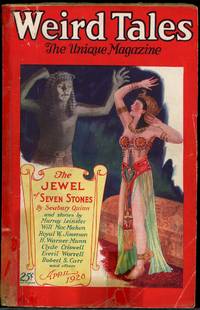
192827661Indianapolis IN: Popular Fiction Publishing Company 1928. Text paper tanned but supple creases at lower right corner repaired closed tears with clear tape small tape strip to verso of front cover with some bleed through clear tape over spine a good to very good copy. 27661. Octavo single issue cover art by C. C. Senf. pictorial wrappers. Pulp Magazine. Includes stories by Seabury Quinn Murray Leinster H. Warner Munn Robert E. Howard verse Everill Worrell and others. Reference: Tymm and Ashley Science Fiction Fantasy and Weird Fiction Magazines pp. 727-736. Popular Fiction Publishing Company unknown
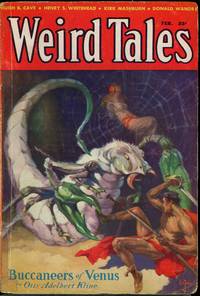
193327708Indianapolis IN: Popular Fiction Publishing Company 1933. Text paper tanned but supple mild edge wear reading crease tape to base of spine some spine fade. A very good copy. 27708. Octavo single issue cover art by J. Allen St. John pictorial wrappers. Pulp Magazine. Includes stories by Donald Wandrei Hugh Cave Maurice Level Clark Ashton Smith and others. Reference: Tymm and Ashley Science Fiction Fantasy and Weird Fiction Magazines pp. 727-736. Popular Fiction Publishing Company unknown
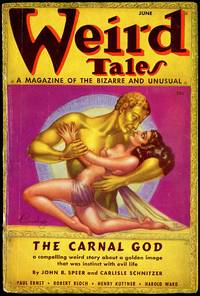
193730827Indianapolis IN: Popular Fiction Publishing Company 1937. Text paper tanned but supple mild soiling to front cover mild reading creases cover has been re-glued a very good copy. An evocative Brundage cover. 30827. Octavo single issue cover art by Margaret Brundage pictorial wrappers. Pulp Magazine. Includes stories by Paul Ernst Robert Bloch and Henry Kuttner Edgar Daniel Kramer and others. This issue's "The Eyrie" has the announcement of the passing of H. P. Lovecraft and tributes by a number of authors. Tymm and Ashley Science Fiction Fantasy and Weird Fiction Magazines pp. 727-736. Popular Fiction Publishing Company unknown
0878912622New. paperback. New. Satisfaction Guaranteed or your money back. paperback
6318095Springer pp. 228 . Hardback. New. Springer hardcover
192229826HBDJ SMALL RED LEATHER WITH GILT EMBOSSMENT & J M D February 1922 1ST ISSUE EARLY REPRINT BK IS NF/ DJ GOOD- . Original binding. Full Leather. Handsome dark red with decorative gilt lettering. Dust jacket now in clear plastic BRODART protector & DJ SPINE HAS COMPLETE LOSS BUT BALANCE OF DJ IS COMPLETE TINY EXTREMITIES Chips Wear. .GOLD Gilt to Top PGS edges. Decorative endpapers. 634pp. VERY GOOD in POOR jacket. Textblock appears clean. Binding sound well-preserved. Covers bright. Jacket spine strip missing. 634 PGS NO ADS IN BACK. EVERYMAN'S LIBRARY #20 SMALL RED LEATHER WITH GOLD GILT EMBOSSMENT & J M D ON OLIVE GREEN DUSTJACKET & CVR TOPSTAIN GOLD GILT<br /> CJ. M. DENT PRINTED IN GREAT BRITAIN EVERYMAN’S LIBRARY hardcover
47442251-nnew. unknown
2024__1394220979John Wiley & Sons 2024. Paperback. New. 7th pap/psc edition. 630 pages. 10.50x8.50x1.25 inches. John Wiley & Sons paperback
18700913636London: Bell & Daldy 1870. Bound in green cloth stamped in gold and black. All edges gilt top edge faded a bit. Some scuffing to spine but type still very readable. A handsome early copy in English of this 542 pp. book of Fairy Tales by the master storyteller. Handsome tight copy. . Early Reprint. Hard Cover. Very Good /No Jacket. 8vo - over 7¾" - 9¾" tall. Bell & Daldy Hardcover
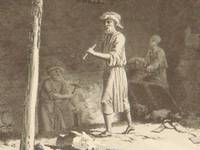
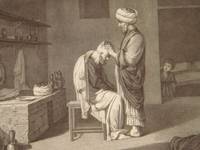
180926345Paris: Imprimerie Impériale 1809. Fine. Imprimerie Impériale Paris 1809-1829 53.50 x 71 cm une feuille Original etching in plano untrimmed extracted from the so-called ""Imperial"" edition of the Description de l'Égypte ou Recueil des observations et recherches faites en Égypte pendant l'expédition française publié par les ordres de Sa Majesté l'Empereur Napoléon le Grand. Produced between February 1802 and 1829 by order of Napoleon Bonaparte and published from 1809 actually 1810 it was printed in 1000 copies on watermarked laid paper ""Égypte ancienne et moderne"" and offered to institutions. Light and marginal foxing not affecting the engraving a small repaired tear in the upper margin 1 cm otherwise excellent state of freshness and preservation. Volume ETAT MODERNE II: The genius of the Institute's scholars is particularly revealed through the plates of the section called Egypte Moderne. Architecture industry social structures health conditions water management music craftsmanship are presented with exceptional precision and graphic quality. The spirit of Diderot and d'Alembert's L'Encyclopédie remains underlying in the approach of the draughtsmen of the Description de L'Egypte who accompany the text volumes with numerous detailed plates striving to create a portrait of the populations imbued with beauty and respect. Wealthy pashas or simple potter craftsmen are represented with sensitivity going about their occupations amid aesthetic compositions without falling into idealism or caricature. LA DESCRIPTION DE L'EGYPTE IMPERIAL edition 1809-1829: La Description de l'Egypte is one of the masterpieces of French publishing and the starting point of a new science: Egyptology. A titanic exposition of Egypt at the time of Bonaparte's conquests between 1798 and 1799 it is divided into 23 volumes including 13 volumes of engravings gathering nearly 1000 plates in black and 72 in color. The 6 volumes of plates entitled Antiquités are devoted to the splendors of pharaonic Egypt. L'Histoire naturelle is distributed across 3 volumes of engravings. One volume is devoted to Cartes géographiques et topographiques while the 3 volumes : Etat Moderne present a striking portrait of Coptic and Islamic Egypt as it was seen by Bonaparte's Oriental armies. The ""Egyptian campaign"" a military disaster reveals through the engravings of the Description de l'Egypte the scientific success it became thanks to the approximately 167 scholars members of the Commission of Sciences and Arts of the Institute of Egypt who followed Napoleon's army. The Institute brought together in Egypt the mathematician Monge the chemist Berthollet the naturalist Geoffroy Saint-Hilaire as well as numerous artists engineers architects doctors. They were charged with rediscovering modern and ancient Egypt showing its natural riches and the know-how of its inhabitants. The first edition called ""Imperial"" of the Description de l'Egypte was produced in four large formats two of them specially created for it and named ""Moyen-Egypte"" and ""Grand-Egypte"" formats. A specific press was built for its printing which stretched over twenty years between 1809 and 1829. The Imperial edition proved so popular that a second edition in 37 volumes entirely in black and without the watermark ""Egypte ancienne et moderne"" called the ""Panckoucke"" edition was published from 1821 by the C.-L.-F. Panckoucke printing house Paris. The realization of this monument of erudition owes much to Baron Dominique Vivant Denon illustrator diplomat collector and subsequently director of the Napoleon Museum of the Louvre who accompanied Napoleon to Egypt with numerous other scholars but decided alone to venture into the South of the country while the other invited scientists remained confined to the Cairo region. The fabulous sketches brought back by Denon during his romantic ride gave Bonaparte the idea to send the other members of the Institute there and thus draw a faithful and complete portrai Imprimerie Impériale unknown
180926390Paris: Imprimerie Impériale 1809. Fine. Imprimerie Impériale Paris 1809-1829 71 x 53.50 cm une feuille Original etching in plano format untrimmed extracted from the so-called ""Imperial"" edition of the Description de l'Égypte ou Recueil des observations et recherches faites en Égypte pendant l'expédition française publié par les ordres de Sa Majesté l'Empereur Napoléon le Grand. Produced between February 1802 and 1829 by order of Napoleon Bonaparte and published from 1809 actually 1810 it was printed in 1000 copies on laid paper watermarked ""Égypte ancienne et moderne"" and presented to institutions. Minor marginal foxing not affecting the engraving a small repaired tear to upper margin 1 cm otherwise excellent state of freshness and preservation. Volume ETAT MODERNE II: The genius of the Institute's scholars is particularly revealed through the plates of the section called Egypte Moderne. Architecture industry social structures sanitary conditions water management music craftsmanship are presented with exceptional precision and graphic quality. The spirit of Diderot and d'Alembert's L'Encyclopédie remains underlying in the approach of the draftsmen of the Description de L'Egypte who accompany the text volumes with numerous detailed plates endeavoring to create a portrait of the populations imbued with beauty and respect. Wealthy pachas or simple potter artisans are represented with sensitivity going about their occupations amid aesthetic compositions without falling into idealism or caricature. LA DESCRIPTION DE L'EGYPTE IMPERIAL edition 1809-1829: La Description de l'Egypte is one of the masterpieces of French publishing and the starting point of a new science: Egyptology. A titanic exposition of Egypt at the time of Bonaparte's conquests between 1798 and 1799 it is divided into 23 volumes including 13 volumes of engravings gathering nearly 1000 plates in black and 72 in color. The 6 volumes of plates entitled Antiquités are devoted to the splendors of pharaonic Egypt. L'Histoire naturelle is distributed across 3 volumes of engravings. One volume is devoted to Cartes géographiques et topographiques while the 3 volumes : Etat Moderne present a striking portrait of Coptic and Islamic Egypt as it was seen by Bonaparte's armies of the Orient. The ""Egyptian campaign"" a military disaster reveals through the engravings of the Description de l'Egypte the scientific success it became thanks to the some 167 scholars members of the Commission of Sciences and Arts of the Institute of Egypt who followed Napoleon's army. The Institute brought together in Egypt the mathematician Monge the chemist Berthollet the naturalist Geoffroy Saint-Hilaire as well as numerous artists engineers architects physicians. They were charged with rediscovering modern and ancient Egypt showing its natural riches and the know-how of its inhabitants. The first edition called ""Imperial"" of the Description de l'Egypte was produced in four large formats two of them specially created for it and named ""Moyen-Egypte"" and ""Grand-Egypte"" formats. A specific press was built for its printing which stretched over twenty years between 1809 and 1829. The Imperial edition proved so popular that a second edition in 37 volumes entirely in black and without the ""Egypte ancienne et moderne"" watermark called the ""Panckoucke"" edition was published from 1821 by the C.-L.-F. Panckoucke printing house Paris. The realization of this monument of erudition owes much to Baron Dominique Vivant Denon illustrator diplomat collector and later director of the Napoleon Museum of the Louvre who accompanied Napoleon to Egypt with many other scholars but decided alone to venture into the South of the country while the other invited scientists remained confined to the Cairo region. The fabulous sketches brought back by Denon during his romantic ride gave Bonaparte the idea to send the other members of the Institute there and thus create a faithful and complete portrait of th Imprimerie Impériale unknown
180926302Paris: Imprimerie Impériale 1809. Fine. Imprimerie Impériale Paris 1809-1829 53.50 x 71 cm une feuille Original unshaved full-page etching from the Imperial edition of the Description de l'Égypte or Recueil des observations et recherches faites en Égypte pendant l'expédition française publié par les ordres de Sa Majesté l'Empereur Napoléon le Grand A Collection of the observations and research carried out in Egypt during the French expedition published on the orders of his Majesty the Emperor Napoleon the Great'.Produced between February 1802 and 1830 on the orders of Naopleon Bonaparte and published between 1809 and 1828 1000 copies were printed and distributed to institutions on vergé paper with an 'Égypte ancienne et moderne' watermark visible when held up to the light. Light marginal spotting not touching image otherwise in very fresh fine condition. An engraving from the Description de l'Egypte one of the masterpieces of French printing and the birth of a new field: Egyptology. A gigantic survey of Egypt at the time of Bonaparte's conquests in 1798 and 1799 the work is divided into 13 volumes of engravings making up 892 plates of which 72 colored as well as presenting the splendors of the Egypt of the Pharaohs in 9 volumes. The other volumes discuss natural history and present a fascinating portrait of Coptic and Islamic Egypt as it was seen by Bonaparte's Eastern Armies. The Egyptian campaign' militarily a disaster demonstrates through the engravings of the Description d'Egypte the scientific success it nonetheless became thanks to the 167 expert members of the Commission of the Sciences and Arts of the Institut d'Egypte Egyptian Institute who followed Napoleon's army. The Institut gathered together in Egypt the mathematician Monge the chemist Berthollet the naturalist Geoffroy Saint-Hilaire as well as numerous artists engineers architects and doctors. They were tasked with re-discovering modern and ancient Egypt and displaying its natural treasures as well as the know-how of its inhabitants.This edition the so-called Imperial edition of the plates for the Description de l'Egypte was printed in four large formats two of which were specially created for it and christened Moyen-Egypte and Grand-Egypte. A special press was built to print it the process extending over 20 years from 1809 to 1829. The Imperial edition proved so popular that a second edition this time in black and white and without the Egypte ancienne et moderne watermark known as the Royal Edition was published during the Restoration by the printing house of C.-L.-F. Panckoucke Paris.The engravings of the Description d'Egypte owe a great deal to Baron Dominique-Vivant Denon illustrator diplomat collector and later Director of the Musée Napoléon the Louvre. His exploration of the South of Egypt gave Bonaparte the idea of sending the experts of the Institut there thus creating a faithful and complete portrait of the area. This was the research gathered together from 1802 in the mammoth Description de L'Egypte.Denon embarked on this story of archeological exploration at the age of 51 reaching first Alexandria and then Cairo before exploring Upper Egypt. Along with the members of the Institut d'Egypte the Natural History Museum's painter H.J. Redouté brother of Pierre-Joseph Redouté author of Roses the mineralogist Dolomiue and the draughtsman Joly Denon then explored the Nile Delta and Lower Egypt. When however he joined the 21st Light Infantry Regiment as it marched across Upper Egypt in pursuit of the retreating Mameluks in November 1798 he found himself the only civilian. In the very midst of the battle itself he reeled off sketches of the works of art that peppered his path right up to the threshold of the Sudan. He said that he had crossed a country that is apart from its name entirely unknown to Europeans and therefore everything was worth describing Voyages dans la Basse et la Haute Egypte pendant les campagnes Imprimerie Impériale unknown
180926343Paris: Imprimerie Impériale 1809. Fine. Imprimerie Impériale Paris 1809-1829 53.50 x 71 cm une feuille Original etching in plano untrimmed extracted from the so-called ""Imperial"" edition of the Description de l'Égypte ou Recueil des observations et recherches faites en Égypte pendant l'expédition française publié par les ordres de Sa Majesté l'Empereur Napoléon le Grand. Executed between February 1802 and 1829 by order of Napoleon Bonaparte and published from 1809 actually 1810 it was printed in 1000 copies on laid paper watermarked ""Égypte ancienne et moderne"" and presented to institutions. Slight and marginal foxing not affecting the engraving otherwise very fine condition and preservation. Volume ETAT MODERNE II: The genius of the Institute's scholars is particularly revealed through the plates of the section called Egypte Moderne. Architecture industry social structures sanitary conditions water systems music craftsmanship are presented with exceptional precision and graphic quality. The spirit of Diderot and d'Alembert's Encyclopédie remains underlying in the approach of the draughtsmen of the Description de L'Egypte who accompany the text volumes with numerous detailed plates endeavoring to create a portrait of the populations imbued with beauty and respect. Rich pashas or simple potter craftsmen are represented with sensitivity going about their occupations amid aesthetic compositions without falling into idealism or caricature. LA DESCRIPTION DE L'EGYPTE IMPERIAL edition 1809-1829: La Description de l'Egypte is one of the masterpieces of French publishing and the starting point of a new science: Egyptology. A titanic exposition of Egypt at the time of Bonaparte's conquests between 1798 and 1799 it is divided into 23 volumes including 13 volumes of engravings gathering nearly 1000 plates in black and 72 in color. The 6 volumes of plates entitled Antiquités are devoted to the splendors of pharaonic Egypt. L'Histoire naturelle is distributed across 3 volumes of engravings. One volume is devoted to Cartes géographiques et topographiques while the 3 volumes : Etat Moderne present a striking portrait of Coptic and Islamic Egypt as it was seen by Bonaparte's armies of the Orient. The ""Egyptian campaign"" a military disaster reveals through the engravings of the Description de l'Egypte the scientific success it became thanks to the some 167 scholars members of the Commission of Sciences and Arts of the Institute of Egypt who followed Napoleon's army. The Institute brought together in Egypt the mathematician Monge the chemist Berthollet the naturalist Geoffroy Saint-Hilaire as well as numerous artists engineers architects physicians. They were charged with rediscovering modern and ancient Egypt showing its natural riches and the know-how of its inhabitants. The first edition called ""Imperial"" of the Description de l'Egypte was produced in four large formats two of them specially created for it and named ""Moyen-Egypte"" and ""Grand-Egypte"" formats. A specific press was built for its printing which stretched over twenty years between 1809 and 1829. The Imperial edition proved so popular that a second edition in 37 volumes entirely in black and without the watermark ""Egypte ancienne et moderne"" called the ""Panckoucke"" edition was published from 1821 by the C.-L.-F. Panckoucke printing house Paris. The realization of this monument of erudition owes much to Baron Dominique Vivant Denon illustrator diplomat collector and subsequently director of the Napoleon museum at the Louvre who accompanied Napoleon to Egypt with numerous other scholars but decided alone to venture into the South of the country while the other invited scientists remained confined to the Cairo region. The fabulous sketches brought back by Denon during his romantic ride gave Bonaparte the idea to send the other members of the Institute there and thus draw a faithful and complete portrait of the territory. Following Denon it was therefore the g Imprimerie Impériale unknown
180926389Paris: Imprimerie Impériale 1809. Fine. Imprimerie Impériale Paris 1809-1829 53.50 x 71 cm une feuille Original etching in plano format untrimmed extracted from the so-called ""Imperial"" edition of the Description de l'Égypte ou Recueil des observations et recherches faites en Égypte pendant l'expédition française publié par les ordres de Sa Majesté l'Empereur Napoléon le Grand. Produced between February 1802 and 1829 by order of Napoleon Bonaparte and published from 1809 actually 1810 it was printed in 1000 copies on laid paper watermarked ""Égypte ancienne et moderne"" and presented to institutions. Light marginal foxing not affecting the engraving otherwise very fine state of freshness and preservation. Volume ETAT MODERNE II: The genius of the Institute's scholars is particularly revealed through the plates of the section called Egypte Moderne. Architecture industry social structures sanitary conditions water management music craftsmanship are presented with exceptional precision and graphic quality. The spirit of Diderot and d'Alembert's L'Encyclopédie remains underlying in the approach of the draftsmen of the Description de L'Egypte who accompany the text volumes with numerous detailed plates endeavoring to create a portrait of the populations imbued with beauty and respect. Wealthy pachas or simple potter artisans are represented with sensitivity going about their occupations amid aesthetic compositions without falling into idealism or caricature. LA DESCRIPTION DE L'EGYPTE IMPERIAL edition 1809-1829: La Description de l'Egypte is one of the masterpieces of French publishing and the starting point of a new science: Egyptology. A titanic exposition of Egypt at the time of Bonaparte's conquests between 1798 and 1799 it is divided into 23 volumes including 13 volumes of engravings gathering nearly 1000 plates in black and 72 in color. The 6 volumes of plates entitled Antiquités are devoted to the splendors of pharaonic Egypt. L'Histoire naturelle is distributed across 3 volumes of engravings. One volume is devoted to Cartes géographiques et topographiques while the 3 volumes : Etat Moderne present a striking portrait of Coptic and Islamic Egypt as it was seen by Bonaparte's armies of the Orient. The ""Egyptian campaign"" a military disaster reveals through the engravings of the Description de l'Egypte the scientific success it became thanks to the some 167 scholars members of the Commission of Sciences and Arts of the Institute of Egypt who followed Napoleon's army. The Institute brought together in Egypt the mathematician Monge the chemist Berthollet the naturalist Geoffroy Saint-Hilaire as well as numerous artists engineers architects physicians. They were charged with rediscovering modern and ancient Egypt showing its natural riches and the know-how of its inhabitants. The first edition called ""Imperial"" of the Description de l'Egypte was produced in four large formats two of them specially created for it and named ""Moyen-Egypte"" and ""Grand-Egypte"" formats. A specific press was built for its printing which stretched over twenty years between 1809 and 1829. The Imperial edition proved so popular that a second edition in 37 volumes entirely in black and without the ""Egypte ancienne et moderne"" watermark called the ""Panckoucke"" edition was published from 1821 by the C.-L.-F. Panckoucke printing house Paris. The realization of this monument of erudition owes much to Baron Dominique Vivant Denon illustrator diplomat collector and later director of the Napoleon Museum of the Louvre who accompanied Napoleon to Egypt with many other scholars but decided alone to venture into the South of the country while the other invited scientists remained confined to the Cairo region. The fabulous sketches brought back by Denon during his romantic ride gave Bonaparte the idea to send the other members of the Institute there and thus create a faithful and complete portrait of the territory. Following Denon it was therefor Imprimerie Impériale unknown
180926344Paris: Imprimerie Impériale 1809. Fine. Imprimerie Impériale Paris 1809-1829 53.50 x 71 cm une feuille Original etching in plano untrimmed extracted from the so-called ""Imperial"" edition of the Description de l'Égypte ou Recueil des observations et recherches faites en Égypte pendant l'expédition française publié par les ordres de Sa Majesté l'Empereur Napoléon le Grand. Produced between February 1802 and 1829 by order of Napoleon Bonaparte and published from 1809 actually 1810 it was printed in 1000 copies on watermarked laid paper ""Égypte ancienne et moderne"" and offered to institutions. Light and marginal foxing not affecting the engraving otherwise very fine state of freshness and preservation. Volume ETAT MODERNE II: The genius of the Institute's scholars is particularly revealed through the plates of the section called Egypte Moderne. Architecture industry social structures health conditions water management music craftsmanship are presented with exceptional precision and graphic quality. The spirit of Diderot and d'Alembert's L'Encyclopédie remains underlying in the approach of the draughtsmen of the Description de L'Egypte who accompany the text volumes with numerous detailed plates striving to create a portrait of the populations imbued with beauty and respect. Wealthy pashas or simple potter craftsmen are represented with sensitivity going about their occupations amid aesthetic compositions without falling into idealism or caricature. LA DESCRIPTION DE L'EGYPTE IMPERIAL edition 1809-1829: La Description de l'Egypte is one of the masterpieces of French publishing and the starting point of a new science: Egyptology. A titanic exposition of Egypt at the time of Bonaparte's conquests between 1798 and 1799 it is divided into 23 volumes including 13 volumes of engravings gathering nearly 1000 plates in black and 72 in color. The 6 volumes of plates entitled Antiquités are devoted to the splendors of pharaonic Egypt. L'Histoire naturelle is distributed across 3 volumes of engravings. One volume is devoted to Cartes géographiques et topographiques while the 3 volumes : Etat Moderne present a striking portrait of Coptic and Islamic Egypt as it was seen by Bonaparte's Oriental armies. The ""Egyptian campaign"" a military disaster reveals through the engravings of the Description de l'Egypte the scientific success it became thanks to the approximately 167 scholars members of the Commission of Sciences and Arts of the Institute of Egypt who followed Napoleon's army. The Institute brought together in Egypt the mathematician Monge the chemist Berthollet the naturalist Geoffroy Saint-Hilaire as well as numerous artists engineers architects doctors. They were charged with rediscovering modern and ancient Egypt showing its natural riches and the know-how of its inhabitants. The first edition called ""Imperial"" of the Description de l'Egypte was produced in four large formats two of them specially created for it and named ""Moyen-Egypte"" and ""Grand-Egypte"" formats. A specific press was built for its printing which stretched over twenty years between 1809 and 1829. The Imperial edition proved so popular that a second edition in 37 volumes entirely in black and without the watermark ""Egypte ancienne et moderne"" called the ""Panckoucke"" edition was published from 1821 by the C.-L.-F. Panckoucke printing house Paris. The realization of this monument of erudition owes much to Baron Dominique Vivant Denon illustrator diplomat collector and subsequently director of the Napoleon Museum of the Louvre who accompanied Napoleon to Egypt with numerous other scholars but decided alone to venture into the South of the country while the other invited scientists remained confined to the Cairo region. The fabulous sketches brought back by Denon during his romantic ride gave Bonaparte the idea to send the other members of the Institute there and thus draw a faithful and complete portrait of the territory. Following Denon it was there Imprimerie Impériale unknown
180925376Paris: Imprimerie Impériale 1809. Fine. Imprimerie Impériale Paris 1809-1829 53.50 x 70 cm une feuille Original unshaved full-page etching from the Imperial edition of the Description de l'Égypte or Recueil des observations et recherches faites en Égypte pendant l'expédition française publié par les ordres de Sa Majesté l'Empereur Napoléon le Grand A Collection of the observations and research carried out in Egypt during the French expedition published on the orders of his Majesty the Emperor Napoleon the Great'.Produced between February 1802 and 1830 on the orders of Naopleon Bonaparte and published between 1809 and 1828 1000 copies were printed and distributed to institutions on vergé paper with an 'Égypte ancienne et moderne' watermark visible when held up to the light. Light marginal spotting not touching image otherwise in very fresh fine condition. An engraving from the Description de l'Egypte one of the masterpieces of French printing and the birth of a new field: Egyptology. A gigantic survey of Egypt at the time of Bonaparte's conquests in 1798 and 1799 the work is divided into 13 volumes of engravings making up 892 plates of which 72 colored as well as presenting the splendors of the Egypt of the Pharaohs in 9 volumes. The other volumes discuss natural history and present a fascinating portrait of Coptic and Islamic Egypt as it was seen by Bonaparte's Eastern Armies. The Egyptian campaign' militarily a disaster demonstrates through the engravings of the Description d'Egypte the scientific success it nonetheless became thanks to the 167 expert members of the Commission of the Sciences and Arts of the Institut d'Egypte Egyptian Institute who followed Napoleon's army. The Institut gathered together in Egypt the mathematician Monge the chemist Berthollet the naturalist Geoffroy Saint-Hilaire as well as numerous artists engineers architects and doctors. They were tasked with re-discovering modern and ancient Egypt and displaying its natural treasures as well as the know-how of its inhabitants.This edition the so-called Imperial edition of the plates for the Description de l'Egypte was printed in four large formats two of which were specially created for it and christened Moyen-Egypte and Grand-Egypte. A special press was built to print it the process extending over 20 years from 1809 to 1829. The Imperial edition proved so popular that a second edition this time in black and white and without the Egypte ancienne et moderne watermark known as the Royal Edition was published during the Restoration by the printing house of C.-L.-F. Panckoucke Paris.The engravings of the Description d'Egypte owe a great deal to Baron Dominique-Vivant Denon illustrator diplomat collector and later Director of the Musée Napoléon the Louvre. His exploration of the South of Egypt gave Bonaparte the idea of sending the experts of the Institut there thus creating a faithful and complete portrait of the area. This was the research gathered together from 1802 in the mammoth Description de L'Egypte.Denon embarked on this story of archeological exploration at the age of 51 reaching first Alexandria and then Cairo before exploring Upper Egypt. Along with the members of the Institut d'Egypte the Natural History Museum's painter H.J. Redouté brother of Pierre-Joseph Redouté author of Roses the mineralogist Dolomiue and the draughtsman Joly Denon then explored the Nile Delta and Lower Egypt. When however he joined the 21st Light Infantry Regiment as it marched across Upper Egypt in pursuit of the retreating Mameluks in November 1798 he found himself the only civilian. In the very midst of the battle itself he reeled off sketches of the works of art that peppered his path right up to the threshold of the Sudan. He said that he had crossed a country that is apart from its name entirely unknown to Europeans and therefore everything was worth describing Voyages dans la Basse et la Haute Egypte pendant les campagnes Imprimerie Impériale unknown
180926348Paris: Imprimerie Impériale 1809. Fine. Imprimerie Impériale Paris 1809-1829 53.50 x 71 cm une feuille Original etching in plano format untrimmed extracted from the so-called ""Imperial"" edition of the Description de l'Égypte ou Recueil des observations et recherches faites en Égypte pendant l'expédition française publié par les ordres de Sa Majesté l'Empereur Napoléon le Grand. Produced between February 1802 and 1829 by order of Napoleon Bonaparte and published from 1809 actually 1810 it was printed in 1000 copies on laid paper watermarked ""Égypte ancienne et moderne"" and presented to institutions. Light and marginal foxing not affecting the engraving otherwise very fine state of freshness and preservation. VOLUME ETAT MODERNE II: The genius of the scholars of the Institute is particularly revealed through the plates of the section called Egypte Moderne. Architecture industry social structures health conditions water management music craftsmanship are presented with exceptional precision and graphic quality. The spirit of L'Encyclopédie by Diderot and d'Alembert remains underlying in the approach of the draftsmen of the Description de L'Egypte who accompany the text volumes with numerous detailed plates endeavoring to create a portrait of the populations imbued with beauty and respect. Rich pashas or simple potter craftsmen are represented with sensitivity going about their occupations in the midst of aesthetic compositions without falling into idealism or caricature. LA DESCRIPTION DE L'EGYPTE IMPERIAL edition 1809-1829: La Description de l'Egypte is one of the masterpieces of French publishing and the starting point of a new science: Egyptology. A titanic exposition of Egypt at the time of Bonaparte's conquests between 1798 and 1799 it is divided into 23 volumes including 13 volumes of engravings gathering nearly 1000 black plates and 72 in color. The 6 volumes of plates entitled Antiquités are devoted to the splendors of pharaonic Egypt. L'Histoire naturelle is divided into 3 volumes of engravings. One volume is devoted to Cartes géographiques et topographiques while the 3 volumes : Etat Moderne present a striking portrait of Coptic and Islamic Egypt as it was seen by Bonaparte's Army of the Orient. The ""Egyptian campaign"" a military disaster reveals through the engravings of the Description de l'Egypte the scientific success it became thanks to the some 167 scholars members of the Commission of Sciences and Arts of the Institute of Egypt who followed Napoleon's army. The Institute brought together in Egypt the mathematician Monge the chemist Berthollet the naturalist Geoffroy Saint-Hilaire as well as numerous artists engineers architects doctors. They were charged with rediscovering modern and ancient Egypt showing its natural riches and the know-how of its inhabitants. The first edition called ""Imperial"" of the Description de l'Egypte was produced in four large formats two of them specially created for it and named ""Moyen-Egypte"" and ""Grand-Egypte"" formats. A specific press was built for its printing which extended over twenty years between 1809 and 1829. The Imperial edition proved so popular that a second edition in 37 volumes entirely in black and without the watermark ""Égypte ancienne et moderne"" called the ""Panckoucke"" edition was published from 1821 by the C.-L.-F. Panckoucke printing house Paris. The realization of this monument of erudition owes much to Baron Dominique Vivant Denon illustrator diplomat collector and subsequently director of the Napoleon Museum at the Louvre who accompanied Napoleon to Egypt with numerous other scholars but decided alone to venture into the South of the country while the other invited scientists remained confined to the Cairo region. The fabulous sketches brought back by Denon from his romantic ride gave Bonaparte the idea to send the other members of the Institute there and thus create a faithful and complete portrait of the territory. Following Denon it Imprimerie Impériale unknown
B9780761909125Paperback / softback. New. Contains chapters which describe what is known and what is not known in areas of childhood abuse. This book features an interview with Roland Summit which provides a personal and historical view of the development of the field and identifies problems and issues that professionals should be prepared to deal with. paperback
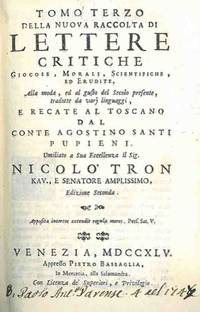
4-44689Venezia appresso Angiolo Pasinelli per due vol. e Pietro Bassaglia per i restanti 1745/46 sei volumi rilegati in tre belle legature in piena pergamena con titoli manoscritti ai dorsi ed in stato di nuovo pp. 6-252-4 6-240 6-268-4 6-256 8-248 - 6-268-4. Una tavola incisa in antiporta ma due soli soggetti ripetuti. In fase di legatura all'epoca il 1° e 2° tomo sono stati rilegati non consecutivamente. unknown
2007Q-0323018106Mosby 2007-10-12. Paperback. New. In shrink wrap. Looks like an interesting title! Mosby paperback
20042111902160200233Nitcho 2004. Soft Cover. Fine. Number of books: 17 books in total Nitcho paperback
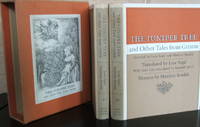
1973007709NY: Farrar Straus and Giroux. First edition. Hard covers in dust jackets and publishedr's slipcase. Published NY: Farrar Straus and Giroux 1973 first printing. 8vo. 3322pp. full page plates by Sendak. Fine crisp bright in fine dust jackets and near fine slipcase. . Fine. Hard. 1st. 1973. Farrar, Straus and Giroux unknown
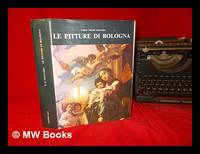
1969292321Bologna : ALFA 1969. First Edition. Hardcover. Fine cloth copy in a near fine very slightly edge-nicked and dust-dulled dust wrapper now mylar-sleeved. Remains particularly and surprisingly well-preserved; tight bright clean and sharp-cornered. Series; Fonti e studi per la storia di Bologna e delle province emiliane ; 1. Physical description; xix 535 pages 36 leaves of color plates : illustrations facsimiles ; 27 cm. Notes; ""Ristampa anastatica corredata da indici di ricerca da un commentario di orientamento bibliografico e informativoe da un repertorio illustrato"". Originally published : Bologna : G. Monti 1686. Bibliography: p. xvii-xix. Subjects; Painting Italy Bologna. Sculpture Italy Bologna. Architecture Italy Bologna. Painting Italy Bologna. Sculpture Italy Bologna. Art Italy Bologna. Genre; Illustrated. Bologna : ALFA hardcover
2016x-1442262672Rowman & Littlefield Pub Inc 2016. Hardcover. New. 270 pages. 10.00x7.00x0.75 inches. Rowman & Littlefield Pub Inc hardcover