1 937 résultats
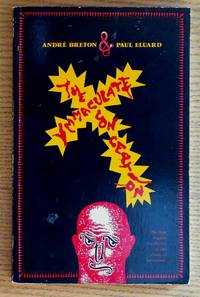
Q13OS-00644New Directions. Used - Good. Good condition. No Dust Jacket French & English. poems poetry french poetry A copy that has been read but remains intact. May contain markings such as bookplates stamps limited notes and highlighting or a few light stains. New Directions unknown
1942D16567Norfolk CT : New Directions 1942. First Edition. Hardcover. Very Good/Good. The less common cloth issue. Slim 8vo; original cloth in DJ. Fragile jacket worn along the spine price-clipped. Edited by Charles Henri Ford with a preface by Paul Eluard. The cover drawing is by Henri Matisse. <br/><br/> New Directions hardcover books
151053Stoke Ferry Norfolk: Daedalus Press nd. First edition. Poetry postcard that measures 4" x 6." Poem by Eluard translated from the French by Peter Hoy. A fine copy. Uncommon. Daedalus Press unknown books
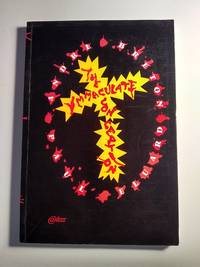
1990930393<p>Translated by Jon Graham. Frontispiece by Salvador Dali. Operating out of the Surrealist headquarters at 42 rue Fontaine in Paris Breton and Éluard embarked on this automatic writing project in 1930; it was finally released in this lovely English edition 60 years later by pataphysics enthusiasts Atlas Press. 'If all that remained of the Surrealist movement were the pages of The Immaculate Conception' wrote Maurice Nadeau 'man alerted could not turn away from the astounding mystery of his condition.' </p><p>Tight uncreased spine. Clean unmarked interior. Minor shelf-wear. Price to back cover has been blacked out. 121 pp. Featured Rare & Collectible.</p> Atlas Press paperback
1990152759London: Atlas Press 1990. Trade Paperback. Very Good. Light wear to cover. Interior pages clean and unmarked; tight binding. 124 pages. Translated by Jon Graham; Frontispiece by Salvador Dali; Introduction by Antony Melville. Keywords: Andre Breton Poems Poetry Surrealism Collaboration Automatic Writings Conception Interuterine Life Death Original Judgement Possessions Atlas Press paperback
2005192113London: Atlas Press 2005. First edition thus. Softcover. 154 pages. Bellmer's classic book translated from the German by Malcolm Green. Features some poems by Paul Eluard. Includes 15 color photographs 10 black and white images and a a few line drawings. A very near fine copy in wrappers and in a very near fine cardstock slipcase. Surprisingly uncommon. Atlas Press unknown
lc_46168Renaissance du Livre Jeunesse; 1er édition (2 décembre 2003)
Mm 160x240 Annata completa nei suoi 4 numeri compresa la rara brossura degli indici. 1300 pagine complessive circa. Copia in buone-ottime condizioni. Spedizione in 24 ore dalla conferma dell'ordine.
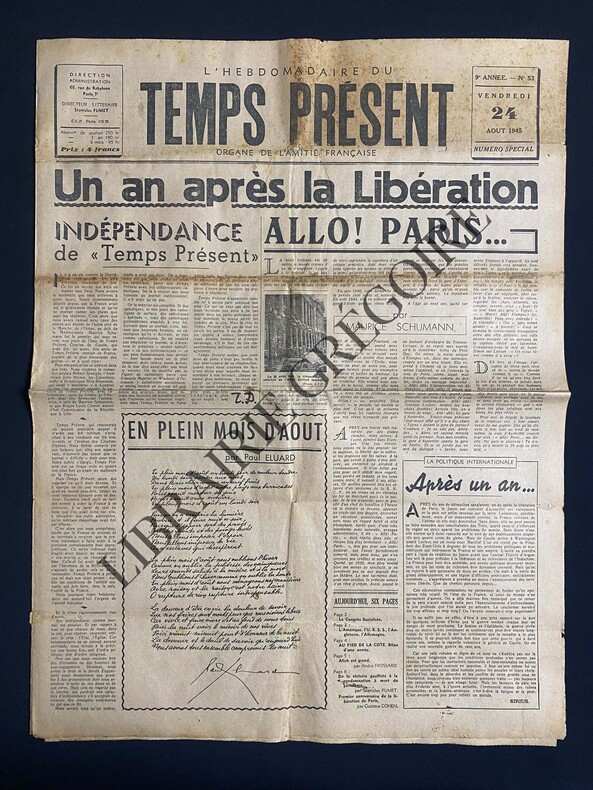
1945ABE-17730739712266 PAGES-43 CM X 60 CM-EN UNE: UN AN APRES LA LIBERATION INDEPENDANCE DE "TEMPS PRESENT", ALLO! PARIS., PAR ROBERT SCHUMANN-EN PLEIN MOIS D'AOUT, PAR PAUL ELUARD, POEME-P3: QUAND L'AMERIQUE NE S'ISOLE PLUS., PAR ROBERT WEEMS-L'URSS REDEVIENT L'EMPIRE RUSSE-P5: LIBERATION DES ARTS-P6: DE LA VICTOIRE GAULLISTE A LA CONDAMNATION A MORT DU PETINISME, PAR STANISLAS FUMET-25 AOUT PREMIER ANNIVERSAIRE DE LA LIBERATION DE PARIS FETE DE SAINT LOUIS, ROI, PAR GUSTAVE COHEN
8966TEL QUEL. N° 2. Eté 1960. Paul Eluard, Janine Aeply, Jean Thibaudeau, Jean Ricardou, Jean Laude, Philippe Sollers, T. S. Eliot, Jean Tortel, Robert D. Valette Très propre.
In-8 (cm. 21.20), cartonato editoriale, sovracoperta editoriale illustrata, pp. 231, (1), con numerose illustrazioni in bianco e nero e a colori fuori testo ed alcune, in bianco e nero, nel testo. Traduzione di Clara Ughetti Cova e Giacomo Battiato. In ottimo stato (nice copy).
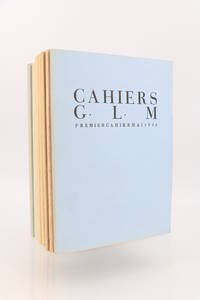
193691033Paris: GLM 1936. Fine. GLM Paris mai 1936 à mars 1939 14.2 x 19.7 cm 9 volumes brochés sous étui First edition and complete run of the 9 G.L.M. cahiers issued between May 1936 and March 1939. A few spines slightly faded as is often the case; otherwise a pleasing copy complete with its original publishers slipcase in full grey boards with red printed title label pasted to the spine. With numerous contributions by most of the Surrealist poets writers and artists including: André Breton René Char Paul Éluard Philippe Soupault René Crevel Valentine Penrose Federico García Lorca Pablo Neruda Michel Leiris Max Ernst Man Ray and André Masson as well as several spiritual forebears of Surrealism such as Franz Kafka Lewis Carroll and Raymond Roussel. GLM hardcover
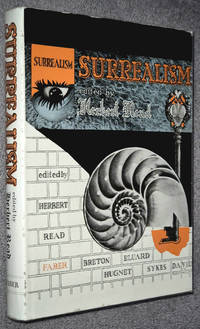
1971018691<p>Contents: Breton A. Limits not frontiers of surrealism. -- Davies H.S. Surrealism at this time and place. -- EÌluard P. Poetic evidence. -- Hugnet G. 1870 to 1936. Reissue of a book first published in 1936 by Faber and Faber. 251 pages illustrations ; 26 cm. Grey cloth boards unclipped dust jacket now in a removable protective sleeve. Slight shelf wear to edges no inscriptions tight and square binding. Photographs available on request. All books dispatched same or next working day in robust packaging.</p> Faber and Faber hardcover
1971P-26588New York: Praeger Publishers 1971. First Edition. Paperback. Fine. Quarto. A beautifully illustrated symposium on Surrealism with important original contributions by Breton and others. Includes first publication of "Limits Not Frontiers of Surrealism" by Andre Breton considered a groundbreaking work in the genre. Fine clean and unmarked as issued in the original first American edition stiff paper covers. Praeger Publishers paperback
194184367Reliure demi-box noir signée de Mercher. Plats de papier effet lame de bois teinté noir, gardes du même papier non teinté. La date 1941 inscrite à la main en marge inférieure du premier plat. Dos long. Titre et tête dorés. 10 pages non chiffrées. Quelques frottements. Une auréole d'humidité maîtrisée en marge supérieure des feuillets, sans incidence sur la fraîcheur de l'ouvrage. Mors usés.
25313Paris, à " La Peau de Chagrin " 1941. In-8 en feuilles de 10 pages au format 16,5 x 23 cm. Petit portrait de l'auteur par Pablo Picasso en couverture. Préface de Jean Paulhan en couverture se continuant au verso du 1er plat. Contient 7 poèmes inédits de Paul Eluard. Bien complet du feuillet supplémentaire avec la liste des œuvres parus de Paul Eluard. Petite fente avec infimes frottis au bas du dos. Rarissime édition originale en magnifique état, vu la fragiltié de l'ouvrage, des premiers textes de Paul Eluard écrit dans la France occupée par les nazis.
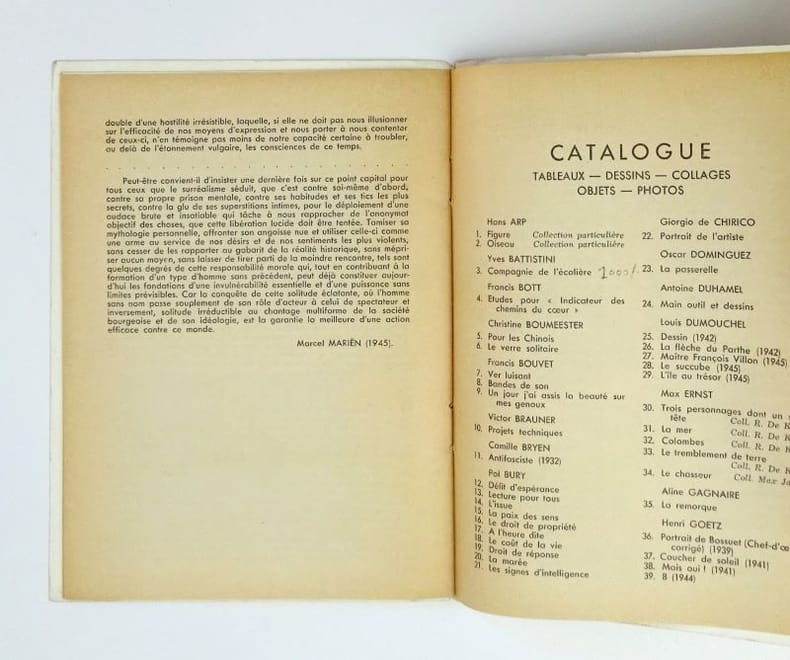
130Galerie des Éditions La Boétie, Bruxelles, 1945, (14,4 x 19,3 cm), 22 pages. Couverture illustrée par René Magritte. Textes d'André Breton, René Magritte, Paul Nougé, Tristan Tzara, Eluard, Louis Scutenaire..Illustrations de Pierre Sanders, Ernst, Hérold, Louis Van de Spiegele, Marïen, Magritte, Hans Arp, Pol Bury, Armand Simon, Louis Dumouchel, Henri Goetz,... Rare catalogue d'exposition de tableaux, dessins, collages, objets, photos et textes des surréalistes essentiellement belges. Exemplaire offert par Yves Battistini à Pierre Mabille, avec une lettre autographe signée de ce dernier où il évoque la lecture du "Miroir du Merveilleux", et un poème autographe signé d'Yves Battistini en dernière page. Rare exemplaire en bon état pour cette publication fragile, une déchirure sans manque avec pliures en bas de la première page, une coupure sans manque en bas de la 3ème page.
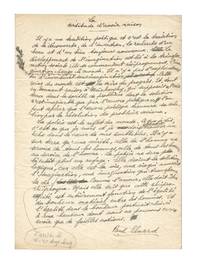
Eluard2<p><strong>ELUARD Paul 1895-1952</strong></p><p>" La Certitude d'avoir raison " autograph manuscript signed " Paul Eluard " N.p.n.d 1 p. in-4 Fold marks paper slightly crumpled some notes on verso from another hand</p><p><strong>Superb first draft manuscript on his vision of poetry: influence on men influence on the world influence on the construction of the relationship of men to their world</strong></p><p><em>" <strong>Il y a une tradition poétique et c'est la tradition de la découverte de l'invention la recherche d'un beau et d'un bien toujours nouveau</strong>. Le développement de l'imagination est lié à la transformation sociale : ils se commandent réciproquement. L'imagination change de monde. <strong>Il n'y a pas d'explorateurs ou d'inventeurs sans imagination. Cette reine du monde est la mère du progrès</strong>. Et tout en donnant raison à</em> Vladimir <em>Maïakovsky qui supposait l'existence dans la société de problèmes dont la solution n'est imaginable que par l'œuvre poétique " l'on peut espérer que l'œuvre poétique trouvera la solution par la résolution des problèmes sociaux. <strong>La poésie est le reflet du monde. Ce que je dis c'est ce que je vois et je dois forcément trouver un écho dans le cœur de mes semblables</strong>. Il n'y a sur terre qu'une vérité celle de l'homme au service de tous les hommes celle de tous les hommes au service de l'homme. <strong>La poésie ne sera bientôt plus un refuge</strong>. Elle devient la solution logique car elle est la vie une vie qui nourrit l'imagination une imagination qui transforme la vie. Comme l'amour elle doit être réciproque. Mais elle saut que cette réciprocité est entièrement fonction de l'égalité du bonheur matériel entre les hommes. Et l'égalité dans le bonheur porterait celui-ci à une hauteur dont nous ne pouvons encore avoir que de faibles notions. Paul Eluard "</em></p><p>This reflection on what poetry is according to Eluard is worth a little overview of the different ways he had to consider this mode of expression: Already before the war Eluard sees poetry as well as the fruit of an aesthetic literary and political commitment. With Aragon and Breton he closely followed the rising ideological conflicts but refused to let art submit to these problems. It is also the collection <em>Capital de la douleur</em> 1926 that remained the best known of the poet at that time. However during the Second World War politics and poetics ended up becoming one under his pen and his poetry became a weapon in its own right; one naturally thinks of the famous hymn to "Liberté" under the Occupation.</p><p>On November 28 1946 shortly after the probable date of our manuscript Nusch Eluard the poet's wife died. The latter then renewed his vision of poetry passing it "from the horizon of one man to the horizon of all". This desire for universality is superbly expressed here: "What I say is what I see and I must necessarily find an echo in the hearts of my fellow men." Moreover the approach to poetry as the common of all stems from a philological reflection on the relationship of men to language whose conclusion is that "The poet … will give us back the delights of the purest language as well that of the man of the street as of the wise as that of the woman the child or the madman. Les Sentiers et les routes de la poésie 1952.</p><p>Part of this manuscript the second and third sentences can be found in the section <em>Poèmes retrouvés</em> volume II of the Pléiade p. 873 under the title <em>Aujourd'hui la Poésie</em>: it is a fragment of a lecture given by Eluard on April 9 1946 at the French Institute in Prague.</p><p>Another part the last sentence is found in <em>Avenir de la Poésie</em> Œuvres complètes tome I de la Pléiade p. 526. We know that Eluard made many conferences and declarations in Prague during the spring of 1946 then Italy and Greece. One can legitimately think that this manuscript dates from this time.</p><p>Lucien Scheler does not mention this text either in the alphabetical index of the periodicals that published Eluard or in the chronological index. Still chances are he knew the text at least by a typed copy. The signature and the pencil endorsement seem to indicate a publication.</p>
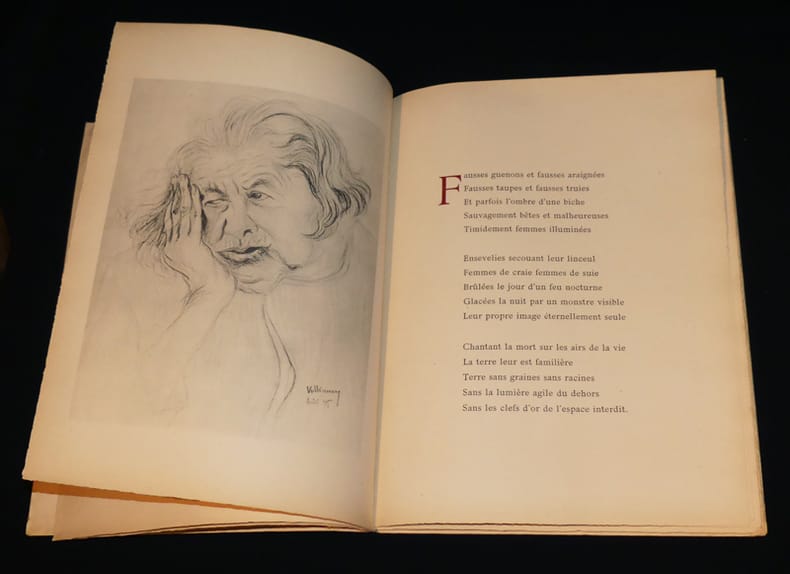
1946103491946 Paris, Vrille, 1946 ( à l'achevé d'imprimer, 1945 au titre); in-4° broché, couverture blanche imprimé en grenat et noir au 1er plat, dos muet; 20 feuillets non chiffrés ( dont 1 blanc). Ouvrage tiré à 786 exemplaires numérotés sur velin pur fil des Papeteries Bellegarde, celui-ci n° 568 est un des 750. Ces poèmes de guerre sont datés de Saint-Alban, 1943 à la fin du texte.
1946wq817Vrille Broché sous couverture rempliée 1946 Grand in-4 broché sous couverture rempliée, tirage unique à 786 exemplaires ici le numéro 53 sur Vélin pur fil des papeteries Bellegarde, (25 * 32.5 cm), ouvrage non paginé, faux titre, titre, puis 32 âges non numérotés. L'ouvrage présente 8 poèmes illustrés de 7 portraits pleine page et d'un dessin représentant le cimetière de fous pour le poème du même nom. L'ouvrage est inspiré par la clinique psychiatrique de Saint-Alban où Paul Éluard se réfugia durant l'hiver 1943 ; couverture marginalement salie au premier plat, un coin abîmé, bel exemplaire. Livraison a domicile (La Poste) ou en Mondial Relay sur simple demande.
194683546Couverture crème rempliée. Avec 8 dessins reproduits à pleine page de Gérard Vulliamy, dont 7 portraits. Non coupé. Le titre fait allusion à la clinique psychiatrique de Saint-Alban où Paul Éluard se réfugia durant l'hiver 1943.
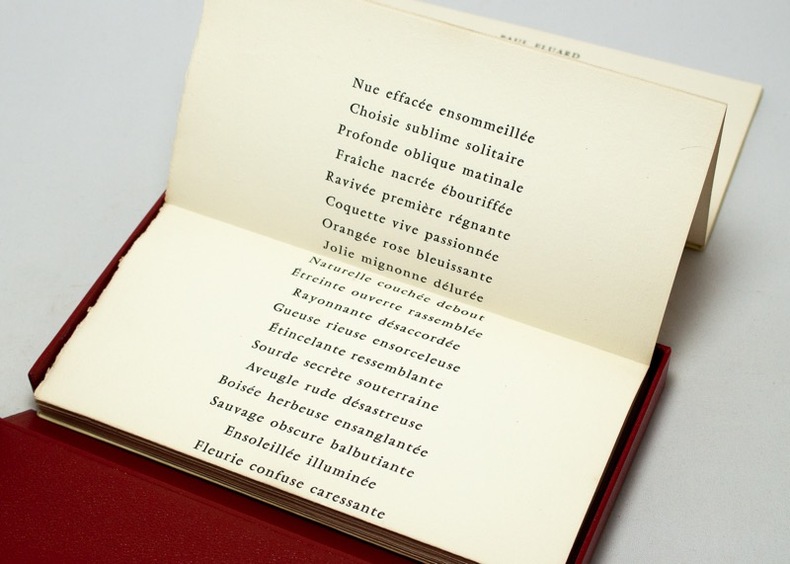
1959190863Paris: Au Vent d'Arles 1959. A celebration of form Sole edition number 87 of 100 copies on Canton paper from a total edition of 135 copies; an intricate production illustrating the female form. Hans Erni 1909-2015 was a Swiss painter and graphic designer known predominantly for his government commissioned projects. He studied art at the Académie Julian in Paris and the School of Applied Arts in Berlin where his admiration for artists such as Georges Braque and Pablo Picasso bloomed. His work has been featured on national stamps and Olympic medals. Narrow octavo concertina-style. With 31 mounted copper-etchings most with tissue guards. Original vellum by Jean Duval front cover with "EE" monogram in gilt bottom edge untrimmed. Housed in original red morocco folding box gilt monogram to spine also by Duval. Minor foxing to vellum small pen mark to rear cover: a near-fine copy in fine box. hardcover
195983867Reliure en vélin dans un étui à clapet en cuir rouge, chacun estampé d'un motif « E » en miroir, probablement pour Eluard et Erni. La reliure et le brochage ont été réalisés par Jean Duval.Livre accordéon reprenant les 31 premiers vers de « Poésie Ininterrompue » d'Eluard et 31 nus de Hans ERNI.
195918504Paris, Aux Vents d’Arles, 1959. Un volume leporello oblong, plats de parchemin ivoire, premier plat orné des initiales de l'auteur et de l'artiste, à savoir un double E (dos à dos). Étui de maroquin rouge, doublé de même, initiales répétées au dos. Reliure et emboîtage de Jean Duval.
70862Coll. "Tel" n° 200, Paris, éd. Gallimard, 1992, in-8, cartonnage souple, couv. ill. coul. éd., 192 pp., bibliographie, notes, table des matières, "Si la poésie est une création d'ordre irrationnel, elle n'en reste pas moins analysable de manière rationnelle ; contrairement à ce que s'imagine une opinion toujours trop prude quant aux joies de l'esprit, comprendre un poème n'en diminue pas le charme, mais augmente le plaisir qu'on prend à le relire. Sans doute l'analyse n'épuise-t-elle jamais tout à fait l'œuvre et c'est heureux - mais l'œuvre n'est pas non plus entièrement évanescente : Mounin le montre en analysant des œuvres difficiles de poètes modernes et contemporains, Mallarmé, Valéry, Éluard, Ponge, Char. L'analyse des poèmes débouche nécessairement sur une réflexion plus ambitieuse sur la poésie, comme sur un plaidoyer en faveur de la critique littéraire lorsque celle-ci prend soin de comprendre d'abord à quelle esthétique se réfère l'œuvre, à quel genre de plaisir elle nous invite sans jamais nier qu'il y ait là une forme très subtile de connaissance." RARE Très bon état