David Mendel HardufLivre Rare Book
658 résultats
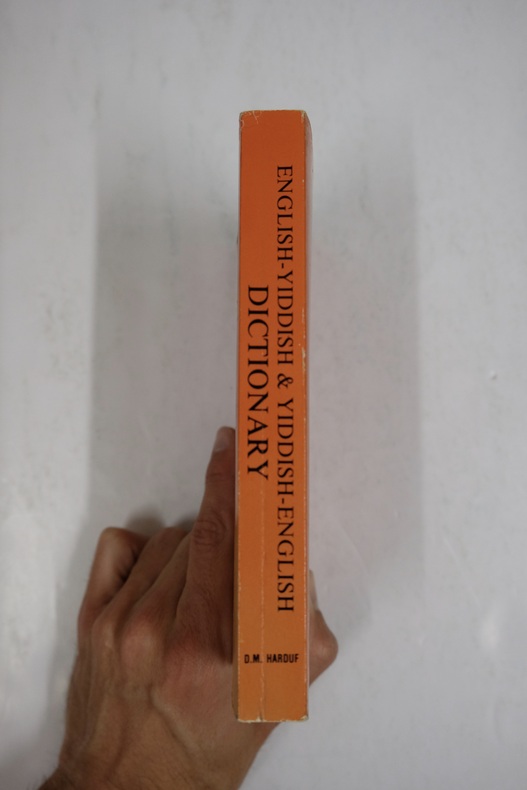
DIC07LANGUEIsrael Book Shop, Inc. 1983. In-12 broché. 360 pages.
IN YIDDISH. 175X245 mm. xxxix+321 pages. Gilt hardcover. Ex-library copy with usual marks. Cover slightly stained. Cover edges slightly bumped. Pen inscription on first whitepage. Else in good condition.
8vo. Xviii, 226 pages. Plate illustrations. SUBJECT (S) : Jews Ukraine Zakarpats'ka oblast history; Jews Romania Sighetu Marmatiei history; Holocaust, Jewish (1939-1945) Ukraine Zakarpats'ka oblast; Holocaust, Jewish (1939-1945) Romania Sighetu Marmatiei; Hasidism Ukraine Zakarpats'ka oblast; Hasidism Romania Sighetu Marmatiei. Light wear to jacket. Very good condition. (EE-3-15)
198725614Paris Seuil 1987 Fort In-8 542 pp
1st edition. Original boards. 8vo. 247 pages. 21 cm. In Yiddish. Title translates to Songs of my Field: Memories of my Exhausted life. Title on title page verso: Espigas de mi campo. Dujowich (1873-1951). SUBJECTS: Jews -- Russia -- Biography. OCLC lists 16 copies worldwide (OCLC: 12385305). Wear to boards. Pages browning. Otherwise Good Condition. (YID-40-96-L-'x)
Original wraps. 8vo. 133, [2] pages. 24 cm. First edition. In German, with some Hebrew. 'On Botany in the Talmud. ' Wraps list: Pest, 1871, Selbstverlag der Verfassers (self-published by the author) ; however title page lists 1870. Treatise on botanic science in the Talmud written by Rabbi Moritz Duschak (1815-1890) ; Austrian rabbi and author. He was a pupil in Talmud of R. Moses Sofer of Presburg, and was for a long time rabbi at Gaya, Moravia. In 1877 he became preacher in Cracow and teacher of religion at the gymnasium of that city. He was a modern preacher and the author of works in the German language. Although engaged to deliver his sermons at the Temple, his sympathies were mostly with the old-style Orthodox people of the 'Klaus, ' who could better appreciate his Talmudical knowledge. His position as preacher was thus somewhat anomalous; and after several years' service he left Cracow and settled in Vienna, where he spent his last days in neglect and disappointment. - 1906 JE. Important study, still cited in medical literature on plant use in human diets. Subjects: Plants in rabbinical literature. Talmud - Natural history. Botany. Plants in literature. Wraps and title page lightly soiled, edges bumped, otherwise fresh and clean. Good + condition. (GER-43-20)
1st edition. Original boards. 8vo. 690, 16 pages. 23 cm. In Yiddish. Title translates to The New Life. A complete second year of this important Yiddish monthly. Zhitlowsky, an immigrant socialist revolutionary, sought to synthesize socialism with nationalism as early as 1883. He demanded for Jews "national equal rights with all peoples" and asserted that only through the Yiddish language could the social and national revival of the Jewish people be effected. He maintained that one could remain identified with the Jewish nationality even if abandoning the Jewish religion. He urged the Jewish masses to participate in the class struggle as a national unit. Alone among the cosmopolitan Jewish socialists he favored national socialism. In 1897 he began publishing philosophical studies in Jewish history and a comprehensive program of action which later appeared in book form as Pisma o starom I novom yevreystvie ("Letters on Old and Modern Judaism, " 1907) . His main thesis was that national consciousness consists mainly of spiritual-cultural determinants and that these national characteristics can be maintained by the Jews in the future in the lands of their dispersion, just as they have survived the lack of territory or unity of language since the end of the second commonwealth. After emancipation of the individual the Jews as a group should be granted national self-government within the framework of the state along with other national minorities. His secularization of the national idea as opposed to those who saw the essence of Judaism in religion, and his optimistic view of the future of Judaism in the Diaspora, were the main underpinnings of his insistence on national cultural autonomy. Zhitlowsky was "in favor of the centrality of Yiddish in the national Jewish experience and labored toward the recognition of that language, and of those who lived out their lives in it, as one of the several cultural linguistic communities of Eastern Europe, and of the Western world as a whole" (Isaac Levitas, et al, in EJ) . Ex-library with usual, minimal markings. Some wear to boards. Binding repaired. Contents clear. Good+ Condition. (YID-30-9)
1st edition. Original, beautifully illustrated boards. 8vo. 745 pages, 23 cm. In Yiddish. Title translates to The New Life. A complete 1st year of this important Yiddish monthly. Zhitlowsky, an immigrant socialist revolutionary, sought to synthesize socialism with nationalism as early as 1883. He demanded for Jews "national equal rights with all peoples" and asserted that only through the Yiddish language could the social and national revival of the Jewish people be effected. He maintained that one could remain identified with the Jewish nationality even if abandoning the Jewish religion. He urged the Jewish masses to participate in the class struggle as a national unit. Alone among the cosmopolitan Jewish socialists he favored national socialism. In 1897 he began publishing philosophical studies in Jewish history and a comprehensive program of action which later appeared in book form as Pisma o starom I novom yevreystvie ("Letters on Old and Modern Judaism, " 1907) . His main thesis was that national consciousness consists mainly of spiritual-cultural determinants and that these national characteristics can be maintained by the Jews in the future in the lands of their dispersion, just as they have survived the lack of territory or unity of language since the end of the second commonwealth. After emancipation of the individual the Jews as a group should be granted national self-government within the framework of the state along with other national minorities. His secularization of the national idea as opposed to those who saw the essence of Judaism in religion, and his optimistic view of the future of Judaism in the Diaspora, were the main underpinnings of his insistence on national cultural autonomy. Zhitlowsky was "in favor of the centrality of Yiddish in the national Jewish experience and labored toward the recognition of that language, and of those who lived out their lives in it, as one of the several cultural linguistic communities of Eastern Europe, and of the Western world as a whole" (Isaac Levitas, et al, in EJ) . Ex-library with usual, minimal markings. Lacks Zhitlowskys original 16 page prologue entitled This program and the dissemination of the monograph The New Life and the title page of issue one. Boards fading and worn, but in tact; hinges starting. Internally Very Good with original illustrated boards. (YID-30-11)
Original paper wrappers. 8vo; 64 pages. By one of the Bund's key leaders in Poland. Very Good Condition with some markings in first pages. (AC-2-11)
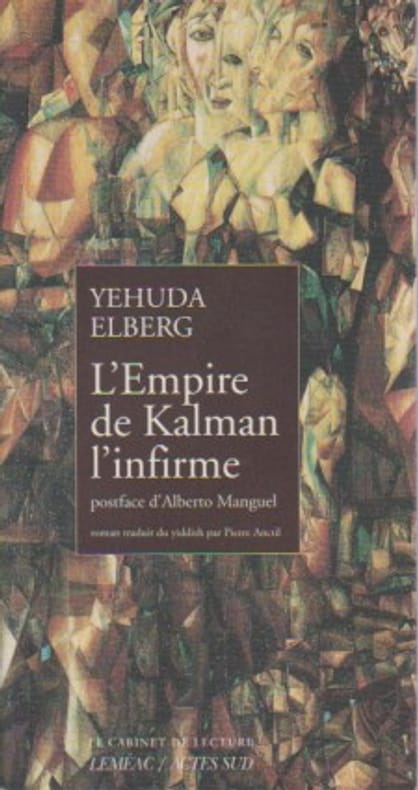
67426Leméac, Actes Sud, Le cabinet de lecture, 2001, 623 pp., broché, très bon état. p., broché, bon état.
Softbound. 12mo. 219 pages. 19 cm. Second edition. Reprint of the Frankfurt a. M. , 1886 edition. In German. The Jewish Colonies in Russia; Culture-Historical Study and Contribution to the history of the Jews in Russia. History and documentation of the limited nineteenth century Jewish agricultural colonies in tsarist Russia. Subjects: Jews - Russia. Jewish farmers. Agricultural colonies - Russia. Clean and fresh. Very good condition. (EE-5-45)
in-16, 266 pp., illustrations, broche, couverture illustrée.- 9782266034944 Bel exemplaire [PP-1]
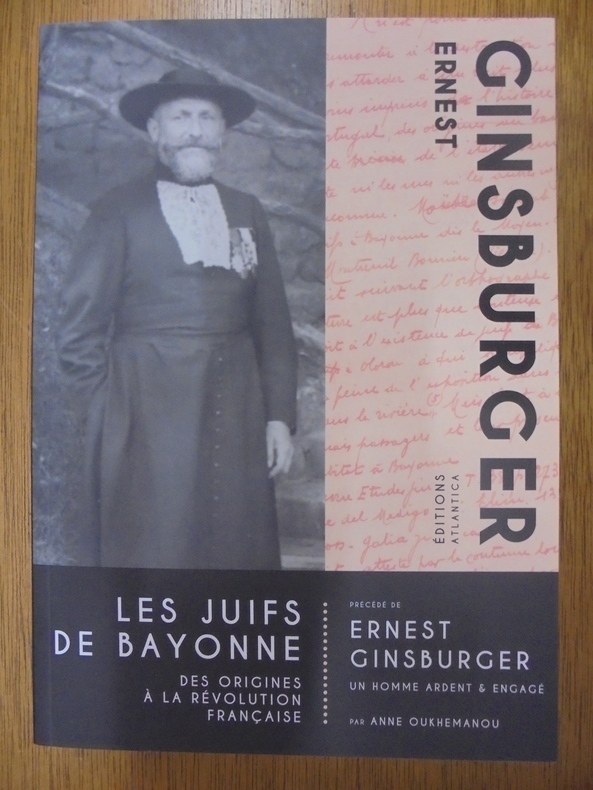
2018REG2414MAtlantica, 2018. 681pp. In-8°. Neuf.
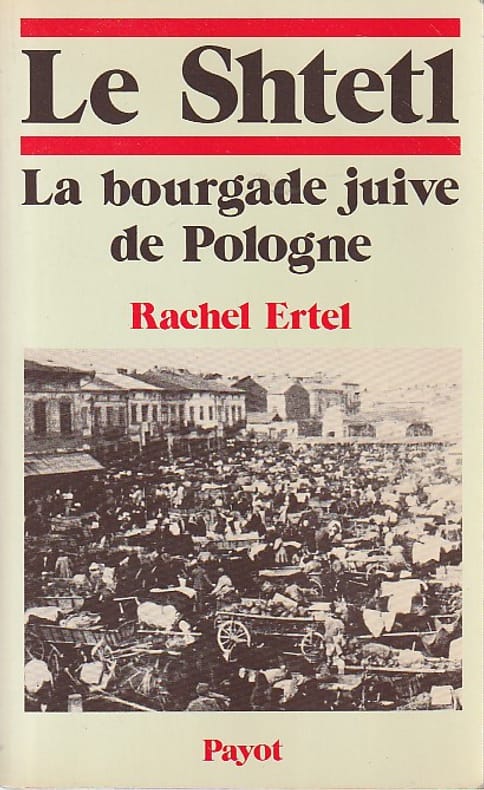
65879Payot, 1982, 321 pp., broché, couverture légèrement insolée, état correct.
1st edition. Original boards with gilt lettering. 8vo. 96 pages, 25 cm. In Yiddish. Title translates to Candlewicks. Asselin (1889-1974) was a prominent Russian-American poet. He published hundreds of poems in Yiddish and his work was featured in the biggest Yiddish newspapers of his day. The Judaica Section of Harvard currently features the Alter Esselin Archive. (Wikipedia, 2018) . SUBJECTS: Yiddish poetry. Light edge wear to boards. Very Good Condition overall. (YID-40-69-CFLX)
23.5x16 cm. 242 pages. Hardcover with dust jacket. As new.
19x26.5 cm. 180 pages. Hardcover. Small dent in front cover. In good condition.
1st Edition. Original paper wrappers bound into period cloth, 4to, 6-16 pages per issue. In Yiddish. Includes some cartoons and other illustrations, including one we noticed by William Gropper. Der Yunion Arbayter (The Union Worker) lasted 2 volumes, running weekly until 1927. The first volume, complete, is here. A.L.G.V.Y / I.L.G.V.Y. stands for the Yiddish name for the heavily Yiddish speaking International Ladies Garment Workers Union; this newspaper was published by an Anarchist section within the union. Yiddish-speaking Jewish anarchists were one of the pillars of the U.S. anarchist movement before World War II. This largely immigrant radical milieu was centered in New York City and opposed capitalism, the state, and organized religion. Yiddish-speaking anarchists built militant unions, anarchist newspapers, and other organizations to further their cause. Many famous anarchists were linked to this movement, including Johann Most, Emma Goldman, Alexander Berkman, and Rudolf Rocker. Yiddish-speaking anarchists played a pivotal role in unions like the International Ladies Garment Workers Union (ILGWU), while the Yiddish anarchist newspaper the Fraye Arbeter Shtime (The Free Voice of Labor) was the largest and longest-lasting U.S. anarchist publication and formed a significant part of the Yiddish cultural landscape. In the 1930s a second generation of bilingual Jewish anarchists emerged, including Sam and Esther Dolgoff, and Audrey Goodfriend, whose influence is still felt in todays anarchist movement.Despite the importance of Yiddish anarchism to the histories of both the U.S. Left and the Jewish community, it has been largely forgotten and written out of historical scholarship (YIVO). Cited in Paul Avrichs Anarchist Portraits (Princeton, 1988) pp 192 & 196. Listed in John Pattens Yiddish Anarchist Bibliography - Periodicals (https://www.katesharpleylibrary.net/w9gk09). SUBJECT(S): Jewish anarchists. OCLC 10218086. OCLC lists 3 holdings worldwide LOC, YIVO, NYU), with NYU holding only this one volume and the Union List of Serials suggesting that the run may have "Ceased with Sept. 26, 1927 issue?" Rear hinge starting. Three issues printed on lower quality paper have darkened, but without any edgewear or breakage. The other 49 issues, printed on quality paper and well protected, remain bright white. All issues clear and very well preserved. Very Good Condition. An outstanding complete volume of a very rare and important Yiddish Anarchist periodical. (YID-42-20)
Original Wraps. 8vo. 316; 120; 125 pages. 22 cm. First edition. In Yiddish. Contents also in Ukrainian. First three issues (complete run? ) of Der Shtern (The Star) , published Kiev 1947-1948; literary almanac (poetry, short stories, criticism, music) of the Yiddish section of the Soviet Writers Union of the Ukraine; contains contributions from Itsik Fefer, David Hofshteyn, Avrom Kahan, Arn Kushnirov, Hershl Polianker and many others. Subjects: Yiddish literature - Ukraine - Periodicals. Jews - Ukraine - Literary collections. Jews. Yiddish literature. Literary collections. Periodicals. OCLC lists 11 copies. Scarce. Wraps aged, worn, and bumped. Pages aged but not brittle. Good - condition. (YID-22-44)
1st edition. Original paper wrappers with modernist 1930s typeface design. 8vo. 28 pages, 20 cm. In Yiddish. Title translates to Nucleus. A lesser known Yiddish monthly featuring some popular Yiddish writers of the period like Jacob Stodolsky and Jacob Glatstein. First published in June of 1930. It appears to have run only 3 issues: June, July (this issue), and November 1930. SUBJECTS: Yiddish literature - Periodicals. OCLC 35215860. OCLC lists 5 holdings worldwide for any issues (NYPL, YIVO, Brandeis, Harvard, NLI), though those holdings may be incomplete. Very Good Condition, a beautiful copy. Scarce. (YID-33-49-elx) xx
1st edition. Original paper wrappers with modernist 1930s typeface design. 8vo. 29 pages, 20 cm. In Yiddish. Title translates to Nucleus. A lesser known Yiddish monthly. Features poetry and prose by Casia Koperman, Michael Licht, and more, It appears to have run only 3 issues: June, July, and November 1930 (this issue) SUBJECTS: Yiddish literature - Periodicals. Very good condition. OCLC 35215860. OCLC lists 5 holdings worldwide for any issues (NYPL, YIVO, Brandeis, Harvard, NLI), though those holdings may be incomplete. Very Good Condition, a beautiful copy. Scarce. (YID-33-49-'elx)
Publishers cloth. 8vo. 424, 78 pages. 24 cm. First edition. In Yiddish. Long inscription by author. English title page: Jewish music in Poland between the two World Wars. With 78 page section of songs and choruses, chiefly unaccompanied, with Yiddish and romanized Yiddish. Published for the World Federation of Polish Jews. Subjects: Jews - Poland - Music - History and criticism. Songs, Yiddish. Music - Poland - History and criticism. Very Good+ condition. (EE-3-13)
1st edition. Original paper wrappers. 8vo. 30 pages, 19 cm. In Yiddish. Title translates to "Darwinism. " Benjamin Feigenbaum (1860-1932) was a Polish-American Yiddish socialist and Yiddish writer. He edited The Forward and the literary monthly Di Tshukunft. He was an outspoken critic of religion, and was also a pioneer of the Socialist Party of America and ran into considerable police trouble as a result of his activism (Wikipedia) . SUBJECTS: Darwin, Charles. OCLC lists 8 copies worldwide (OCLC: 19313039) . Front wrapper is loose with some chips in the margins. Pages brownings and omewhat fragile with very small chips in bottom right corner. Otherwise good condition. (YID-33-22-EL)
Publishers cloth. 8vo. 249, [9] pages. 23 cm. First edition. Published by the Magnes Press, under the auspices of the Center for research on Roumanian Jewry (Je´rusalem) . With fold out demographic Map of Moldavia from 1845. History of Jewish craft occupations and artisan guilds in Moldavia; throughout the 19th century the number and diversity of Jewish skilled craftsmen increased by the decade. Subjects: Jews - Romania - Moldavia - Economic conditions. Jewish artisans - Romania - Moldavia. Moldavia - Ethnic relations. Light wear to wraps, otherwise fresh and clean. Very good condition. (EE-5-14)
8vo. 303 pages, illustrated. First edition. In Yiddish. Includes English translation of title on copyright page: "The Jews of Johannesburg. " Dustjacket worn but present, otherwise very good condition. (ComHist-15-9A)