SINGER Isaac Bashevis,Livre Rare Book
658 résultats
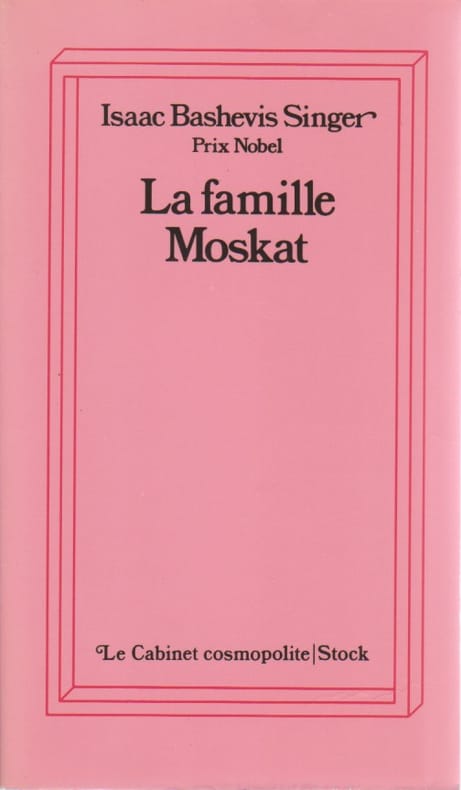
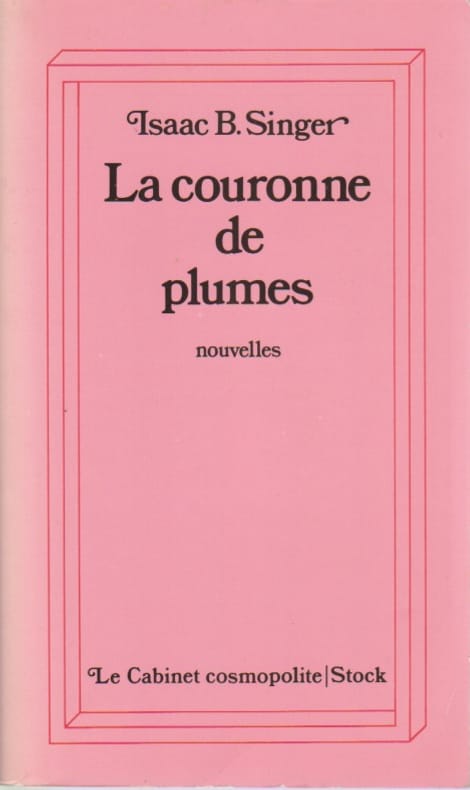
31640Traduit de l'américain, Stock, Nouveau cabinet Cosmopolite, 1990, 376 pp., broché, jaquette, traces de plis sur le dos, état correct.
10496Stock, Le cabinet cosmopolite,1978, 588 p., broché, couverture très légèrement défraîchie, dos un peu insolé, bon état.
17195Traduit de l'américain, Stock, Le cabinet cosmopolite,1976, 375 p., broché, couverture partiellement insolée, bandeau d'origine, état satisfaisant.
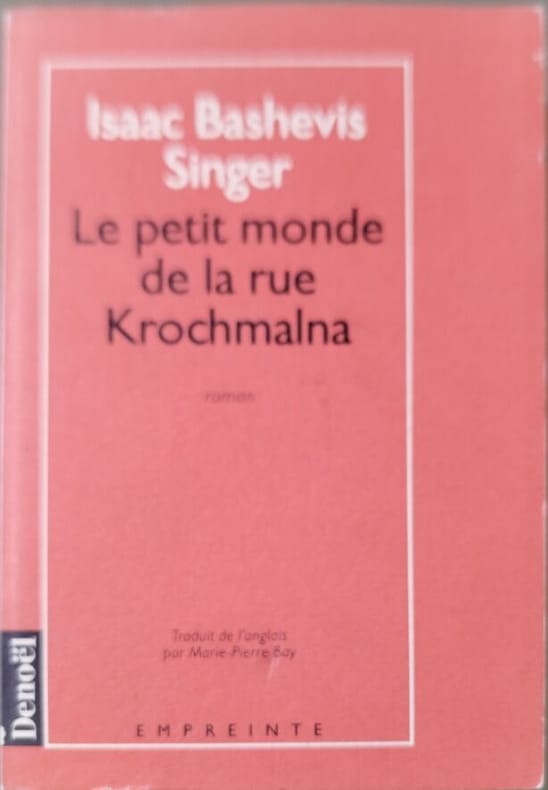
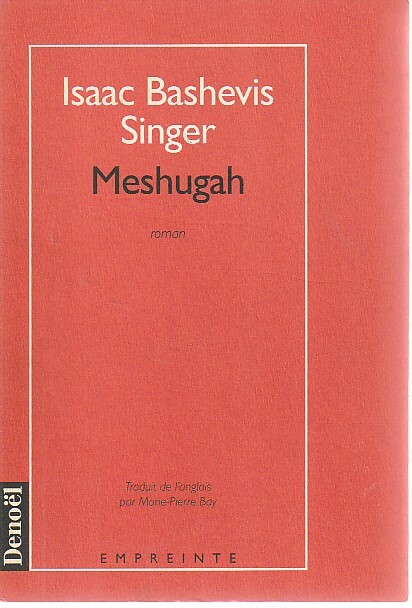
199112460Denoël / Empreintes 1991 254 pages in8. 1991. broché. 254 pages. Le roman suit Max Barabander un ancien truand devenu riche en Argentine qui retourne dans le quartier juif de Varsovie au début du XXe siècle pour retrouver sa jeunesse. Il y croise divers personnages comme Tsirele la fille du rabbin Reyzl Kork l'entremetteuse Basha la servante et Theresa la sorcière dans une atmosphère vivante et bruyante de la rue Krochmalna
1375796Paris: Stock, 1982 in-8, 379 pages, glossaire. Broché, couv. illustrée, bon état. Roman paru en yiddish à New York en 1937 par le frère ainée de Isaac Bashevis Singer. Edition originale de la traduction française.
16949Denoël, Empreinte,1995, 297 pp., broché, rousseurs sur les tranches et la couverture, état correct.
40079Stock, Le Cabinet Cosmopolite, 1994, 384 pp., broché, légères traces d'usage, plis de lecture sur le dos, état satisfaisant.
1st Yiddish edition. Original illustrated paper wrappers. 12mo. 95 pages, 14 cm. In Yiddish with some Russian. Title translates to Lublin Extermination-Camp Majdanek. Soviet war correspondent and poet Konstantin Simonovs booklet on the atrocities of the Majdanek camp, published simultaneously in several languages, was only the second monograph published on the atrocities at Majdanek. Simonov (1915-1979) was a highly decorated poet, novelist, playright, and war correspondent whose works were widely known (Wikipedia, 2018) . A Polish-Soviet Special Criminal Court was established in Lublin in August 1944 in order to investigate the Nazi crimes in the Majdanek extermination camp, with Simonov covering the proceedings as the basis for this work. The Majdanek concentration camp was established on Heinrich Himmler's order and operated from October 1, 1941 until it was liberated by the Soviet Army on July 22, 1944. It is known to be the best preserved Nazi concentration camp of the Holocaust, as the Germans did not have enough time to destroy the evidences of their crimes. The Commission for investigating the German crimes was established in August 1944 and soon they published this booklet in several languages. Despite of the importance of this statement it must be mentioned that the Commission made many erroneous assumptions regarding the duration of the camp or number of people killed at Majdanek, probably because they were motivated rather by political and propaganda agenda than by a search for historical facts. The total number of the victims is still controversial, in this report 1.5 million victims of different nationalities were counted, however according to the latest researches there were 79, 000 victims, 59, 000 of whom were Jews. [Kranz, T. : Bookkeeping of Death and Prisoner Mortality at Majdanek. Pp. 81-110. In: Silberklang, D. (ed. ) : Yad Vashem Studies. Vol. 35: 1. Jerusalem, 2007.]. SUBJECTS: World War, 1939-1945 -- Atrocities. World War, 1939-1945 (OCLC: 145083668) . Light wear to wrappers and pages browning. Otherwise very good condition. (HOLO2-142-4-ALR)
A cura di Frediano Sessi. Manca angolo in basso a sinistra della quarta di copertina<br/>Collana STRUZZI 462<br/>Legatura brossura <br/>Formato Ottavo<br/>Num Pagine 270<br/>Traduttore Frediano Sessi<br/>Prima Edizione
20116964Stock 2011 340 pages in8. 2011. Broché. 340 pages. L'historien Simon Epstein examine l'année 1930 trois ans avant l'arrivée d'Hitler au pouvoir pour dresser un panorama mondial de la condition juive. En s'appuyant sur des archives communautaires et la presse de l'époque il réfute l'idée que les Juifs étaient passifs ou peu conscients de leur judaïté démontrant au contraire qu'ils conciliaient clairement leur identité religieuse et leur citoyenneté nationale
1st Yiddish edition. Original decorated boards. 8vo. 288, 309, 350, 485, 275, 402 pages [1834 pages total![, 23 cm. Title translates to The Deluge. Yiddish translation of Henryk Sienkiewicz masterpiece historical novel The Deluge. It was originally published as a trilogy in 1886 and tells a story of a fictional Polish-Lithuanian Commonwealth soldier and noble Andrzej Kmicic and shows a panorama of the Commonwealth during its historical period of the Deluge, which was a part of the Northern Wars (Wikipedia, 2019). SUBJECTS: Polish fiction -- Translations into Yiddish. OCLC lists 9 copies worldwide (OCLC:173031593). Ex-library with usual markings. Cloth on all volumes are lightly worn. Pages browning as expected with interwar paper, but not too bad. Overall good condition. (YID-33-52'elx)
1st edition. Issue with Singers Photo on cover and lead article being the transcript of an interview with Singer on pages 2-12, which includes 6 additional photos interspersed throughout the text. The Editors note, Isaac Beshevis Singer visited the Cincinnati campus for a week of lectures and dialogue with the teachers and future rabbis of a movement which does not actually forsake Jewishness but has taken out of Jewishness its very essence. Interestingly, Lawrence Kushner, then a rabbinic student, is listed on the masthead of this issue for Photography and New York representative. The Variant ran a total of 8 volumes, 1961-1969, generally appearing 3 times per year. Issued by the student body of the Hebrew Union College, Jewish Institute of Religion. SUBJECT (S) : Jewish college students -- Periodicals. Reform Judaism -- United States. OCLC lists 11 institutions with holdings for at least some of the issues, but it is unclear which are complete. Only one Ivy League Institution (Harvard) lists any holdings at all. Somewhat rare. Very Good Condition (KH-8-64)
Publishers cloth. 8vo. 161 pages. 23 cm. First edition. Covers the period of the Chmielnicki Massacre and the Thirty Years War, and the movement of impoverished refugees into Western Europe. Moses Avigdor Shulvass (19091988) , scholar and educator. Born in Plonsk, Poland, Shulvass studied in Berlin. He lived in Erez Israel from 1938 to 1948 and then immigrated to the United States, where he eventually became professor of Jewish history at Spertus College of Jewish Studies in Chicago. His publications in many languages include historical studies on Italian Jewry. Of special interest are his books Roma ve-Yerushalayim (Rome and Jerusalem, 1945) ; Hayyei ha-Yehudim be-Italyah bi-Tekufat ha-Renaissance (Jewish Life in Renaissance Italy, 1955) ; and his biographical sketch of Samuel David Luzzatto with documentary supporting material, Pirkei Hayyim (1951) . He also published two volumes of essays on various aspects of Jewish history, Bi-Zevat ha-Dorot (In the Grip of Generations, 1960) and Between the Rhine and Bosphorus (1964) as well as Die Juden in Wuerzburg waehrend des Mittelalters (1934) . He also wrote From East to West (1971) , Jewish Culture in Eastern Europe (1975) , and The History of the Jewish People (1982) . (EJ 2008) Subjects: Jews - Germany - History - 1096-1800. Jews - Poland - History. Jews - Migrations. Joden. Migratie (demografie) Migration. Geschichte 1600-1800. Very clean and fresh in VG jacket. Very good + condition. (EE-5-37A)
IN YIDDISH. 23.5x16cm. 464 pages. Hardcover. Cover stained and rubbed. Cover edges and corners worn and bumped. Spine worn, rubbed and tattered. Spine cracked. Pen inscription on front inner cover and title page. Ex-library copy with usual marks. Several pages edges and corners slightly worn. Pages yellowing. Else in good condition.
IN YIDDISH AND HEBREW. RARE Yizkor book (memorial book) commemorating the Jewish community of Falenica annihilated in the Holocaust. Falenica is a part of Wawer, one of districts of Warsaw on the right bank of the Vistula, in the far southeastern corner of the city (until 1951 a separate village, afterwards became part of Warsaw). Falenica is located along the main rail line, which connects Warsaw with Lublin. During World War II the Germans opened a Jewish ghetto there, called Falenica-Miedzeszyn Ghetto. All of its inhabitants were transported to Treblinka in August 1942. Contains many b&w photographs. 280x220mm. 478 pages. Black cloth Hardcover with gilt front cover and spine. Cover dirty and slightly scratched. Front cover upper corner and spine edges bumped. Rear endpaper upper edge/corner slightly peeling. Rear whitepage bottom corner creased/wrinkled. Pages slightly yellowing. [SUMMARY]: This extremely rare Yizkor book commemorating the exterminated Jewish community of Falenica is in good condition. PLEASE NOTE: This item is overweight. We may ask for extra shipping costs.
Later cloth. 12mo. 111 pages. 19 cm. First edition. In Yiddish. Pogroms in Ukraine; The time of the Volunteer Army; a history of the Ukraine Pogroms carried out by the White Ukrainian forces (the Dobrovolcheskaya armiya) ; includes entries on Jewish Self-Defense Groups in the Ukraine. The author, Nokhem Shtif (18791933) , was a linguist, literary historian, and political activist. After the February 1917 Revolution, Shtif was among the founders of the revived Folkspartey (Folks Party) . Inspired by Simon Dubnow, the party had been first formed in 1907, but remained dormant throughout the following decade. He left Kiev in 1920, spending a short time in Minsk, where he and Zelig Kalmanovitch lectured for Yiddish teachers. Subsequently, Shtif moved to Kovno (Kaunas) , then a stronghold of the Folkspartey, but eventually settled in Berlin in March 1922. His book on pogroms in Ukraine was published in Berlin in Russian (Pogromy na Ukraine; 1922) and in Yiddish (Pogromen in Ukraine; 1923) . (Yivo Encyclopedia) . Bound in attractive later marbled boards and cloth, with gilt title on spine. Subjects: Jews - Persecutions - Ukraine. Pogroms - Ukraine. Ukraine - History - Revolution, 1917-1921. Ukraine - Ethnic relations. OCLC lists 7 copies. With institutional bookstamps on title page, otherwise clean and fresh. Good + condition. (EE-5-18)
Original Wraps for each issue, all bound into publisher's distinctive illustrated boards. 4to. [approx. 18 pages per issue]. 29 cm. Run of Kinder Zhurnal, Wrappers in various colors, almost always with beautiful period front cover illustrations and, internally, period modernist yiddish illustrations by artists including Aaron Goodelman. "Kinder zhurnal and Farlag Matones were both founded by the Sholem Aleichem Folk Institute, an organization established in New York in 1918 to coordinate a secular Yiddish school system. Kinder zhurnal, a children's magazine, was in existence from 1920 to 1981. Its first editor, Shmuel Niger, served from 1922 to 1948. The magazine published works by writers such as Mani Leib, Aleph Katz, Jacob Glatstein, Kadia Molodowsky. " - Guide to the Yivo Archives. For more, see Naomi Tozman's 1993 masters thesis, :Kinder zhurnal: a microcosm of the Yiddishist philosophy and secular education movement in America," which can be downloaded at https://escholarship.mcgill.ca/downloads/1c18dg573?locale=en. Subjects: Children's literature, Yiddish - Periodicals. Kinder Zhurnal Kinder Journal Kinder Zshurnal Sholem Aleichem Folks Shuln. Sholem Aleichem Folk Institute (New York, N. Y. ) . Yiddish periodicals - New York (State) - New York. Jews - Education - New York (State). OCLC: 179197128. Most libraries which have any issues at all appear to have limited runs, oftentimes only a year or two. Overall very clean and fresh, not aged, and well kept. Some wear to cloth on spine, internally very clean and nice, overall about Very good- condition. (YID-22-51-L-'e)
Original Wraps for each issue, all bound into publisher's distinctive illustrated boards. 4to. [approx. 18 pages per issue]. 29 cm. Run of Kinder Zhurnal, Wrappers in various colors, almost always with beautiful period front cover illustrations and, internally, period modernist yiddish illustrations by artists including Aaron Goodelman. "Kinder zhurnal and Farlag Matones were both founded by the Sholem Aleichem Folk Institute, an organization established in New York in 1918 to coordinate a secular Yiddish school system. Kinder zhurnal, a children's magazine, was in existence from 1920 to 1981. Its first editor, Shmuel Niger, served from 1922 to 1948. The magazine published works by writers such as Mani Leib, Aleph Katz, Jacob Glatstein, Kadia Molodowsky. " - Guide to the Yivo Archives. For more, see Naomi Tozman's 1993 masters thesis, :Kinder zhurnal: a microcosm of the Yiddishist philosophy and secular education movement in America," which can be downloaded at https://escholarship.mcgill.ca/downloads/1c18dg573?locale=en. Subjects: Children's literature, Yiddish - Periodicals. Kinder Zhurnal Kinder Journal Kinder Zshurnal Sholem Aleichem Folks Shuln. Sholem Aleichem Folk Institute (New York, N. Y. ) . Yiddish periodicals - New York (State) - New York. Jews - Education - New York (State). OCLC: 179197128. Most libraries which have any issues at all appear to have limited runs, oftentimes only a year or two. Gorgeous flawless copy, a stunning copy, Very good+ condition. (YID-22-51-L-'e)
Original Wraps for each issue, bound by publisher into illustrated boards. 4to. [approx. 18 pages per issue]. 29 cm. Begins with the special "Yubelai Numer," April/May 1922, and running a full calendar year, though Volume/Issue numbering follows a different system! Run of Kinder Zhurnal, Wrappers in various colors, almost always with beautiful period front cover illustrations and, internally, period modernist yiddish illustrations by artists including Aaron Goodelman. "Kinder zhurnal and Farlag Matones were both founded by the Sholem Aleichem Folk Institute, an organization established in New York in 1918 to coordinate a secular Yiddish school system. Kinder zhurnal, a children's magazine, was in existence from 1920 to 1981. Its first editor, Shmuel Niger, served from 1922 to 1948. The magazine published works by writers such as Mani Leib, Aleph Katz, Jacob Glatstein, Kadia Molodowsky. " - Guide to the Yivo Archives. For more, see Naomi Tozman's 1993 masters thesis, :Kinder zhurnal: a microcosm of the Yiddishist philosophy and secular education movement in America," which can be downloaded at https://escholarship.mcgill.ca/downloads/1c18dg573?locale=en. Subjects: Children's literature, Yiddish - Periodicals. Kinder Zhurnal Kinder Journal Kinder Zshurnal Sholem Aleichem Folks Shuln. Sholem Aleichem Folk Institute (New York, N. Y. ) . Yiddish periodicals - New York (State) - New York. Jews - Education - New York (State). OCLC: 179197128. Most libraries which have any issues at all appear to have limited runs, oftentimes only a year or two.Bit of discoloration to illustration boards, otherwise an excellent copy with no damage, Very good condition (YID-22-51D-L-'e)
Original Wraps for each issue, bound by publisher into illustrated boards. 4to. [approx. 18 pages per issue]. 29 cm. Begins with the special "Yubelai Numer," April/May 1922, and running a full calendar year, though Volume/Issue numbering follows a different system! Run of Kinder Zhurnal, Wrappers in various colors, almost always with beautiful period front cover illustrations and, internally, period modernist yiddish illustrations by artists including Aaron Goodelman. "Kinder zhurnal and Farlag Matones were both founded by the Sholem Aleichem Folk Institute, an organization established in New York in 1918 to coordinate a secular Yiddish school system. Kinder zhurnal, a children's magazine, was in existence from 1920 to 1981. Its first editor, Shmuel Niger, served from 1922 to 1948. The magazine published works by writers such as Mani Leib, Aleph Katz, Jacob Glatstein, Kadia Molodowsky. " - Guide to the Yivo Archives. For more, see Naomi Tozman's 1993 masters thesis, :Kinder zhurnal: a microcosm of the Yiddishist philosophy and secular education movement in America," which can be downloaded at https://escholarship.mcgill.ca/downloads/1c18dg573?locale=en. Subjects: Children's literature, Yiddish - Periodicals. Kinder Zhurnal Kinder Journal Kinder Zshurnal Sholem Aleichem Folks Shuln. Sholem Aleichem Folk Institute (New York, N. Y. ) . Yiddish periodicals - New York (State) - New York. Jews - Education - New York (State). OCLC: 179197128. Most libraries which have any issues at all appear to have limited runs, oftentimes only a year or two. Some paper covers, with browning paper, have come loose (all are present) with a tough of edgewear, some wear to cloth, Good condition overall (YID-22-51D-E-'e)
Original Wraps for each issue, all bound together at spine but lacking boards. 4to. [approx. 18 pages per issue]. 29 cm. The publisher generally bound Vol II, Nr. 11/12 (Jan/Feb 1923) with Vol III as a 1923 volume, so is not present here. Run of Kinder Zhurnal, Wrappers in various colors, almost always with beautiful period front cover illustrations and, internally, period modernist yiddish illustrations by artists including Aaron Goodelman. "Kinder zhurnal and Farlag Matones were both founded by the Sholem Aleichem Folk Institute, an organization established in New York in 1918 to coordinate a secular Yiddish school system. Kinder zhurnal, a children's magazine, was in existence from 1920 to 1981. Its first editor, Shmuel Niger, served from 1922 to 1948. The magazine published works by writers such as Mani Leib, Aleph Katz, Jacob Glatstein, Kadia Molodowsky. " - Guide to the Yivo Archives. For more, see Naomi Tozman's 1993 masters thesis, :Kinder zhurnal: a microcosm of the Yiddishist philosophy and secular education movement in America," which can be downloaded at https://escholarship.mcgill.ca/downloads/1c18dg573?locale=en. Subjects: Children's literature, Yiddish - Periodicals. Kinder Zhurnal Kinder Journal Kinder Zshurnal Sholem Aleichem Folks Shuln. Sholem Aleichem Folk Institute (New York, N. Y. ) . Yiddish periodicals - New York (State) - New York. Jews - Education - New York (State). OCLC: 179197128. Most libraries which have any issues at all appear to have limited runs, oftentimes only a year or two.Light wear to outer wrappers at first and final issue, touch of worming to two issues, Overall Good+ condition. (YID-22-51B-L-'e)
Original Wraps for each issue, all bound into publisher's distinctive illustrated boards. 4to. [approx. 18 pages per issue]. 29 cm. Run of Kinder Zhurnal, Wrappers in various colors, almost always with beautiful period front cover illustrations and, internally, period modernist yiddish illustrations by artists including Aaron Goodelman. "Kinder zhurnal and Farlag Matones were both founded by the Sholem Aleichem Folk Institute, an organization established in New York in 1918 to coordinate a secular Yiddish school system. Kinder zhurnal, a children's magazine, was in existence from 1920 to 1981. Its first editor, Shmuel Niger, served from 1922 to 1948. The magazine published works by writers such as Mani Leib, Aleph Katz, Jacob Glatstein, Kadia Molodowsky. " - Guide to the Yivo Archives. For more, see Naomi Tozman's 1993 masters thesis, :Kinder zhurnal: a microcosm of the Yiddishist philosophy and secular education movement in America," which can be downloaded at https://escholarship.mcgill.ca/downloads/1c18dg573?locale=en. Subjects: Children's literature, Yiddish - Periodicals. Kinder Zhurnal Kinder Journal Kinder Zshurnal Sholem Aleichem Folks Shuln. Sholem Aleichem Folk Institute (New York, N. Y. ) . Yiddish periodicals - New York (State) - New York. Jews - Education - New York (State). OCLC: 179197128. Most libraries which have any issues at all appear to have limited runs, oftentimes only a year or two. Two issues show some toning, three cover pages have come loose but are present. Some wear to spine. Overall Good condition. (YID-22-51A-L-'e)
Publishers cloth. 8vo. 200, XIII pages. 25 cm. First edition. In Hebrew with English summary. Added title page: The Crown Rabbinate in Russia; A Chapter in the Cultural Struggle Between Orthodox Jews and Maskilim. The Crown Rabbis of late imperial Russia held the government-mandated designation of rabbi, but their functions as record keepers, Russian administrative representatives, and sometimes Jewish communal (but secular) leaders belied the religious title. the opening of government-sponsored rabbinical training seminaries in Vilna and Zhitomir in 1847 these schools reflected the practical ideals of the maskilim, who emphasized the need for religious leaders to have a strong secular education. the crown rabbinate outlasted the crown rabbinical schools. On the one hand, the increasingly influential maskilim and other progressive Jews promoted the notion that a rabbi should embody worldly ideas and guide his community in the social, economic, and intellectual components of the Haskalah. Orthodox Jews, on the other hand, wanted only a traditional spiritual rabbinate. By the turn of the twentieth century, the question of who should be empowered with the religious representation of, and authority over, the Jewish communities in Russia had turned into a heated debate that played itself out in the Russian Jewish press and at various meetings of rabbis and the intelligentsia. The Russian Jewish journals Ha-Melits and Voskhod served as forums for this debate, which continued until World War I and aimed, ultimately, at solving the problem of the dual rabbinate. All the while, crown rabbis continued to function in their official capacities, even participating in various Russian rabbinic commissions as well as the Rabbinic Congress of 1910. (YIVO Encyclopedia) In the series: Mehkarim be-toldot `am-Yisrael ve-Erets-Yisrael : Sidrah monografit; kerekh 1 (Studies in the history of the Jewish people and the land of Israel; 1) Subjects: Crown Rabbinate. Haskalah - Russia. Jews - Europe, Eastern - Politics and government. Jews - Legal status, laws, etc. - Russia - History. Jews - Russia - Emancipation. Jews - Russia - Politics and government. Judaism - Russia. OCLC lists 15 copies. Light wear to cloth, otherwise fresh and clean. Very good + condition. (EE-5-39)
Publishers cloth. 8vo. Ix, 300 pages. 23 cm. Illustrated. First edition. Signed by author. "Yiddish and the Creation of Soviet Jewish Culture gives voice to the activists empowered by the state to create a Soviet Jewish national culture. These activists were striving for a national revolution to create a new culture for Jews to identify as Jews on new, secular, Soviet terms. This book explores the ways in which Jews were part of, not apart from, both the Soviet system and Jewish history. Soviet Jewish culture worked within contemporary Jewish national and cultural trends and simultaneously participated in the larger project of propagating the Soviet state and ideology. Soviet Jewish activists were not nationalists or Soviets, but both at once. David Shneer addresses some of the painful truths about the Jews' own implication and imbrication in the Soviet system and inserts their role in twentieth-century Jewish culture into the narrative of Jewish history. " (Dust jacket description) Subjects: Jews -- Soviet Union -- Intellectual life. Yiddish language -- Social aspects -- Soviet Union. Yiddish literature -- Soviet Union -- History and criticism. Jews -- Soviet Union -- Identity. Jews -- Cultural assimilation -- Soviet Union. Jewish socialists -- Soviet Union -- History. Light shelf wear. Sticker on dust jacket designating that this is an autographed copy. Very good + condition. (EE-6-9)
IN HEBREW AND YIDDISH WITH ENGLISH FOREWORD. 24.5x15.5 cm. VI+706 pages. Hardcover. Cover slightly stained and slightly rubbed. Spine slightly loose. Pages slightly yellowing. Else in good condition. PLEASE NOTE: This item is overweight. We may ask for extra shipping costs.