3 889 résultats
A PRISTINE LARGE-PAPER COPY OF THE FIRST AND ONLY EDITION. XII, 168 pp. + addenda leaf (often missing, but present here). An introduction to the Chronicon Samaritanum or Liber Josuae. A LARGE-PAPER COPY, beautifully printed (in Latin, with some Hebrew types) with huge margins on extremely fine, thick laid paper (this copy about twice as thick as normal copies). Large 4to. Original unprinted wraps. Uncut and unopened. Some wear and tear to wraps, INTERNALLY FINE AND BRIGHT, COMPLETELY FRESH, LIKE NEW.
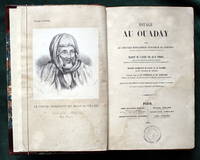
000903Hardcover. Good. Benjamin Duprat and others Paris 1851 first edition; large 8vo 170 x 240mm; pp lxxv 756 plus title to the plates section list of plates and the plates themselves together with a large folding map linen-backed of the area and dated 1845; the engraved plates with one exception are double page; the list calls for a total of ten plates including the portrait of the author and the folding map but one plate the first section of the double plate V is missing this featuring small items such as a stretcher a horse decoration and more; half brown morocco marbled sides skilfully rebacked with the original spine laid down and with appropriate new end papers; part of the marbled sides of the front cover scuffed; the early pages to about xv show the effects of some old wetting in the form of browning and with one page very skilfully repaired none with any loss of text or margins; neat small circular library stamps on the title and occasionally elsewhere including on the backs of the plates; occasional underlinings or brief notes in light pencil in the margins; overall a book in good condition generally clean and firm and not greatly affected by the matters mentioned; scarce in its original form as here. . . . Ouadây aka as Ouaddaï or Wadai is an area a former Sultanate in the east of Lake Chad and the border with Sudan. The Wadai Empire or Sultanate known locally as Burgu or Birgu emerged in the 17th century through conquest of the ruling Tunjur people of the area displacing them from the lands of the Sultanate of Darfur. It was overthrown by France in 1909/1912 and reconstituted under France in 1935. When Chad became independent in 1960 it became part of that new state. Its capital is Abéché. See Wikipedia for more detail. <br/> <br/> hardcover
Complet en 3 volumes, I: 453pp., II: xlviii + 104 + 408pp., III: 255 + 208pp., contenant plusieurs textes en arabe et en syriaque, Réimpression de l'édition 1893, 26cm., reliures d'éditeur en toile avec titre doré (qqs.rousseurs), texte et intérieur frais, bon état, peu commun, poids: 3.5kg., [CONTENU détaillé: I: Essai sur la transmission de la science antique au moyen age. Doctrines et pratiques chimiques, Traditions techniques et traductions arabico-latines avec la publication nouvelle du "Liber Ignium" de Marcus Graecus et impression originale du "Liber Sacerdotum", avec 25 figures d'appareils, table analytique et index // II: L'alchimie syriaque comprenant une introduction et plusieurs traités d'alchimie syriaques et arabes d'après les manuscrits du British Museum et de Cambridge. Texte et traduction avec notes, commentaires, reproduction des signes et des figures d'appareils, table analytique et index // III: L'alchimie arabe, comprenant un introduction historique et les traités de Cratès, d'El-Habib, d'Ostanès et de Djaber, tirés des manuscrits de Paris et de Leyde. Texte et traduction, notes, figures, table analytique et index], W102954
1828109061828 Paris, Firmin-Didot Frères, 1828-1829; 2 tomes reliés en 1 volume in-4°, demi-basane fauve de l'époque, dos lisse orné de jeux de filets gras et maigres dorés et de fleurons dorés, titre doré; VII - 461pp. ; (4) - 435pp. Texte sur 2 colonnes.
180925939Imprimerie Impériale | Paris 1809-1829 | 71 x 54 cm | une feuille
180925832Imprimerie Impériale | Paris 1809-1829 | 71 x 54 cm | une feuille
180923292Imprimerie Impériale | Paris 1809-1829 | 71 x 54 cm | une feuille
180935404Imprimerie Impériale | Paris 1809-1829 | 71 x 54 cm | une feuille
180925336Imprimerie Impériale | Paris 1809-1829 | 70.50 x 53.50 cm | une feuille
1934PHO-1749Paris : Librairie orientaliste Paul Geuthner, 1934-1938, 3 volumes in-8, brochage éditeur, XXXIV-486 pp.; 493 pp.;571 pp., petits défauts au brochage.
180925831Imprimerie Impériale | Paris 1809-1829 | 71 x 54 cm | une feuille
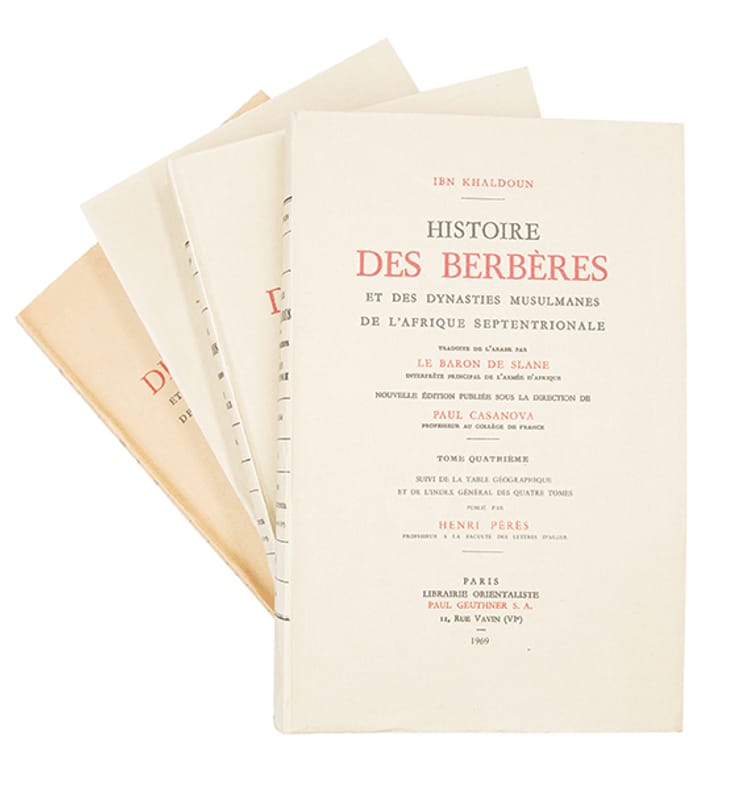
389744 volumes grand in-8 (252 x 163 mm), brochés, couvertures imprimées de l'éditeur. Paris, Librairie Orientale Paul Geuthner, 1968-1969.
18860045711886 Paris, Hachette, 1886. Deux volumes in-8 (166 X 245 mm) demi-chagrin vert lierre, plats de toile chagrinée ornés d'encadrements à froid, dos quatre nerfs plats, caissons dorés, auteur, titre et tomaison dorés, tranches dorées (reliure de l'éditeur). Tome I : (2) ff. blancs, XII-467 pages, une planche dépliante, (2) ff. blancs - Tome II : (2) ff. blancs, (2) ff. de faux-titre et titre, 438 pages, 1 carte couleurs dépliante, 4 planches à double page, (2) ff. blancs. Quelques rousseurs, très éparses, plus marquées sur les premiers feuillets de chaque volume, début de fente de 5 cm en tête du mors supérieur du tome I, déchirure sans manque à la carte dépliante.
186929518Aux bureaux de l'Illustration | Paris 1869 | 20.50 x 29 cm | broché
18331462PARIS. DUCOLLET, LIBRAIRE-EDITEUR. 1833-1835. 7 VOLUMES IN-8 (13,5 X 21,5 X 20 CENTIMETRES ENVIRON) DE (4) + IV + 468, (4) + VIII + 416, (4) + 503, (4) + 440, (4) + 543, (4) + III + 478 ET (4) + 612 PAGES, RELIURE D'EPOQUE 1/2 VEAU HAVANE, DOS A QUATRE FAUX NERFS ORNE DE CAISSONS ENCADRES DE FILETS A FROID, FILETS DORES, TITRE DORE SUR ETIQUETTE MAROQUIN ROUGE. EDITION ORIGINALE DE LA CORRESPONDANCE DE MICHAUD ET POUJOULAT RELATANT LE VOYAGE JUSQU’EN GRECE, PUIS A CONSTANTINOPLE ET A JERUSALEM, EN PALESTINE, SYRIE ET EGYPTE. SANS LA CARTE REPLIEE QUI NE SEMBLE PAS AVOIR ETE RELIEE DANS L’OUVRAGE, D’ORIGINE. TACHE BRUNE SUR LA TRANCHE DU TOME 7, QUELQUES TRACES DE FROTTEMENTS, SANS GRAVITE, SINON BEL EXEMPLAIRE.
180925319Imprimerie Impériale | Paris 1809-1829 | 53.50 x 70.50 cm | une feuille
Very Good English Original autograph letter signed (ALS) 'W. Gifford Palgrave', to "Dear Joseph", regretting he is unable to make the journey William Palgrave Gifford. Speaker's Court, the Palace, Westminster, undated. 15x10 cm. In English. 2 pp. in good condition, with a separate photographic portrait of Palgrave. William Gifford Palgrave was an English priest, soldier, traveller, and Arabist, author of A Personal Narrative of a Year's Journey through Central and Eastern Arabia (1862-1863). Palgrave was born in Westminster. He was the son of Sir Francis Palgrave and Elizabeth Turner, daughter of the banker Dawson Turner. His brothers were Francis Turner Palgrave, Inglis Palgrave and Reginald Palgrave. He was educated at Charterhouse School, then occupying its original site near Smithfield, and under the head-mastership of Dr Saunders, afterwards Dean of Peterborough. Among other honours he won the school gold medal for classical verse, and proceeded to Trinity College, Oxford, where he obtained a scholarship, graduating First Class Lit. Hum., Second Class Math., 1846. He went straight from college to India and served for a time in the 8th (The King's) Regiment of Foot, Bombay Native Infantry, H.I.C. Shortly after this, he became a Roman Catholic, was ordained a priest, and joined the order of the Jesuits, (Society of Jesus), and served as a member of the order in India, Rome, and in Syria, where he acquired a colloquial command of Arabic. He convinced his superiors to support a mission to the interior of Arabia, which at that time was terra incognita to the rest of the world. He also gained the support of the French emperor, Napoleon III, representing to him that better knowledge of Arabia would benefit French imperialistic schemes in Africa and the Middle East. Palgrave then returned to Syria, where he assumed the identity of a travelling Syrian physician. Stocking his bags with medicines and small trade goods, and accompanied by one servant, he set off for Najd, in north-central Arabia. He travelled as a Christian. The service he would do for the Society of Jesus and the French empire would be as a spy, not a missionary. Palgrave became friendly with Faisal bin Turki bin Abdullah Al Saud while in Riyadh, Saudi Arabia. Faisal's son, Abdul Rahman bin Faisal, asked Palgrave to get him strychnine. Palgrave believed that Abdul wanted to poison his father. Palgrave was accused of espionage and was almost executed for his Christian beliefs.
- Aden s.d. (ca 1880), Photographie : 24,6x21,4cm / Carton : 29,4x24cm, une photographie encollée sur carton. - Photographie originale en tirage albuminé d'époque encollée sur un carton représentant l'Hôtel de l'Europe et le Grand Hôtel de l'Univers à Aden (Yemen), légende dans la photographie en marge basse. Quelques petits manques angulaires sans gravité. Belle photographie d'Aden telle que Rimbaud la connut. [ENGLISH DESCRIPTION ON DEMAND]
- Imprimerie Impériale, Paris 1809-1829, 71x54cm, une feuille. - Original, unshaved, full-page etching from the "Imperial edition" of the Description de l'Égypte, or 'Recueil des observations et recherches faites en Égypte pendant l'expédition française, publié par les ordres de Sa Majesté l'Empereur Napoléon le Grand [A Collection of the observations and research carried out in Egypt during the French expedition, published on the orders of his Majesty the Emperor Napoleon the Great]'. Produced between February 1802 and 1830 on the orders of Naopleon Bonaparte and published between 1809 and 1828, 1,000 copies were printed and distributed to institutions, on vergé paper with an 'Égypte ancienne et moderne' watermark, visible when held up to the light. Light marginal spotting not touching image, otherwise in very fresh, fine condition. An engraving from the Description de l'Egypte, one of the masterpieces of French printing and the birth of a new field: Egyptology. A gigantic survey of Egypt at the time of Bonaparte's conquests in 1798 and 1799, the work is divided into 13 volumes of engravings making up 892 plates, of which 72 colored, as well as presenting the splendors of the Egypt of the Pharaohs in 9 volumes. The other volumes discuss natural history and present a fascinating portrait of Coptic and Islamic Egypt as it was seen by Bonaparte's Eastern Armies. The 'Egyptian campaign', militarily a disaster, demonstrates, through the engravings of the Description d'Egypte, the scientific success it nonetheless became thanks to the 167 expert members of the Commission of the Sciences and Arts of the Institut d'Egypte [Egyptian Institute] who followed Napoleon's army. The Institut gathered together in Egypt the mathematician Monge, the chemist Berthollet, the naturalist Geoffroy Saint-Hilaire as well as numerous artists, engineers, architects and doctors. They were tasked with re-discovering modern and ancient Egypt and displaying its natural treasures as well as the know-how of its inhabitants. This edition, the so-called "Imperial" edition of the plates for the Description de l'Egypte was printed in four large formats, two of which were specially created for it and christened "Moyen-Egypte" and "Grand-Egypte". A special press was built to print it, the process extending over 20 years, from 1809 to 1829. The "Imperial" edition proved so popular that a second edition, this time in black and white and without the "Egypte ancienne et moderne" watermark - known as the "Royal Edition" - was published during the Restoration by the printing house of C.-L.-F. Panckoucke (Paris). The engravings of the Description d'Egypte owe a great deal to Baron Dominique-Vivant Denon, illustrator, diplomat, collector and later Director of the Musée Napoléon (the Louvre). His exploration of the South of Egypt gave Bonaparte the idea of sending the experts of the Institut there, thus creating a faithful and complete portrait of the area. This was the research gathered together from 1802 in the mammoth Description de L'Egypte. Denon embarked on this story of archeological exploration at the age of 51, reaching first Alexandria and then Cairo before exploring Upper Egypt. Along with the members of the Institut d'Egypte, the Natural History Museum's painter H.J. Redouté (brother of Pierre-Joseph Redouté, author of Roses), the mineralogist Dolomiue, and the draughtsman Joly, Denon then explored the Nile Delta and Lower Egypt. When, however, he joined the 21st Light Infantry Regiment as it marched across Upper Egypt in pursuit of the retreating Mameluks in November 1798, he found himself the only civilian. In the very midst of the battle itself, he reeled off sketches of the works of art that peppered his path right up to the threshold of the Sudan. He said that he had crossed "a country that is, apart from its name, entirely unknown to Europeans, and therefore everything was worth describing" (Voyages dans la Basse et la Haute Egypte pendant le
- Imprimerie Impériale, Paris 1809-1829, 53,5x70,5cm, une feuille. - Original, unshaved, full-page etching from the "Imperial edition" of the Description de l'Égypte, or 'Recueil des observations et recherches faites en Égypte pendant l'expédition française, publié par les ordres de Sa Majesté l'Empereur Napoléon le Grand [A Collection of the observations and research carried out in Egypt during the French expedition, published on the orders of his Majesty the Emperor Napoleon the Great]'. Produced between February 1802 and 1830 on the orders of Naopleon Bonaparte and published between 1809 and 1828, 1,000 copies were printed and distributed to institutions, on vergé paper with an 'Égypte ancienne et moderne' watermark, visible when held up to the light. Light marginal spotting not touching image, otherwise in very fresh, fine condition. An engraving from the Description de l'Egypte, one of the masterpieces of French printing and the birth of a new field: Egyptology. A gigantic survey of Egypt at the time of Bonaparte's conquests in 1798 and 1799, the work is divided into 13 volumes of engravings making up 892 plates, of which 72 colored, as well as presenting the splendors of the Egypt of the Pharaohs in 9 volumes. The other volumes discuss natural history and present a fascinating portrait of Coptic and Islamic Egypt as it was seen by Bonaparte's Eastern Armies. The 'Egyptian campaign', militarily a disaster, demonstrates, through the engravings of the Description d'Egypte, the scientific success it nonetheless became thanks to the 167 expert members of the Commission of the Sciences and Arts of the Institut d'Egypte [Egyptian Institute] who followed Napoleon's army. The Institut gathered together in Egypt the mathematician Monge, the chemist Berthollet, the naturalist Geoffroy Saint-Hilaire as well as numerous artists, engineers, architects and doctors. They were tasked with re-discovering modern and ancient Egypt and displaying its natural treasures as well as the know-how of its inhabitants. This edition, the so-called "Imperial" edition of the plates for the Description de l'Egypte was printed in four large formats, two of which were specially created for it and christened "Moyen-Egypte" and "Grand-Egypte". A special press was built to print it, the process extending over 20 years, from 1809 to 1829. The "Imperial" edition proved so popular that a second edition, this time in black and white and without the "Egypte ancienne et moderne" watermark - known as the "Royal Edition" - was published during the Restoration by the printing house of C.-L.-F. Panckoucke (Paris). The engravings of the Description d'Egypte owe a great deal to Baron Dominique-Vivant Denon, illustrator, diplomat, collector and later Director of the Musée Napoléon (the Louvre). His exploration of the South of Egypt gave Bonaparte the idea of sending the experts of the Institut there, thus creating a faithful and complete portrait of the area. This was the research gathered together from 1802 in the mammoth Description de L'Egypte. Denon embarked on this story of archeological exploration at the age of 51, reaching first Alexandria and then Cairo before exploring Upper Egypt. Along with the members of the Institut d'Egypte, the Natural History Museum's painter H.J. Redouté (brother of Pierre-Joseph Redouté, author of Roses), the mineralogist Dolomiue, and the draughtsman Joly, Denon then explored the Nile Delta and Lower Egypt. When, however, he joined the 21st Light Infantry Regiment as it marched across Upper Egypt in pursuit of the retreating Mameluks in November 1798, he found himself the only civilian. In the very midst of the battle itself, he reeled off sketches of the works of art that peppered his path right up to the threshold of the Sudan. He said that he had crossed "a country that is, apart from its name, entirely unknown to Europeans, and therefore everything was worth describing" (Voyages dans la Basse et la Haute Egypte pendan
- Imprimerie Impériale, Paris 1809-1829, 70x53,5cm, une feuille. - Original, unshaved, full-page etching from the "Imperial edition" of the Description de l'Égypte, or 'Recueil des observations et recherches faites en Égypte pendant l'expédition française, publié par les ordres de Sa Majesté l'Empereur Napoléon le Grand [A Collection of the observations and research carried out in Egypt during the French expedition, published on the orders of his Majesty the Emperor Napoleon the Great]'. Produced between February 1802 and 1830 on the orders of Naopleon Bonaparte and published between 1809 and 1828, 1,000 copies were printed and distributed to institutions, on vergé paper with an 'Égypte ancienne et moderne' watermark, visible when held up to the light. Light marginal spotting not touching image, otherwise in very fresh, fine condition. An engraving from the Description de l'Egypte, one of the masterpieces of French printing and the birth of a new field: Egyptology. A gigantic survey of Egypt at the time of Bonaparte's conquests in 1798 and 1799, the work is divided into 13 volumes of engravings making up 892 plates, of which 72 colored, as well as presenting the splendors of the Egypt of the Pharaohs in 9 volumes. The other volumes discuss natural history and present a fascinating portrait of Coptic and Islamic Egypt as it was seen by Bonaparte's Eastern Armies. The 'Egyptian campaign', militarily a disaster, demonstrates, through the engravings of the Description d'Egypte, the scientific success it nonetheless became thanks to the 167 expert members of the Commission of the Sciences and Arts of the Institut d'Egypte [Egyptian Institute] who followed Napoleon's army. The Institut gathered together in Egypt the mathematician Monge, the chemist Berthollet, the naturalist Geoffroy Saint-Hilaire as well as numerous artists, engineers, architects and doctors. They were tasked with re-discovering modern and ancient Egypt and displaying its natural treasures as well as the know-how of its inhabitants. This edition, the so-called "Imperial" edition of the plates for the Description de l'Egypte was printed in four large formats, two of which were specially created for it and christened "Moyen-Egypte" and "Grand-Egypte". A special press was built to print it, the process extending over 20 years, from 1809 to 1829. The "Imperial" edition proved so popular that a second edition, this time in black and white and without the "Egypte ancienne et moderne" watermark - known as the "Royal Edition" - was published during the Restoration by the printing house of C.-L.-F. Panckoucke (Paris). The engravings of the Description d'Egypte owe a great deal to Baron Dominique-Vivant Denon, illustrator, diplomat, collector and later Director of the Musée Napoléon (the Louvre). His exploration of the South of Egypt gave Bonaparte the idea of sending the experts of the Institut there, thus creating a faithful and complete portrait of the area. This was the research gathered together from 1802 in the mammoth Description de L'Egypte. Denon embarked on this story of archeological exploration at the age of 51, reaching first Alexandria and then Cairo before exploring Upper Egypt. Along with the members of the Institut d'Egypte, the Natural History Museum's painter H.J. Redouté (brother of Pierre-Joseph Redouté, author of Roses), the mineralogist Dolomiue, and the draughtsman Joly, Denon then explored the Nile Delta and Lower Egypt. When, however, he joined the 21st Light Infantry Regiment as it marched across Upper Egypt in pursuit of the retreating Mameluks in November 1798, he found himself the only civilian. In the very midst of the battle itself, he reeled off sketches of the works of art that peppered his path right up to the threshold of the Sudan. He said that he had crossed "a country that is, apart from its name, entirely unknown to Europeans, and therefore everything was worth describing" (Voyages dans la Basse et la Haute Egypte pendant
- Imprimerie Impériale, Paris 1809-1829, 71x54cm, une feuille. - Original, unshaved, full-page etching from the "Imperial edition" of the Description de l'Égypte, or 'Recueil des observations et recherches faites en Égypte pendant l'expédition française, publié par les ordres de Sa Majesté l'Empereur Napoléon le Grand [A Collection of the observations and research carried out in Egypt during the French expedition, published on the orders of his Majesty the Emperor Napoleon the Great]'. Produced between February 1802 and 1830 on the orders of Naopleon Bonaparte and published between 1809 and 1828, 1,000 copies were printed and distributed to institutions, on vergé paper with an 'Égypte ancienne et moderne' watermark, visible when held up to the light. Light marginal spotting not touching image, otherwise in very fresh, fine condition. An engraving from the Description de l'Egypte, one of the masterpieces of French printing and the birth of a new field: Egyptology. A gigantic survey of Egypt at the time of Bonaparte's conquests in 1798 and 1799, the work is divided into 13 volumes of engravings making up 892 plates, of which 72 colored, as well as presenting the splendors of the Egypt of the Pharaohs in 9 volumes. The other volumes discuss natural history and present a fascinating portrait of Coptic and Islamic Egypt as it was seen by Bonaparte's Eastern Armies. The 'Egyptian campaign', militarily a disaster, demonstrates, through the engravings of the Description d'Egypte, the scientific success it nonetheless became thanks to the 167 expert members of the Commission of the Sciences and Arts of the Institut d'Egypte [Egyptian Institute] who followed Napoleon's army. The Institut gathered together in Egypt the mathematician Monge, the chemist Berthollet, the naturalist Geoffroy Saint-Hilaire as well as numerous artists, engineers, architects and doctors. They were tasked with re-discovering modern and ancient Egypt and displaying its natural treasures as well as the know-how of its inhabitants. This edition, the so-called "Imperial" edition of the plates for the Description de l'Egypte was printed in four large formats, two of which were specially created for it and christened "Moyen-Egypte" and "Grand-Egypte". A special press was built to print it, the process extending over 20 years, from 1809 to 1829. The "Imperial" edition proved so popular that a second edition, this time in black and white and without the "Egypte ancienne et moderne" watermark - known as the "Royal Edition" - was published during the Restoration by the printing house of C.-L.-F. Panckoucke (Paris). The engravings of the Description d'Egypte owe a great deal to Baron Dominique-Vivant Denon, illustrator, diplomat, collector and later Director of the Musée Napoléon (the Louvre). His exploration of the South of Egypt gave Bonaparte the idea of sending the experts of the Institut there, thus creating a faithful and complete portrait of the area. This was the research gathered together from 1802 in the mammoth Description de L'Egypte. Denon embarked on this story of archeological exploration at the age of 51, reaching first Alexandria and then Cairo before exploring Upper Egypt. Along with the members of the Institut d'Egypte, the Natural History Museum's painter H.J. Redouté (brother of Pierre-Joseph Redouté, author of Roses), the mineralogist Dolomiue, and the draughtsman Joly, Denon then explored the Nile Delta and Lower Egypt. When, however, he joined the 21st Light Infantry Regiment as it marched across Upper Egypt in pursuit of the retreating Mameluks in November 1798, he found himself the only civilian. In the very midst of the battle itself, he reeled off sketches of the works of art that peppered his path right up to the threshold of the Sudan. He said that he had crossed "a country that is, apart from its name, entirely unknown to Europeans, and therefore everything was worth describing" (Voyages dans la Basse et la Haute Egypte pendant le