3 888 résultats
R260237850Au bureau du journal. non daté. In-8. Relié. Etat d'usage, Couv. partiel. décollorée, Dos satisfaisant, Intérieur frais. 150 pages environ. Etiquette collée sur coiffe en pied.. . . . Classification Dewey : 492.7-Arabe
C. A. Schwetschke und Sohn. 1837. In-4 Carré. Relié demi-cuir. Etat d'usage. Plats abîmés. Dos très frotté. Intérieur acceptable. 694 pages. Texte sur 2 colonnes. Titre, fleurons et bandeaux dorés sur le dos. Etiquette de code sur la couverture. Quelques tampons de bibliothèque. Fortes épidermures sur le dos. Plats très frottés. Couverture se détachant. Edidit G.W. Freytag.
C. A. Schwetschke und Sohn. 1837. In-4 Carré. Relié demi-cuir. Etat d'usage. Couv. convenable. Dos abîmé. Quelques rousseurs. 694 pages. Texte sur 2 colonnes. Auteur, titre et filets dorés sur le dos. Etiquette de code sur la couverture. Quelques tampons et annotations de bibliothèque. Fortes épidermures et manques sur le dos. Plats très frottés. Couverture se détachant légèrement. Edidit G.W. Freytag.
1858R320067470CHALLAMEL / DUPRAT BENJAMIN. VERS 1858. In-8. Relié demi-cuir. Etat d'usage, Coins frottés, Dos frotté, Intérieur frais. XXIV + 393 pages -. . . . Classification Dewey : 492.7-Arabe
1867R260154094BASTIDE, ALGER. 1867. In-12. Relié. Etat d'usage, Coins frottés, Coiffe en pied abîmée, Quelques rousseurs. 306 pages. Dos de toile marron, papier noir et blanc sur les plats. Page de titres et frontispice illustrés en couleurs et or.. . . . Classification Dewey : 492.7-Arabe
- Imprimerie Impériale, Paris 1809-1829, 70x53,5cm, une feuille. - Original, unshaved, full-page etching from the "Imperial edition" of the Description de l'Égypte, or 'Recueil des observations et recherches faites en Égypte pendant l'expédition française, publié par les ordres de Sa Majesté l'Empereur Napoléon le Grand [A Collection of the observations and research carried out in Egypt during the French expedition, published on the orders of his Majesty the Emperor Napoleon the Great]'. Produced between February 1802 and 1830 on the orders of Naopleon Bonaparte and published between 1809 and 1828, 1,000 copies were printed and distributed to institutions, on vergé paper with an 'Égypte ancienne et moderne' watermark, visible when held up to the light. Light marginal spotting not touching image, otherwise in very fresh, fine condition. An engraving from the Description de l'Egypte, one of the masterpieces of French printing and the birth of a new field: Egyptology. A gigantic survey of Egypt at the time of Bonaparte's conquests in 1798 and 1799, the work is divided into 13 volumes of engravings making up 892 plates, of which 72 colored, as well as presenting the splendors of the Egypt of the Pharaohs in 9 volumes. The other volumes discuss natural history and present a fascinating portrait of Coptic and Islamic Egypt as it was seen by Bonaparte's Eastern Armies. The 'Egyptian campaign', militarily a disaster, demonstrates, through the engravings of the Description d'Egypte, the scientific success it nonetheless became thanks to the 167 expert members of the Commission of the Sciences and Arts of the Institut d'Egypte [Egyptian Institute] who followed Napoleon's army. The Institut gathered together in Egypt the mathematician Monge, the chemist Berthollet, the naturalist Geoffroy Saint-Hilaire as well as numerous artists, engineers, architects and doctors. They were tasked with re-discovering modern and ancient Egypt and displaying its natural treasures as well as the know-how of its inhabitants. This edition, the so-called "Imperial" edition of the plates for the Description de l'Egypte was printed in four large formats, two of which were specially created for it and christened "Moyen-Egypte" and "Grand-Egypte". A special press was built to print it, the process extending over 20 years, from 1809 to 1829. The "Imperial" edition proved so popular that a second edition, this time in black and white and without the "Egypte ancienne et moderne" watermark - known as the "Royal Edition" - was published during the Restoration by the printing house of C.-L.-F. Panckoucke (Paris). The engravings of the Description d'Egypte owe a great deal to Baron Dominique-Vivant Denon, illustrator, diplomat, collector and later Director of the Musée Napoléon (the Louvre). His exploration of the South of Egypt gave Bonaparte the idea of sending the experts of the Institut there, thus creating a faithful and complete portrait of the area. This was the research gathered together from 1802 in the mammoth Description de L'Egypte. Denon embarked on this story of archeological exploration at the age of 51, reaching first Alexandria and then Cairo before exploring Upper Egypt. Along with the members of the Institut d'Egypte, the Natural History Museum's painter H.J. Redouté (brother of Pierre-Joseph Redouté, author of Roses), the mineralogist Dolomiue, and the draughtsman Joly, Denon then explored the Nile Delta and Lower Egypt. When, however, he joined the 21st Light Infantry Regiment as it marched across Upper Egypt in pursuit of the retreating Mameluks in November 1798, he found himself the only civilian. In the very midst of the battle itself, he reeled off sketches of the works of art that peppered his path right up to the threshold of the Sudan. He said that he had crossed "a country that is, apart from its name, entirely unknown to Europeans, and therefore everything was worth describing" (Voyages dans la Basse et la Haute Egypte pendant
- Imprimerie Impériale, Paris 1809-1829, 53,5x70cm, une feuille. - Original, unshaved, full-page etching from the "Imperial edition" of the Description de l'Égypte, or 'Recueil des observations et recherches faites en Égypte pendant l'expédition française, publié par les ordres de Sa Majesté l'Empereur Napoléon le Grand [A Collection of the observations and research carried out in Egypt during the French expedition, published on the orders of his Majesty the Emperor Napoleon the Great]'. Produced between February 1802 and 1830 on the orders of Naopleon Bonaparte and published between 1809 and 1828, 1,000 copies were printed and distributed to institutions, on vergé paper with an 'Égypte ancienne et moderne' watermark, visible when held up to the light. Light marginal spotting not touching image, otherwise in very fresh, fine condition. An engraving from the Description de l'Egypte, one of the masterpieces of French printing and the birth of a new field: Egyptology. A gigantic survey of Egypt at the time of Bonaparte's conquests in 1798 and 1799, the work is divided into 13 volumes of engravings making up 892 plates, of which 72 colored, as well as presenting the splendors of the Egypt of the Pharaohs in 9 volumes. The other volumes discuss natural history and present a fascinating portrait of Coptic and Islamic Egypt as it was seen by Bonaparte's Eastern Armies. The 'Egyptian campaign', militarily a disaster, demonstrates, through the engravings of the Description d'Egypte, the scientific success it nonetheless became thanks to the 167 expert members of the Commission of the Sciences and Arts of the Institut d'Egypte [Egyptian Institute] who followed Napoleon's army. The Institut gathered together in Egypt the mathematician Monge, the chemist Berthollet, the naturalist Geoffroy Saint-Hilaire as well as numerous artists, engineers, architects and doctors. They were tasked with re-discovering modern and ancient Egypt and displaying its natural treasures as well as the know-how of its inhabitants. This edition, the so-called "Imperial" edition of the plates for the Description de l'Egypte was printed in four large formats, two of which were specially created for it and christened "Moyen-Egypte" and "Grand-Egypte". A special press was built to print it, the process extending over 20 years, from 1809 to 1829. The "Imperial" edition proved so popular that a second edition, this time in black and white and without the "Egypte ancienne et moderne" watermark - known as the "Royal Edition" - was published during the Restoration by the printing house of C.-L.-F. Panckoucke (Paris). The engravings of the Description d'Egypte owe a great deal to Baron Dominique-Vivant Denon, illustrator, diplomat, collector and later Director of the Musée Napoléon (the Louvre). His exploration of the South of Egypt gave Bonaparte the idea of sending the experts of the Institut there, thus creating a faithful and complete portrait of the area. This was the research gathered together from 1802 in the mammoth Description de L'Egypte. Denon embarked on this story of archeological exploration at the age of 51, reaching first Alexandria and then Cairo before exploring Upper Egypt. Along with the members of the Institut d'Egypte, the Natural History Museum's painter H.J. Redouté (brother of Pierre-Joseph Redouté, author of Roses), the mineralogist Dolomiue, and the draughtsman Joly, Denon then explored the Nile Delta and Lower Egypt. When, however, he joined the 21st Light Infantry Regiment as it marched across Upper Egypt in pursuit of the retreating Mameluks in November 1798, he found himself the only civilian. In the very midst of the battle itself, he reeled off sketches of the works of art that peppered his path right up to the threshold of the Sudan. He said that he had crossed "a country that is, apart from its name, entirely unknown to Europeans, and therefore everything was worth describing" (Voyages dans la Basse et la Haute Egypte pendant
- Didot, Paris 1803, 40,5x54cm, une feuille. - Original, unshaved, full-page etching from the "Imperial edition" of the Description de l'Égypte, or 'Recueil des observations et recherches faites en Égypte pendant l'expédition française, publié par les ordres de Sa Majesté l'Empereur Napoléon le Grand [A Collection of the observations and research carried out in Egypt during the French expedition, published on the orders of his Majesty the Emperor Napoleon the Great]'. Produced between February 1802 and 1830 on the orders of Naopleon Bonaparte and published between 1809 and 1828, 1,000 copies were printed and distributed to institutions, on vergé paper with an 'Égypte ancienne et moderne' watermark, visible when held up to the light. Light marginal spotting not touching image, otherwise in very fresh, fine condition. An engraving from the Description de l'Egypte, one of the masterpieces of French printing and the birth of a new field: Egyptology. A gigantic survey of Egypt at the time of Bonaparte's conquests in 1798 and 1799, the work is divided into 13 volumes of engravings making up 892 plates, of which 72 colored, as well as presenting the splendors of the Egypt of the Pharaohs in 9 volumes. The other volumes discuss natural history and present a fascinating portrait of Coptic and Islamic Egypt as it was seen by Bonaparte's Eastern Armies. The 'Egyptian campaign', militarily a disaster, demonstrates, through the engravings of the Description d'Egypte, the scientific success it nonetheless became thanks to the 167 expert members of the Commission of the Sciences and Arts of the Institut d'Egypte [Egyptian Institute] who followed Napoleon's army. The Institut gathered together in Egypt the mathematician Monge, the chemist Berthollet, the naturalist Geoffroy Saint-Hilaire as well as numerous artists, engineers, architects and doctors. They were tasked with re-discovering modern and ancient Egypt and displaying its natural treasures as well as the know-how of its inhabitants. This edition, the so-called "Imperial" edition of the plates for the Description de l'Egypte was printed in four large formats, two of which were specially created for it and christened "Moyen-Egypte" and "Grand-Egypte". A special press was built to print it, the process extending over 20 years, from 1809 to 1829. The "Imperial" edition proved so popular that a second edition, this time in black and white and without the "Egypte ancienne et moderne" watermark - known as the "Royal Edition" - was published during the Restoration by the printing house of C.-L.-F. Panckoucke (Paris). The engravings of the Description d'Egypte owe a great deal to Baron Dominique-Vivant Denon, illustrator, diplomat, collector and later Director of the Musée Napoléon (the Louvre). His exploration of the South of Egypt gave Bonaparte the idea of sending the experts of the Institut there, thus creating a faithful and complete portrait of the area. This was the research gathered together from 1802 in the mammoth Description de L'Egypte. Denon embarked on this story of archeological exploration at the age of 51, reaching first Alexandria and then Cairo before exploring Upper Egypt. Along with the members of the Institut d'Egypte, the Natural History Museum's painter H.J. Redouté (brother of Pierre-Joseph Redouté, author of Roses), the mineralogist Dolomiue, and the draughtsman Joly, Denon then explored the Nile Delta and Lower Egypt. When, however, he joined the 21st Light Infantry Regiment as it marched across Upper Egypt in pursuit of the retreating Mameluks in November 1798, he found himself the only civilian. In the very midst of the battle itself, he reeled off sketches of the works of art that peppered his path right up to the threshold of the Sudan. He said that he had crossed "a country that is, apart from its name, entirely unknown to Europeans, and therefore everything was worth describing" (Voyages dans la Basse et la Haute Egypte pendant les campagnes de Bon
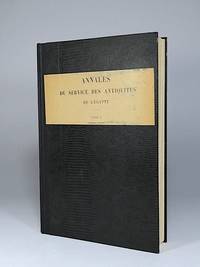
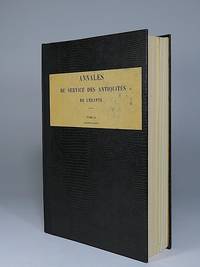
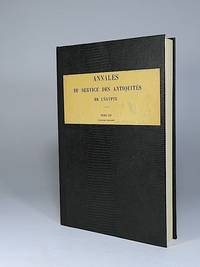
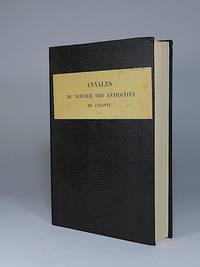
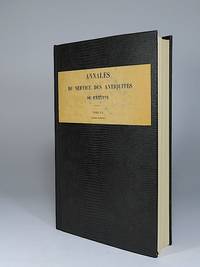
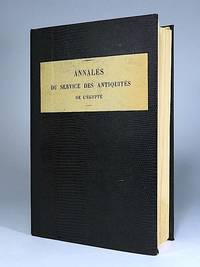
19509999_02754Le Caire Institut Français d'Archéologie Orientale 1950. 1st Edition . Hardcover. . ~ ~ NOTE: THE PRICE OF THIS BOOK IS CURRENTLY REDUCED! ~ ~ . Quarto. Pp. 606. With text figures illustrations plates some in colour and folding plans. HARDCOVER bound in neat cloth and matching pebbled boards lettering-pieces to cover and spine cut from original wrappers. In fine condition. Excellent copy practically unused. ~ FIRST EDITION. For a complete table of contents and a list of contributors consult Wikipedia under series title. _O-7 <br/> <br/> Le Caire, Institut Français d'Archéologie Orientale hardcover
19519999_02755Le Caire Institut Français d'Archéologie Orientale 1951. 1st Edition . Hardcover. . ~ ~ NOTE: THE PRICE OF THIS BOOK IS CURRENTLY REDUCED! ~ ~ . Quarto. Pp. 580. With text figures illustrations many plates and folding plans. HARDCOVER bound in neat cloth and matching pebbled boards lettering-pieces to cover and spine cut from original wrappers. In fine condition. Excellent copy practically unused. ~ FIRST EDITION. For a complete table of contents and a list of contributors consult Wikipedia under series title. _O-7 <br/> <br/> Le Caire, Institut Français d'Archéologie Orientale hardcover
19579999_02758Le Caire Institut Français d'Archéologie Orientale 1957. 1st Edition . Hardcover. . ~ ~ NOTE: THE PRICE OF THIS BOOK IS CURRENTLY REDUCED! ~ ~ . Quarto. Pp. 392. Plus a very large number of plates and plans in several suites many of which are folding. With text figures and illustrations. HARDCOVER bound in neat cloth and matching pebbled boards lettering-pieces to cover and spine cut from original wrappers. In fine condition. Excellent copy. ~ FIRST EDITION. For a complete table of contents and a list of contributors consult Wikipedia under series title. _O-7 <br/> <br/> Le Caire, Institut Français d'Archéologie Orientale hardcover
19589999_02759Le Caire Institut Français d'Archéologie Orientale 1958. 1st Edition . Hardcover. . ~ ~ NOTE: THE PRICE OF THIS BOOK IS CURRENTLY REDUCED! ~ ~ . Quarto. Pp. 358. Plus a large number of plates and folding plans. With text figures and illustrations. HARDCOVER bound in neat cloth and matching pebbled boards lettering-pieces to cover and spine cut from original wrappers. In fine condition. Excellent copy. ~ FIRST EDITION. For a complete table of contents and a list of contributors consult Wikipedia under series title. _O-7 <br/> <br/> Le Caire, Institut Français d'Archéologie Orientale hardcover
19529999_02756Le Caire Institut Français d'Archéologie Orientale 1952. 1st Edition . Hardcover. . ~ ~ NOTE: THE PRICE OF THIS BOOK IS CURRENTLY REDUCED! ~ ~ . Quarto. Pp. 678. With text figures illustrations many plates and folding plans. HARDCOVER bound in neat cloth and matching pebbled boards lettering-pieces to cover and spine cut from original wrappers. In fine condition. Excellent copy. ~ FIRST EDITION. For a complete table of contents and a list of contributors consult Wikipedia under series title. _O-7 <br/> <br/> Le Caire, Institut Français d'Archéologie Orientale hardcover
19409999_02744Le Caire Institut Français d'Archéologie Orientale 1940. 1st Edition . Hardcover. . ~ ~ NOTE: THE PRICE OF THIS BOOK IS CURRENTLY REDUCED! ~ ~ . Thick quarto. Pp. 1023. With text figures and illustrations many plates and large folding plans. HARDCOVER bound in neat cloth and matching pebbled boards lettering-pieces to cover and spine cut from original wrappers. In fine condition. Excellent copy practically unused. ~ FIRST EDITION. For a complete table of contents and a list of contributors consult Wikipedia under series title. _O-6 <br/> <br/> Le Caire, Institut Français d'Archéologie Orientale hardcover
191341439in Arabic: Beirut: The American Printing Press 1913. 8vo 18.5 cm 7.5" 920 295 pp. <br><br>The Van Dyck translation of the Bible into Arabic first appeared in 1865 and remained the standard version used by Arabs for a century. This edition from the American Printing Press is => an all-Arabic production with the only English appearing in it being a small-print line "Bible Third Font 282" on the title-page at "rear".<br>Â Â Â Â Cornelius Van Alen Van Dyck 181895 was born at Kinderhook NY and educated at Jefferson Medical College Philadelphia receiving his M.D. in 1839. The following year the American Board of Commissioners for Foreign Missions sent him to Lebanon as a medical missionary for the Dutch Reformed Church and he remained in the Middle East for the rest of his life with only an occasional trip to the U.S.<br>Â Â Â Â Van Dyck became fluent in Arabic wrote extensively in that language and taught medicine and other subjects: "He was professor of pathology and internal medicine in the medical school of the newly founded Syrian Protestant College which later became the American University of Beirut. He also taught astronomy in its literary section directed its observatory and meteorological station as well as the mission press and edited its weekly journal al-Nashran. He wrote Arabic textbooks on chemistry internal medicine physical diagnosis and astronomy publishing some of them at his own expense" Wikipedia.<br>Â Â Â Â WorldCat records at least three editions of the Arabic Bible from the American Printing Press in 1913 each with a different pagination. Publisher's brown cloth spine stamped in gilt with title in Arabic and with blind stamping to covers and spine; some chipping to cloth around spine and at edges. Printed on very thin paper occasionally showing a short tear or a crease but clean and untattered. A very good copy. The American Printing Press hardcover books
14676Late 19th or early 20th century Koummya Arabic dagger with cast brass scabbard. The scabbard has silver engraved motifs and metal accents. The dagger measures 18" along the curve and has a hand carved wood handle with brass encasement rounding the hilt. The blade is curved sharp and slides securely into the sheath. It shows use but no damage. In good condition. unknown
19551896PARIS. HORIZONS DE FRANCE. 1955. IN-4 SOUS PORTEFEUILLE CARTONNE A LACETS DE L'EDITEUR (20X 29 CENTIMETRES ENVIRON), TITRE IMPRIME EN NOIR, CONTENANT UNE BROCHURE DE TEXTE DE 71 PAGES ET UNE SUITE DE 128 PLANCHES, DONT 4 EN COULEURS. EDITION ORIGINALE. BON EXEMPLAIRE.
23128Probably Persia Circa 18th century. Finely written in Arabic calligraphy in black outlined and highlighted in red and gold. Small Folio 6.5†x 3.75†handsomely presented within a cream mount. A very finely preserved example. Probably Persia unknown
Very Good German In modern claret cloth. Demy 8vo. (21 x 14 cm). In German. [10], 221, [1] p. Die Anthropologie der Araber im zehnten Jahrhundert n. Chr. The anthropology of the Arabs in the 10th century AD. Contents with main titles: Zusammensetzung des Körpers; Die sinnliche Wahrnehmung; Der Mikrokosmos (der Mensch eine kleine Welt); Embryologie, Astrologie; Die Theilseele; Die Grenze des menschlichen Wissens; Leben u. Tod; Schmerz u. Lust; Ton, Laut, Sprache. Friedrich Heinrich Dieterici was a German orientalist and historian. First Edition. Extremely rare.
Very Good Turkish, Ottoman (1500-1928) Original aesthetic leather bdg. with traditional Ottoman style. Large roy. 8vo. (25 x 17 cm). In Ottoman script. [4], 365, [1] p. Muhtasar semâil-i serif tercümesi. Prep. by Mehmed raif El-Hac. Tirmizî, often referred to as Imam at-Termezi/Tirmidhi, was a Persian Islamic scholar and collector of hadith who wrote al-Jami` as-Sahih (known as Jami` at-Tirmidhi), one of the six canonical hadith compilations in Sunni Islam. He also wrote Shama'il Muhammadiyah (popularly known as Shama'il at-Tirmidhi), a compilation of hadiths concerning the person and character of the Islamic prophet, Muhammad. At-Tirmidhi was also well versed in Arabic grammar, favoring the school of Kufa over Basra due to the former's preservation of Arabic poetry as a primary source. Muhammad ibn `Isa at-Tirmidhi was born during the reign of the Abbasid caliph al-Ma'mun. He began the study of hadith at the age of 20. From the year 235 AH (849/850) he traveled widely in Khurasan, Iraq, and the Hijaz in order to collect hadit. At-Tirmidhi was a pupil of al-Bukhari, who was based in Khurasan. Adh-Dhahabi wrote, "His knowledge of hadith came from al-Bukhari."[16] At-Tirmidhi mentioned al-Bukhari's name 114 times in his Jami`. He used al-Bukhari's Kitab at-Tarikh as a source when mentioning discrepancies in the text of a hadith or its transmitters, and praised al-Bukhari as being the most knowledgeable person in Iraq or Khurasan in the science of discrepancies of hadith. When mentioning the rulings of jurists, he followed al-Bukhari's practice of not mentioning the name of Abu Hanifah. Because he never received a reliabe chain of narrators to mention Abu Hanifa's decrees, he would instead attribute them to "some people of Kufa." Al-Bukhari held at-Tirmidhi in high regard as well. He is reported to have told at-Tirmidhi, "I have profited more from you than you have from me," and in his Sahih he narrated two hadith from at-Tirmidhi. At-Tirmidhi also narrated some hadiths from Abu Dawud, and one from Muslim. Muslim also narrated one hadith from at-Tirmidhi in his own Sahih. A.J. Wensinck mentions Ahmad ibn Hanbal as among at-Tirmidhi's teachers. However, Hoosen states that according to the most reliable sources, at-Tirmidhi never went to Baghdad, nor did he attend any lectures of Ahmad ibn Hanbal. Furthermore, at-Tirmidhi never directly narrates from Ahmad ibn Hanbal in his Jami'. Several of at-Tirmidhi's teachers also taught al-Bukhari, Muslim, Abu Dawud, Ibn Majah, and an-Nasa'i. Extremely rare. Second Edition (Probably). (This Edition not in Özege; for other 2 editions see Özege 14271).
20021iiiCf0072London New York Bahrain: Kegan Paul Limited 2002. Book. Very Good. Decorative Hardcover. 1st Published in 2002. 8vo or 8° Medium Octavo: 7¾" x 9¾" tall. 307 ix pp. A great almost spotlessly clean copy! Solidly and tightly bound essentially and nearly flawless copy with minimal internal and external wear and use. Copy with crisp pages clean text and light shelf wear. Smooth covers. Slight wear and rubbing on cover board corners. Relevant newspaper article included from previous owner. No dust jacket. . Kegan Paul Limited Hardcover
- Imprimerie Impériale, Paris 1809-1829, 71x53,5cm, une feuille. - Gravure originale à l'eau-forte in plano, non rognée, extraite de l'édition dite « Impériale » de la Description de l'Égypte ou Recueil des observations et recherches faites en Égypte pendant l'expédition française, publié par les ordres de Sa Majesté l'Empereur Napoléon le Grand. Réalisée entre février 1802 et 1829 sur ordre de Napoléon Bonaparte et publiée à partir de 1809 [en réalité 1810], elle fut tirée à 1000 exemplaires sur Vergé filigrané « Égypte ancienne et moderne » et offerte aux institutions. Légères et marginales rousseurs sans atteinte à la gravure, sinon très bel état de fraîcheur et de conservation. Volume ETAT MODERNE, II : Le génie des savants de l'Institut se révèle particulièrement à travers les planches de la section dite Egypte Moderne. Architecture, industrie, structures sociales, état sanitaire, régime des eaux, musique, artisanat, sont exposés avec une précision et une qualité graphique exceptionnelle. L'esprit de L'Encyclopédie de Diderot et d'Alembert reste sous-jacent dans la démarche des dessinateurs de la Description de L'Egypte, qui accompagnent les volumes de textes de nombreuses planches détaillées, s'employant à dresser un portrait des populations empreint de beauté et de respect. Riches pachas ou simples artisans potiers sont représentés avec sensibilité, vaquant à leurs occupations au milieu de compositions esthétiques, sans pour autant tomber dans l'idéalisme ou la caricature. LA DESCRIPTION DE L'EGYPTE, édition IMPERIALE (1809-1829) : La Description de l'Egypte est un des chefs d'uvre de l'édition française et le point de départ d'une nouvelle science : l'égyptologie. Titanesque exposé de l'Egypte au temps des conquêtes de Bonaparte entre 1798 et 1799, elle est répartie en 23 volumes dont 13 volumes de gravures rassemblant près de 1000 planches en noir et 72 en couleur. Les 6 volumes de planches intitulées Antiquités sont consacrés aux splendeurs de l'Egypte pharaonique. L'Histoire naturelle est répartie en 3 volumes de gravures. Un volume est consacré aux Cartes géographiques et topographiques tandis que les 3 volumes : Etat Moderne dressent un portrait saisissant de l'Egypte copte et islamique telle qu'elle était vue par les armées d'Orient de Bonaparte. La « campagne d'Egypte », désastre militaire, dévoile à travers les gravures de la Description de l'Egypte la réussite scientifique qu'elle est devenue, grâce aux quelques 167 savants membres de la Commission des sciences et des arts de l'Institut d'Egypte qui suivaient l'armée de Napoléon. L'Institut a réuni en Egypte le mathématicien Monge, le chimiste Berthollet, le naturaliste Geoffroy Saint-Hilaire, ainsi que de nombreux artistes, ingénieurs, architectes, médecins... Ils eurent la charge de redécouvrir l'Egypte moderne et antique, d'en montrer les richesses naturelles, et le savoir-faire de ses habitants. L'édition originale, dite « Impériale », de la Description de l'Egypte fut réalisée sur quatre formats de grande taille, deux d'entre eux spécialement créés pour elle et baptisés formats « Moyen-Egypte » et « Grand-Egypte ». On construisit une presse spécifique pour son impression, qui s'étala sur vingt ans, entre 1809 et 1829. L'édition Impériale s'avéra si populaire qu'une deuxième édition en 37 volumes entièrement en noir et sans le filigrane « Egypte ancienne et moderne », dite édition « Panckoucke », fut publiée à partir de 1821 par l'imprimerie C.-L.-F. Panckoucke (Paris). La réalisation de ce monument d'érudition doit beaucoup au baron Dominique Vivant Denon, illustrateur, diplomate, collectionneur et par la suite directeur du musée Napoléon du Louvre qui accompagna Napoléon en Egypte avec de nombreux autres savants mais décida seul de s'aventurer dans le Sud du pays, alors que les autres scientifiques conviés restaient confinés dans la région du Caire. Les fabuleux croquis rapportés par Denon lors de sa romanesque chevauchée donnèrent l'idée à Bon
- Imprimerie Impériale, Paris 1809-1829, 53,5x71cm, une feuille. - Gravure originale à l'eau-forte in plano, non rognée, extraite de l'édition dite « Impériale » de la Description de l'Égypte ou Recueil des observations et recherches faites en Égypte pendant l'expédition française, publié par les ordres de Sa Majesté l'Empereur Napoléon le Grand. Réalisée entre février 1802 et 1829 sur ordre de Napoléon Bonaparte et publiée à partir de 1809 [en réalité 1810], elle fut tirée à 1000 exemplaires sur Vergé filigrané « Égypte ancienne et moderne » et offerte aux institutions. Légères et marginales rousseurs sans atteinte à la gravure, sinon très bel état de fraîcheur et de conservation. Volume ETAT MODERNE, II : Le génie des savants de l'Institut se révèle particulièrement à travers les planches de la section dite Egypte Moderne. Architecture, industrie, structures sociales, état sanitaire, régime des eaux, musique, artisanat, sont exposés avec une précision et une qualité graphique exceptionnelle. L'esprit de L'Encyclopédie de Diderot et d'Alembert reste sous-jacent dans la démarche des dessinateurs de la Description de L'Egypte, qui accompagnent les volumes de textes de nombreuses planches détaillées, s'employant à dresser un portrait des populations empreint de beauté et de respect. Riches pachas ou simples artisans potiers sont représentés avec sensibilité, vaquant à leurs occupations au milieu de compositions esthétiques, sans pour autant tomber dans l'idéalisme ou la caricature. LA DESCRIPTION DE L'EGYPTE, édition IMPERIALE (1809-1829) : La Description de l'Egypte est un des chefs d'uvre de l'édition française et le point de départ d'une nouvelle science : l'égyptologie. Titanesque exposé de l'Egypte au temps des conquêtes de Bonaparte entre 1798 et 1799, elle est répartie en 23 volumes dont 13 volumes de gravures rassemblant près de 1000 planches en noir et 72 en couleur. Les 6 volumes de planches intitulées Antiquités sont consacrés aux splendeurs de l'Egypte pharaonique. L'Histoire naturelle est répartie en 3 volumes de gravures. Un volume est consacré aux Cartes géographiques et topographiques tandis que les 3 volumes : Etat Moderne dressent un portrait saisissant de l'Egypte copte et islamique telle qu'elle était vue par les armées d'Orient de Bonaparte. La « campagne d'Egypte », désastre militaire, dévoile à travers les gravures de la Description de l'Egypte la réussite scientifique qu'elle est devenue, grâce aux quelques 167 savants membres de la Commission des sciences et des arts de l'Institut d'Egypte qui suivaient l'armée de Napoléon. L'Institut a réuni en Egypte le mathématicien Monge, le chimiste Berthollet, le naturaliste Geoffroy Saint-Hilaire, ainsi que de nombreux artistes, ingénieurs, architectes, médecins... Ils eurent la charge de redécouvrir l'Egypte moderne et antique, d'en montrer les richesses naturelles, et le savoir-faire de ses habitants. L'édition originale, dite « Impériale », de la Description de l'Egypte fut réalisée sur quatre formats de grande taille, deux d'entre eux spécialement créés pour elle et baptisés formats « Moyen-Egypte » et « Grand-Egypte ». On construisit une presse spécifique pour son impression, qui s'étala sur vingt ans, entre 1809 et 1829. L'édition Impériale s'avéra si populaire qu'une deuxième édition en 37 volumes entièrement en noir et sans le filigrane « Egypte ancienne et moderne », dite édition « Panckoucke », fut publiée à partir de 1821 par l'imprimerie C.-L.-F. Panckoucke (Paris). La réalisation de ce monument d'érudition doit beaucoup au baron Dominique Vivant Denon, illustrateur, diplomate, collectionneur et par la suite directeur du musée Napoléon du Louvre qui accompagna Napoléon en Egypte avec de nombreux autres savants mais décida seul de s'aventurer dans le Sud du pays, alors que les autres scientifiques conviés restaient confinés dans la région du Caire. Les fabuleux croquis rapportés par Denon lors de sa romanesque chevauchée donnèrent l'idée à Bon