Jacquemond Richard Telmissany MayLivre Rare Book
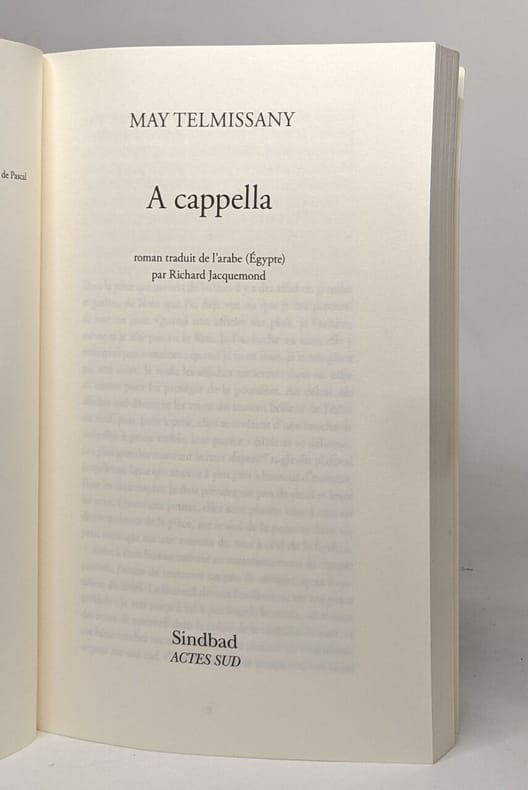
A cappella
2014100118833Actes sud 2014 168 pages 13 4x1 6x21cm. 2014. Broché. 168 pages.
Un Autre Monde · Val Couoesnon, France9,00 €
3 889 résultats
Very Good English Original gold-tones albumen photograph from 'Holy Land pictures', London, 1870. Oblong folio. (30,5 x 38 cm); photographic image size: 15x20 cm. Descriptive text in English. (Shechem (Nablus), between Ebal and Gerizim Shechem (Nablus), between Ebal and Cerizim: This was Abraham's first halting-place, Gen. xii. 6; Here Jacob settled and bought a piece of land, Gen, xxxiii, 19; Here Joshua assembled the people just before his death, Josh, xxiv; And here the ten tribes rebelled against Rehoboam, 1 Kings xii.). Frank Mason Good, born 1839 in Deal, Kent, began his photographic career as an assistant to photographer Francis Frith. Good is known to have been active during the 1860s and 1870s. He lived most of his life at Phoenix Green, Hartley Wintney, (and died there on 28th June 1928) but had studios in London and Brighton. In 1870 he married Margaretta Teape at St Mark, Goodman's Fields. Following Margaretta's death (on 29th December 1904) he married his second wife, Jessie Emily Waghorn, in 1906, at Hartley Wintney. He is best known for his stereographic photographs of the Near East, and it was Frith who sponsored Good's first trip there. Other geographic locations captured by Good include Spain, Greece, and the Isle of Wight. Frank Mason Good is best known for his series of views of the Middle East taken on four separate tours of the area in the 1860s and 1870s. He first traveled to Egypt as an assistant to Francis Frith in late 1857. He joined the Photographic Society in 1864, and in 1880 served as a judge of its annual exhibition. He lived at Hartley Wintney, Winchfield, Hampshire.
Very Good Turkish Original b/w photograph. 9x14 cm. It shows Erkilet and many women and men with a child around him. Probably it's taken during a travel. Erkilet was an officer of the Ottoman Army and the general of the Turkish Army. In the fall 1941 he, along with General Ali Fuad Erden, visited the occupied territories in Ukraine (including Crimea) on invitation of Gerd von Rundstedt. From there he and other Turkish officers flew to Rastenburg to meet Hitler in person. In 1943 he published his essays on that trip under title "What I Saw on the Eastern Front". Being a staunch Turanist, he was briefly detained for Panturkic activities in 1948 together with some other prominent Turanists.
Very Good Turkish Original b/w photograph. 9x14 cm. It shows Erkilet and two other men and a woman sitting around a table. Erkilet was an officer of the Ottoman Army and the general of the Turkish Army. In the fall 1941 he, along with General Ali Fuad Erden, visited the occupied territories in Ukraine (including Crimea) on invitation of Gerd von Rundstedt. From there he and other Turkish officers flew to Rastenburg to meet Hitler in person. In 1943 he published his essays on that trip under title "What I Saw on the Eastern Front". Being a staunch Turanist, he was briefly detained for Panturkic activities in 1948 together with some other prominent Turanists.
Very Good Turkish, Ottoman (1500-1928) Original cloth bdg. with extra new full leather wrapper in the Ottoman style. Faded on cloth. Some slight stains on several pages. Avery good copy. Roy. 8vo. (24 x 17 cm). In Ottoman script. 11, 18, 228, 4 [...] p., 48 numerous b/w full paged plates. Ihsan Abidin, who completed the "Askerî BaytarMektebi" [I.e. Military Veterinary School] in 1904, was brought to the health and zootechnical professor of this school upon the merger of the Istanbul Military and Civilian Baytar Schools under the name of "Baytar Mekteb-i Alisi". He served as the Undersecretary of the Ministry of Agriculture (1927-1931) and had important services in the field of zootechnics. Ihsan Abidin Bey played an important role in the establishment of Higher Agricultural Institutes, studlands and warehouses. He has signed many articles and more than fifteen books published domestically and in Europe. His the most important book is 'Osmanli atlari' [i.e. The Ottoman horse and horse breeding] including 48 numerous plates and text in 279 pages. In his book, Akinci gives examples from Europe and Africa; He extends to the remotest corners of Asia and talks about the care, feeding, characteristics of horse breeds and emphasizes the importance of horse breeding. Only two copies located in OCLC 984405354.; Not in the Arabian horse bibliography of Boyd & Paul.; TBTK 2831.; Özege 15856.; Not in Kazancigil & Solok (Veterinary bibl.). First and Only Edition.
Very Good Turkish, Ottoman (1500-1928) Original map. Oblong atlas folio. (57 x 77 cm). In Ottoman script. Folded. Stains on the upper side. Slightly chipped margins. Filistin haritasi. Scale: 1/250.000. Erkilet was an officer of the Ottoman Army and the general of the Turkish Army. In fall 1941 he, along with General Ali Fuad Erden, visited the occupied territories in Ukraine (including Crimea) on the invitation of Gerd von Rundstedt. From there he and other Turkish officers flew to Rastenburg to meet Hitler in person. In 1943 he published his essays on that trip under the title "What I Saw on the Eastern Front". Being a staunch Turanist, he was briefly detained for Panturkic activities in 1948 together with some other prominent Turanists.
Very Good Turkish, Ottoman (1500-1928) Original color map. 21x19,5 cm. In Ottoman script. No scale, no mapmaker info. Slightly dumped on right margin. Little wear on peninsula view. Otherwise a good copy. Folded. [Ottoman map of Aden Bay and Port].
Very Good Turkish, Ottoman (1500-1928) In contemporary cloth bdg. Roy. 8vo. (24 x 17 cm). In Ottoman script. 43, 59 p. Divan literature is described as "a certain tradition literature with its rules and boundaries" in the most general form. These rules and boundaries have enabled the formation of common expressions in religion and in Sufi intellection in particular and in poetry by the influence of Persian literature, and they have made it traditional in time. In this context, in classical Turkish poetry, whose male poets are predominant in quality and quantity, patriarchal rhetoric presents an outlook that its frame has been established by common tropes, metaphors, poetic themes and in short by similar imaginations and ideas. The divans of Lady Mihri (died after 1512), Lady Leyla (died in 1848) and Lady Seref (1809-1861) have different aesthetic understandings in that context. Laylâ Hanim was one of the few Turkish women poets who made a collection of her poems. Lived in Istanbul and died in 1848. Her family was close to the Ottoman Sultanate and Leylâ Hanim, witnessed the reign of Mahmud II (1808-1839) and Abdülmecid I (1839-1861). She is the daughter of Moralizâde Hâmid Efendi. Her mother Hadîce Hanim is the sister of Keçecizâde Izzet Molla, a notable bureucrat and poet of the times. She has three brothers, Atâullah Mehmed Efendi, Nurullah Mehmed Efendi and Hâlid Efendi, who died at a young age. She had financial problems after her father's death and she expressed those in her poems. Some of her poems in the divan mention that her father and brother Hâlid Efendi have lived in Bursa for a while. She is educated by Keçecizâde Izzet Molla, she is quick-witted. She experienced a short marriage, which lasted about a week; after the divorce she devoted herself to poetry. Her grave is in Galata Mevlevîhanesi. Following books include information of her life, characteristics and poetry: Fatin Tezkiresi (363), Ahmet Rif'at's Lugat-i Târîhiyye ve Cogrâfiyye (154), Tuhfe-i Nâ'ilî (895), Sicill-i Osmânî (93), Bursali Mehmet Tahir's Osmanli Müellifleri (406), Haci Begzâde Ahmet Muhtar's Sâir Hanimlarimiz (51-2), Mehmed Zihnî Efendi's Mesâhir'ün-Nisâ (195), and Semseddin Sâmî's Kâmusü'l-A'lâm (4060). These resources indicate that Leylâ Hanim is from a noble family and the links of the family to the high cadres of Ottoman bureaucracy and their intellectual property have left traces in her poetry. AH 1299 = AD 1882. Fourth Edition. (Source: All poetry). OCLC 163633996.; Özege 4177 / 2. First Bulaq Edition. Litho. Rare.
Very Good Turkish, Ottoman (1500-1928) Original cloth bdg. with marbled boards and brown cloth spine. Fading on spine and foxing on boards and pages. Overall a good copy. Roy. 8vo. (24 x 17 cm). In Ottoman script (Old Turkish with Arabic letters). 118 p. Lithographed. Early edition of this rare poem collection by Leyla Hanim (?-1847), who was a few female poets in the Ottoman literature, known for her lyrical love poems. Divan literature is described as "a certain tradition literature with its rules and boundaries" in the most general form. These rules and boundaries have enabled the formation of common expressions in religion and in Sufi intellection in particular and in poetry by the influence of Persian literature, and they have made it traditional in time. In this context, in classical Turkish poetry, whose male poets are predominant in quality and quantity, patriarchal rhetoric presents an outlook that its frame has been established by common tropes, metaphors, poetic themes, and in short by similar imaginations and ideas. The divans of Lady Mihri (died after 1512), Lady Leyla (died in 1848), and Lady Seref (1809-1861) have different aesthetic understandings in that context. Leylâ Hanim was one of the few Turkish female poets who made a collection of her poems. Lived in Istanbul and died in 1848. Her family was close to the Ottoman Sultanate and Leylâ Hanim, witnessing the reign of Sultan Mahmud II (1808-1839) and Sultan Abdülmecid I (1839-1861). She is the daughter of Moralizâde Hâmid Efendi. Her mother Hadîce Hanim is the sister of Keçecizâde Izzet Molla, a notable bureaucrat, and poet of the times. She has three brothers, Atâullah Mehmed Efendi, Nurullah Mehmed Efendi and Hâlid Efendi, who died at a young age. She had financial problems after her father's death and she expressed those in her poems. Some of her poems in the divan mention that her father and brother Hâlid Efendi have lived in Bursa for a while. She is educated by Keçecizâde Izzet Molla, she is quick-witted. She experienced a short marriage, which lasted about a week; after the divorce, she devoted herself to poetry. Her grave is in Galata Mevlevîhanesi. Several books include information of her life, characteristics, and poetry such as Fatin Tezkiresi (363), Ahmet Rif'at's Lugat-i Târîhiyye ve Cogrâfiyye (154), Tuhfe-i Nâ'ilî (895), Sicill-i Osmânî (93), Bursali Mehmet Tahir's Osmanli Müellifleri (406), et alli. These resources indicate that Leylâ Hanim is from a noble family and the links of the family to the high cadres of Ottoman bureaucracy and their intellectual property have left traces in her poetry. AH 1299 = AD 1882. (Source: All poetry). OCLC 949496080.; Özege 4177 / 4. First two editions were printed in Cairo.
Very Good Turkish, Ottoman (1500-1928) Original b/w photo. 9 x 14 cm. Printed size: 9 x 11 cm. Ottoman manuscript on verso: "10 Temmuzda resm-i geçide dahil olan ve Trablusgarb civârindan gelen üçyüz müselleh Arab süvarilerinin mürûru. Yüksek ebniyye Tunus Basi'nda kâsânesi. Iyd-i Milli serefine dört kösesine, bir de ortasina asilmis büyük bayrak...". An extremely rare historically significant sepia photograph showing 300 armed Arab cavalries arriving from the vicinity of Tripoli, entering the parade on 10 July [1911, or 1912]. The Ottoman flag above the town hall [municipality building]. Signed "Ali Riza".
Very Good Arabic Original sheet music. Folio. (32 x 25 cm). In Arabic and French. 4, [1] p. Illustrated cover. Stamp on cover by 'Hanna George'. Second page has personal stamp of Messih (Publisher). [SHEET MUSIC] Mohamad Labis Seifou pour piano par Mathilde Abdel Messih.= Mohammad Labis Saife bagmat al-hejaz mousiki waz' Matilde Abdalmesih. No. 35. Printed in Egypt.
Very Good Arabic Original sheet music. Folio. (32,5 x 25 cm). In Arabic and French. 4, [1] p. Illustrated cover. [SHEET MUSIC] Ya taleh el-Saad Ifrahli Musique pour piano et instruments Arabes.
Very Good French Original business card. 6x9,5 cm. In Arabic and French. On card, engraved b/w portrait photo of Sultan, his tughra (dated 1331 Hegira), and the sign of Lahej sultanate. Lahej was a Sheikdom based in Lahej in Southern Arabia. The Sultanate became self-ruled in 1728 and gained independence in 1740. In 1839, the Sultanate became the Protectorate of Aden of the British Empire, though nominally the 'Abdali Sultan retained his status. The the Protectorate of Aden was briefly ruled again by the Ottomans during World War I, but regained by the British and absorbed into Federation of South Arabia in 1963. The 'Abdali dynasty was officialy abolished in 1967, through the proclamation by South Yemen. Hegira: 1331 = Gregorian: 1915.
Very Good French Original business card. Slightly stained. 5x8,5 cm. In Arabic and French. On card, engraved his tughra (dated 1331 Hegira), and the sign of Lahej sultanate. No photo. Lahej was a Sheikdom based in Lahej in Southern Arabia. The Sultanate became self-ruled in 1728 and gained independence in 1740. In 1839, the Sultanate became the Protectorate of Aden of the British Empire, though nominally the 'Abdali Sultan retained his status. The the Protectorate of Aden was briefly ruled again by the Ottomans during World War I, but regained by the British and absorbed into Federation of South Arabia in 1963. The 'Abdali dynasty was officialy abolished in 1967, through the proclamation by South Yemen. Hegira: 1331 = Gregorian: 1915.
Very Good Arabic Original brown half leather bindings in Egyptian style, raised six bands to spine, title gilt on the second, volume nos on fourth, and alphabetical with the historical content of the volumes on sixth compartments and "Mahmoud Al-Tawawî" name. Minor foxing on some pages. Overall a very good set. Roy. 8vo. (24 x 17 cm). In Arabic. 14 books are complete set in 7 volumes. Extremely rare first printed edition of the most comprehensive and complete corpus on Baghdad city, which includes Al-Baghdadi's first-hand account of the collection of hadiths, biographies, and his travels in the 11th century Baghdad in traditional "al-râwî" style. Al-Baghdadi is known as a Muslim traveler in the pursuit of knowledge who compiled hadiths and traveled to many Islamic cities. He was born on the 24th ?jumada II, 392 (1002) at Darzidjan, a large village on the west bank of the Tigris below Baghdad. The son of a khatib [i.e. preacher], he began his studies very early and spent his youth traveling in search of ?adith. In this way, he visited Basra, Nishapur, I?fahân, Hamadân, and Damascus. Finally settling in Baghdâd, he held the office of a kha?îb and this was the origin of the name al-Khatîb al-Bag_dadi. After completing his education, he spent more than twenty years of his time writing "Tarikh Baghdad". He finished his corpus in 444 AH [1052-53]. He was a fellow student of Rîsürrüesâ Ibn al-Muslima who was the vizier of the Abbasid caliph Kâim-Biemrillâh. The vizier took Khatib, whom he appreciated in the science of hadith, under his patronage. The Abbasid caliph, therefore, ordered Khatib to be given permission to take hadith lessons from him. Khatib started to narrate hadiths from "Tarikh Baghdad" to his students here in his house near the Nizâmiya Madrasa, on the other hand, he started to read the books for which he had permission to narrate from many teachers, also write the books he planned. Several years after, the Turkish commander Besasiri (?-1060), who was a supporter of the Fatimid Caliph Mustansir-Billâh, entered Baghdad with the encouragement of the Fatimid caliph, deposed the caliph, and killed Ibn al-Muslima. Some members of the Hanbali sect, who had a grudge against Khatib because of what they wrote against some Hanbalis in Tarikh Baghdad, started to disturb him by taking the opportunity to kill the vizier. Therefore, he had to flee to Damascus. In his masterpiece, Khatibi, in addition to his account and descriptions of the city during his time in Baghdad, 7831 figures of people in total who lived or came in Baghdad before 450 (1058), statesmen such as caliphs, viziers, commanders, poets, judges, and other professions. This is an alphabetical work giving information about biographies of these figures, but it starts with the name "Muhammad" referring to the Muslim prophet. The first volume is about the establishment of Baghdad in the pre-Islamic period, its conquest by the Muslims, and its history. This masterpiece of him, published in fourteen volumes, is the most comprehensive corpus written on Baghdad in the Islamic world including the city's topography, history, et alli. Brockelmann, GAL, I, 401; Suppl., I, 563.; H. Gibb, "Islamic Biographical Literature".; F. Rosenthal, A History of Muslim Historiography, Leiden 1968, p. 14, 43. Only one set in OCLC in BnF (Bibliothèque nationale de France): 1198963531.
Very Good Arabic Original wrappers in dark green cloth spine. Demy 8vo. (21 x 14 cm). In Arabic 40 p. First and Only Edition in book form of this work on synonyms in the Arabic language, printed for the Arabic universities as an early textbook in Bulaq Printing House. The Bulaq or El-Amiriya Press is the first official and governmental printing press to be established in Egypt, and function according to industrial printing basis, causing not just a qualitative but also a quantitative and knowledgeable leap in science throughout the Arab region. The Bulaq Press was part of Mohamed Aly's inclusive development plans for the modernization of Egypt. The Khedive, first initiated his plans by establishing a strong Egyptian army; one that is capable of strengthening his grip on the country. It thus became essential that this army be provided with the necessary instructive and educational books and material, by which to learn military plans and techniques, as well as the different types of artillery and laws that define a soldier's duties and rights. A pressing need eventually developed for establishing a governmental press; one that should provide such material. By 1815 CE., Mohamed Aly initiated the process of bringing the art of printing to Egypt by sending the first official delegation, headed by Nicole El Masabki, to Milan in Italy, to learn the principles of printing. The same delegation was later able to return and establish the first official press in Egypt. Only three copies located in OCLC: 978241754.
Very Good Turkish Original color map. 52x65 cm. In Turkish. Scale: 1: 800,000. Showing shores from Latakia to Haifa; Lebanon , Beyrouth, North Palestine, Syria, Saudi Arabia and borders, Orontes river, deserts. [TURKISH MAP of BEYROUTH, DAMASCUS, JORDAN] Sam, Beyrouth, Lebanon, Jordan.
Fine Turkish Original pictorial wrappers. Oblong large 8vo. (13 x 25 cm). In Turkish. [22] p., many b/w plates. Not recorded in any platform and library, extremely rare propaganda pamphlet prepared for 60's Turkey by the UAR, The United Arab Republic. On the frontispiece, the leader of the UAR, Egyptian President Gamal Abdel Nasser's iconic words with his portrait by Moheeb. The pamphlet includes the UAR's vision usually and its social and economic policies, projects, Suez Canal, Al-Wady al-Gadid, industry, navigation, mining, oil and its industry, agriculture and agricultural reforms, livestock, culture and education, medicine, water, tourism, etc. Extremely rare.
New Turkish Paperback. Roy. 8vo. (24 x 17 cm). In Turkish. 343 p. [Umayyads, (661-750)] Emevîler, 661-750. Umayyads, founded in Damascus by Mu'awiya b. Abu Sufyan and lived for 90 years, was the first dynastical state in the Islamic History. The Umayyad period is well-known with the transition of the office of caliphate into a dynasty as well as with fight against opposing groups and conquests gained outside. In this period, in which Istanbul was sieged for several times, the boundaries of the state have stretched from Turkestan to inner France and from Anatolia to India thanks to the conquests gained in east and west, thus spreading Islam rapidly in this vast land. The Umayyad period, in which studies in the field of Islamic sciences increased, and consequently led to increased number in the production of the books, witnessed the emergence of the first political and sectarian movements as well. The foundations of Islamic art was also laid in this period.
Very Good Arabic Early edition of a study on Saad Zaghloul and Adly ibn Khalil Yakan hostility in Egyptian Wafd Party. Zaghloul, (1857-1927), was an Egyptian statesman and patriot, leader of the Wafd Party, and of the nationalist movement of 1918-19, which led Britain to give Egypt nominal independence in 1922. He was briefly prime minister in 1924. Adly Yakan Pasha was an Egyptian political figure. He served as the 14th Prime Minister of Egypt between 1921 and 1922, again between 1926 and 1927, and finally in 1929. This book describes in all detail the veto of Adly Pasha on the Milner Report and the conflict between him and Zaghloul. Half leather bdg. made by "Abd al-Zahir" bindery of Egypt. Six raised bands to spine with Arabic letter gilt. Cloth boards. Demy 8vo. (21 x 15 cm). In Arabic. 200 p., portaits and b/w ills. Offset lithography. First and Only Edition. Scarce. OCLC 741068965, 23485359, 236001837, 4770913140 (Arab Union Catalog). Not translated into any Western languages.
Paperback pastel yellow quarto. 176 pages ; 25 cm In Arabic || Ethics; Islamic law. Islamic ethics. Muslims -- Conduct of life.
2014100118833Actes sud 2014 168 pages 13 4x1 6x21cm. 2014. Broché. 168 pages.
First edition, 4to, 15,[1]pp., purchase note in Sir Thomas' hand "Sotheby 66", orig. blue paper wrappers bound in, uncut, middle hill boards, spine chipped. A catalogue of 127 manuscripts rich in Arabic and Persian works, purchased by Guise between 1788 and 1795, at great personal expense, while he was Head Surgeon to the General Hospital. "His rarest manuscripts (according to his catalogue published in 1800) were purchased from the widow of Dastur Darab who between 1758 and 1760 had taught Avestan to Anquetil du Perron, the first translator of the Avesta into a European language."?British Library. ESTC locates copies at the British Library, National Library of Scotland, Gottingen (Germany) & New York Public Library.
Fine English Paperback. Foolscap 8vo. (18 x 12 cm). In English. 75, [5] p., b/w ills. A chronology of the Mosul question, 1918-1926.
61115Bruxelles, Editions Labor, 2002. 16 x 24, 181 pp., broché, très bon état.
9441Paris, Albin Michel, 1974 15 x 23, 350 pp., broché, bon état