880 résultats
198366181Luis Gonzalez-Robles and Jose M. Losada. As New. 1983. Paperback. FREE UPGRADE to Courier/Priority Shipping Upon Request IN STOCK AND IMMEDIATELY AVAILABLE FOR SHIPMENT - AS NEW THE TEXT BLOCK IS PRISTINE CLEAN UNMARKED AND IN EXCELLENT CONDITION - - Text in English. 72 pp. With 98 ills. 16 col. . 29 x 23 cm. -- with a bonus offer-- . Luis Gonzalez-Robles and Jose M. Losada paperback
1820ZB394212American Association of Teachers of Spanish and Portuguese 1918-2000. volumes 1-83; lacks 9-12. 1918-2000. partly bound library markings textually clean & tight price is for the set. - If you are reading this this item is actually physically in our stock and ready for shipment once ordered. We are not bookjackers. Buyer is responsible for any additional duties taxes or fees required by recipient's country. Photos available upon request. American Association of Teachers of Spanish and Portuguese unknown
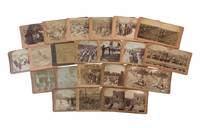
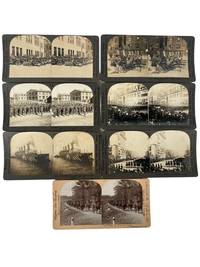
1918205021918. Buffalo Soldier regiments depicted in stereoview photographs from the World War I era document African American cavalrymen and infantry units serving in segregated formations of the United States Army during the early twentieth century. These images record soldiers from several historically significant Black military units including the 9th U.S. Cavalry the 10th Cavalry and the 369th Infantry Regiment. African American soldiers served in large numbers during World War I despite segregation in the armed forces and the war marked a turning point in public recognition of Black military service. The photographs capture cavalry movement machine gun training and celebratory returns from the European front preserving visual evidence of the military presence and public visibility of Buffalo Soldiers during the conflict.<br /> <br /> Archive consists of seven stereoview photographs published by the Keystone View Company during the World War I period. The views depict soldiers from the 9th U.S. Cavalry the 8th Regiment of Colored Troops the 10th Cavalry the Chicago Regiment of Colored Troops and the 15th Regiment of the 369th Infantry. Two stereoviews show Black machine gun companies operating Lewis guns one of the principal light machine guns used on the Western Front during the war. Another view shows Troop K of the 10th Cavalry moving on horseback at Camp Chickamauga in Georgia. Additional stereoviews depict African American soldiers returning from European service and marching in public celebrations including scenes of troops parading along major boulevards such as Fifth Avenue in New York.<br /> <br /> The Buffalo Soldier regiments had already established a long military record before the First World War. Units such as the 10th Cavalry formed part of the segregated Regular Army created after the Civil War and served in campaigns across the western United States during the Indian Wars later participating in the Spanish American War the Philippine American War and operations during the Mexican Revolution. World War I marked one of the final periods in which cavalry units remained visible in American military organization as mechanized armor and motorized vehicles soon replaced mounted troops. At the same time Black soldiers who returned from service were celebrated in wartime parades yet continued to face segregation and racial discrimination within American society. Stereoview cards remain well preserved with light age wear typical of early twentieth century photographic prints. Very good condition overall and a visually compelling record of Buffalo Soldiers during the World War I era. unknown
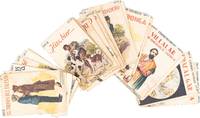
1920RF1178<p><b>History and Stories for Children and Teenagers by One of the Most Important Spanish Publishers of All Times</b></p><p>12vo; 4 series 20 issues each: <i>"Cuentos" "Vida de hombres celebres" "Cuentos" "Episodios historicos"</i>; original illustrated wrappers; fine condition.</p><p>Ramón Sopena 1867-1932 was a Spanish editor who founded the publishing house that bears his name in 1894 in Barcelona. He was a multifaceted editor that published essentially dictionaries and encyclopedias but also journals. For some time he also edited erotic works and then opted for popular literature.</p><p>In the children's genre he published small works in series such as the ones we offer here: the CHILDREN COLLECTION or the LIBRARY FOR CHILDREN. The printing house had a long life since it closed only in 2004.</p><p>The purpose of the CHILDREN'S COLLECTION "<i>Episodios historicos</i>" "<i>Historical episodes</i>" was to make relevant topics of Spain's history available to children. "<i>Vida de hombres celebres</i>" "<i>Life of famous men</i>" are brief biographies of characters from Spanish and universal history. Finally the two series of "<i>Cuentos</i>" "<i>Tales</i>" are small stories without specifying their authors.</p><p># WorldCat: no copies of this series in US Libraries. <b><br /></b></p>
1639ABC_50152Madrid 1639. Folio c. 29 x 20.1 cm. Diego Diaz Unbound housed in a plastic folder. 2 ll. Rare 17th-century Spanish pamphlet documenting the maritime activities of the Royal Armada of Dunkirk and privateers along the coasts of France England and other territories from 1 May to 31 December 1638. This detailed account lists 118 captured vessels including warships frigates and small craft many laden with highly valuable cargoes such as silk spices wine sugar salt precious metals and pearls.Printed in Madrid it served both as a record of naval prizes and a public announcement of military success during the turbulent years of the Eighty Years War 1568-1648 and concurrent Franco-Spanish conflicts. Dunkirk then a major Spanish port in the Low Countries was a base for state-authorised privateers corsarios whose daring raids on enemy shipping are vividly detailed here including the disposition of artillery captured crews and the fate of vessels either incorporated into the Spanish fleet or destroyed.The present work emphasizes the skill and bravery of the Dunkirkers noting that despite repeated attempts by Dutch fleets to block them only one Spanish warship was lost over thirty months of operations while over 800 enemy ships were captured. It is an exceptional example of early modern naval reporting illustrating not only the logistics and spoils of naval warfare but also the political and economic role of privateering in Spanish maritime strategy.The leaves are slightly browned and foxed the gutter of the second leaf has been reinforced with a manuscript page number "124" and "125" at the recto of the first leaf and the verso of the last leaf. Otherwise in good condition.l Catálogo y Biblioteca Digital de Relaciones de Sucesos CBDRS 0001964; WorldCat 1025513992 224450878 7 copies. unknown
1898231301898. Spanish-American War stereoview archive circa 1898-1899 documenting how the war was pictured through mass-produced photographic views that followed U.S. mobilization battlefield action occupation and military life across both Cuba and the Philippines. These stereoviews preserves the visual system by which the war was circulated to American audiences showcasing camp organization troop movement burial hospital care naval power and overseas deployment. Particularly notable is the archive's coverage of the Rough Riders the Santiago campaign in Cuba and U.S. presence in Manila and Malate showing how stereoview photography helped normalize the war's expansion from anti-Spanish conflict into a broader American imperial presence.<br /> <br /> Archive of 21 stereoviews Various publishers. Spanish-American War stereoview archive. Cuba the Philippines and the United States circa 1898-1899. each measuring 3" x 7". The views are drawn from multiple phases and theaters of the war including camp and drill scenes in the United States embarkation and troop arrivals at Tampa battlefield and occupation imagery from Cuba and extensive and some grisly scenes from Manila and surrounding areas in the Philippines. Captions and images show soldiers in formation cavalry drill military reviews naval artillery hospital interiors encampments burial grounds and troops in active position. Cuban views include Morro Castle after bombardment dead and wounded on the battlefield of Santiago U.S. soldiers preparing to invade Cuba and troops dining near Cabañas Fortress. Philippine views include a departure for Manila American pickets routing a Filipino reconnoitering party the 18th Infantry engaged by Filipino outposts volunteers awaiting orders under the tropical sun Army Hospital Manila and "Our Boys in Camp at Malate P.I." One stereoview identifies Roosevelt's Rough Riders in the mobilization phase linking the archive to one of the war's most publicly mythologized units.<br /> <br /> As a group the stereoviews demonstrate the process by which the Spanish-American War was framed not simply as a short military victory over Spain but as a sustained structure of U.S. troop deployment and occupation extending from Cuba into the Philippines. The Manila and Malate scenes are especially important in this regard since they place American soldiers within the opening phase of the Philippine conflict where U.S. military presence quickly moved beyond liberation rhetoric into imperial control. The archive's mixture of battlefield casualties camp routine naval spectacle and celebratory review scenes shows how stereoscopic publishing converted war into a domestic viewing experience while reinforcing the legitimacy of American expansion abroad. Wear to mounts some toning; overall very good condition. A strong cross-theater visual archive of the Spanish-American War and the emergence of U.S. imperial power in Cuba and the Philippines. unknown
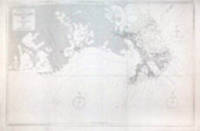
188015998Madrid: Published by the Spanish Admiralty 1880. Engraving. Printed on wove paper. In excellent condition. Image size: 24 x 37 1/4 inches. A wonderful sea chart of the Mississippi Delta produced by the Spanish Admiralty at the close of the nineteenth century.<br/> <br/> This is an impressive sea chart of the Mississippi Delta produced by the Spanish Admiralty in 1880. The coast line is clearly mapped out with little detailing except for the soundings around the Delta. There are two compasses and a number of lighthouses identified along the shoreline. The chart uses the surveys conducted by the U. S. Coast Survey which were carried out between 1853 and 1877. It is a wonderful chart of this important area and superb collector's piece for anyone interested in early maps of the Americas. Published by the Spanish Admiralty unknown
RGW19242AEtching and aquatint from L'Art on laid paper small tear professionally repaired This is one of the additional plates for 'The Proverbios' series. This edition impression was published in 1877 in volume 2 of L'Art with the title Que Guerrero Quel Guerrier. The man running in mock terror from the scarecrow figures slaps his backside to entertain the crowd. unknown
keith-richards-in-exile-v<p>Harman B/W Digital Fibre. Limitation of only 20<br>First ever printing. Hand numbered.<br>Spanish Tony Media estate stamp to verso.<br>Spanish Tony Sanchez facsimile signature to bottom right recto.<br>Taken early 1970s printed 2024.</p><p><span>All prices are unframed. If you would like your print to be framed do get in touch.</span></p> unknown
mick-jagger-and-keith-ric<p>Harman B/W Digital Fibre. Limitation of only 20<br>First ever printing. Hand numbered.<br>Spanish Tony Media estate stamp to verso.<br>Spanish Tony Sanchez facsimile signature to bottom right recto.<br>Taken 1972 printed 2024.<br></p><p><span>All prices are unframed. If you would like your print to be framed do get in touch.</span></p> unknown
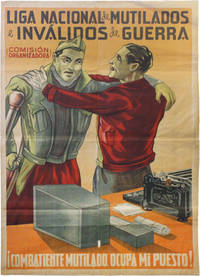
193852890Madrid: Gráficas Reunidas U.H.P. 1938. Original illustrated poser offset printed in colors on beige stock measuring 68.5cm x 100cm 27" x 39.25". Light wear and toning to extremities a few old folds smoothed-out with several tiny nicks and small edge tears a few tiny splits at intersection of folds and a small loss toward lower margin just above the lettering; an unrestored Very Good example unbacked. <br /> <br /> The first in a series of four propaganda posters produced by Gráficas Reunidas for the Liga Nacional de Mutilados e Inválidos de Guerra LNMIG the National League of War Wounded and Invalids founded in Madrid in 1937. "The creation of this association was the first tangible outcome of the organizational efforts made by wounded Republican veterans. According to their provisional programme their key concern was to remain 'useful' útiles to the war effort and provide 'unconditional help to the government'. It was stated that the association should 'educate and re-educate the disabled veterans in physical and cultural terms. As a consequence of the efforts made by the LNMIG on behalf of disabled veterans the government gave preference to the war wounded to fill vacant menial jobs such as janitors messengers and the like" cf.Matthews James. Spain at War: Society Culture and Mobilization 1936-44. The poster created by an anonymous artist depicts a wounded soldier supporting himself with a crutch being embraced by a typist above text reading "Wounded soldier take my place!" translation mine. OCLC notes a single holding at the Biblioteca Universitat de Barcelona. CARULLA 1.268. Gráficas Reunidas U.H.P. unknown
1703139168London: Printed and sold by John Nutt 1703. Planting colonies in the Spanish Americas First edition preceding the second edition of that year with an added postscript. Published in the third year of the War of the Spanish Succession 1701-1714 the anonymous author proposes that in return for the support of Britain and the Netherlands for the claim of the Emperor of Austria to the Spanish crown Spain's territories in America should be ceded to the two mercantile powers. They propose a confederation which will share the treasure from the Spanish mines keeping it out of the hands of a single monarch and in so doing preserve the balance of power in Europe. They moreover support extending the war to the Spanish West-Indies at that stage untouched by the conflict and offer proposals to plant colonies there. They respond to critics who would argue that such attempts at joint control of the American mines and territories would engender war between Britain and the Netherlands as trade brings peace and also reject the arguments that American wealth flowing into the mercantile nations would weaken the nation as was believed to be the case in Spain. The polemic nonetheless offers a stark realpolitik view of world politics and of the war treating as irrelevant the moral questions of stripping the territories of their nominal ally Habsburg Spain rather than the official war aims of taking French territories and stemming the growth of Bourbon power. A scarce treatise with ESTC locating six copies for this issue and a further two copies of the second edition Library Hub and Worldcat adding several more yet still absent from many prominent institutional collections and untraced in auction records. Small quarto 205 x 162 mm. Disbound pamphlet with remnants of original spine the pages numbered in an 18th-century hand 589-654 from its original place in the sammelband vol. Lightly browned and foxed top two cords mostly gone but bottom two holding light worming at foot not affecting text tiny hole affecting one letter to pp. 25/26. A very good copy without chipping or repairs. Alden 703153; European Americana 703/53; ESTC T193661; Kress S2261. Not in Sabin. unknown
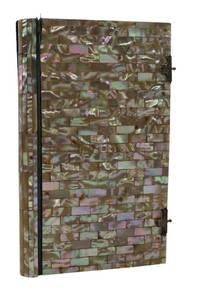
1895AQ31138París: Librería A. Aimond 1895. 4 180pp. Contemporary tessellated mother-of-pearl two metal clasps incorporating a cruciform design. Housed in custom dark green cloth clamshell case. Green cloth joints starting. Leaves lightly browned modern book-label of Robin de Beaumont to verso of FFEP. A late nineteenth-century Parisian edition of the Catholic Liturgy of Hours in Spanish housed in an exceedingly elaborate and frustratingly unsigned contemporary nacre binding. . 12mo. Librería A. Aimond hardcover
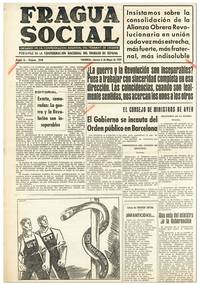
193726237Valencia: CNT 1937. 49 tabloid issues ca.48cm with publication seqence as follows: Año II Nos. 219 224-225 227-228 233-234 241-243 245 327-329 331-332 334-340 342 347-349 351-352 356 358-363 365-378. Printed offset on newsprint ca.8pp per issue; illus. Issues show light overall wear and toning creases and small tears with underlining and marginalia in red and blue colored-pencil to most issues; overall Very Good. Substantial run of this Spanish Civil War newspaper the official organ of the anarcho-syndicalist group Confederación Nacional del Trabajo. Published in Valencia between 1936-1939 the paper provided daily coverage of the Republican struggle with articles by Jesus Muro Felix Paredes Enrique Lopez Alarcon Gaston Leval and Juan Lopez et al. Illustrated with political cartoons and caricatures throughout. Large runs extremely uncommon in the trade; OCLC shows just 5 American institutions holding any issues. [CNT] unknown
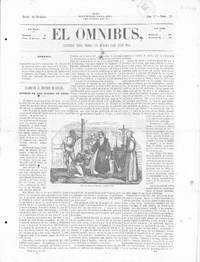
1855RF 1508<p><strong>El Omnibus. Lecturas para todos - Se publica los lunes.</strong> Madrid: Establecimiento Tipográfico de Mellado 1855-1857.</p><p>ALL PUBLISHED. Año 1 n.1 dic.1855 - año 2 n.95 30 jul. 1857; folio; each issue: 4 pp illustrated with fine wood engraved plates contemporary calf.</p><p>First edition complete run of 95 issues of this weekly periodical from Madrid published for two years. Each issue included at least one illustration alongside the topics included in the issue including travelogs world History and History of Spain. Several texts penned by Alexandre Dumas and other important writers were published in this Spanish periodical for the first time before appearing in book form. Of great interest.</p><p> Hartzenbusch Eugenio. Apuntes para un catálogo de periódicos madrileños desde el año 1661 a 1870.</p><p># WorldCat: No copies in US Libraries RF 1508 LL 1207</p> Establecimiento Tipográfico de Mellado
181956069København 1819. Folio. 44 x 27 cm. Original blue wrappers with some dampstains and rear somewhat soiled. With the engraved oval title on upper wrapper. In a later hcloth portfolio. With 19 all engraved maps charts plans coastal profiles of which 7 are double-page. Maps numbered in letters A-K profiles numbered I-IX.The maps depicting the main harbours with townplans and anchorages. Maps with a few small marginal closed tears. <br/><br/><em>Extremely scarce Danish edition a compilation from Vicente Tofino's "Atlas Maritimo" where the sheets have Danish text. This maritime-atlas was probably intended to accompagny Løvenørn's "Beskrivelse til det voxende Kaart over Kysterne af Spanien og Portugal." 1818.Bibl. Danica II 362 a. 367. - Luisa Martín-Merás: Catálogo analítico de los Atlas del Museo Naval de Madrid 2007". No 232. </em> hardcover
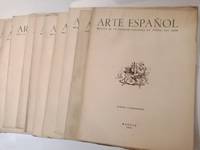
194928545Madrid: Sociedad Española de Amigos del Arte1949-1967.- 36 fascículos de unas 45 p. cada uno ilustraciones; 4º 26 cm.- SE OFRECEN los siguientes Nos.: 1949 3er. cuatrimestre 1950 1er. cuatrimestre 1951 completo los tres cuatrimestres 1952 1er. cuatrimestre 1953 a 1962 completos los tres cuatrimestres de cada año además de los tres fascículos que se publicaron para los años 1963-1967 conjuntamente. Es decir faltan el 2º y el 3er. cuatrimestres de los años 1950 y 1952 4 números salvo esto la revista SE OFRECE SEGUIDA desde 1949 3er. cuatrimestre hasta 1967 final por lo que se vende como conjunto. ARTE ESPAÑOL EN GENERAL E HISTORIA DEL ARTE ESPAÑOL Libro en español [Sociedad Española de Amigos del Arte] paperback
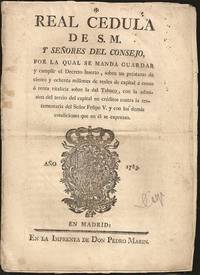
1783CA114212 pages with crest to title page. Quarto 11 1/4" x 8" single folded sheet housed in a custom made enclosure. First edition.<br /><br />Cedula Latin means in general an order or authorization; in earlier times such a document on the authority of the king or a royal decree which for Spain and Spanish America was a decree issued directly by the monarch.<br /><br />During the second half of the eighteenth century the Spanish Crown monopolized the tobacco industry in its American colonies creating vertically integrated organisations which included factories for the production of cigars and cigarettes. Few economic activities were more vital to the development of the Spanish American economies that the cultivation manufacture and commercialization of tobacco. Tobacco was the second most important export industry in Spanish America at the time. The decision of the Bourbon monarchs to monopolize the industry was a critical component of their plan to increase government revenues through a renewed contract with the colonists. This Spanish royal decree issued at the end of the War of American Independence to take effect January 1 1784 alters the basis for the tobacco trade set up as a monopoly under Phillip V and establishing new regulations for the business. This decree mainly affected the American colonies including Louisiana.<br /><br /><b>Condition:</b><br /><br />Some soiling on front and back; last page has columns of numbers and damp-stain along edge one inner page heavily soiled near head else a very good copy in a fine enclosure. En la Imprenta de Don Pedro Marinan
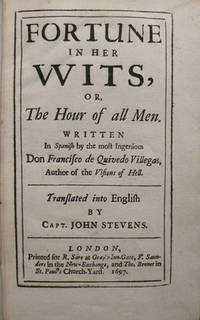
169719796London: Printed for R. Sare F. Saunders and Tho. Bennet 1697 1697. First edition in English. ESTC R5377; Wing Q188. Binding particularly the spine rubbed; text fine; very good copy. 8vo contemporary mottled calf gilt decorated and lettered spine. The first English translation of Francisco de Quevedo's La Hora de Todos y la Fortuna con Seso a biting satire of Spanish politics and the follies of the times written under the guise of a prose fantasy. Ouevedo 1580-1645 a contemporary and friend of Cervantes was one of the greatest writers of his era in Spanish literature. The translator Capt. John Stevens was a prolific translator of Spanish literature and author on Spanish subjects. London: Printed for R. Sare, F. Saunders and Tho. Bennet, 1697 unknown
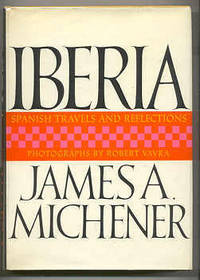
1968100334NY: Random House 1968. First edition first prnt. Photographs by Robert Vavra. Inscribed by Michener on the front free endpage to Random House editior Bert Krantz. "Random House 1968 To Bert Kranz Who helped so much to put this beautiful book together even though she was damn near dead at the time. Affectionately Jim Michener." Tiny tear at spine top edge very light shelfwear; dustjacket with minimal edgewear mostly at the spine top edge. Near Fine condition in a Near Fine dustjacket with an archival cover. A bright association copy and unique with Michener's sentiments to editor Krantz. Inscribed by Author. First Edition. Hardcovers. Near Fine/Near Fine. 8vo - over 7¾" - 9¾" tall. Association Copy. Random House Hardcover
2010SONG143360065XBrand: BH Espanol 2010-04-15. hardcover. Used: Good. 6.00x1.38x9.25. Buy with confidence. Excellent Customer Service & Return policy. Brand: BH Espanol hardcover
197282762Ediciones Poligrafa S. A 1972-01-01. Hardcover. Very Good. Large format hardcover in jacket with text in Spanish light chip to head of spine of the jacket. All 11 original lithographs are intact. Tight binding no marks. oversized and overweight. Please email for photos. Ediciones Poligrafa, S. A hardcover
1970023359New York: Harper & Row Publishers 1970 First printing of the stated first edition in second state dust jacket. Book with light wear to covers and spine ends else in fine condition; price-clipped dust jacket with moderate wear to spine ends/corners a short closed tear to upper front cover and light toning to margins else fine. Harper & Row, Publishers hardcover
6ropzMuseu de Arte Sao Paulo. Hardcover. Very Good/No Jacket. Very rare book. Warmly inscribed and dated in Spanish by Jesus Fuertres on the front page he died in the year 2006. No edition or date stated c1985. No Author credited. Publication of 119 pages. The boards are a touch edge worn remain in very good condition. Internally there are no other markings or inscriptions. The pages are neat clean and complete. The binding is secure. GK. Our orders are shipped using tracked courier delivery services. Museu de Arte Sao Paulo hardcover
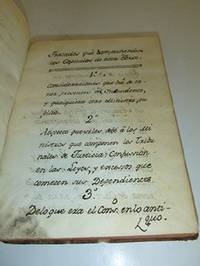
51-5862circa 1765. Small 4to. 14 x 20cm. 150 manuscript leaves. 18th Century calf with gilt spineworn. .Provenance: Estate of Joaquin Romero Maura. Mr Maura great-grandson of a five-time prime minister of Spain lived in the UK for most of his life and co-directed the Iberian Centre with the illustrious historian Sir Raymond Carr. Joaquín Romero Maura – died lin June 2022 at the age of 81 at a senior home in Zaragoza Spain. The historian – who held a PhD from Oxford University – was widowed and childless. He had been a confidante of the former Spanish king.Joaquín Romero Maura Niza 1940-Zaragoza 5 de junio de 2022 fue un historiador español. Destacó por su obra La rosa de fuego un estudio sobre el obrerismo barcelonés de la primera década del siglo xx. circa 1765 unknown