1 284 résultats
Very light shelfwear to book else fine. Scholar's name to ffep (R. E. Fantham). Very light edgewear to DJ else fine. ; 0.88 x 9.48 x 6.38 Inches; 224 pages; By its very nature, the art of oratory involves character. Verbal persuasion entails the presentation of a persona by the speaker that affects an audience for good or ill. In this book, James May explores the role and extent of Cicero's use of ethos and demonstrates its persuasive effect. May discusses the importance of ethos, not just in classical rhetorical theory but also in the social, political, and judicial milieu of ancient Rome, and then applies his insights to the oratory of Cicero. Ciceronian ethos was a complex blend of Roman tradition, Cicero's own personality, and selected features of Greek and Roman oratory. More than any other ancient literary genre, oratory dealt with constantly changing circumstances, with a wide variety of rhetorical challenges. An orator's success or failure, as well as the artistic quality of his orations, was largely the direct result of his responses to these circumstances and challenges. Acutely aware of his audience and its cultural heritage and steeped in the rhetorical traditions of his predecessors, Cicero employed rhetorical ethos with uncanny success. May analyzes individual speeches from four different periods of Cicero's career, tracing changes in the way Cicero depicted character, both his own and others', as a source of persuasion, changes intimately connected with the vicissitudes of Cicero's career and personal life. He shows that ethos played a major role in almost every Ciceronian speech, that Cicero's audiences were conditioned by common beliefs about character, and finally, that Cicero's rhetorical ethos became a major source for persuasion in his oratory.
Very light bump to 1 corner. Else book is fine. Sticker residue to front panel of DJ. ; 0.88 x 9.48 x 6.38 Inches; 224 pages; By its very nature, the art of oratory involves character. Verbal persuasion entails the presentation of a persona by the speaker that affects an audience for good or ill. In this book, James May explores the role and extent of Cicero's use of ethos and demonstrates its persuasive effect. May discusses the importance of ethos, not just in classical rhetorical theory but also in the social, political, and judicial milieu of ancient Rome, and then applies his insights to the oratory of Cicero. Ciceronian ethos was a complex blend of Roman tradition, Cicero's own personality, and selected features of Greek and Roman oratory. More than any other ancient literary genre, oratory dealt with constantly changing circumstances, with a wide variety of rhetorical challenges. An orator's success or failure, as well as the artistic quality of his orations, was largely the direct result of his responses to these circumstances and challenges. Acutely aware of his audience and its cultural heritage and steeped in the rhetorical traditions of his predecessors, Cicero employed rhetorical ethos with uncanny success. May analyzes individual speeches from four different periods of Cicero's career, tracing changes in the way Cicero depicted character, both his own and others', as a source of persuasion, changes intimately connected with the vicissitudes of Cicero's career and personal life. He shows that ethos played a major role in almost every Ciceronian speech, that Cicero's audiences were conditioned by common beliefs about character, and finally, that Cicero's rhetorical ethos became a major source for persuasion in his oratory.
Scratch to front panel of DJ. Minor rubbing to DJ else NF. ; 0.88 x 9.48 x 6.38 Inches; 224 pages; By its very nature, the art of oratory involves character. Verbal persuasion entails the presentation of a persona by the speaker that affects an audience for good or ill. In this book, James May explores the role and extent of Cicero's use of ethos and demonstrates its persuasive effect. May discusses the importance of ethos, not just in classical rhetorical theory but also in the social, political, and judicial milieu of ancient Rome, and then applies his insights to the oratory of Cicero. Ciceronian ethos was a complex blend of Roman tradition, Cicero's own personality, and selected features of Greek and Roman oratory. More than any other ancient literary genre, oratory dealt with constantly changing circumstances, with a wide variety of rhetorical challenges. An orator's success or failure, as well as the artistic quality of his orations, was largely the direct result of his responses to these circumstances and challenges. Acutely aware of his audience and its cultural heritage and steeped in the rhetorical traditions of his predecessors, Cicero employed rhetorical ethos with uncanny success. May analyzes individual speeches from four different periods of Cicero's career, tracing changes in the way Cicero depicted character, both his own and others', as a source of persuasion, changes intimately connected with the vicissitudes of Cicero's career and personal life. He shows that ethos played a major role in almost every Ciceronian speech, that Cicero's audiences were conditioned by common beliefs about character, and finally, that Cicero's rhetorical ethos became a major source for persuasion in his oratory.
(Collana : Maschera Nera) Un romanzo che ci narra di banditi, giovani banditi,innamorati delle armi e della morte (1.XI.4). - Il ricavato della vendita di questo libro sarà destinato ai progetti di ricerca e formazione promossi dalla "Fondazione Salvatore Calabrese"
Scholar's name to ffep (G. P. Goold). Foxing/dustsoiling to top of textblock. Dustjacket has 4 cm tear to rear panel. DJ is price-clipped. ; Loeb Classical Monographs; 9.1 X 6.6 X 1.1 inches; 288 pages
2008100137682Cambridge University Press 2008 464 pages 15 24x22 86x2 9464cm. 2008. Broché. 464 pages.
A clean, unmarked book with a tight binding. Full brown cloth boards. Previous owner's name on front endpaper. Faded and torn dust jacket. 188 pages. 5 1/2"w x 8 3/4"h.
1986LITTFRAXVIE2220721Pays-Bas, Leiden, E. J. Brill, 1986, 17 x 24,5, 380 pages sous reliure éditeur toilée et jaquette imprimées.
Edizione: Prima edizione . Pagine: 11+264+274 . Illustrazioni: Due frontespizi con medesima marca tipografica " Scientia immutabilis" . Formato: 16° . Ex libris: Bel ex libris di Jacobus Maximilianus Co: Collatti . Rilegatura: Cartonato in pergamena con tassello rosso al dorso con autore e titoli, tagli in rosso . Stato: Buono . Caratteristiche: Bruniture, rilegatura settecentesca: esemplare in buonissimo stato. (BA) . Note epoca: MDCII
(Collana : -) Uno scrittore a specchio della sua terra (1.XXIX.10). - Il ricavato della vendita di questo libro sarà destinato ai progetti di ricerca e formazione promossi dalla "Fondazione Salvatore Calabrese"
304 pages. "Eases the writing journey by helping you build reading and writing skills while mastering the basics of grammar and mechanics." - from back cover. Cleand and unmarked with very light wear. Nice copy. Book
334 pages including index. A Canadian text focussing upon the three main stages of the process of writing: planning, developing, and revising. Well-used. Unmarked. Sticker remnant upon front cover. Good working copy. Book
188825221888 P., Lyon, Delhomme et Briguet, 1888, in 12, relié demi basane, dos lisse orné de doubles filets dorés, VII-388 pages ; infimes frottis.
Meyer Michel Meyer Michel, La retorica, il Mulino, 1997 - I. Bologna, il Mulino 1997 - I italiano, in ottavo pp.184 37408 Meyer Michel, La retorica, il Mulino, 1997 - I ed, in 8, Brossura, pp. 184, Ottimo.
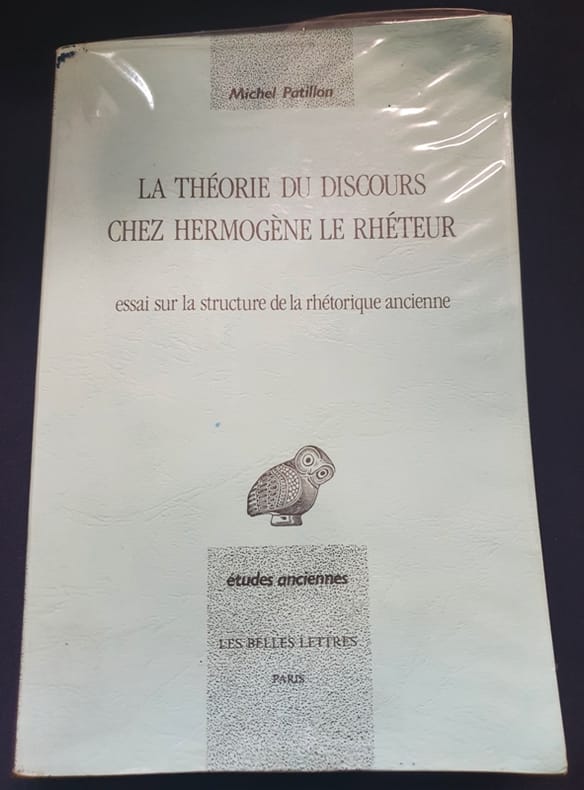
198875CeParis Les Belles Lettres 1988 In8 - broché - 412 pages - tranches tachées
1996LFA-126722521Un ouvrage de 443 pages, format 165 x 245 mm, broché, publié en 1996, Armand Colin, bon état
DISPONIBILITÀ GARANTITA AL 99%; SPEDIZIONE ENTRO 12 ORE DALL'ORDINE. RIMANENZA DI MAGAZZINO PARI AL NUOVO. MAI SFOGLIATO, LIEVISSIMI SEGNI DEL TEMPO. Michelangelo Giusta ha insegnato per più di vent'anni Filologia greco-latina all'Università di Torino. Una buona parte della sua attività filologica ha avuto per oggetto testi filosofici greci e latini. Descrizione bibliografica Titolo: Il testo delle «Tusculane» Autore: Michelangelo Giusta Editore: Firenze: Le lettere, 1991 Lunghezza: 371 pagine; 24 cm Peso: 800 gr. ISBN: 8871660609, 9788871660608 Collana: Volume 1 di Filologia testi e studi; Università degli studi di Torino, fondo di studi Parini-Chirio Soggetti: Miscellanea latina, Periodo romano, fino al 499 ca., Linguistica, Opere, Cicerone, Marco Tullio, Tusculanae disputationes, Studio filologico, Commenti, Classici Latini, Poesia, teatro, Storia, Critica, Narrativa, Romanzieri e scrittori di prosa, Letteratura greca e latina, Retorica, Filosofia, Dossografia, Certamen Paravianum, Zur Textkritik der Tusculanen, Critica letteraria, Lundstrom, Stoicismo, Conversazioni a Tuscolo, Dialoghi filosofici, Interpretazioni, Traduzioni, Erudizione, De divinatione, otium, Philosophy, Cicero, Stoici Antichi, philosophie Cicéronienne, opere filosofiche, Oratoria Parole e frasi comuni ablativo amanuense anacoluto animi animus asindeto atque Atticum autem Bentley chiaro Cicerone citato in apparato congettura contesto corretto correttore correzioni V2 Davies deorum dimostrato docere dolorem Drexler editori edizione eius enim Epicuro errato errore espunto esset etiam evidente familiares finibus frase genitivo Grilli haec igitur integrazione interpolatore interpretazione iperbati ipsum Kuhner libido linea logica Lucullus Lundstròm malum manoscritti Marinone multa mutato nihil nisi omesso omnia oportere oratore paleografica parole passo Tusculane periodo plane Platone Pohlenz potest prearchetipo precede precedente quae quam quid quidem quis quod ragione risulta saepe sarebbe scritto Shackleton Bailey sintattica Socrate spiegazione sunt tamen testo tradito tradizione trasposizione tratto Tusculanen uidetur uigere uita uitae verbo Vermeintliche Glosseme verosimile Verrem Wesenberg Zweifel
65767, Brepols, 2020 Hardback, xi + 443 pages, Size:152 x 229 mm, Language: English. ISBN 9780888442178.
(1.VI.7). - Il ricavato della vendita di questo libro sarà destinato ai progetti di ricerca e formazione promossi dalla "Fondazione Salvatore Calabrese"
(Collana : Narrativa Rusconi) Marcella la protagonista di questo romanzo ha molte esperienze sbagliate alle spalle che sembrano non aver lasciato tracce nella sua vita...scopriremo come l'hanno cambiata (1.XXX.1). - Il ricavato della vendita di questo libro sarà destinato ai progetti di ricerca e formazione promossi dalla "Fondazione Salvatore Calabrese"
Text in italian; Spudasmata Band 115; 280 pages; Dion of Prusa is one of the most important sources for the history of literature and rhetoric in the early Roman empire. He was not only Trajan’s political advisor, but also provided us with an important theoretical study on the political rhetoric of the period: the different forms of government, the dialectic of monarchy and tyranny, social harmony, Greek loyalty to the Romans, and the position of the intellectual in the 1st and 2nd centuries AD. This book examines the connections between rhetoric, sophistics, politics and ethics in one of Dion of Prusa’s most famous speeches. The historical background, the literary context and significant aspects of the reception of Dion’s ideas and suggestions are illuminated, and major modern scholarly opinions are discussed and often disproved. The author always keeps the analysis and various interpretations of the text in the central focus of a critical reading. This gives the work its interest for philologists and historians in the field of the history of ancient rhetoric and the second sophistic as well as of Graeco-Roman society in the first two centuries of our era.
1974100132889Indiana University Press 1974 352 pages 16 69x2 82x23 19cm. 1974. Broché. 352 pages.
20023126540Leiden, Boston & Köln: Brill 2002. XVIII, 238 Seiten. Gr. 8° (22,5-25 cm). Orig.-Leinenband. [Hardcover / fest gebunden].
(Collana : Collezione di classici stranieri) Con introduzione e note di G.S.Gargano - (1.I.7). - Il ricavato della vendita di questo libro sarà destinato ai progetti di ricerca e formazione promossi dalla "Fondazione Salvatore Calabrese"