459 résultats
2022__0878201998Hebrew Union College Pr 2022. Hardcover. New. bilingual edition. 326 pages. Hebrew language. 9.00x6.00x1.00 inches. Hebrew Union College Pr hardcover
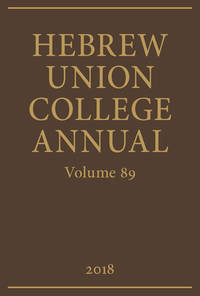
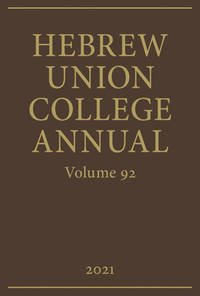
feb393HEBREW UNION COLLEGE JEWISH INSTITUTE OF RELIGION HARDBACK issn 360-9049 BROWN BOARDS 323 PAGES Contents : The development of the priestly calendars The redactional agenda of the book of psalms The temple mount the rabbis and the poetics of memory Conversion to juaism in classical antiquity AND 5 OTHER TOPICS A BRAND NEW BOOK UNUSED. Full refund if not satisfied. 24 hour despatch. Hardcover. New/No Jacket. hardcover
0878201998.Ghardcover. Good. Access codes and supplements are not guaranteed with used items. May be an ex-library book. hardcover
087820606X.Ghardcover. Good. Access codes and supplements are not guaranteed with used items. May be an ex-library book. hardcover
2019__0878201661Hebrew Union College Pr 2019. Hardcover. New. 296 pages. 9.00x6.00x1.00 inches. Hebrew Union College Pr hardcover
1021081019.Ghardcover. Good. Access codes and supplements are not guaranteed with used items. May be an ex-library book. hardcover
19923672-nnew. unknown
19923672like new. unknown
1334854386.Gpaperback. Good. Access codes and supplements are not guaranteed with used items. May be an ex-library book. paperback
036527044X.Ghardcover. Good. Access codes and supplements are not guaranteed with used items. May be an ex-library book. hardcover
4R-EOWL-YQUBFair. Black hardback as pictured. No marks in text book is cocked pages clean of any marks or notes. Looks like some water on edges and a little musty. Shipping daily. hardcover
768182013 CD Rom. 4500 Pages Hebrew-English-Translieration. New 2013 unknown
1965274636The Intitute for the Translation of Hebrew Literature 1965-1973. Pamphlet. Good. Summer 1965; Spring 1967; Spring 1968; Fall 1968; Spring 1969; Spring 1970; Fall 1970; Spring 1972; Fall 1972; Spring 1973; Summer 1973;Autumn 1973; Spring 1974; Summer 1974; Autumn 1974; and Winter 1974 The Intitute for the Translation of Hebrew Literature unknown
1364831909. Hardcover 1384pp. Very good. Full leather with edges stained red. The binding is tight with the spine and edges lightly scuffed the inner hinges are cracked and there is a previous owner's name on the endpaper. Text in Hebrew Language. Bible Bible New Testament Old Testament. Hardcover
1R-TN06-EOBNFine. unknown
1936biblio1014<p>300 p.</p> paperback
16921327694Lipsiae: Johannis Casparis Meyeri/Gottfried Liebezeit 1692. Fifth Revised edition. Hardcover. Two works of Judaica bound together in a single volume: Henrico Opitio Heinrich Opitz with B. Wasmuthi. Hazer leshon ha-qodesh: Hoc est atrium linguae sanctae. Lipsiae: Johannis Casparis Meyeri 1692. Fifth Revised edition. 156 pages. Henrico Opitio Heinrich Opitz. Novum Lexicon Hebraeo-Chaldaeo-Biblicum. Lipsiae: Gottfried Liebezeit 1692. 1095 pp. Hebrew 62 pp. Chaldaean. Square quarto in full vellum binding with faded hand-written titles on spine. All edges tinted blue. Pagination restarts with each part. Text in Hebrew and Latin. Condition: Very Good. The binding is shaken with some shelf-wear and bumping. The spine and boards are sunned and somewhat warped and there are some splits at hinges and gutter. Medium age-toning and some foxing. Scattered marginalia some of which are in Hebrew and some of which appear to be lists of occurrences of particular Hebrew words in the Hebrew Scriptures. Dimensions 7 x 8.125 x 3.125<br /> <br> <br /> <br> <br /> shelved case 4. 1327694. Shelved Dupont Bookstore. Johannis Casparis Meyeri/Gottfried Liebezeit hardcover
ria9781906764708_inpHardback. New. New Book; Fast Shipping from UK; Not signed; Not First Edition; The Habad school of hasidism is distinguished todayfrom other hasidic groups by its famous emphasis on outreach on messianism andon empowering women. This book presents an in-depthstudy of an intriguing movement which takes traditiona hardcover
201652057Leiden: Brill 2016. First edition. Hardcover. Fine. Octavo. 8 254pp. Index and 15 page bibliography. Blue spine lettered in white over color photo boards. Illustrated with a frontispiece photo and 4 text photo. A fine as new copy.<br /> <br /> In Haredi Masculinities between the Yeshiva the Army Work and Politics: The Sage the Warrior and the Entrepreneur Hakak takes us on a fascinating journey into the world of young Haredi men who dare to leave Jewish Haredi religious seminaries Yeshivas and Kollels and explore new territories. Through extensive participant observations in a Haredi army basic training course an occupational training program in Hi-Tech professions and the Haredi Headquarter of the Likud Party Hakak explores the interactions between young Haredi men and the cultural and masculine models they meet in these new sites. Hakak’s observations expose the varying ways in which Haredi masculinities are being re-shaped through such interactions and how this is impacting the Haredi minority and Israeli society more broadly. <br /> <br /> Contents: 1. Masculinity youth and the haredi minority in Israel -- 2. From the army of God to the Israeli armed forces -- 3. Between the holy and the practical: young haredi men acquire a profession -- 4. Journey into the meanders of Israeli politics: haredi men in the Likud Party -- 5. Filmed on a weekday -- 6. From the world of Torah to the heart of Israeli society: concluding discussion. <br /> <br /> Volume 27 of the Brill series "Jewish Identities in a Changing World. Brill hardcover
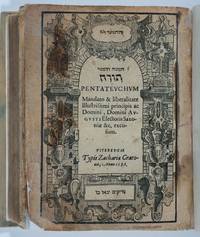
158653478Wittenberg: Zacharias Crato Krafft 1586. First edition. Hardcover. Very Good. Four parts quarto published between 1586 and 1587. Register continuous through parts 1 and 2; separate registers for parts 3 and 4. Collation in 4s: 1-65 blank 33.4; 1-30 lacks blank 30.4; 1-32 lacks 32.4 colophon. 506 leaves. Title within elaborate woodcut borders. Single-column text in vocalized Hebrew with cantillation; printed side-glosses. Separate Hebrew half-titles within woodcut borders for the latter three parts Former Prophets; Later Prophets; Hagiographa; names of the biblical books set in large font within woodcut cartouches. Later vellum. Title and following three leaves with marginal reinforcement slight text loss. Occasional mild embrowning else very good with bright half-titles. <br /> <br /> First Wittenberg edition of the complete Hebrew Scriptures with a concluding list of Haftaroth readings noting the Ashkenazi and Sefardi variations. Our copy is the variant with Hebrew and Latin title. A majority of the few surviving copies are bound with a Hebrew title and the publisher's information is taken from the colophon which provides a Jewish calendar date of 5347 = 1587. Vinograd notes that individual books and sections of the Hebrew Bible had been printed at Wittenberg since a quarto edition of the prophet Obadiah appeared in 1521. The title-page designs were re-used in the Hebrew bible published at Frankfurt am Oder in 1595. Each book closes with the Masora Finales printed in square type.<br /> <br /> Andreas Masch notes in his revised edition of Le Long's Bibliotheca Sacra 1778: "This edition of the Hebrew Bible is so rare and infrequent that it was omitted in the earlier edition of Le Long's work at Paris but it is known to Wolffius Bibliotheca Hebraea not in its entirety but only in respect of certain parts." One can speculate as to why the edition is rare but it may be worth noting that "when Hans and Friedrich Hartmann decided to start producing Hebraica in an effort to become the official printer for the univeristy of Frankfurt/Oder they were able to do so relatively quickly by hiring away five experienced workmen from Zacharias Croto's Wittenberg firm which was having financial difficulties" Burnett.<br /> <br /> Masch continues: "At the colophon is noted the year and the name of those at whose expense this Hebrew Bible was published: colophon info in Heb. and Latin The above example is therefore attributed to the liberality of the prince and to the expense of the two citizens of Wittenberg But the Rühilii brothers were not correctors of the work but citizens and senators of Witteberg whose name is quite famous in the history of the Germanic Bibles. The work came from the workshop of Zacharias Craton otherwise known as Kraft to whom we owe several editions of German Bibles. The title in both copies represents a gate in which above and below Ps. 118 com. 20. is printed. In accordance with the first Plantin edition the text was printed so as to match nearly page-for-page. It is composed of four parts with the five festival books added to the Pentateuch; but each part is decorated with a special title." Full title: חמשה חומשי תורה Pentateuchum mandato & liberalitate illustrissimi principis ac Domini Domini Augusti Electoris Saxoniae. Vitebergae: Typis Zacharia Cratonis Anno 1586. alternate Hebrew title: חמשה חומשי תורה × ×“×¤×¡ ×¢× ×¨×‘ העיון על ידי זכריה כר×טו.<br /> <br /> References: Benzing Buchdrucker 16/17 p. 471; Le Long/Masch I 1778 pp. 33-34; Steinschneider 277; VD16 ZV 29818 quarto; Vinograd 21. Not in: Adams; Darlow & Moule; Delaveau & Hillard. Cf. Burnett Christian Hebraism in the Reformation Era p. 204. Zacharias Crato [Krafft] hardcover
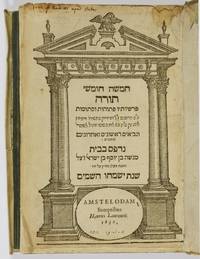
163155459Amsterdam: printed by Menasseh ben Israel for Henricus Laurentius 1631. First edition. Hardcover. Very good-. Octavo 16.8 by 11.4 cm. Collation: aleph-lamed-zayin8 = 296 leaves. 612 i.e. 592 pp: p. 464 erroneously numbered 484 465 as 485 and so on throughout. Two column text in unvocalized Hebrew; every fifth verse numbered in the margin. Title within architectural border; half titles with letterpress ornamentation for the Former and Latter Prophets. Contemporary vellumwith exposed thongs edges stained blue; yapp fore-edges; front joint cracked but holding strong. Intermittent light toning to text outmost leaves a bit more darkened; very occasional small stains. Title-page slighltly trimmed 4 mm at bottom edge; expert marginal repairs at bottom corners of 2 leaves; 1 leaf re-margined at fore-edge with no loss of text else a very good copy with crisp clean text.<br /> <br /> First Hebrew Bible published in Amsterdam printed by the rabbi diplomat publisher and religious thinker Menasseh ben Israel 1604-1657 one of the most distinguished members of the Portuguese Jewish community of Amsterdam and the first Jewish printer in the Northern Netherlands. The Amsterdam printer and publisher Hendrick Laurensz Lauretius provided the financing for this edition along with two other Bible editions and two editions of the Hebrew Psalms printed by Menasseh between 1631 and 1646. "These publications were not only made for the local market but mainly for international trade. Thanks to this financial help Menasseh was able to organize his printing office in a more professional way" Fuks hiring a Jewish compositor Judah Leb ben Mordecai Gimple from Posen and a gentile compositor Bartholomeus Laurensz. <br /> <br /> The printing activity of Menasseh was especially important in the steadily growing productions of the Hebrew press in the Northern Netherlands. Fulfilling the needs of the Sephardic community for Jewish ritual texts eliminated the need for expensive imports from Venice and Poland. Menasseh undersood that the relatively cheap paper and tools available in Amsterdam made it possible to compete in quality and prices with the Hebrew presses of Poland Italy and Basel. "Gentile publishers and booksellers in Amsterdam such as Jansonius and Laurentius were quick to see the opportunity of the opening Eastern European market and financed several of Menasseh's publications" Fuks. Menasseh was the first to introduce in the Netherlands waybertaytsch types for Yiddish publications along with illustrated Hebrew books. He was also the first Jewish printer to adopt the Dutch pocket-book format made famous by the Elzeviers.<br /> <br /> Notes on publication date and issue: The title is dated 1630 in Arabic numerals; the colophon notes the date of completion in Hebrew characters as 5 Adar 5391 = 7 February 1631 along with the printer's apology for being unable to provide the index of pericopes promised on the title-page due to lack of printing material. Darlow and Moule describe this issue as Variant A with a Latin imprint appearing in the cartouche beneath the Hebrew title.<br /> <br /> Provenance and annotations: early entry in brown ink at front paste-down with short Greek inscription Theos. dated 1700; old Latin inscription in black ink at top margin title in reference to Hebrew roots; date of 1812 beside Yiddish entry penned in black ink within imprint cartouche at title; old entry in German penned in black ink at verso title beneath which is an oval cartouche in imitation of the one at the title in which an owner has penned in black ink the Hebrew imprint information regarding Hendrick Laurensz as it would appear in the Varient B issue; old library shelf marks at rear paste-down; recent owner entry in blue ink in Hebrew at front paste-down. References: Darlow and Moule 5123a; Fuks/Fuks-Mansfeld no. 152; pp. 105; 111f.; Steinschneider no. 453; Vinograd Amsterdam 22.<br /> <br /> Full title and imprint: חמשה חומשי תורה פרשיותיו פתוחות וסתומות ×¢"פ ×”×¨×ž×‘× ×–"ל ומדוייק בחסירו' ויתרות להעתק ס"ת ×¢× ×œ×•×— בסופו מועיל לסופרי' ×•× ×‘×™××™× ×¨××©×•× ×™× ×•××—×¨×•× ×™× ×•×›×ª×•×‘×™×: × ×“×¤×¡ בבית ×ž× ×©×” בן ישר×ל ז׳׳צל והוגה בעיון × ×ž×¨×¥ על ידו ×©× ×ª ישמחו השמי×<br /> Amstelodami sumptibus Henrici Laurentii 1630. printed by Menasseh ben Israel for Henricus Laurentius hardcover
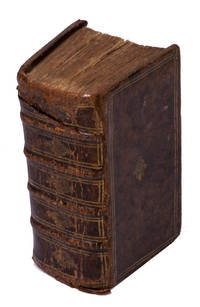
161018174Leiden 1610. 24mo in 8s 11 x 6 cm. Franciscus II Raphelengius Gold-tooled mottled calf ca. 1720 sewn on 4 cords each board with a small central flower ornament and a frame of double fillets the spine with a lozenge ornament in each of the 5 compartments a roll on each raised band and at the head and foot and further double fillets gold-tooled board edges mottled edges. With 4 letterpress title-pages for the Pentateuch early prophets major and minor prophets and Psalms etc. and decorations built up from arabesque typographic ornaments. Set in sephardic meruba Hebrew types unpointed with the imprints in semi-cursive rabbinical but the place of publication in meruba. 4 volumes bound as 1. 264; 227 1 blank; 238 2 blank; 287 1 blank pp. vols. 1-2 with arabic numerals 3-4 with Hebrew. A pocket-sized edition of the Hebrew Old Testament in four volumes volume 1 containing the Pentateuch or Torah volume 2 the early prophets Joshua Judges Samuel Kings volume 3 the later major Isaiah Jeremiah Ezekiel and minor prophets and volume 4 the Psalms Job Song of songs Ruth Lamentations Ecclesiastes Esther Daniel Ezra and Chronicles. It was produced by Franciscus II Raphelengius grandson of Christoffel Plantin and son of one of Europe's first great Hebrew scholars Plantin's son-in-law Franciscus I Raphelengius 1539-1597 who helped prepare Plantin's magnificent 1572 Polyglot Bible succeeded to the Leiden branch of Plantin's printing office and became professor of Hebrew at Leiden University. Plantin himself had produced the Dutch Republic's first Hebrew book there in 1585 and Raphelengius produced many more beginning in 1588.With occasional very minor foxing or faint discolouration but otherwise in very good condition. The spine and joints are worn with superficial cracks a repair at the head and a small tear at the foot and the sewing is slightly loose. A charming little Hebrew Bible from the first Dutch printing office to produce Hebrew books.l aleph.nli.org.il 001366023 4 copies; Darlow & Moule 5114; Fuks 25 2 copies; Steinschneider 386; WorldCat 8 or 9 copies. ABE CAT Bibles Sermons & Psalmbooks unknown
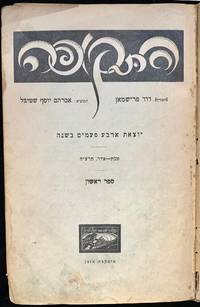
191843090Moskvah Moscow : A.Y. Shtibel 1918. First edition. Original boards 8vo 678 pages. 26 cm. In Hebrew. Title translates as “The Season.â€<br> Rare volume 1 published in the USSR of the quarterly literary magazine Ha-Tekufah. Includes essays by Simon Dubnow poetry short stories translations and articles.<br> Ha-Tekufah was a “Hebrew periodical devoted to literary scientific and social subjects which appeared first as a quarterly then as an annual intermittently between 1918 and 1950. Ha-Tekufah received the financial backing of Abraham Joseph Stybel a philanthropist who had placed David Frischmann in charge of launching Hebrew literary projects on an unprecedented large scale. Accordingly Frischmann established both the Stybel publishing house and launched Ha-Tekufah serving as the editor of both projects. The first volume of Ha-Tekufah appeared in Moscow early in 1918 before the Bolshevik regime had decided to suppress Hebrew literature. Frischmann published the works of the world's best authors and scholars. The literary standards of the periodical were high. Frischmann encouraged young authors for example Eliezer Steinman. In all respects and not least for its beautiful graphic work Ha-Tekufah was a rare phenomenon in Hebrew literature.†Jewish Virtual Library.<br> SUBJECTS: Hebrew literature Modern -- Periodicals. Hebrew literature Modern. OCLC: 25586768<br> Boards separated and pages edgeworn. Lacks backtrip spine covering. Good Condition internally. YID-46-7-’. Moskvah [Moscow] : A.Y. Shtibel unknown
1939N4645Jerusalem: Government Printer 1939. First Edition . Half Cloth. Very Good. 8vo. Some 12000pp for the 14 volumes. HEBREW LANGUAGE. Each colume with owner's stamp on the firtst page MODAI ADVOCATES -TEL AVIV Some spotting on edges and front end papers. A few pages loose. General minimal wear. UNIFORM HALF CLOTH BINDING. A VERY GOOD COPY OF THIS RARE OFFFICIAL PUBLICATION FO THE PALESTINE MANDATE. <br/> <br/> Government Printer hardcover