445 résultats
8vo pp.159 in sefardi ladino w. turkish alphabet, unique collection on turkish jewish sefardi traditions. tradizioni in ladino, spagnolo sefardita degli ebrei di turchia, costantinopoli, istanbul. stambul estanbol.
1019383267.Ghardcover. Good. Access codes and supplements are not guaranteed with used items. May be an ex-library book. hardcover
New English Paperback. Pbo. Demy 8vo. (21 x 13,5 cm). In English. 418 p. The official line that successive Turkish regimes have frequently repeated and which has firmly established itself in both Turkish and foreign public opinion is that the Republic of Turkey is one of those rare countries in which antisemitism has never taken root, and in which Jews have thus lived for centuries within a tolerant atmosphere of peace and tranquility, but it simply isn't true. Along with antisemitism are the conspiracy theories in which the "Jew" or the "Zionist" feature as the main actors that are widely seen throughout Turkish society. In fact, this state of affairs is not only pervasive but has even become "normal" to the point of banality, so much so that it tends to draw no reaction from either the country's intellectuals or politicians. This book contains a collection of author's published articles on the subject-a subject that has received no serious treatment in Turkey, and as such attempts to fill the gaping hole in our knowledge of this widespread yet rarely discussed phenomenon and, as such, stands as an indispensible source for those interested in Turkey and antisemitism.
8vo, cloth in dj. excellent copy, no marks. 247pp. Original dust jacket with gold lettering on spine over blue cloth. An authoritative work discussing diseases, organs, ethics & prayers for the Jewish physician, famous physicians in the talmud, as well as answers to miscellaneous questions such as artificial respiration in biblical times and dolphins in the talmud
8vo, br. ed. 220pp. Jewish Communism' was one of the most powerful and destructive political myths in 20th-century Europe. The cry of Jewish communist conspiracy turned traditional, often religiously inspired anti-Jewish sentiments into a murderous anti-Semitic rampage. The connection of Jews with communism has always been an extremely sensitive issue, which cannot simply be dismissed as a fully irrational phenomenon. Jews were disproportionately present in the revolutionary movement. This does not make the myth of Jewish Communism less mythical, but it does imply that real interests and conflicts were involved. This book presents the first full-length analysis of the identification of Jews with communism. It traces the myth of Jewish Communism from the traditional anti-Jewish prejudices on which it is built, to its crucial role in Eastern European Stalinist and post-Stalinist politics. It documents the painful controversies that the participation of Jews in the revolutionary movement has generated among Jewish observers, among communists, and also among historians. The Author : André Gerrits is Associate Professor in East European Studies at the University of Amsterdam, where he holds the Jean Monnet Chair in European Integration, and Senior Research Fellow at the Netherlands Institute of International Relations (Clingendael).
8vo, cloth in dj. 226pp. The fullest account to date of German Jews's struggle for economic survival under the Third Reich.
652In 12 broché,couverture imprmée.Faux-titre,titre,XII,152 pages.3 cartes dépliantes en fin de volume.Régions et des lieux dont il est parlé dans le nouveau testament,carte de la Palestine selon le partage des tribus.Carte de la Palestine depuis la captivité de Babylone jusqu’à la dernière guerre des juifs.Derivaux éditeur 1840.Starsbourg petits raccommodages.Rousseurs éparses habituelles
8vo. 130 x 189 mm. viii, 86, [1] pp.Cloth. Fine. Documenting the Jewish community in Kai Feng Fu, from over a millenia of steady residence. Fascinating study of ancient jewish residents in China from over 1000 years ago
br. ed. ill.originale pp. 185, dorso con etichetta e mancanza di circa 2com nella parte superiore, pp.80-81 in fotocopia. altrimenti buono. raro. giuda judah abrabanel avrabanel spinoza
1876GITb524Paris Lacroix et Cie 1876. In-8 386pp. Demi chagrin tabac, dos à 4 nerfs orné de fleurons dorés, rel époque. Bel exemplaire.
Very Good French Paperback. Samll 4to. (27 x 18 cm). In French. 16 p. La littérature Samaritaine (Supplement -Encyclopedie de l'Islam- a l'art Samaritains, Tome IV, Livrasion C). Samaritan literature. Gaster was a Romanian, later British scholar, the Hakham of the Spanish and Portuguese Jewish congregation, London, and a Hebrew and Romanian linguist. Moses Gaster was an active Zionist in Romania as well as in England, where in 1899 he helped establish the English Zionist Federation. He was the father of Jack and Theodor Gaster and the grandfather of Marghanita Laski. He was also son-in-law to Michael Friedländer and father-in-law to Neville Laski.
4to, pp.335 hardcover. A comprehensive and timely exploration of the key role Jerusalem played in shaping the art and culture of the Middle Ages Medieval Jerusalem was a vibrant international center and home to multiple cultures, faiths, and languages. Harmonious and dissonant influences from Persian, Turkish, Greek, Syrian, Armenian, Georgian, Coptic, Ethiopian, Indian, and European traditions invested Jerusalem with a key role in shaping the art of the Middle Ages. Through compelling essays by international and interdisciplinary experts and detailed discussions of more than 200 works of art, this beautiful, authoritative volume breaks new ground in exploring the relationship between the historical and the archetypal city of Jerusalem, uncovering the ways in which the aesthetic achievements it inspired enhanced and enlivened the medieval world. Patrons and artists from Christian, Jewish, and Islamic traditions alike focused their attention on the Holy City, endowing and enriching its sacred buildings and creating luxury goods for its residents. This artistic fertility was particularly in evidence between the 11th and the 14th centuries, notwithstanding often devastating circumstances-from the earthquake of 1033 to the fierce battles of the Crusades. Dazzling illustrations featuring new photography complement this unprecedented, panoptic story of Jerusalem in the Middle Ages.
8vo, original red cloth , black and white frontis portrait, xiii + 386pp, index, Errata slip mounted on p. [xiv]. translated by Samuel Katz. English version edited, with notes, by Ivan M. Greenberg.. Mr Begin's personal account of Hebrew revolt against British Mandatory rule in Palestine.
8vo, ril. ed. in sovracop- Una storia della diaspora sefardita, la minoranza ebrea spagnola che, cacciata dalla penisola iberica all'indomani della scoperta dell'America, si insediò nei territori dell'Impero Ottomano, nei Balcani e in Asia minore. E lì si è sviluppata mischiando lingua, tradizioni, costumi e vita sociale con l'Islam mediterraneo. L'Impero Ottomano era un contesto multietnico e multiculturale in cui lingue, religioni e modelli economici e sociali si integravano e in cui gli ebrei, così come greci e armeni, godevano di ampie autonomie e funzionavano di fatto come uno stato nell'Impero, sotto la guida dei rabbini e dei notabili. La nascita di nuovi Stati con forte identità nazionale su base etnica segnerà la fine di quella fase e l'inizio delle persecuzioni. esaurito fuori catalogo. firma di app. altrimenti come nuovo.
8vo, rilegat. ed. sovracoperta, cofanetto. 510pp. «La letteratura dei palazzi, o Hekalot, come si chiamano in ebraico, è antica, misteriosa, difficile. Mette soggezione anche al lettore esperto, abituato a vedersela con i testi astrusi della qabbalah, la sapienza segreta del giudaismo, che si è forgiata tra il XIII e il XVI secolo. Per quanto siano complesse le allegorie dei mistici medievali e della prima età moderna, questi palazzi a perpendicolo su dirupi di luce rimangono una meta proibitiva, quasi irraggiungibile. La letteratura degli Hekalot precede la qabbalah. La precede nel tempo, giacché comincia a costituirsi nei primi secoli dell'età volgare, e la precede nell'ordine mentale e nell'immaginario collettivo. Chi giunge alle dimore divine, e riesce a penetrarvi, entra in un'aristocrazia sapienziale, invidiata e ambita. Il percorso è pericoloso. Alle porte degli edifici superni vigilano guardiani scorbutici e maneschi. Bisogna saperli prendere con le buone, ingraziarseli, oppure aggirarli ricorrendo a qualche aiuto altolocato. Ma non è solo l'itinerario difficile a respingere molti, o forse quasi tutti. Il problema, con cui si scontrava l'adepto in età antica, e che ancora oggi scoraggia più di un lettore, è capire il perché di tanta fatica. Cosa si trova in cielo? Beninteso, non nel cielo volgare dei nostri viaggi intercontinentali. Quello che qui importa è il cielo incontaminato della sapienza primordiale. Il cielo abitato da Dio e dalla sua corte celeste. Il cielo affollato di angeli, protetto da mura altissime di tizzoni accesi, a un tempo percorso da melodie dolcissime e scosso da paurosi boati. Cosa c'è da vedere, cosa c'è da sapere? Questo è l'argomento del nostro libro. Le pagine che seguono sono una risposta alla domanda che, da sempre, s'è fatta a chi torna. Cos'hai visto? Ne valeva la pena? Cosa c'è "là"»? (dall'Introduzione)

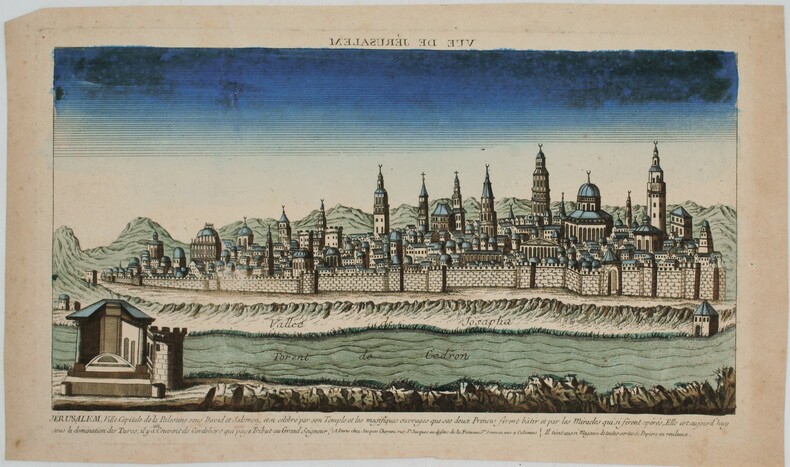
PHO-1298Vue d'optique originale , en colories d’époque , dimension de feuille 450x274mm , de l’impression 410x242mm, titre à l’envers ,verso blanc .
8vom 240pp. According to a commonplace narrative, the rise of modern political thought in the West resulted from secularizationthe exclusion of religious arguments from political discourse. But in this pathbreaking work, Eric Nelson argues that this familiar story is wrong. Instead, he contends, political thought in early-modern Europe became less, not more, secular with time, and it was the Christian encounter with Hebrew sources that provoked this radical transformation. During the sixteenth and seventeenth centuries, Christian scholars began to regard the Hebrew Bible as a political constitution designed by God for the children of Israel. Newly available rabbinic materials became authoritative guides to the institutions and practices of the perfect republic. This thinking resulted in a sweeping reorientation of political commitments. In the books central chapters, Nelson identifies three transformative claims introduced into European political theory by the Hebrew revival: the argument that republics are the only legitimate regimes; the idea that the state should coercively maintain an egalitarian distribution of property; and the belief that a godly republic would tolerate religious diversity. One major consequence of Nelsons work is that the revolutionary politics of John Milton, James Harrington, and Thomas Hobbes appear in a brand-new light. Nelson demonstrates that central features of modern political thought emerged from an attempt to emulate a constitution designed by God. This paradox, a reminder that while we may live in a secular age, we owe our politics to an age of religious fervor, in turn illuminates fault lines in contemporary political discourse.
8vo pp. 468, text and indexes in french and hebrew, original cloth worn, spine faded, text vg. the original edition scarce.
1848GITaz164Paris L.F Hivert 1848. 2vol in-8 broché III 460 492pp. Orné de 2 frontispices gravés sur acier, 1 carte en couleurs dépliante. Dos factices, petits manques et effrangures sur les plats. 2e édition revue et corrigée.
8vo, br. ed. xiv-265pp. complimentary paaste down ow. as new.
8vo, hardcover in dj. 387pp. From the award-winning historian of the Holocaust, Europe Against the Jews, 1880-1945 is the first book to move beyond Germany?s singular crime to the collaboration of Europe as a whole. The Holocaust was perpetrated by the Germans, but it would not have been possible without the assistance of thousands of helpers in other countries: state officials, police, and civilians who eagerly supported the genocide. If we are to fully understand how and why the Holocaust happened, Götz Aly argues in this groundbreaking study, we must examine its prehistory throughout Europe. We must look at countries as far-flung as Romania and France, Russia and Greece, where, decades before the Nazis came to power, a deadly combination of envy, competition, nationalism, and social upheaval fueled a surge of anti-Semitism, creating the preconditions for the deportations and murder to come. In the late nineteenth century, new opportunities for education and social advancement were opening up, and Jewish minorities took particular advantage of them, leading to widespread resentment. At the same time, newly created nation-states, especially in the east, were striving for ethnic homogeneity and national renewal, goals which they saw as inextricably linked. Drawing upon a wide range of previously unpublished sources, Aly traces the sequence of events that made persecution of Jews an increasingly acceptable European practice. Ultimately, the German architects of genocide found support for the Final Solution in nearly all the countries they occupied or were allied with. Without diminishing the guilt of German perpetrators, Aly documents the involvement of all of Europe in the destruction of the Jews, once again deepening our understanding of this most tormented history.
8vo, hardcover in dj. This book proposes that the idea of the Jews in European cultures has little to do with actual Jews, but rather is derived from the conception of Jews as Christianity's paradigmatic Other, eternally reenacting their morally ambiguous New Testament role as the Christ-bearing and -killing chosen people of God. Through new readings of canonical Russian literary texts by Gogol, Turgenev, Chekhov, Babel, and others, the author argues that these European writers?Christian, secular, and Jewish?based their representation of Jews on the Christian exegetical tradition of anti-Judaism. Indeed, Livak disputes the classification of some Jewish writers as belonging to "Jewish literature," arguing that such an approach obscures these writers' debt to European literary traditions and their ambivalence about their Jewishness. This work seeks to move the study of Russian literature, and Russian-Jewish literature in particular, down a new path. It will stir up controversy around Christian-Jewish cultural interaction; the representation of otherness in European arts and folklore; modern Jewish experience; and Russian literature and culture. About the Author: Leonid Livak is Associate Professor at the University of Toronto, where he teaches at the Department of Slavic Languages and Literatures and in the Centre for Jewish Studies. He is the author of How It Was Done in Paris: Russian Émigré Literature and French Modernism (2003).
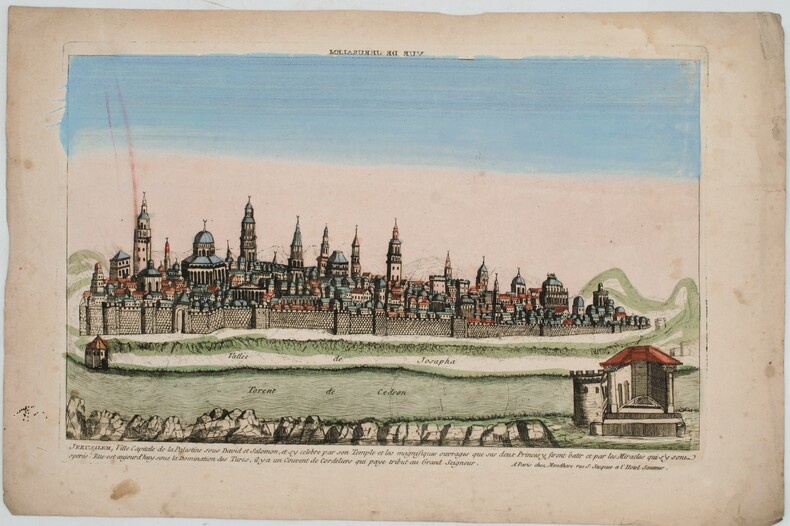
PHO-129918eme ,Vue d'optique originale , en colories d’époque , dimension de feuille 495x330mm , de l’impression 415x280mm, titre à l’envers ,verso blanc , petites taches .
184530709Paris Firmin-Didot 1845 In-8 704 pp,de la série, L'Univers pittoresque. Histoire et description de tous les peuples de leurs religions, moeurs, industries et coutumes. L'auteur fut ministre de France aux Etats-Unis. 68 gravures in fine , et 3 cartes dont une dépliante intérieur plutôt frais.
Large 8vo., 560 p. Paperback. Fine. Oversize and heavy volume. Please contact for postage cost. textos contemporaneos en judio sefardi de turquia. Ladino turchia sefardi castillano viejo diaspora sefardi sefardita.