Brustein William I.MareMagnum
Bettauer HugoMareMagnum
La città senza ebrei. Un romanzo di Dopodomani
8vo, br. ed. pp.198.

Pali s.r.l. · Roma, IT15,00 €
445 résultats
8vo, br. ed. How did the levels of anti-Semitism in the 1930s compare to those of earlier decades? Did anti-Semitism vary in content and intensity across societies? In other words, were Germans more anti-Semitic than their European neighbors, and, if so, why? How does anti-Semitism differ from other forms of religious, racial, and ethnic prejudice? In this 2003 book, William I. Brustein offersa truly systematic comparative and empirical examination of anti-Semitism within Europe before the Holocaust. Brustein proposes that European anti-Semitism flowed from religious, racial, economic, and political roots, which became enflamed by economic distress, rising Jewish immigration, and socialist success. To support his arguments, Brustein draws upon a careful and extensive examination of the annual volumes of the American Jewish Year Books and more than 40 years of newspaper reportage from Europe s major dailies. The findings of this informative book offer a fresh perspective on the roots of society s longest hatred.
8vo., First Edition thus, with pictorial endpapers; plum cloth, gilt back, backstrip gilt a little faded (but wholly legible), a very good, bright, clean copy. Much-needed reissue of the original edition of 1862, edited by David Smith.
8vo, 209pp. In Superman Is Jewish Harry Brod reveals the links between Jews and superheroes in a penetrating investigation of iconic comic book figures. He describes how the role of each hero reflects the evolution of the Jewish place in American culture-an alien in a foreign land, like Superman; a figure plagued by guilt for not having saved his family, like Spider-Man; outsiders persecuted for being different (X-Men); a nice, smart guy afraid people wont like him when hes angry (the Hulk). Brod blends humor and sharp observation as he considers these well-known figures overtly and discreetly Jewish characteristics and talks about how their creators-including Jerry Siegel, Joe Shuster, Stan Lee, and Jack Kirby-integrated their Jewish identities and their creativity. His lively guided tour takes us from the Passover Haggadahs exciting action scenes of Mosess superpowers to acclaimed Pulitzer Prize winners and overseas animators. Brod has written and lectured extensively on this fun and provocative topic and through his expertise explores the deeper story of how one immigrant group can influence the larger culture through entertainment and, in the process, see itself in new, more empowering ways. superman ebreo?
8vo, br. ed. bandelle. A Gerusalemme il soffio caldo dello Sharav accarezza gli oleandri dei viali, le sinagoghe e le moschee, la vita quotidiana di una città all'apparenza pacifica. Così come sembra serena la vita di due donne, due musiciste, giunte in Israele per tenere un concerto: Elisheva, una famosa violoncellista, e Rachel, la sua allieva prediletta, vengono da New York e resteranno a Gerusalemme solo tre giorni. Per entrambe, però, quello è un viaggio nel passato: Rachel, la più giovane, torna in famiglia, combattuta tra l'affetto per il padre, il senso di colpa (sente di aver tradito le sue aspettative di ebreo ortodosso) e il desiderio di fuggire da lui e dalla sua cultura. Anche la più anziana Elisheva è fuggita da qualcosa, anzi sopravvissuta: al campo di concentramento di Majdanek. E scampata alla morte, ma non ai ricordi che non hanno smesso di ossessionarla un solo giorno. A Gerusalemme incontra il suo figlioccio, Daniel, la cui madre era internata insieme a lei. Daniel, che è diventato un agente del Mossad, le consegna una valigia: all'interno c'è un'arma con cui la musicista vuole uccidere l'uomo noto solo come "Henker", il boia di Majdanek. Fuggito in Sudamerica, Henker si è costruito una nuova identità e proprio in quei giorni è a Gerusalemme con una comitiva di turisti. In un romanzo in cui ogni personaggio presenta la sua verità, Chochana Boukhobza intreccia due storie che segretamente risuonano l'una nell'altra, due storie di ferite mai rimarginate, di promesse fatte ai morti, di vendetta
8vo, Paperback, xix, 188 pages, illustrated, 24 cm. The Passover and its rite are central in the history of Judaism and Christianity. Explaining how the Passover evening celebration, the seder, became one of the most popular Jewish rituals, Baruch M. Bokser shows how it was based on and transformed a biblical sacrificial meal. Bokser demonstrates the significance of the motif of Passover in ancient Judaism, indicating why Jews and Christians employed it to express hopes for redemption. And he also illuminates the process of historical development through the interaction of a traditional heritage with contemporary and outside cultural influences. This is a fascinating book which will add much to our understanding of Judaism and Christianity and of the nature of religion in a changing world. Baruch Bokser was ordained as arabbi at Jewish Theological Seminary and also received a Ph. D. In religious studies from Brown University. Beginning in 1974, he taught at the University of California at Berkeley, leaving in 1982 for Dropsie College in Philadelphia (now the Annenberg Research Institute for Judaic and Near Eastern Studies) . Then in 1986, Bokser returned to the Jewish Theological Seminary to join the faculty and where, at his early death at age 44 in 1990, hewas the director ofthe program in ancient Judaism. "Packs facts, analysis and insight into its relatively short 141 pages of text and footnotes. The hypothesis and argument are clearly spelled [out] and and then supported by detailed references to various Talmud and Mishnah sections which are reproduced as necessary. Although.reprinted in 2002, it is current and consistent with more recent works. I read the book in the weeks leading up to 2009 Passover holidays and found much in Dr. Bokser's work to work into the actual Seder and ignite the interest of those present. In essence, Dr. Bokser makes a very persuasive case that the Passover Seder, as molded in the Hagaddah, was one of the key pillars for the survival of Judaism after the catastrophic destruction of the Second Temple in 70 C. E. Certainly, he establishes that the basics of the Seder as we know it today with its emphasis on freedom, community and symbolic ritual owes its genesis to the Tanna and the Amora of the centuries following the destruction" (Jerome Hoffman, Amazon review)
1st American Edition. 8vo - over 7¾" - 9¾" tall. From the jacket: " 'Israel's Secret Wars' is the first documented, comprehensive history of all three of Israel's intelligence services, from their origins in the 1930s, through Israel's five wars, up to the present, including the Ostrovsky affair. Highly readable and exhaustively researched, it contains the most accurate information available about a shadowy and controversial subject in which myth all too often obscures reality."
8vo, br. ed. 190pp. Fra il 1875 e il 1914 sbarcarono a Buenos Aires più di cinque milioni di stranieri. Molti di questi immigrati erano ebrei provenienti dai più disparati luoghi dell'Europa orientale. Dalla fusione di tutte le culture che in quel paese si erano incontrate nasceva il tango. L'apporto degli ebrei a questa avventura collettiva ha contribuito a fare di questo ballo-canzone un'arte universale. Gli ebrei lottarono duramente per integrarsi in Argentina, paese in cui i sentimenti antisemiti erano largamente diffusi. Per molti di loro il tango, musica e danza scandalosa per la borghesia "porteña", fu un mezzo di assimilazione e non è un caso se entrambi ebbero come comuni nemici sia i militari golpisti, che i movimenti fascisti.
8vo, br. ed. pp.198.
br. Pag. 100 ISBN: 8881251191
8vo, br. ed. xxix + 321pp., b/w pls., index. a rarely considered yet critical dimension of anti-Semitism that was instrumental in the conception and perpetration of the Holocaust: the association of Jews with criminality. Drawing from a rich body of documentary evidence, including memoirs and little-studied photographs, Michael Berkowitz traces the myths and realities pertinent to the discourse on "Jewish criminality" from the eighteenth century through the Weimar Republic, into the complex Nazi assault on the Jews, and extending into postwar Europe.
8vo, br. ed. vistosa dedica nella pagina di titolo. altrimenti come nuovo. ripruzioni fotograiche a colori dall'esposizione a roma cascina dei vallati 17 ottobre 2017-30 marzo 2018, nell'anniversario della proclamazione delle legi razziali in italia. phto ocumentation of racial laws in 1938 Italy. in italiano. .
1370210Paris: Herissant, 1742 in-12, XVI-502-XXX pages, carte dépliante "Carte de la Terre Promise" par BORDELET. Rel. basane d'ép., dos lisse orné, tranches marbrées, petit travail de vers au dos et aux mors, coins usés, bon état intérieur.
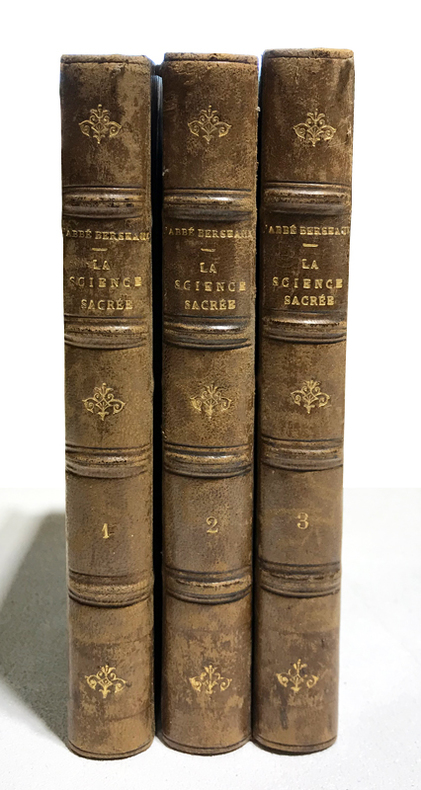
3757Nancy, Vagner, 1863 - 1864 ; trois tomes in-12 ; demie-basane havane, dos à nerfs ornés de fleurons dorés, titre et tomaison dorés (relire de l'époque) ; 439 pp. ; 448 pp. ; 447 pp., (1) p. d'errata.
2 volumi, 8vo, leg. edit. pp.1401, sovracoperta in cofanertto . "Sionista. L'aggettivo suona come un insulto. Il termine oggi e' talmente svalutato che la realta' cui si applica ha finito per sparire sotto i sedimenti della stigmatizzazione e persino, come in certe occasioni internazionali, della demonizzazione. Alla realta' di una fede e di una cultura, il discorso antisemita ha risposto con fantasie tremende (l'omicidio rituale, tra l'altro), soffocando nella paura un oggetto di conoscenza. Alla realta' di un'ideologia e di un movimento nazionale sostanzialmente atipico, il rifiuto risponde con il marchio d'infamia, ma non ci dice che cosa esso sia e, ancora meno, che cosa sia stato. Il sionismo e' a tal punto sepolto sotto strati e strati di riprovazione che oggi e' difficile determinare serenamente che cosa fu, in quali condizioni nacque, l'humus che lo nutri' e la pluralita' dei suoi significati. Posto di fronte ai problemi della modernita' politica, imboccando in particolare la strada della nazione, della laicita', dell'utopia sociale e della cultura come nuova forma della dimensione religiosa in societa' secolarizzate, il sionismo, lungi dal rivolgersi solo agli ebrei, contribuisce a porre le domande capitali del XX secolo. Che ne e' dei rapporti tra la lingua e la nazione, tra popolo e territorio, cosa succede a una fede nazionale nel processo globale di laicizzazione del mondo? Cosa accade alle forme culturali del politico nelle societa' massificate in cui il sionismo inizio' a prendere forma piu' di un secolo fa?" (Dall'Introduzione)
8vo, br. ed. 463pp. L'amicizia fra Benjamin e Scholem spicca, nel Novecento, come una tra le più affascinanti e vitali. E quando nel 1980 Scholem pubblica questo carteggio, che copre gli ultimi otto anni della vita di Benjamin, vuole rendere giustizia a un rapporto complesso e non privo di contrasti, ma improntato a una profonda fedeltà. Grande studioso della Qabbalah e della mistica ebraica, Scholem è, nel 1932, già da tempo in Palestina e ormai a un passo dalla cattedra; la vita di Benjamin, cabbalista in incognito e profondo innovatore del pensiero, attraversa invece la sua fase più tormentata: ospite di volta in volta a Ibiza, Parigi, Sanremo e in Danimarca, è costantemente alla ricerca di una base di sussistenza. Tra i due, fortemente segnati dalla formazione nella Berlino di inizio secolo e subito attratti dalle ricerche l'uno dell'altro, si sviluppa un confronto incessante che investe l'attualità politica, i libri letti, le comuni conoscenze (da Buber a Bloch, da Brecht ai francofortesi), e che trova il suo fulcro nei densissimi scambi a proposito di Kafka. Un dialogo a distanza - se si esclude il breve incontro parigino dell'inverno del 1938 - e non di rado drammatico, intessuto com'è anche di malintesi, puntute allusioni, eloquenti silenzi, ma che resta una prova convincente delle parole con cui Benjamin definì il suo rapporto con Scholem: «fra Gerhard e me le cose stanno così: ci siamo persuasi a vicenda».
8vo, br. ed. pp.125. esaurito fuori catalogo
8vo, br. ed., 377 pages, Until the publication of this remarkably comprehensive history of the Sephardi diaspora, only limited attention had been given to the distinctive Judeo-Spanish cultural entity that flourished in the Balkans and Asia Minor for more than four centuries. Yet the great majority of Sephardi Jews, after their expulsion from Spain in 1492 and subsequently from Portugal, found their way to this region, drawn by the political stability and relatively tolerant rule of the Ottoman Empire, as well as by promising socioeconomic conditions. Esther Benbassa and Aron Rodrigue show how Sephardi society and culture developed in the Levant, sharing language, religion, customs, and communal life as they did nowhere else, both during prosperous times and during the declining fortunes of the seventeenth and eighteenth centuries. The impact of westernization, the end of Ottoman power, and the rise of fragmenting nation-states transformed this vital community in the modern era. And, like many other Jewish communities, the unique Judeo-Spanish culture was dispersed and destroyed by the Holocaust and the migrations of the twentieth century. Sephardi Jewry presents its vivid history in a readable, well-documented narrative
8vo, ril. ed. in sovracop- Una storia della diaspora sefardita, la minoranza ebrea spagnola che, cacciata dalla penisola iberica all'indomani della scoperta dell'America, si insediò nei territori dell'Impero Ottomano, nei Balcani e in Asia minore. E lì si è sviluppata mischiando lingua, tradizioni, costumi e vita sociale con l'Islam mediterraneo. L'Impero Ottomano era un contesto multietnico e multiculturale in cui lingue, religioni e modelli economici e sociali si integravano e in cui gli ebrei, così come greci e armeni, godevano di ampie autonomie e funzionavano di fatto come uno stato nell'Impero, sotto la guida dei rabbini e dei notabili. La nascita di nuovi Stati con forte identità nazionale su base etnica segnerà la fine di quella fase e l'inizio delle persecuzioni. esaurito fuori catalogo. firma di app. altrimenti come nuovo.
Trade paperback, 6th (1987) printing, as news, 12mo., 193 pages., ISBN: 0834801582
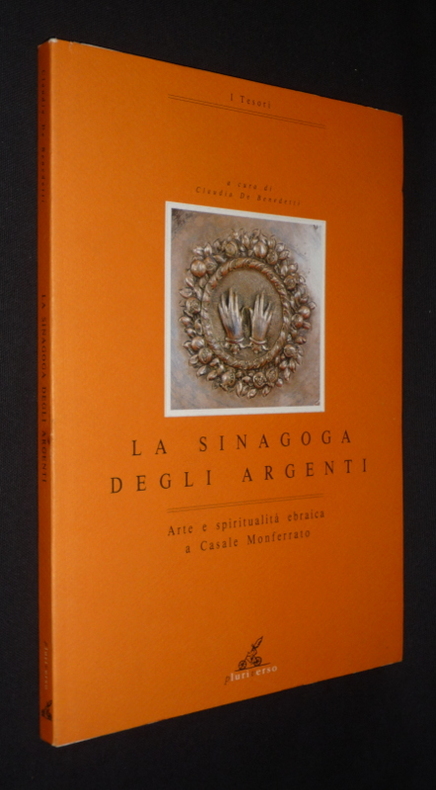
1991qi1777Pluriverso Album cartonné avec jaquette 1991 In-4 (21 x 29,7 cm), broché, rabats illustrés, 105 pages, illustration en couleurs in et hors texte, texte en italien et anglais ; petite trace sur le dos, par ailleurs très bon état général. Livraison a domicile (La Poste) ou en Mondial Relay sur simple demande.
8vo, original red cloth , black and white frontis portrait, xiii + 386pp, index, Errata slip mounted on p. [xiv]. translated by Samuel Katz. English version edited, with notes, by Ivan M. Greenberg.. Mr Begin's personal account of Hebrew revolt against British Mandatory rule in Palestine.
12mo, The Jewish joke is as old as Abraham, and like the Jews themselves it has wandered over the world, learned countless new languages, worked with a range of different materials, been performed in front of some pretty hostile crowds, but still retained its own distinctive identity. So what is it that animates the Jewish joke? Why are Jews so often thought of as funny ? And how old can a joke get? The Jewish Joke is a brilliant - and very funny - riff on Jewish jokes, about what marks them apart from other jokes, why they are important to Jewish identity and how they work. Ranging from self-deprecation to anti-Semitism, politics to sex, it looks at the past of Jewish joking and asks whether the Jewish joke has a future. With jokes from Woody Allen, Lena Dunham and Jerry Seinfeld, as well as Freud and Marx (Groucho mostly), this is both a compendium and a commentary, light-hearted and deeply insightful.
In -4°, pp. 112, brossura editoriale. Libro intonso. La tiratura totale comprendeva solo altre 350 copie. Il libro, in prima edizione, è un resoconto contemporaneo della nascita dello stato di Israele. Il suo autore, Nicolas Baudy, nato in Ungheria decise di emigrare in Francia molto giovane, considerato il numero chiuso imposto ai tempi nel suo Paese di nascita agli ebrei circa l’accesso agli studi. Dopo aver militato nella legione straniera ed essere stato prigioniero dei tedeschi riuscì a evadere dal campo di concentramento e a unirsi alla Resistenza francese. Dal 1949, anno di pubblicazione di questo libro, al 1963, fu redattore capo della rivista “Evidences”, pubblicata dall’American Jewish Committee.
8vo, cloth in dj. 226pp. The fullest account to date of German Jews's struggle for economic survival under the Third Reich.
4to, pp.335 hardcover. A comprehensive and timely exploration of the key role Jerusalem played in shaping the art and culture of the Middle Ages Medieval Jerusalem was a vibrant international center and home to multiple cultures, faiths, and languages. Harmonious and dissonant influences from Persian, Turkish, Greek, Syrian, Armenian, Georgian, Coptic, Ethiopian, Indian, and European traditions invested Jerusalem with a key role in shaping the art of the Middle Ages. Through compelling essays by international and interdisciplinary experts and detailed discussions of more than 200 works of art, this beautiful, authoritative volume breaks new ground in exploring the relationship between the historical and the archetypal city of Jerusalem, uncovering the ways in which the aesthetic achievements it inspired enhanced and enlivened the medieval world. Patrons and artists from Christian, Jewish, and Islamic traditions alike focused their attention on the Holy City, endowing and enriching its sacred buildings and creating luxury goods for its residents. This artistic fertility was particularly in evidence between the 11th and the 14th centuries, notwithstanding often devastating circumstances-from the earthquake of 1033 to the fierce battles of the Crusades. Dazzling illustrations featuring new photography complement this unprecedented, panoptic story of Jerusalem in the Middle Ages.