445 résultats
8vo, br. ed. 202pp.
8vo, br. ed. xii + 250 pp. 18 color plates, 25 BW figures. ".examines both the legend and the reality of Rembrandt's relationship to Jews and Judaism.Nadler is able to build a deep and complex account of the remarkable relationship between Dutch and Jewish cultures in the period.".There is a popular and romantic myth about Rembrandt and the Jewish people. One of history's greatest artists, we are often told, had a special affinity for Judaism. With so many of Rembrandt's works devoted to stories of the Hebrew Bible, and with his apparent penchant for Jewish themes and the sympathetic portrayal of Jewish faces, it is no wonder that the myth has endured for centuries.
8vo, br. ed. pp.267, alcune figg.bn.nt.
16mo, ril. ed. sovracop. (piccola tacca sulla parte superiore della sovracoperta, altrimenti ottima), pp.404. RACCONTI DI GERUSALEMME (KELEV HUTSOT - PAT SHELEMA' - MEOIEV LEHOEV - TEHILLA' - AD OLAM - 'IDO VE 'INAM - SHEVUAT EMUNIN - KELIPPAT TAPPUAH ZAHAV - MIDDIRA' LEDIRA')
8vo, br. ed. con bandelle, pp. 128
8vo, hardcover in dj, 262pp. In Quarantine! Howard Markel traces the course of the typhus and cholera epidemics that swept through New York City in 1892. The story is told from the point of view of those involved?the public health doctors who diagnosed and treated the victims, the newspaper reporters who covered the stories, the government officials who established and enforced policy, and, most importantly, the immigrants themselves. Drawing on rarely cited stories from the Yiddish American press, immigrant diaries and letters, and official accounts, Markel follows the immigrants on their journey from a squalid and precarious existence in Russia's Pale of Settlement, to their passage in steerage, to New York's Lower East Side, to the city's quarantine islands. At a time of renewed anti-immigrant sentiment and newly emerging infectious diseases, Quarantine! provides a historical context for considering some of the significant problems that face American society today.
16247Broché - 17 x 22 - 351 pp - année 1962 - Editions Presses Universitaires de France - Cartes -
16530026141653 Lipsiae [Leipzig], Impensis Haered. Henningi Grosfii, Literis Friderici Lanckisii Exscribebat, Chriftophorus Cellarius, 1653. Fort volume petit in-quarto (170 X 200 mm) vélin rigide, plats ornés d'un encadrement de filets avec fleurons d'angles à froid, dos lisse cloisonné de filets avec fleurons à froid dans les compartiments, titre calligraphié à l'encre noire, tranches teintées en bleu (reliure de l'époque) ; frontispice, (5) ff., 1724 pages, (11) ff. d'index et errata. Accroc avec petite fente de deux centimètres en queue du mors supérieur, tache d'encre sur le titre, feuillets brunis, infime travail de ver (trou de la taille d'une tête d'épingle) affectant les 19 premiers feuillets, cerne de mouillure dans la marge inférieure de quelques feuillets. Initiale manuscrite «F. » répétée sur les 3 premiers feuillets.
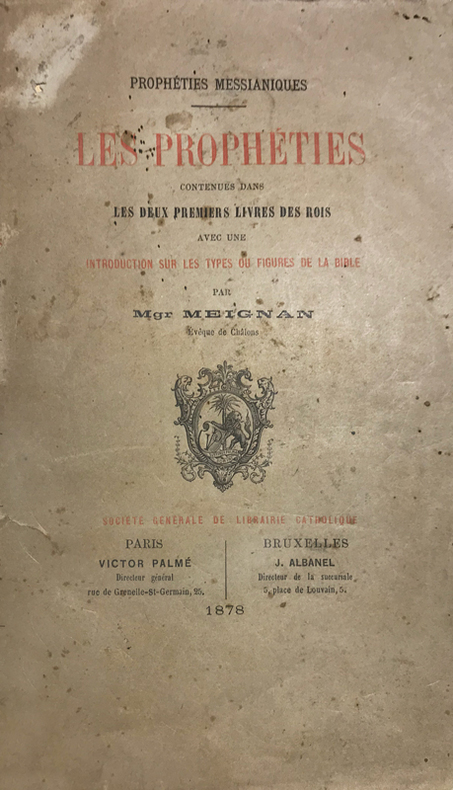
18783788Paris, Victor Palmé ; Bruxelles, J. Albanel (Le Mons, E. Monnoyer), 1878 ; in-8, broché ; LXXV (75) pp., 224 pp.
1979LFA-126724719Un ouvrage de 91 pages, format 195 x 275 mm, broché, publié en 1979, A.C.I.P., bon état
8vo, ril. tela ed. in sovracop. raduzione di Fausto Galuzzi. "1992. Christopher Lucas, giornalista americano di padre ebreo e madre cattolica, si trasferisce a Gerusalemme nella speranza di guarire dal suo "affettuoso, sciocco attaccamento alla religione". Ma questo stesso attaccamento lo spinge a collaborare con uno psichiatra alla stesura di un libro sulla "sindrome di Gerusalemme", il disturbo psicologico che coglie le presonalità più instabili tra i visitatori della Terra Santa, inducendoli a ritenersi investiti di una missione divina. L'indagine potrebbe essere una tranquilla, per quanto appassionante, ricerca all'incrocio fra giornalismo, psicoanalisi e teologia; invece porta Lucas a contatto con ambigui personaggi." cm.14x21, pp.552, firma di app, altrimenti come nuovo
8vo, hardcover in dj, pp.261. So shattering were the aftereffects of Kishinev, the rampagethat broke out in late-Tsarist Russia in April 1903,that one historian remarked that it was ?nothing lessthan a prototype for the Holocaust itself.? In three days of violence,49 Jews were killed and 600 raped or wounded, whilemore than 1,000 Jewish-owned houses and stores were ransackedand destroyed. Recounted in lurid detail by newspapersthroughout the Western world, and covered sensationallyby America?s Hearst press, the pre-Easter attacks seized theimagination of an international public, quickly becoming theprototype for what would become known as a ?pogrom,? andproviding the impetus for efforts as varied as The Protocols ofthe Elders of Zion and the NAACP. Using new evidence culledfrom Russia, Israel, and Europe, distinguished historian StevenJ. Zipperstein?s wide-ranging book brings historical insight andclarity to a much-misunderstood event that would do so muchto transform twentieth-century Jewish life and beyond
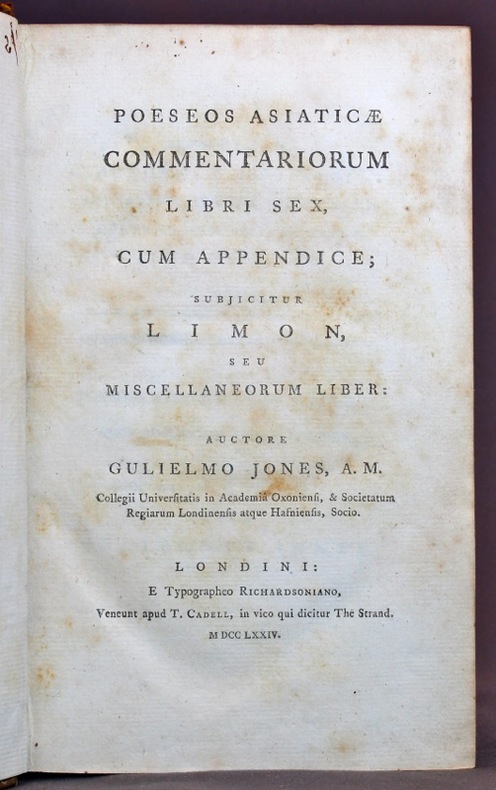
177415633Londini, E Typographeo Richardsoniano, veneunt Apud T. Cadell, 1774. In-8 de [2]-XXXI-[1]-542-[2] pages, plein veau beige, dos à nerfs joliment orné de filets et fleurons dorés, pièce de titre en maroquin rouge, roulette dorée sur les coupes.
br. 8vo, 599 photos.
br, 8vo, 598 photos
8vo, br. ed. bandelle 22,5 cm. 208 pagine 16 tavole in bianco e nero fuori testo . Una città nelle Alpi, apparentemente tranquilla, si appresta a festeggiare i riti della Pasqua. Il piccolo figlio di Andrea il conciapelli scompare improvvisamente, nonostante le affannose ricerche dei genitori e delle numerose persone coinvolte non se ne trova traccia. Qualche settimana prima, durante la quaresima, un predicatore francescano aveva tuonato dal pulpito profetando che dagli ebrei sarebbe venuta una sciagura. La lotta contro l'usura era la giustificazione della sua accesa ostilità, ma le storie di ebrei malvagi pronti a compiere sacrilegi o a uccidere bambini erano già radicate nell'immaginario popolare. Non passò molto e iniziò a serpeggiare l'idea che si dovesse indagare nella direzione della piccola comunità ebraica e della sua modesta sinagoga. Giunse però la spontanea denuncia di alcuni maggiorenti della comunità che una sera si recarono a dichiarare di aver rinvenuto il corpo esanime del piccolo nella derivazione di una roggia che attraverso una saracinesca portava direttamente l'acqua del fiume negli scantinati all'interno delle loro case. Nonostante la collaborazione il loro arresto avvenne la sera stessa, con l'esclusione di donne e bambini, confinati nei loro domicili. Inizia così una vicenda processuale drammatica che ha visto finire torturati, uccisi e messi al rogo tutti i maschi della piccola comunità ebraica. Ogni cosa è stata meticolosamente registrata negli atti che ancora oggi parlano con dovizia di particolari della tragedia.
34248Turnhout , Brepols, 1997 Paperback, 358 p., 210 x 270 mm. ISBN 9782503506395.
34249Turnhout , Brepols, 1997 Paperback, 304 p., 255 betaradiographies, 210 x 270 mm. ISBN 9782503506401.
184530709Paris Firmin-Didot 1845 In-8 704 pp,de la série, L'Univers pittoresque. Histoire et description de tous les peuples de leurs religions, moeurs, industries et coutumes. L'auteur fut ministre de France aux Etats-Unis. 68 gravures in fine , et 3 cartes dont une dépliante intérieur plutôt frais.
1996pt55departement oosterse studies Dos carré collé 1996 In-8 broché, dos carré collé, 251 pp. ; très bon état. Livraison a domicile (La Poste) ou en Mondial Relay sur simple demande.
1st edition -1st printing, very good black cloth with silver lettering, in good d jacket 262 pgs., Late Professor Louis Ginzberg was among the most noted Jewish scholar of his time. author of The Legends of the Jews.
8vo, br. ed. 160pp. II 1° aprile 1882 nella cittadina ungherese di Tisza Eslar scompare Esther Solymosi, una giovane contadina cristiana. È il sabato che precede la Pessach, la Pasqua ebraica e, per l'antico pregiudizio del sangue, la piccola comunità ebraica locale viene ingiustamente accusata di omicidio rituale. Moritz Scharf, un ragazzo ebreo, è il teste chiave del processo. Sotto tortura testimonia di aver assistito dal buco della serratura della sinagoga a un rito di sangue per il quale è stata sacrificata Esther Solymosi. Il rischio è che il mito del sangue nel tribunale di Nyíregyhàza si confonda con la storia.
8vo, cart. rig., sovracoperta, edit. pagg. 282, 27 foto f/testo., 23 cm