SHARP (Thomas)Livre Rare Book
445 résultats
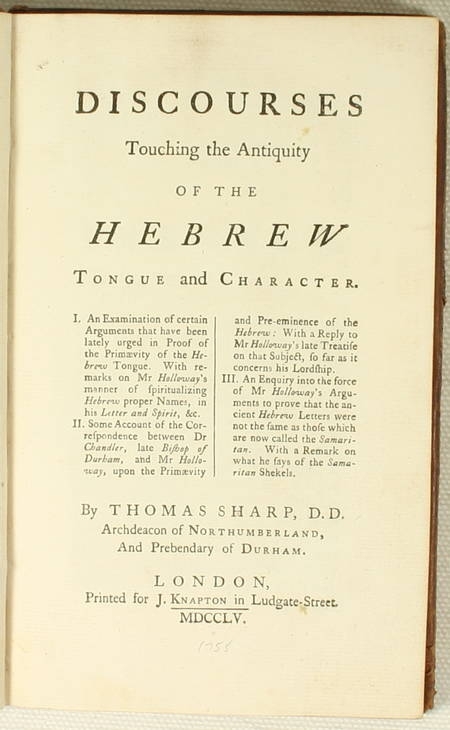
17556412London, J. Knapton, 1755. 355 g In-8, pleine basane, viii-247 pp.. La pièce de titre a été refaite. Coins usés, frottements, mors fendillés. . (Catégories : Judaica, Hébreux, )
0259369535.Gpaperback. Good. Access codes and supplements are not guaranteed with used items. May be an ex-library book. paperback
199723439Paris Larousse 1997 In-8 300 pp + tables
1806GITg418A Paris chez Le Normant 1806. In-8 XXXIII 358pp imprimées sur 2 colonnes. Demi basane bleu nuit, dos lisse orné de fleurons dorés et à froid, frise dorée en queue, relié vers 1840. Bel exemplaire frais, sans rousseurs et bien complet.
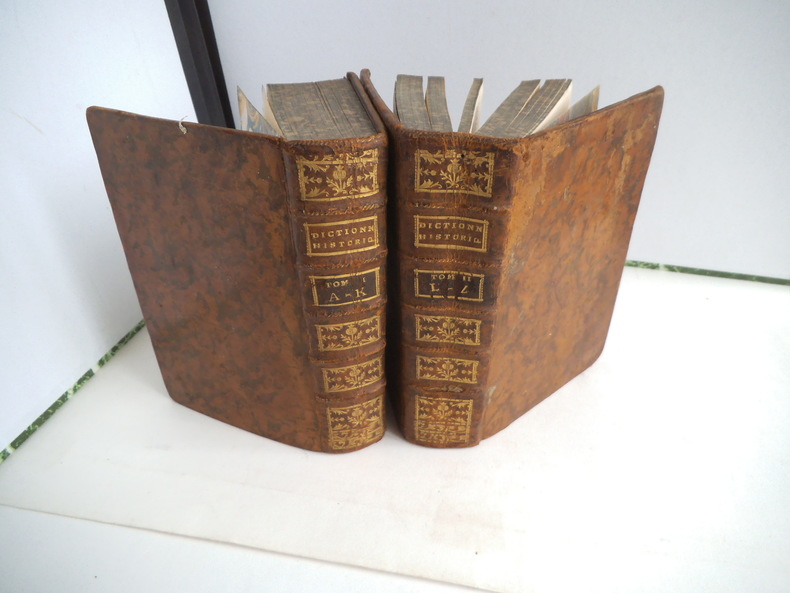
9650Contenant l’histoire des patriarches des princes hébreux, des empereurs, des rois et des grands capitaines, des dieux, des héros de l’antiquité payenne, des Pape, des saints pères, des évêques, et des cardinaux célèbres…des historiens ,orateurs, jurisconsultes, médecins des femmes savantes, des poètes, des peintres, des sculpteurs…et généralement de toutes les personnes illustres ou fameuses, de tous les siècles et de toutes les nations du Monde…Ouvrage utile pour l’intelligence de l’histoire ancienne et moderne et pour la connaissance des écrits et des actions des grands hommes illustres. Nouvelle édition corrigée et augmentée. Complet en deux volumes .2 tomes en 2 volumes in 12 plein cuir fauve raciné à nerfs, pièce de titre chagrin rouge, tomaison, filets roulette dorés. Tome 1 lettre A-K titre, XLVIII, IX table des hommes illustres, 835 pages. Texte sur 2 colonnes Tome 2: titre, 1 feuillet d’errata, 1003 pages, 1 page d’approbation, tranches rouges, chez la Veuve Didot 1760. Très bon état
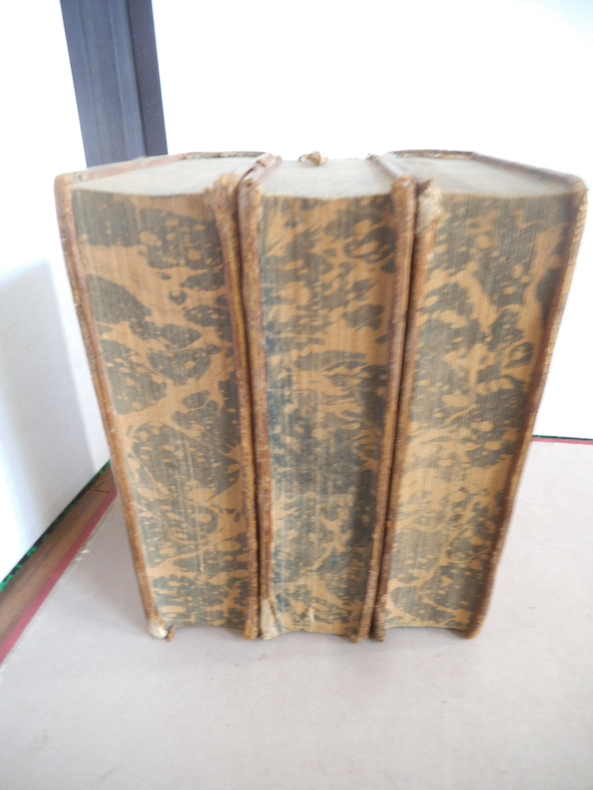
14516Dictionnaire Historique et bibliographique portatif Contenant l’histoire des patriarches des princes hébreux, des empereurs, des rois et des grands capitaines, des dieux, des héros de l’antiquité payenne, des Pape, des saints pères, des évêques, et des cardinaux célèbres…des historiens ,orateurs, jurisconsultes, médecins des femmes savantes, des poètes, des peintres, des sculpteurs…et généralement de toutes les personnes illustres ou fameuses, de tous les siècles et de toutes les nations du Monde…Ouvrage utile pour l’intelligence de l’histoire ancienne et moderne et pour la connaissance des écrits et des actions des grands hommes illustres. Trois tomes en trois volumes in 8 plein cuir fauve raciné à nerfs, titre, caissons, palmettes dorés. Filet doré sur coupes. Tranches marbrées 120x175mm. A paris du fonds de la Veuve DIDOT chez LE CLERC libraire 1777. Tome I : lettre A à -F -XII 700pages plus additions et corrections VI, plus correction et augmentation promises pour Janvier 1778. X. Tome II : lettres G à N- faux titre, titre, 1 feuillet d’approbation, 434 pages, corrections et augmentations survenues pendant l’impression III, additions et corrections autour de 1778 V Paris 1772 coins inférieurs émoussés. Tome III : Lettres Q à Z - 840 pages, additions et corrections du tome III 1779. XII. Table des articles du tome III Supplément au dictionnaire historique de LADVOCAT 8 pages. 1777. Texte sur 2 colonnes. Bon ensemble.
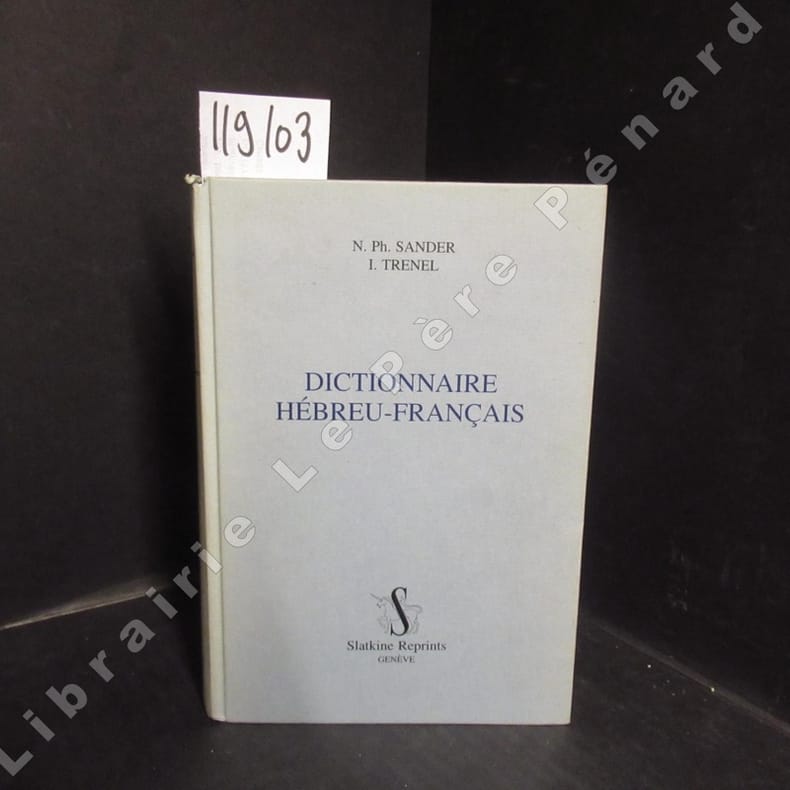
20051191032005 Editions Slatkine Reprints - 2005 - Réimpression de l'édition de Paris de 1859 - Fort in-8, cartonnage bleu ciel de l'éditeur - 811 pages
8vo, br. ed. pp.278. Un memoir, i ricordi dell'autore: la sua famiglia, la famiglia d'origine della madre, i due villaggi che l'hanno visto bambino. E i personaggi veri che popolano Leoncin e Bilgoraj - il padre sognatore, ingenuo, fragile, affascinato dal chassidismo con la sua vena mistica, le sue danze e i suoi canti, ma incapace di mantenere la famiglia a un livello accettabile; la madre, donna colta e intellettuale; il nonno, rabbino autorevole e benestante; la nonna, regina di una cucina generosa e affollata - sono, se possibile, ancora più vivi e originali di quelli dei romanzi, come se l'autore, mentre scrive, stesse rivivendo quei giorni lontani, e li raccontasse con lo stesso sguardo critico, ironico, ma affettuoso e tollerante che gli appartiene sempre. Una storia vera, calata nell'ambiente ristretto di due villaggi d'antan, che in realtà rivela un intero universo.
4to, br. ed. pp. xii-148. Indice analitico a cura di Marina Reinisch.
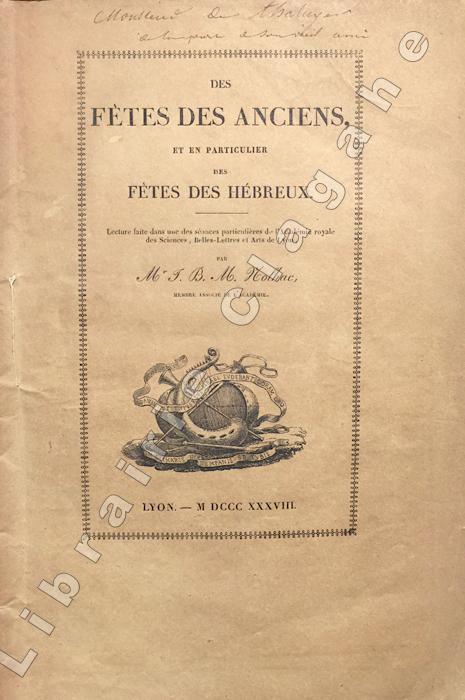
18389562Lyon, Imprimerie typographique et lithographique de Louis Perrin, 1838 ; in-8, broché ; 44 pp, couverture marron ornée.
41901Hafniae ( Copenhague ) Typis Matthiae Godicchenii, Sumptibus Petri Hauboldi 1672 in 4 (20x16) 1 volume reliure plein velin ivoire, pièce de titre de maroquin rouge, portrait gravé en frontispice, page de titre imprimée en rouge et noir, 3 faux-feuillets non chiffrés, 218 pages, 12 faux-feuillets non chiffrés, 71 pages (Accedit de ponderibus et mensuris veterum medicorum), avec de nombreuses figures gravées sur bois dans le texte, papier uniformément jauni. Johann Rhode. Bon exemplaire ( Photographies sur demande / We can send pictures of this book on simple request )
8vo, 390pp. The straggly beard, the hooked nose, the bag of coins, and gaudy apparel - the religious artists of medieval Christendom had no shortage of virulent symbols for identifying Jews. Yet, hateful as these depictions were, the story they tell is not as simple as it first appears. Drawing on a wide range of primary sources, Lipton argues that these visual stereotypes were neither an inevitable outgrowth of Christian theology nor a simple reflection of medieval prejudices. Instead, she maps out the complex relationship between medieval Christians' religious ideas, social experience, and developing artistic practices that drove their depiction of Jews from benign, if exoticized, figures connoting ancient wisdom to increasingly vicious portrayals inspired by (and designed to provoke) fear and hostility. At the heart of this lushly illustrated and meticulously researched work are questions that have occupied scholars for ages-why did Jews becomes such powerful and poisonous symbols in medieval art? Why were Jews associated with certain objects, symbols, actions, and deficiencies? And what were the effects of such portrayals-not only in medieval society, but throughout Western history? What we find is that the image of the Jew in medieval art was not a portrait of actual neighbours or even imagined others, but a cloudy glass into which Christendom gazed to find a distorted, phantasmagoric rendering of itself.
8vo, tela ed. in sovracoperta. pp.451. esaurito fuori catalogo. firma di app. altrimenti ottimo.
8vo, br. ed. 298pp. Nel 1928 Ludwig Lindner, un liberale protestante, viene nominato console della Repubblica di Germania a Genova e sposta in Liguria la sua famiglia, composta dalla moglie, Elisabeth Binswanger, di famiglia ebraica, e dai figli Lore e Wolfgang. Lore era la mamma dell'autrice di questo libro. Tra i due rami della famiglia – quello che resta in Germania e quello trapiantato in Italia – intercorre un fitto carteggio: centinaia di lettere scritte con cadenza regolare dalla nonna Lina e dalla sua nipotina Anneliese, destinate ai parenti «italiani». Trascritte e tradotte nei loro passaggi più importanti, queste lettere rappresentano ora un documento eccezionale, che ci permette di vivere in presa diretta le vicende di una famiglia ebraica tedesca dall'ascesa al potere di Hitler, nel 1933, alla deportazione delle due donne, nel 1942. Dalla serenità di un giardino sulle rive del Danubio all'inferno del Lager. Il carteggio, composto di parole sincere, intime, familiari, strazianti, descrive nel suo complesso il lento percorso, durato nove interminabili anni, attraverso il quale nonna e nipote vengono condotte senza pietà, umiliazione dopo umiliazione, all'esito atroce della deportazione e della morte. Grazie al lavoro di contestualizzazione storica operato da Mara Fazio, in queste pagine il lettore ha il privilegio di seguire la storia in prima persona, condividendo la commozione, l'angoscia, le esili speranze, la dignità, l'impotenza e il terrore che le parole di queste lettere ancora suscitano a distanza di ottant'anni. Ed è tanto più importante che l'operazione di recupero di questo materiale unico sia stata compiuta proprio da Mara Fazio, una diretta discendente, che oltre alla competenza storiografica mostra una dedizione ostinata, ispirata da profonda pietas filiale, dolorosamente percepibile.
8vo, br ed. bandelle pp.xii-292. Poco prima di morire Gershom Scholem ampliò notevolemente il testo dei suoi ricordi di gioventù "Da Berlino a Gerusalemme". Mentre nella prima versione veniva descritto l'ambiente ebraico tedesco durante la Prima guerra mondiale, in questa edizione il centro della sua analisi si sposta maggiormente verso Gerusalemme, soprattutto con il progetto di una nuova vita culturale e sociale per lo Stato di Israele. È la storia di un itinerario intellettuale ricco di incontri con alcune figure chiave del periodo come Martin Buber, Franz Rosenzweig e Samuel Agnon che, nello stesso tempo, rivela il tentativo di definire una nuova identità ebraica, attraverso la difesa della lingua e le ricerche sulla mistica.
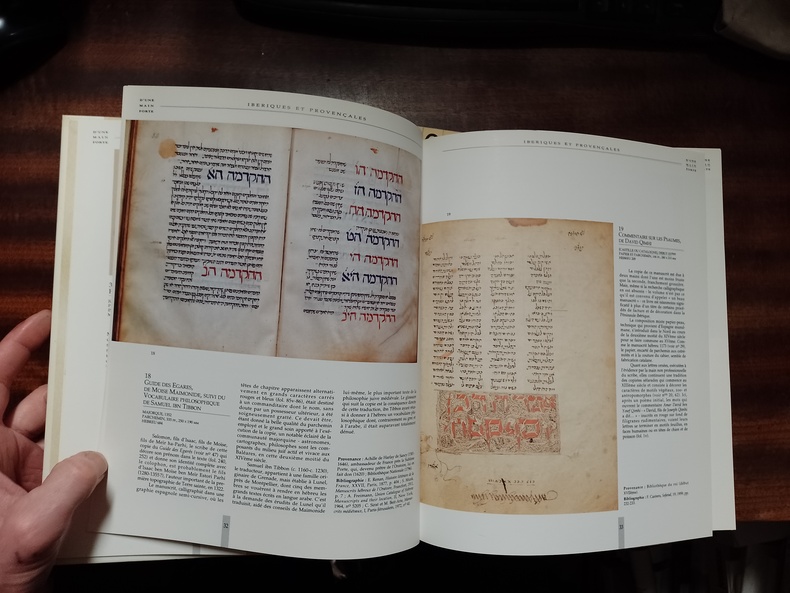
1991LIVRE4545451224Paris, Bibliothèque Nationale de France/Seuil, 1991, 25 x 29,5, 208 pages sous cartonnage éditeur illustré. Iconographie noir & blanc et couleurs. Ouvrage publié à l'occasion de l'exposition présentée à la Galerie Mansart du 17 octobre 1991 au 15 janvier 1992.
1375740Paris: Seuil, Bibliothèque nationale, 1991 in-4, 207 pages, illustrations. Bibliographie, trois index. Cartonnage illustré d'éd., très bon état. Préface d'Emmanuel Leroy-Ladurie. Joint le carton d'invitation à l'inauguration de l'exposition à la Bibliothèque nationale. L'ouvrage décrit 148 manuscrits hébreux.
8vo, herdcover in dj, 368 pages. During a 1931 trial of four Nazi stormtroopers, known as the Eden Dance Palace trial, Hans Litten grilled Hitler in a brilliant and merciless three-hour cross-examination, forcing him into multiple contradictions and evasions and finally reducing him to helpless and humiliating rage (the transcription of Hitlers full testimony is included. ) At the time, Hitler was still trying to prove his embrace of legal methods, and distancing himself from his stormtroopers. The courageous Litten revealed his true intentions, and in the process, posed a real threat to Nazi ambition. When the Nazis seized power two years after the trial, friends and family urged Litten to flee the country. He stayed and was sent to the concentration camps, where he worked on translations of medieval German poetry, shared the money and food he was sent by his wealthy family, and taught working-class inmates about art and literature. When Jewish prisoners at Dachau were locked in their barracks for weeks at a time, Litten kept them sane by reciting great works from memory. After five years of torture and hard labor-and a daring escape that failed-Litten gave up hope of survival. His story was ultimately tragic but, as Benjamin Hett writes in this gripping narrative, it is also redemptive. It is a story of human nobility in the face of barbarism. The first full-length biography of Litten, the book also explores the turbulent years of the Weimar Republic and the terror of Nazi rule in Germany after 1933
177pp Softcover Very Good Condition
106621Droz, Travaux d'Humanisme et Renaissance n°CCXXVI, 1988, 439 pages, pleine toile rouge de l'éditeur, bon état.
8vo, 271pp . good and evil in religions, Egypt, Mesopotamia and India, through Iranian and Jewish prophets, to early Christian beliefs.
8vo, br. ed. pp.301. In the wake of modern genocide, we tend to think of violence against minorities as a sign of intolerance, or, even worse, a prelude to extermination. Violence in the Middle Ages, however, functioned differently, according to David Nirenberg. In this provocative book, he focuses on specific attacks against minorities in fourteenth-century France and the Crown of Aragon (Aragon, Catalonia, and Valencia). He argues that these attacks--ranging from massacres to verbal assaults against Jews, Muslims, lepers, and prostitutes--were often perpetrated not by irrational masses laboring under inherited ideologies and prejudices, but by groups that manipulated and reshaped the available discourses on minorities. Nirenberg shows that their use of violence expressed complex beliefs about topics as diverse as divine history, kinship, sex, money, and disease, and that their actions were frequently contested by competing groups within their own society. Nirenberg's readings of archival and literary sources demonstrates how violence set the terms and limits of coexistence for medieval minorities. The particular and contingent nature of this coexistence is underscored by the book's juxtapositions--some systematic (for example, that of the Crown of Aragon with France, Jew with Muslim, medieval with modern), and some suggestive (such as African ritual rebellion with Catalan riots). Throughout, the book questions the applicability of dichotomies like tolerance versus intolerance to the Middle Ages, and suggests the limitations of those analyses that look for the origins of modern European persecutory violence in the medieval past.
1948GIT00947Paris Commission Intersyndicale Juive auprès de la CGT 1948. In-8 broché 277 XLIIIpp. Nombreux portraits dans le texte.
jj4008Editions l'Arche du Livre Cartonnage d'éditeur In-8° cartonnage d'éditeur, 494 pp., erratum inséré dans le volume, sans date ; cartonnage légèrement frotté, très bon état Livraison a domicile (La Poste) ou en Mondial Relay sur simple demande.
8vo, br. ed. 288 pages. 8.98x5.91x0.87 inches.]Old Odessa, on the Black Sea, gained notoriety as a legendary city of Jewish gangsters and swindlers, a frontier boomtown mythologized for the adventurers, criminals, and merrymakers who flocked there to seek easy wealth and lead lives of debauchery and excess. Odessa is also famed for the brand of Jewish humor brought there in the 19th century from the shtetls of Eastern Europe and that flourished throughout Soviet times. From a broad historical perspective, Jarrod Tanny examines the hybrid Judeo-Russian culture that emerged in Odessa in the 19th century and persisted through the Soviet era and beyond. The book shows how the art of eminent Soviet-era figures such as Isaac Babel, Il'ia Ilf, Evgenii Petrov, and Leonid Utesov grew out of the Odessa Russian-Jewish culture into which they were born and which shaped their lives.