92 résultats
159939429Heidelberg: Ex officina Commeliniana 1599. 8vo 19.9 cm 7.75". 14 827 1 pp. Lacks interior blank only. <br><br>One of the last 16th-century interlinear editions of the Greek New Testament and Vulgate Latin as first presented in Plantin's monumental Royal Antwerp Polyglot Bible of 156972. The text is printed in Greek with the Vulgate in roman type inter-linearly; additionally there are decorative letters and head and tailpieces. When the Vulgate differs from the Greek its text is printed in the margin as a shouldernote and a literal Latin rendering by the great Spanish theologian Benedictus Arias Montanus a.k.a. Benito Arias Montano is printed in italics in the text. The Commelin device appears on the title-page which describes this printing as "Editio postrema multò quàm antehac emendatior."<br>Â Â Â Â Evidence of Readership: Marginal notes or accents in at least two early hands have been added in ink in two dozenplus places with one page used for scribbling and content ranging from a squiggle to a word to real notes; two Latin words and the publication date in Arabic numerals under the publisher's roman have been inked to the title-page.<br>Â Â Â Â Provenance: Early calligraphic ownership note of "Dudley" dated 1843 on binder's blank; later ownership signature of E.F. Whitehouse with the shelfmark 354 and an acquisition note including the collectorly report "It was all to bits I had it bound and consider it a great curiosity. <br>Â Â Â Â <br>Â Â Â Â Adams B1716; Darlow & Moule 4656a; VD16 ZV 1904; USTC 440704. Recent half brown calf and mustard buckram cloth red leather spine label lettered in gilt all edges speckled brown new endpapers; very gently rubbed one short tear at bottom gutter of binder's blank. Light age-toning and waterstaining of various darknesses throughout most of the text with the occasional spot. The title leaf has been backed with a later paper with no loss of content; interior blank only lacking as above three leaves with small interior holes affecting letters two leaves with marginal sections torn away. Readership and provenance evidence as above with some inked notes trimmed or bled onto surrounding leaves. => Read and engaged with by multiple people and all the more intriguing because of it. Ex officina Commeliniana hardcover books
1800E0068viii514 pages with frontispiece map. Quarto 10 1/2" x 8 3/4" housed in a custom slipcase. Translated by Maurice Keatinge. First English edition.Bernal Dïaz del Castillo was a conquistador who wrote an eyewitness account of the conquest of Mexico by the Spaniards under Hernan Cortes himself serving as a rodelero under Cortes. Born in Medina del Campo Spain he came from a family of little wealth and he himself had received only a minimal education. He sailed to Cuba in 1514 to make his fortune but after two years found few opportunities there. Much of the native population of the island had already been killed by epidemics and forced labor and in 1517 an expedition was sent to the smaller Caribbean islands to find alternative sources of labor. Dïaz joined this group under the command of Francisco Hernandez de Cordoba. It was a difficult venture and although they discovered the Yucatan coast by the time the expedition returned to Cuba they were in disastrous shape. Nevertheless Dïaz returned to the coast of Yucatan the following year on an expedition led by Juan de Grijalva with the intent of exploring the newly discovered lands. Upon returning to Cuba he enlisted in a new expedition this one led by Hernan Cortes. In this third effort Dïaz took part in one of the legendary military campaigns of history bringing an end to the Aztec empire in Mesoamerica. During this campaign Dïaz spoke frequently with his companions in arms about their experiences collecting them into a coherent narration. The book that resulted from this was Historia verdadera de la conquista de la Nueva Espana English: The True History of the Conquest of New Spain. In it he describes many of the 119 battles in which he claims to have participated culminating in the fall of the Aztec Empire in 1521.As a reward for his service Dïaz was appointed governor of Santiago de los Caballeros present-day Antigua Guatemala. He began writing his history in 1568 almost fifty years after the events described in response to an alternative history written by Cortes's chaplain who had not actually participated in the campaign. He called his book the Verdadera Historia True History in response to the claims made in the earlier work. Dïaz died in 1585 without seeing his book published. A manuscript was found in a Madrid library in 1632 and finally published providing an eye-witness account of the events often told from the perspective of a common soldier. Today it is one of the most important sources in understanding the campaign that led to the collapse of the Aztec Empire and the Spanish conquest of Mexico.Condition:Spine renewed with new period spine label and original boards which the corners and edges are heavily rubbed some foxing to early pages. Frontispiece map repaired. Custom made red slipcase with Japanese toggles and leather spine label in gilt lettering else about a very good copy in a near fine case. Printed for J Wright by John Dean hardcover books
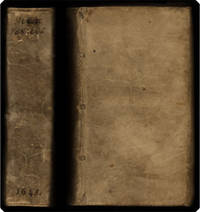
164841618Amsterdam: Prostant apud Neminem 1648. 12mo 13.4 cm 5.27". Frontis. 4 252 14 index 2 blank 71 1 pp. <br><br>with separate title-page Stymmelius Christoph. Studentes sive comoedia de vitâ studiosorum. Alentopholi: In Aedibus Iberiorici Nobilimi 1647. 12mo. 88 pp. and Senatus et consultatio sacerdotum quorundam super mandato praesulis facto ut concubinas habitas abigant & posthac nullas alant. Amsterdam: 1648. 12mo. 8 pp.<br>Â Â Â Â This compendium of witticisms jests and comedy opens with a copper-engraved frontispiece of a jovial drunkard and a first title-page bearing a woodcut of a peddler and his dog. The first part offers a collection of ironic questions and answers on satirical topics often concerned with women e.g. what is a liberal woman as well as with curiosities e.g. why are Ethiopians black is begging preferable to wealth it is. There follow essays on assorted topics including pseudo-medicine "Quid sit medicina culinaris"; the Pugna porcorum this Battle of the Pigs being => a satirical poem written solely and perhaps preposterously with words beginning with P; while the Crepundia poetica is a collection of short poems on sundry subjects from doctors to astrologers.<br>Â Â Â Â The Nugae venales first appeared in 1632 with subsequent publications making use of various combinations of sections. => This early edition adds a comedy about university life Studentes sive comoedia de vita studiosorum and a satirical poem on the clergy.<br>Â Â Â Â Provenance: Front fly-leaf with pencilled inscription of E. Kijper noting purchase price of "IV florines" in 1920. <br>Â Â Â Â <br>Â Â Â Â Brunet IV 136-137; Graesse IV 701; VD17 23:629766P. Contemporary vellum with yapp edges spine with hand-inked title and date; light dust-soiling overall with spine and edges darkened vellum just starting to chip at back joint. Front pastedown and fly-leaf with later pencilled annotations. Studentes bound out of order with title-page and prologue towards the end; a helpful hand has tried to make sense of the situation by adding page numerals. One leaf with short tear from outer margin touching a few words without loss; one short wormtrack touches two lines on each side of one leaf. Pages age-toned otherwise clean. => A solid interesting example of this popular work in an early stage of its evolution. Prostant apud Neminem hardcover books
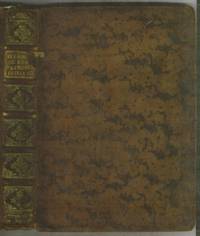
1755CA011424531 pages with engraved allegorical frontispiece and index. Small folio 11 1/2" x 8 1/2" bound in original full leather with raised spine bands and decorative gilt lettering. Palau 266572. Sabin 70785 First edition.<br /><br />Full of original documents respecting the establishment of the Church in the Indies and the protection of the Indians together with all the bulls referred to from that of Alexander VI to the time of publication. With the additional 24 preliminary leaves not in all printings.<br /><br />The ancestors of Rivadeneira on both sides had served the Crown for centuries in the Reconquista in high positions of Church and State and in the conquests of Mexico and the Darién. Among his relatives is the Marquis de Moncada lieutenant colonel of the Puebla Regiment. Rivadeneira received a bachelor's degree in Philosophy and Law from the University of Mexico. He obtained a scholarship at the Colegio Mayor de Todos Santos on November 11 1731 served in various positions competed for the Chair of Institutes and remained in residence until 1746. The Audiencia de México approved him to practice as a lawyer in 1733. While still in Todos Santos Rivadeneira began serving in various positions. He was an advisor to the mayors of the city and town of Carrión in Valle Atrisco. The interim viceroy-archbishop Juan de Bizarrón appointed him a lawyer for the poor of the Courtroom of the Audiencia in 1739 with similar capacity in the Tribunal del Santo Oficio the city of Puebla and the Agustino Convent of Mexico. In 1744 Rivadeneira became fiscal agent of the room of the Crime. He served as an advisor to the viceroy Duke of the Conquest and was commissioned to settle a dispute over land by his successor the Count of Fuenclara. In 1746 Rivadeneira decided to go to Spain for family businesses and to secure a position. For a payment of 13000 pesos he obtained the appointment as supernumerary judge of the Audiencia de Guadalajara by decree of January 30 and title of February 20 1748. Without occupying this position he obtained the criminal prosecution of the Audiencia de Mexico on December 22 of 1753. He obtained a license to sail to New Spain with the servants José Ostos of Écija; Diego Ibiricu from Cádiz; Antonio de la Cruz from Zacatecas and Manuel Tagle a "free black". Rivadeneira returned to New Spain in 1755 in the same vessel in which the new viceroy Marquis de las Amarillas went and assumed his post on October 30 1755. As a prosecutor he opposed the activities of the Tribunal de Acordada. Assigned to the civil prosecutor's office to replace Luis de Mosquera and Aranda by consultation of April 28 and title of June 21 1760 the following year by consultation of May 14 and title of August 15 was appointed to replace the deceased Francisco López Adán as judge of the Audiencia. He served until his death. While he was an oidor he was denounced for possessing forbidden books. While in Spain in 1752 Rivadeneira published <i>El Pasatiempo for the use of Ex.mo Señor Carvajal and Lancaster a history of the world from creation to Fernando VI</i> in three volumes. This long didactic and religious poem was an effort to obtain a position and Beristain perhaps not knowing of the payment of 13000 pesos by Rivadeneira considered his first appointment of audience due to the sponsorship of José de Carvajal. As a prosecutor in 1755 Rivadeneira wrote the <i>Handbook compendium of the Indian Board of Trustees</i> which traced the royal patronage to the Book of Genesis an achievement for which the Crown gave him 4000 pesos. He also wrote the <i>Defense of Royal Jurisdiction</i> in 1763 <i>the remarkable newspaper of His Excellency Marquise de las Amarillas</i> and the draft of the protest sent to Spain by the City Council of Mexico City in 1771 on a claim of appointments for Americans.<br /><br /><b>Condition:</b><br /><br />Missing some of spine label small crack along the heal font hinge spine ends chipped light rubbing to extremities with the corners rubbed through internally very nice over all a very good copy. Antonio MarÃn hardcover books
195347241Concepción: by the Company 1953-4. First Edition. Quarto 27cm. Twelve monthly issues comprising the entire first year of publication. Bound into cloth-backed boards front and rear wrappers retained; each issue 16pp. Moderate external wear; punch-holes in bound margin of each issue else Very Good. A graphically impressive company journal issued by the major Chilean mining and manufacturing firm Compañia de Acero del Pacifico CAP. Founded in 1947 CAP is still one of the largest industrial concerns in all of Latin America. Huachipato a publication aimed toward the company's employees chronicles activities both within the company and in the surrounding apparently vast company town. In addition to industrial and technological achievements the publication documents the social life of the company's workers with much coverage of sporting and cultural events the town's soccer team also called Huachipato was elevated to Chile's primera división as early as 1965. The journal is noteworthy for its graphical sophistication with photo-montaged covers sprightly layouts and a mid-century aesthetic reflecting Latin America's internationalist ambitions during this period. Rare; OCLC 2020 locates just scattered holdings all for three or fewer issues; Texas and Cornell only in North America. by the Company unknown books
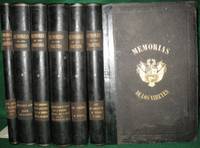
1859CA02406 volumes. xxx379index pages; 426index pages; 388index pages; 51620 tables and index pages; 39317 tables and index pages; 39456 tables and index with large fold out map at back and 12 plates. Folio 12 1/4" x 8 1/4" bound in original publisher's dark brown pebbled cloth ruled in blind with front boards with armorial gilt device. New spines with original title in gilt laid on. Palau 95426 Sabin 26119 First editions.<br /><br />These memoirs prepared by ten of the viceroys were intended to apprise each successor of the nature and duties of his post of the distribution of offices and presidencies of the privileges of the natives their hereditary customs and character. The work forms a glorious monument of statesmanship; and it may be conjectured that if the Spaniards had always formed their conduct according to these Memorias they would never had lost their colonies in the New World. Bibliographico-Linguistica 312 part III<br /><br />The series was edited under the direction of the Ministerio de Hacienda.<br /><br />Some foxing in all volumes some water staining varying in degrees in volumes worming to some volumes in varying degrees a few affecting text but all readable. Spine replaced with original spine labels affixed else a good set of a scare colonial item. Due to the size and/or weight of this lot extra shipping and/or handling charges may apply. Libreria Central de Felipe Baily hardcover books
156237346Lugduni Lyons: apud Theobaldum Paganum 1562. 16mo 11.5 cm; 4.5". 284 pp. <br><br>16th-century printers seem to have been fond of printing these particular books of the Bible as a unit in small format for personal use. The palm-sized "poetical books" or "wisdom literature" do not survive in the appreciable numbers that the octavo and larger format whole Bibles or Testaments do. => In fact of this edition in North American libraries we trace only this now deaccessioned copy and one other in a Canadian institution.<br>Â Â Â Â Pagan's variant of the famous Estienne printer's device appears on the title-page. Text is printed in roman type with occasional use of italic and Hebrew and a few nice historiated initials here and there. Early limp vellum dust-soiled and gently cocked. Exseminary library with rubber-stamp on bottom edge of closed volume others on front and rear pastedowns bookplate at front shadows of librarian's pencilling erased from title and verso. Light age-toning small chipping to first and last few leaves light inking on verso of front fly-leaf. apud Theobaldum Paganum hardcover books
198226131N.p. San Salvador: FPL 1982. Photolithograph in colors; 56.5cm x 37.5cm ca 22-1/4" x 15-1/2". A vivid unfaded example free of wear; Fine. Poster celebrating the twelfth anniversary of the Fuerzas Populares de Liberación "Farabundo MartÃ" FPL. The FPL was one of five Marxist organizations that joined in 1980 to form the FMLN which is today the mainstream left party of El Salvador. The still somewhat provisional nature of the alliance in 1982 may be gauged from the fact that in this poster the FPL continues to maintain its own identity publishing under its own imprint and adding a caption in the lower margin "Miembro del FMLN." Photo-illustrated with five scenes from the Salvadoran civil war including active scenes combat surrounding a quote by the Communist revolutionary leader Cayetano Carpio aka "Marcial". Not found in OCLC though web search does turn up a copy at IISH Netherlands. FPL unknown books
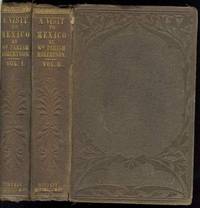
1853BOOKS0066102 volumes xxii332 pages with folding frontispiece and folding map; ii478 pages. Small Octavo 7 3/4" x 5 1/4". Bound in original embossed brown cloth with gilt lettering to spine. The map is titled Mexico and Texas and shows the Republic of Texas including a large sectin of today's New Mexico Kansas and southern Colorado northward to the Arkansas River and westward to the Rio Grade. Sabin 72016 1st American edition. 2 volumes. xxii332 pages with fold out frontispiece and foldout map; ii478 pages with appendix. Small Octavo 7 3/4" x 5 1/4". Bound in original decorative blind stamped brown cloth with gilt lettering to spine. The map is titled Mexico and Texas and shows the Republic of Texas including a large section of today's New Mexico Kansas and southern Colorado northward to the Arkansas River and westward to the Rio Grade. Sabin 72016 First American edition. Robertson was appointed Mexican commissioner in 1848. He journeyed with his daughter from Southampton to Bermuda on the Avon and then to the Yucatan Peninsular on the Forth. Written in the form of a journal the book includes both details of everyday life on board ship and dramatic events such as shipwreck. Both father and daughter contributed to the book which gives an interesting perspective on Robertson's sojourn in Mexico. The book provides information on the country's mines politics and mores as well as anecdotes of the Yucatan and West Indies. Condition: Front inner hinge of volume one cracked through spine ends and corners chipped and rubbed previous owner's name on front end papers. A good copy. Simpkin, Marshall & Co hardcover books
1892A0818265-480 pages with 2 plates illustrations tables. Quarto 11 1/2" x 8 3/4" bound in quarter red leather marbled boards and gilt lettering to spine. From the library of Professor George M Foster. Pagination follows its publication in a volume of the Anales del Museo Nacional de Mexico. First edition.<br /><br />Jacinto de la Serna was a 17th-century priest who recorded extensive information regarding the survival of native religious customs. Born in Mexico he gained a doctorate in theology at the University of Mexico of which he was later rector three times. As a young priest he served for 14 years in parishes of the Indians during the same time that Ruiz de Alarcon was making his investigations. He spent most of his later career in Mexico City where he was one of the curates of the cathedral during three periods. He held important offices in the administrations of the archdiocese. He served as visitor general of the archdiocese under two archbishops. In 1656 he composed a work entitled Manual de ministros de indios para el conocimiento de sus idolatrias y extirpacion de ellas first published in 1892 in which he drew together the fruits of his own experience and the results of his studies. The purpose of the work was to acquaint the religious ministers with the superstitions of the Indians so that they could better instruct their Indian charges. The work may be divided into four parts. In chapters 1-5 he traces the history of the efforts to put an end native religious practices. In this section he gives valuable details of his own activities and of those of his predecessors such as Pedro Ponce de Leon and Hernando Ruiz de Alarcon. Chapters 6-11 are a study of the Aztec calendar for which he drew heavily on Martin de Leon. Boturini later used some of his material. Chapters 12-27 treat of religious beliefs and practices of the Indians. Large sections were take directly or in paraphrase from Ruiz de Alarcon including the latter's translations of Indian chants and prayers. Chapters 28-33 propose remedies against the continued practice of the native religions.<br /><br />George McClelland Foster Jr born in Sioux Falls South Dakota on October 9 1913 died on May 18 2006 at his home in the hills above the campus of the University of California Berkeley where he served as a professor from 1953 to his retirement in 1979 when he became professor emeritus. His contributions to anthropological theory and practice still challenge us; in more than 300 publications his writings encompass a wide diversity of topics including acculturation long-term fieldwork peasant economies pottery making public health social structure symbolic systems technological change theories of illness and wellness humoral medicine in Latin America and worldview. The quantity quality and long-term value of his scholarly work led to his election to the National Academy of Sciences in 1976. Virtually all of his major publications have been reprinted and/or translated. Provenance from the executor of Foster's library laid in.<br /><br />Condition:<br /><br />Foster's stamp to title. Some extremity rubbing boards slightly bowed else a very good copy. Imprenta del Museo Nacional hardcover books
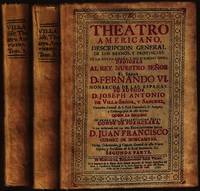
1952CA0250Description:<br />2 volumes. Royal octavo 9 1/4" x 6 3/4" bound in facsimile velum with title printed in red and black on covers and horizontally ink lettered. Introduction by Francisco Gonzalez de Cossio. From the library of George M Foster. Second edition limited to 500 copies of which this is number 13.José Antonio Villaseñor y Sánchez was an 18th-century geographer historian and mathematician in New Spain. He was born in San Luis Potosà México and studied at San Ildefonso in Mexico City. He became an accountant and later official cosmographer geographer of New Spain. By order of Philip V the viceroy of New Spain Conde de Fuenclara was commanded in 1740 to have a report prepared on the true condition of the provinces of his jurisdiction. He commissioned José Antonio Villaseñor y Sánchez to prepare the report. Villaseñor occupied a number of important posts: official mayor of the Contaduria de Reales Tributos contador general de la azogues and cosmographer of New Spain. He wrote a number of works of mathematical and astronomical interest. The outcome of this commission by Fuenclara was the Theatro Americano descripción general de los reinos y provincias de la Nueva España y sus jurisdicciones. It appered in two volume in 1746 and 1748. The first volume contains introductory chapters on pre-Spanish and Spanish history of Mexico followed by a jurisdiction-by jurisdiction description of the archdiocese of Mexico and diocese of Puebla. The second volume continues the description for the diocese of Puebla. The second volume continues the description for the diocese of Michoacán Oaxaca Guadalajara and Durango. The work comprehends a great mass of data regarding the ethnology and population of the Mexican provinces in the mid-18th century. Handbook of Middle American Indians.George McClelland Foster Jr born in Sioux Falls South Dakota on October 9 1913 died on May 18 2006 at his home in the hills above the campus of the University of California Berkeley where he served as a professor from 1953 to his retirement in 1979 when he became professor emeritus. His contributions to anthropological theory and practice still challenge us; in more than 300 publications his writings encompass a wide diversity of topics including acculturation long-term fieldwork peasant economies pottery making public health social structure symbolic systems technological change theories of illness and wellness humoral medicine in Latin America and worldview. The quantity quality and long-term value of his scholarly work led to his election to the National Academy of Sciences in 1976. Virtually all of his major publications have been reprinted and/or translated. Provenance from the executor of Foster's library laid in.Condition:<br />Foster's stamp to front limited page some wear to edges small linear tear at spine head of volume 2 else a very good copy. Editora Nacional paperback books
18592221732<p>First edition. Octavo. 2 large folding tables at rear. Errata leaf. Contemporary maroon calf over marbled boards red morocco label minor rubbing. Very good. 65 pages XXVIII appendix.</p><p>Scarce work by this Mexican Lt. Colonel of Artillery 1831-1877. He achieved the rank of brigadier general and was appointed commander of the imperial artillery at the Siege of Queretara.</p><p>Provenance: From the library of the great English collector and bibliophile Sir Thomas Phillips 1792-1872 with his MS pressmark.</p> Imprenta de J. M. Lana hardcover books
18452221653<p>Carbajal Francisco De - also sp. Carvajal Vindicacion de D. Francisco Carbajal. Mexico City Imprenta de Vicente Garcia Torres 1845. 53 pages.</p><p>Bound With:</p><p>Espinosa D. Francisco Carbajal. Atrocidades Cometidas Por El Malrado Gobierno De Ayutla Y Su Satelite Benito Quintana Y Otros. Mexico City. 1858. 60 pages.</p><p>Octavo. Period green morocco over marbled boards black morocco label. Very good some light foxing. 2 separate works in one volume.</p><p>With the MS pressmark and "MHC" inscription of famed English bibliophile Sir Thomas Phillips 1792-1872.</p> Imprenta de Vicente Garcia Torres hardcover books
1779983821Lucian cianucian Greek Lucianos Latin Lucianus born AD 120 Samosata Commagene Syria now Samsat Tur.—died after 180 Athens Greece<br /><br />Danza Dialogo di Luiano con Annotazioni con annotazioni. <br /><br />In Firenze : nella stamperia di Gaspero Pecchioni 1779. Original edition. 8vo. Old wrappers iv 44 p. Some stains to titlepage. Very good copy. In this dialogue the Cynic Crato who has no in pantomimic dancing or those who go to see it is converted to its appreciation by his friend Lycinus.<br />This is a translation into Italian with notes of Lucian's famous dialogue on pantomime or "tragic dancing" in ancient Greece. In "tragic" dancing a dramatic plot is enacted by a masked and costumed dancer supported by an actor. The dancer's lines are spoken for him by someone else. There is also a chorus and for accompaniment the flute and the syrinx with various instruments of percussion. The work is dedicated to Antonio Muzarelli who was ballet master at the Burgtheater in Vienna at a time when ballet was detested by Emperor Joseph II although the art form was gaining some popularity due to the reforms of Jean-Georges Noverre 29 April 1727 – 19 October 1810 the a French dancer and balletmaster generally considered the creator of ballet d'action. The dialogue was probably written in Antioch in 162–165 a.d. when the Emperor Verus was there in compliment to him because of his interest in pantomime at a time when visual art was held inferior to literary art. This work underscores the legitimacy of dance because Lucian recognizes the intellectual character of dance. He emphasizes that a dancer must be able to express his or her ideas and sentiments through the intelligibility of movement and posture. Lucian's dialogue on dancing remains popular today due to its clever dialogue and clarity of argument. Rare: two OCLC locations one in North America: NYP Pecchioni books
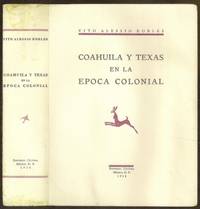
1938CA0116xii751 pages with color frontispiece maps some foldout plates some in color diagrams and illustrations. Royal octavo 9 1/2" x 7" bound in original wrappers. Inscribed by the author. Howes 382 Limited to 1000 copies.Vito Alessio Robles was born on August 14th of 1879 in Saltillo Coahuila son of Dominic Alessio and Cristina Robles. There he studied at the Ateneo Fuente. He graduated as an engineer at the Military College of Mexico City. In 1910 a lieutenant colonel in the Federal Army under the command of Colonel Samuel Garcia Cuellar fought Madero in the Battle of Casas Grandes Chihuahua. Before he had taken up arms against the Yaquis. Under Madero he served as Inspector General of Police Public Works and deputy military attache in Rome. n 1913 he returned to Italy as a result of the fall of Madero. Under the Victoriano Huerta presidency he was arrested and detained and imprisoned. Following this he joined the Constitutionalist ranks first operated in San Luis Potosi under the command of General Alberto Carrera Torres and then was sent north with Francisco Villa. At the onset of division of the revolutionary leaders in the Convention of Aguascalientes he remained with the convention and was a delegate and became secretary. He held the governorship of the Federal District during the presidency of Roque Gonzalez Garza allowing its inhabitants to bear arms. After 1920 he held a deputation by the Federal District and a senate of Coahuila . In 1925 and 1926 had moved in diplomatic circles as a minister of Mexico in Sweden. As Chairman of the National Anti Party fought against Plutarco Elias Calles and Alvaro Obregon. He ran for governor of Coahuila in 1929 and in that same year he was banished from the country finding acceptance in Austin Texas where he devoted himself to historical research. Vito Alessio Robles also excelled as a great journalist was director of the Heraldo de Mexico and The Democrat and contributor to El Universal Excelsior and La Prensa among others under the pseudonyms "Tobias O. Soler" and "Pingüino Macho". Condition:Still has the original onion skin wrapper. Inscribed on half title slight stain to head and tail of spine else a very good to fine copy. Editorial Cultura paperback books
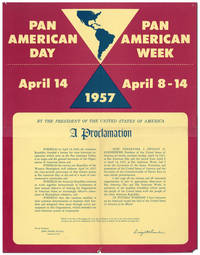
42513Washington: GPO 1957. Offset-printed broadside in three colors 21-1/2" x 17"; printed recto-only. Old folds probably as issued; a few small nicks to extremities; Very Good or better. Announces the establishment of Pan American Week April 8-14; and Pan American Day April 14 and reprints the full text of Eisenhower's proclamation. Pan-American Day is still celebrated in some Latin American countries though news of its establishment never seems to have made a lasting impression on the U.S. populace. Though clearly intended for display this broadside is apparently scarce with no example recorded in commerce and none catalogued in OCLC as of October 2018. unknown books
19512222239<p>First edition presumed first issue in gilt stamped green cloth. 24 illustrations. Dust jacket unclipped. Enclosed in a green morocco slipcase with three leather labels. Very good. 398 pages.</p><p>Signed and inscribed by author to noted book collector George A. Zabriskie on front free endpaper.</p><p>With two snake skin pieces bookplates on the front and rear pastedowns.</p> Eyre & Spottiswoode hardcover books
1934CA0247Description:<br />2 volumes: 427 pages with facsimile title and index; 513 pages with two facsimile pages appendix and index. Royal octavo 9 1/2" x 7" bound in three quarter blue leather with raised spine bands and gilt lettering to spine. From the library of George M Foster. Second edition.<br /><br />The two chronicles by Francisco de Burgoa easily hold first place for inflated style and bombastic phraseology especially the opening remarks to various chapters. Yet for the important area of Oaxaca and the numerous subjects he treats Burgoa's works are indispensable and irreplaceable sources. Burgoa born in Oaxaca was related to numerous local colonial families. He took his final vows in 1625 and by 1649 was provincial of his Order. In that post he made a special effort to visit various parts of Oaxaca especially seeking notices of Zapotecan antiquities with the aim of writing a history of Oaxaca. Before his death in 1681he did not complete it but left two prolix yet valuable published treatises. The two chronicles are the usually abbreviated Palestra historial and Geográfica descripción. Burgoa conceived of them as a single work but they differ in contents. The Palestra historial is a typical chronicle. It begins with the arrival in 1526 of Dominicans in Mexico City and shortly thereafter their appearance in Oaxaca. Burgoa rehearses the lives of many missionaries already biographized by Davila Padilla but Burgoa emphasizes their apostolate in the Oaxaca areas even before formal establishment of the Province of San Hipolito 1592. These lives are uniformly eulogistic but scattered through them are important bits of information on the numerous Indian groups of Oaxaca. The Geográfica descripción has 80 chapters. They detail the histories of the Monasteries and the work of their friars among the Indians with much less attention to biographical detail than in the Palestra historial. The data run to about mid-17th century in both. Handbook of Middle American Indians<br /><br /> George McClelland Foster Jr born in Sioux Falls South Dakota on October 9 1913 died on May 18 2006 at his home in the hills above the campus of the University of California Berkeley where he served as a professor from 1953 to his retirement in 1979 when he became professor emeritus. His contributions to anthropological theory and practice still challenge us; in more than 300 publications his writings encompass a wide diversity of topics including acculturation long-term fieldwork peasant economies pottery making public health social structure symbolic systems technological change theories of illness and wellness humoral medicine in Latin America and worldview. The quantity quality and long-term value of his scholarly work led to his election to the National Academy of Sciences in 1976. Virtually all of his major publications have been reprinted and/or translated. Provenance from the executor of Foster's library laid in.<br /><br />Condition:<br />Some occasional pencil marginalia by Foster. Foster's date of acquired on front paste down of volume one. Some rubbing to extremities else a very good set. Archivo General de la Nacion hardcover books
1946CA0057xxiv549 pages with 120 facsimile pages. Folio 13" x 9 1/2" bound in original publisher's wrappers. Originally written in English by Dr. Wagner it was published only in Spanish. Translated by Joaquin Garcia Pimentel and Federico Gomez de Orozco. Limited to 1000 copies of which this is number 285 on "fulva charta de Coyoacan" a yellow-tinted paper manufactured in Coyoacan. First edition.<br /><br />This monumental work was ten years in preparation. It contains a description of the books printed in Mexico before 1601 and in most cases includes a reproduction of the title page references to other bibliographies census of copies in public and private hands and prices and dates of sale. The author modestly calls this a supplement to the bibliographies of Joaquin Garcia Icazbalceta Jose Toribio Medina and Nicolas Leon. Actually it is the most complete and detailed work on printing in Mexico from 1539 to 1600 ever published.<br /><br /><b>Condition:</b><br /><br />Edge wear to wrappers with some closed tears else a very good copy still unread. Editorial Polis paperback books
165285679Amsterdam: sumptibus regiis L. Elzevier 1652. Editio nova ab auctore sucta et recognita. Hardcover. Very Good. 499p. Later old leather. 14 cm. No cover titling. Edges and joints rubbed. Backstrip crazed. Outer blanks partially pasted down. Old name Daniel Keim inked on a couple of leaves. Narrowly margined. Latin text. This defense of Charles I and of the divine right of kings was first published in the year 1649 that Charles I was executed. This "Edition nova" appears to be rather scarce. <br/><br/> sumptibus regiis [L. Elzevier] hardcover books
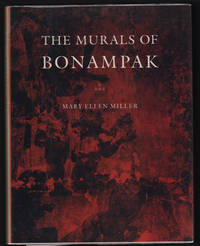
1986271Princeton: Princeton University Press 1986. First Edition First Printing. Hardcover. Near fine/near fine. A near fine first edition in a near fine dust jacket. Russet cloth boards. White end papers. From the private library of Larry Southwick collector's marginalia pencilled near front hinge no other markings. Binding sound square and sturdy. Foxing top edge interior pages clean and bright. Sunning to spine edge of dust jacket. 176 pp. followed by 63 pp. plates many in color. Also illustrated with 53 figures and drawings. Quarto 8 1/2 x 11 inches tall. Princeton University Press hardcover books
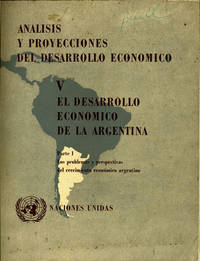
195934895México: Naciones Unidas Departamento de Asuntos Económicos y Sociales 1959. First edition. Cloth. A very good or better copy with light soiling and owner's name on original wrapper leaves clean. xiii 129 pp. Sm. 4to. A pioneer contribution to the economy of Argentina in the first half of the 20th c. Naciones Unidas Departamento de Asuntos Económicos y Sociales hardcover books
1768769111768. BOUDOT Jean. DICTIONARIUM UNIVERSALE LATINO-GALLICUM ex Omnibus Latinitatis Autoribus Summa Diligentia Collectum. ad Usum Serenissimi Dombarum Principis. Rouen Printed by Lallement and Paris Barbou etc. 1768. Octavo. 4xvi11122pp. Dedicated to Louis Bourbon Prince of Dombes. Title in red and black. Some faint foxing else internally fine. Early calf quite worn and dried. Cordell Collection has 1786 edition. unknown books
19652221599<p>First edition. Small thin octavo. Preface by Felix B. Visillac. Original stiff tan wrappers stamped in black. Text browned due to paper quality. Very good. 54 pages.</p><p>Signed and inscribed by author to poet Alicia Ghiragossian on title page.</p> Direccion Lafuente paperback books
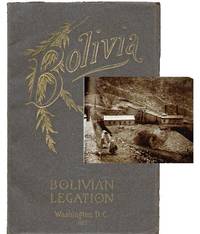
191218158Washington DC: Press of Byron S. Adams 1912. 6 x 9.25 inches 72 pp with chromolithograph frontispiece many b/w illustrations from photographs. Near fine with mild edgewear to wrappers. Stamp of the Bolivan Consulate in San Francisco on front endpaper. An attractive informational booklet aimed at potential investors with description of the major cities of Bolivia and details of topography demographics climate natural resources mining the financial system laws and tariffs and transportation. A colored folding map of the country shows forest agricultural areas and mineral locations. Press of Byron S. Adams unknown books