26 128 résultats
67053, Corpus Christianorum Continuatio Mediaevalis, vol. 241B, 2025 Hardback, Pages: lxxii + 920 pages, Size:155 x 245 mm. Illustrations:1 col. Language(s):Latin, German * New. ISBN 9782503586731.
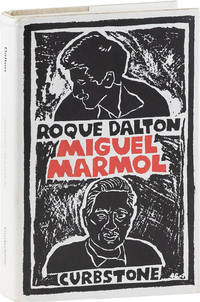
198759799New York: Curbstone Press 1987. First English Language Edition. First printing. Octavo. Tan cloth hardcover; dustjacket; xviii19-503pp. Inscribed on front flyleaf: "Para la camarada Kendra Alexander y adelante con la lucha solidaria con el pueblo Salvadoreño y Centroamerica" signed by Miguel Mármol dated 1988. Mild bumps to board corners a bit of rippling to cloth on spine still Near Fine a slightly faded but still Near Fine dustwrapper. <br /> <br /> A terrific association copy inscribed by Miguel Mármol to American communist and civil rights activist Kendra Alexander. Mármol 1905-1993 founding father of the Salvadoran Communist Party in 1930 and a leading figure of the Salvadoran worker-revolutionary movement for over five decades told his story over the course of several weeks in 1966 to the Salvadoran communist poet Roque Dalton. In his introduction Dalton who was assassinated in 1973 describes the experience as "one of the greatest satisfactions of my life" and the result was indeed one of the most popular and important works of Latin American revolutionary literature of the decade - Mármol's tumultuous life most of it spent in exile came both to exemplify and inspire the revolutionary movement in El Salvador and Central America.<br /> <br /> Though Miguel Mármol was first published in 1972 and went into numerous subsequent printings in Cuba and the Soviet Union there was no English-language translation until this 1987 edition from the small Latin-American publisher Curbstone. The cloth issue is hard to find and inscribed copies are rare; this a compelling association copy inscribed to the American civil rights leader and Communist Party leader Kendra Alexander 1945-1993 perhaps best-remembered as a close associate of Angela Davis whose Defense Committee she co-chaired during Davis's 1971 conspiracy trial. 59799. Curbstone Press unknown
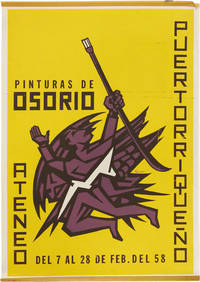
195855418San Juan: Ateneo Puertorriqueño 1958. Original illustrated poster silkscreened in three colors on white stock measuring 47.25cm x 67.25cm 18.5" x 26.5". Light wear and handling some faint creases short tear to upper left margin with masking tape along upper and lower margins on recto and some faint adhesive streaking; unbacked; Very Good / B. Striking poster announcing a 1958 exhibition of paintings by Puerto Rican painter and printmaker Carlos Osorio 1927-1984 at the Ateneo Puertorriqueño the country's oldest private cultural institution. The exhibition featured 41 works including oil paintings watercolor and drawings. The poster designed by Puerto Rican artist Carlos Rivera 1923-1999 features a powerful central image of a winged man holding aloft a staff which is both his paintbrush and his machete. Not separately listed in OCLC though we note an example held by the University of Puerto Rico. Ateneo Puertorriqueño] unknown
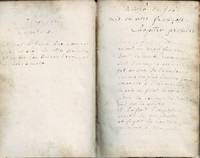
6651Manuscript on paper bound. 19th century. Good. Octavo 18 cm; 1 78 leaves paginated in manuscript. Latin and French text on facing pages. Bound in waste vellum manuscript in French no longer easily legible. Pages thumbed and toned at edges. Interlinear corrections in text as well as tipped in overleavers with corrected text. <br /><br />All we know of this manuscript book derives from examination of the physical evidence. The text does not correspond to any known French verse translation of the Book of Job so it seems to be a private endeavor. The unprofessional cursive orthography accords stylistically with handwriting typical of the 19th century but the structure and materials of the binding could indicate an earlier origin. The Latin text of the Vulgate appears on the pages facing the translation. Manuscript on paper, bound. hardcover
1800E0068viii514 pages with frontispiece map. Quarto 10 1/2" x 8 3/4" housed in a custom slipcase. Translated by Maurice Keatinge. First English edition.<br /><br /> Bernal Dïaz del Castillo was a conquistador who wrote an eyewitness account of the conquest of Mexico by the Spaniards under Hernan Cortes himself serving as a rodelero under Cortes. Born in Medina del Campo Spain he came from a family of little wealth and he himself had received only a minimal education. He sailed to Cuba in 1514 to make his fortune but after two years found few opportunities there. Much of the native population of the island had already been killed by epidemics and forced labor and in 1517 an expedition was sent to the smaller Caribbean islands to find alternative sources of labor. Dïaz joined this group under the command of Francisco Hernandez de Cordoba. It was a difficult venture and although they discovered the Yucatan coast by the time the expedition returned to Cuba they were in disastrous shape. Nevertheless Dïaz returned to the coast of Yucatan the following year on an expedition led by Juan de Grijalva with the intent of exploring the newly discovered lands. Upon returning to Cuba he enlisted in a new expedition this one led by Hernan Cortes. In this third effort Dïaz took part in one of the legendary military campaigns of history bringing an end to the Aztec empire in Mesoamerica. During this campaign Dïaz spoke frequently with his companions in arms about their experiences collecting them into a coherent narration. The book that resulted from this was Historia verdadera de la conquista de la Nueva Espana English: The True History of the Conquest of New Spain. In it he describes many of the 119 battles in which he claims to have participated culminating in the fall of the Aztec Empire in 1521.As a reward for his service Dïaz was appointed governor of Santiago de los Caballeros present-day Antigua Guatemala. He began writing his history in 1568 almost fifty years after the events described in response to an alternative history written by Cortes's chaplain who had not actually participated in the campaign. He called his book the Verdadera Historia True History in response to the claims made in the earlier work. Dïaz died in 1585 without seeing his book published. A manuscript was found in a Madrid library in 1632 and finally published providing an eye-witness account of the events often told from the perspective of a common soldier. Today it is one of the most important sources in understanding the campaign that led to the collapse of the Aztec Empire and the Spanish conquest of Mexico.<br /><br /><b>Condition:</b>Spine renewed with new period spine label and original boards which the corners and edges are heavily rubbed some foxing to early pages. Frontispiece map repaired. Custom made red slipcase with Japanese toggles and leather spine label in gilt lettering else about a very good copy in a near fine case. Printed for J Wright by John Dean hardcover
1800E0068viii514 pages with frontispiece map. Quarto 10 1/2" x 8 3/4" housed in a custom slipcase. Translated by Maurice Keatinge. First English edition.Bernal Dïaz del Castillo was a conquistador who wrote an eyewitness account of the conquest of Mexico by the Spaniards under Hernan Cortes himself serving as a rodelero under Cortes. Born in Medina del Campo Spain he came from a family of little wealth and he himself had received only a minimal education. He sailed to Cuba in 1514 to make his fortune but after two years found few opportunities there. Much of the native population of the island had already been killed by epidemics and forced labor and in 1517 an expedition was sent to the smaller Caribbean islands to find alternative sources of labor. Dïaz joined this group under the command of Francisco Hernandez de Cordoba. It was a difficult venture and although they discovered the Yucatan coast by the time the expedition returned to Cuba they were in disastrous shape. Nevertheless Dïaz returned to the coast of Yucatan the following year on an expedition led by Juan de Grijalva with the intent of exploring the newly discovered lands. Upon returning to Cuba he enlisted in a new expedition this one led by Hernan Cortes. In this third effort Dïaz took part in one of the legendary military campaigns of history bringing an end to the Aztec empire in Mesoamerica. During this campaign Dïaz spoke frequently with his companions in arms about their experiences collecting them into a coherent narration. The book that resulted from this was Historia verdadera de la conquista de la Nueva Espana English: The True History of the Conquest of New Spain. In it he describes many of the 119 battles in which he claims to have participated culminating in the fall of the Aztec Empire in 1521.As a reward for his service Dïaz was appointed governor of Santiago de los Caballeros present-day Antigua Guatemala. He began writing his history in 1568 almost fifty years after the events described in response to an alternative history written by Cortes's chaplain who had not actually participated in the campaign. He called his book the Verdadera Historia True History in response to the claims made in the earlier work. Dïaz died in 1585 without seeing his book published. A manuscript was found in a Madrid library in 1632 and finally published providing an eye-witness account of the events often told from the perspective of a common soldier. Today it is one of the most important sources in understanding the campaign that led to the collapse of the Aztec Empire and the Spanish conquest of Mexico.Condition:Spine renewed with new period spine label and original boards which the corners and edges are heavily rubbed some foxing to early pages. Frontispiece map repaired. Custom made red slipcase with Japanese toggles and leather spine label in gilt lettering else about a very good copy in a near fine case. Printed for J Wright by John Dean hardcover books
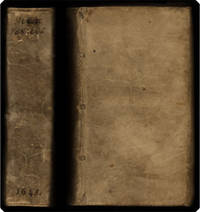
164841618Amsterdam: Prostant apud Neminem 1648. 12mo 13.4 cm 5.27". Frontis. 4 252 14 index 2 blank 71 1 pp. <br><br>with separate title-page Stymmelius Christoph. Studentes sive comoedia de vitâ studiosorum. Alentopholi: In Aedibus Iberiorici Nobilimi 1647. 12mo. 88 pp. and Senatus et consultatio sacerdotum quorundam super mandato praesulis facto ut concubinas habitas abigant & posthac nullas alant. Amsterdam: 1648. 12mo. 8 pp.<br>Â Â Â Â This compendium of witticisms jests and comedy opens with a copper-engraved frontispiece of a jovial drunkard and a first title-page bearing a woodcut of a peddler and his dog. The first part offers a collection of ironic questions and answers on satirical topics often concerned with women e.g. what is a liberal woman as well as with curiosities e.g. why are Ethiopians black is begging preferable to wealth it is. There follow essays on assorted topics including pseudo-medicine "Quid sit medicina culinaris"; the Pugna porcorum this Battle of the Pigs being => a satirical poem written solely and perhaps preposterously with words beginning with P; while the Crepundia poetica is a collection of short poems on sundry subjects from doctors to astrologers.<br>Â Â Â Â The Nugae venales first appeared in 1632 with subsequent publications making use of various combinations of sections. => This early edition adds a comedy about university life Studentes sive comoedia de vita studiosorum and a satirical poem on the clergy.<br>Â Â Â Â Provenance: Front fly-leaf with pencilled inscription of E. Kijper noting purchase price of "IV florines" in 1920. <br>Â Â Â Â <br>Â Â Â Â Brunet IV 136-137; Graesse IV 701; VD17 23:629766P. Contemporary vellum with yapp edges spine with hand-inked title and date; light dust-soiling overall with spine and edges darkened vellum just starting to chip at back joint. Front pastedown and fly-leaf with later pencilled annotations. Studentes bound out of order with title-page and prologue towards the end; a helpful hand has tried to make sense of the situation by adding page numerals. One leaf with short tear from outer margin touching a few words without loss; one short wormtrack touches two lines on each side of one leaf. Pages age-toned otherwise clean. => A solid interesting example of this popular work in an early stage of its evolution. Prostant apud Neminem hardcover books
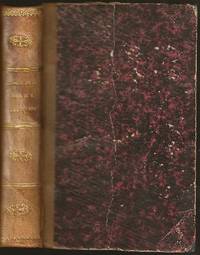
1882CA0128xv488 pages with appendices. Octavo 8 1/2" x 5" bound in quarter leather with gilt lettering to spine in stiff boards. From the library of Professor George M Foster. Second edition.<br /><br />Alonso de la Rea was born in Queretaro in 1610. He wrote his Cronica in 1637-1639 providing data on Michoacán and Jalisco. For many matters he leaned heavily on Torquemada who in turn had copied them from Mendieta. Ricard quoting an 18th century opinion mentions that Rea lacked interest in chronology to an excessive degree. His work was however an official and methodical chronicle of the province preserving considerable detail about it. Rea's Cronica . 1639 was first published in 1643 and is now a bibliographical rarity. The volume is divided into three books totaling 92 chapter. Book 1 describes the region products people their dealings with Aztecs their general traits religious rites the last native emperors and coming of the Spaniards. This is followed by arrival of the Franciscan missionaries with biographies of some of these pioneer friars. Book 2 begins with the division of the province between Michoacán and Jalisco 1606 and contains numerous biographies of the members of that order. Book 3 is also a series of lives and an account of the Custodio del Rio Verde. The second edition was published in Mexico 1882. It includes additional relevant documents in three appendices. At the end of the text there is a table of contents but no index.<br /><br />George McClelland Foster Jr born in Sioux Falls South Dakota on October 9 1913 died on May 18 2006 at his home in the hills above the campus of the University of California Berkeley where he served as a professor from 1953 to his retirement in 1979 when he became professor emeritus. His contributions to anthropological theory and practice still challenge us; in more than 300 publications his writings encompass a wide diversity of topics including acculturation long-term fieldwork peasant economies pottery making public health social structure symbolic systems technological change theories of illness and wellness humoral medicine in Latin America and worldview. The quantity quality and long-term value of his scholarly work led to his election to the National Academy of Sciences in 1976. Virtually all of his major publications have been reprinted and/or translated. Provenance from the executor of Foster's library laid in.<br /><br />Condition:<br /><br />Foster's stamp to title. Corners bumped edge wear to boards rubbing to paper boards else a very good copy. Imprenta de J R Barbedillo hardcover
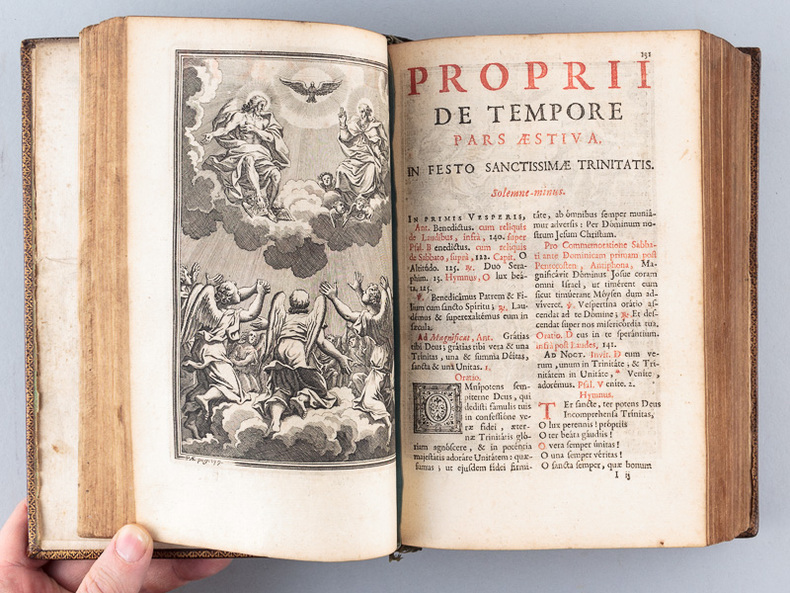
1701490972 vol. fort et grand in-8 reliure de l'époque plein maroquin rouge, dos à 5 nerfs dorés richement orné, belles roulettes d'encadrement en plats, beau papier de garde à motifs d'anges, toutes tranches dorées, Sumptibus Frederici Leonard, Paris, 1701, Pars Aestiva : 27 ff. n. ch., 806-clij pp., 1 f., 7 pp. et 3 planches hors texte ; Pars Hiemalis : 32 ff., 810-clx pp., 1 f., 7 pp. et 2 planches hors texte (par Chauveau et par Picart)
172416349Roma, Typis Reu. Cam. Apostolicae (Stamperia della reveranda Camera apostolica), 1724 ; in-4 ; vélin ivoire de l’époque, titre manuscrit au dos ; (2) ff. d’Index. Suivi par : Compendio delle cose principali Contenute nel Ceremoniale di Gregorio XV. De electione Romani Pontificis. Per facilitare alli Signori Cardinali il nuovo modo di elegere il Papa, e per istruttione delli Maestri di Ceremonie. Roma, nella Stamperia della Reu. Cam. Apost., 1724 ; (6) ff. y compris le titre séparé, 11 pp., (1 bl.) ; (10) ff.: Riforma delle Spese solite farsi in tempo di Sede Vacante, e per il Conclave. Vignette sur bois identique aux deux titres, aux armes du Vatican.
1692173431692 2 tomes reliés en un volume, reliure plein veau brun raçinéin-folio (binding full calfskin in-folio), reliure d'époque, dos 6 nerfs (spine with raised bands), décoration or (gilt decoration) , entre-nerfs à compartiments à fleurons au fer plein (between the raised bands compartment with floweret with full blocking stamp) "en Losange", titre frappé or (gilt title), pièce de titre sur fond havane foncé (label of title) avec filet et roulette or (label of title with gilt line and fillets), manque de cuir en bas et en haut du dos (lack of leather at the bottom and the top of the spine) (sur 2 cm2), coiffes supérieure et inférieure accidentées (head and tail of the spine lightly damaged), plats frottés (rubbed cover), coins fortement écornés (corners strongly dog-eared), toutes tranches lisses (all smooth edges), rouges (red edges), cicatrices très claires de mouillures marginales en marge intérieure des 10 premières pages (moins de 3 cm2), ainsi qu'en marge extrérieure des dernières pages (lights scars waterstains on the margin pages), texte sur 2 colonnes (text - 2 coloumns), orné d'un titre frontispice gravé sur bois (engraving wood) en noir + un Titre en rouge et noir avec une grande vignette gravée sur bois (engraving wood) en noir en bas de page (par Mathieu Ogier) + front-de-chapitre bandeau (headpiece) + lettrines (dropped initials) + culs-de-lampe (tailpieces) gravés sur bois en noir par Germain AUDRAN + 1 front-de-chapitre bandeau (headpiece) par J. BUYS en tête de seconde partie, ([12] + 482) + ([2] + 455) pages, M.DC.XCII (1692) Lugduni, apud Antonium Beaujolin Editeur,
167521061Lugduni Laurens 1675 -in-folio plein-veau 2 volumes, reliure d'époque plein veau raçiné brun in-folio (binding full calfskin in-folio) (26 x 38,5 cm), dos à nerfs (spine with raised bands), décoré or (gilt decoration), titre et tomaison frappés "or" (gilt title), pièce de titre et de tomaison sur fond bordeaux avec roulette "dentelles" "or" et double filets "or" en encadrement, entre-nerfs à caissons "or" dans un encadrement d'un double filet "or" avec rinceaux "or" aux angles, un filet à froid de part et d'autre des nerfs, roulette large "or" en tête et en pied, coiffes supérieures manquantes + coiffe de pied accidentée, coins écornés, roulette "or" sur les coupes et roulette "dentelle" "or" sur les chasses avec léger manque de dorure (blurred gilding), toutes tranches lisses dorées, titre imprimé en rouge et noir, Texte en latin à colonnes et manchettes, orné d'une gravure titre (frontispice) gravé sur bois en noir par Germain AUDRAN + une importante gravure en bas de la page de titre : "Marque de Pierre Guillimin", gravée sur bois en noir par Nicolas Auroux + 2 gravures front-de-chapitre historiées et légendées gravées sur bois en noir + de trés nombreuses lettrines historiées gravées sur bois en noir + cul-de-lampes historiés gravés sur bois en noir, ([12] + 482) + (455) Pages, M.DC.LXXV (1675) Lugduni, sumptibus Antonii Laurens Editeur,
200553Parme, Imprimerie Royale [Bodoni], 1789 in-folio, [2] ff. n. ch. (titre, dédicace à Charles IV), VIII-29 pp., avec 5 vignettes en-tête ou culs-de-lampe gravées par Raffaelo Morghen d'après Volpato et Tofanelli, manque le frontispice, cartonnage de papier marbré (reliure de l'époque). Manque le dos.
201808493Paris, Apud h.Barbou , 1805 ; in 16, 420 pp., cartonnage de l'éditeur. Notis illustrati, cpitibus distinci et juxta editionem ejusdem auctoris editm adusum serenissimi Delphini ex recensione Valart.
1645A2575Amsterdami, Johannem Blaeu, 1645 ; in-12, VI pp. + 363 pp., reliure d'époque plein-veau, dos orné à nerfs, plats estampés et dorés de filets et décors, tête dorée, (mors fragiles, coiffes: état moyen). Sénèque le Philosophe (L.-Annæus Seneca) célèbre écrivain latin né à Cordoue en 3 ou 4 après J.-C., s’adonna à la philosophie et à l’éloquence. Il fut le précepteur de Néron et influença beaucoup, par son stoïcisme, les auteurs du 18ème siècle, comme par exemple Corneille. Sénèque fut acculé au suicide en s'ouvrant les veines dans son bain, étant compromis dans la conjuration de Pison. Bon état.
Amsterdami, Johannem Blaeu, 1645; in-12, VI pp. + 363 pp., reliure d'époque plein-veau, dos orné à nerfs, plats estampés et dorés de filets et décors, tête dorée, (mors fragiles, coiffes : état moyen). Sénèque le Philosophe (L.-Annæus Seneca) célèbre écrivain latin né à Cordoue en 3 ou 4 après J.-C., s’adonna à la philosophie et à l’éloquence. Il fut le précepteur de Néron et influença beaucoup, par son stoïcisme, les auteurs du 18ème siècle, comme par exemple Corneille. Sénèque fut acculé au suicide en s'ouvrant les veines dans son bain, étant compromis dans la conjuration de Pison. Bon état.
19928S.l., s.d. ; in 12 veau brun épidermé ; 385 et 168 pp., pages de titres propres, 8 pp. de tables. Les titres sont dans des encadrements richement décorés et le texte est encadré d'un simple filet.
164511208Lugd. Batavorum (Leyde), Franciscus Hackius, 1645 ; in-8 ; plein vélin ivoire à recouvrements, titre manuscrit au dos (reliure de l'époque) ; (16) pp., dont le titre gravé représentant une scène de théâtre, 1136, (48) pp. d'index.
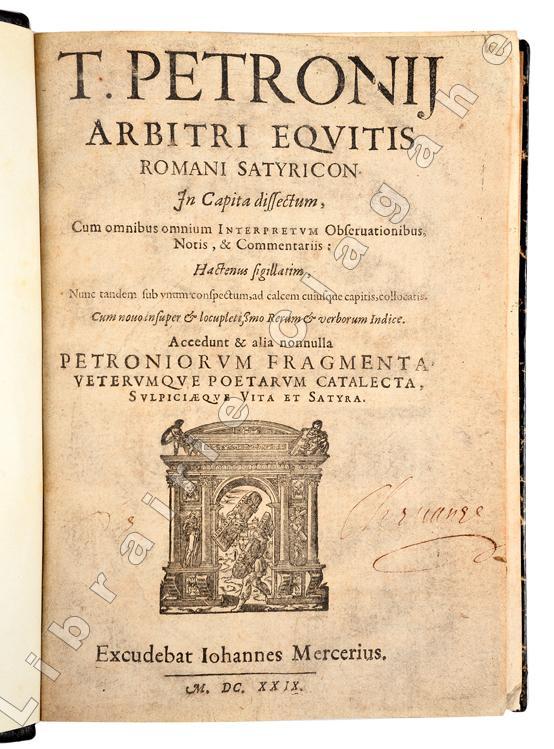
162920310S.l., [Genève], Iohannes Mercarius, 1629 marque d’imprimeur ; in-4° (211 mm), demi-veau réglisse, dos à nerfs, titre doré (reliure du XIXe s.) ; [12], 44, 430 pp. [1 bl.] ff. ; 69, [1 bl.], [14] pp. (sign. : é4, 2, 9, 99, 999, 9999, 9999994, 99999992, A-Hhh4 ; a-k4, l2).
188320Turin, Imprimerie Royale, 1854-1857 2 forts vol. in-folio, XX-[2] pp., CXXII-1652 colonnes ; [7] ff. n. ch., LIV-1636 colonnes, avec une planche dépliante gravée au trait, demi-basane mirabelle, dos lisse orné de filets dorés et noirs, pièces de titre et de tomaison noires, tranches mouchetées (reliure de l'époque). Dos insolés, pièces de titre frottées.
156014605[Genève], Henri Estienne, Huldrich Fugger (Huldrici Fuggeri), 1560 ; in-8 ; plein vélin ivoire ; 100 pp. (A-F 8, G 2).
171946521ABHamburg, Liebezeit und Felginer 1719. Kl.4°. [4] Bl., 248 S., [3] Bl., 360, [16] S. Pergament der Zeit mit hs. Rückentitel. Einband altersfleckig. Teils geringf. gebräunt. Name am Vorsatz. 2 Seiten leicht angeschmutzt.
222227Amsterdam, Louis Elzévir, 1646 in-16, [12] ff. n. ch. (titre-frontispice gravé, titre, dédicace, préface, pièces liminaires), [280] pp. mal chiffrées 270 (il y a saut de chiffrage de 144 à 135), [27] ff. n. ch. de table et d'errata, maroquin cerise à long grain, dos à nerfs fleuronné, encadrement de double filet à froid sur les plats avec fleurons dorés en écoinçon, simple filet doré sur les coupes, tranches dorées, encadrement de guirlande dorée sur les contreplats (rel. du XIXe s.). Légères traces blanches au plat inférieur.
1618R100763Antverpiae [Antwerpen], ex Officina Plantiniana apud Balthasarem Moretum & viduam Ioannis Moreti 1618-1621-1620 Convolute of 3 works by Bellarminus bound in 1 physical volume, contemporary full vellum (bit soiled, contemporary handwritten title on spine), 18cm., text clean and bright, stamp and old handwritten ex-libris on blanco endpaper, good condition, [Content: I: "De septem verbis", 238 + [2] pp., ref. De Backer-Sommervogel I-1241-38, Antwerp, edited in 1618 (same year as the first edition of Rome), with engraved IHS-logo on titlepage and some ornamental initials // II: "De gemitu", 346 + [27] pp., 1621, with engraved IHS-logo on titlepage and engraved printer's device on last page, with some ornamental initials, ref. De Backer- Sommervogel I-1241-37 // III: "De arte bene moriendi", 1620 (same year as the first edition of Rome), ref. De Backer-Sommervogel I-1244-40, [16] + 255 + [5] + [2bl.] pp., with engraved IHS-logo on titlepage and some ornamental initials], R100763
Convolute of 3 works by Bellarminus bound in 1 physical volume, contemporary full vellum (bit soiled, contemporary handwritten title on spine), 18cm., text clean and bright, stamp and old handwritten ex-libris on blanco endpaper, good condition, [Content: I: "De septem verbis", 238 + [2] pp., ref. De Backer-Sommervogel I-1241-38, Antwerp, edited in 1618 (same year as the first edition of Rome), with engraved IHS-logo on titlepage and some ornamental initials // II: "De gemitu", 346 + [27] pp., 1621, with engraved IHS-logo on titlepage and engraved printer's device on last page, with some ornamental initials, ref. De Backer- Sommervogel I-1241-37 // III: "De arte bene moriendi", 1620 (same year as the first edition of Rome), ref. De Backer-Sommervogel I-1244-40, [16] + 255 + [5] + [2bl.] pp., with engraved IHS-logo on titlepage and some ornamental initials], R100763