ZOESIUS Henricus.Livre Rare Book
26 128 résultats
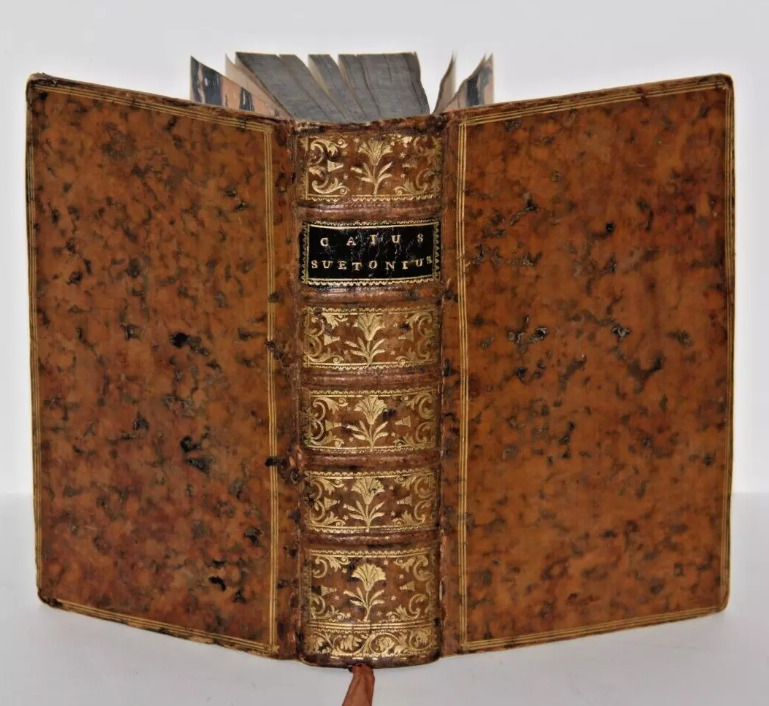
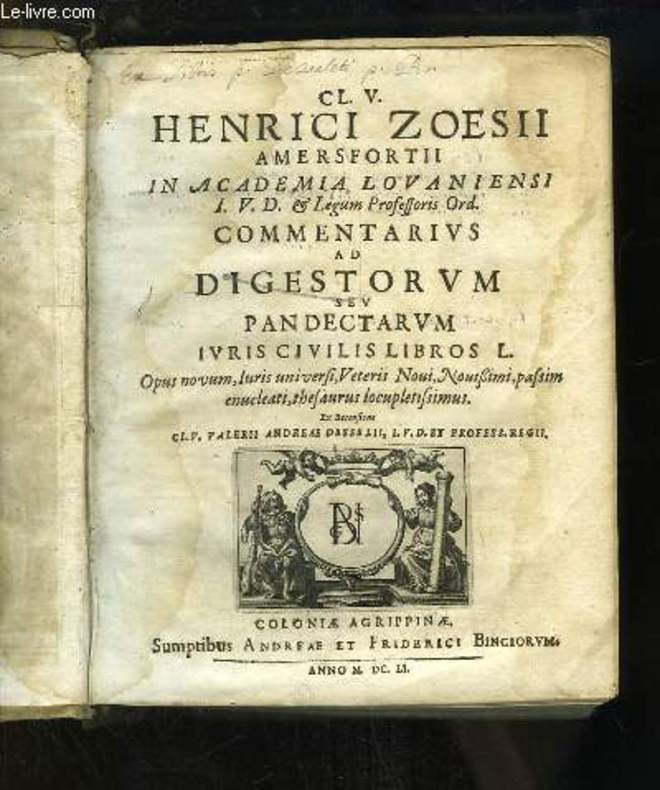
1651RO80087557ANDREAE ET FRIDERICI BINGIORUM. 1651. In-8. Relié plein cuir. Etat passable, Couv. défraîchie, Dos abîmé, Rousseurs. Ouvrage 1116 pages. Ex-Libris manuscrit sur la page de titre. Frontispice en noir et blanc. Bandeaux et lettrines illustrés. Ouvrage en latin. Manque de cuir important sur le dos, à 4 nerfs. coins et coupes des plats frottés.. . . . Classification Dewey : 470-Langues italiques. Latin
1755CA011424531 pages with engraved allegorical frontispiece and index. Small folio 11 1/2" x 8 1/2" bound in original full leather with raised spine bands and decorative gilt lettering. Palau 266572. Sabin 70785 First edition.<br /><br />Full of original documents respecting the establishment of the Church in the Indies and the protection of the Indians together with all the bulls referred to from that of Alexander VI to the time of publication. With the additional 24 preliminary leaves not in all printings.<br /><br />The ancestors of Rivadeneira on both sides had served the Crown for centuries in the Reconquista in high positions of Church and State and in the conquests of Mexico and the Darién. Among his relatives is the Marquis de Moncada lieutenant colonel of the Puebla Regiment. Rivadeneira received a bachelor's degree in Philosophy and Law from the University of Mexico. He obtained a scholarship at the Colegio Mayor de Todos Santos on November 11 1731 served in various positions competed for the Chair of Institutes and remained in residence until 1746. The Audiencia de México approved him to practice as a lawyer in 1733. While still in Todos Santos Rivadeneira began serving in various positions. He was an advisor to the mayors of the city and town of Carrión in Valle Atrisco. The interim viceroy-archbishop Juan de Bizarrón appointed him a lawyer for the poor of the Courtroom of the Audiencia in 1739 with similar capacity in the Tribunal del Santo Oficio the city of Puebla and the Agustino Convent of Mexico. In 1744 Rivadeneira became fiscal agent of the room of the Crime. He served as an advisor to the viceroy Duke of the Conquest and was commissioned to settle a dispute over land by his successor the Count of Fuenclara. In 1746 Rivadeneira decided to go to Spain for family businesses and to secure a position. For a payment of 13000 pesos he obtained the appointment as supernumerary judge of the Audiencia de Guadalajara by decree of January 30 and title of February 20 1748. Without occupying this position he obtained the criminal prosecution of the Audiencia de Mexico on December 22 of 1753. He obtained a license to sail to New Spain with the servants José Ostos of Écija; Diego Ibiricu from Cádiz; Antonio de la Cruz from Zacatecas and Manuel Tagle a "free black". Rivadeneira returned to New Spain in 1755 in the same vessel in which the new viceroy Marquis de las Amarillas went and assumed his post on October 30 1755. As a prosecutor he opposed the activities of the Tribunal de Acordada. Assigned to the civil prosecutor's office to replace Luis de Mosquera and Aranda by consultation of April 28 and title of June 21 1760 the following year by consultation of May 14 and title of August 15 was appointed to replace the deceased Francisco López Adán as judge of the Audiencia. He served until his death. While he was an oidor he was denounced for possessing forbidden books. While in Spain in 1752 Rivadeneira published <i>El Pasatiempo for the use of Ex.mo Señor Carvajal and Lancaster a history of the world from creation to Fernando VI</i> in three volumes. This long didactic and religious poem was an effort to obtain a position and Beristain perhaps not knowing of the payment of 13000 pesos by Rivadeneira considered his first appointment of audience due to the sponsorship of José de Carvajal. As a prosecutor in 1755 Rivadeneira wrote the <i>Handbook compendium of the Indian Board of Trustees</i> which traced the royal patronage to the Book of Genesis an achievement for which the Crown gave him 4000 pesos. He also wrote the <i>Defense of Royal Jurisdiction</i> in 1763 <i>the remarkable newspaper of His Excellency Marquise de las Amarillas</i> and the draft of the protest sent to Spain by the City Council of Mexico City in 1771 on a claim of appointments for Americans.<br /><br /><b>Condition:</b><br /><br />Missing some of spine label small crack along the heal font hinge spine ends chipped light rubbing to extremities with the corners rubbed through internally very nice over all a very good copy. Antonio MarÃn hardcover books
4678P.AE.LE MERCIER . PARIS . M D CC LX . 1760 . Reliure cuir . Texte en Latin . 660 pages + 128 pages ( commune sanctorum ) + 72 pages ( supplément )
1 vol. petit in-8 reliure de l'époque pleine basane marron, dos à 5 nerfs orné, Apud Pet. Paulum Tozzium [ Tozzi ], [ Padoue ], MDCXIIX [ 1618 ], 24 ff., 383 pp. [ paginé 283 ] Exemplaire contenant 211 emblèmes, commentés par l'humaniste Claude Mignault (1536-1606) et annotés par Lorenzo Pignoria (1571-1631). Oeuvre de délassement, les fameux "emblèmes" du grand juriste André Alciat (1492-1550) qui établit un protocole bien particulier associant trois élements : un titre, une image et une épigramme. Etat satisfaisant (reliure frottée avec mouill., fortes mouill. intérieures) Français
157266876Accesserunt D. Io. Sotealli Theologi. & Horatii Lutij Iuriscons. [... ] Additae praeterea sunt ad finem Pij III Pont. Max. Bullaen una eum triplici utilissimo Indice, Item Catalogus & Index librorum prohibitorum, 1 vol. petit in-8 reliure postérieure pleine basane marbrée, Apud Gugliel. Rovillium [ Guillaume Rouillé ou Rouville ], Lugduni [ Lyon ], 1572, 16 ff., 365 pp., 65 ff. n. ch.
1686657871 vol. in-8 reliure de l'époque pleine basane marbrée, dos à 5 nerfs orné, Apud Franciscum Halma, Academiae Typographum, Ultrajecti [ Utrecht ], 1686 [1687 ], 4 ff., 471-40 pp. avec un portrait dépliant. Titre complet : Lexicon novum Hebraeo-Latinum, ad modum Lexici Schreveilaini Graeci compositum, Per modum Indicis Hebraici primo à D. Robertsono conscriptum ; Sed jam latinitate donatum, atque Textibus, continentibus voces irregulares, alissque Animadversionibus locupletatum ; Atque adauctum Lexico Chaldaico-Biblico, a Johanne Leusden
Concinnata & Historica narratione (sed brevi) illustrata Opera ac Studio Ioannis Iacobi Luckii Argentoratensis, Cum gratia et privilegio Sacrae Caesareae Maiestatis, 1 vol. in-folio reliure de l'époque pleine basane marron, dos à 6 nerfs orné, Sumptibis Ipsi Authoris, Typis Reppianis, Argentinae [Strasbourg ], 1620, 4 ff., 383 pp. et 1 f. Plus qu'un superbe catalogue numismatique recueillant les pièces et médailles provenant de la collection de l'auteur, ce bel ouvrage richement illustré des portrait des grands personnages du temps évoque les faits et geste de chacun d'entre eux, de manière chronologique. Brunet évoque un "recueil devenu assez rare". Grand généalogiste et collectionneur, Johann Jacob Luck (1574-1635) finit sa carrière en tant que bailli du Staufenberg (Bade). Etat satisfaisant (manque important à un feuillet - le folio H - un manque en coiffe sup., qq. mouill. discrètes, coins frottés, bon état par ailleurs). Prix en l'état. (Brunet, III, 1217) Latin
1633666231 vol. in-16 cartonnage bradel début XIXe : Philosophiae Thomisticae Vesibus Concinnatae Pars Prima, Complectens Dialecticam, Logicam, & Physicam metrice elaboratas, Apud Andream Allegret, in Vico Dionysij propè Monasterium Filiarum Dei, Paris, 1634 [ Contient : ] Dialectica Thomistarum Versibus concinnata, Sumptibus Discipulorum Authoris, D.D. Camillo de Neuville nuncupata, Lugduni, 1633, 64 pp. et 2 ff. n. ch. [ Suivi de : ] Logica Thomistarum versibus concinnata, D.D. Ioachimo d'Estaing nuncupata, 1633, 70 pp. et 1 f. n. ch. [ Suivi de : ] Physica Thomistarum versibus concinnata, Patri Nicolao Rodulfio nuncupata, 1634, 106 pp. et 1 f. n. ch.
1643TTUMLITU6Paris: Mathurin Hénault 1643. 1643. 2 Parts in 1 second part with title: Hagiologion Franco-Galliae Excerptum A. Philippo Labbé.Cum Sacra Galliarum Topographia. 4to. pp. 14 p.l. 422 1 leaf 164. first title in red & black. woodcut ornaments initials & title vignettes. contemporary mottled calf gilt back front joint splitting extremities worn & chipped some light browning marginal dampstains to first few leaves. First Edition of the French Translation by Philippe Labbé 1607-1667. Not in Goldsmith BM STC French. F. Hardcover. Paris: Mathurin Hénault, 1643. Hardcover
160535918AB[Wittenberg?], gedruckt von Wolfgang Meissner für Zacharias Schurer [Schürer] 1605. 4°. [4] Bll., VIII, 1306 [recte 1304], [72] S. Blindgeprägter Schweinslederband über Pappe auf 4 Bünden, Deckel mit 3 Rollen und Blindlinien kassettiert, Querriegel und Platten als Mittelstück. Ein Gelenk restauriert, kl. Fehlstellen (Ecken) farblich angepaßt ergänzt. Wenige Wurmlöcher am Deckel. Teils etwas gebräunt, viele farbige Unterstreichungen (offensichtlich älter).
173146519ABHildesheim, Schroeder 1731. 8°. [11 statt 12] Bll., 638 S., [1] Bl., 639-1142, [70] S. Pergament der Zeit mit (verblaßtem) hs. Rückentitel. Vorderes Innengelenk etwas gelockert, es fehlt das Frontispiz. Wenige Notizen von alter Hd an Spiegel und im Text. Ein Stempel whdt.
165439429ABLeiden, Elsevier 1654. 4°. [2] Bll., 872 [recte 870] S., [3] Bll. Pgmt der Zt. Titelblatt mit geringf. Papierergänzung. Sauber und wohlerhalten.
66508, Brepols, 2025 Hardback, cxl + 788 pages, Size:155 x 245 mm, Illustrations:13 b/w, 26 tables b/w., Language(s):Latin, German. *new ISBN 9782503612003.
160940751AB[Heidelberg], in bibliopolio Commelin 1609. 8°. 1 (unbedrucktes) Bl., 121, [5] S., 1 (leeres) Bl., 172 S. Geprägter Schweinsleder-Band (Linien, Flechtwerk u.a.) der Zeit auf 4 Bünden, Medaillons auf beiden Deckeln (Ritter im Oval, vergoldet), Farbschnitt mit Punze. Geringf. Altersspuren, Vergoldung verblaßt. Kl. hs. Besitzvermerk von 1618 am Titel, diesbezüglicher hs. Übertragungsvermerk am unbedruckten Blatt.
169040207ABNeuhaus, Todt 1690. 2°. [4] Bll., 659 S., [4] Bll. Pgmt der Zt mit beschädigten Bandschließen, hs. Rückentitel. Einband angestaubt, Rückenbezug mit 2 kl. Fehlstellen. Titel mit Besitzvermerk von alter Hd und Eckabriß, dadurch minimaler Buchstabenverlust. Durchgehend geringf. gebräunt. 2 kl. Wurmlöcher m weißen Rand.
366303Franekerae Excudebat Ægidius Radæus, Ordinu 1597 Q. Septimii Florentis Tertulliani... Opera quae hactenus reperiri potuerunt omnia: Ex editione Jacobi Pamelii Brugensis [Texte imprimé]. Quibus seorsim additæ sunt annotationes Beati Rhenani Seletstadiensis, auctæ censura Inquisitionis Hispanicae : Itemque castigationes ac notæ perspicuæ et brevis Francisci Junii Biturigis... Communes p à Indices accesserunt locorum Scripturæ Sacræ, aliorum auctorum, itemque verborum et rerum locupletissimus.4 parties reliées en 1 volume petit in-folio ( 310 X 210 mm ) de ( [4]-655-[1 bl.] [8]-310-[2 bl.] 127-[1 bl.] 88-59-[1 bl.] p. ), pleine basane fauve, dos à nerfs orné de fleurons dorés, fleuron central doré et double filet doré d'encadrement sur les plats ( Reliure postérieure ). Anciennes mouillures claires marginales, gardes absentes, agréable exemplaire. Note( s ): 1re partie: mêmes traités de Tertullien que dans l'édition de Pamele, à l'exception des fragments grecs et latins des oeuvres perdues. - 2e partie: les "Castigationes et notae" de Du Jon sont précédées de "Q. Septimii Florentis Tertulliani vita". - 3e partie: les "Annotationes" de Rhenanus, qui ont leur titre propre, sont suivies de son "Admonitio... de quibusdam Tertulliani dogmatis". - 4e partie: le texte de l'"Apologeticus", accompagné de la paraphrase de F. Zephyrus, est suivi des index.
503 columns. Latin text, translation and editorial matter in English. ; Asfar, Deel 2; 503 pages
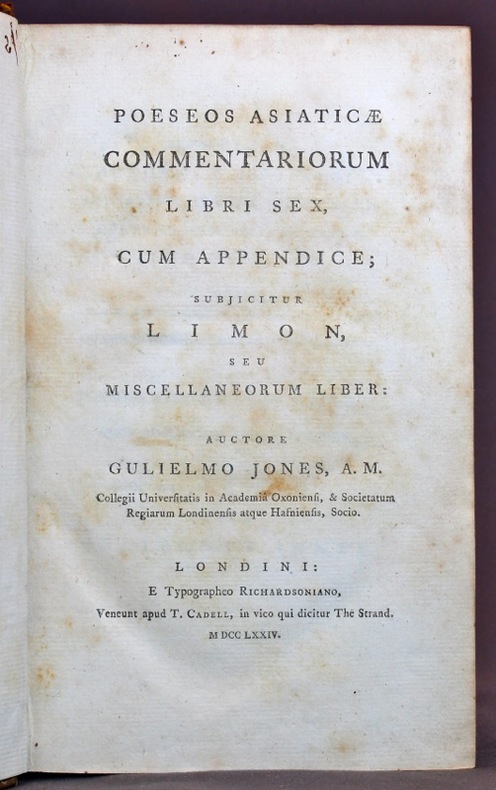
177415633Londini, E Typographeo Richardsoniano, veneunt Apud T. Cadell, 1774. In-8 de [2]-XXXI-[1]-542-[2] pages, plein veau beige, dos à nerfs joliment orné de filets et fleurons dorés, pièce de titre en maroquin rouge, roulette dorée sur les coupes.
16653301CBLugd. Batav et Roterod (Leiden u. Rotterdam), Ex Officina Hackiana, 1665. 8°. 2 Bl. (24), 534, (46) S. (2) Bl. Mit gest. Titel. Pergamentband der Zeit (fleckig).
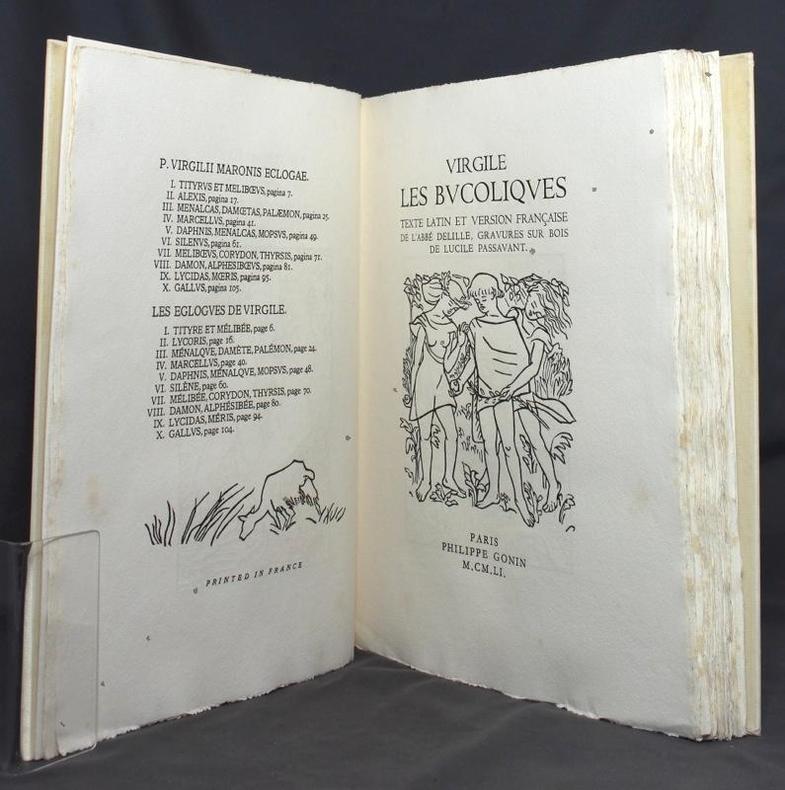
195112185Paris, Philippe Gonin, 1951. 3 volumes in-folio en feuilles, le premier de [8]-111-[17] pages, couverture rempliée imprimée en noir, sous chemise avec titre au dos, les deux suivants sous couvertures rempliées illustrées respectivement en noir et en rouge, sous chemise commune avec titre au dos. Quelques rousseurs aux chemises, sur la couverture de la suite en noir et dans le volume de texte, petit accroc en queue de la couverture de la suite en noir.
155565161555 Sebastianus Gryphus, Lugdunum, 1555. Deux volumes in-12 plein vélin ivoire, dos lisses, titre manuscrit, tranches rouges, 519+459 pages et table, texte et latin. Léger travail de vers sur le premier volume, coupes frottées et léger manque à une charnière du tome second.
165637211Severiani Gabalorum Episcopi de Cruce ; Basili Seleuciae de S. Stephano, eiusque Reliquis Zachariae, Hierosolymorum Antistitis, ad suae plebis reliquias Epistola e Perside incertique aequalis de eadem captivitate ac sanctae urbis excidio. Ex vetustis... Cardinalis Mazarini Graecis codicibus nova prodeunt... R. P. Francisco Combefis,... interprete, 1 vol. petit in-8 reliure de l'époque plein basane marron, dos à 4 nerfs orné, double filet doré sur plat, Sumptibus Antonii Bertier, Parisiis [ Paris ], 1656, 8 ff., 410 pp. et 3 ff. n. ch.
1751LRB100212In-8° , plein veau , triple filets sur les plats, dos à nerfs , fleurons sur les caissons, pièce de titre . Signet de soie vieux rose. Tranches tâchetées bleues et blanches. Excellent état, coiffes usées. Titre bicolore. Complet de toutes ses gravures. 21 ff° - 1024p. - 18 ff°
Full Title: P. TERENTIA AFRI POET LEPIDISSIMI COMOEDIAE: Andria, Eunuchus, Heavtontimorvmenos, Adelphi, Hecyra, Phormio, ex emendatissimis ac fide dignissimis codicibus summa diligentia castigat, metris in suum ordinem recte restitutis, ac uarijs lectionibus in margine appositis ex collatione prostremarum editionum Aldini & Gryphiani exemplaris. Elenchum interpretum, qui in had comoedias docte simul & erudite scripserunt, proxima subinde pagina demonstrabit. Eorum qu in his interpretum commentarijs annotata sunt, index amplissimus. pp. [22], 154 [i.e. 308], 117 [i.e. 234, [8]. Lacks two leaves of front matter (*2 & *3). Various errors in pagination as recorded in other examples. Folio. 320 mm. Old full vellum binding. Double and triple column Latin text in Italic and Roman. Great many bold woodcut illustrations of the scenes appear throughout the volume, and add to its charm. The various early paper 'repairs' to the title probably cover up old ownerships. Written some time after these repairs is an ink manuscript notation: Della Libreria de S(an) Vincenzo (in Tuscany). CEdit Iniquos - which seems to identify the text and/or editing as unjust, evil, and/or wicked. not too unusual for pagan works. On the front flyleaf is the 18th or 19th century autograph ownership of A. Wallis (unidentified). Publius Terentius Afer (195/185-159 BC), better known in English as Terence, was a playwright of the Roman Republic, of North African descent. His comedies were performed for the first time around 170-160 BC. Terentius Lucanus, a Roman senator, brought Terence to Rome as a slave, educated him and later on, impressed by his abilities, freed him. Terence apparently died young, probably in Greece or on his way back to Rome. He only wrote six plays. All survived, and are printed here. In this famous 1545 edition of Terence, Scoto, provided three summaries for the action of each scene by different humanist scholars of note. The innovation was immediately popular. The basic layout problem in the case of Terence was that the text consists of short scenes with much back-and-forth badinage while the apparatus was typically very lengthy. Early printers of these texts arranged the commentary for each scene all around the base text, creating a window or windows for the words of Terence. The resulting window-and-frame layouts are visually very lively, with each spread slightly different from the last, depending on the length of the commentary with respect to the text. As the sixteenth century progressed, however, it became more usual to employ a simple two-column format that placed the base text of each scene first and the commentary afterwards, alternating but running continuously from column to column. The four columns on a spread owned variety and visual interest because the text of Terence was set in larger type and more generously leaded than the commentary, but the result was rarely as handsome as the older layouts. This two-column format took over because it was much easier to set, correct, revise, and reprint than a window-and-frame. Similarly, fewer and fewer options were exercised in ornamenting and illustrating the folio text as the century wore on. Virtually the only ambitious editions from this point of view are this 1545 Scoto and the 1553 Cesano. These books preserve something of the grace of earlier folios, with scene-by-scene illustrations that characterized some folio editions in the fourteen nineties. Illustrations of individual scenes disappeared entirely after the 1555. The wonderful woodcuts are valued mainly for what they tell us of the Italian stage in the 15th and 16th century. BM STC Italian p. 664. ADD1 Safe
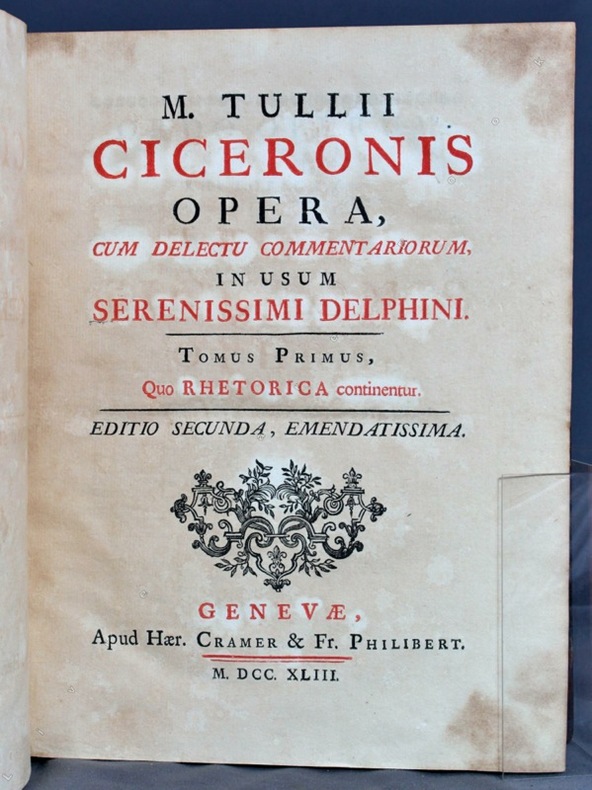
17439782Genevae, Apud Haer. Cramer & Fr. Philibert, 1743-1746. 9 volumes in-4, demi-basane brune à coins, dos à 5 nerfs avec titre doré, étiquettes de titre bordeaux, tranches mouchetées. 1 coiffe supérieure manque, petits accrocs à 4 autres. Reliures un peu frottées, quelques rousseurs et feuillets brunis. Ex-libris Jean Louis Buisson.