92 résultats
1768769111768. BOUDOT Jean. DICTIONARIUM UNIVERSALE LATINO-GALLICUM ex Omnibus Latinitatis Autoribus Summa Diligentia Collectum. ad Usum Serenissimi Dombarum Principis. Rouen Printed by Lallement and Paris Barbou etc. 1768. Octavo. 4xvi11122pp. Dedicated to Louis Bourbon Prince of Dombes. Title in red and black. Some faint foxing else internally fine. Early calf quite worn and dried. Cordell Collection has 1786 edition. unknown books
195839123Geneva: International Labour Organization ILO 1958. First Edition. Octavo. Pictorial card wrappers; 103pp; illus. Mild cover wear with erasure at upper corner of front wrapper; horizontal tear to one text leaf; Very Good. Well-illustrated propectus for the ILO's Andean Programme designe to raise living and working standards for indigenous peoples of Colombia Ecuador Peru and Bolivia. Uncommon. International Labour Organization (ILO) unknown books
19379023717Cambridge: Harvard University Press 1937. 1st. Hardcover. Near fine. Bound in publisher's original red cloth with the front cover and spine stamped in gilt. Lightly rubbed edges and extremities. Huntington Browns stamp on ffep. <br/><br/> Harvard University Press hardcover books
19379023718Cambridge: Harvard University Press 1937. 1st. Hardcover. Near fine. Bound in publisher's original red cloth with the front cover and spine stamped in gilt. Lightly rubbed edges and extremities sunned spine. <br/><br/> Harvard University Press hardcover books
198226131N.p. San Salvador: FPL 1982. Photolithograph in colors; 56.5cm x 37.5cm ca 22-1/4" x 15-1/2". A vivid unfaded example free of wear; Fine. Poster celebrating the twelfth anniversary of the Fuerzas Populares de Liberación "Farabundo MartÃ" FPL. The FPL was one of five Marxist organizations that joined in 1980 to form the FMLN which is today the mainstream left party of El Salvador. The still somewhat provisional nature of the alliance in 1982 may be gauged from the fact that in this poster the FPL continues to maintain its own identity publishing under its own imprint and adding a caption in the lower margin "Miembro del FMLN." Photo-illustrated with five scenes from the Salvadoran civil war including active scenes combat surrounding a quote by the Communist revolutionary leader Cayetano Carpio aka "Marcial". Not found in OCLC though web search does turn up a copy at IISH Netherlands. FPL unknown books
195347241Concepción: by the Company 1953-4. First Edition. Quarto 27cm. Twelve monthly issues comprising the entire first year of publication. Bound into cloth-backed boards front and rear wrappers retained; each issue 16pp. Moderate external wear; punch-holes in bound margin of each issue else Very Good. A graphically impressive company journal issued by the major Chilean mining and manufacturing firm Compañia de Acero del Pacifico CAP. Founded in 1947 CAP is still one of the largest industrial concerns in all of Latin America. Huachipato a publication aimed toward the company's employees chronicles activities both within the company and in the surrounding apparently vast company town. In addition to industrial and technological achievements the publication documents the social life of the company's workers with much coverage of sporting and cultural events the town's soccer team also called Huachipato was elevated to Chile's primera división as early as 1965. The journal is noteworthy for its graphical sophistication with photo-montaged covers sprightly layouts and a mid-century aesthetic reflecting Latin America's internationalist ambitions during this period. Rare; OCLC 2020 locates just scattered holdings all for three or fewer issues; Texas and Cornell only in North America. by the Company unknown books
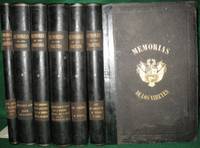
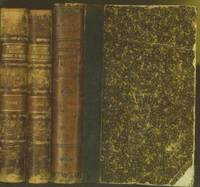
1859CA02406 volumes. xxx379index pages; 426index pages; 388index pages; 51620 tables and index pages; 39317 tables and index pages; 39456 tables and index with large fold out map at back and 12 plates. Folio 12 1/4" x 8 1/4" bound in original publisher's dark brown pebbled cloth ruled in blind with front boards with armorial gilt device. New spines with original title in gilt laid on. Palau 95426 Sabin 26119 First editions.<br /><br />These memoirs prepared by ten of the viceroys were intended to apprise each successor of the nature and duties of his post of the distribution of offices and presidencies of the privileges of the natives their hereditary customs and character. The work forms a glorious monument of statesmanship; and it may be conjectured that if the Spaniards had always formed their conduct according to these Memorias they would never had lost their colonies in the New World. Bibliographico-Linguistica 312 part III<br /><br />The series was edited under the direction of the Ministerio de Hacienda.<br /><br />Some foxing in all volumes some water staining varying in degrees in volumes worming to some volumes in varying degrees a few affecting text but all readable. Spine replaced with original spine labels affixed else a good set of a scare colonial item. Due to the size and/or weight of this lot extra shipping and/or handling charges may apply. Libreria Central de Felipe Baily hardcover books
2005251165San Francisco: Fellowship of Reconciliation 2005. Two issues of the Puerto Rico Update nos. 35 and 44 the latter issue expanded to include Colombia and a Vieques Issue Brief from Winter 2002. 4 8 and 4 pages respectively all 8.5x11 inches very good but for folds from mailing. Much coverage of local opposition to US military activities in the area. Fellowship of Reconciliation unknown books
1910CA01065 volumes: volume 1 Texto: xx607 pages with frontispiece portraits illustrations facsimiles maps and plates; volume 2 Documentos: 552 pages; volume 3 Vida de Ercilla: 337 pages with portraits illustrations and index; volumes 4-5 Illustrations: 512 pages with facsimile titles to the first publications; 559 pages with facsimile signatures plates and index. Folio 15" x 10 3/4" with original wrappers bound in to cloth binding. Compiled and arranged by Jose Toribio Medina. First edition.<br /><br />La Araucana is an epic poem in Spanish about the Spanish conquest of Chile by Alonso de Ercilla; it is also known in English as The Araucaniad. It was considered the national epic of the Kingdom of Chile and one of the most important works of the Spanish Golden Age Siglo de Oro. The poem consists of 37 cantos that are distributed across the poem's three parts. The first part was published in 1569; the second part appeared in 1578 when it was published with the first part; the third part was published with the first and second parts in 1589. The poem shows Ercilla to be a master of the octava real the complicated stanza in which many other Renaissance epics in Castilian were written. A difficult eight-line unit of 11-syllable verses that are linked by a tight rhyme scheme the octava real was a challenge few poets met. It had been adapted from Italian only in the 16th century and it produces resonant serious-sounding verse that is appropriate to epic themes. The work describes the initial phase of the Arauco War which was born as a Spanish conquests attempt not at all comparable in importance to those of Hernán Cortés who helped conquer the Aztec empire and Francisco Pizarro who initiated the overthrow the Inca empire. Contrary to the epic conventions of the time however Ercilla placed the lesser conquests of the Spanish in Chile at the core of his poem because the author was a participant in the conquest and the story is based on his experiences there. On scraps of paper in the lulls of fighting Ercilla jotted down versified octaves about the events of the war and his own part in it. These stanzas he later gathered together and augmented in number to form his epic. It was the first poem of its kind written by a participant in the course of the events narrated and the first to immortalize the beginnings of a modern country. In the minds of the Chilean people La Araucana is a kind of Iliad that exalts the heroism pride and contempt of pain and death of the legendary Araucanian leaders and makes them national heroes today. Thus we see Ercilla appealing to the concept of the "noble savage" which has its origins in classical authors and took on a new lease of life in the renaissance - c.f. Montaigne's essay Des Canibales and was destined to have wide literary currency in European literature two centuries later. He had in fact created a historical poem of the war in Chile which immediately inspired many imitations.<br /><br />La Araucana is deliberately literary and includes fantastical elements reminiscent of medieval stories of chivalry. The narrator is a participant in the story at the time a new development for Spanish literature. Influences include Orlando furioso by Ludovico Ariosto. Also features extended description of the natural landscape. La Araucana's successes—and weaknesses—as a poem stem from the uneasy coexistence of characters and situations drawn from Classical sources primarily Virgil and Lucan both translated into Spanish in the 16th century and Italian Renaissance poets Ludovico Ariosto and Torquato Tasso with material derived from the actions of contemporary Spaniards and Araucanians. The mixture of Classical and Araucanian motifs in La Araucana often strikes the modern reader as unusual but Ercilla's turning native peoples into ancient Greeks Romans or Carthaginians was a common practice of his time. For Ercilla the Araucanians were noble and brave—only lacking as their Classical counterparts did the Christian faith. Caupolicán the Indian warrior and chieftain who is the protagonist of Ercilla's poem has a panoply of Classical heroes behind him. His valour and nobility give La Araucana grandeur as does the poem's exaltation of the vanquished: the defeated Araucanians are the champions in this poem which was written by one of the victors a Spaniard. Ercilla's depiction of Caupolicán elevates La Araucana above the poem's structural defects and prosaic moments which occur toward the end when Ercilla follows Tasso too closely and the narrative strays from the author's lived experience. Ercilla the poet-soldier eventually emerges as the true hero of his own poem and he is the figure that gives the poem unity and strength. The story is considered to be the first or one of the first works of literature in the New World cf. Cabeza de Vaca's Naufragios—Shipwrecked or Castaways for its fantastical/religious elements it is arguable whether that is a "traveler's account" or actual literature; and Bernal DÃaz del Castillo's Historia verdadera de la conquista de Nueva España The Conquest of New Spain. La Araucana's more dramatic moments also became a source of plays. But the Renaissance epic is not a genre that has as a whole endured well and today Ercilla is little known and La Araucana is rarely read except by specialists and students of Spanish and Latin American literatures and of course in Chile where it is subject of special attention in the elementary schools education both in language and history. La Araucana makes Chile the only American country that was founded under the lights of an epic poem. <br /><br />Condition:<br /><br />Bound in red cloth with original wrappers bound in. Volume one first 15 pages closed tear at heal repaired back page fore edge repaired. A very good set. Imprenta elzeviriana hardcover books
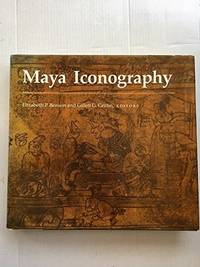
1988222Princeton: Princeton University Press 1988. First Edition First Printing. 1/4 cloth. Very good/fine. Very good first printing. Brown cloth under buckram quarter cloth binding. Cream endpapers. Pages are clean and bright. Rear endpaper and page 379 have short tear at bottom. From the private library of Larry Southwick collector's marginalia pencilled near front hinge. In a fine dust jacket now protected in a clear removable archival cover. Profusely illustrated with photos and drawings. 379 pp. including bibliography and index. Quarto 10 1/2 x 10 inches tall. Large and heavy item billed at actual shipping charges. Princeton University Press hardcover books
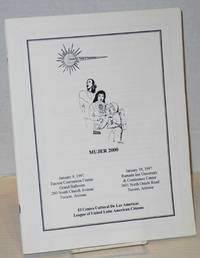
1997201723Tucson: El Centro Cultural de las Americas & League of United Latin American Citizens 1997. Magazine. 28p 8.5x11 inches biographical sketches and b&w photos of participants resources schedules events ads very good event program in stapled white pictorial wraps. El Centro Cultural de las Americas & League of United Latin American Citizens unknown books
19771335018Kalamazoo MI: Cistercian Publications Inc 1977. Hardcover. Octavo; G/G; pp 291; blue spine with white text; scarce in HB; dust jacket has rubbed exterior; minor chipping to edges; slight soiling to front; some foxing inside dj and flaps; cloth shows slight foxing to exterior; strong boards; text block edges have slight tone; some foxing to endpapers; interior clean; tight binding; inscribed by artist; arts - American. 1335018. FP New Rockville Stock. Cistercian Publications Inc hardcover books
1800E0068viii514 pages with frontispiece map. Quarto 10 1/2" x 8 3/4" housed in a custom slipcase. Translated by Maurice Keatinge. First English edition.Bernal Dïaz del Castillo was a conquistador who wrote an eyewitness account of the conquest of Mexico by the Spaniards under Hernan Cortes himself serving as a rodelero under Cortes. Born in Medina del Campo Spain he came from a family of little wealth and he himself had received only a minimal education. He sailed to Cuba in 1514 to make his fortune but after two years found few opportunities there. Much of the native population of the island had already been killed by epidemics and forced labor and in 1517 an expedition was sent to the smaller Caribbean islands to find alternative sources of labor. Dïaz joined this group under the command of Francisco Hernandez de Cordoba. It was a difficult venture and although they discovered the Yucatan coast by the time the expedition returned to Cuba they were in disastrous shape. Nevertheless Dïaz returned to the coast of Yucatan the following year on an expedition led by Juan de Grijalva with the intent of exploring the newly discovered lands. Upon returning to Cuba he enlisted in a new expedition this one led by Hernan Cortes. In this third effort Dïaz took part in one of the legendary military campaigns of history bringing an end to the Aztec empire in Mesoamerica. During this campaign Dïaz spoke frequently with his companions in arms about their experiences collecting them into a coherent narration. The book that resulted from this was Historia verdadera de la conquista de la Nueva Espana English: The True History of the Conquest of New Spain. In it he describes many of the 119 battles in which he claims to have participated culminating in the fall of the Aztec Empire in 1521.As a reward for his service Dïaz was appointed governor of Santiago de los Caballeros present-day Antigua Guatemala. He began writing his history in 1568 almost fifty years after the events described in response to an alternative history written by Cortes's chaplain who had not actually participated in the campaign. He called his book the Verdadera Historia True History in response to the claims made in the earlier work. Dïaz died in 1585 without seeing his book published. A manuscript was found in a Madrid library in 1632 and finally published providing an eye-witness account of the events often told from the perspective of a common soldier. Today it is one of the most important sources in understanding the campaign that led to the collapse of the Aztec Empire and the Spanish conquest of Mexico.Condition:Spine renewed with new period spine label and original boards which the corners and edges are heavily rubbed some foxing to early pages. Frontispiece map repaired. Custom made red slipcase with Japanese toggles and leather spine label in gilt lettering else about a very good copy in a near fine case. Printed for J Wright by John Dean hardcover books
200331672Westport: Greenwood Press. As New. 2003. Hardcover. 0313323941 . First printing. As new in glossy illustrated boards. No dust jacket as issued. . Greenwood Press hardcover books
197596663New York: New Outlook Publishers 1975. 52p. wraps. Statement issued jointly by the communist parties of various Latin American and Caribbean countries. New Outlook Publishers unknown books
193329764Antofagasta: Partido Comunista de Chile 1933. Lithographed postal card ca 19.5cm x 9cm 5-1/4" x 3-1/2". Mild discoloration; corners slightly rounded; Very Good. Recto is a captioned portrait; verso printed for mailing with text providing a brief biography of Anabalon a communist-affiliated college professor who was arrested tortured and killed by Chilean government forces in 1932. A rare memorial of this little-remembered but briefly influential event. [Partido Comunista de Chile] unknown books
1883E0564Title leaf & 13 leaves of maps being mounted albumen photograph reductions of the original map. Photographs are approximately 7¼" x 8¾" on card stock leaves. Oblong royal octavo 9 "x 12½" bound in original red cloth rebacked with modern leather with original gilt-lettered leather spine laid on. References: P-LG 5121. El Territorio Mexicana Vol II p 457 reproduces 5th map of 1st edition. International Geographical Exposition and Congress of London. Geographical and Exploring Commission of the Mexican Republic. Catalogue of the Exhibits presented by the Commission with a short sketch of its organization and labors by the Directing Engineer Julio Alvarado C. E. Mexico 1895. p 32 First and only edition.<br /><br />Rare atlas of photographs of the map of the region around Puebla southwest of Mexico City. Warren Heckrotte describes the atlas and the enterprise that produced it: "The Comision Geografica-Explordora was established by a decree of December 13 1877. It was directed to prepare a map of the Republic with all the scientific accuracy desirable. The region around the town of Puebla southwest of Mexico City was the first effort of the Commission. The surveying was done by astronomical determinations and triangulation. Between 1879 and 1882 the planned nine sheets lithographed in Mexico City were issued at a scale of 1:20000. Elevations are shown by contour lines. For this atlas the sheets were issued as photographs the maps reduced in scale to 1:50000. A photographic edition at the scale of 1:100000 was also issued. Other areas of the country were mapped. The ultimate goal was to produce a map of the country at a scale of 1:100000 in 1100 sheets. At the time the Commission closed shop in 1914 a little over 200 sheets had been completed. This mode of production suggests that a small number of these atlases were produced." Indeed OCLC/WorldCat locates only two copies at the University of California Berkeley and Dartmouth College.<br /><br />Condition:<br /><br />Some soiling to covers; expertly rebacked by Sandra Good; new endpapers; internally fine or nearly so a bit of darkening to margins of mounts. Comisión Geográfico-Exploradora hardcover books
1709CA1100viii24412 pages with engraved map folding plan and four engraved illustrations in text and index. Quarto 9 ¾" x 7½" bound in period calf with modern rebacking original gilt spine leather laid down and ruled gilt edges to cover. Translated by Joh Stevens. First English Edition.<br /><br />This is a highly regarded chronicle of the conquest and colonization of Peru by Spaniards in the latter part of the 16th century and is lauded for its at the time objectivity. Cieza de Leon's Chronica was to appear in 4 sections this translation being the first part only all that was available of the history until the latter part of the 19th century.<br /><br />Pedro Cieza de León was a Spanish conquistador and chronicler of Peru. He is known primarily for his history and description of Peru Crónicas del Perú. He wrote this book in four parts but only the first was published during his lifetime; the remaining sections were not published until the 19th and 20th centuries. Cieza de León was born to a family of Jewish conversos1 around 1520 in Llerena a town in southeastern Extremadura less than 60 mi from Portugal. Although recently converted from Judaism to Catholicism the family enjoyed good social standing in the region because of their networks and business dealings. His father Lope de León was a shopkeeper in the town and his mother Leonor de Cazalla was a native of Llerena. There is scant documentary evidence of the young Cieza de León’s childhood and little is known of his early life before his voyage to the Americas. Given the fact that he left home at 13 it is unlikely that Cieza de León received more than a rudimentary education. In 1536 in Córdoba at 16 Cieza de León was greatly surprised to learn of the discovery of the land of the Incas and so decided to go to Seville to embark on his journey to South America to see for himself the artifacts of precious metals which had been brought to Spain from Cajamarca. In light of the prohibition of entry into the Spanish colonies for Jews and Jewish converts to Catholicism Alonso López and Luis de Torres attested for Cieza de León that he was not prohibited. Jewish converso Pedro López de Cazalla secretary of Spanish conquistador Francisco Pizarro conqueror of the Incan Empire was also his first cousin. He returned to Seville Spain in 1551 and married a woman named Isabel López de Abreu. Here he published in 1553 the first part of the chronicles of Peru Primera Parte. He died the following year leaving the rest of his work unpublished. His Second Part of Chronicles of Peru describing the Incas was translated by Clements Markham and published in 1871 for the Hakluyt Society. In 1909 the fourth part of his chronicle focusing on the civil wars among the Spanish conquerors was published under the title Third Book of the Peruvian Civil Wars. The third part of Cieza de León's Crónicas del Perú which examined the discovery and conquest of Peru by the Spaniards was considered by historians to be lost. The document eventually turned up in a Vatican library and historian Francesca Cantù published a Spanish version of the text in 1979. Though his works are historical and narrate the events of the Spanish conquest of Peru and the civil wars among the Spaniards much of their importance lies in his detailed descriptions of geography ethnography flora and fauna. He was the first European to describe some native Peruvian animal species and vegetables.<br /><br />Condition:<br /><br />Expertly rebacked some light rubbing to extremities foxing old book plate on front pastedown else very good. unknown hardcover books
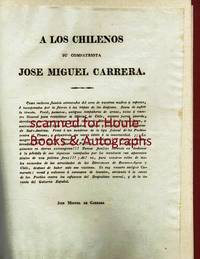
9756<p>Small 4to broadside tipped onto a stiff blank leaf. Spanish text. Bound in 1/2 gilt stamped red morocco over matching cloth spine with raised bands covers ruled in gilt. Fine. Later black cloth slipcase. Scarce. Rare broadside of the Latin American struggle for independence. Carrera 1785-1821 principal leader in the early fighting for Chilean independence where his experience in the Napoleonic Wars secured his place as head of the nationalist government; later his arrogance produced dissentions with other leaders and his rivalry with Bernardo O'Higgins led to the defeat of the nationalist forces at Rancagua in 1814.</p> [Santiago, n.p., ca. 1819] hardcover books
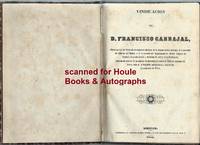
18452221653<p>Carbajal Francisco De - also sp. Carvajal Vindicacion de D. Francisco Carbajal. Mexico City Imprenta de Vicente Garcia Torres 1845. 53 pages.</p><p>Bound With:</p><p>Espinosa D. Francisco Carbajal. Atrocidades Cometidas Por El Malrado Gobierno De Ayutla Y Su Satelite Benito Quintana Y Otros. Mexico City. 1858. 60 pages.</p><p>Octavo. Period green morocco over marbled boards black morocco label. Very good some light foxing. 2 separate works in one volume.</p><p>With the MS pressmark and "MHC" inscription of famed English bibliophile Sir Thomas Phillips 1792-1872.</p> Imprenta de Vicente Garcia Torres hardcover books
1934CA0247Description:<br />2 volumes: 427 pages with facsimile title and index; 513 pages with two facsimile pages appendix and index. Royal octavo 9 1/2" x 7" bound in three quarter blue leather with raised spine bands and gilt lettering to spine. From the library of George M Foster. Second edition.<br /><br />The two chronicles by Francisco de Burgoa easily hold first place for inflated style and bombastic phraseology especially the opening remarks to various chapters. Yet for the important area of Oaxaca and the numerous subjects he treats Burgoa's works are indispensable and irreplaceable sources. Burgoa born in Oaxaca was related to numerous local colonial families. He took his final vows in 1625 and by 1649 was provincial of his Order. In that post he made a special effort to visit various parts of Oaxaca especially seeking notices of Zapotecan antiquities with the aim of writing a history of Oaxaca. Before his death in 1681he did not complete it but left two prolix yet valuable published treatises. The two chronicles are the usually abbreviated Palestra historial and Geográfica descripción. Burgoa conceived of them as a single work but they differ in contents. The Palestra historial is a typical chronicle. It begins with the arrival in 1526 of Dominicans in Mexico City and shortly thereafter their appearance in Oaxaca. Burgoa rehearses the lives of many missionaries already biographized by Davila Padilla but Burgoa emphasizes their apostolate in the Oaxaca areas even before formal establishment of the Province of San Hipolito 1592. These lives are uniformly eulogistic but scattered through them are important bits of information on the numerous Indian groups of Oaxaca. The Geográfica descripción has 80 chapters. They detail the histories of the Monasteries and the work of their friars among the Indians with much less attention to biographical detail than in the Palestra historial. The data run to about mid-17th century in both. Handbook of Middle American Indians<br /><br /> George McClelland Foster Jr born in Sioux Falls South Dakota on October 9 1913 died on May 18 2006 at his home in the hills above the campus of the University of California Berkeley where he served as a professor from 1953 to his retirement in 1979 when he became professor emeritus. His contributions to anthropological theory and practice still challenge us; in more than 300 publications his writings encompass a wide diversity of topics including acculturation long-term fieldwork peasant economies pottery making public health social structure symbolic systems technological change theories of illness and wellness humoral medicine in Latin America and worldview. The quantity quality and long-term value of his scholarly work led to his election to the National Academy of Sciences in 1976. Virtually all of his major publications have been reprinted and/or translated. Provenance from the executor of Foster's library laid in.<br /><br />Condition:<br />Some occasional pencil marginalia by Foster. Foster's date of acquired on front paste down of volume one. Some rubbing to extremities else a very good set. Archivo General de la Nacion hardcover books
200028629NY: St. Martin's. Fine in Near Fine dust jacket. 2000. Hardcover. 031223144X . First printing. Fine in a very near fine hint of sun fading along spine dust jacket. . St. Martin's hardcover books
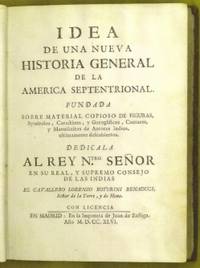
1746A0068xxxvi167viii96 pages. Octavo 8 1/4" x 6 1/4" bound in full leather with decorative gilt and lettering to spine. From the library of George M Foster. First edition.<br /><br />Lorenzo Boturini Benaducci born in Italy of noble parentage studied in Milan and lived in Trieste and Vienna. He was a knight of the Holy Roman Empire. Forced to flee Austria because of the war with Spain Boturini arrived in Spain via England and Portugal. In Madrid he met the Condesa de Santibáñez oldest daughter of the Condesa de Moctezuma. The mother authorized him to collect a pension due her as a descendant of the Aztec Emperor Moctezuma II from the royal treasury in New Spain. Boturini went to New Spain in 1736 where he remained eight years. During those years he assembled a vast collection of paintings maps manuscripts and native codices. He copied more than 500 pre-Columbian inscriptions and made his own drawings of monuments and sculptures and he investigated the history of the apparition of the Virgin of Guadalupe on the hill of Tepeyac. He traveled widely and on his travels brought together the largest collection of Mexican antiquities assembled to that time by a European. Not only did he intend to write the history of the Virgin of Guadalupe but he also had plans to crown her image with a gold crown. For that purpose he sought donations from the bishops and from the public. This brought him to the attention of the colonial government which was suspicious of the motives of a foreigner making this proposal. On June 2 1743 after an investigation the recently arrived viceroy Pedro Cebrián y AgustÃn had him imprisoned and impounded his collection. He was accused of entering New Spain without license from the Council of the Indies and of introducing papal documents without a royal permit. After eight months in prison Boturini was sent to Spain. He fell into the hands of pirates who eventually released him at Gibraltar. From there he traveled to Madrid in miserable conditions. In Madrid he met Mariano Fernández de EcheverrÃa y Veytia another passionate collector of Indian antiquities. Fernández de EcheverrÃa y Veytia offered Boturini a place to live and financial support and got the Council of the Indies to reconsider his case. Boturini was absolved. The king named him royal chronicler of the Indies ordered that his collection be returned to him and extended an invitation for him to return to New Spain. Boturini however declined to return to New Spain and his collection was never restored. It appears that he was granted recompense and a stipend to work on his projected history of the colony. In Madrid he wrote a history of ancient Mexico unpublished at the time of his death in 1753. The library at the BasÃlica de Nuestra Señora de Guadalupe is named for him. The Boturini Collection was formed between 1735 and 1743 to serve as the basis of a projected Historia de América Septentrional. It consisted of many valuable documents the majority of them of Indian provenance. Among these were hieroglyphic paintings that had belonged to Juan de Alva Ixtlilxochitl a descendant of the rulers of Texcoco. Ixtlilxotchitl bequeathed these documents to Carlos de Sigüenza y Góngora. The collection was confiscated by Viceroy Pedro Cebrián y AgustÃn at the time of Boturini's arrest in 1743. It was deposited in the office of the secretary of the viceroyalty. The documents were neglected there for years and suffered considerable pilferage. The subsequent viceroy Juan Francisco de Güemes 1st Count of Revillagigedo granted the historian and antiquary Fernández de EcheverrÃa y Veytia Boturini's friend from Madrid the paintings and documents he solicited for his own studies. On Fernández de EcheverrÃa y Veytia's death they passed to Antonio de León y Gama. He died in 1802 and the collection passed to his heirs. Shortly thereafter 16 paintings were obtained by Alexander von Humboldt during his visit to Mexico in 1802-03. He published them in Vues des cordillères et monuments des peuples indigènes d'Amérique. The originals of these are now in the Berlin State Library. Part of the remainder of the collection may have passed to Father José Pichardo an amateur antiquarian. Joseph Alexis Aubin beginning in 1827 or shortly thereafter obtained important parts of the collection from a variety of sources. He sold his collection to Eugène Goupil who was of French and Mexican descent. This part of the collection passed by donation or purchase to the National Library in Paris where it remains under the name Aubin-Goupil Collection.<br /><br />George McClelland Foster Jr born in Sioux Falls South Dakota on October 9 1913 died on May 18 2006 at his home in the hills above the campus of the University of California Berkeley where he served as a professor from 1953 to his retirement in 1979 when he became professor emeritus. His contributions to anthropological theory and practice still challenge us; in more than 300 publications his writings encompass a wide diversity of topics including acculturation long-term fieldwork peasant economies pottery making public health social structure symbolic systems technological change theories of illness and wellness humoral medicine in Latin America and worldview. The quantity quality and long-term value of his scholarly work led to his election to the National Academy of Sciences in 1976. Virtually all of his major publications have been reprinted and/or translated. Provenance from the executor of Foster's library laid in.<br /><br />Condition:<br /><br />Lacks frontispiece portrait. Lacks Foster's stamp or date of purchase. some damp stains to end papers neat old marginalia in Spanish to back end paper worm hole ant head and heal of spine going through spine extremities bumped and rubbed old owner's label to front paste down 1" chip at back head hinge and name to front end paper scuffed else a good copy of a rare item. En la Imprenta de Juan de Zuniga hardcover books
1670WRCLIT65539London: excudit Rogerus Nortonus regius in Latinis Græcis & Hebraicis typographus; væneuntque apud Sam. Mearne regium bibliopolam in vico vulgariter dicto Little-Britaine 1670. 382pp. plus preliminary blank leaf. Contemporary speckled calf raised bands spine gilt extra. Upper joint cracked at top and bottom; corners worn shallow loss at crown and toe of spine a few minor marginal smudges front free endsheet nearly loose contemporary ownership inscriptions on endsheets with ink name in margin of title- page but internally a very good copy. Second edition of this version of Book of Common Prayer in Latin for the Anglican Church edited by John Durel who signs the dedication "J.D. Editor." First printed in 1669 this is one of two variants of the 1670 printing noted by ESTC in this case with the imprint in five lines ending with 'Little- Britaine." The translation was initially undertaken by John Earle John Pearson and John Dolben but they withdrew before the work was complete and Durel later Dean of Windsor completed it. ESTC locates four copies of this variant in North America and nine of the four line variant. ESTC R17750. WING B3637B. GRIFFITHS 87.10. excudit Rogerus Nortonus, regius in Latinis, Græcis & Hebraicis typographus; væneuntque apud Sam. Mearne, regium bibliopolam i hardcover books
1911CA0100a3 volumes. Volume 1. vi314 with frontispiece and plates; volume 2. 372 pages with frontispiece and plates. volume 3. 518 pages with frontispiece and one plate. Royal octavo 9 1/4" x6 1/4" Bound in quarter leather with gilt lettering to spine and raised spine bands; marbled boards. Preface par M. le Cte de MoüyFirst edition.<br /><br />Mémoires: L'Intervention Française au Mexique by Charles Blanchot. This very rare memoir by Charles Blanchot was aide-de-camp to General Bazaine Supreme Commander of French Forces in Mexico during Mexico's Second Empire. There is so much in here that has never seen light in either Spanish or English for instance: the powerful if behind-the-scenes role of Doña Juliana de Gómez Pedraza widow of Manuel Gómez Pedraza and the vicious if as Blanchot suggests unfounded rumors circulating in Mexico City about Bazaine in 1866-7. Blanchot who married an American of French origin in Mexico City also offers a detailed and lively portrait of Mexico City society at the time.<br /><br />Condition:<br /><br />First signature of volume one detached with some edge wear along the fore-edges title to volume two detached binding edges and hinges rubbed spines darkened. A good copy of a very rare and scarce work. Librairie Emile Nourry hardcover books