1 201 résultats
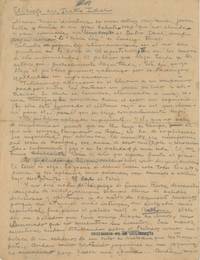
1923List2852Mexico City 1923. Double-sided 8 ½ x 11 inch sheet handwritten with signature. Stained and slightly torn at fold. Excellent. Julio Enrique Ãvila 1892–1968 was a Salvadoran science professor journalist and poet. He is best known for his poetry anthology El mundo de mi jardÃn 1927. Offered here is a review of MarÃa Teresa Montoya in a production of Linares Rivas’ La Mala Ley at Mexico City’s Ideal Theater in 1923. In it Ãvila is captivated not by the play or Montoya’s performance but by the theater’s blind pianist. Translated from Spanish the review reads in part:<br /> <br /> “Staggering slightly and supported by a companion's shoulder a pale introspective young man makes his way between the seats. His hair is striking illuminated by a serene sadness and bears the color of dusk—as if the last ray of sunlight that once shone for him remained trapped within it… for him who is blind completely blind!<br /> <br /> “The audience claps impatiently… And he—who knows nothing of impatience—for whom time is endless who knows no early or late cannot understand this restless eagerness to push minutes forward this relentless dissatisfaction this desperate craving to experience everything—both suffering and joy—within the brevity of a lifetime. .<br /> <br /> “He must be a dreamer whose illusions lie far beyond reach a man of fantasy who cannot grasp his dream… His sensitive hands move over the keys as if searching for a path for a thread of melody to carry them away… They wander gathering jasmine in a harmonious garden to make an offering… They are like fledgling birds that have mistaken the moon bathing in the pond for their mother… And they follow it endlessly yet never reach it… and weep because they have been left alone… .<br /> <br /> “And through the music my soul has longed to embrace the soul of that lonely man that artist who dwells in sound who builds palaces and horizons out of melodies… The soul of that pale withdrawn young man who knows nothing of impatience for whom there is no early or late.â€<br /> <br /> Overall a striking work by a significant figure in Latin American literature. unknown
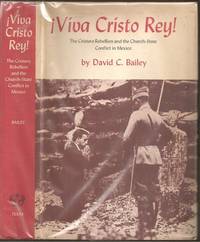
1974TEH004xiii346 pages with foldout map plates bibliography and index. Royal octavo 9 1/4" x 6 1/4" bound in original publisher's red cloth with gilt lettering to black spine label in pictorial jacket. The Texas Pan American Series. First edition. The Cristero War or Cristero Rebellion 1926–1929 also known as La Cristiada was a widespread struggle in many central-western Mexican states against the secularist anti-Catholic and anticlerical policies of the Mexican government. The rebellion was set off by enactment under President Plutarco Elías Calles of a statute to enforce the anticlerical articles of the Mexican Constitution of 1917 also known as the Calles Law. Calles sought to eliminate the power of the Catholic Church and organizations affiliated with it as an institution and also suppress popular religious celebration in local communities. The massive popular rural uprising was tacitly supported by the Church hierarchy and was aided by urban Catholic support. US Ambassador Dwight W. Morrow brokered negotiations between the Calles government and the Church. The government made some concessions the Church withdrew its support for the Cristero fighters and the conflict ended in 1929. It can be seen as a major event in the struggle between Church and State dating back to the 19th century with the War of Reform but it can also be interpreted as the last major peasant uprising in Mexico following the end of the military phase of the Mexican Revolution in 1920. Condition: Corners bumped. Jacket with some offset darkening else a better than very good copy in like jacket. University of Texas Press hardcover
0267076479.Ghardcover. Good. Access codes and supplements are not guaranteed with used items. May be an ex-library book. hardcover
0267076460.Ghardcover. Good. Access codes and supplements are not guaranteed with used items. May be an ex-library book. hardcover
0483384992.Gpaperback. Good. Access codes and supplements are not guaranteed with used items. May be an ex-library book. paperback
0483385050.Gpaperback. Good. Access codes and supplements are not guaranteed with used items. May be an ex-library book. paperback
1995007610Santa Fe New Mexico U.S.A.: School of Amer Research Pr 1995. 449pp. the definitive study of the role of Western contact in generating disease war and political strife among the Yanomami from the slave raiding of the 17th Century. Clean. Trade Paperback. Fine/No Jacket - Wraps. 8vo - over 7¾" - 9¾" tall. School of Amer Research Pr paperback
5415LETTERS: 30 September 1977 and 3 July 1979 both on letterhead of Yale University Department of Classics; OFFPRINT from 'Harvard Studies in Classical Philology': Cambridge Massachusetts: Harvard University Press 1963. Both letters two pages quarto. LETTER ONE annotated in ink with some ink marks in the blank space beneath Goold's signature: Written at the point at which Goold was relinquishing the University College Latin Chair to return to Yale. 'I told you I should be visiting Yale this autumn; and now I have to tell you that I shall be going on to Stanford after Christmas till March. Still if I shan't have the pleasure of coming in occassionally to the bookshop it probably means that I shall be ordering more books from you!' Orders a couple of copies of Austin's 'Aeneid'. 'To my great delight classics are thriving at Yale as also at Harvard where I went to a party a week or so ago; I don't know whether this reflects a national trend quite likely not but I'm glad to be at a place where there are so many people taking classics courses that one hasn't to worry about being sacked because of the dearth of students.' Discusses his wife's job 'we see each other only at weekends' and 'the Marshalls' 'they very kindly met us at Boston airport & contributed much to our being able to settle down so well'. 'The printers of the Loeb Classical Library of which Goold was Chief Editor continue to make the most appalling mistakes. They bound the whole of my Manilius before discovering that they had printed ASTRONMICA rather than - NOMICA on the spine! The result is that the spine will now have a costly cover-up job done on it and another two months' delay. Absolutely infuriating. I can I suppose comfort myself with the thought that this is likely to be the best £3.90 worth in Latin studies - but I've shed as much of my blood on thhe book as I care.' Asks if Blackwell's want to stock his edition of Horace's odes. LETTER TWO with negligible coffee stain: Is sorry to learn that Quinton has 'been put on half-time'. 'But I gather reading between the lines that Blackwell's is not devoid of humanity and that some special i.e. better arrangement may be possible. And it may be congenial for you to work on second-hand books exclusively'. Speculates that there are enough copies of out of print classics books 'to enable one English bookseller to do a good trade'. Places an order for three works. 'I need hardly say that I look forward to a continuation of our personal contact & promise my undiminished interest in whatever you can come up with in the second-hand book line. Discusses the complicated publishing plans for the Harvard Servius. 'I don't expect any difficulty although I anticipate being pressured into cutting back on typographical excellence.' 'I get the impression that Britain's new government is proving more popular & successful than most thought possible. Contrariwise the oil crisis has hit America hard: the other day I had to wait 2 hours in a nearly mile-long queue of cars to get my tank filled'. Discusses car dependency and the cutting out of wasteful consumption. THE OFFPRINT is of eighteen pages octavo stapled into original grey printed wraps. Very good with a trace of rust to the staples. Front wrap inscribed to 'P. Q. with best wishes from G. P. G.' LETTERS: 30 September 1977 and 3 July 1979, both on letterhead of Yale University Department of Classics; OFFPRINT (from 'Harvar paperback
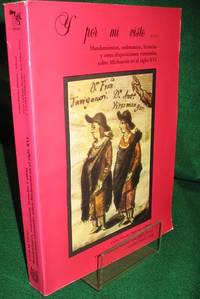
1994CA0124549 pages with maps tables facsimiles bibliography and index. Quarto 11" x 8 1/4" bound in original wrappers. Assisted by Victor Cardenas Morales Irais Pinon Flores and Trinidad Pulido Solis. First edition limited to 1000 copies.<br /><br />The 891 documents included in this volume are an inexhaustible source of the original historical information about government and the colonial administration of the Indian peoples of Michoacán during the sixteenth century. Each of these documents usually brief transcribed here are the living testimony of a people under the Spanish regime and through their efforts and requests to the viceroy in turn show their adaptation to the Spanish bureaucracy as well as its dissatisfaction with the colonial power. Beyond Michoacán the era of political conflicts military or ecclesiastical history this book shows the indigenous world at a crucial moment in its history.<br /><br />Condition:<br /><br />Edge wear corners gently bumped else a very good copy. Universidad Michoacana paperback
19615025<p>Chicago Illinois: Franciscan Herald Press Publishers of Franciscan Literature First Edition March 6 1961. XVII302 pages. AsNew Hardcover with a Good DJ. 8.25"x55"x1.1". be32.</p> Franciscan Herald Press Publishers of Franciscan Literature hardcover
1145332668.Gpaperback. Good. Access codes and supplements are not guaranteed with used items. May be an ex-library book. paperback
1992Q-0520065530University of California Press 1992-02-25. Paperback. New. New. In shrink wrap. Looks like an interesting title! University of California Press paperback
0520065522.Ghardcover. Good. Access codes and supplements are not guaranteed with used items. May be an ex-library book. hardcover
1163289728.Gpaperback. Good. Access codes and supplements are not guaranteed with used items. May be an ex-library book. paperback
1432683527.Gpaperback. Good. Access codes and supplements are not guaranteed with used items. May be an ex-library book. paperback
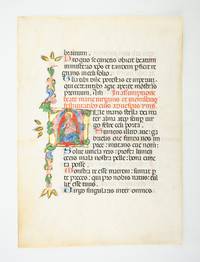
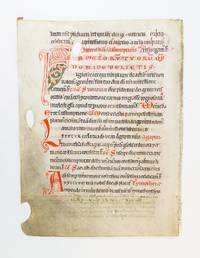
ST20973Italy 15th century. 364 x 260 mm. 14 3/8 x 10 1/4". Single column 22 lines in a rounded gothic book hand. <br/> Rubrics in red versal initials alternating red and blue with purple penwork one three-line initial in blue with purple penwork A SIX-LINE "A" DEPICTING THE ASSUMPTION OF THE VIRGIN the initial painted pink with red green and blue nodes and acanthus on a burnished gold ground with extensions running the length of the text column incorporating more acanthus and small gold embellishments with sprays of the gold leaves at the top bottom and center. A little rubbing to the paint negligible soiling and small spots to margins but in excellent condition overall.<br/> <br/> This very large handsomely preserved leaf features a strikingly attractive initial of the Virgin opening the beloved hymn "Ave Maris Stella" "Hail Star of the Sea". Dating back to at least the ninth century and traditionally associated with the hour of Vespers on Marian feast days as here the hymn praises the Virgin's purity meekness and mercy calling upon her as the "Nurturing Mother of God" to dispel evil and free us from our sins. Inside the gilt and painted initial is a lovely portrait of the Virgin who is depicted seated against a red mandorla dressed in pink and wrapped in a green and blue mantle--perhaps a reference to the colors of the ocean. Her hands are raised in prayer fingers lightly touching above her heart and her well-defined features appear both strong and serene. Judging from the size of the initial liberal use of gold and the wide margins of this leaf the original manuscript must have been a costly item produced for a wealthy church or monastery. unknown
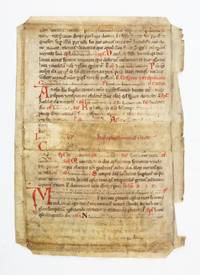
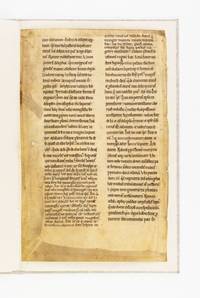
ST19350-013Germany early 13th century. 273 x 193 mm. 10 3/4 x 7 1/2". Single column 31 lines text in two sizes in a gothic hand. <br/> Rubrics in red several one- and two-line initials in red and two larger initials in red. A few lines with neumes later notations in the margins now quite faded. ◆Vellum a bit soiled and creased as expected fading to four or five lines where the spine was placed several notches along one edge other imperfections due to its reuse as binding scrap but still an excellent specimen that is almost entirely legible.<br/> <br/> Written in a neat and attractive hand this sizable leaf from a Missal remains mostly quite legible with all its rubrication intact despite having been used as part of a binding. A few lines also show musical notation from the earliest generation of neumes. They are described as "in campo aperto" which means literally "in an open field" because they and they alone occupy the space or "field" above the text. They are also described as adiastematic because they appear in a straight line whereas later diastematic neumes reflect changes in pitch by being placed in a higher or lower vertical position above the text. At the time the present leaf was written out the neumes here simply served as an "aide memoire" to the singer who had already learned the melody orally. unknown
ST17236Germany mid- to late 12th century. 290 x 217 mm. 11 3/8 x 8 1/2". Single column 21 lines in an attractive proto-gothic book hand. <br/> Rubrics in red several one-line initials in red five red initials measuring two to four lines long and with penwork embellishment A LOVELY SEVEN-LINE WHITE-VINE INITIAL outlined in red and with a pale yellow wash along the edge the lower half of the ground filled with green wash. Lower margins with notations in later Medieval hands. ◆A handful of original holes in the vellum no doubt from stretching the skin during processing with the scribe writing around the flaws where necessary a little soiling to lower outside corner one or two negligible spots otherwise IN FINE CONDITION the ink unusually rich and the paint very bright.<br/> <br/> From a Sacramentary a service book that contained the prayers said during Mass subsumed by the Missal in the 13th century this early leaf was once part of an attractive manuscript of very high quality. The very large and superb "F" opens the Mass for the Feast of the Assumption and the other readings here include Masses for Sts. Hippolytus and Cassian celebrated on 13 August; St. Eusabius 14 August; Vigil of the Assumption of the Virgin 14 August; Assumption of the Virgin 15 August; St. Agapitus 18 August; and the beginning of the Mass for Sts. Timothy Hippolytus and Symphorian 22 August. Sister leaves from this same manuscript have previously appeared in Sam Fogg Cat. 16 "Text Manuscripts and Documents 2200BC to 1600AD" 1995 nos. 30 and 31; Maggs Bros. European Bulletin 20 1995 no. 37; Quaritch Cat. 1270 "Bookhands of the Middle Ages VI" 2000 nos. 69 and 70; Sotheby's 6 December 2001 lot 8; and Bloomsbury 6 December 2017 lot 16. The Fogg description notes that similar initials can be seen in French German and Flemish manuscripts of the period "but very few manuscripts have the special characteristics of this one." For example the initials on the sister leaves described by Fogg contain atypically mauve and green as well as an "unusual . . . exterior contoured ground which is not confined by any geometric form." This means there is no line or shape to box in or define the capital's form; rather it appears as if surrounded by an aura or gentle shadow. Our initial contains a green ground only no mauve but the same unusual and attractive yellow aura. It is rare to find Romanesque leaves of this size and caliber in such fine condition and the present leaf with its beautiful regular proto-gothic hand exceptional white-vine initial and several large decorative initials in red is especially desirable. unknown
ST17768<p>England second half of 12th century but before 1180. 313 x 198 mm. 12 1/4 x 7 3/4. Double column 32 lines in a lovely late Caroline hand verso with some lines erased and corrected in a smaller hand. <br />Mounted in a fine tan cloth folder between sheets of textured acid-free paper. Front pastedown with book label of the Schøyen Collection with their shelf mark MS 237 written in ink. ◆Recovered from a binding and thus with overall toning and soiling recto somewhat browned from binder's glue but almost entirely confined to three margins and the verso virtually unaffected other trivial imperfections but in surprisingly good condition given its history the very rich ink especially dark and well preserved.<br /><br />This is an exceptionally lovely example of an early English book hand standing at the crossroads of the Caroline and proto-gothic calligraphic traditions. According to Thompson "In the twelfth century the scribes seem to have vied with each other in producing the best types of book-writing of which they were capable with the result that remarkable precision in the formation of the letters was attained and that the century may be named as excelling all others for the beauty of its MSS." "Greek and Latin Paleography" p. 436 The present leaf certainly lives up to this description being notable for its exceptionally neat and legible script written with uncommonly pretty and regular letter forms by a practiced and confident hand. The Caroline tradition is apparent in certain tendencies such as the use of "&" for "et" and the lack of biting curves between letters while a shift toward the proto-gothic can be seen in the vertical and compressed letter forms as well as the increased use of abbreviations and ligatures. Although the present work has often been credited to Haymo of Halberstadt due to a longstanding error in attribution reaching back to the 15th century modern scholarship now recognizes Haimo of Auxerre a monk at the Abbey of Saint-Germain in Auxerre d. ca. 875 as its true author. A prominent theologist and writer during the Caroline Renaissance Haimo produced a number of influential commentaries on various books of the Bible. The provenance on this leaf can be traced back as far as the mid-19th century when it was auctioned at Sotheby's on 21 August 1858 lot 119.2 sold as part of an album containing various leaves and fragments put together by Philip Bliss 1787-1857 registrar of the University of Oxford. It then went into the celebrated collection of Sir Thomas Phillipps 1792-1872 and was eventually sold by the Robinson Brothers on 24 April 1911 lot 390.3. This leaf has previously appeared in Quartich's catalogue 1036 "Bookhands of the Middle Ages" no. 79.5 and was most recently in the collection of Martin Schøyen his MS 237.</p>
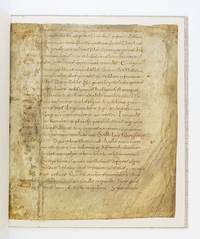
ST17766Probably Germany third quarter of ninth century. 285 x 245 mm. 11 1/4 x 9 3/4". Single column 25 lines in a Caroline minuscule book hand. <br/> Tipped into a paper folder and presented in a tan cloth binding with ink notation on spine and a small sticker on upper cover. Rubrics in red. Front pastedown of folder with the bookplate of the Schøyen collection. With several pages of typed and handwritten notes including Bernard Rosenthal's cataloguing and a copy of a letter from Bernhard Bischoff to Rosenthal concerning the dating of the leaf. ◆Recovered from a binding and thus with some expected browning staining and wrinkling a long vertical fold through the text touching a couple letters of each line recto with the first few words of each line roughened and somewhat obscured a couple of other words a bit hard to make out but the vast majority of text very legible with fore and tail margins very ample and in all quite a good specimen representing a remarkable survival.<br/> <br/> Featuring a lovely Caroline miniscule hand this very early leaf from a Lectionary may have been made for the use of a particular church or individual and comes with recent distinguished scholarship and provenance. Although the text here contains familiar passages from the Old and New Testaments their juxtaposition in this context presents a bit of a conundrum: as the enclosed cataloguing explains the story of the wicked husbandmen from Matthew followed by the story of Esau surrendering his birthright to Jacob from Genesis "is an irregular and indeed unrecorded liturgical sequence of texts and suggests that this particular collection of lections was compiled for a particular church or private chapel." It is also possible that the Lectionary was made for the use of an individual rather than an institution with certain needs or preferences—perhaps a scholar or theologian or even a Carolingian nobleman many of whom were literate and educated. The hand here is an excellent example of the legible and elegant Caroline minuscule that dominated Western Europe in this period; distinctive letter forms include clubbed ascenders such as on the letters "b" "d" and "l" a long "s" with the shaft on the line and the use of the ampersand as a general abbreviation for the letters "et" occurring anywhere in a word for example "conter&" for "conteret". Termed the "integrated ampersand" this usage is especially characteristic of Caroline minuscule manuscripts of the late eighth and ninth centuries. Our leaf comes with bookseller Bernard M. Rosenthal's catalogue description noting that it was "Purchased from Schab New York Feb. 1969." William H. Schab was a book and art dealer in the firm of Gilhofer and & Ranschburg in Vienna before fleeing Austria in 1938 and settling in New York where he founded his own business. Also included here is a copy of a handwritten note regarding the date of the present leaf from renowned paleographer Bernard Bischoff. The leaf was also featured in Quaritch's 1991 catalogue 1147 Bookhands of the Middle Ages V no. 25.5 and was until recently part of the Schøyen Collection their MS 623. Four additional pages of cataloguing are also included here. Despite having been used as binding scrap at some point in its life this leaf is very well preserved with no words lost from trimming with distinctly visible ink and in a clear and very pleasing hand. unknown
2000008536Brazil: EMBRAER Centro de Comunicacoes 2000. 144pp/illus. History of the Brazilian Air Force in the Amazon pioneers also led Embraer's Journey through time. It is therefore not surprising that on a given moment the two paths crossed. And it was certainly without pomp and circumstance that the first Bandeirante turboprop appeared over the great forest". Profusely illustrated with colour and b/w photographs. Clean. 1st Edition. Hard Cover. Fine/Near Fine. 4to - over 9¾" - 12" tall. EMBRAER, Centro de Comunicacoes hardcover
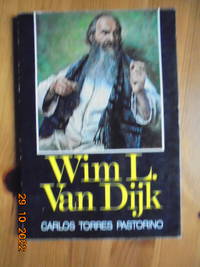
197413830Petropolis RJ Brasil: Vozes 1974. Soft cover. Good. Wim L. Van Dijk. Laid out in newspaper column style so that each page the left column is the text in Portuguese and on the right is the text in English. There are several color plates of oil paintings many of the Petropolis region where incidentally the iconic lay left Catholic press Vozes is located as well and others of his native Holland. Title page is signed by Van Dijk and dated Nov.2 1987. Pictorial gatefold glossy wraps have rub marks on spine and edges the text is in fine condition. 91 pages index BW & Color plates of his drawings and paintings on glossy paper stock. <br/> <br/> Vozes paperback
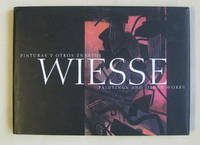
2005001253Peru: Ediciones Sociedad Agricola Chanca 2005. First edition. Hardcover. Very Good /very good . Oblong 8vo. 192 pp. Bound in illustrated boards in matching dust jacket. Full-color illustrations. Text in Spanish and English. Inscribed by Artist to Latin American colonial literature scholar Rolena Adorno: "Para Rolena Adorno/este recuento provisional de/voces y figuras de una geografía/e historias singulares/con todo aprecio Ricardo Wiesse/19 Jul 05." Very Good light bumping to corners in Very Good dust jacket with light wear to extremities. <br/><br/> Ediciones Sociedad Agricola Chanca hardcover
19852090502124500312Japan Asia Africa Latin America Solidarity Committee 1985. Soft Cover. Fine. Number of pages: 181p Size: 18cm Japan Asia Africa Latin America Solidarity Committee paperback
0778766780.Glibrary. Good. Access codes and supplements are not guaranteed with used items. May be an ex-library book. unknown