1 201 résultats
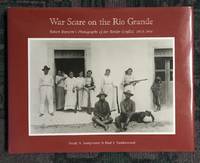
1992004075Austin: Texas State Historical Association 1992. Hardcover. Very Good /very good . Oblong 8vo. xvi 136 pp. Bound in full brown cloth title printed in black and red on white cardstock label affixed to spine in illustrated dust jacket. Black and white photographs throughout. Includes bibliography and index. Very Good vertical crease apparent on preliminary pages through page xii otherwise internally clean light fading to extremities of binding in Very Good dust jacket with vertical crease to front flap minor shelf wear to extremities. <br/><br/> Texas State Historical Association hardcover
200513688University of California Press 2005. Hardcover. Fine/No DJ. Torben Eskerod. Missing jacket unmarked in new condition only one owner me. <br/> <br/> University of California Press hardcover
42498London: Thomas Nelson and Sons Ltd. 1957. . 8vo. pp.xxviii145Latin text145English Translation 147-150Index red clothgilt; ownership inscription to front free endpaper small sticker to front paste-down shading to head light wear to edges o/w a very good clean copy. No dust-jacket. London: Thomas Nelson and Sons Ltd., 1957. hardcover
1783746017.Ghardcover. Good. Access codes and supplements are not guaranteed with used items. May be an ex-library book. hardcover
18452221653<p>Carbajal Francisco De - also sp. Carvajal Vindicacion de D. Francisco Carbajal. Mexico City Imprenta de Vicente Garcia Torres 1845. 53 pages.</p><p>Bound With:</p><p>Espinosa D. Francisco Carbajal. Atrocidades Cometidas Por El Malrado Gobierno De Ayutla Y Su Satelite Benito Quintana Y Otros. Mexico City. 1858. 60 pages.</p><p>Octavo. Period green morocco over marbled boards black morocco label. Very good some light foxing. 2 separate works in one volume.</p><p>With the MS pressmark and "MHC" inscription of famed English bibliophile Sir Thomas Phillips 1792-1872.</p> Imprenta de Vicente Garcia Torres hardcover
1967010800New York: Columbia University Press 1967. 421pp/illus. End-paper maps. "Combining the skills of an anthropologist and an economist Belshaw provides a remarkably sophisticated analysis of the workings of a peasant economic system in interaction with the larger national community. The findings have relevance for rural development outside of Mexico as well as within it and the research design itself may constitute an exceptionally useful model for economists working at this level of inquiry. The major part of the field work for this study was done in 1962 using questionnaires including a census of people land and animals an agricultural survey a social survey a questionnaire for storekeepers and another for garmentmakers focused on entrepreneurial activities and a sixth on miscellaneous occupations. The study is focused on land labor capital and entrepreneurship and includes data on the social structure and standards of living. DJ has a couple of small tears. Text is clean with no marks. 1st Edition. Cloth. Near Fine/Very Good. 8vo - over 7¾" - 9¾" tall. Columbia University Press hardcover
1331931223.Gpaperback. Good. Access codes and supplements are not guaranteed with used items. May be an ex-library book. paperback
198112077Livraria Itatiaia Editora / Universidade de Sao Paulo 1981. Hardcover. Very Good/Very Good. Faintly yellowed page edges and spine otherwise in fine condition dust jackets have minimal wear. Collectible condition. This fourth edition essentially reprints the text of the 1976 Melhoramentos third revised edition there are however differences in preface bibliography and layout. This deluxe edition is a three volume set inserted in the Reconquista do Brasil series volumes 46-48 in hardcover edition with dust jackets whereas usually this series is published in softcover. Cover art by Claudio Martins. Translated by Lucia Furquim Lahmeyer. Reviewed by B.F. Ramiz Galvao Ernst Winkler Basilio de Magalhaes. Includes facsimile of cover of original German edition. BW illustrations musical scores charts volume three has a pouch with two folded maps. I personally purchased this set when first released directly from USP bookstore in 1982 and therefore know firsthand they have not passed through the hands of many owners. <br/> <br/> Livraria Itatiaia Editora / Universidade de Sao Paulo hardcover
0366322036.Gpaperback. Good. Access codes and supplements are not guaranteed with used items. May be an ex-library book. paperback
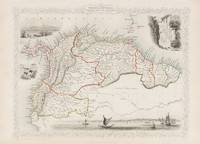
18512008AG1851. London & New York J & F. Tallis 1851. Original steel engraving / Vintage map. Drawn and engraved by John Rapkin. Partly hand-coloured. Plate Size: 32.7 cm x 24.9 cm. Sheet Size: 37.4 cm x 27.3 cm. Vintage 19th century map in very good condition. John Tallis 7 November 1817 3 June 1876 was an English cartographic publisher. His company John Tallis and Company published views maps and atlases in London from roughly 1838 to 1851. Tallis set up as a publisher with Frederick Tallis in Cripplegate in 1842; the business moved to Smithfield in 1846 and was dissolved in 1849. From 1851 to 1854 Tallis operated as John Tallis and Company. He started The illustrated news of the world and national portrait gallery of eminent personages in 1858 selling it for £1370 in 1861; it folded in 1863. Wikipedia The most important project John Tallis undertook was the 'Illustrated Atlas' from 1851. The original map we offer here was part of this exceptional Atlas and all the maps it contained are still today considered as the last reminder of an era of lavish map production. Tallis worked the project together with John Rapkin 1815-1876 and it was Rapkin's style and talent that we have to thank for when we marvel at these maps today. What makes these maps so special is the detail of engraved vignettes that surround the map and often show indigenous scenes people in their environment and even more so historical buildings or historical views of towns and cities architecture and landscape. The project of 'The Illustrated Atlas' was designed to be finished just in time for the anxiously awaited "Great Exhibition of the Works of Industry of All Nations" or The Great Exhibition sometimes referred to as the Crystal Palace Exhibition in reference to the temporary structure in which it was held was an international exhibition that took place in Hyde Park London from 1 May to 11 October 1851. It was the first in a series of World's Fairs exhibitions of culture and industry that became popular in the 19th century and it was a much anticipated event. The Great Exhibition was organized by Henry Cole and Prince Albert husband of the reigning monarch Queen Victoria. It was attended by numerous notable figures of the time including Charles Darwin Samuel Colt members of the Orléanist Royal Family and the writers Charlotte Brontë Charles Dickens Lewis Carroll George Eliot and Alfred Tennyson. Music for the opening was under the direction of Sir George Thomas Smart and the continuous music from the exhibited organs for the Queen's procession was "under the superintendence of William Sterndale Bennett". Wikipedia unknown
1993CA0126260 pages with maps two folding and color plates. Royal octavo 9 1/r" x 6 1/2" bound in original yellow cloth with red lettering to spine and front cover. First edition limited to 500 copies.<br /><br />This production is a vast bibliography: over one hundred titles including books essays documentaries compilations book reviews and articles. In the newsletter of the General Archive of the Nation which published twenty historical documentaries geographic studies of colonial Mexico. But also includes the revolution of independence and the formation of the Mexican state.<br /><br /><b>Condition:</b><br /><br /> A touch of rubbing to extremities. Jacket spine sunned rubbing to extremities with some light chips to spine ends else a very good copy in like jacket. Editorial Morevallado hardcover
7E-9HYX-ADJ9Fair. Leather wrap 1865. Latin version. It's rough looking but it's all there. Shipping daily. hardcover
1390126080.Gpaperback. Good. Access codes and supplements are not guaranteed with used items. May be an ex-library book. paperback
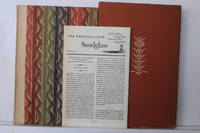
193510737<p>The Heritage Press New York 1935. First Edition 'Thus'. VG book Sandglass and Slipcase minor edgewear. Noted for its beautiful hand-made paper binding with individual variations in the paper pattern. The top has the typical bright stain red. The book is divided into two books - Book I: A dialogue critiquing the social and economic ills of 16th-century Europe particularly England and Book II: A detailed travelogue describing the island of Utopia a fictional society where private property is abolished everyone works a six-hour day and religious tolerance is practiced.</p> The Heritage Press hardcover
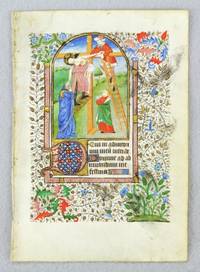
1420ST12005fFrance probably Paris ca. 1420. 210 x 146 mm. 8 1/4 x 5 3/4". Single column recto with five lines of text verso with 16 lines all in a very pleasing very regular gothic book hand. <br/> Attractively matted. Rubrics in red verso with a one-line and two two-line initials as well as a line filler in colors and burnished gold recto with a one-line initial and a line filler in the same style and with a quite large five-line "D" in pink and white with enclosed floral diapering all on a burnished gold ground the same side WITH A LOVELY FULL BORDER of swirling hairline stems bearing numerous leaves and berries of burnished gold and with sprays of acanthus leaves and flowers in multiple colors spilling from the corners this ENCLOSING A POIGNANT ARCH-TOPPED MINIATURE OF THE REMOVAL OF CHRIST FROM THE CROSS measuring approximately 85 x 60 mm. the miniature within a thin gold frame and enclosed in turn on three sides by bars in colors and gold the scene showing two men on ladders unfastening Christ's lifeless body from the cross while Joseph of Arimathea waits below clutching cloth to be used for a burial shroud as the Madonna at the lower left of the picture reaches up to clasp her son's bloody arm. With a small cross stitched in white thread in each upper corner. ◆A little soiling right along hinge edge a few smudges in the border a couple of tiny flakes of paint missing from the cross and the sky otherwise fine the vellum clean and fresh the colors rich and the gold lustrous.<br/> <br/> This is an especially sorrowful scene depicted with power grace and sensitivity by an artist demonstrating very considerable skill in composition and execution. The scene is well designed with the cross providing a device for focus at the center of the miniature. Nicodemus identified by his expensive attire is atop a ladder behind the cross lowering Christ's limp body onto the shoulder of another man probably a servant whose ladder is set against the front. Despite the fact that the corpse is more bones than flesh the artist has made it seem a heavy burden draped over the shoulder of the man as he walks backward down his ladder. Fully stretched out Christ's left arm is held for balance by Nicodemus at the top right while the other arm hangs down toward the Virgin. While we can only see her back her image evokes great pathos as she reaches up with both hands to grasp the mangled arm of her son his blood running from his hand onto hers. Joseph of Arimathea whose position anchors the right side of the picture looks on with concern tightly holding linen to shroud the body. St. John and Mary Magdalen conventional participants in the Deposition are not present in this miniature. While it is possible and even likely that the same artist produced this scene and the miniature of Christ Carrying the Cross this one is better as the faces are more deftly painted and the folds in the various garments are more clearly defined. unknown
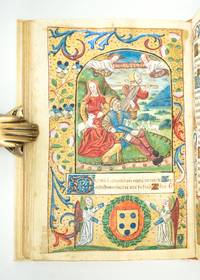
1516ST20620Northern France late 15th or early 16th century. 176 x 128 mm. 7 x 5". Single column 23 lines in a neat batârde hand. i blank 101 ii blank leaves. Lacking one leaf after f. 87 possibly containing a miniature otherwise complete. Contents: Calendar f. 1r; Gospel Lessons f. 7r; Passion according to John f. 10v; Hours of the Virgin f. 15v; Penitential Psalms and Litany f. 45r; Office of the Dead f. 54v; Hours of the Cross f. 68v; Hours of the Holy Spirit f. 70v; Prayers to the Trinity St. Veronica "Obsecro Te" "O Intemerata" and "Stabat Mater" f. 72v; Suffrages f. 79r; Prayers in French to be said on various occasions f. 86v; verse prayer in French beginning "Royne des cieulx glorieuse" f. 90r; additional prayers in French and Latin f. 93v. <br/> Attractive 19th century vellum with lacy gilt border raised bands ruled in gilt gilt lettering tan silk endleaves all edges gilt. Housed in a felt-lined reddish-brown pebbled morocco clamshell box with gilt lettering on spine. Rubrics in red numerous one- and two-line initials in painted gold on burgundy or blue ground WITH 27 SMALL MINIATURES one miniature of Christ Carrying the Cross measuring 60 x 68 mm. the rest depicting saints and measuring between eight and nine lines each surrounded by a full border of acanthus flowers and small dots on bare or painted vellum and 14 LARGE MINIATURES EACH OPENING WITH A FULL BORDER either with acanthus and flowers as before or architectural some borders embellished with figures animals or hybrids two with a small scene in the lower margin and about a dozen with the added coats of arms and/or mottos of Jean Boutin. The subjects of the large miniatures include the following: St. John of Patmos f. 7r; Annunciation f. 15v; Visitation f. 23r; Nativity f. 27v; Annunciation to the Shepherds f. 29v; Adoration of the Magi f. 31v; Presentation in the Temple f. 33v; Flight into Egypt f. 35v; Death of the Virgin f. 38v; Bathsheba bathing f. 45r; Funeral Mass f. 54v; Crucifixion f. 68v; Pentecost f .70v; Trinity f. 72v. See: Fairfax-Murray "French" p. 265-266. Vellum binding soiled but perfectly sound. Small portions of some border figures and perhaps three or four miniatures touched up in the 16th century see below occasional chipping to white paint small hole in the border of ff. 11 & 29 light scattered spotting fading thumb soiling and other minor issues but an attractive and substantially complete manuscript the illumination extensive and mostly well preserved.<br/> <br/> This heavily illustrated Book of Hours is a lovely example of provincial illumination; it calls attention in an interesting way to the influence of printed books on manuscript art; and it contains intriguing traces of an early prominent owner. Our manuscript contains a total of 41 large and small miniatures by a skilled artist who clearly had some training and familiarity with the prevailing styles of the time. The overall appearance of the work suggests the artist or workshop was located in Northern France and although the figures and backgrounds are indicative of a provincial hand the rich colors profuse use of liquid gold and sumptuous borders are unmistakable marks of luxury. The image of the Trinity is particularly lovely demanding the viewer's attention with God the Father's piercing gaze and conveying the majesty of the subject with a patterned throne set against a starry sky. Of special interest here are the compositions of the large miniatures many of which seem to have been copied from printed Books of Hours of the period. When we talk about the transition from manuscripts to print culture in the late-15th and 16th centuries the discussion often focuses on how the art of manuscripts influenced the appearance of printed works. There is no better example than Books of Hours which in printed editions often mimic the look of their manuscript predecessors in appearance and the way many were finished by hand. However as the present example demonstrates the opposite was also true as printed works inevitably made their way into the hands of manuscript artists. Some even worked simultaneously both as illustrators for publishers working with metal- and woodcuts and as manuscript painters. As a reflection of this point in the present work we find distinct similarities between our miniatures and a series of metalcuts used by Philippe Pigouchet for the publisher Simon Vostre beginning in 1496 Fairfax-Murray's set 2. According to Fairfax-Murray "These cuts . . . were evidently very favourably received by Pigouchet's rivals and imitators for one finds several close copies and adaptations in the various productions of other presses" including a very close imitation of woodcut images commissioned by the publisher Antoine Vérard. Evidently the popularity of these plates extended to manuscript artists and it is fascinating to see the adaptation of each composition to suit the painter's own style and the patron's needs. Most of the compositions in our manuscript are essentially simplified versions of the printed miniatures retaining the central figures their gestures garments and props but with complex backgrounds eschewed as are extra figures deemed unnecessary to fulfill the narrative. The resulting miniatures are far less busy than their printed counterparts allowing the viewer to focus on the central story. In a few instances the artist has added small scenes beneath the large miniatures. An example on f. 35 depicts the so-called "Miracle of the Wheat" featuring harvesters misleading Herod's soldiers by truthfully saying that the fleeing Holy Family passed by when their now miraculously matured crop was just being sown. This kind of inclusion may have been influenced by the copious small metalcut scenes that decorate the borders of numerous printed Books of Hours of this period. The text here follows a fairly typical structure but includes prayers in French to be said for each day of the week and on various occasions such as when one awakens or when one leaves a house. Also in French are additional verses to the Virgin--one of which is credited to the Franciscan preacher Jean Tisserand d. 1497 who founded an order for repentant women. Another accessory prayer included here f. 98 appeared in both prayer books and conjuring manuals of the period straddling the line between religion and popular magic. Based on an apocryphal encounter between Pope Leo III and Charlemagne during the Battle of Roncevaux this prayer was often used as a protective amulet against all manner of evil; here it is said to "conquer demons and one's enemies." Although we do not know for whom this manuscript was originally made the book shows a number of marginal customizations in the form of different coats of arms the motto "Soit avenu" "Let it come to pass" and the name of Jean Boutin written on ff. 23 and 35. This owner could have been Jean Boutin Sieur de la Court et de Chamballan and Mayor of Nantes from 1575-76. In addition to the marginal customizations the manuscript may possibly have some very neat replenishing of white facial paint in a handful of marginal figures and perhaps in a very small number of the miniatures. Using magnification and strong light we are unable to find convincing evidence that this retouching took place at least in the miniatures and if it was we think it was done quite early perhaps in the 16th century. Worst case it would necessarily be termed subtle and skillful enough to cause uncertainty now and whatever the verdict is in this respect the manuscript remains very fresh and attractive features attractively executed paintings is complete but for one leaf and would provide ample room for additional research. unknown
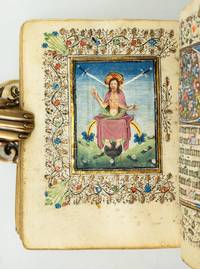
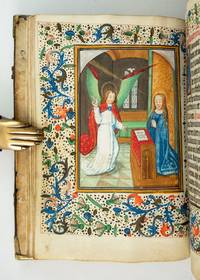
1450ST20835Flanders ca. 1450. 109 x 81 mm. 4 1/4 x 3 1/8". Single column 14 lines in a gothic book hand. 161 leaves. COMPLETE. Contents: Calendar f. 1r; Mass of the Holy Spirit f. 14r; Mass of the Holy Cross f. 23r; Requiem Mass f. 30r; Prayer on the Seven Last Words of Christ by the Venerable Bede f. 36v; Passion according to John f. 40v; blank f. 53; Hours of the Holy Cross f. 55r; Mass of the Virgin Mary f. 60r; Gospel Lessons f. 66v; Hours of the Virgin f. 73r; Penitential Psalms f. 126r; Litany f. 138r; Office of the Dead f. 144r. <br/> PLEASING NEAR-CONTEMPORARY BLIND-ROLLED CALF apparently with some old skilled restoration to joints spine and corners covers with rolled vine border surrounding a panel of three columns bearing a roll with parts of the inscription "AVE MARIA GRACIA PLENA" each word separated by one of four small motifs a flower a human profile the lamb of god and a sitting animal--perhaps a lion raised bands compartments with part of the same inscription roll. Lacking the original ties. Housed in a very attractive custom-made brown calf folding case with blind-stamped lettering on the spine interior lined in suede the whole within a calf-lipped suede-lined matching slipcase. Rubrics in red numerous one-line initials in blue with red penwork or gold with dark blue penwork many two-line initials in burnished gold on pink and blue ground with white embellishments several larger "I" initials between four and 11 lines in burnished gold on pink and blue ground with white embellishments 12 six- to seven-line initials some painted pink or blue with white embellishments and filled with flowers and tendrils on a gold ground or the initial in burnished gold on pink and blue ground with white embellishments EIGHT LARGE MINIATURES each inside a thin gold frame and with a three-quarter border of gilt leaves hairline vines and floral spays each facing page with a similar three-quarter border the subjects of the miniatures being: the Holy Spirit in the form of a dove f. 13v; St. Helena and the True Cross f. 22v; Raising of Lazarus f. 29v; Crucifixion f. 54v; Virgin and Child Enthroned f. 59v; Annunciation f. 72v; Last Judgment f. 125v; Funeral Mass f. 143v. Prickings visible in fore margins. See: Defoer et. al "The Golden Age of Dutch Manuscript Illumination" pp. 75-86. Just minor wear to the solid very pleasing early binding. A little chipping almost always mild to four of the miniatures with square frames the fifth the Annunciation somewhat rubbed and faded the three domed miniatures perfectly intact vellum with minor soiling and thumbing in places especially in lower corners of leaves in second half other trivial imperfections but overall a very well-preserved manuscript with no major issues.<br/> <br/> This enchanting little prayer book features eight attractive miniatures large gleaming burnished gold initials and a pleasing period binding--all in an excellent state of preservation. The miniature program here can be attributed to the so-called Masters of Otto van Moerdrecht the name given to a variety of Dutch artists active in the 1430s and '40s all working in a similar mode rather than to a specific master or workshop. According to Defoer et al. the work of these miniaturists "exhibit varied compositional formulas and bright highly contrasting colors . . . . The small somewhat doll-like figures appear rather wooden but their expressive gestures give the scenes a varied and vivid character." Two artistic hands are responsible for the present miniatures. The artist behind the first three miniatures all set within domed gilt frames the Holy Spirit St. Helena and Raising of Lazarus shows particular skill with a very smooth application of color figures with long eloquent hands and faces with subtle white highlighting. A second artist was responsible for the remaining five miniatures set within square golden frames Crucifixion Virgin and Child Enthroned Annunciation Last Judgment and Funeral Mass. Though this hand is less polished and the miniatures slightly smaller in size the scenes are all quite charming and attractively colored with vivid splashes of bright orange bubblegum pink sky blue and pale green. It is worth noting that the miniatures differ not only because of the artists' degree of success but also because of their condition: whereas the five are generally well preserved the other three are in a virtually perfect state. In addition to the central text of the Hours of the Virgin this manuscript contains several Masses each of which is preceded by a miniature. Perhaps the most interesting of these is the Mass of the Holy Cross which is paired with a miniature of St. Helena mother of Constantine the Great. According to Christian tradition Helena found the wooden cross used in the Crucifixion while she was travelling in Jerusalem in the fourth century. Constantine built the Basilica of the Holy Sepulchre in its honor and installed the relic there to be venerated. Britannica says that the adoration of the True Cross led to wide-spread sale of its fragments sought after as objects of devotion. It is unusual to find St. Helena depicted in a Book of Hours and this image is especially appealing with Helena in a beautiful red robe crown and halo embracing a large wooden cross in the center of the composition. The background is reminiscent of the work of the Gold Scrolls group with small swirls of liquid gold swimming in a scarlet sky the same scrolling motif graces the Holy Dove miniature. There is no indication of former ownership in this manuscript although the Calendar presents a few unusual saints that confirm a Flanders connection. These include St. Amandus in red known as the "Apostle of Flanders" on 2 February; St. Guido known as the "Poor Man of Anderlecht" on 9 September; St. Bavo in red patron saint of Ghent where a Cathedral is named in his honor on 10 October; and St. Eligius patron saint of goldsmiths and metalworkers on 1 December. The binding here is very close to contemporary and probably dates to the late 15th century. Neither the floral roll nor the "Ave Maria" roll seems to appear in EBDB. Similar rolls include r001954 r000623 and r000670 but ours is the only one with four different and charming tools one of each used between every "Ave" and "Maria." For a manuscript only slightly bigger than the palm of one’s hand this Book of Hours has a great deal to offer. In addition to its early binding and lovely illumination by an influential group of artists great care has been put into its preservation so that it resolutely endures for our pleasure and for owners in the centuries to come. unknown
1470CLe2501Low Countries probably Bruges ca. 1470-80. 186 x 135 mm. 7 3/8 x 5 1/4". Single column 20 lines in a gothic book hand. i blank 108 i blank leaves bound too tightly for a close collation but APPARENTLY COMPLETE. Contents: Calendar f. 1r; Gospel Lessons f. 7r; Hours of the Holy Cross f. 11r; Hours of the Holy Spirit f. 15r; Mass of the Virgin 18r; "Obsecro te" f. 21r; "O Intemerata" f. 23r; Suffrages f. 24r; Hours of the Virgin f. 33r; Office of the Virgin as said throughout Advent f. 71r; Penitential Psalms f. 76r; Litany and petitions f. 81v; Office of the Dead f. 87r. <br/> HANDSOME RENAISSANCE ENTRELAC BINDING upper joint and parts of spine very skillfully repaired covers with a gilt floral border surrounding a central panel of gilt strapwork design with traces of original polychrome painting raised bands spine gilt in compartments original bosses and catchplates clasps renewed all edges gilt. Rubrics in red numerous one-line initials in blue with red penwork or gold with dark purple penwork many two-line initials in burnished gold on pink and blue ground with white highlights most of these with floral sprays extending into the margins 22 SMALL MINIATURES measuring approximately 45 x 37 mm. each with panel borders of colorful acanthus and flowers at the top and bottom of the page connected by a strand of gilt bezants and 14 FULL-PAGE MINIATURES each surrounded by a full border of acanthus flowers and bezants the facing pages also with full borders and a large six-line initial painted pink or blue filled with swirling vines and flowers on gilt and painted ground. Subjects of the large miniatures being: Crucifixion f. 10v; Pentecost f. 14v; Virgin and Child f. 17v; Annunciation f. 32v; Visitation f. 42v; Nativity f. 49v; Annunciation to the Shepherds f. 52v; Adoration of the Magi f. 55v; Presentation in the Temple f. 58v; Massacre of the Innocents f. 61v; Flight into Egypt f. 66v; Coronation of the Virgin f. 70v; David in Prayer f. 75v; Raising of Lazarus f. 86v. Front pastedown with a 16th century inscription see below; rear pastedown with a 17th century ownership inscription in ink signed François le Paige. Lower joint a bit rubbed margins with a little soiling and occasional wrinkle fore-edge border rule just grazed by binder in a few places the other borders quite ample miniatures with tiny chips light fading or rubbing in a couple places etc. but IN EXCELLENT CONDITION the attractive period binding very well preserved with boards showing virtually no signs of wear the vellum generally clean and bright and the miniatures fresh and richly colored.<br/> <br/> This is an extensively illustrated Book of Hours preserved in an especially attractive early binding with richly colored miniatures attributed to the Master of Philip of Cleves' "Book of the Hunt." Active in the Low Countries from approximately 1470-90 this artist was patronized by some of the area's wealthiest elite and is known to have collaborated with another important illuminator called the Bruges Master of 1482. Some trademarks of our painter include faces with subtle blue shading; high arched eyebrows; thin golden halos; and women with very straight shoulder-length hair highlighted with strands of gold. Outdoor scenes often contain narrative elements in the distance such as the figures of a young David and Goliath in the miniature of King David at Prayer or pagan idols dropping from a column in the Flight into Egypt recalling a popular apocryphal tale of pagan relics miraculously falling to pieces as the Holy Family passes by. Some miniatures of note in addition to these two are the Raising of Lazarus for the Office of the Dead--a popular alternative to funeral images particularly among Flemish illuminators--and the Massacre of the Innocents for the hour of Vespers a particularly violent episode in which King Herod commands his soldiers to slaughter the male infants of Bethlehem. Like other miniatures in this work the action in these scenes is spread out between the fore middle and background creating a multi-layered narrative that invites the eye to explore and meditate. The artist's color palette in this manuscript is quite memorable and includes a bright mustard yellow pale green and cherry blossom pink. The Coronation of the Virgin makes particularly strong use of color with a sunset-like gradient giving way to billowy blue clouds. The Annunciation miniature also demonstrates the Master's facility with color; here the Angel Gabriel's red and green wings are fully extended while the Virgin is radiant against a golden yellow wall covering. In addition to the large compositions we are treated to 22 smaller miniatures depicting the Evangelists and saints each of which is charming in its more confined presentation. Although the saints found in the Suffrages are quite typical for a Book of Hours the Calendar is another story. Despite being rather sparsely filled out the calendar here includes several feast days some of them unusual enough to provide additional insight into the manuscript's localization and use. For example there is St. Landoaldi 19 March a missionary to Northern France and Belgium and St. Winnoc 6 November the son of a Breton king with a former abbey in the far north of France. The calendar is idiosyncratic in other ways as well with saints' names that are repeated and others that are either extremely obscure or whose dates seem to be wrong. Whatever the case additional research into the calendar would undoubtedly prove revealing. We are fortunate to have some early provenance information written into this Book of Hours. The inscription on the front pastedown reads: "This last day of September 1590 we name erased but Claude le Paige lieutenant of the guards of his highness of Bar le Duc on the one hand and Alix de la Taxe on the other hand have married in front of the holy Catholic church at the place of Mirecourt." Below this inscription are notes indicating the ages of the bride and groom 17 and 36 respectively as well as the dates of their deaths: he died on 9 May 1610 and she on 14 September 1622. Located in the strategically important Meuse region in northeastern France the Duchy of Bar-le-Duc unified with Lorraine in 1480 and became extremely wealthy during the 16th century. Although we do not know for whom the manuscript was originally made it seems quite possible that it was commissioned for a forebear of the named Bar-le-Duc spouses and was perhaps passed down through later generations of the family. The signature on the pastedown indicates that François le Paige son of Claude and Alix inherited the book from his parents. This manuscript was lavishly and tastefully bound early in the 16th century and has survived in excellent condition to the present day. This binding would originally have been painted but even without its original colors it is still quite attractive perhaps even splendid. In excellent condition inside and out the manuscript is a fortunate survival and a testament to generations of careful stewardship. unknown
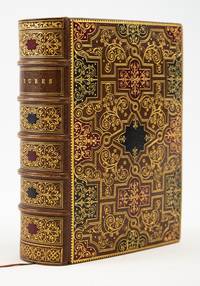
ST20295Northern France probably Paris third quarter of 15th century. 130 x 100 mm. 5 1/8 x 3 7/8". Single column 15 lines in an elegant gothic book hand. 280 leaves. First four leaves misbound lacking at least seven leaves five of which probably contained miniatures. Contents: Devotion to the Passion f. 1r; blank f. 4; Calendar f. 5r; Gospel Lessons f. 17r; "Obsecro te" and "O intemerata" f. 23r; blank f. 23; Hours of the Virgin lacking opening leaves for Terce Nones and Vespers f. 33r; Penitential Psalms and Litany f. 100r; Hours of the Cross lacking preliminary leaf f. 120r; Hours of the Holy Spirit p. 123r; Office of the Dead lacking preliminary leaf f. 127r; "Sept Vers de Saint Bernard" and Suffrages f. 176v; series of devotional prayers in Latin and French including the Hours of the Conception an indulgence devotional poems in French prayers for specific occasions such as when facing tribulations going to confession protection against storms and for friends abroad the Stabat Mater the Seven Joys of the Virgin Gospel sequences "Le chemin de paradis" and many others f. 199r; blank f. 280. <br/> ESPECIALLY BEAUTIFUL MID-19TH CENTURY LIGHT BROWN MOROCCO LAVISHLY GILT IN THE "FANFARE" STYLE BY CAPÉ stamp-signed in gilt on front turn-in covers with large green and red morocco inlaid panels gilt strapwork scrolling and small star tools raised bands spine compartments with red or green morocco inlay surrounded by gilt scrolling embellishments gilt lettering RED MOROCCO DOUBLURES gilt in the style of Duodo with repeating pattern of flowers encircled by vines marbled endleaves modern paper and vellum flyleaves all edges gilt. Housed in a fine suede-lined pebble-grained leather pull-off case with gilt lettering on spine. Light red ruling and rubrics numerous line-fillers in blue and pink with gilt embellishments many one- and two-line initials in burnished gold on pink and blue ground three four-line initials in pink or blue filled with ivy leaves on a burnished gold ground two of these with a gilt and painted baguette along the outer edge of text and all with a three-quarter border of hairline vines flowers acanthus and gold leaves the majority of the leaves with a panel border of hairline vines and flowers on one side one historiated initial painted blue on a burnished gold ground depicting the Virgin accompanied by a gilt and painted baguette and three-quarter border FOUR SMALL MINIATURES DEPICTING THE APOSTLES each with a gilt and painted baguette and surrounded by a three-quarter border and EIGHT LARGE ARCH-TOPPED MINIATURES above a three-line initial painted blue or pink on gold ground a gilt "L" shaped bar border incorporating colorful flowers and a full border of border of hairline vines flowers acanthus and gold leaves and A HALF-PAGE RECTANGULAR MINIATURE with a border along the lower half. The subjects of the large miniatures include: the Mass of St. Gregory f. 1r; Annunciation f. 33r; Visitation f. 57r; Nativity f. 70r; Adoration of the Magi f. 80v; Crowning of the Virgin f. 94v; David in Prayer f. 100r; Pentecost f. 123r; and a rectangular miniature of the Holy Wound or perhaps the Bleeding Host of Dijon f. 241v. Isolated light rubbing and negligible chips to miniatures the dark blue paint appearing slightly worn in places as is often the case occasional faint smudges to borders and other imperfections but all of these trivial. IN THOROUGHLY FINE CONDITION INTERNALLY--the paint fresh the vellum clean and the margins quite comfortable--AND THE EXTRAORDINARILY FINE BINDING FLAWLESS.<br/> <br/> In a spectacular 19th century binding this lovely thick little Book of Hours was executed by a talented follower of Maître François and the Master of Jean Rolin and contains a large number of prayers and devotional texts many of them in French. The manuscript includes a fine array of large and small miniatures executed with a colorful palette and careful attention to detail. Particularly noteworthy is the excellent molding of faces. Each figure--no matter their station or importance to the scene--displays unique characteristics that give us a sense of their age sentiments and demeanor. This is an impressive feat given the small scale of the compositions and this individualization adds a great deal of value to the miniatures as well as the viewer's emotional experience connecting to the images. Our artist owes much to the work of the so-called Maître François and slightly before him the Master of Jean Rolin the latter an eponym attached to the illuminator of missals done for Rolin cardinal-bishop of Autun d. 1483. Perhaps of Burgundian origin the Master of Jean Rolin completed his artistic education in Paris probably in the workshop of the Bedford Master and afterward established his own atelier in Burgundy. There he played a key role in the transition from the Bedford Master's slightly more gothic style to the more thoroughly Renaissance style of Maître François who ran the most successful Parisian workshop during the years between 1460 and 1480 producing illuminated manuscripts small and large sacred and secular. Characteristic of Maître François's style are richly colored scenes interiors depicted with considerable detail women and children with pale porcelain complexions and male figures with darker weathered flesh tones--all of which can be seen in the present work. The final miniature present in this work however seems to have been executed by a different artist altogether being rather more flat in appearance and without the detailed facial molding noted earlier. About two-thirds of the manuscript follows fairly regular arrangement of texts with the exception of the Mass of St. Gregory which is misbound at the beginning of the volume. Then following the Suffrages are approximately 80 leaves of devotional texts in Latin and French including popular verses such as the "Seven Joys of the Virgin" and the "Stabat Mater" as well as more unusual texts such as the Hours of the Conception prayers for specific occasions or protections--for example against storms "Contre tempeste" and when one passes over water "Quant on passe par eaue"--indulgences and other related texts. Two of the more interesting passages are "Le chemin de paradis" a French prayer beginning "Qui en paradis veult aller" and a series of Latin poems that claim to be copied from originals found at the church of St. Paul in Rome. These copious additional prayers suggest a high degree of customization for a client who may have been particularly religious or at least very concerned with self-preservation! and they present intriguing possibilities for further study. The manuscript was rebound sometime in the middle years of the 19th century by Capé d. 1867 one of the most distinguished binders in France in his day. He was especially well known for the delicacy of his work which can be observed to great effect in the present example. He was the binder to the Empress Eugenie and Béraldi calls him "the Bozérian of the second Empire." His work has always been highly sought after and it resides in all of the great collections where bindings are considered important. This volume seems to have been sold to bookseller Francis Edwards as lot no. 95 at Sotheby's sale on 3 April 1957 and has been in private hands ever since. The manuscript is a little jewel inside and out and has obviously been a treasured vessel of prayer and art for generations of owners. unknown
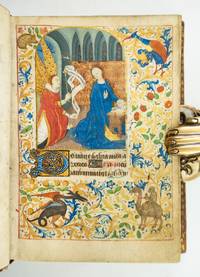
1470ST20836Western France Angers ca. 1470. 122 x 88 mm. 4 3/4 x 3 1/2". Single column 15 lines in a neat bâtarde hand. 152 leaves first and last three are ruled blank leaves; leaf count does not include the first blank endleaf erroneously included in the modern pencil foliation. COMPLETE. Contents: early ownership inscriptions f. 2v Calendar f. 5r Hours of the Virgin f. 17r Extract from the Gospel of John f. 55v Obsecro Te f. 57r Penitential Psalms and Litany f. 61r Office of the Dead f. 78r series of devotional prayers in Latin to the Virgin Mary Christ and the Archangel Michael f. 115r O Intemerata f. 134v series of devotional prayers in Latin f. 138r ruled blank leaves with family records of Jacques Bille f. 150v. <br/> Pleasing early 19th century caramel colored straight-grain morocco covers bordered with a double gilt rule smooth spine gilt in compartments divided with a double gilt rule and dotted roll and cross centerpieces neat early repair to head of spine turn-ins gilt marbled endpapers all edges gilt. Housed in a 20th century felt-lined slipcase with a gilt monogram on front. Ruled in red rubricated in red and blue two one-line burnished gold initials on a blue or pink ground one three-line blue and red penwork initial eight three- to four-line initials in pink and blue filled with ivy leaves on a burnished gold ground these pages with three-quarter borders of acanthus leaves dense rinceaux colorful fruit and flowers gold ivy leaves and bezants and WITH FOUR ARCH-TOPPED MINIATURES above a three- or four-line initial painted blue or pink on gold ground each surrounded by a full border of painted gold and brightly colored acanthus leaves vines and flowers studded with burnished gold bezants three borders inhabited with fantastical creatures the subjects of the miniatures including the Annunciation f. 17r; King David in Prayer f. 61r; a funeral procession f. 78r; and the Pietà f. 115r. Verso of first leaf with signature of Jacques Bille or Billes and the following page with a note in a different contemporary hand with the day and year erased and written over: "Ces presentes heures sont a iaques bille qui les trouvera si les luy Rende et il paiera voluntriers le VIII le jour de la sainct martin. Tesmoion son seign manuel cy mis le huytiesme jour de Avril L'an mil cinqcens et seze" "These present hours belong to Jaques Bille; whoever finds them should return them to him and he will gladly pay on the eighth the day of Saint Martin. Witness his manual signature placed here on the eighth day of April in the year one thousand five hundred and sixteen" followed by Bille's signature; third blank leaf with the ownership inscription "Tussanus Philippus Adeline Presbyter anno 1763"; verso of final text leaf and next three blanks with family records see below. Superficial crease to spine other insignificant signs of use to the leather but the binding sound and attractive. A hint of thumbing at lower corners of first half of the manuscript miniatures with a few isolated minor spots of rubbing not affecting faces otherwise in very fine condition internally the paint bright and fresh and the vellum clean.<br/> <br/> Almost certainly made in western France and with early ownership inscriptions tying it to that area this Book of Hours contains four extraordinarily high-quality miniatures by an accomplished artist very likely related to one of the greatest French manuscript illuminators of the period. Stylistic markers here include drapery with crisp folds figures with pale skin and high foreheads simple but perfectly executed scenery and a flair for detail. The latter talent is particularly evident on the various textiles and garments which include almost impossibly fine gold trimmings and sophisticated draping. It was in fact on the basis of the extraordinary drapery that the manuscript had previously been associated with the circle of Jean Fouquet called by Avril and Reynaud "the greatest French painter and illuminator of the 15th century." In a case of twin summits recent scholarship suggests an alternative attribution to the similarly illustrious circle of Maître de Jouvenel des Ursins a contemporary of Fouquet who according to Avril and Reynaud was "the most important illuminator of the mid 15th century in western France." Around him sprung up a group of artists collectively referred to as the "Jouvenel group" who were based primarily in the area between Tours Nantes and Angers. The illuminations in the present work are so skillful that with additional research it may be possible to pin down an attribution with more certainty; whatever the identity of the artists the level of finishing in these illuminations--from the careful molding of the faces and bodies to the expertly balanced compositions and elegant brushwork--are the hallmarks of a superior hand. When this item was sold at Sotheby's on 13 July 1977 the auction catalogue said that the miniatures "are painted with fine clear colours with great delicacy in the modelling of faces and costumes. The finest miniature is that of the Pietà set against a deep green hill with a fiery sun setting behind dark mountains and buildings and lighting up the evening sky." Indeed this image is a quiet masterpiece of illumination and an excellent example of this artist's work. The naked figure of Christ exhibits a real command of anatomy and proportion while subtle details such as the foreshortening to Christ's face and the whisper-thin cloth clinging to the lower body are done with an exquisite touch. The miniature of the funeral procession also stands out for its superior quality. The composition is quite different from the Pietà being a large group of people rather than an intimate portrait of two figures but it is approached with equal rigor and devotion to detail. The faces turning toward the viewer all show impressive individualization with the figure dressed in blue being particularly well formed and highly differentiated from the crowd--so much so that this could possibly be considered a patron portrait. Three of the miniatures in this work contain borders with delightful examples of marginalia including a court jester a hedgehog a male and female centaur wielding weapons a monkey riding a camel another monkey rubbing his posterior and other whimsical hybrid creatures. These stand out because they are rendered with the characteristic skill and attention to detail found in the larger miniatures so it is possible that they could also be the work of the miniature artist. Although the Calendar in this manuscript is fairly sparse at least two unusual entries in red point toward western France: St. Julian Bishop of Le Mans 27 January; and St. Maurilius patron saint of Angers 13 September. Significantly the Translation of St. Maurilius also appears on both 16 August and 19 of October in black. Strengthening this association with the west are the early ownership inscriptions tying to the Bille family from at least the early 16th century and possibly before. The final three leaves contain family records that include the date of Jacques Bille's wedding 8 April 1516 and the births of 15 children written in two or three hands between approximately 1520 and 1549. The name of our former owner was difficult to trace with certainty but we find mention of a Jacques Bille in the French National Archives where he is listed as a notary in Bourg in southwestern France. This would make sense given Bille's complex signatures found on the first two leaves--the extra flourishes may well reflect notarial signatures that he used in his work. In modern times our manuscript was sold at Sotheby's on 25 February 1946 lot 57 to Maggs who may well have sold it to Sven Ericcson who is listed as the owner of this and four other 15th century illuminated Books of Hours when it was sold at Sotheby's in 1977 for £3200. According to RBH it was purchased at that auction by "Malle" almost certainly Bernard Malle 1929-2008 brother of filmmaker Louis Malle and an eminent collector and bibliographer. In an elegant tribute to his late friend and mentor Bernard Clavreuil calls Malle "one of the most discerning . . . collectors of the postwar era" someone who "never ceased to refine and improve in order to achieve an impossible perfection." Malle also acted as a private advisor to more than one major collection and it is possible that he purchased the present manuscript on behalf of an unknown collector rather than his own library. These former owners clearly looked after this Book of Hours carefully over the years and for good reason: it is a work of considerable craftsmanship and beauty with illuminations distinguished by very substantial artistic skill. unknown
SKU0562725Oxford University Press 2017-12-15. paperback. Good. 10x0x8. Textbook May Have Highlights Notes and/or Underlining BOOK ONLY-NO ACCESS CODE NO CD Ships with Tracking Oxford University Press paperback
SKU0562724Oxford University Press 2017-12-15. paperback. Good. 9x6x0. Textbook May Have Highlights Notes and/or Underlining BOOK ONLY-NO ACCESS CODE NO CD Ships with Tracking Oxford University Press paperback
SKU0610232Oxford University Press 2017-12-15. paperback. New. 10x0x8. New Textbook Ships with Tracking Oxford University Press paperback
SKU0610231Oxford University Press 2017-12-15. paperback. New. 9x6x0. New Textbook Ships with Tracking Oxford University Press paperback
mon0004151119Oxford University Press 12/15/2017 12:00:01. paperback. Very Good. 0.5906 9.9606 7.0472. Cover and edges may have some wear. Oxford University Press paperback