Willlem-James 's Gravesande [Willem Jacob van's Gravesande] in Latin; trans JT Desaguliers J TBiblio.com
123 résultats
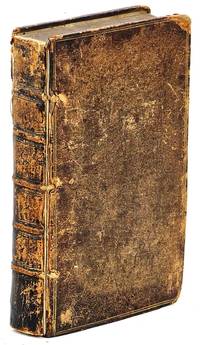
1731102630London: J. Senex W. Innys J. Osborn and T. Longman. 1731. Vol 2 only of 2. Full leather early binding 25 engraved folding platespp xv 285 indx xix. Spine heavily rubbed hinges fragile stitching weak corners rubbed. Worming to bottom edge including through the inner corner of pages heavier at earlier and latter pages but not affecting any of the text with some tanning to these pages. Peter Cowan's the Australian writer copy wih his ownership signature to front paste-down. Good condition. 's Gravesande was a Dutch mathematician and natural philosopher who helped to propagate Isaac Newton's ideas in Continental Europe and laid the foundations for the teaching of Newtonian mechanics through experimental demonstrations. Vol. II of "Mathematical Elements of Natural Philosophy" studies Newton's ideas on fire the refraction and reflection of light opacity and colours the planetary system and celestial motions including universal gravity. The publisher John Senex was one of the principal cartographers of the 18th century. This edition published only a few years after Isaac Newton's death and complete with all twenty-five engraved plates showing experiments. 4th Edition. Leather. J. Senex, W. Innys, J. Osborn and T. Longman hardcover
1755CA011424531 pages with engraved allegorical frontispiece and index. Small folio 11 1/2" x 8 1/2" bound in original full leather with raised spine bands and decorative gilt lettering. Palau 266572. Sabin 70785 First edition.<br /><br />Full of original documents respecting the establishment of the Church in the Indies and the protection of the Indians together with all the bulls referred to from that of Alexander VI to the time of publication. With the additional 24 preliminary leaves not in all printings.<br /><br />The ancestors of Rivadeneira on both sides had served the Crown for centuries in the Reconquista in high positions of Church and State and in the conquests of Mexico and the Darién. Among his relatives is the Marquis de Moncada lieutenant colonel of the Puebla Regiment. Rivadeneira received a bachelor's degree in Philosophy and Law from the University of Mexico. He obtained a scholarship at the Colegio Mayor de Todos Santos on November 11 1731 served in various positions competed for the Chair of Institutes and remained in residence until 1746. The Audiencia de México approved him to practice as a lawyer in 1733. While still in Todos Santos Rivadeneira began serving in various positions. He was an advisor to the mayors of the city and town of Carrión in Valle Atrisco. The interim viceroy-archbishop Juan de Bizarrón appointed him a lawyer for the poor of the Courtroom of the Audiencia in 1739 with similar capacity in the Tribunal del Santo Oficio the city of Puebla and the Agustino Convent of Mexico. In 1744 Rivadeneira became fiscal agent of the room of the Crime. He served as an advisor to the viceroy Duke of the Conquest and was commissioned to settle a dispute over land by his successor the Count of Fuenclara. In 1746 Rivadeneira decided to go to Spain for family businesses and to secure a position. For a payment of 13000 pesos he obtained the appointment as supernumerary judge of the Audiencia de Guadalajara by decree of January 30 and title of February 20 1748. Without occupying this position he obtained the criminal prosecution of the Audiencia de Mexico on December 22 of 1753. He obtained a license to sail to New Spain with the servants José Ostos of Écija; Diego Ibiricu from Cádiz; Antonio de la Cruz from Zacatecas and Manuel Tagle a "free black". Rivadeneira returned to New Spain in 1755 in the same vessel in which the new viceroy Marquis de las Amarillas went and assumed his post on October 30 1755. As a prosecutor he opposed the activities of the Tribunal de Acordada. Assigned to the civil prosecutor's office to replace Luis de Mosquera and Aranda by consultation of April 28 and title of June 21 1760 the following year by consultation of May 14 and title of August 15 was appointed to replace the deceased Francisco López Adán as judge of the Audiencia. He served until his death. While he was an oidor he was denounced for possessing forbidden books. While in Spain in 1752 Rivadeneira published <i>El Pasatiempo for the use of Ex.mo Señor Carvajal and Lancaster a history of the world from creation to Fernando VI</i> in three volumes. This long didactic and religious poem was an effort to obtain a position and Beristain perhaps not knowing of the payment of 13000 pesos by Rivadeneira considered his first appointment of audience due to the sponsorship of José de Carvajal. As a prosecutor in 1755 Rivadeneira wrote the <i>Handbook compendium of the Indian Board of Trustees</i> which traced the royal patronage to the Book of Genesis an achievement for which the Crown gave him 4000 pesos. He also wrote the <i>Defense of Royal Jurisdiction</i> in 1763 <i>the remarkable newspaper of His Excellency Marquise de las Amarillas</i> and the draft of the protest sent to Spain by the City Council of Mexico City in 1771 on a claim of appointments for Americans.<br /><br /><b>Condition:</b><br /><br />Missing some of spine label small crack along the heal font hinge spine ends chipped light rubbing to extremities with the corners rubbed through internally very nice over all a very good copy. Antonio MarÃn hardcover books
1755CA0114<p>24531 pages with engraved allegorical frontispiece and index. Small folio 11 1/2" x 8 1/2" bound in original full leather with raised spine bands and decorative gilt lettering. Palau 266572. Sabin 70785 First edition.<br /><br />Full of original documents respecting the establishment of the Church in the Indies and the protection of the Indians together with all the bulls referred to from that of Alexander VI to the time of publication. With the additional 24 preliminary leaves not in all printings.<br /><br />The ancestors of Rivadeneira on both sides had served the Crown for centuries in the Reconquista in high positions of Church and State and in the conquests of Mexico and the Darién. Among his relatives is the Marquis de Moncada lieutenant colonel of the Puebla Regiment. Rivadeneira received a bachelor's degree in Philosophy and Law from the University of Mexico. He obtained a scholarship at the Colegio Mayor de Todos Santos on November 11 1731 served in various positions competed for the Chair of Institutes and remained in residence until 1746. The Audiencia de México approved him to practice as a lawyer in 1733. While still in Todos Santos Rivadeneira began serving in various positions. He was an advisor to the mayors of the city and town of Carrión in Valle Atrisco. The interim viceroy-archbishop Juan de Bizarrón appointed him a lawyer for the poor of the Courtroom of the Audiencia in 1739 with similar capacity in the Tribunal del Santo Oficio the city of Puebla and the Agustino Convent of Mexico. In 1744 Rivadeneira became fiscal agent of the room of the Crime. He served as an advisor to the viceroy Duke of the Conquest and was commissioned to settle a dispute over land by his successor the Count of Fuenclara. In 1746 Rivadeneira decided to go to Spain for family businesses and to secure a position. For a payment of 13000 pesos he obtained the appointment as supernumerary judge of the Audiencia de Guadalajara by decree of January 30 and title of February 20 1748. Without occupying this position he obtained the criminal prosecution of the Audiencia de Mexico on December 22 of 1753. He obtained a license to sail to New Spain with the servants José Ostos of Écija; Diego Ibiricu from Cádiz; Antonio de la Cruz from Zacatecas and Manuel Tagle a "free black". Rivadeneira returned to New Spain in 1755 in the same vessel in which the new viceroy Marquis de las Amarillas went and assumed his post on October 30 1755. As a prosecutor he opposed the activities of the Tribunal de Acordada. Assigned to the civil prosecutor's office to replace Luis de Mosquera and Aranda by consultation of April 28 and title of June 21 1760 the following year by consultation of May 14 and title of August 15 was appointed to replace the deceased Francisco López Adán as judge of the Audiencia. He served until his death. While he was an oidor he was denounced for possessing forbidden books. While in Spain in 1752 Rivadeneira published <em>El Pasatiempo for the use of Ex.mo Señor Carvajal and Lancaster a history of the world from creation to Fernando VI</em> in three volumes. This long didactic and religious poem was an effort to obtain a position and Beristain perhaps not knowing of the payment of 13000 pesos by Rivadeneira considered his first appointment of audience due to the sponsorship of José de Carvajal. As a prosecutor in 1755 Rivadeneira wrote the <em>Handbook compendium of the Indian Board of Trustees</em> which traced the royal patronage to the Book of Genesis an achievement for which the Crown gave him 4000 pesos. He also wrote the <em>Defense of Royal Jurisdiction</em> in 1763 <em>the remarkable newspaper of His Excellency Marquise de las Amarillas</em> and the draft of the protest sent to Spain by the City Council of Mexico City in 1771 on a claim of appointments for Americans.<br /><br /><strong>Condition:</strong><br /><br />Missing some of spine label small crack along the heal font hinge spine ends chipped light rubbing to extremities with the corners rubbed through internally very nice over all a very good copy.</p> Antonio Marín hardcover
1724127267Londini : sumptibus J. & B. Sprint, W. Taylor, W. Innys, J. Osborn, S. Ballard, J Batley, A. Ward, & S. Palmer MDCCXXIV (1724). [90], 222, [62] Seiten. Mit einigen Vignetten. Neuer Leinwand-Einband ohne Titelaufdruck in guter Erhaltung. (Titelblatt an den äußeren Rändern etwas brüchig u. knittrig sowie gebräunt. Papier teils gebräunt). 20x13 cm
17975287BBAltona, Johann Friedrich Hammerich, 1797-1800. 8°. Mit 1 gest. gef. Karte u. 1 lithogr. Tafel. Pappbde. d. Zt. mit goldgepr. Rückenschild u. mont. Bibliotheksnummern + Wichtig: Für unsere Kunden in der EU erfolgt der Versand alle 14 Tage verzollt ab Deutschland / Postbank-Konto in Deutschland vorhanden +, 5287B 4 Bde. (stärker berieben u. bestossen).
1713AQ15276Londini i.e. London: Apud R. & J. Bonwicke et al. 1713. 38 184pp 148. With an engraved frontispiece. Handsomely bound in contemporary richly gilt-tooled black morocco A.E.G. Lightly rubbed. Marbled endpapers Recent bookplate of Robert J. Hayhurst to FEP loss to upper corner of front blank fly-leaf early inked inscription of 'John Murray / April 1726' to recto. An early eighteenth-century Latin edition of the 1662 Book of Common Prayer. The translation was completed by Jersey-born Anglican clergyman Jean Durel 1625-1683 who had been appointed Chaplain of the Stuart Court's French congregation at the Savoy and also held the monopoly for printing the French translation of the new authorised Liturgy. Considered eminently superior to the latter this translation mined the Sarum Missal and Breviary as a source for amongst others the canticles and psalms included here. The delay of seven years between the passing of the Act of the Uniformity which made use of the Book of Common Prayer compulsory in Anglican church services and the first publication of this translation in 1669 suggests that the demand for Latin editions had waned since Tudor days. ESTC T140407. 12mo. Apud R. & J. Bonwicke et al. unknown
17134037Londini: Apud R. J. Bonwicke and five others 1713. 1713 12mo in 6s. 36 184 150 p. Collates unsigned2 A6 a - b6 B - Q6 R2 unsigned1 Aa - Mm6 Nn2. Engraved frontispiece as Griffiths 87/16. The Psalms are in the 1716 reprint with Atkins name removed from the imprint of the part title. The substitution of the 1716 sheets means that the catchword on R2v is incorrect. Griffiths describes this edition as 16mo but it is in 6s with horizontal chainlines. Bound in contemporary black morocco rubbed but sound. Sides tooled in triple panels with corner tools. Spine gilt in panels between raised bands. All edges gilt. Name torn from blank endpaper and an inscription deleted . A few old shorthand notes. A sound copy. Londini: Apud R. J. Bonwicke, [and five others], hardcover
175030360ABParis, Brocas & Aumont 1750. 12°. Titel, 491, (5) S., 2 Bll. Ldr der Zt auf 5 (unechten) Bünden mit Rückenvergoldung. Berieben, Ecken stärker bestoßen; drei kl. Wurmlöcher; hs. Notiz am hint. Vorsatz; Exlibris am Spiegel.
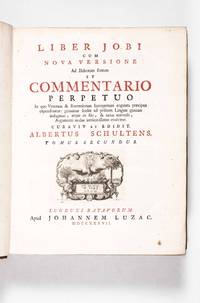
173749261Leiden: Jean Luzac 1737. First edition. Two volumes large quarto. 52 544; 2 545-1232 63 indices 1 corrigendapp. Text in two columns with Hebrew text and facing Latin translation interspersed with commentary. Titles in red and black with engraved vignettes. Contemporary speckled calf; gilt-tooled spine with raised bands and morocco lettering pieces; gilt dentelles; edges daubed in red and green. Light scuffing to boards and fading to spines. A very good set with crisp clean text throughout.<br /> <br /> First edition of this comprehensive commentary to the biblical Book of Job by the Dutch scholar of Semitic languages Albert Schultens 1686-1750 who maintained "that the true nature of the Hebrew language and the meaning of many of its words and idioms are to be found chiefly in the Arabic" Orme. Fifty-five pages of the indices constitute a brief lexicon and provide Latin as well as Arabic equivalents for more than 1000 Hebrew words. Schultens studied theology and eastern languages at Groningen where he received his degree in theology in 1709. After a brief career as a preacher in Wassenaar he was nominated professor of Hebrew and Jewish antiquities at Franeker in 1713. In 1729 he decamped for Leiden were he was first appointed reader in eastern languages and finally full professor in 1732.<br /> <br /> At this time a chief concern of Calvinist theologians was to liberate Old Testament exegesis from the Jewish Rabbinic as well as Catholic traditions. Schultens' influential and controversial solution was revealed as early as 1706 in his first public thesis Disputatio theologico philologica de utilitate linguae Arabicae in interpretanda S. Scriptura A Theologico-Philosophical Dissertation on the Utility of the Arabic Language for the Interpretation of the Holy Scriptures "a forceful attack" Brugman & Schröder on the Protestant sola scriptura methodology of Biblical exegesis. "With the help of Jacobus Golius' Arabic dictionary he perused with zeal and fervour the Old Testament and wrote prolifically. The lexical superiority of Arabic had led him to a reconsideration of the position of Hebrew: at first he had called Arabic 'the most splendid daughter of mother Hebrew' but in his oration of 1729 he proclaimed Hebrew and Arabic cognate twin sisters. This shocked conservative theologians as an outright profanation of God's Word" Brugman & Schröder. "In 1737 he applied his theories in his bilingual edition of the book of the prophet Job whom he regarded as an Arab. The Hebrew text and the Latin translation are all but totally submerged by the extensive commentary in which Schultens draws abundantly on Arabic texts such as the Hamasa an anthology of early Arabic poetry by the ninth-century poet Abu Tammam" Vrolijk & van Leeuwen. Schultens was not without his critics and by 1824 William Orme notes a turning of the tide: "Different opinions are entertained of the correctness of his views and also of his success in applying them; but it is now generally admitted that he carries his notions of the advantage of Arabic learning to the interpretation of the Scriptures too far." <br /> <br /> Jean Luzac 1728-1777 was a member of a well-known Huguenot family of printers; he published many works for the University of Leiden including three Hebrew books of Albert Schultens. Isaac van der Mijn is noted as the printer at the colophon of the second volume.<br /> <br /> Provenance: printed label of the Bibliotheca Seminarii Warmondani at the front endleaf of the first volume. Full title: Liber Jobi cum nova versione ad Hebraeum fontem et commentario perpetuo in quo Veterum et Recentiorum Interpretum cogitata præcipua expenduntur: genuinus sensus ad priscum Linguae genium indagatur atque ex filo et nexu universo Argumenti nodus intricatissimus evolvitur. Curavit et editit. Albertus Schultens. Tomus Primus. -Tomus Secundus<br /> <br /> References: J. Brugman & F. Schröder Arabic Studies in the Netherlands Leiden: E.J. Brill 1979 p.26f. Fuks/Fuks-Mansfeld 78. Orme Bibl. Biblica p. 390. A. Vrolijk & R. van Leeuwen Arabic Studies in the Netherlands a Short History in Portraits 1580-1950 Leiden: E.J. Brill 2014 pp. 73-79. Jean Luzac unknown
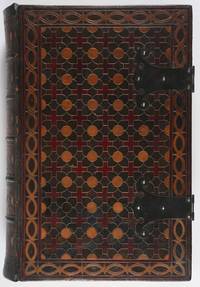
170153475Liege: Jean-François Broncart 1701. First edition thus. Hardcover. Very good. Two tomes each in two parts bound in one volume folio: 6 lxxix 1 blank 544; 1 title 1 blank 545-957 1 blank xx Cantique des cantiques 96 La sagesse; Ecclesiastique de Jesus fils de Sirach; 1 title 1 blank 468; 1 title 1 blank 430 16 Oratio Manassae; Liber Esdrae - tertius et quartus pp. Main titles for each tome in red and black; secondary titles in black only all four titles with engraved printer's device; each dated 1701. Text in two columns Latin and French. Illustrated with 6 engraved plates: frontispiece Johann Friederich Karg von Bebenburg; folding plate with 16 vignettes 4x4 depicting well-known biblical scenes; 4 folding maps The Holy Land; The Promised Land Apportioned by Tribe; Jerusalem in the Second Temple Era - after Lamy; The World Known to the Evangelists. Quarter-page engraved vignettes at the head of each of the 30 biblical books; historiated initials; printed marginalia. Exquisitely bound in the 19th century in levant morocco extra over wooden boards with mosaic compartments in crimson ochre; and dark brown bordered in fine gilt line; spine with raised bands lightly rubbed; pair of brass mounts finished in black with steel rivets at both covers clasps and catched perished. All edges gilt and elaborately gauffered in textured floral motif; gilt inner dentelles; decorative endleaves renewed in orange and black; crimson silk ribbon marker. The work of a master binder. Expertly repaired at spine caps. Occasional faint embrowning; marginal dampstains beginning in second half mostly at outer corners; expanding to fore-edge and darkening considerably in final 20 leaves. Overall a very good copy with crisp text throughout though incomplete: lacks Antoine Arnould's "Concorde des quatre Evangélistes" along with its accompanying Latin version and the concluding index.<br /> <br /> Amply margined copy of this sumptuous edition of the Bible comprising the Latin Sixto-clementine Vulgate and the Port-Royal French translation printed in parallel columns. Isaac-Louis Lemaistre de Sacy 1613-1684 was the principal translator of the French version which was edited and completed after his death by Pierre Thomas du Fossé 1634-1698 and Henri-Charles de Beaubrun 1655-1723 who also provide annotations throughout. According to Barbier the French controversialist Thierry de Viaixnes 1659-1735 who found himself often at odds with his superiors was the principal editor of the work; at the time of its preparation he was serving as director of an academy at Hautvilliers in the diocese of Rheims McClintock & Strong.<br /> <br /> Dedicated to Johann Friederich Karg von Bebenburg 1648-1719 whose signed portrait was drawn and engraved by C. Gustav of Amling. An advocate of maximal papal power Karg served as Privy Councilor of the Prince-Bishop of Bamberg and Würzburg Peter Philipp von Dernbach then of Elector Max Emanuel of Bavaria. He served as Dean of Our Lady in Munich and was entrusted by Emperor Leopold I with a legation to Pope Innocence XI. By these efforts he secured in 1688 the election of Prince Joseph Clemens of Bavaria as Archbishop of Cologne as a result of which he was made Chancellor and Minister of State here noted on the frontispiece.<br /> <br /> Provenance and annotations: Bookplate of Herman Blum Blumhaven Library & Gallery with his ticket below; two gilt-stamped ex-libris morocco labels: Henry W. Poor oval; Adolph Lewisohn octogonal. References: Darlow & Moule 3779; Deleveau & Hillard Bibles imprimées du XVe au XVIIe siècles conservées è Paris 605; ADB 15 1882 "Karg: Johann Friedrich; Jean-François Broncart hardcover
17671232331767. Paris: Boudet Desaint et Avignon Merande 1767-1773. <br /> <br /> 17 vols 4to 33 engraved plates some folding 6 letterpress tables some folding. Contemporary/original mottled calf spines gilt and gilt-lettered. A bit dry and worn but quite sound.<br /> <br /> § A lovely quarto edition of the Bible in Latin and French also issued in 8vo -- this is much the more preferable version. The plates and maps are outstanding and the physical feat of printing all seventeen volumes in six years is astonishing. Complete sets in commerce are surprisingly scarce though widely held by institutions. Brunet I 888: "Ce livre connu sous le nom de Bible de Vence mais qui devrait plutôt porter celui de Rondet son éditeur est fort estimé." Not in Darlow and Moule under Latin or French. unknown
172940362ABWittenberg, Gottfried Zimmermann Erben, 1729. Kl.-4°. [12] Bll., 516 S., [2] Bll., 256 S., [16] - [4] Bll., 104 S. Pgmt der Zt mit Rückentitel in Gold. Einband leicht fleckig. Rückenbezug mit Fehlstelle. Innengelenke etwas wurmstichig. Teils kl Wasserrand. Name am Titel alt gelöscht.
17417510EBLipsiae (Leipzig), Sumpt. Haered. Lanckisianorum., 1741. Klein-8°. 17,5 x 11,5 cm. Titelblatt, 2 Blatt, 1112 Seiten, Titelblatt, 206 Seiten, Titelblatt, 128 Seiten. Pergamentband mit blindgeprägtem Rückentitel und gemustertem Schnitt. [2 Warenabbildungen]
171047270ABWittenberg, Quensted [und ebda] Ludowig 1696-1710. 4°. [4] Bl., 58 S., [7] Bl., 1072 S., [108] Bl. - [4] Bl., 210 S., [4] Bl. Pergament der Zeit mit fragmentarischem hs. Rückentitel.
173033700ABHalle, Waisenhaus 1730. Quarta editio emendatior. 8°. 11 (n.n.) Bll., 472, 694 S. Pgmt der Zt mit hs. Rückentitel. Einband mäßig altersfleckig. Gelenke leicht angeplatzt, Deckel etwas verzogen. Frontispiz stark beschädigt, unvollständig. Der zweifarbige Titel und Praefatio eng beschnitten, Titel mit etwas Buchstaben-, die Einleitung auch mit etwas Textverlust im Rand. Teils etwas gebräunt, 2 S. angeschmutzt, viele Marginalien von alter Hd, teils auch leicht tintenfleckig. 4
175546364ABHelmstadt, Weygand 1755. 4°. [8] Bll., 1034 S., [17] Bll. Pergament der Zeit mit Rückenschild. Einband leicht altersfleckig. Bezugsfehlstelle am Fuß des Vorderdeckels, Pergament-Bezug (Einschlag) am hinteren Spiegel gelockert. Sonst nur geringf. Gebrauchsspuren, minimal gebräunt, sauber.
172446365ABLeipzig, Fritsch 1724. 4°. [6] Bll., 1320 S., [10] Bll. Pergament der Zeit. Einband etwas altersfleckig. Fl. Vorsätze entfernt, Innengelenke geringf. gelockert. Wenige Unterstreichungen von alter Hand. Wenige Bll. mit schwachem Wasserrand im Kopfsteg.
17102501100018xbvkAmsterdam, Offizin Hendrik Wetstein, 1710. Copperplate-titlepage, printed titlepage in red and black with woodblock flower-bucket; (8) 315 pages, 1 blank sheet; ALL ON UNTRIMMED PAPER. - Vellum-binding with gilt-titled red spinelabel; small-8vo.(ca. 16 x 9 x 2 cm).
173746451ABHelmstadt, Weygand 1737. 8°. [8] Bll., 840 S. Pergament der Zeit mit Rückenschild. Einband leicht altersfleckig. Name am Vorsatz. 2 Seiten geringf. fleckig.
174531699Lugdunum Batavorum (d.i. Brittenburg), Samuel Luchtmans, 1745. 12°. 22 nn S., 480 S., - Abraham Kaau-Boerhaave (1715 in Den Haag - 1758 in Sankt Petersburg), niederländischer Mediziner. Studium der Medizin in Leiden, 1738 Promotion. Mitglied der kaiserlich russischen Akademie der Wissenschaften in St. Petersburg. 1747 erhielt er die Professur der Anatomie und Physiologie an der Universität Sankt Petersburg. Bibliotheksschilchen auf den Vorderdeckel, Ziffernvermerk auf dem Vorsatz, kleiner Besitzstempel auf dem Titel sowie auf S. 3. Einband etwas bestoßen, innen wohlerhalten und sauber.
172346332ABHalle, Waisenhaus-Buchhandlung 1723. 8°. [32] Bll. (davon 3 leer und eines für den Buchbinder], 321 S., [19] Bll. Neuerer marmorierter Pappband mit Rückenschild. Unbeschnitten, minimal gebräunt.
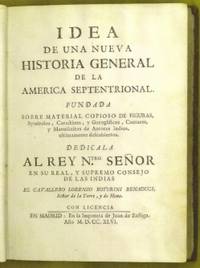
1746A0068xxxvi167viii96 pages. Octavo 8 1/4" x 6 1/4" bound in full leather with decorative gilt and lettering to spine. From the library of George M Foster. First edition.<br /><br />Lorenzo Boturini Benaducci born in Italy of noble parentage studied in Milan and lived in Trieste and Vienna. He was a knight of the Holy Roman Empire. Forced to flee Austria because of the war with Spain Boturini arrived in Spain via England and Portugal. In Madrid he met the Condesa de Santibáñez oldest daughter of the Condesa de Moctezuma. The mother authorized him to collect a pension due her as a descendant of the Aztec Emperor Moctezuma II from the royal treasury in New Spain. Boturini went to New Spain in 1736 where he remained eight years. During those years he assembled a vast collection of paintings maps manuscripts and native codices. He copied more than 500 pre-Columbian inscriptions and made his own drawings of monuments and sculptures and he investigated the history of the apparition of the Virgin of Guadalupe on the hill of Tepeyac. He traveled widely and on his travels brought together the largest collection of Mexican antiquities assembled to that time by a European. Not only did he intend to write the history of the Virgin of Guadalupe but he also had plans to crown her image with a gold crown. For that purpose he sought donations from the bishops and from the public. This brought him to the attention of the colonial government which was suspicious of the motives of a foreigner making this proposal. On June 2 1743 after an investigation the recently arrived viceroy Pedro Cebrián y AgustÃn had him imprisoned and impounded his collection. He was accused of entering New Spain without license from the Council of the Indies and of introducing papal documents without a royal permit. After eight months in prison Boturini was sent to Spain. He fell into the hands of pirates who eventually released him at Gibraltar. From there he traveled to Madrid in miserable conditions. In Madrid he met Mariano Fernández de EcheverrÃa y Veytia another passionate collector of Indian antiquities. Fernández de EcheverrÃa y Veytia offered Boturini a place to live and financial support and got the Council of the Indies to reconsider his case. Boturini was absolved. The king named him royal chronicler of the Indies ordered that his collection be returned to him and extended an invitation for him to return to New Spain. Boturini however declined to return to New Spain and his collection was never restored. It appears that he was granted recompense and a stipend to work on his projected history of the colony. In Madrid he wrote a history of ancient Mexico unpublished at the time of his death in 1753. The library at the BasÃlica de Nuestra Señora de Guadalupe is named for him. The Boturini Collection was formed between 1735 and 1743 to serve as the basis of a projected Historia de América Septentrional. It consisted of many valuable documents the majority of them of Indian provenance. Among these were hieroglyphic paintings that had belonged to Juan de Alva Ixtlilxochitl a descendant of the rulers of Texcoco. Ixtlilxotchitl bequeathed these documents to Carlos de Sigüenza y Góngora. The collection was confiscated by Viceroy Pedro Cebrián y AgustÃn at the time of Boturini's arrest in 1743. It was deposited in the office of the secretary of the viceroyalty. The documents were neglected there for years and suffered considerable pilferage. The subsequent viceroy Juan Francisco de Güemes 1st Count of Revillagigedo granted the historian and antiquary Fernández de EcheverrÃa y Veytia Boturini's friend from Madrid the paintings and documents he solicited for his own studies. On Fernández de EcheverrÃa y Veytia's death they passed to Antonio de León y Gama. He died in 1802 and the collection passed to his heirs. Shortly thereafter 16 paintings were obtained by Alexander von Humboldt during his visit to Mexico in 1802-03. He published them in Vues des cordillères et monuments des peuples indigènes d'Amérique. The originals of these are now in the Berlin State Library. Part of the remainder of the collection may have passed to Father José Pichardo an amateur antiquarian. Joseph Alexis Aubin beginning in 1827 or shortly thereafter obtained important parts of the collection from a variety of sources. He sold his collection to Eugène Goupil who was of French and Mexican descent. This part of the collection passed by donation or purchase to the National Library in Paris where it remains under the name Aubin-Goupil Collection.<br /><br />George McClelland Foster Jr born in Sioux Falls South Dakota on October 9 1913 died on May 18 2006 at his home in the hills above the campus of the University of California Berkeley where he served as a professor from 1953 to his retirement in 1979 when he became professor emeritus. His contributions to anthropological theory and practice still challenge us; in more than 300 publications his writings encompass a wide diversity of topics including acculturation long-term fieldwork peasant economies pottery making public health social structure symbolic systems technological change theories of illness and wellness humoral medicine in Latin America and worldview. The quantity quality and long-term value of his scholarly work led to his election to the National Academy of Sciences in 1976. Virtually all of his major publications have been reprinted and/or translated. Provenance from the executor of Foster's library laid in.<br /><br />Condition:<br /><br />Lacks frontispiece portrait. Lacks Foster's stamp or date of purchase. some damp stains to end papers neat old marginalia in Spanish to back end paper worm hole ant head and heal of spine going through spine extremities bumped and rubbed old owner's label to front paste down 1" chip at back head hinge and name to front end paper scuffed else a good copy of a rare item. En la Imprenta de Juan de Zuniga hardcover books
1746A0068xxxvi167viii96 pages. Octavo 8 1/4" x 6 1/4" bound in full leather with decorative gilt and lettering to spine. From the library of George M Foster. First edition.<br /><br />Lorenzo Boturini Benaducci born in Italy of noble parentage studied in Milan and lived in Trieste and Vienna. He was a knight of the Holy Roman Empire. Forced to flee Austria because of the war with Spain Boturini arrived in Spain via England and Portugal. In Madrid he met the Condesa de Santibáñez oldest daughter of the Condesa de Moctezuma. The mother authorized him to collect a pension due her as a descendant of the Aztec Emperor Moctezuma II from the royal treasury in New Spain. Boturini went to New Spain in 1736 where he remained eight years. During those years he assembled a vast collection of paintings maps manuscripts and native codices. He copied more than 500 pre-Columbian inscriptions and made his own drawings of monuments and sculptures and he investigated the history of the apparition of the Virgin of Guadalupe on the hill of Tepeyac. He traveled widely and on his travels brought together the largest collection of Mexican antiquities assembled to that time by a European. Not only did he intend to write the history of the Virgin of Guadalupe but he also had plans to crown her image with a gold crown. For that purpose he sought donations from the bishops and from the public. This brought him to the attention of the colonial government which was suspicious of the motives of a foreigner making this proposal. On June 2 1743 after an investigation the recently arrived viceroy Pedro Cebrián y Agustín had him imprisoned and impounded his collection. He was accused of entering New Spain without license from the Council of the Indies and of introducing papal documents without a royal permit. After eight months in prison Boturini was sent to Spain. He fell into the hands of pirates who eventually released him at Gibraltar. From there he traveled to Madrid in miserable conditions. In Madrid he met Mariano Fernández de Echeverría y Veytia another passionate collector of Indian antiquities. Fernández de Echeverría y Veytia offered Boturini a place to live and financial support and got the Council of the Indies to reconsider his case. Boturini was absolved. The king named him royal chronicler of the Indies ordered that his collection be returned to him and extended an invitation for him to return to New Spain. Boturini however declined to return to New Spain and his collection was never restored. It appears that he was granted recompense and a stipend to work on his projected history of the colony. In Madrid he wrote a history of ancient Mexico unpublished at the time of his death in 1753. The library at the Basílica de Nuestra Señora de Guadalupe is named for him. The Boturini Collection was formed between 1735 and 1743 to serve as the basis of a projected Historia de América Septentrional. It consisted of many valuable documents the majority of them of Indian provenance. Among these were hieroglyphic paintings that had belonged to Juan de Alva Ixtlilxochitl a descendant of the rulers of Texcoco. Ixtlilxotchitl bequeathed these documents to Carlos de Sigüenza y Góngora. The collection was confiscated by Viceroy Pedro Cebrián y Agustín at the time of Boturini's arrest in 1743. It was deposited in the office of the secretary of the viceroyalty. The documents were neglected there for years and suffered considerable pilferage. The subsequent viceroy Juan Francisco de Güemes 1st Count of Revillagigedo granted the historian and antiquary Fernández de Echeverría y Veytia Boturini's friend from Madrid the paintings and documents he solicited for his own studies. On Fernández de Echeverría y Veytia's death they passed to Antonio de León y Gama. He died in 1802 and the collection passed to his heirs. Shortly thereafter 16 paintings were obtained by Alexander von Humboldt during his visit to Mexico in 1802-03. He published them in Vues des cordillères et monuments des peuples indigènes d'Amérique. The originals of these are now in the Berlin State Library. Part of the remainder of the collection may have passed to Father José Pichardo an amateur antiquarian. Joseph Alexis Aubin beginning in 1827 or shortly thereafter obtained important parts of the collection from a variety of sources. He sold his collection to Eugène Goupil who was of French and Mexican descent. This part of the collection passed by donation or purchase to the National Library in Paris where it remains under the name Aubin-Goupil Collection.<br /><br />George McClelland Foster Jr born in Sioux Falls South Dakota on October 9 1913 died on May 18 2006 at his home in the hills above the campus of the University of California Berkeley where he served as a professor from 1953 to his retirement in 1979 when he became professor emeritus. His contributions to anthropological theory and practice still challenge us; in more than 300 publications his writings encompass a wide diversity of topics including acculturation long-term fieldwork peasant economies pottery making public health social structure symbolic systems technological change theories of illness and wellness humoral medicine in Latin America and worldview. The quantity quality and long-term value of his scholarly work led to his election to the National Academy of Sciences in 1976. Virtually all of his major publications have been reprinted and/or translated. Provenance from the executor of Foster's library laid in.<br /><br />Condition:<br /><br />Lacks frontispiece portrait. Lacks Foster's stamp or date of purchase. some damp stains to end papers neat old marginalia in Spanish to back end paper worm hole ant head and heal of spine going through spine extremities bumped and rubbed old owner's label to front paste down 1" chip at back head hinge and name to front end paper scuffed else a good copy of a rare item. En la Imprenta de Juan de Zuniga hardcover
173143578ABParis, Brocas 1731. 12°. [1] Bl., 396 S. Leder der Zeit mit reicher Rückenvergoldung, Kantenvergoldung. Etwas berieben. Stellenweise braun- und tintenfleckig. Siegelreste und Anmerkungen von alter Hd am Spiegel. Fl. Vorsätze entfernt.
178941423ABBiponti [Zweibrücken], ex Typographia Societatis 1789. [Titel], XLV, 354 S., [32] Bll. HLdr des 19. Jhdts mit schwarzem Rückenschild. Etwas berieben. Schwach stockfleckig. Anmerkungen (Bleistift).