Herran, SaturninoBiblio.com
1 201 résultats
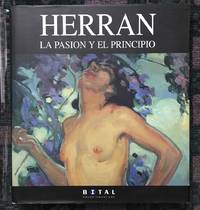
1994004097S. l.: Bital Grupo Financiero 1994. Hardcover. Near Fine/very good . 4to. 200 2 pp. Bound in full black cloth stamped in in white on spine in illustrated dust jacket. Profusely illustrated many in full color including two fold-outs. Includes chronology list of works bibliography and an analysis of the composition of several works. Near Fine there is some bleed-through of adhesive on front and rear pastedowns otherwise bright copy in Very Good dust jacket with minor scuffing and wear. <br/><br/> Bital Grupo Financiero hardcover
0365915874.Gpaperback. Good. Access codes and supplements are not guaranteed with used items. May be an ex-library book. paperback
2026100137100Perrin et Cie 2026. Bon état bords frottés intérieur globalement propre quelques rousseurs par endroit bonne tenue. in8. 2026. Relié. Perrin et Cie unknown
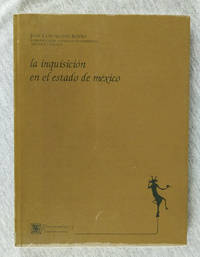
1995005054Instituto Mexiquense De Cultura 1995. first edition. Softcover. Very Good/no jacket. Olive green wraps 155 pages 8.5 in tall. First edition of 1000 copies text is in Spanish. Catalogue of 784 documents covering the inquisition in Mexico from 1536 to 1819. Laminate has just started to separate from wraps at botton and top edges otherwise clean and unworn. Instituto Mexiquense De Cultura paperback
0483602086.Gpaperback. Good. Access codes and supplements are not guaranteed with used items. May be an ex-library book. paperback
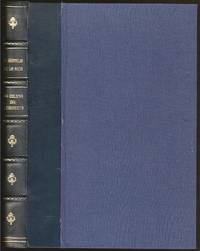
1920BOOKS006183<br />viii308 pages with errata. Quarto 10 1/4" x 7 1/2" bound in quarter leather with blue boards and gilt lettering to raised spine bands. Originally issued in wrappers which are bound in. Biblioteca de Historia Hispano-Americana. First edition.<br /><br />Founded in 1680 by Portugal as <i>Colonia do Sacramento</i> the colony was later disputed by the Spanish who settled on the opposite bank of the river at Buenos Aires. The colony was conquered by Jose de Garro in 1680 but returned to Portugal the next year. It was conquered again by the Spanish in March 1705 after a siege of five months but given back in the Treaty of Utrecht. Another attack during the Spanish-Portuguese War 1735-1737 failed. It kept changing hands from crown to crown due to treaties such as the Treaty of Madrid in 1750 and the Treaty of San Ildefonso in 1777 until it remained with the Spanish. It then transferred to Portuguese control again being later incorporated into Brazil after 1816 when the entire Banda Oriental Uruguay was seized by the government of the United Kingdom of Portugal Brazil and the Algarves and renamed the Cisplatina province. On 10 January 1809 before the independence of Uruguay it was designated as a "Villa" town and has since been elevated to the status of "Ciudad" city. Since independence Colonia del Sacramento has expanded to the north and east but the original Barrio Historico historic quarter retains its irregular terrain-fitting street plan built by the Portuguese contrasting with the wider orthogonal calles in the newer Spanish area.<br /><br /><b>Condition:</b><br /><br />A very good copy. Editorial Catolica Toledana hardcover
1965008334Mexico: Universidad Nacional Autonoma De Mexico 1965. 1 of 2000 copies. 412pp/illus/fold-outs. Gold decorated blue cloth and spine with black title label in original dustjacket. Corner bumped. Publication Instituto de Investigaciones Historicas ;1. ser. no. 86. Includes bibliography. A wonderfull book on ancient Mexican pottery illustrated with b/w photographs as well as fold-out charts and drawings. Text in Spanish. Clean. 1st Edition. Cloth. Near Fine/Near Fine. 8vo - over 7¾" - 9¾" tall. Limited Edition. Universidad Nacional Autonoma De Mexico hardcover
1961biblio273<p>Small thin hardback with 41 pages limited edition to 500 copies signed and inscribed by Raphael Munoz Text all in Spanish</p> hardcover
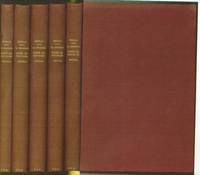
1910CA01065 volumes: volume 1 Texto: xx607 pages with frontispiece portraits illustrations facsimiles maps and plates; volume 2 Documentos: 552 pages; volume 3 Vida de Ercilla: 337 pages with portraits illustrations and index; volumes 4-5 Illustrations: 512 pages with facsimile titles to the first publications; 559 pages with facsimile signatures plates and index. Folio 15" x 10 3/4" with original wrappers bound in to cloth binding. Compiled and arranged by Jose Toribio Medina. First edition.<br /><br />La Araucana is an epic poem in Spanish about the Spanish conquest of Chile by Alonso de Ercilla; it is also known in English as The Araucaniad. It was considered the national epic of the Kingdom of Chile and one of the most important works of the Spanish Golden Age Siglo de Oro. The poem consists of 37 cantos that are distributed across the poem's three parts. The first part was published in 1569; the second part appeared in 1578 when it was published with the first part; the third part was published with the first and second parts in 1589. The poem shows Ercilla to be a master of the octava real the complicated stanza in which many other Renaissance epics in Castilian were written. A difficult eight-line unit of 11-syllable verses that are linked by a tight rhyme scheme the octava real was a challenge few poets met. It had been adapted from Italian only in the 16th century and it produces resonant serious-sounding verse that is appropriate to epic themes. The work describes the initial phase of the Arauco War which was born as a Spanish conquests attempt not at all comparable in importance to those of Hernán Cortés who helped conquer the Aztec empire and Francisco Pizarro who initiated the overthrow the Inca empire. Contrary to the epic conventions of the time however Ercilla placed the lesser conquests of the Spanish in Chile at the core of his poem because the author was a participant in the conquest and the story is based on his experiences there. On scraps of paper in the lulls of fighting Ercilla jotted down versified octaves about the events of the war and his own part in it. These stanzas he later gathered together and augmented in number to form his epic. It was the first poem of its kind written by a participant in the course of the events narrated and the first to immortalize the beginnings of a modern country. In the minds of the Chilean people La Araucana is a kind of Iliad that exalts the heroism pride and contempt of pain and death of the legendary Araucanian leaders and makes them national heroes today. Thus we see Ercilla appealing to the concept of the "noble savage" which has its origins in classical authors and took on a new lease of life in the renaissance - c.f. Montaigne's essay Des Canibales and was destined to have wide literary currency in European literature two centuries later. He had in fact created a historical poem of the war in Chile which immediately inspired many imitations.<br /><br />La Araucana is deliberately literary and includes fantastical elements reminiscent of medieval stories of chivalry. The narrator is a participant in the story at the time a new development for Spanish literature. Influences include Orlando furioso by Ludovico Ariosto. Also features extended description of the natural landscape. La Araucana's successes—and weaknesses—as a poem stem from the uneasy coexistence of characters and situations drawn from Classical sources primarily Virgil and Lucan both translated into Spanish in the 16th century and Italian Renaissance poets Ludovico Ariosto and Torquato Tasso with material derived from the actions of contemporary Spaniards and Araucanians. The mixture of Classical and Araucanian motifs in La Araucana often strikes the modern reader as unusual but Ercilla's turning native peoples into ancient Greeks Romans or Carthaginians was a common practice of his time. For Ercilla the Araucanians were noble and brave—only lacking as their Classical counterparts did the Christian faith. Caupolicán the Indian warrior and chieftain who is the protagonist of Ercilla's poem has a panoply of Classical heroes behind him. His valour and nobility give La Araucana grandeur as does the poem's exaltation of the vanquished: the defeated Araucanians are the champions in this poem which was written by one of the victors a Spaniard. Ercilla's depiction of Caupolicán elevates La Araucana above the poem's structural defects and prosaic moments which occur toward the end when Ercilla follows Tasso too closely and the narrative strays from the author's lived experience. Ercilla the poet-soldier eventually emerges as the true hero of his own poem and he is the figure that gives the poem unity and strength. The story is considered to be the first or one of the first works of literature in the New World cf. Cabeza de Vaca's Naufragios—Shipwrecked or Castaways for its fantastical/religious elements it is arguable whether that is a "traveler's account" or actual literature; and Bernal Díaz del Castillo's Historia verdadera de la conquista de Nueva España The Conquest of New Spain. La Araucana's more dramatic moments also became a source of plays. But the Renaissance epic is not a genre that has as a whole endured well and today Ercilla is little known and La Araucana is rarely read except by specialists and students of Spanish and Latin American literatures and of course in Chile where it is subject of special attention in the elementary schools education both in language and history. La Araucana makes Chile the only American country that was founded under the lights of an epic poem. <br /><br />Condition:<br /><br />Bound in red cloth with original wrappers bound in. Volume one first 15 pages closed tear at heal repaired back page fore edge repaired. A very good set. Imprenta elzeviriana hardcover
1974100091753Les belles lettres 1974. Bon état couverture défraîchie ternie accroc sur le dos intérieur propre. in8. 1974. Broché. Les belles lettres unknown
1922DEMO013468IMilan: Studio Editoriale Corbaccio 1922. Limited edition. Octavo. fair. 8vo 129 pages untrimmed leaves chipped wrappers Bi-lingual: In Italian and Latin. <br/><br/>Copy no. 80 of 1000 copies. This work issued as Vol.7 in Series 2 of Classici Dell'Amore series. "Beccadelli is most famous for his bawdy masterpiece HERMAPHRODITUS 1425 a collection of eighty-one Latin epigrams which evoke the unfettered eroticism of the works of Catullus and Martial as well as of the PRIAPEA. This work was greeted with acclaim by scholars. but subsequently condemned and censured as obscene by Christian apologists. . Guarino da Verona . called Beccadelli a poetic scion of the Sicilian writer of antiquity Theocritus - Wikipedia." Both works by these 15th century authors are Introduced by Angelo Ottolini. Studio Editoriale Corbaccio unknown
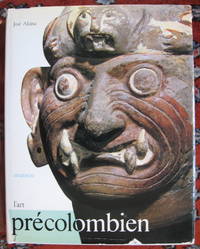
1978002152Paris: Editions D'art Lucien Mazenod 1978. Hardcover. Very Good /very good. 4to. 614 2 pp. Bound in full white cloth title stamped in blue on spine color illustration pasted to front cover. Full color and black and white illustrations most of the photographs are by Jean Mazenod. Includes bibliography and index. Text in French. Very Good internally clean and bright light soiling to extremities of text block and binding otherwise binding clean and bright in Very Good dust jacket with several short tears and wear to extremities overall minor age-toning and rubbing. Very attractive copy. <br/><br/> Editions D'art Lucien Mazenod hardcover
0365340804.Gpaperback. Good. Access codes and supplements are not guaranteed with used items. May be an ex-library book. paperback
1333899580.Gpaperback. Good. Access codes and supplements are not guaranteed with used items. May be an ex-library book. paperback
3389106413.Gpaperback. Good. Access codes and supplements are not guaranteed with used items. May be an ex-library book. paperback
2010DADAX1165387441Kessinger Publishing 2010-09-10. paperback. New. 8.25x1.50x11.00. Buy with confidence. Excellent Customer Service & Return policy. Kessinger Publishing paperback
2009DADAX1104096072Kessinger Publishing 2009-02-16. paperback. New. 8.25x1.50x11.00. Buy with confidence. Excellent Customer Service & Return policy. Kessinger Publishing paperback
199915658Ecco Press 1999. Soft cover. Near Fine. Translated from Portuguese to English by Clifford Landers. Still looks new in collectible condition. <br/> <br/> Ecco Press paperback
62424472Littman Library of Jewish Civilization The pp. 246 Index. Papeback. New. Littman Library of Jewish Civilization, The unknown
1113782994.Gpaperback. Good. Access codes and supplements are not guaranteed with used items. May be an ex-library book. paperback
1104264137.Gpaperback. Good. Access codes and supplements are not guaranteed with used items. May be an ex-library book. paperback
1165548747.Gpaperback. Good. Access codes and supplements are not guaranteed with used items. May be an ex-library book. paperback
1240925662.Gpaperback. Good. Access codes and supplements are not guaranteed with used items. May be an ex-library book. paperback
1357462417.Ghardcover. Good. Access codes and supplements are not guaranteed with used items. May be an ex-library book. hardcover
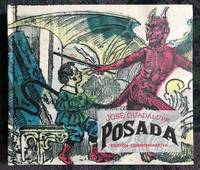
2013003397Aguascalientes: Instituto Cultural de Aguascalientes ; México D.F. : Consejo Nacional para la Cultura y las Artes 2013. First edition. Hardcover. Very Good . Oblong 8vo. 282 2 pp. Bound in red cloth and illustrated boards title embossed on front cover. No jacket as issued. Illustrations throughout some in full color. Texts in Spanish English and Japanese Includes bibliography and index. Images from the collection of Museo José Guadalupe Posada-Aguascalientes and Mercurio López Casillas. Very Good minor bumping to corners minor wear to extremities. Tight clean copy. <br/><br/> Instituto Cultural de Aguascalientes ; México, D.F. : Consejo Nacional para la Cultura y las Artes hardcover