8 080 résultats
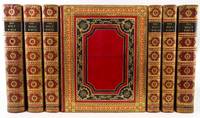
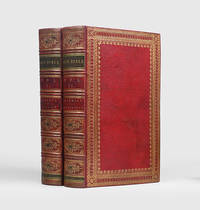
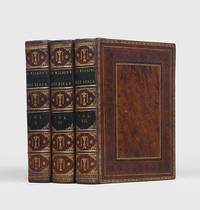
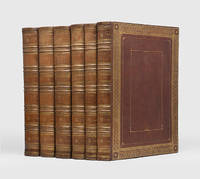
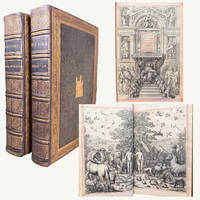
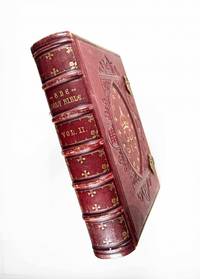
186249952Glasgow Edinburgh and London: William Mackenzie 1862. Deluxe Edition. Two volumes folio 450 x 330 mm published between 1862 and 1863. 16 1344pp. 57 unnumbered leaves of albumin prints 230 x 160mm mounted on card stock. Crimson morocco over wooden boards elaborately tooled in gilt and blind; edges mounted in brass double brass clasps with thistle motif; covers with a broad blind-stamped border around a recessed central panel with the crowned cipher of Queen Victoria in gilt; gilt tooled spine with 5 raised bands; a.e.g. marbled endleaves with gilt dentelles. Covers with some mild traces of use; single crease in each marbled endleaf partially detached in second volume; occasional light to moderate foxing mostly confined to the plate mounts; albumin prints in fine condition often with foxing extending about 5mm from the edges into the mount. Overall a very good set with a fine series of photographs notable for their technical achievment.<br /> <br /> Deluxe edition one of 170 copies complete with all 57 albumen prints. Produced for the 1862 International Exhibition and dedicated to Queen Victoria then recently in mourning for the death of Prince Albert this work appeared at a time when photography though still a laborious and expensive process was just beginning to become a popular activity. Victoria herself was an amateur photographer and "the royal couple had been enthusiastic supporters of photography in England from the beginning; in 1853 they became founding patrons of the Photographic Society Club" K. Fiedorek. Francis Frith 1822-1898 the devout Quaker whose photographic images grace the present work was one of the best-known photographers to work in the Near East and the most commercially successful photographer of the nineteenth century. Finding his elementary studies tedious Frith left school at the age of ten apprenticed with a grocer and eventually started his own business. He later went into printing sold the grocery business to a competitor at a substantial profit and went on to devote himself to photography. "The growing Victorian interest in the East and its exotic and historic attractions caught the attention of this astute businessman" Perez. Between 1856 and 1860 Frith made three photographic expeditions to Egypt Ethiopia Sinai and the Levant accompanied by the engineer Francis Herbert Wenham who provided technical assistance in mechanics and optics. While Perez notes that Frith's "approach was always a strictly commercial one and his concern was to make truthful and accurate views of the area" he readily concedes that "the technical quality of Frith's photographs is superior." Frith employed the new wet collodion process in which glass plate negatives were sensitized exposed and developed while still wet. While technically demanding the process yielded rich detail and broad tones. "Frith's were the first original wet-plate photographs of Jerusalem and the Holy Land to reach a wide English-speaking audience and his pictures of the small Palestinian towns were most likely the first published anywhere" Nir p.66.<br /> <br /> Perhaps the most novel aspect of this celebrated edition of the Bible and certainly a harbinger of things to come was the way in which the photographer "presented the radical possibility of seeing photographs of the biblical sites alongside related verses of scripture. he sought to defend and promote his faith by conscripting the veracity of science and materialism to his cause and considered photography to be the most effective medium for his campaign" Foster et al. This vision is manifest even in such details as the re-captioning of prints previously offered for sale so that the new descriptions would more clearly reference the King James text. It should be noted that while the printing was still done by hand this was one of the earliest books for which machinery was used for composing. Original publisher's price = 50 guineas. Another version of this work was published at London in 1860-1862 by Eyre & Spottiswoode; sometimes confused with the present work it was issued in 20 parts each containing a single photographic print by Frith.<br /> <br /> K. Fiedorek A Photographic Bible Fit for a Queen NYPL Blog 2014. Foster Heiting and Stuhlman Imagining Paradise pp. 68-69. Gernsheim Incunabula of British Photographic Literature 1839-1875 p.36 no.184. Herbert The English Bible 1940 1217. Y. Nir The Bible and the Image The History of Photography in the Holy Land 1939-1899 esp. chap. 3: "Early Traveling Landscape Photographers". N. Perez Focus East: Early Photography in the Near East 1838-1885 pp.163-165. William Mackenzie unknown
1800ST20221aLondon: T. Bensley for T. Macklin final volume Bensley for T. Cadell & W. Davies 1800 for the six volumes of the Bible 1816 for the Apocrypha. First Printing of this Edition. 480 x 385 mm. 19 x 15 1/8". One leaf in the Apocrypha 3P2 comprising two prologues of Ecclesiasticus invisibly inserted from another copy. Seven volumes comprising the regular Bible in six volumes and the Apocrypha usually not included as a seventh volume. <br/> ABSOLUTELY MAGNIFICENT CONTEMPORARY RED NEOCLASSICAL-STYLE STRAIGHT-GRAIN MOROCCO SUMPTUOUSLY GILT AND ONLAID WITH BLUE BY GEORG FRIEDRICH KRAUSS done for Prince Albert Casimir Duke of Saxe-Teschen with repeated "AST" monogram covers with very elaborate frames incorporating 11 plain and decorative gilt rules four onlaid borders of blue morocco and very elegant swirling foliate ornamentation around the central scalloped panel six pairs of raised bands each pair flanking a recessed gilt and blue metope and pentaglyph rule very handsome spine compartments with blue fan-shaped cornerpieces and central gilt-decorated blue medallions within sunburst gilt collars turn-ins with Greek key pattern in gilt striking endleaves of turquoise and green watered silk the Apochrypha endleaves slightly different. With more than 100 allegorical headpieces and tailpieces and some 70 SPLENDID LARGE-FOLIO-SIZE COPPER PLATES after Fuseli Reynolds West and others most plates printed before letters. Tissue guards perhaps later. Herbert 1442 and 1651. First volume with about 30 leaves noticeably foxed the majority of plates offset onto previous and following pages consistent inoffensive offsetting of text on facing pages other trivial imperfections but still a very impressive copy internally with the luxurious paper used for the text both fresh and clean and the engravings richly impressed and with very little foxing. Some unimportant scuffing and rubbing to the leather but all defects minor THE MAGNIFICENT BINDINGS REMARKABLY WELL PRESERVED the heavy volumes completely solid with only insignificant signs of use and THE MOROCCO AND LAVISHLY GILT DECORATION EXTREMELY BRIGHT. AN ALTOGETHER MEMORABLE COPY.<br/> <br/> The most prodigious form of Scripture in English ever published the Macklin Bible was often put into ornate bindings especially by London binders like Staggemeier and his contemporaries. But however much other sets may glisten the present magnificent example surely stands at or near the front of the line as one of the most lavishly decorated and arresting copies in existence. Its decorative extravagance also testifies to the fact that Macklin's publication was sufficiently admired outside of England to warrant the finest workmanship and the expenditure of great sums of money on artistic resources. The very large and bold type the fine Whatman paper and the series of engravings by some of the most celebrated artists of the period make this an item that is already very desirable. Like the Boydell "Shakespeare Gallery" also printed by Bensley our Macklin Bible is a vast picture book with illustrations that are grand both in size and emotional impact. But it is of course the bindings here that matter the most. Francesco Piranesi is generally given credit for inventing the Neoclassical style when he designed volumes presented to Gustavus III of Sweden during this monarch's visit to Rome in 1783-84. Quickly popular the Neoclassical style was imitated and developed by Staggemeier & Welcher in London by F. W. Standlander in Stockholm and by Georg Friedrich Krauss in Vienna. Krauss was the most prominent Continental binder working in this style of the day and Saxe-Teschen was perhaps his most important client. Products of the Krauss bindery have passed through some of the most distinguished collections over the years particularly those of Fürstenberg and Schäfer; and his bindings have consistently brought remarkable sums of money at auction. It is sufficient to say that the present group of bindings represents the most impressive collection of decorative volumes we have ever offered for sale. The collector for whom these bindings were originally executed Duke Albert of Saxe-Teschen 1738-1822 was the son of Friedrich August II of Saxony and the son-in-law of the empress Maria Theresa. After providing important military and civil service to the Habsburg empire he retired to Vienna in 1795 and afterward devoted himself to the fine arts. He founded the Albertina which now houses the greatest collection of prints in the world and he put together a great library distinguished by the highest taste and most exacting standards. The present copy has the additional distinction of containing what amounts to an extra volume: the Macklin Bible however it is bound most often appears in the marketplace without the Apocrypha appearing here as Volume VII which was not issued until 16 years after the others. It is also of some interest that the bindings of our seven volumes were decorated in an entirely uniform fashion as a close inspection shows something not typical of a set with volumes published so many years apart. The non-uniform endleaves in the final volume here may have resulted from the fact that given the physical size of the books the binder simply ran out of the cloth he had used for lining the first six volumes. The present set was offered though unsold at Sotheby's in 2003 with an estimate of £40-50000 approximately $64000-80000 and in 2005 for £30-40000 approximately $54000-72000. T. Bensley for T. Macklin [final volume Bensley for T. Cadell & W. Davies] unknown
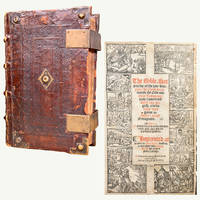
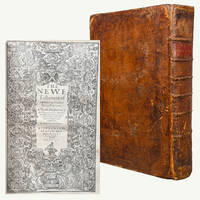
1549T61<p>London: By S. Mierdman for John Daye and William Seres 1549. Folio 11.75 x 7.75 in. </p><p><strong>Collation:</strong> Aa2 Bb6 Cc8 D-R6 S4 First Part: Gen-Deut; Aa-Tt6 Second Part: Josh-Job; Aa-Gg6 Hh8 Ii-Zz6 AAa8 Third Part: Psalms-Malachi; Aaa-Mmm6 Nnn4 Fourth Part: Apocrypha; A-T6 V8 Fifth Part: New Testament. <strong><em>Lacks</em></strong> D1 Gen 1-2 provided in good facsimile. </p><p><strong>Description: </strong>General title page 1549 surrounded by a border comprised of 14 woodcuts. Title and Almanacke printed in red and black. Two large half-page engravings before Psalms and Isaiah. Many woodcuts throughout the text. Text in black letter double columns with 65 lines to the full column. Text is ruled in red from Genesis through 2 Samuel and again throughout the New Testament. Text divided into five parts with divisional title pages to each part surrounded by two ornamental blocks and two woodcuts above and below depicting narrative scenes. This Bible contains the famous note in 1 Peter 3: "And yf she be not obedient and healpfull unto hym endevevoureth to beate the feare of God into her heae that thereby she maye be compelled to learne her duitie and do it" and is sometimes referred to as the "wife-beater Bible." The text includes Tyndale's chapter summaries and prologues including his notes in Revelation where he refers to the Pope as the antichrist.</p><p><strong>Binding:</strong> Contemporary brown calf over beveled oak boards. Covers featuring a mid-sixteenth century blind roll design within concentric frames. All metal corner- and centerpieces intact. Clasps and hasps were likely added later. Plain endpapers. Extremities lightly rubbed and scuffed but wonderfully preserved overall.</p><p><strong>Condition:</strong> Clean and bright with good margins; some of the red rules slightly faded; a few leaves with lower corner repair O4 R2 fore-margin repair Ee5-6 none of which impact the text; I45 in New Testament with small repair reducing one letter to headline; some thumbsoiling to edges; A near complete copy in a stunning contemporary binding and in far better condition than typically seen. </p><p><strong>Provenance: </strong>"David K. Parsons 2005" to front pastedown; laid down copperplate engraving depicting the final interview of John Rogers with his wife and eleven children just prior to his burning at the stake by Bloody Mary; birth records of James and Elizabeth Sage to blank leaf before Apocrypha; ex-libris stamp of David Parsons to final blank leaf. </p><p><strong>Note:</strong> The Matthew's Bible also referred to as the Matthew's-Tyndale Bible was printed in 1537 1549 two editions and 1551. Copies of the 1537 first edition are very difficult to find and rarely complete. The text was reprinted twice in 1549: one edition with the notes slightly revised by Edmund Becke and the "wife-beater" note at 1 Peter 3 this copy and the other edition being a straight reprint of the 1537 text without woodcuts and a notoriously bad printing. This edition boasts numerous woodcuts in the text especially the Pentateuch the gospels and Revelation. </p><p>John Rogers was a central figure in the history of the English Bible. Best known as the editor of the Matthew's Bible Rogers deliberately worked under the pseudonym "Thomas Matthew" to distance the volume from the condemned and dangerous name of William Tyndale. This strategic choice allowed the Bible to circulate more freely at a time when Tyndale's translations were officially banned. In reality roughly two thirds of the Matthew's Bible consists of Tyndale's work including Genesis through 2 Chronicles and the entire New Testament. Rogers helped preserve and disseminate Tyndale's translation during a period when doing so openly could invite severe punishment.</p><p>Rogers' faithfulness to Scripture ultimately cost him his life. During the reign of Queen Mary I when she sought to return England to Catholicism Rogers was arrested for heresy and became the first Protestant martyr of Mary's persecution. In 1555 he was burned at the stake at Smithfield reportedly in the presence of his wife and children bearing witness to his convictions to the end. The Matthew's Bible is considered to be the primary version of our English Bible.</p><p><strong>References:</strong> Herbert 74; Harold H. Hutson and Harold R. Willoughby "Decisive Data on Thomas Matthew Problems" <em>Journal of Bible and Religion</em> Vol. 6 No. 2 Spring 1938 77-82 121-128.</p> (S. Mierdman for) John Daye, and William Seres hardcover
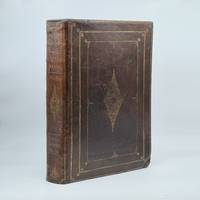
1763184488Cambridge: printed by John Baskerville 1763. An outstanding synthesis of fine printing illustration and binding First Baskerville edition: a spectacular copy of one of the greatest English Bibles and a crowning achievement of English printing in a magnificent Staggemeier and Welcher binding and abundantly extra-illustrated with 287 Old Master engravings. The copy adorned two of the greatest book collections of the last two centuries: the library of the Dukes of Marlborough at Blenheim Palace and of Estelle Doheny in California. Friedrich Leberecht Staggemeier 1759-1827 was esteemed for his elaborately decorated neoclassical bindings. He partnered with Samuel Welcher from 1799 to 1810 and the pair catered to the highest echelons of the market. Extra-illustration was a distinguishing feature of this market: here 171 of the illustrations are from Bernard Picart and Gerard Hoet's Figures de la Bible The Hague 1728 and 58 are from Pierre Mortier's Bible Amsterdam and Antwerp 1700 while others are from Jan Luyken's Icones Biblica Veteris et N. Testamenti Amsterdam 1729 and other sources. The extravagant binding and extra-illustration were commissioned by the first owner the collector and scholar Jacob Bryant. In 1804 he bequeathed the Bible to his patron George Spencer 4th Duke of Marlborough. It remained in the duke's collection at Blenheim Palace until 1881 when it passed to Fanny Octavia Louisa daughter of the 7th duke. Her descendants sold the book and it passed via Dawson's Book Shop to Estelle Doheny one of the greatest collectors of the 20th century where it joined her Gutenberg Bible and other landmarks of printing history. She bequeathed it to St. John's Seminary which sold it and the rest of Doheny's collection in 1988 where it realized $11000. Bound in 2 vols large folio 518 x 343 mm pp. 1146. Extra-illustrated with 287 Old Master engravings of which 198 are single page and 84 double each mounted mostly within a black ink and pale yellow wash frame. Late 18th- or early 19th-century red straight-grain morocco by L. Staggemeier & Welcher of London binder's ticket green morocco labels richly gilt in compartments wide gilt borders to covers gilt Greek-key turn-ins green watered-silk linings with gilt grapevine borders all edges gilt. Joints and extremities restored scattered light offsetting from plates and foxing else contents fresh very minor worming to front endpapers of first volume: a beautiful copy. ESTC T93106; Gaskell 26; Herbert 1146. unknown
1566U07<p><strong>Summary</strong></p><p>Quarto 8.5" x 6.25". An attractive and profusely illustrated quarto Tyndale New Testament. This is the third edition of Jugge's revision and the final Tyndale New Testament. A scarce book in a beautifully executed period-appropriate binding with nearly one hundred woodcuts.</p><p><strong>Description </strong></p><p>General title page in expert color facsimile. Calendar printed in red and black. Eighty-three woodcuts in ninety-four occurrences including a map of Palestine and a map of St. Paul's journeys. Text in single column black letter type in paragraph format. This handsomely printed revision by Jugge is lavishly illustrated combining the woodblocks from the two previous editions with the blocks by Virgil Solis that were later used in the Bishops' Bible. The large title-page portrait features young king Edward who awarded Jugge a license to print the first edition. First chapter woodcut initials cover eleven lines of text. Divisional printed title to the Epistles of St. Paul and Revelation. Text presented with 38 lines to the full column. Jugge's revision served as an effort to bring the English translation closer to the original Greek. The last of the over forty editions of Tyndale's New Testament with the headlines in Roman type.</p><p><strong>Collation</strong></p><p>flueron8 -fleuron1-3 par10 A-Y8 -S1 Aa-Pp8 Qq4. 312 ff. <strong><em><u>Lacks</u></em></strong> 4 leaves altogether title page dedication first leaf of calendar John 21 – <strong>all provided in color facsimile</strong>.</p><p><strong>Binding</strong></p><p>Beautifully rebound in black calf. Covers with central gilt arabesque design featuring flowers and swirls surrounded by small circles within a triple paneled border with corner fleurons. Spine with five raised bands and elaborate gilt tooling to compartments. Plain endpapers.</p><p><strong>Condition</strong></p><p>par4 lower marginal repair; E5 marginal repair; M8 N1 marginal loss with a few missing letters in facsimile; trimmed and cropped to fore-edge reducing marginal notes and cross references; final leaf of Tables stained; infrequent light toning occasional staining but overall clean and crisp.</p><p><strong>Provenance </strong></p><p>par4 with "Edmund Barber" to top of page. The previous owner reports that the Bible fell out of a wall of a cottage during demolition in the 1960s somewhere in West London.</p><p><strong>Note </strong></p><p>William Tyndale's translation of the New Testament was the first to be printed in the English language. The father of the modern English language and the father of the English Reformation Tyndale was spurred on by the desire to "cause a boy that driveth the plow to know more of the Scripture" than the clergy of the day. He would be killed for this cause in 1536. The translation was bitterly opposed by Bloody Mary and many copies of Tyndale's Bibles were burned. Research has shown that at least eighty percent of the King James Version is Tyndale's.</p><p><strong>Scarcity</strong></p><p>USTC records 21 copies in holding with most copies lacking the title page. RBH records only 1 copy at auction since 1936 with that copy lacking over 200 leaves.</p><p><strong>References</strong></p><p>Herbert 121; STC 2873; ESTC S122998; USTC 506525; Luborsky 2873; PMM 58 1526 edition.</p> Richard Jugge hardcover
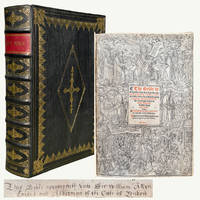
1540T75<p><strong>Summary</strong></p><p>Pulpit Folio 14.25" x 10.25". An early folio of the second edition of the Great Bible with all five title pages. A beautifully rebound copy with first ownership provenance of a famous knight merchant and mayor of the city of London.</p><p><strong>Description </strong></p><p>General title page 1541 printed in red and black featuring Henry VIII above distributing his <em>Verbum Dei</em> to Cromwell and Cranmer God barely squeezed in among the clouds at the top. Archbishop Cranmer on the left distributing the Bible to the clergy and the Cromwell on the right is distributing the Bible to the nobility. Below the people are without Bibles as the Great Bible was chained to pulpits and proclaim only <em>Vivat Rex</em> aside from the few who are imprisoned on the bottom right. Calendar also printed in red and black. Text in two column black letter with 62 lines to the full column. The beginning of each chapter features a floriated or historiated woodcut initial with occasional metal cast capitals. Title pages to the second third and fourth parts also printed in red and black bordered by the relevant woodcuts to that section. The New Testament title page n.d. in red and black like the general title except that Cromwell's arms are removed. Concludes with <em>The Table.</em></p><p><strong>Collation</strong></p><p>6 a-k8 l4 first part A-N8 O4 second part Aa-Pp8 Qq4 third part Aaa-Hhh8 Iii6 fourth part Aa-Nn8 -Nn6-8 New Testament. <strong><em>Lacks</em></strong> the final leaf of Revelation and two leaves of the Tables provided in expert facsimile. All titles are present.</p><p><strong>Binding</strong></p><p>Rebound in period appropriate back calf. Boards paneled in gilt with gilt rolls and corner fleurons around a central arabesque design. Spine with six blind-lined raised bands and elaborate gilt tooling to compartments. A red gilt-lined morocco label with the words "Holy Bible" and a date of 1540 lettered in gilt to the foot. Endpapers renewed.</p><p><strong>Condition</strong></p><p>Intermittent staining to lower gutter and head; trimmed at head with headlines cropped in Pentateuch and just touching a few sidenotes; 3 reinforced and remargined; 4 Kk1 lower corner repair without loss; h45 lower margin reinforced; l4 Rr6 laid down; Nn5 repair to lower gutter without loss; a well-preserved copy of an important early Bible.</p><p><strong>Provenance </strong></p><p>Early ownership inscription to foot of first Calendar leaf reading "This Bible apertayneth unto Sir William Allyn Knight and Alderman of the City of London." William Allyn 1515-1586 was a prominent London merchant and Lord Mayor 1555–56. The location where Cromwell's arms are removed on the NT title bears a merchant's device dated 1574.</p><p><strong>Note</strong></p><p>An impressive copy of the scarce Great Bible so called due to its imposing size. This copy like many from the first seven editions is issued in a mixed state. The general title is from April 1540 but Genesis 1 and Matthew 1 from May 1541. The New Testament title page is also from a 1541 copy as Cromwell's arms are removed. The few small flaws notwithstanding this is an attractive copy of an almost complete early Great Bible that is becoming increasingly scarce in commerce.</p><p><strong>References</strong></p><p>Herbert 53; STC 2070; Luborsky and Ingram 2070.</p> Edward Whytchurche hardcover
1655354139London: E.T. For a Society of Stationers 1655. WITH A CONTEMPORARY FORE-EDGE BY LEWIS of flowers centering on a quotation within a wreath "Blessed is he that word faded" and signed Lewis fecit 1656.". 12mo 169 x 115 mm. Contemporary black goatskin elaborately tooled in gilt small central oval onalys of calf at center of a large rectangular onlaid panel spine in 7 compartments with 6 raised bands red morocco lettering piece in one. Laid into full green pebbled morocco drop box. WITH A CONTEMPORARY FORE-EDGE BY LEWIS of flowers centering on a quotation within a wreath "Blessed is he that word faded" and signed Lewis fecit 1656.". 12mo 169 x 115 mm. With a most unusual contemporary watercolor painting on the fore edge of the book displaying a design of flower and acorns surrounding a central green wreath which encloses the following inscription: "March 13 1665 Martha White Order my Aedes in thy Word ps: 119 " According to Webber in 1001 Fore-edge Paintings p. 12 the earliest date on a fore-edge painting by Lewis is a 1651 Bible now in NYPL dated 1653 on fore-edge and similarily depicts flower animals and a motto. VERY EARLY AND RARE<br /> <br /> Signed by the London firm of Stephen and Thomas Lewis the earliest known bindery to paint both the firm's name and a year directly on the fore-edge paintings. Their fore-edges were typical of the time featuring elements from nature such as flowers animals or birds and they incorporated ofdten a wreath as here with a quote from Scriptures. This copy is additionally enhanced by its contemporary ownership by a woman reader. Provenance: contemporary ownership inscriptions of Martha Reyner "Martha Reyner her Booke with the price 0-18" front flyleaf and "Martha Thompson Her Book Ano Domini 1705 et Praetorum huius drawing of a bird." In a fleece-lined green morocco folding case. Rebacked with original spine laid down top headband partly frayed one nick to leather on front cover some slight fading of gilt E.T. For a Society of Stationers unknown
1763306680Birmingham: John Baskerville Printer to the University 1763. The third variant of the Subscriber's list with the most names ending with that of the Hon. Charles York Esq Attorney General. 1146 pp. 1 vols. Folio. Bound in full dark blue straight-grained morocco covers tooled in gilt with wide Greek key and drawer handle border with floral cornerpieces narrow gilt filet-bordered rectangles tooled all over with drawer handle and sunburst tools and semé off small dots with central gilt-stamped L with crown spine with six double raised bands titled in one compartment stamped with owner's name "Frederic Powys" in another and the rest richly gilt a.e.g. pink endsheets by Staggemeier and Welcher with their circular pink paper label on front pastedown. Front joint and headcap with conservation repairs of the highest quality light foxing to text. The third variant of the Subscriber's list with the most names ending with that of the Hon. Charles York Esq Attorney General. 1146 pp. 1 vols. Folio. The 1763 edition of Baskerville's Bible has always been recognised as his masterpiece and is one of the high-points in the history of printing in Britain. This beautiful and monumental binding can be closely dated because Thomas Powys formerly MP for Northamptonshire was created Baron Lilford in 1797 and Staggemeier & Welcher are recorded in partnership on Villiers Street as of 1799. By 1810 Welcher was in business alone at that address. The Hon and Rev. Frederic Powys whose name appears on the spine was the third son of the first Lord Lilford; he married in 1807. Whether the binding was commissioned for his taking holy orders or on the occasion of his marriage can only be conjectured. A landmark of printing in a splendid binding. Nixon p. 184; Gaskell Bibliography of John Baskerville 26; Ramsden p. 135. Provenance: Frederic Powys his name tooled in gilt to spine Lilford Library booklabel John Baskerville, Printer to the University unknown
17631230541763. Cambridge: Printed by John Baskerville Printer to the University 1763. <br /> <br /> Royal folio 573 unnumbered leaves. A2 1 B-13D2 a-e2 f1. English binding of contemporary full blue-green morocco covers with elaborate gilt border backstrip richly gilt with red morocco lettering pieces stamped in gilt "HOLY BIBLE" and at the foot "BASKERVILLE" gilt edges marbled endpapers. Inevitable slight signs of wear on such a huge book but in all a very good unrestored copy internally flawless.<br /> <br /> § First edition of Baskerville's masterwork in a magnificent contemporary English binding. Third issue of the subscribers' list as usual. "John Baskerville was a monumental figure in the history of English bookbinding and printing with contemporary accounts of his work ethic revealing a man deeply engaged in virtually every aspect of book production. Yet for most of his life and indeed for many decades afterwards he was decried as a mere amateur. Still other sources show an individual with highly idiosyncratic and paradoxical habits -- he lived with Sarah Eaves for nearly two decades out of wedlock; a devout atheist who was buried in his own backyard without Christian ceremony; a man who 'had wit but always against religion and decency'" F.E. Pardoe in John Baskerville of Birmingham: Letter-Founder and Printer 1975. <br /> <br /> Paradoxically after taking the position of Printer to the University of Cambridge on 1 December 1758 Baskerville produced one of the few great Bibles. It is a true masterwork expertly printed with impeccable attention to ink type spacing paper quality and ease of use. Published on 4 July 1763 "the adjective that inevitably comes to mind is 'noble' and the volume warrants the word. It was conceived and executed on a grand scale. to show that he had now learnt his craft and was able to practice it in a masterly fashion. and the result shows again that Baskerville must be placed in the very top rank of book designers" Pardoe 87. Morison and Day The Typographic Book 1963 write that "Baskerville's folio English Bible printed for the University of Cambridge is the finest presentation of Holy Writ since Richelieu's Latin Vulgate printed at the Imprimerie Royal" 48. Gaskell 26. Herbert 1146. Morison & Day The Typographic Book 48. Huntington Library Great Books in Great Editions 7. Rothschild 2640. Rumball Petre 145. unknown
39481Philadelphia: Printed by C. Sherman 5605. 8vo 5 volumes. 8 7/8 x 5 1/2 inches. Hebrew and English text on facing pages. Each volume inscribed at the head of the English-language title "To my beloved wife from her affectionate husband" the first volume with a later family annotation. Contemporary purple morocco spine in six compartments with raised bands lettered in gilt in the second and fourth repeating gilt decoration in others marbled edges marbled endpapers.<br/> <br/> Provenance: Solomon Nunes Carvalho each cover stamped in gilt<br/> <br/> Rare large-paper association copy of the first Jewish translation of the Pentateuch into English.<br/> <br/> More than any other person of his time Isaac Leeser 1806-1868 envisioned the development of a major center of Jewish culture and religious activity in the United States. He single-handedly provided American Jews with many of the basic religious texts institutions and conceptual tools they needed to construct the cultural foundation of what would later emerge as the largest Jewish community in the history of the Jewish people. Printed in 1845 this edition of the Pentateuch in five volumes included a vocalized Hebrew text of each of the Five Books of Moses together with an English translation and notes as well as the haftarot prophetic readings. Leeser actually began working on The Law of God in 1838. Among the factors involved in his decision to begin systematically working on a translation was the recent opening of Rebecca Gratz's Sunday School which met for the first time in March 1838 in Philadelphia and was desperately in need of appropriate study material. Students were compelled to use the King James Bible for want of a Jewish alternative. Religiously objectionable passages in other texts provided by Protestant organizations were either pasted over or torn out by Gratz's staff. Leeser who supported the Sunday School and was its chief academic resource person felt compelled to find more suitable texts for the students. The impetus for Leeser throughout was always his desire to provide the Jews of America with an English text of the Bible that was produced by one of their own and was not tainted by conversionist motivations. This copy with provenance to Solomon Nunes Carvalho who was a noted American painter photographer writer and inventor best known for traveling with John C. Fremont on his fifth expedition through Kansas Colorado and Utah. He published an account of that journey titled "Incidents of Travel and Adventure in the Far West; with Colonel Fremont's Last Expedition" 1860 and was considered a pioneer in travel photography. Isaac Leeser the hazzan of Congregation K.K. Mikveh Israel married Carvalho and his wife Sarah Miriam Solis on October 15 1845 in Philadelphia where Carvalho's father had a workshop.<br/> <br/> Rosenbach 569; Singerman 884; Goldman 7; Lance J. Sussman "Another Look at Isaac Leeser and the First Jewish Translation of the Bible in the United States" Modern Judaism Vol. 5 No. 2 Gershom Scholem Memorial Issue. May 1985 pp. 159-190. Printed by C. Sherman unknown
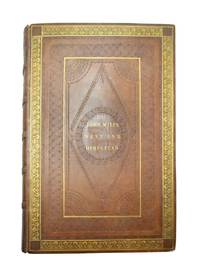
1785173867Bath: printed by R. Cruttwell; and sold by Rivingtons' Dilly Robson & Robinsons' 1785. With three Biblical fore edge paintings An imposing Bible handsomely bound by Edwards of Halifax in their celebrated "Etruscan" style. The set is unusual in featuring motifs relevant to the contents on all three fore-edges - scenes from the Old and New Testaments - as opposed to the more typical landscapes. Edwards famously almost never signed their bindings and their style was very frequently reproduced by others. This set is cited by Weber in his Annotated Dictionary of Fore-Edge Paintings as "a notable Bible from the Edwards bindery" Weber 2010 p. 118-9 and it is used as an example in a chapter devoted to distinguishing genuine Edwards bindings and paintings from imitations. The technique of concealing a painting under the gilt fore edge of books was revived in England by William Edwards about 1780. "The Edwards family not only carried on the art but enlarged it from the mainly floral and heraldic early efforts with occasional religious scenes and royal portraits to embrace views of well-known country houses set in landscapes" Marks p. 194. They were the originators of the bucolic English fore-edge painting which became standard in the 19th century. Scholars believe that the paintings were made in Halifax rather than in London by artists both within and outside the family and under the supervision of Thomas Edwards. Inspiration for the images was taken from various sources often engravings appearing in other books; for landscapes the favourite artist was William Gilpin a pioneer of the "picturesque". Volume I features a moment from Genesis: Abraham welcoming three angels into his home an act of hospitality which moved the Lord to bless Abraham and his wife with a son despite she was far beyond childbearing age. On Volume II is an episode from Exodus: an Egyptian princess and her attendants discover the infant Moses in the bulrushes of the Nile. Volume III displays an animated scene from the life of St. Paul as he preaches in Rome. The "Etruscan" style binding with a border of palmettes and other classical ornaments stencilled in black on brown calf was one of the firm's most popular designs. The origin of this style is debated: some 19th-century writers attributed the invention to John Whitaker while others ascribe it to the Edwards firm. It is known that Edwards employed it from at least 1775. Provenance: a Herman Frasch Whiton probably the American sailor and Olympic champion 1904-1967 with his elaborately designed bookplate featuring his arms and a ship on the verso of an initial blank in each volume. b Randall J. Moskovitz MD American collector from Memphis Tennessee with his bookplates loosely inserted. 3 vols large quarto 306 x 238 mm. Contemporary "Etruscan" calf by Edwards of Halifax spines with raised bands compartments tooled in gilt with flower and urn centerpieces and pediment cornerpieces black morocco labels covers with gilt pentaglyph and metope border stencilled frame of palmettes central panel of tree calf enclosed by gilt Greek key roll board edges and turn-ins tooled in gilt marbled endpapers each vol. with a contemporary fore-edge painting depicting a Scriptural scene edges gilt green silk bookmarkers. Spines uniformly darkened binding judiciously refurbished joints and spine ends repaired gilt retouched on spine light rubbing to palmettes design in places intermittent foxing and slight toning else clean the fore-edge paintings beautifully preserved. A handsome set. P. J. M. Marks "The Edwards of Halifax Bindery" British Library Journal vol. 24 no. 2 1998; Jeff Weber Annotated Dictionary of Fore-Edge Painting Artists & Binders 2010. See also: G. E. Bentley The Edwardses of Halifax 2015; Carl J. Weber Fore-Edge Painting 1966. hardcover
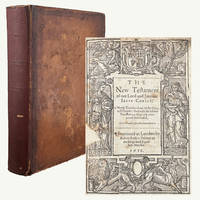
1794302622Boston: Printed at Boston by Alexander Young and Thomas Minns For J. Boyle B. Larkin J. White Thomas and Andrews D. West E. Larkin W.P. Blake and J. West. Sold by them at their respective book-Stores 1794. A-U6 W6 X-Z6 Z6 verso blank. Text printed in two columns. 1 vols. 12mo. Recent half calf. Small hole in top of title page margin not affecting text title leaf with tissue repair at gutter and fore edge margin 4 other leaves with small repairs to margins. Very good. A-U6 W6 X-Z6 Z6 verso blank. Text printed in two columns. 1 vols. 12mo. This rare edition of the New Testament printed in 1794 at Boston for a consortium of booksellers aimed to provide a distinctly American printed Bible as an alternative to the British printings being imported and thus included the Great Seal of the United States prominently displayed on the title page. Thus suggesting that even at the dawn of the American republic certain clauses of the Bill of Rights were subject to fluid interpretation. This is an early appearance of the Great Seal of the United States and is the only instance where it was used in conjunction with a patently religious work. Copies are recorded at AAS and Duke. Evans 26664; Hills English Bible in America 48; ESTC W4683 AAS Duke Printed at Boston, by Alexander Young and Thomas Minns, For J. Boyle, B. Larkin, J. White, Thomas and Andrews, D. West, E. Larki unknown
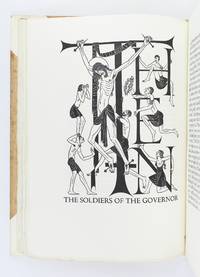
1931ST20201Waltham St. Lawrence: Golden Cockerel Press 1931. No. 352 OF 500 COPIES the first 12 on vellum. 343 x 241 mm. 13 1/2 x 9 1/2". 1 p.l. 268 2 pp 1 leaf colophon. <br/> Original white half pigskin and buckram sides by Sangorski & Sutcliffe stamp-signed on front pastedown raised bands top edge gilt other edges untrimmed. ILLUSTRATED THROUGHOUT with four large wood engravings on section titles and scores of striking large and small woodcut illustrations decorative elements and initials BY ERIC GILL. Printed on Batchelor handmade paper. The front pastedown with the engraved armorial bookplate of Albert and Constance Ramsay-Cohn the bookplate of Louis W. Black and the bookplate of "Downsland Court Ditchling Sussex." Chanticleer 78; A Century for the Century 26. Buckram boards somewhat freckled as usual very faint printer's smudges in one margin otherwise A VERY FINE COPY the pigskin--almost always found soiled and/or damaged--quite clean and pleasing and virtually pristine internally.<br/> <br/> This is an especially appealing copy of the chief work produced by one of the foremost English private presses. One of Eric Gill's outstanding achievements as an illustrator and one of the Golden Cockerel Press' great books the "Four Gospels" has been called by Franklin the finest of all private press books printed between the wars. The success of the work has much to do with Gill's ability to create a harmonious integration of woodcut illustration and typography his Golden Cockerel typeface one of the most important ever cut specifically for private use is introduced here. At the same time that the work achieves an aesthetic balance it also takes risks with the emotional nature of the woodcuts and with its unjustified page layout. As Franklin observes Gill's "pictures beautifully explain their letters as leaves spring from branches. This work is a wonderful extension of typography." Founded in 1920 with the intention to print fine editions of important well-known books as well as new literary works of merit from young authors the Golden Cockerel Press was purchased in 1924 by the illustrator and wood-engraver Robert Gibbings. "Under his direction" says Cave the Press was "transformed into the principal vehicle for the renaissance of wood-engraved book illustration" up until the beginning of World War II. In addition to doing wood engravings himself Gibbings employed a stable of eminent artists including among others Gill John Nash John Farleigh David Jones Eric Ravilious and Blair Hughes-Stanton. Our copy has been owned by two notable collectors and scholars of illustrated books. An early owner was British art historian Albert Mayer Cohn who wrote the catalogue raisonné of George Cruikshank's work. Later the volume passed into the hands of Boston collector Louis W. Black whose Aldine-related bookplate was designed by celebrated wood-engraver Leonard Baskin 1922-2000. Regarding the other bookplate here we have been unable to trace exactly who resided at Downsland Court in Ditchling but it is worth noting that Gill's Sussex artist's community was centered in Ditchling where he lived from 1907-24; it is certainly possible that our copy belonged to someone associated with this group. Golden Cockerel Press unknown
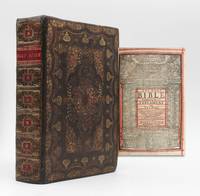
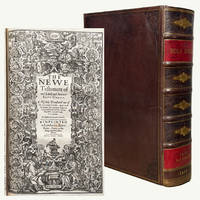
1617U26<p><em>The Holy Bible Conteyning the Old Testament and the New. Newly Translated Out of the Originall Tongues: And with the former translations diligently compared and revised by his Maiesties Speciall Comandement… </em></p><p><strong>Summary:</strong> Pulpit Folio approx. 16.25" x 11.25". The third of the five distinct pulpit folios of the King James Version. A textually complete copy with the Genealogies by John Speed at a fraction of the price of the first edition.</p><p><strong>Description: </strong>General title page 1617 in facsimile. Calendar printed in red and black. The Genealogies by John Speed with title page. The double-page map in facsimile. Text in large two column black letter type with 59 lines to the full column and within a ruled border. With the reading "and she went into the citie" in Ruth 3:15. New Testament title page 1617 with the twelve tribes of Israel on the left and the twelve disciples on the right. The four evangelists with their gospel symbols around the letterpress with the Tetragrammaton the dove and the slain Lamb at the center.</p><p><strong>Collation:</strong> A6 -A1 B4 C6 D4 prelims; A-C6 D2 -D2 Genealogies and map A-Z6; Aa-Zz6 Aaa-Zzz6 Aaaa-Zzzz6 Aaaaa-Ccccc6 Old Testament and Apocrypha; A-Z6 Dddddd6 New Testament. Complete Bible text with general title page and the map supplied in facsimile.</p><p><strong>Binding:</strong> Professionally rebound in brown calf. Covers paneled in gilt and blind. Spine with five raised bands gilt and blind tooling to compartments and with two gilt-lined red morocco labels and the words "Holy Bible" and "1611 3rd issue" lettered in gilt. Endpapers renewed.</p><p><strong>Condition:</strong> A2-C1 of prelims with marginal corner repair; 5D1-2 NT title and first leaf of Matthew with a few ink blots; 5G2 with ink blot to text obstructing a few letters on recto; 6A-6D with lower corner reinforced to margins; final two leaves of Revelation with loss to border and one letter of text; final leaf soiled and frayed to edges; overall a very nice copy with great margins.</p><p><strong>Note:</strong> The 1611 King James Bible was printed in a 59-line folio format in 1611 1613 1617 1634 and in 1640/39. The 1611 He Bible constituted a distinct edition with the reading "and hee went into the citie" in Ruth 3:15. The second edition 1613 She Bible was printed in subsequent years 1613 1617 1634 1640/39 with the variant "and she went into the citie." The second edition is frequently found in a variant state with leaves mixed in from different years but most here appear to originate from 1617.</p><p>Arguably the most important book ever published in English. Its influence can best be summed up by G.M. Trevelyan who stated that "for every Englishman who had read Sidney or Spenser or had seen Shakespeare acted at the Globe there were hundreds who had read or heard the Bible with close attention as the words of God. The effect of the continual domestic study of the book upon the national character imagination and intelligence for nearly three centuries to come was greater than that of any literary movement in our annals or any religious movement since the coming of St. Augustine." Macaulay said of it "If everything else in our language should perish the King James Bible would alone suffice to show the whole extent of its beauty and power" PMM 114.</p><p><strong>References:</strong> Herbert 319. PMM 114.</p> Robert Barker hardcover
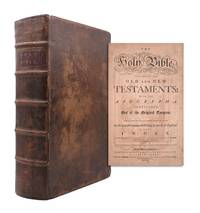
1789101717Philadelphia: William Young 1790 i.e. 1789. First edition thus. 12mo. 816 pp. with separate New Testament title-page. Collation: A-2L¹². Contemporary sheep; covers worn with some loss to leather exposing boards front joint split and holding by one cord rear joint with old sewed repair contents toned and dust-soiled a few gatherings worn at fore-edge touching text U1 "Song of Solomon" torn and damaged with loss to text and old paper repairs FIRST EDITION OF THE SECOND ENGLISH BIBLE PRINTED IN THE UNITED STATES and the first English Bible printed after the adoption of the Constitution. It follows Robert Aitken's Bible published in Philadelphia 1781-2. Printing of Young's 12mo Bible which Hills states was advertised for use in schools was already underway when Aitken's 1789 application to Congress for an exclusive right to publish Bibles in America was rejected. Evans notes that "this edition was published in 1789 although dated 1790" and quotes from the publisher's advertisement: "this edition has two strong recommendations to preference it is cheaper than any imported edition; and it is composed entirely of American manufacture." Young followed with a 24mo edition with metrical psalms in 1790.Rare: ESTC locates three copiestwo at AAS NYPL. Complete and in its original binding.PROVENANCE: contemporary birth records on verso of New Testament title-page for Vannosdoll family; Catherine Pellar early ownership inscription on title-page REFERENCE: ESTC W4491; Evans 22345; Herbert 1348; Hills 25 24mo issue; Rumball-Petre America's First Bibles Appendix no. 13 "Second Protestant Bible in English"; Sabin 5168; not in Darlow and Moule William Young hardcover
1800173564London: printed for Thomas Macklin by Thomas Bensley 1800. The grandest Bible ever printed in Britain First Macklin edition of the Bible handsomely bound. "The most ambitious edition produced in Britain often pirated but never rivalled" ODNB this Bible is a masterpiece of book art published at the apogee of British copperplate engraving and involving some of the best artists of its day. The Bible dedicated to the king was published serially between 1791 and 1800 in 70 parts each at £1. 1s. Thomas Macklin 1752-1800 began work on the project in the year following the opening of his famous Poets' Gallery in Pall Mall. The prospectus issued in 1789 explained that he was planning to add scripture pictures to his exhibition to be then reproduced in a "magnificent Bible". The paintings were realised by several artists including Hamilton Fuseli and Loutherbourg and exhibited at the Poets' Gallery between 1790 and 1796. Initially promising 60 plates the project eventually included 71 some of which never appeared in Macklin's exhibitions. Most of the headpiece and tailpiece vignettes were designed by Loutherbourg the type was cut by Joseph Jackson and his apprentice Vincent Figgins and the paper made by Whatman. The Bible took 11 years to complete and the publication costs exceeding £30000 almost bankrupted Macklin. Though the final engraving was finished five days before his death the last of the vignettes was not completed for another six weeks and he consequently never saw the finished work. Some copies of the Bible were bound in a fine neoclassical style by contemporary London binders particularly Staggemeier and Welcher. This set is unsigned but the treatment of the spine appears closer to the work of Kalthoeber see Maggs Cat. 1212 II no. 164. This set is bound in six volumes as recommended in the instructions to the binder vol. I. However sets are sometimes found bound in seven. 6 vols large folio 458 x 370 mm. With 71 copper engraved plates after Fuseli and others 113 wood engraved vignette head- and tailpieces. Contemporary diced russia spines with raised bands compartments lettered and tooled in gilt elaborate gilt frames to covers incorporating foliate and flower tools board edges and turn-ins tooled in gilt leather inner hinges marbled endpapers edges gilt silk bookmarkers. Bound with half-titles. A few trivial marks and light scuffs to covers small cosmetic repair to rear cover of vol. I superficial splits to a couple of joints subsequently retouched and now firm occasional foxing to contents and offsetting from plates else clean and bright. A very good set. ESTC T123175; Herbert 1441; Lowndes I p. 192. Maggs Bros Ltd Bookbinding in the British Isles Sixteenth to the Twentieth Century Cat. 1212 Part II 1996. hardcover
1638371824Cambridge: Thomas Buck and Roger Daniel 1638. Large paper copy. Ruled in red throughout. Roman letter in two columns. Engraved title page within architectural border featuring Biblical characters a vignette of the 'Last supper' and printer's device. 12 642 151 3 202pp. Bound with preceding the Bible: The Book of Common Prayer. 104pp. And with following the Bible: Whole Book of Psalmes. 8 1 2-90 10 pp. Folio 17 x 11 inches. Contemporary black morocco gilt covers panelled with roll tool borders and central arabesque design in gilt flat spine gilt with marching morocco labels gilt edges minor wear at joints lower corners bumped. Provenance:Webb early inscription on the front pastedown; Maggs Brothers item 827 in unidentified mid-20th century catalogue clipping laid in; General Theological Seminary bookplate. Large paper copy. Ruled in red throughout. Roman letter in two columns. Engraved title page within architectural border featuring Biblical characters a vignette of the 'Last supper' and printer's device. 12 642 151 3 202pp. Bound with preceding the Bible: The Book of Common Prayer. 104pp. And with following the Bible: Whole Book of Psalmes. 8 1 2-90 10 pp. Folio 17 x 11 inches. This edition contains the first major revisions of the King James version standardising the use of italics and altering several readings. "This remained the standard text until the publication of Dr. Paris' Cambridge edition of 1762" Herbert.<br /> <br /> A lovely example bound in contemporary English black morocco and measuring 430x280mm is considerably larger than the dimensions cited by Darlow & Moole 402 375x234 mm and Darlow & Moole 403 for a "large thick paper" copy 397x270 mm. Bible: Herbert 520; Darlow & Moule 402 and 403; ESTC S123371; STC 2nd ed 2331. Common Prayer: Griffiths 1638:2; STC 2nd ed. 16410; ESTC S902. Psalms: STC 2nd ed. 2682; ESTC S122380 Thomas Buck and Roger Daniel unknown
176369256Cambridge: Printed by John Baskerville 1763. BIBLE IN ENGLISH; BASKERVILLE John. BASKERVILLE John. The Holy Bible Containing the Old Testament and the New. Translated out of the Original Tongues and with the Former Translations Diligently Compared and Revised by His Majesty's Special Command. Appointed to be Read in Churches. Cambridge: Printed by John Baskerville 1763.<br> <br> Full Description:<br> <br> BIBLE IN ENGLISH. The Holy Bible Containing the Old Testament and the New: Translated out of the Original Tongues and with the Former Translations Diligently Compared and Revised by His Majesty's Special Command. Appointed to be Read in Churches. Cambridge: Printed by John Baskerville 1763.<br> <br> First edition with the list of subscribers in the third state ending with "The Hon. Charles York Esq; Attorney General." Two large folio volumes in one 19 1/8 x 12 1/4 inches; 480 x 311 mm. Complete with 573 leaves. Text ends on leaf 13E1 and is followed by an Index and Tables a-e f1. List of subscribers bound in after title-page and dedication. Text in double columns.<br> <br> Beautifully bound in early 19th-century full diced tan calf. Boards elaborately ruled and tooled in gilt and blind. Spine stamped and lettered in gilt. Front board lettered in gilt reading "John Miles/ West End/ Hampstead." Marbled endpapers. All edges marbled. Gilt dentelles. Back board with some very mild scuffing and a tiny bit of worming to head of board and at top and bottom of outer hinge. Some light foxing to first title-page and preliminary leaves but text is very clean. With the dates of births and deaths of the Miles family in old ink manuscript on the front free endpaper. Overall a very good clean copy.<br> <br> Originally priced four guineas in sheets for subscribers "the edition consisted of 1250 copies of which 556 were remaindered in 1768 and bought by the London bookseller R. Baldwin at 36s. each.Baldwin was offering copies at three guineas in sheets in 1771" Gaskell.<br> <br> "One of the most beautifully printed books in the world" Dibdin. This edition "has always been regarded as Baskerville's magnum opus and is his most magnificent as well as his most characteristic specimen" T.B. Reed A History of the Old English Letter Foundries p. 279. Gaskell declared that the title-page to the New Testament is "a perfect page of fine printing."<br> <br> Although the Baskerville Bible is now recognized as one of the greatest Bibles of all time it was initially a financial failure. Costing £2000 to print the remaining stock about half of the edition was remaindered five years after publication to a London bookseller. It was Baskerville's last great book.<br> <br> "Aesthetically the highest point in English Bible printing so far was John Baskerville's folio printed at Cambridge in 1763. To achieve his ambition to print a folio Bible Baskerville had to become University Printer on not very advantageous terms. The Bible uses his types paper and ink and shows his characteristic 'machine-made' finish: very smooth and even in colour and impression with glossy black ink on smooth paper. The design is traditional but the quality of material and workmanship is so high and the conventions are so delicately modified and consistently applied that the result is extremely impressive" The Cambridge History of the Bible: The West from the Reformation to the Present Day p. 464.<br> <br> Darlow & Moule 857. ESTC T93106. Gaskell Baskerville 26. Herbert 1146. Huntington Library Great Books in Great Editions 6.<br> <br> HBS 69256.<br> <br> $15000. Printed by John Baskerville unknown
1650778EHB223STDEngland London 1650. Size when opened: 17 x 25 cm. Ivory silk satin richly decorated in a colourful floral design with goldwork metal sequins and clusters of seed pearls the text "voir nostre domine" embroidered on the front and back. Exquisitely embroidered 17th-century English binding with a colourful floral design comparable to the very few silk bindings decorated in London during the years ca. 1625-1650 that have survived. The design which is identical on both sides showcases a crowned Tudor rose with its stem in a vase surrounded by flowers foliage and ornamented leaves with the text "voir nostre domine" at the top. It has been embroidered onto a base of ivory silk satin lined with white linen and decorated with four blue painted ornaments on the interior. The work has been executed with an exquisite pallet of green blue pink red orange white brown and gold threads brilliantly contrasting the ivory white of the base fabric.All sections and shapes have been beautifully outlined with gold thread fastened with red silk. The hearts of the roses the crowns the vases and the initials V and D of the text have been decorated with small pearls. Little round sequins are scattered in the foliage filling the negative space. At the interior two pockets have been sewn intended for the insertion of a book probably a Psalter of ca. 16.5 x 10 cm or 12mo format.Some sections are a little bit faded the embroidery on the spine and around the edges is partly detached missing a few pearls and sequins and likely some goldwork the silk is slightly water stained on the interior. Otherwise an extremely rare specimen of a very richly decorated silk bookbinding in very good condition.l Cf. Barber Textile and embroidered bindings plate 21; Davenport English embroidered bookbindings 43; Tregaskis Catalogue 878 1923 no. 4. unknown
1613U11<p><em>The Holy Bible conteyning the Old Testament and the New: Newly translated out of the originall Tongues: And with the former Translations diligently compared and revised by his Majesties Speciall commandement.</em></p><p><strong>Summary</strong></p><p>A textually complete 72-line folio King James She Bible. Bound with Speed's Genealogies in eighteenth century calf.</p><p><strong>Description</strong></p><p>Pulpit Folio 15.5" x 10.5". General title page in facsimile. Preliminaries include the <em>Translators to the Reader </em>11 pp.; <em>Kalendar</em> in red and black 6 ff.; <em>Almanack </em>1 p. in red and black; <em>The Table and Kalendar Expressing the order of the Psalms and Lessons… </em>5 pp.; <em>The Names of all the Books…</em> in red and black 1 p. Bound with <em>The Genealogies…</em> by John Speed 34 pp. without the double-page map. Text in two column black letter in smaller type with 72 lines to the full column. Text within ruled border. Each chapter begins with a woodcut initial. New Testament title page 1613 features the Tetragrammaton above the Agnus Dei and the Holy Dove with Matthew and Mark on either side; on the left side are the tents of the twelve tribes and on the right side the twelve apostles; below the letterpress are the Lamb slain along with Luke and John. Many headpieces vignettes and decorated initials throughout.</p><p><strong>Collation</strong></p><p>A-B4 -A1 title C6 D4 prelims; A-C6 Genealogies; A-Z6 Aa-Zz6 Aaa-Zzz6 Aaaa-Mmm6 Nnnn6 Bible text. <strong><em>Lacks</em></strong> general title page supplied in facsimile.</p><p><strong>Binding</strong></p><p>Eighteenth century calf rebacked and recornered with original spine laid down. Boards paneled in blind. Spine with six raised bands blind stamps to compartments and a red morocco label with the words "Holy Bible" lettered in gilt. Plain endpapers.</p><p><strong>Condition</strong></p><p>Light browning and staining but generally clean throughout; trimmed occasionally touching headline; A2 A3 of prelims with lower marginal loss; A4 B6 Kkkk2-5 with marginal fraying or loss not impacting text; Z6 Ss6 NT title with small repair to gutter; Uuu6 with small marginal loss; final leaf of Revelation stained and laid down.</p><p><strong>Provenance </strong></p><p>Eighteenth century ownership inscription of Thomas Chisnal to A23. Badder family manuscript record of births from 1765-85 to 3T5v.</p><p><strong>Note </strong></p><p>The true 1613 folio edition "easily distinguishable from the other large folio editions by its smaller type" Herbert. The number of leaves are reduced from 732 to 508 and was "no doubt designed as a cheaper alternative for poorer churches" Norton <em>A Textual History of the King James Bible</em> p. 76. This true second folio introduces four readings that have become standard: 'that ye may have' for 'the he may haue' Ez 6:8 'she poured it not' for 'she powred it' Ez 24:7 'as a flower' for 'as floure' 2 Es 15:50 and 'what thy right hand doeth' for 'what they right doeth' Mt 6:3.</p><p><strong>References </strong></p><p>Herbert 322; USTC 3005767; ESTC S122066.</p> Robert Barker hardcover
1612R28<p>London: Robert Baker 1612. 4to approx. 7.5" x 5.5". A scarce copy of the first separately issued quarto New Testament of the King James Version. A very early printing closely conforming to the first edition He Bible.</p><p><strong>Description: </strong>Title page 1612 with woodcut border featuring the four gospel symbols and the figures of fides and humilitas with the royal arms above. Text in single column black letter with headings and marginal references in Roman type. Concludes with dated colophon 1612. First chapter floriated initials head- and tailpieces.</p><p><strong>Collation:</strong> A-Z8 -A4 A5 Aa-Vv8. Lacks two leaves Matthew 2:17-4.</p><p><strong>Binding:</strong> Nineteenth century blind paneled brown calf. Rebacked with old brown morocco spine. Gray plain endpapers. All edges red. Rubbed with bumped corners.</p><p><strong>Condition:</strong> Text is generally clean with sporadic marginal spotting; final leaf lightly soiled; title page with short marginal tear mounted on a stub with small loss to inner margin; four leaves with lower marginal loss not impacting text; headlines cropped on a handful of leaves; overall a bright copy.</p><p><strong>Provenance: </strong>"M W Stoddard August 1870" to front endpaper; "Thomas Bonn was born in the year 1694" to verso of title page.</p><p><strong>Note:</strong> Arguably the most important book ever published in English and an opportunity to own a first edition at the fraction of the price of a complete He Bible. Macaulay said of it "If everything else in our language should perish the King James Bible would alone suffice to show the whole extent of its beauty and power" PMM 114. The quarto New Testament is more scarce than its complete quarto Bible counterpart H313 and slightly more common than the very scarce octavo and 12mo editions H310 and H315.</p><p><strong>References:</strong> Herbert 318; ESTC 2910; USTC 3004925 with only 18 copies in holdings.</p> Robert Barker hardcover
1660T24<p><em>The Holy Bible containing the Bookes of the Old and New Testament…</em></p><p><strong>Summary:</strong> Pulpit Folio in 2 Vols. 19" x 13". A pulpit folio Field's Bible commemorating the restoration of Charles II. Bound in contemporary morocco with six double plate engravings including Adam and Eve in the Garden and Solomon's Temple.</p><p><strong>Description:</strong> 2 works in 2 vols. Begins with <em>The Book of Common Prayer </em>with printed title page 1660 preceded by a full-page engraving of the Royal Arms by Hollar. The entire work is elaborately ruled in red and features wide margins. Engraved title page by Diepenbeeck and Lambart featuring King Solomon on the throne with David Moses and Aaron above. Double page plate of Adam and Eve in the Garden featuring a variety of animals including a unicorn. The second double page plate with vestments and details of the tabernacle. Other plates include a map various views of Solomon's temple and a very large fold-out of Jerusalem.</p><p><strong>Collation:</strong> a2 A-Z2 Aa-Ll2 BCP par4 parpar4 A-Z6 Aa-Zz6 Aaa-Kkk6 Lll4 Genesis-Job; Mmm-Zzz6 Aaaa-Yyyy6 Zzzz8 a-y4 A-Z6 Aa-Dd6 Ee8 Psalms – Revelation.</p><p><strong>Binding:</strong> Nineteenth century dark green paneled morocco. Covers with gilt stamp image featuring Kin's College Chapel in Cambridge around an elaborate gilt rolled border. Spine with six sets of double raised bands and elaborate tooling to compartments with the words "Holy Bible" and "Genesis – Job" or "Psalms – Revelation" lettered in gilt along with a date to foot. Red endpapers. All edges gilt with inner dentelles. </p><p><strong>Condition:</strong> The text is clean and bright appearing unread; Garden of Eden plate mounted to stub with repaired closed tear; Map of Jerusalem with a few short closed tears. Joints in volume 2 cracked but holding firm.</p><p><strong>Note:</strong> A very good copy of the popular Restoration Bible celebrating the return of Charles II. The text was first published the previous year by John Field printer to the University of Cambridge who had been commissioned to supply a lectern bible for use in churches and libraries. Former university Vice-Chancellor John Worthington noted that "For a fair large letter large paper with fair margin … there was never such a Bible in being". This work is the first King James Bible provided with illustrations and beautiful double-plate engravings at that.</p><p><strong>References:</strong> Herbert 668; ESTC R17044; Wing B2258.</p> John Field hardcover
1808354112Philadelphia: Printed by Jane Aitken 1808. First edition. 512; 490; 444; 472pp. 4 vols. 8vo. Contemporary full black morocco gil likely bound by Jane Aitken minor wear at joints one spine splitting but holding. First edition. 512; 490; 444; 472pp. 4 vols. 8vo. "Charles Thomson 1729-1824 made the first translation of the Septuagint into the English language and the first English translation of the New Testament in the western hemisphere. Thomson spent twenty years in making the translation. The books called Apocrypha which are included in the canon of the Greek Old Testament but not in the Hebrew were omitted in his translation. After copying the manuscript four times he had it published at Philadelphia by Jane Aitken the first woman to print any part of the Holy Scriptures in America and the daughter of the printer Robert Aitken. It is of interest that the name 'Cha. Thomson' appears as the signer of the Congressional resolution in the front of the 1782 Aiken Bible" Hills.<br /> <br /> Charles Thomson emigrated to America from his native Ireland in 1739. On recommendation of Benjamin Franklin he served as a tutor at the College of Pennsylvania later the University of Pennsylvania. He later left teaching for business in which he prospered. "Because of his reputation for fairness and integrity he was chosen by the Indians to keep their record of proceedings at the treaty of Easton 1757 and in the following year he was adopted into the Delaware tribe with a name meaning `man who tells the truth'" DAB. He was an early and ardent supporter of the Revolution and was unanimously elected Secretary to the Continental Congress serving in that post from 1774 to 1789. Thomson "was the very man in Philadelphia with whom John Adams busily probing the minds of all and sundry on the vital questions involved would wish to have as he did have 'much conversation.' 'This Charles Thomson' Adams wrote 'is the Sam Adams of Philadelphia the life of the cause of liberty they say.'" DAB. Thomson resigned his post when he was offered no part in Washington's inauguration ceremonies nor any post in the new administration. He devoted the next twenty years to his monumental translation.<br /> <br /> Jane Aitken continued her father Robert's business after his death in 1802. "She had in 1810 a printing house in Philadelphia. She obtained much reputation by the productions which issued from her press" Thomas. In addition to being one of the first American female printers Jane Aitken was also a bookseller bookbinder businesswoman and employer. The typeface Aitken used for the Thomson Bible was an attractive and utilitarian type developed in 1796 by two Scotsmen Binney and Ronaldson at their Philadelphia type foundry. The Thomson Bible is considered her greatest printing achievement and the first Bible printed by a woman in America.<br /> <br /> This set in a very unusual American full morocco gilt binding likely bound by Aitken's shop. See Spawn Willman and Carol Spawn "The Aitken Shop: Identification of an Eighteenth-Century Bindery and Its Tools" in The Papers of the Bibliographical Society of America vol. 57 no. 4 1963 pp. 422-37. Darlow & Moule 1005; Herbert 1514; Rumball-Petre 184; O'Callaghan 1808.2; Wright p.113; Hills 153; Thomas History of Printing in America p.402 Printed by Jane Aitken unknown
1791345231Worcester: Isaiah Thomas 1791. First Edition of Isaiah Thomas's Folio Bible. 50 engraved plates. Folio. Contemporary calf red morocco lettering piece. Expert repairs at top and bottom of spine. Housed in a morocco backed box. First Edition of Isaiah Thomas's Folio Bible. 50 engraved plates. Folio. "The two Thomas Bibles of 1791 were without doubt far in advance of any other publications of the same kind that had appeared in America in point of typography excellence of paper binding and general execution"--Wright Early American Bibles pages 74-88. Evans 23186; Hills 29; ESTC W4497 Isaiah Thomas unknown
185369294Philadelphia: Isaac Leeser 1853. BIBLE IN ENGLISH; LEESER Isaac. LEESER Isaac translator. The Twenty-Four Books of the Holy Scriptures. Carefully translated according to the Masoretic Text on the Basis of the English Version after the best Jewish Authorities; and supplied with short Explanatory Notes. By Isaac Leeser. Hebrew "For it shall not be forgotten out of the mouth of his seed." Dent. xxxi 21. Philadelphia: Isaac Leeser 1853.<br> <br> Full Description:<br> <br> BIBLE IN ENGLISH. LEESER Isaac translator. The Twenty-Four Books of the Holy Scriptures. Carefully translated according to the Masoretic Text on the Basis of the English Version after the best Jewish Authorities; and supplied with short Explanatory Notes. By Isaac Leeser. Hebrew "For it shall not be forgotten out of the mouth of his seed." Dent. xxxi 21. Philadelphia: Isaac Leeser 1853.<br> <br> First edition of the first complete translation of the Old Testament by a Jewish translator into English building upon Leeser's 1845 translation of the five books of the Pentateuch translation in 1845-1846. Folio 10 3/8 x 8 3/8 inches; 275 x 212 mm.<br> <br> Original full brown morocco. Boards ruled and elaborately stamped in gilt. Spine stamped and lettered in gilt. All edges marbled. Marbled endpapers. Binding with some restoration along joints and edges. A bit of foxing mainly to the preliminaries. Some occasional light dampstaining. Overall a very good copy.<br> <br> "Having published a five-volume Pentateuch-cum-haftarot lections from the Prophets translation in 1845-1846 as well as a complete vocalized and accentuated Hebrew Bible in 1848 the first such edition published in the U.S. he proceeded from April 1852 to September 1853 to extend his translation efforts to the entire Hebrew Bible. The result was his Twenty-Four Books of the Holy Scriptures the first translation of all of Tanakh into English by a Jew complete with short explanatory notes. Leeser explained in the preface to his magnum opus that he undertook the project in order to provide Anglophone Jewry with a vernacular version of the Bible "which has not been made by the authority of churches in which they can have no confidence" pp. iii-iv. The book achieved wide popularity among English-speaking Jews and even some Gentiles especially in America and went through multiple editions." Sotheby's<br> <br> "The translation of the Bible was Leeser's great literary achievement and represented many years of patient labor and devotion to a task which he considered sacred. Leeser was not fully equipped for this work for he was no specialist in Hebrew philology nor a master if Jewish learning in general and he was quite conscious of his shortcomings but he was inspired. He says in his preface: 'I thought in all due humility that I might safely go to task confidently relying upon that superior aid which is never withheld from the inquirer after truth.' He made good use of the various German translations by Jews of the collective commentary known as the Biur vol. III sec. 81 and of other Jewish exegetic works. As a result his translation though based in style upon the King James version can be considered an independent work for the changes he produced are numerous and great. His prime concern was to supply the traditional interpretation when necessary and the retention of the Jewish spirit at times even at the expense of beauty of style. The translation went through numerous editions and until the new Jewish Publication Society version was issued in 1917 it was the only source from which many Jews not conversant with Hebrew derived their knowledge of the Bible in accordance with Jewish tradition" Waxman History of Jewish Literature 1090.<br> <br> HBS 69294.<br> <br> $12500. [Isaac Leeser] unknown