8 080 résultats
19702080202105200848Daiichi Gakushusha 1970. Soft Cover. Fine. Number of pages: 356p Daiichi Gakushusha paperback
19702092902140310598Daiichi Gakushusha 1970. Soft Cover. Fine. Number of books: 1 Daiichi Gakushusha paperback
DADAX097782957XBrand: Trialtea USA 0000-00-00. 1. paperback. New. 0.00x0.00x0.00. Buy with confidence. Excellent Customer Service & Return policy. Brand: Trialtea USA paperback

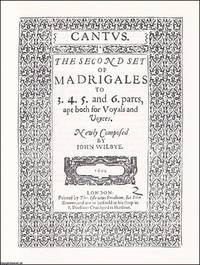
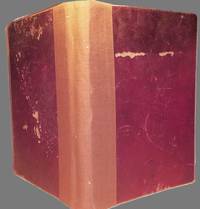
1973371904Theatrum Orbis Terrarum New York & Amsterdam 1973. Hardcover. Good Condition. Wilbye is likely the most renowned among English madrigal composers. A collection of his madrigals was published in 1598 followed by a second collection in 1608 together comprising a total of sixty-four works. Unpaginated. Minimal wear to the pages or the binding. Original red cloth with contrasting gilt lettering piece to the spine and upper board. Ex-University Library with their bookplate blind stamp and shelf label. Size: Folio 21 x 30 cms. Category: Antiquarian & Rare; ISBN: 9022106330. ISBN/EAN: 9789022106334. This item may require more postage than the rates shown for delivery outside the UK. If extra postage is required we will contact you before processing your order and you will be given the details and option to decline the extra cost. 9789022106334 Theatrum Orbis Terrarum hardcover
19892090502128704426Kinseido 1989. Soft Cover. Fine. Size: chrysanthemum format Number of books: one Kinseido paperback
18080MV432North Shields England 1808. Extremely rare handwritten letter of great interest to collectors or researchers of ENGLISH QUAKER LIFE. ROBERT SPENCE Quaker banker ALS North Shields dated 1808. Three pages 4to. plus integral address leaf. To his future wife's father Robert Foster Hebblethwaite Hall near Ledberge Kendal. This letter is the nexus of a correspondence that will last nearly five decades between these two English Quakers - bound by blood religion and soon matrimony - Spence begs to be allowed to visit Hebblethwaite now that Foster has learned of his attachment to Mary. Very sensitively written and in many ways a proposal of marriage but much more than the simple face value of the words may be read between the lines as Spence appears very defensive for not having spoken to Foster first. Simply sensational English Quaker historical autographed letter. VG. Autograph. Manuscript. Very Good. 4to - over 9¾" - 12" tall. Paperback
0966700740.Gpaperback. Good. Access codes and supplements are not guaranteed with used items. May be an ex-library book. paperback
86kzScrapbook. Good. Hardcover. 13.25"x10". Re-backed. 30 leaves many tipped in pieces. Written with an oversized clear cursive hand. Majority of the entries center on contemporary women's issues in Victorian England. 20% of the top edge of the text block has eroded occasionally affecting some of the entries. The erosion has been stanched and the album is now in nice condition. Hardcover
18770009039NAPLES ALEXANDRIA CAIRO SUEZ JAFFA JERUSALEM. Good. 1877. On offer is a fascinating journal written by an English woman of a trying and difficult voyage from Naples Italy to the Holy Land of Jerusalem in 1877. The journal is 35 pages long and is of a trip of a small group who travel first to Alexandria via Sicily then by rail to Cairo and Ismailia through the newly constructed Suez Canal and finally an extraordinary months journey on horseback with tented camping in the desert at night. The trip is a very difficult journey and at one point the woman writes this was our first experience of travelling in Palestine and I can assure you it was a most trying one. The authors handwriting is beautiful and is an easy pleasure to read. These pages seem to be notes for a talk the woman is going to give. There are also corrections of the writing in pencil by the woman herself and the book ends as if the words were meant to be spoken to an audience. The journal begins: Naples to Jerusalem Notes by the way Naples which is to be my starting point tonight is beautifully situated on one of the finest bays in the world. The city extends for three miles along the short of the bay but rows of houses villages and small towns extend almost entirely around it. Nearly opposite Naples is Mount Vesuvius from whose summit have poured in times past the streams of lava and showers of ashes which have again and again buried whole towns and villages situated on its sides and even at some distance from its foot; and from which a light cloud of smoke is always rising.; We went on board a steamer bound for Alexandria at two p.m. on Sunday February the 18th 1877 but did not sail until five oclock during which time we had a fine view of the city and its surroundings.On the following morning we entered the straits of Messina and about 11 oclock landed at Messina capital of Sicily where we stayed a short time and walked through the town. We sailed about 12 and it was quite smooth through the straits our companions came on deck.Soon after we got through the straits a storm burst upon us. The guards were fixed on to the table today to keep the things in their places but did not remedy all the evil for as you know anything liquid will find its own level so that when we had soup before us and the boat rolled to an angle of 45 de. It was either running over the opposite edge of the plat or pouring over us which was far from pleasant we had no more soup during the three days that the storm commenced. They reach Alexandria a few rough days later: Pompeys pillar and Cleopatras needles are the most striking monumental relics of Alexandria and we drove to Pompeys pillar first. It stands on rising ground the highest in the neighborhood and close to it is a Mohammedan cemetery. The writer is a smart woman adept at conveying events with skillful detail grativats and occasionally humor. She is also quite a worldly woman often bringing in recent world events to give context: Recent events have brought Egypt to the notice of all newspaper readers and the bombardments of the forts of Alexandria by the British Fleet and the subsequent setting on fire of the principal parks of the city and especially of the European part has been brought very vividly before the public by the Illustrated Papers. The Great Square is where the principal buildings of the city were situated. The buildings surrounding it were of imposing appearance here were the Consulates the principal Banks the finest shops and the largest hotel.All this is now a heap of ruins. She goes on to describe the contrast in dress between native women and European women: you often see for instance an Egyptian woman covered from head to foot with a long thick veil which hides all but her eyes and walking close behind her an European lady dressed in the height of Paris fashion. The European gentlemen are of course dressed as we are accustomed to see them except that all wear the Turkish fez and the higher class Egyptians mostly wear the same dress but the lower classes all wear loose petticoat trousers reaching to the ankles and a loose jacket and round the waist they often have a gaily coloured sash or shawl. After Alexandria the writer takes a train to Cairo. She describes the train ordinary first class ones made in England and sent out and the landscape she sees the land is well cultivated and is watered by the annual overflowing of the Nile and is also artificially irrigated by means of numerous canals cut for the purpose from the Nile.. Cairo is a more purely Oriental city than Alexandria and we stay here five days. The writer describes the contrast between old Cairo and new Cairo as well stating that the new Cairo is built after the style of the boulevards of Paris with wide streets and trees planted on the side paths shops and houses in the European style while the old Cairo is truly Eastern narrow irregular streets merely of earth trampled smooth though far from being level. In Cairo the writer describes many different places she sees travelling around the city by donkey indeed there are regular stands for them and anyone who wishes to go out calls for one as we call for a cab and especially the shops in the bazaars. While in Cairo she takes a donkey trip to the Island of Rhoda to see the famous Nilometer that measures flood height. She also goes to see the Boulak Museum the finest collection of Egyptian Antiquities in the world the University of the East and observes the Muslim call to prayer at the University: At 12 o.c. the call to prayer was heard from the minarets of the mosk mosque and instantly all spread their prayer carpets on which they knelt down with their faces turned towards Mecca and utterly regardless of our presence they went through their devotions. From Cairo there are day trips to Sakkara and Memphis where the writer sees and writes of many statues sculptures and sacred bulls all very well preserved and recently discovered and excavated. After the five days in Cairo the author sets off for Ismailia a place on the Suez canal about half way between Suez and Port Said. She comments on the refilling of the dry Lake Imshah after Suez Canal construction just 8 years or so earlier. She writes Ismailia has entirely grown up since the canal was made it was before nothing but desert but a freshwater canal supplies it and other stations on the Suez Canal. It seems as if wherever water can be got on to the land the desert may be turned into a garden for already they have a few good gardens there and many avenues of trees. The author than travels to Port Said across the Suez Canal by steamer. From Port Said she goes onto Jaffa. During the time we had our only experience of the Kamseen which is a hot dry wind full of fine sand blowing off the desert and looks like a thick yellow fog. The sand was so fine that it penetrated all our clothes and we had to go into the cabin for protection. In Jaffa she comments on the numerous orange and lemon groves the poor sanitary situation in the city and the many muddy dirty and crooked streets of the city our first impressions were not pleasant. In Jaffa she goes to Simon the Tanners house and also to where Peter had his vision of a sheet let down from Heaven knit at the four corners and filled with all manner of beasts etc. She also visits a Mission school run by an English lady attended by Jews Mohammedans and Syrians alike. The school is Methodist. From Jaffa the author and her companions set out for the month long horseback trip to Jerusalem sleeping in tents at night. We rode between orange and lemon groves for some distance the road was fenced off with prickly pear a close growing thorny cactus which reaches about 6ft high a fence which will defy man or beast. From the onset of the journey there are persistent problems with the horses: my horse had a bad trick of pulling up suddenly if I tried to pass the foremost of the party they cing very tenaciously to each other and there was no attempt to run away with any of us.We were in the saddle for over five hours with the sun fiercely shining on us from a cloudless sky and if there had not been a nice breeze we should have found it much worse than we did. Despite the problems the write is astounded with the beauty of the Middle Easter landscape. The Plain of Sharon was gay with flowers particularly with a small anemone of a very bright scarlet and as we got into the hill country the ledges of the rocks were filled with beautiful varieties of cyclamen. At night she describes the tents they have brought along and the new experience of sleeping in tents which seemed almost like sleeping out of doors. They have brought along five sleeping tents a saloon tent and a kitchen tent with a Union Jack flag flying from one and Stars and Stripes from the other. It is obvious the people on the trip come from wealth as she describes the extraordinary five course dinner they are served in their camp site: first course soup 2nd stewed tongue with fried potatoes 3rd cauliflower browned with egg & breadcrumbs 4th chicken and asparagus 5th apricot tarts and dessert nuts raisins & Jaffa oranges after which we had a large cup of tea to finish off with. The first nights are cold and noisy nights with dogs barking and frogs croaking. They wake up each morning with a servant blowing a rams horn trumpet. The writer is taken by the Biblical ground through which she travels: Our route to day is over ground of great interest and where great events in the early history of the subjugation of Palestine by Joshua took place. It was here that Joshua uttered the memorable words at the battle of Beth Horon Sun stand thou still upon Gibeon and thou Moon in the valley of Aijalon.I have no doubt they would take the same road we were going for we reached Kirjath Jearim where the Ark was kept so long early in the day. Finally the author and her companions reach Jerusalem. Here she writes clearly and beautifully of Jerusalem of its hills and deep valleys and twisting roads. We descend the Mount of Olives past the garden of Gethsemane then across the brook Hedron and up the other side of the valley passing the traditional site of Stephen's martyrdom. Enter Jerusalem by St. Stephen's gate and along the Via Dolorosa return to our hotel. The journal ends like so We spent several days in visiting the places of interest in the city and its neighbourhood but it would take too long for me to attempt a description of them. I can only hope in conclusion that some here present may have the pleasure of seeing for themselves that wonderful city and land. The journal consists of four gatherings of roughly 10 pages each though these gatherings are not bound and many pages are loose or very close to being unattached. The paper shows some wear and coloration from age but it does not hinder the experience of reading this amazing travelogue at all.; Manuscript; Folio - over 12" - 15" tall; KEYWORDS: HISTORY OF PILGRIMAGE TO THE HOLY LAND JERUSALEM PRE-STATE ISRAEL NAPLES MESSINA ITALY SICILY ALEXANDRIA CAIRO EGYPT ISMAILIA SUEZ CANAL ARABIAN DESERT TRAVEL BY HORSEBACK 19TH CENTURY FEMALE TRAVEL IN THE 1800s BAZAARS OF EGYPT NOTES FOR A LECTURE TRIP THROUGH THE ARAB WORLD NORTH AFRICA MIDDLE-EASTERN TRAVEL RAIL TRAVEL IN THE LEVANT KHAMSIN WIND JAFFA SHARON PLAIN LUXURY TRAVEL BIBLE TRAIL DESCRIPTIONS OF MIDDLE EASTERN LANDSCAPE BRITANNICA HANDWRITTEN MANUSCRIPT DOCUMENT LETTER AUTOGRAPH WRITER HAND WRITTEN DOCUMENTS SIGNED LETTERS MANUSCRIPTS HISTORICAL HOLOGRAPH WRITERS AUTOGRAPHS PERSONAL MEMOIR MEMORIAL ANTIQUITÉ CONTRAT VÉLIN DOCUMENT MANUSCRIT PAPIER ANTIKE BRIEF PERGAMENT DOKUMENT MANUSKRIPT PAPIER OGGETTO DANTIQUARIATO ATTO VELINA DOCUMENTO MANOSCRITTO CARTA ANTIGÜEDAD HECHO VITELA DOCUMENTO MANUSCRITO PAPEL . hardcover
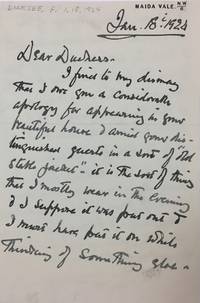
1924005446Maida Vale London 1924. Loose_leaf. Very Good. Single sheet of laid paper written on both sides. Approximately 160 words. Measuring roughly 6 x 4 inches with a single horizontal crease. CONDITION: scattered very faint finger-soiling else fine. ALS on personal stationery with very posh Maida Vale NW 6 address engraved top right edge. Fantastic content. A marvelous window onto the mores of English society in the 1920's. Dicksee would have been in his 70's at the time of this letter and presumably should have known better than to wear his "old stable jacket" to a soiree of the Dutchess's.but do we ever learn some of us do we ever learn Despite our best efforts we never have been able to identify exactly which Dutchess this event pertains to. We even contacted the author of Dicksee's definitive biography "Frank Dicksee: 1853-1928; His Art and Life" by Simon Toll 2017. ACC Publishing but he was as stumped as we were. For your reading pleasure here is the our best efforts to decipher the letter's eccentric handwriting: "Jan. 18 1924. Dear Duchess I find to my dismay that I owe you a considerable apology for appearing in your beautiful house and amidst your distinguished guests in a sort of "old stable jacket" -it is the sort of thing that I mostly wear in the evening and I suppose it was put out & I must have put it on while thinking of something else & I never became aware of the solecism I had committed until I took the wretched thing off before going to bed. Your Grace may not have noticed this. My only consolation is that the men present at least would not take me now P.R.A. to be the son of a tailor as his costume was without tails. and indecipherable. Really I am most sorry that any guest of yours should be so careless and uncouth. I of course indecipherable to where this delinquent has to sign himself in all humiliation Yrs Sincerely Frank Dicksee." Provenance: purchased at auction with auction record available to buyer upon request. " Frank Dicksee was born at a time when the first wave of Pre-Raphaelitism was beginning to make its presence felt in Britain and he inherited the romantic spirit of the movement that had been founded only a stone's throw from his childhood home. After early success with his painting of unrequited love Harmony he rose to be one of the most popular artists of the late 19th-century painting in a sumptuous and dramatic style. Dicksee's family was a veritable dynasty of artists but it is Frank who is best known and loved today for his Pre-Raphaelite inspired subjects. He enrolled in the Royal Academy in 1870 and quickly achieved success elected to the Academy in 1891 and became President of the Royal Academy in 1924." From the publisher of : "Frank Dicksee: 1853-1928; His Art and Life" by Simon Toll 2017. ACC Publishing. <br/><br/> unknown
19270001377ABOARD THE S.S. LANCASTRIA TO EUROPE. Good. 1927. On offer is a delightful original manuscript travel diary dated 1927 wherein Fred English with his wife Cora writes of his adventures and observations while aboard the S.S. Lancastria as well as his travels and adventures in England France Ireland etc. He writes of going to Blarney Castle and other castles seeing Lord Barrymore's estate and going to Killarney Dublin Brussels and many many other places! He begins: "S.S. Lancastria at Sea" - These notes are written for my own use. I am mailing them home that others may perhaps enjoy some of our pleasures. Please read them and then mail them immediately to the next on the list he then lists a lot of peoples names Don't forget that I want to use them when I return. Please see that none are lost". Here are some snippets: "Saturday August 27 1927 - Embarked at East Boston at 4:50 p.m. 10th Calvary Band playing. Bon Voyage by official representative of city. Escorted down harbor by Fire Boat playing four streams hose. Many vessels saluted with whistles. Three women and a boy failed to get off and were taken off down a ladder to a tug. It has rained all day. Have dropped pilot and are proceeding to sea. Found we were both booked together in J4 so far no sign of sea sickness. Am now waiting for dinner second sitting at 7 p.m. in to dinner at Table 3. Mr & Mrs Cain of N.Y. table companions. Enjoyed dinner five courses excellent service. Back on deck sea not rough but fog has shut down fog horn blows every minute. Watched sea and talked until 9:30 p.m. then seven times around deck equal one mile. Cora has taken a dose of Mothersill's pills as a prevention against sea sickness. Really doesn't need if no rougher than now. This day has been a big experience . It is as hot as it ever gets in Aroostook. The dining room is really too hot to eat in. We have a table stewart who tries hard to please but has a difficult time he is always in his own way . We had an impressive Memorial Service for sailors lost at sea 8 gold star mothers strewed flowers on water. We lost our table companions Mr & Mrs Cain. They moved to C deck - We had a good sing last night and a symphony concert by the ships orchestra. This morning wireless reports that Brock and Schlee had crossed the Atlantic in 23 hr. and 19 min. Had a wonderful day on deck. In the afternoon we played shuffleboard and ball on top deck. In the evening we danced a little . Now sailing directly towards Queenstown - Tonight the water has a larger swell and the ship is beginning to roll and pitch. So far the sensation is not bad. Some are beginning to feel sick again - There is to be dancing if the roll does not prevent. Saw a large school of flying fish seemed to be either white or silver color. Sometimes they take a flight of perhaps a hundred yards. There is a very jolly crowd on board who are bent on enjoying themselves - We saw schools of porpoises yesterday wish we might see a whale . We have enjoyed life on the boat. Time passes rapidly - There are two or three real characters on board. One Greenly from Boston a very fat good natural cuss from Boston. He brought aboard about 50 bottles of drink and a couple cases of oranges. He nearly missed the boat but arrived in time a dress coat over his arm part of which had been dropped in the mud. Neverless he was feeling glorious and has been ever since - Last night we sighted a passenger ship about five or six miles north sailing towards America. We have seen a number of freighters. They make the sea less lonely. - There are a small number aboard who are trying to drink the bar dry with fair success. We are in touch with land by wireless. We could radiogram home but would cost about four dollars. When we realize the expanse of ocean we feel that Lindberg had colossal nerve to attempt its passage all alone . It is fun to dance aboard except when the ship gives an extra roll the dancers go crashing into the wall or into the rail . We have the run of the ship which is worth a good deal. Our room is fairly good though small. I believe I would rather have the cheapest room aboard with run of ship than a better room say second class without run of the ship . Clancy our table steward is having a wonderful time telling us English customs. One of the cleverest jokes of last evening was a passenger who dressed as a steward. He had an English face even to that dumb look they have when they do not understand. He went into the smoking room and about the deck taking orders from many people who were not wise to the joke much to the amusement of those who were . Memorial for Lusitania in fore lounge over or nearly over spot where she sank . We arrived in Paris about 10 a.m. - After breakfast we took a train or street car to Trocadeors Convention Hedges. The parade was to start at 1:30 so we found the place were Mainse was to form. It was near Place D'lena which contains Geo Washingtons equestrian statue. While admiring the statue we noticed Hotel D'lena facing it. Then it occurred to Cora that the Mac Manuses were stopping at that hotel. We proceeded to find them. Crossing the square we heard our names called. Sure enough there they were on an iron balcony watching the parade form. We went up watched the parade form and pass until the ___ section came along then we joined and paraded. Talk about thrills. Flying could not compare. Up Rue D'Iena to the Arc dr Triomphe where we threw flowers on the unknown soldiers tomb - It was a National French Holiday declared for the occasion. The Stars and Stripes flew from the Eiffel Tower for the first time in history. It seemed millions of people lined the streets all cheering - No not all for it was reported that a few hissed. Both sides of the street were lined with soldiers with drawn bayonets. Every square had a troop of Calvalry or mounted guards. Every corner a squad of gendarmes ready to turn in any direction. It was expected that some demonstration would be made against Massachusetts but none came. There was a thrill to this parade that words cannot describe. It made me shiver and quiver. The Soldiers of a Nation parading the streets of the capital city of another cheered by its populace. One of the objects of this convention was to cement the two people together. I believe that it went a long way towards accomplishing its purpose." HISTORICAL NOTES: Originally named Tyrrhenia the S.S. Lancastria was the sister of Cameronia II of the Anchor Line which Cunard owned from 1911 until 1935. Built by Wm. Beardmore & Co. of Glasgow the Tyrrhenia was launched in 1920 and made her maiden voyage Glasgow-Quebec-Montreal on June 13 1922. She then ran from Liverpool to Canada Boston or New York until placed on the Hamburg-New York route in 1923. Refitted and renamed Lancastria during the winter of 1923-34 she then served New York from Liverpool Southampton or London until 1932 after which Lancastria was used mostly for cruising. Requisitioned for use as a troopship in 1940 Lancastria was bombed and sunk at St. Nazaire on 17 June 1940 during the evacuation of France. As many as 9000 people mostly British troops were on board. At least 3000 and perhaps as many as 5000 died in the costliest British merchant ship loss of the war. Winston Churchill felt the country's morale could not bear the burden of such terrible news and newspapers were ordered not to print the story. Survivors were forbidden under the King's Regulations to mention the disaster and people killed were listed as "missing in action". This led to the assumption by most bereaved relatives that they probably died during the bloody retreat through France. However the story of the sinking finally broke in New York newspapers on July 26 1940 and was soon afterwards taken up by the British press. The official report is still sealed until the year 2040 under the Official Secrets Act. If it could be proved that Sharpe was ordered by Ministry of Defense Officials to ignore his maximum load restriction there could be considerable grounds for compensation claims against the British Government. Currently the evidence for this remains under lock and key for another 31 years. The diary has 50 pages filled with handwritten entries plus there are an additional 12 pages with notations on his purchases cost of the trip etc. 4 1/2" x 7 1/4" and it is VG.; 24mo - over 5" - 5¾" tall; KEYWORDS: SS LANCASTRIA OCEAN TRAVEL TYRRHENIA EVACUATION OF FRANCE POST WORLD WAR I WWI HANDWRITTEN MANUSCRIPT DOCUMENT LETTER AUTOGRAPH DIARY JOURNAL LOG KEEPSAKE WRITER HAND WRITTEN DOCUMENTS SIGNED LETTERS MANUSCRIPTS HISTORICAL HOLOGRAPH WRITERS DIARIES JOURNALS LOGS AUTOGRAPHS PERSONAL MEMOIR MEMORIAL PERSONAL HISTORY AMERICANA Als antiquité contrat vélin document manuscrit papier Antike Brief Pergament Dokument Manuskript Papier oggetto d'antiquariato atto velina documento manoscritto carta antigüedad hecho vitela documento manuscrito Papel . unknown
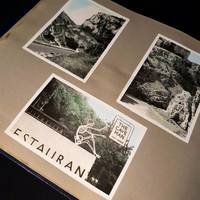
kp42Photographic Image. Very Good. Hardcover. Folio - over 12. 1950 PHOTOGRAPH-ALBUM. --EXTENSIVE PHOTO-TRAVELOGUE of Post-WW2 ENGLAND & WALES-- 158 hand-colored & tinted b&w photographs of the outdoors and topographical scenes in England's seaside towns of Devon & Cornwall street scenes near Canterbury Cathedral and lake areas in Wales. DEFTLY COMPOSED FINE QUALITY PHOTOGRAPHS-- beautifully hand-tinted and colored the photographs are annotated with handwritten captions. Photos are mostly 3"x 5" a few are 6"x 9" glue-mounted to heavy-stock paper with onionskins between in a vintage blue leather album folio size 10" x 12". There are a handful of postcards Cox's Cave Somerset and 12 mini- snapshots bought at Canterbury Cathedral. Wells Somerset/ Cathedral City/ Cheddar Gorge Somerset/ Dunster Somerset- yarn market Minehead Bristol Channel to Wales/ View from White Stones/ Selworthy/ N. Devon Combe Martin/ Hartland Quay/ Clovelly / N. Cornwall/ Rosemery/ Cape Cornwall/ The Longship Lighthouse Lamorna Cove/ Port Hleven/ Newlyn Harbour/ Fowey & Polruan/ St. Austell / Bodmin Moor/ Dartmoor/ Polperro Gunnislake/ Plymouth crossing S. Devon/ Buckfast Abbey/ Tor-bay Cirencester/ Ludlow/ Lake Bala in Gwynedd Wales/ Moel-y-Dinas/ Bylchan Denbighshiere/ Ormes Bay/ LLandrinio Bryn Eisteddfod/ Conway Harbour on the north coast of Wales/ Monmouth on Wye/ Marlborough Savernake Forest Beaulieu River Winchester/ Dover Castle/ Chalk Cliffs at Seaford/ Birling Gap/ Kent/ Chilham/ Canterbury. Wonderful condition. Hardcover
2016126071University Of Chicago Press. New. 2016. Hardcover. 022613105X . FREE UPGRADE to Courier/Priority Shipping Upon Request - IN STOCK AND IMMEDIATELY AVAILABLE FOR SHIPMENT - Flawless copy brand new pristine never opened -- with a bonus offer-- . University Of Chicago Press hardcover
26600483like new. unknown
26600483-nnew. unknown
2016206555Chicago IL and London: The University of Chicago Press 2016. First edition and first printing. Hardcover. 285 pages. An examination of two shows: "Contemporary Black Artists in American" at the Whitney Museum of American Art and "The DeLuxe Show" which was at a movie theater in Houston. Includes some color and black and white illustrations. A clean and tight near fine copy in black cloth boards and in a near fine dust jacket. The University of Chicago Press unknown
022613105X.Ghardcover. Good. Access codes and supplements are not guaranteed with used items. May be an ex-library book. hardcover
DADAX022613105XUniversity of Chicago Press 2016-12-20. Illustrated. hardcover. New. 7.00x1.10x9.00. Buy with confidence. Excellent Customer Service & Return policy. University of Chicago Press hardcover
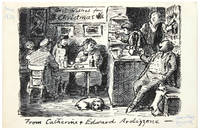
1973338255London: Privately Printed for Edward and Catherine Ardizzone 1973. First edition issued as a 1973 Christmas greeting card by Edward and Catherine Ardizzone. Very slightly rubbed at tips of corners with one small tan soil spot at one corner else a near fine copy. First edition issued as a 1973 Christmas greeting card by Edward and Catherine Ardizzone. Scarce no holding of this 1973 Christmas greeting card is located by OCLC. Seven examples of other Christmas cards illustrated by Ardizzone are included among the Edward Ardizzone papers housed by de Grummond Collection at the University of Southern Mississippi. This 1973 Christmas card pre-dates the earliest of those seven known examples the earlist of which was dated 1976. [Privately Printed for Edward and Catherine Ardizzone] unknown
1832D4411England probably Beckenham 1832-1862. Hardcover. Good. Written in several varying hands with 6 fine pencil drawing vignettes one laid-in loose one of Napoleons grave signed Chas. Cadby one pen and ink landscape vignette. A fine painting of sparrow and rose; several laid in drawings of architectural views mainly pastoral English scenes one view labeled Beckenham one view for the stake of William Hunt of Brentwood Protestant Marytyr died 1555 and landscape. Few clippings from publications stationery postcard views including those for Rydal Lake Westmoreland Beckenham Arundel Castle Grange Bridge Bolton Abbey Exeter Coniston Old Man and some Welsh landscapes loose or laid-in. two full-page pasted in photographs unidentified portraits likely of Bird or Cadby family and seven other photographs loose or laid in. Original paneled calf; covers detached but present spine mostly perished some contents loose. Written contents include copied poems of: Sun of the Sleepless by Lord Byron; From the Recesses by Sir John Bowring 1792-1872; a hymn: If all our hopes and all our fears by Sir John Bowring; Sweet is the balmy evening hour by Miss Mitford; It is not that my lot is low by Henry Kirke White; Byrons lament to H.K. White Unhappy White! While was in its spring And thy young muse just waved her joyous wing The spoiler came; and all thy promise fair Has sought the grave to sleep for ever there copied by Alfred Bird and dated 1862. Other original work by the Bird family include To the First of my brother Anemonies When Aging some lines from a memorial for Charles Cadby signed by Bird dated 1846 3 pages in memoriam of Albert Prince Consort died 1861 in the hand of Emily Bird dated 1862. Pasted to paper and mounted on doilies are 2 preserved dissected ivy-leaves said to be taken from Brompton cemetery. Commonplace books were collections of proverbial wisdom. Such books were essentially scrapbooks filled with items of every kind: medical recipes quotes letters poems proverbs and prayers. Many of the Bird familys commonplace book themes encircle death and mourning. Alfred Bird perhaps later Bird family member composed Fair but False in 1867 on unrequited love and in that same year The River of Life love poem to nature and another The Lords of Lochleaven. A memorial page left unfinished is for Emily Bird. Alfred and Emily Bird daughter born 1827 to Charles Cadby married at Westminster in April 1847. The book was passed between the two after their marriage where some nice Victorian themes are realized in the collection. Fine Victorian anthology tied to a single family. <br/><br/> hardcover
19732080602108201162Japan English Education Association 1973. Soft Cover. Fine. The book is in fine condition. Japan English Education Association paperback
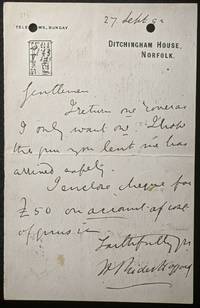
kx103Book. Very Good. Soft cover. 1892. 'AUTOGRAPHED LETTER' written and signed by H. RIDER HAGGARD -- dated September 27 1892 on Haggard's own letterhead from Ditchingham House Norfolk - interestingly there's an Egyptian cartouche on letterhead on upper left corner. 1892 letter from H. Rider Haggard is in exceptional condition-- single leaf 7" x 4.5" verso blank. Two punch holes at head creases from old folds. Eleven lines of script-- 'Gentlemen I return one camera as I only want one. I hope the you lent me has arrived safely. I enclose cheque for 50 on account of cost of - Faithfully yours H. Rider Haggard'. The letter come alongside two early American editions of Haggard's first novels 'King Solomon's Mines' and 'SHE: A History of Adventure'. These two novels had enormous popularity and their success led Haggard to serialize both books. 'King Solomon's Mines'- Published by JOHN B. ALDEN NY unabridged in 'The New York Novelist' Vol. II Nos. 5-8 July1885. Original printed wrapper-- contents clear and unmarked with occasional odd spot. 98 pages with 33 pages of ads including covers. The story of adventurer Allan Quatermain's life. 'SHE: A History of Adventure'- 1887 published by POLLARD & MOSS NY in 'The Echo Series' No. 5. Original printed blue wrappers-- edge worn a bit of creasing spine partially perished. In very good overall condition-- text-block evenly age toned contemporary rubber stamps on the cover. 237 pages with 7 pages of ads including covers. Paperback
2004004494Barnes & Noble 2004. Hardcover. Acceptable/Very Good. Lots of check marks and marginalia. <br/> <br/> Barnes & Noble hardcover
Gabrielsen, Egill DaaeIn Pristine Condition. unknown
198935460Nationalmuseum. New. 1989. 3926982144 . FREE UPGRADE to Courier/Priority Shipping Upon Request IN STOCK AND IMMEDIATELY AVAILABLE FOR SHIPMENT - 520- BRAND NEW FLAWLESS COPY NEVER OPENED - In English - 82 pp. 28 illustrations in color. -- with a bonus offer-- . Nationalmuseum unknown