MAROT, Clément.Livre Rare Book

1 412 résultats
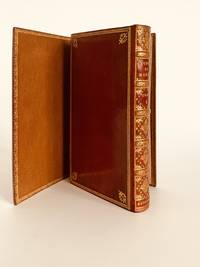
LCS-17645Précieux exemplaire à grandes marges de l’un des principaux livres de langue française du XVIe siècle conservé dans sa reliure parisienne en maroquin rouge doublé de maroquin bleu. A Lyon, à l’enseigne du Rocher, 1544. In-8 de 479 pp., (17) pp., 264 pp. Plein maroquin rouge, triple filet doré encadrant les plats, dos à nerfs richement orné, double filet doré sur les coupes, doublures de maroquin bleu à dentelle, tranches dorées sur marbrures. Reliure signée Belz-Niedrée. 160 x 104 mm.
LCS-1864043
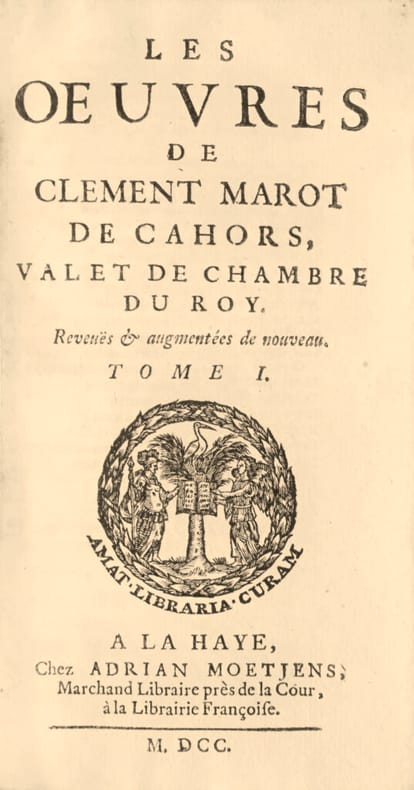
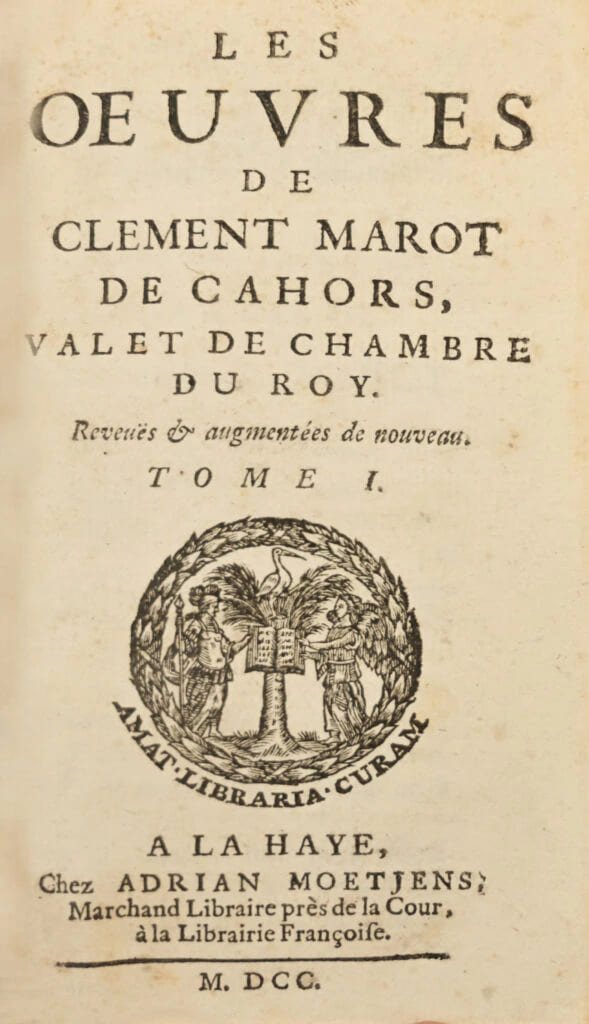
LCS-18490La plus précieuse et la plus bibliophilique édition du XVIIe siècle des "Œuvres" de Clément Marot. A la Haye, chez Adrian Moetjens, Marchand Libraire près de la Cour, à la Librairie Françoise, 1700. Deux volumes petit in-12 de xvi pp., 732 pp. et (8) ff. de table. Maroquin bleu nuit, aux angles, quadrilobes mosaïqués de maroquin rouge ornés, pièce centrale chantournée de maroquin beige et losange rouge, ornés de petits fers, large bordure de fleurons dorés, filet doré en encadrement, dos à nerfs ornés de fers et quadrilobes mosaïqués rouge et brun, tranches dorées sur marbrures. Reliure mosaïquée de l’époque. 133 x 74 mm.
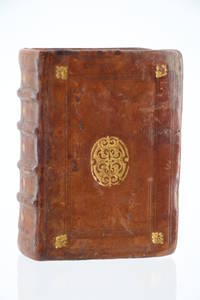
152974561529 Paris: Galliot, 1529. In-8: 9.5 x 14 cm, 8 ff. n. chiff. de titre, prologue et table, 403 ff. chiff. I à CCCCIII. Achevé d'imprimé en mars 1529 par Pierre Vidoue pour Galliot du Pré. Première édition en lettres rondes et deuxième édition de la version du Roman de la Rose établie par Clément Marot (1ère de 1526 in-fol.). Edition illustrée d'une vignette de titre et de 50 bois dans le texte nouvellement gravés pour cette édition. (Broudillon, The early editions of Roman de la Rose, Londres, 1906: p. 32). Reliure du XVIIIe siècle en veau. Dos à nerfs avec pièce de titre de maroquin lavallière et caissons ornés aux petits fers. Bel exemplaire.
LCS-1864047
LCS-1864012
LCS-A73«Jolie édition, la plus recherchée» des Œuvres de Clément Marot, écrit Brunet. La Haye, chez Adrian Moetjens, 1700. 2 tomes en 2 volumes petits in-12 de: I/ xvi pp., 318; II/ (1) f. de titre, pp. 321 à 732, (16) pp. de table. Reliés en plein maroquin olive de l’époque, filet doré encadrant les plats, dos à nerfs ornés de pièces d’armes figurant des soleils dorés dans les caissons, coupes décorées, roulette intérieure dorée, tranches dorées. Reliure de l’époque. 131 x 75 mm.
157942165Lyon, Jean de Tournes Imprimeur du Roy, 1579. 2 parties en 1 volume in-16 (120 x 75 mm) de (26)-597-(1) pp., 314 pp., (1) f. fleuron au verso, 22 figures dans le texte (42 x 55 mm), maroquin rouge, dos orné à nerfs maroquin rouge, dos orné à nerfs, filets et roulette dorée intérieurs, tranches dorées sur marbrure (Belz-Niédrée).
LCS-17773Bel exemplaire conservé dans ses éclatantes reliures en maroquin rouge de l’époque. La Haye, chez Adrian Moetjens, 1700.2 tomes en 2 volumes petits in-12 de : I/ xvi pp., 318 ; II/ pp. 319 à 732, (16) pp. de table. Reliés en plein maroquin rouge de l’époque, plats ornés de fleurons d’angle dorés reliés par des filets d’encadrement dorés en pointillés, dos à nerfs finement ornés, coupes décorées, roulette intérieure dorée, tranches dorées sur marbrures. Reliure de l’époque.134 x 74 mm.
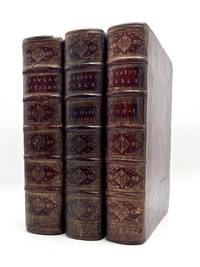
167586475A Charenton: Par Anthoine Cellier 1675. Fine. Par Anthoine Cellier A Charenton 1675 18.50 x 26.50 cm 3 volumes reliés Protestant edition of the Geneva Bible with various additions that characterize the composite impressions sold at Charenton besides The Psalms of David set to French rhyme by Clement Marot and Theodore de Beze with title page and numerous musical staves: History of the Holy Scripture of the Old and New Testament which contains the Summary of sacred chronology. This addition has its own title page placed after the general title. At the end of volume III several texts: The form of ecclesiastical prayers; Of baptism of the Lord's Supper Of the articles of faith; Of the ten commandments; Of the sacraments; Confession of faith. All these additions are present to characterize Protestant liturgy and its difference being both the orthodox Bible of Protestantism and a manual of faith. Although the Geneva Bible was revised several times its first revision is due to Theodore de Beze. A title vignette repeated on 2 volumes; the second tome having a different one printer's mark. A title vignette for the title page of the Psalms. Typographical ornaments. Contemporary full old red morocco binding. Richly decorated raised-band spine. Covers decorated in Du Seuil style with central frame and fleurons in the corner-pieces. Roll-tooled cuts and rich interior frieze. Gilt edges. Rubbing. A small fragment of headcap missing to the New Testament volume. To volume I lack to lower joint at tail. Corners slightly turned in. The first 6 leaves of the New Testament with dampstain traces fading and resembling more browning in inner margin and in the margins. None of the 3 volumes have a marbled endpaper before the title which in the 17th century is not necessarily a lack but is encountered relatively commonly. First endpaper before the title of volume I coming loose. Dampstain traces on the last 2 leaves of volume I. One of the last Protestant Bibles printed in France the last dating from 1678. Protestant worship having been prohibited in Paris and its surroundings by the Edict of Nantes Henri IV authorized the construction of a temple at Charenton near Paris. Parisian printers used this to distribute their editions of sacred texts. In 1671 the booksellers' shops at Charenton were burned down. Manuscript ex-libris: Wilhelmiire de Wrede Par Anthoine Cellier unknown
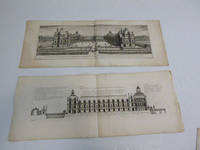
51-6667Paris De Buisine 1660. I. Small oblong folio. 33 x 25.5cm. Six leaves and text and 18 double page plates. Contemporary calf worn. The pages are now detached and the binding serves as a chemise. Perfect for display. Reference: Fowler no. 192 Edition A of C.1 f. of title on double page 1 f. on double page dedication 1 f. on double page reader's note 18 out of 19 engraved plates on double page views plans and sections. All the leaves and plates formerly mounted on tabs are detached. Brown calf decorated ribbed spine contemporary binding. Very worn binding. Scattered foxing and light marginal water stains.Work dedicated to the Château de Richelieu in Indre-et-Loire commissioned in 1631 by the Cardinal and completed by Armand-Jean Du Plessis Duke of Richelieu heir and nephew of the former to Jacques Lemercier circa 1582-1654 architect of the Sorbonne the Château de Rueil the Hôtel de Liancourt the town of Richelieu and the Palais Cardinal which became the Palais Royal. The château housed the cardinal's collections including his library before being almost entirely destroyed during the Revolution.OCLC Number / Unique Identifier:1064308985:.Contents:.1. 'Plan General Dv Chasteav de Richeliev' - Plan of the Chateau de Richelieu and the surrounding grounds showing internal rooms within the chateau courtyards the moat formal gardens and parterres and lawns. A scalebar below.2. View of the cour d'honneur at the Chateau de Richelieu the elegant courtyard enclosed on two sides by matching ranges with central domes and end pavilions the stately chateau beyond with pavilions at each corner and a domed corps de logis the curving walls of the basse-cour to the foreground ruined in the plate to show the view numerous figures throughout the scene including gentlemen riding to the hunt elegantly dressed figures in conversation and a man driving a donkey to the foreground.3. 'Plan du Chasteau et de la principale Cour de Richelieu.' - A plan of the ground floor and the inner court of the Chateau de Richelieu showing the numerous rooms such as bedchambers the chapel offices kitchens halls and latrines bridges across the moat. A scalebar below4. 'Veve Generale en Perspective dv Chasteav des Basse-Covrs de l'Anti-Covr des Parterres des Iardins &c. de Richeliev.' - View of the Chateau de Richelieu the elegant chateau beyond the cour d'honneur enclosed on two sides by matching ranges with central domes and end pavilions the basse cour enclosed on two sides by separate courtyards with stables and offices a wide avenue leading through towards the house the gardens and parterres beyond with woods to the left and right numerous figures throughout the scene the whole framed to the left and right with architectural elements with statues of sphinxes.5. 'Eleuation en Perspectiue de la principale Cour du Chasteau de Richelieu des feu Aisles de ses Pauillons de ses corps de logis et de son grand Escalier' - View of the inner court of the Chateau de Richlieu with the domed corp de logis beyond wings enclosing the courtyard with end pavilions with squared domes a bridge leading over the moat the parterres and woodlands beyond several figures throughout the scene.6. View of the Chateau de Richelieu from the parterres behind the chateau the corp de logis excised to allow the view wings enclosing the inner courtyard with end pavilions with squared domes the basse cour beyond the gatehouse parterres to the right and lawns to the left woodlands beyond figures throughout the scene7. 'Eleuation en Perspective du Chasteau de Richelieu de son Anti-cour de ses Bassecours et de tous ses autres accompagnemens.' - View of the Chateau de Richelieu the domed corp de logis beyond the moat parterres and lawns to the right the other buildings of the chateau beyond numerous figures throughout the scene includding two men with lances in the wide court beyond three men in the shade of the large tree to the left.8. View of the gardens of the Chateau de Richelieu the semi-circular court with elegant parterres surrounding a central fountain the pavillon de l'orangerie and the pavillon du chai et des caves to the left and right a wide avenue beyond leading through the thick woodlands mountains in the distance figures throughout the scene including noblemen and gardeners.9. 'Eleuation de la principale entreÌe du Chasteau de Richelieu.' - Elevation of the domed gatehouse of the Chateau de Richelieu Hercules and Mars in niches on either side and a statue of Louis XIII above with a statue of Fame crowning the dome the domed end pavilions of the wings to the left and right smaller buildings on either side.10. 'Eleuation du grand corps de logis et du grand Escalier veü de la Cour du Chasteau' - Elevation of the corp de logis of the Chateau de Richelieu the corp de logis with a domed central pavilion statues set into niches to the walls between the windows a cross-section through the wings to the left and right showing the interiors a cross-section through the moat to the left and right. A scalebar below.11. 'Eleuation de l'entreÌe du pont-leuis du Chasteau de Richelieu de l'ordonnance de Iaq. le Mercier Architecte du Roy.' - View of the domed gatehouse of the Chateau de Richelieu Hercules and Mars in niches on either side and a statue of Louis XIII above with a statue of Fame crowning the dome decorative rostra and urns to the walls the gates finely carved with steps leading up to them. A plan below.12. 'Eleuation de l'ordre Dorique du Dosme de la terraße dedans la cour du Chasteau de Richelieu de l'ordonnance de Jaques le Mercier Architecte du Roy.' - View of the domed gatehouse of the Chateau de Richelieu Venus and Apollo in niches on either side and a statue of three male figures above with a statue of Fame crowning the dome decorative rostra and urns to the walls. A plan below.13. 'Eleuation d'une partie des faces d'un coste de la Cour reduit aÌ‚ ses mesures et proportions.' - View of part of the wall of the Chateau de Richelieu highly decorative dormer windows to the roof with ciphers statues of Apollo and Hermes in the niches between the high windows to the piano nobile busts in round niches surrounded by wreaths and acanthus leaves on either side of the ground floor windows. A scalebar below.14. 'Eleuation et Profil du Salon de la Galerie et du grand Escalier.' - Elevation of part of the Chateau de Richelieu containing the gallery salon and grand staircase statues in niches between the windows to the piano nobile and busts below the end pavilions with high domes one with a cross-section showing the interior rooms the moat to the left with an arch a bridge to the right. A scalebar below.15. 'Eleuation de la demi lune ou de la principale entreÌe du Chasteau' and 'Eleuation de l'une des Faces de la Basse-cour.' - Elevation of the walls and arches of the basse-cour and the cour d'honneur at the Chateau de Richelieu the walls surmounted by stone balls. Two scalebars below.16. 'Eleuation de l'une des Faces de l'Anti-cour ou des Escuries du Manege couvert et des appartemens des Escuyers des Palefreniers et des autres valets d'escurie.' - View of the stables and offices at the Chateau de Richelieu the fine range with a central domed pavilion with a cupola above and smaller pavilions to the left and right with pointed roofs a wall extending to the left. A scalebar below.17. 'Eleuation et Profil d'un des costes qui regarde le Parc du Chasteau de Richelieu.' - Elevation of the Chateau de Richelieu from the garden the end pavilions with domes above and dormer windows to the roofs balustrades above the moat a bridge to the right and an archway to the left. A scalebar below.18. 'Eleuation des logemens des laboureurs et pour le betail.' - Elevation of the workers lodgings at the Chateau de Richelieu the low range with dormer windows to the roof a large end pavilion to the right and another on a smaller scale to the left with a cross-section showing the interior a balustrade extending to the right. A scalebar to the left.In -4 oblong de 1 f. de titre sur double page 1 f. sur double page dédicace 1 f. sur double page avis au lecteur 18 sur 19 planches gravées sur double page vues plans et coupes. Tous les feuillets et planches anciennement montés sur onglets sont détachés. Veau brun dos à nerfs orné reliure de l'époque. Reliure très usagée. Piqûres éparses et mouillures claires marginales.Ouvrage consacré au château de Richelieu en Indre-et-Loire commandé dès 1631 par le Cardinal et terminé par Armand-Jean Du Plessis duc de Richelieu héritier et neveu du premier à Jacques Lemercier vers 1582-1654 architecte de la Sorbonne du château de Rueil de l'hôtel de Liancourt de la ville de Richelieu et du Palais Cardinal devenu le Palais Royal. Le château abrita les collections du cardinal dont sa bibliothèque avant d'être presque entièrement détruit sous la Révolution. [Paris], [De Buisine], [1660]. I unknown
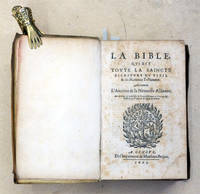
91212Genf Matthieu Berjon 1605. 8° Teil 1: Titelbl. m. Vignette in Holzschnitt 3 Bl. «Epistre»/Namensregister 412 Bl. 96 Bl. «Les livres apocryphes» 130 Bl. «Le nouveau testament» 2 Bl. «Interpretation de quelques mots et noms .»; Teil 2: Titelbl. m. Vignette in Holzschnitt o. P.: 2 Bl. «Epistre» 77 Bl. Noten Priv.-Pgt. d. Zt. m. Rückentitel von alter Hand seitlichen Überstehkanten Etw. wellig u. geschwärzt Kopf etw. rissig. Marginalien von alter Hand a. Vs. Blattränder etw. gebräunt tlw. etw. stockfl. Meist zweispaltiger Druck. - Der 2. Teil «Les Cl. pseaumes de David .» enthält: «Epistre» 2 Bl. «Les pseaumes de David .» 53 Bl. «Table .» 3 S. «La forme des prières ecclesiastiques .» und «La forme d’aministrerle baptesme» 8 S. «La manière de célébrer la Sainte cene» 2 S. «La forme de célébrer le mariage» und «De la visitation des malades» 3 S. «Lecatéchisme c’est à dire leformulaire d’instruire les enfans en la Chréstienté .» 23 S. «Oraison pour dire au matin en se leuant» 2 S. «Confession de foy faite d’un commun accord par les françois .» 7 S. - «Clément Marot um 1496 Cahors Midi-Pyrénées - September 1544 Turin Franzose. Sohn des Jean Dichters. Kammerherr. 1533 begann M. die Psalmen in franz. Verse zu übertragen von denen er 1542 rund dreissig veröffentlichte. Die Sorbonne verbot diese jedoch. Im Dezember 1542 ging M. ins Exil nach Genf wo er an der Herausgabe seiner Psalmen und anderer Dichtungen arbeitete. Johannes Calvin beantragte im Oktober 1543 im Rat einen Geldbetrag für M. der diesem die Vollendung seiner Nachdichtung der 150 Psalmen erlaubt hätte doch wurde das Gesuch abgelehnt. Noch im selben Jahr publizierte M. die ersten 50 Psalmen. Im Dezember verliess er aber Genf nachdem die Behörden ihn wegen eines Würfelspiels mit François Bonivard schikaniert hatten. Die Übertragung der Psalmen schloss Theodor Beza ab. Der 1561 erschienene Psalter bildet bis heute eine der Grundlagen der ref. Dichtung und Musik»; «Theodor Beza 24.6.1519 Vézelay Burgund - 13.10.1605 Genf. . Sein herausragendstes Werk sind jedoch seine Annotationen zum Neuen Testament Ausgaben von 1558 1565 1582 1598 zahlreiche Neuauflagen nach seinem Tod: Während über 40 Jahren immer wieder neu überarbeitet stehen seine Bibelkommentare am Ursprung der ref. Dogmatik des 17. Jh. Sein starker Einfluss als führende Gestalt der Reformation wurde durch die Lehrtätigkeit an der Genfer Akademie unterstützt wo er bedeutende Professoren François Hotman Lambert Daneau anzog. .» HLS. 010 Genf, Matthieu Berjon, 1605 unknown
167586475Par Anthoine Cellier | A Charenton 1675 | 18.50 x 26.50 cm | 3 volumes reliés
16831912190016Paris : Chez l'Auteur dans l'Hostel Royal des Invalides 1683. First Edition. Hardcover. Acceptable. Early work on French architecture Folio 44 x 29 cm. Bound in contemporary speckled calf Reliure de l'epoque. Rebacked. 12 51 p. Engraved title vignette. Interesting vignette of Louis XIV addressing supplicants on a battlefield seated on his throne on the dedication page. Twenty-nine copper-engraved plates many folding. The some plates have soiling and early repairs. Planches gravees par Jean Marot et Pierre Le Pautre. The book describes the Hotel commissioned as a hostel for disabled soldiers and built by L. Bruand 1671-4 and J. Hardouin Mansart 1676-1706. An early French hospital. <br> Armorial bookplate of Hans Sloane Esq. Sir Hans Sloane 1660-1753 was the physician to George I and a noted botanist and bibliophile. His collections formed the basis of the British Museum. Huston bookplate no. 1. <br> Refs: Kunstbibliothek Berlin Cat 2476; Brunet IV 486. RIBA Early printed books 2 1995 no. 1762; B. Jestaz L'Hotel et l'eglise des Invalides 1990; A. Mauban Jean Marot 1944. Catalogers note: According to RIBA the publishing history of this work is rather complicated with various attributions and numerous variants. In this example the text appears to be from 1683 but some of the plates may have been added at a later time. <br> This is an oversized or heavy book which requires additional postage for international delivery outside the US. Paris : Chez l'Auteur, dans l'Hostel Royal des Invalides hardcover
6078Two folding engraved plates. xi 5 390 pp. Small 8vo cont. red morocco with the arms in gilt of either the Comtesse de Provence or the Comtesse d’Artois see below triple gilt fillet round sides spine nicely gilt a.e.g. Paris: J.B. Coignard 1745.<br/> <br/> First edition and a lovely copy in contemporary red morocco with arms see below. “La Garaye 1675-1755 a Breton nobleman and philanthropist was a diligent chemist who devised a novel method of preparing medicines from minerals by long maceration with neutral salt solutions. He also extracted a number of principles from plants as from Peruvian bark the extract of which became known as the ‘essential salt of Garaye’.â€â€“Neville II p. 3.<br/> <br/> “He devised a rapid method of making black oxide of iron and prepared an ammoniacal chloride of mercury called ‘Tinctura mercurialis’.â€â€“Ferguson II p. 78 under Marot.<br/> <br/> It is unusual to find a book of this kind so finely bound. Daughters of King Victor-Amédée III of Sardinia Marie Joséphine 1753-1810 and Marie Thérèse 1756-1805 married respectively the Comte de Provence the future Louis XVIII and the Comte d’Artois the future Charles X. The arms for their bindings are identical “le graveur ayant oublié de représenter la bordure crénelée ou dentelée qui seule permet la discrimination†OHR 2517.<br/> <br/> A very fine copy with the smallest defects to the binding. This is the first issue of the book with the title dated 1745. There is a second issue which appeared a year later with a new title-page and different publisher.<br/> <br/> ⧠Duveen p. 391. Hoover 500. Partington III pp. 88-89. Quentin-Bauchart II pp. 309-331. unknown
6078Two folding engraved plates. xi 5 390 pp. Small 8vo cont. red morocco with the arms in gilt of either the Comtesse de Provence or the Comtesse d'Artois see below triple gilt fillet round sides spine nicely gilt a.e.g. Paris: J.B. Coignard 1745. First edition and a lovely copy in contemporary red morocco with arms see below. "La Garaye 1675-1755 a Breton nobleman and philanthropist was a diligent chemist who devised a novel method of preparing medicines from minerals by long maceration with neutral salt solutions. He also extracted a number of principles from plants as from Peruvian bark the extract of which became known as the 'essential salt of Garaye'."-Neville II p. 3. "He devised a rapid method of making black oxide of iron and prepared an ammoniacal chloride of mercury called 'Tinctura mercurialis'."-Ferguson II p. 78 under Marot. It is unusual to find a book of this kind so finely bound. Daughters of King Victor-Amédée III of Sardinia Marie Joséphine 1753-1810 and Marie Thérèse 1756-1805 married respectively the Comte de Provence the future Louis XVIII and the Comte d'Artois the future Charles X. The arms for their bindings are identical "le graveur ayant oublié de représenter la bordure crénelée ou dentelée qui seule permet la discrimination" OHR 2517. A very fine copy with the smallest defects to the binding. This is the first issue of the book with the title dated 1745. There is a second issue which appeared a year later with a new title-page and different publisher. ❧ Duveen p. 391. Hoover 500. Partington III pp. 88-89. Quentin-Bauchart II pp. 309-331. unknown books
157475825à Paris: Chez Claude Micard 1574. Fine. Chez Claude Micard à Paris 1574 8.50 x 12.50 cm 2 parties reliées en un volume Very rare first edition of this collection which brings together translations that had appeared separately before: The Georgics translated by Richard Le Blanc 1554 The Eclogues translated by Clément Marot for the first and by Richard Le Blanc for the nine others in 1555 and The Aeneid by Louis Des Mazures first complete edition in 1560. This edition includes the verse translation printed in roman type facing the Latin text printed in italics. Manuscript ownership inscription on the title page. Contemporary full calf binding spine with four raised bands decorated with gilt typographical motifs and blind fillets covers decorated with multiple blind ruling frames gilt fleurons at corners and stamped with a large gilt typographical motif at their center. Binding very skillfully restored. Chez Claude Micard hardcover
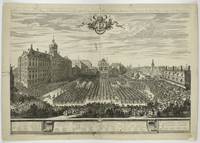
71935Amsterdam. J. Gole 1686. Very large broadside 69.0 x 100.0 cm consisting of two vertically combined sheets. Large very detailed engraving. Printed surface 65.0 x 93.0 cm. = Finely engraved and unusually accurate and detailed view of De Dam the Dam square in the heart of Amsterdam by the French-born Dutch architect designer and engraver Daniel de Marot 1661-1752. It depicts festivities related to a yearly fair centred on a parade by the city's civil guard. The names of the company captains are engraved in the inner side of a probably imaginary frieze or balcony on a building on the south side of the square east of Kalverstraat from where Marot must have witnessed the event. The title translates as "Amsterdams Fair showing the Civic Guard presenting to the great honourable Lord and Mayors". Quite probably the publisher J. Gole was related to Marot as the latter was a nephew of the Dutch later French cabinet maker Pierre Gole ca. 1620-1684. A few skilful repairs. An extraordinary clean complete copy with the two parts very well joined together. Hollstein 5; F.M. Supplement 2683A. unknown
157475825Chez Claude Micard | à Paris 1574 | 8.50 x 12.50 cm | 2 parties reliées en un volume
15519911551 1 Reliure romantique en plein veau bleu, fleuron central losangé à froid, dos lisse orné de filets et fers dorés, roulette dorée sur les coupes, tranches dorées. Reliure frottée. Titre et premier feuillet restaurés, mouillures. Titre courant atteint par le couteau du relieur. In-16, 11,1 x 7,2 cm, 398-[8] feuillets, numérotation au recto. Paris, Vivant Gaulterot, 1551.
15519911551 1 Reliure romantique en plein veau bleu, fleuron central losangé à froid, dos lisse orné de filets et fers dorés, roulette dorée sur les coupes, tranches dorées. Reliure frottée. Titre et premier feuillet restaurés, mouillures. Titre courant atteint par le couteau du relieur. In-16, 11,1 x 7,2 cm, 398-[8] feuillets, numérotation au recto. Paris, Vivant Gaulterot, 1551.
170027209La Haye Adrian Moetjens 1700 2 volumes in-12. xvi, 732 pp. 8 ff.n.ch.
1596Embry 156261Par Thomas Portau Niort: 1596. Two pages inked notes to added blank and recto of Frontis portrait at front and 14 pages of inked note to added blanks at rear. Occasional marginal inked notes pages trimmed close on upper edge but not obscuring any text binding rubbed but solid. Overall a charming copy of a scarce and early edition of Marot's works. Engraved Frontis. Probable 18th century calf spine decoratively gilt. 16mo. 4.5 x 2.75 inches. 16 1-548 1-148 4 149-248 32 last blank. Edited by Francois Miziere. Brunet III 1458. Par Thomas Portau, Niort: 1596. unknown books
170071751à La Haye The Hague: Chez Adrian Moetjens 1700. Fine. Chez Adrian Moetjens à La Haye The Hague 1700 8.50 x 14.20 cm 2 volumes reliés First collected edition. First issue copy with the 2 identical title fleurons enriched with 2 frontispiece portraits by Holbent but engraved by 2 different artists. Furthermore no edition of Marot's poetry is recorded between 1615 and this one. Edition that joins the Elzevier collection. Handsome edition the most sought-after according to Brunet III 1458 who adds: ""It is difficult to procure well-preserved copies with good margins and whose leaves do not have a reddish tint."" Ours is of appreciable freshness with some very rare and very pale minimal foxing. English binding in full glazed red morocco doublure of lemon morocco and signed with a red morocco pastille: St. James. London ca 1840. Raised spine richly decorated with antique 18th-century fleurons roulettes on the bands. Gilt titles. Dates at tail. Triple frame on boards with dotted fillets and corner fleurons. Interior frieze. Lemon morocco pastedowns with red morocco pastille of the binder. Japan paper endpapers. Gilt edges. A slip pasted on one of the endpages: ""From Renouard's Library"". Renouard Library. Magnificent copy. Chez Adrian Moetjens hardcover
165451762No place, No date, (Paris around 1654). 4to. (275 x 210 mm). Contemp. full mottled calf. Raised bands. Richly gilt spine. Titlelabel with gilt lettering. Corners neathly restored. 2 stamps on foot of titlepage (ouside engraving). With engraved ornamental title-page and 113 engravings on 107 (of 122 ??) sheets. Most of the plates signed (I. or J. or Ian, or Jean) Marot sculp. Wide-margined and internally clean.