1 986 résultats
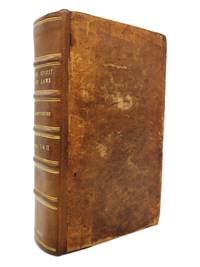
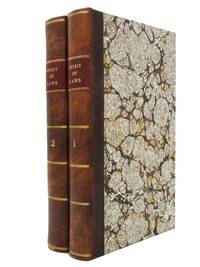
180239Worcester: Printed by Isaiah Thomas Jun. sold by him and by Mathew Carey Philadelphia; also by the various Booksellers throughout the United States 1802. First US edition. Two volumes. Modern calf-backed marbled boards. Some browning of text generally light. Contemporary signature of "Jos. Allen" on titles. Enclosed in an open-end cloth case. The first American edition of Montesquieu's 1689-1755 classic work of political theory that helped form the American Constitution. Montesquieu first published The Spirit of Laws in 1748 in his native France as De l'esprit des loix anonymously in part because his works were subject to censorship. The book became recognized for its pioneering work on political theory and comparative law and was rapidly translated into other languages and published throughout Europe. Thomas Nugent the influential Irish historian and travel writer published the first English translation in 1750 but in 1751 the Roman Catholic Church placed the work on its Index Librorum Prohibitorum "List of Prohibited Books". Despite the book's censorship it would profoundly influence the American Founding Fathers and other political luminaries including Alexis de Tocqueville. The book was first printed in America by the influential revolutionary war printer and anti-British journalist Isaiah Thomas 1749-1831 and was sold and distributed by Thomas and fellow American printer and economist Mathew Carey 1760-1839. Montesquieu spent nearly twenty-one years researching and writing The Spirit of Laws which covers a wide range of topics including law philosophy government social life and anthropology. Montesquieu's work is perhaps best remembered today for its influential thesis that the best means for promoting and safeguarding political liberty is through a constitutional government that is subject to a separation of powers-an insight that would directly shape the formation of the American constitutional republic. The work also famously argues that successful political institutions must reflect the social and geographical aspects of the communities they govern and that legitimate governments are those that preserve legality and individual civil liberties. This edition was the first to be printed in the newly born United States of America and sets forth Montesquieu's enduring thought in thirty-one books that are divided into six sections. A masterpiece of political theory and sociology and a defining part of American history. Printed by Isaiah Thomas, Jun. sold by him and by Mathew Carey, Philadelphia; also by the various Booksellers throughout the Uni hardcover
180213Worcester: Printed by Isaiah Thomas Jun. sold by him and by Mathew Carey Philadelphia; also by the various Booksellers throughout the United States 1802. First US edition. Two volumes bound as one. Contemporary calf. Re-backed new endpapers hole in upper margin of title and adjacent leaves tear on final leaf affecting a few letters browning and offsetting to pages. Enclosed in an open-end case of brown cloth with leather tips. The first American edition of Montesquieu's 1689-1755 classic work of political theory that helped form the American Constitution. Montesquieu first published The Spirit of Laws in 1748 in his native France as De l'esprit des loix anonymously in part because his works were subject to censorship. The book became recognized for its pioneering work on political theory and comparative law and was rapidly translated into other languages and published throughout Europe. Thomas Nugent the influential Irish historian and travel writer published the first English translation in 1750 but in 1751 the Roman Catholic Church placed the work on its Index Librorum Prohibitorum "List of Prohibited Books". Despite the book's censorship it would profoundly influence the American Founding Fathers and other political luminaries including Alexis de Tocqueville. The book was first printed in America by the influential revolutionary war printer and anti-British journalist Isaiah Thomas 1749-1831 and was sold and distributed by Thomas and fellow American printer and economist Mathew Carey 1760-1839. Montesquieu spent nearly twenty-one years researching and writing The Spirit of Laws which covers a wide range of topics including law philosophy government social life and anthropology. Montesquieu's work is perhaps best remembered today for its influential thesis that the best means for promoting and safeguarding political liberty is through a constitutional government that is subject to a separation of powers-an insight that would directly shape the formation of the American constitutional republic. The work also famously argues that successful political institutions must reflect the social and geographical aspects of the communities they govern and that legitimate governments are those that preserve legality and individual civil liberties. This edition was the first to be printed in the newly born United States of America and sets forth Montesquieu's enduring thought in thirty-one books that are divided into six sections. A masterpiece of political theory and sociology and a defining part of American history. Printed by Isaiah Thomas, Jun. sold by him and by Mathew Carey, Philadelphia; also by the various Booksellers throughout the Uni hardcover
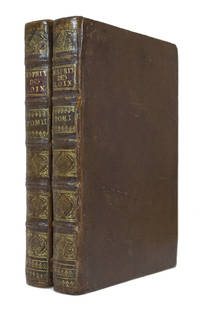
174866821Geneve: Chez Barillot & Fills 1748. One of the Most Remarkable Works of the Eighteenth Century"<br> <br> MONTESQUIEU Charles de Secondat Baron de. De l'Esprit des Loix ou Du rapport que les loix doivent avoir avec la constitution de chaque gouvernement les moeurs le climat la religion le commerce &c. à quoi l'auteur a ajouté. Des recherches nouvelles sur les loix Romaines touchant les Successions sur les Loix Françoises & sur les Loix féodales. Geneve: Chez Barillot & Fils i.e. Paris: Prault n.d. 1748.<br> <br> Second edition first issue same year as first edition 1748 with "Barillot" spelled with one "r" on title and with the errata leaf at the end of Volume I. Two quarto volumes. 8 xxiv 522 1 errata 1 blank; 4 xvi 564 pp.<br> <br> Contemporary calf expertly rebacked with original spines laid down corners and ends of spine renewed. Spines decoratively tooled in gilt in compartments with raised bands and brown and red morocco labels. Gilt board edges marbled endpapers. All edges stained red. Front joint of volume I just starting. Bookplates. Contemporary ink inscriptions o n titles and front fly-leaves. Occasional light marginal spotting. Still a v e r y good copy of this important work.<br> <br> In 1743 Montesquieu began work on De l'Esprit des Loix "one of the most remarkable works of the eighteenth century.It took four years to write and when it was finished almost all his friends advised him not to publish it. Montesquieu paid no attention and it was printed in Geneva in the autumn of 1748. It consists of six main sections the first dealing with law in general and different forms of government and the second with the means of government military matters taxation and s o on. The third deals with national character and the effect on it of climate; a subject of peculiar originality and the one most discussed at the time. The fourth and fifth deal with economic matters and religion; the last is an appendix on law-Roman feudal and modern French. The most distinctive aspect of this immense syllabus is its moderation: a quality not designed to achieve official approval in 1748. It is an always original survey which is neither doctrinaire visionary eccentric nor over-systematic.The scheme that emerges of a liberal benevolent monarchy limited by safeguards on individual liberty was to prove immensely influential.his theories underlay the thinking which led up to the American and French revolutions and the United States Constitution in particular is a lasting tribute to the principles he advocated" Printing and the Mind of Man. Kress 4920. Tchemerzine VIII p. 460. Printing and the Mind of Man 197 first edition.<br> <br> HBS 66821<br> <br> $3000. Chez Barillot, & Fills unknown
174866821ìOne of the Most Remarkable Works of the Eighteenth Centuryî MONTESQUIEU Charles de Secondat Baron de. De l'Esprit des Loix ou Du rapport que les loix doivent avoir avec la constitution de chaque gouvernement les moeurs le climat la religion le commerce &c. ‡ quoi l'auteur a ajoutÈ. Des recherches nouvelles sur les loix Romaines touchant les Successions sur les Loix FranÃoises & sur les Loix fÈodales. Geneve: Chez Barillot & Fils i.e. Paris: Prault n.d. 1748. Second edition first issue same year as first edition 1748 with ìBarillotî spelled with one ìrî on title and with the errata leaf at the end of Volume I. Two quarto volumes. 8 xxiv 522 1 errata 1 blank; 4 xvi 564 pp. Contemporary calf expertly rebacked with original spines laid down corners and ends of spine renewed. Spines decoratively tooled in gilt in compartments with raised bands and brown and red morocco labels. Gilt board edges marbled endpapers. All edges stained red. Joints starting. Bookplates. Contemporary ink inscriptions o n titles and front fly-leaves. Occasional light marginal spotting. Still a v e r y good copy of this important work. In 1743 Montesquieu began work on De l'Esprit des Loix ìone of the most remarkable works of the eighteenth century.It took four years to write and when it was finished almost all his friends advised him not to publish it. Montesquieu paid no attention and it was printed in Geneva in the autumn of 1748. It consists of six main sections the first dealing with law in general and different forms of government and the second with the means of government military matters taxation and s o on. The third deals with national character and the effect on it of climate; a subject of peculiar originality and the one most discussed at the time. The fourth and fifth deal with economic matters and religion; the last is an appendix on lawóRoman feudal and modern French. The most distinctive aspect of this immense syllabus is its moderation: a quality not designed to achieve official approval in 1748. It is an always original survey which is neither doctrinaire visionary eccentric nor over-systematic.The scheme that emerges of a liberal benevolent monarchy limited by safeguards on individual liberty was to prove immensely influential.his theories underlay the thinking which led up to the American and French revolutions and the United States Constitution in particular is a lasting tribute to the principles he advocatedî Printing and the Mind of Man. Kress 4920. Tchemerzine VIII p. 460. Printing and the Mind of Man 197 first edition. HBS 66821 $3000 Chez Barillot, & Fills hardcover books
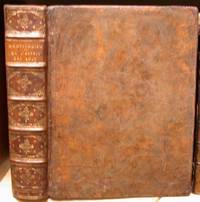
1749elala1368Leyden i.e. Lyon: "Chez Les Libraires Associés 1749. 1749. 2 Volumes in 1. 4to. pp. viii 14 369; 2 p.l. 306 i.e. 395 12 16Critique 50Défense. woodcut ornaments & initials. contemporary mottled calf rebacked corners renewed some light foxing & browning. few early ms. notes in margins & corrections in text. Early Edition of one of the most remarkable works of the eighteenth century treating the philosophical principles of law and government and the determining influence of geographical and economic factors on social thought customs and legal and political institutions. Montesquieu was unanimously advised by his friends including Helvétius and Fontenelle not to publish but he ignored them. Despite Helvétius criticism that the work was too moderate it was placed on the Index and the Sorbonne planned a regular censure of it. Although largely misunderstood or ignored by his contemporaries including the philosophes Montesquieus theories exerted a profound influence; "they underlay the thinking which led up to the American and French Revolutions and the United States Constitution in particular is a lasting tribute to the principles he advocated." PMM This edition is unrecorded in the bibliographies. cfBrunet III 1859-60. cfCioranescu 46153. cfGraesse IV 589. cfPrinting and the Mind of Man 197. Leyden [i.e. Lyon?]: "Chez Les Libraires Associés, 1749. unknown
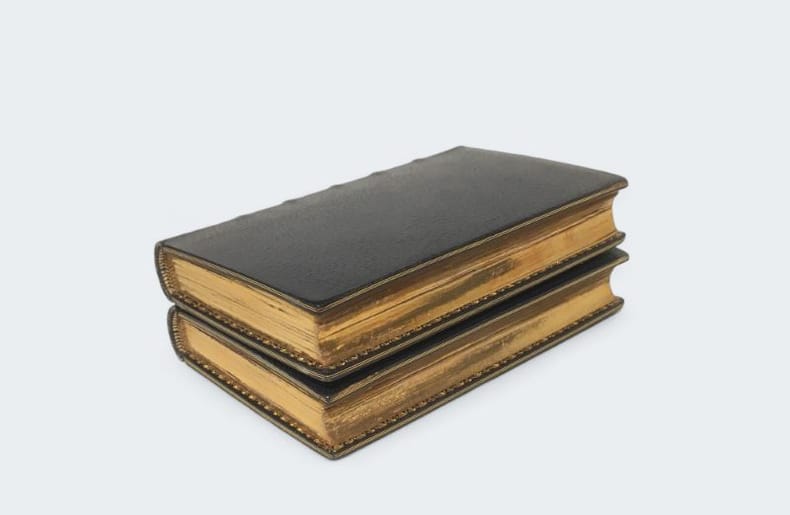
1721221721 Cologne, Pierre Marteau [i. e. Amsterdam, Susanne de Caux], 1721 ; 2 vol. petit in-12, 312 pp. ; 347 pp., maroquin bleu nuit janséniste, dos à nerfs, coupes filetées, dentelle intérieure, tranches dorées (Thivet).
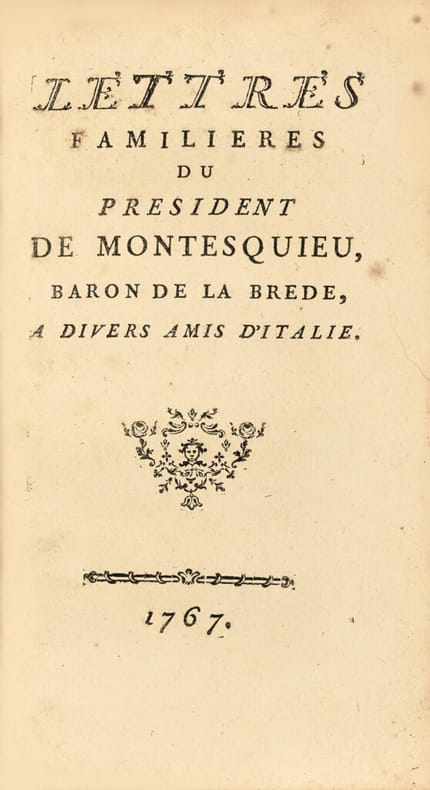
LCS-18566Charmant exemplaire conservé dans sa reliure de l’époque. S.l., 1767. In-12 de 236 pp., pp. 259 à 285, (1) f. d’Avis au Lecteur. Veau granité, double filet doré encadrant les plats, dos à nerfs orné de filets dorés, pièce de titre de maroquin rouge, tranches mouchetées. Reliure de l’époque. 164 x 94 mm.
1796SKU016<p>Bibliographical Description Author: MONTESQUIEU Charles-Louis de Secondat Baron de. Title: Œuvres de Montesquieu. Edition: A new and complete edition published in Paris 1796. Publisher: Paris Chez Plassan Régent-Bernard et Grégoire. De l'Imprimerie de Plassan. Date: L'An IV 1796. Format: 5 volumes. Grand in-4° Large Paper Copy. Technical Details: • Paper: Printed on Grand Papier Vélin high-quality wove paper. Characterized by exceptionally wide margins and a superior smooth finish. • Illustrations: Complete with a frontispiece portrait of Montesquieu in Volume 1 and 13 copperplate engravings plates after designs by renowned artists such as Moreau le Jeune Vernet and Peyron. • Maps: Includes the 2 large folding maps in Volume 1: "Carte pour l'intelligence du livre intitulé De l'Esprit des Loix" and "Supplément pour la Carte du Livre intitulé De l'Esprit des Loix". Both maps are dated L'An IV. • Binding: Housed in the original "Bradel" paper-covered boards from the period of publication. Spines feature the original red morocco leather labels with gilt-lettered titles and volume numbers. Marbled covers. Provenance & Cataloging Notes: • Includes contemporary handwritten bibliographical notes in pencil and ink on the endpapers identifying the set as a luxury "Grand Papier" copy. • Bearing the original bookseller's label from the prestigious Parisian firm Giraud-Badin. • Historically regarded as "La meilleure édition collective du XVIIIe siècle" The finest collected edition of the 18th century. Condition Report: The internal condition is remarkable; the pages are notably clean crisp and white with minimal foxing. The printing remains sharp. The original bindings show natural age-related wear to the spine ends capitals and corners but remain structurally sound and unrestored.</p> Plassan, Regent-Bernard, Gregoire hardcover
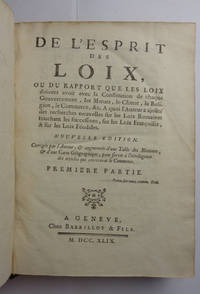
1749024094<p>Geneve: Barrillot 1749. Titolo completo: De l'Esprit des Loix ou du rapport que les loix doivent avoir avec la Constitution de chaque Gouvernement les Moeurs le Climat la Religion le Commerce etc. A quoi l'Auteur a ajouté des Recherches niouvelles sur les Loix Romaines touchant les Successions sur les Loix Françaises & sur les Loix Féodales. Nouvelle edition. Corrigé par l'Auteur & augmentée d'une Table des Matieres & d'une Carte Géographique pour servir à l'intelligence des articles qui concernent le Commerce. Volume premier … Second. -Due tomi in un volume in 4° 20x265 cm di XXIV-326pp; 2-XIV-398pp. Carta geografica del mondo ripiegata in fondo. Un taglio al margine bianco della pagina di titolo per togliere una firma che peraltro è presente nella pagina di titolo della Seconda parte. Una nota manoscritta su un foglio ripiegato cioè quattro facciate riporta delle Observations sur le Livre de l'Esprit des Loix tratte dall'Origine du despotisme oriental di Boulanger. Altre note manoscritte per tre fitte pagine sono contenute nell'ultimo foglio bianco e nel foglio bianco dietro la risguardia e sembrano tratte dal Mercure de France del Novembre 1753. Terza edizione. Legatura coeva in tutta pelle dorso a nervi ornato e dorato piccola mancanza di pelle a un angolo tagli rossi. Risguardie in carta marmorizzata. Condizioni molto buone tranne il taglio indicato a un margine bianco per questa preziosa edizione di pochi mesi successiva alla prima.</p> Barrillot
1751WFH1London: Noursse 1751. Vol. 1 upper cover almost detached other 2 vols. quite tight. Previous owner signature of ffep of all volumes. Scattered foxing throughout. Four years in the writing this work was immensely influential in development of the enlightened principles of human rights which underlay the political and humanistic principles of the American and French Revolutions and later representative governments. . Full-Leather. Fair/No Jacket. 12mo - over 6¾" - 7¾" tall. Trade. Noursse Hardcover books
48698Genève.Barillot.(sans date,ni auteur).2 vols.in-8 en reliure d'époque.522 et 564 p.Contre-façon de l'édition originale de 1748.Parue chez Laurent Durand à Paris en 1749. Etat satisfaisant.Reliure en veau moucheté avec pièces de titre et tomaison.Ouverture aux 2 mors sur le Tome 1 avec petit manque de cuir.Qques mouillures et rousseurs in-texte.Tranches rouges.
173420012205Amsterdam: Jaques sic Desbordes 1734. Full contemporary calf rebacked with gilt tooled calf leather spine label. Owner's name and "le President de Montesquieu" written in pen on title page very lightly rubbed at cover extremities small indentation scar on rear cover: a very nice VG copy. Small 8mo. Printing and the Mind of Man p 117: ". this was immediately recognized as a major work and it has remained the most popular and widely read of his books." ". neither its style a masterly succintness nor its matter . have lost their value. 1st edition. 1st issue. Title page in red and black. Le Petit p. 493-4. This copy has neither the mispagination error on pp. 101-104 nor the errata page. It does have all errors on pages 129 130 131 & 267. None of these is a cancel sheet. cf Brunet. Jaques [sic] Desbordes hardcover
181944126Paris Mnard et Desenne 1819 5 volumes in-12, demi-veau beige, plats de papier marbr, dos quatre nerfs orns de filets, fleurons et roulettes pousss or, et portant des pices de titre et de tomaison mosaques en maroquin vert; doublures et gardes de papier marbr, tranches lisses marbres (Thouvenin).Portrait-frontispice de l'auteur grav sur acier par Prevost. Trs agrable exemplaire dans des demi-reliures dcores signes de Thouvenin, un des plus grands relieurs du XIXe sicle qui exera Paris de 1813 1834.
1749228724Geneve: Barrillot & Fils 1749. Nouvelle Edition Second Edition . Full Leather. Very Good. Second edition appeared in 1749 one year after the initial publication of Montesquieu's very important work in the history of political philosophy. 463 510 pages Two volumes bound as one. Illustrated with scarce folding map. Brown leahter with red and gold titles gilt decoration on spine top and base of spine corners are lightly bumped and worn top front corner heavily bumped light wear to edges a few scuffs and marks clean marbled endpapers previous owner's names on leaf following ffep at head of full-title text is clean and unmarked binding and hinges are strong and unbroken crease to top corner of frep foxing to text edges as usual Very Good. Photographs are available upon request. Please do not hesitate to ask. A very good copy of an early edition of a work that has indelibly shaped the character of western political thought since its publication. <br/> <br/> Barrillot & Fils hardcover
42217A Amsterdam, chez Jaques Desbordes, 1734. Pt. in-8°, 277p. Reliure plein veau d'époque, dos à nerfs orné de fleurons dorés, pièce de titre beige.
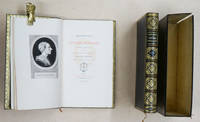
93720Paris Librairie des Bibliophiles 1886. 8° radiertes Fronti. Portrait des Autors XVIII 210 S.; 258 S. 16 Abb. Blauer Maroquin-Bd. der Zeit signiert: Chambolle-Duru Buchrücken goldgeprägt Rundumgoldschnitt. Vorsätze m. reicher floraler Zierleiste u. marmoriertem Papier in Schmuckschuber Scchuber angebrochen. Bücher minimalst fleckig Namenszug in Blei a. Leerblatt - sehr schöne Exemplare. Avec une péface par M. Tourneux. Dessins d’Ed. de Beaumont gravés a l’eau-forte par Boilvin.Nr. 156 von 170 numerierten Exemplaren auf papier de Holland.- René Victor Chambolle 1834-1898 et Hippolyte Duru 1803-1884 associés ou seuls sont des relieurs français ayant contribué à de nombreux ouvrages.- Charles-Louis de Secondat Baron de La Brède et de Montesquieu getauft am 18. Januar 1689 auf Schloss La Brède bei Bordeaux; † 10. Februar 1755 in Paris bekannt unter dem Namen Montesquieu war ein französischer Schriftsteller Philosoph und Staatstheoretiker der Aufklärung. Er gilt als Vorläufer der Soziologie bedeutender politischer Philosoph und Mitbegründer der modernen Geschichtswissenschaft.Obwohl der gemäßigte Vordenker der Aufklärung für seine Zeitgenossen auch ein erfolgreicher belletristischer Autor war ist er vor allem als geschichtsphilosophischer und staatstheoretischer Denker in die Geistesgeschichte eingegangen und beeinflusst noch heute aktuelle Debatten.1721 wurde er durch einen Briefroman berühmt den er 1717 begonnen hatte und der bald nach seinem anonymen Erscheinen in Amsterdam von der Zensur verboten wurde: die «Lettres persanes». Den Inhalt des Werkes das heute als ein Schlüsseltext der Aufklärung gilt bildet die fiktive Korrespondenz zweier fiktiver Perser die von 1711 bis 1720 Europa bereisen und Briefe mit Daheimgebliebenen wechseln. Hierbei schildern sie – und dies ist der aufklärerische Kern des Werkes – ihren Korrespondenzpartnern die kulturellen religiösen und politischen Verhältnisse vor allem in Frankreich und besonders in Paris mit einer Mischung aus Staunen Kopfschütteln Spott und Missbilligung was spätestens seit Pascals «Lettres provinciales» ein beliebtes Verfahren war um den Leser zum Teilhaber einer Sicht von außen zu machen und ihm so einen kritischen Blick auf das eigene Land zu ermöglichen. Montesquieu behandelt in dieser Schrift verschiedene Themen wie Religion Priestertum Sklaverei Polygamie Benachteiligung der Frauen u. a. m. im Sinne der Aufklärung. Darüber hinaus ist in die Lettres ein romanesker Handlungsstrang um die daheim gebliebenen Haremsdamen eingeflochten der an dem Erfolg des Buches nicht ganz unbeteiligt war. 010 Paris, Librairie des Bibliophiles, 1886 unknown
1751WFH1ALondon: A Londres Chez Noursse 1751. Full sprinkled contemporary calf binding 5 raised bands gilt. AE red sprinkled red and white handsewn endbands. Expertly restored and with new red morocco gilt titling pieces. Tome number panels worn. Contains a pristine version of the scarce folding map of the world in Vol. 1. This edition was corrected by the author and augmented by a table of contents. One of the most significant political works of the 18th century first published in Geneva in 1748. It was put on the Index in 1751 and condemned by the Sorbonne. Noted in Printing and the Mind of Man London 1963 where it is said to have ".deeply influenced the political thinking which led to the French and the American Revolutions.". Nouvelle Edition. Full-Leather. Good/No Jacket. 16mo - over 5¾" - 6¾" tall. Trade. A Londres Chez Noursse Hardcover books
ORD-7526Amsterdam. Jacques Desbordes. 1734. Petit in-8 (97 x 157mm) plein maroquin vert bouteille, dos à 5 nerfs, titre en fines lettres or sur le dos, double filet or sur les coupes, triple roulette bordant les gardes en papier jaspé, tranches dorées, 2ff., 277 pages et 1f. d'errata qui ne se trouve pas dans tous les exemplaires. Edition originale avec toutes les caractéristiques signalées par Tchemerzine IV, 927 et Le Petit, 493-494. Très bel exemplaire dans une agréable reliure de Hardy-Mennil.
51836Et des recherches nouvelles sur les loix romaines touchant les successions..Leyde.1749.In-4 relié d'époque.2 tomes en 1: 369 et 396 pages.Tranches rouges.Reliure en veau marbré à restaurer. Certaines rousseurs .
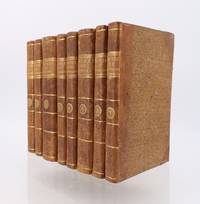
179289730Deux-Ponts: Société typographique 1792. Fine. Société typographique Deux-Ponts 1792 10 x 16.8 cm 8 volumes reliés New edition revised corrected and considerably enlarged.Contemporary bindings in half mottled fawn calf over corners smooth spines gilt with fillets morocco title and volume labels brown paper-covered boards sprinkled edges.Some minor rubbing to the spines a few corners slightly bumped.L'Esprit des lois occupies volumes I to IV; La Défense de l'Esprit des lois volume V with a general index; Lettres persanes volume VI; volume VII gathers the Considérations and related pieces; volume VIII contains the posthumous works.This collected edition of Montesquieu's works offers no particular bibliographical peculiarities in its contents but constitutes a very rare Zweibrücken printing bearing the false Saarbrücken imprint: Deux-Ponts was in fact an autonomous and conveniently located printing centre by virtue of its proximity for introducing into France titles that could not otherwise evade censorship. Société typographique hardcover
52432New York: Hafner Press. As New. N.D. Paperback. FREE UPGRADE to Courier/Priority Shipping Upon Request IN STOCK AND IMMEDIATELY AVAILABLE FOR SHIPMENT - Text pristine clean & unmarked crisp tight to the spine - lxix 683 pages. ND; copyright 1949. -- with a bonus offer-- . Hafner Press paperback
17839140Chez Guillaume De Bure Fils aîné, Quai Des Augustins 8 x 13,2 A Londres et Se Trouve à Paris 1783 Petit volume in-18, reliure plein maroquin glacé vert de la fin du XVIIIe ou tout début XIXe siècle, dos lisse orné d'un fin décor à la grotesque et de filets dorés, pièce de titre de maroquin rouge, "1783" doré en queue, plats encadrés d'un mince filet doré, coiffes guillochées et dorés, filet doré sur les coupes, mince roulette dorée en chaînette intérieure, pages de garde cailloutées, tranches dorées, beau papier vergé d'Annonay, 143 pp. Deux gravures d'après Le Barbier précédées de leur tirage avant la lettre. L'ouvrage provient de la bibliothèque de Jean-Jacques Debure (1765-1853), libraire de la Bibliothèque royale sous la Restauration et fils de Guillaume Debure (1734-1820), comme l'atteste la note manuscrite au dos de la première garde : "collationné complet, le 19 février 1826, 1031, J.J. de Bure l'aîné". Sur la même garde, se trouve l'annotation "c.d.m.m 482", [cabinet de ma mère] qui rappelle que ce petit volume finement relié faisait partie de la bibliothèque de sa mère, née Marguerite Barrois dans une famille de libraires. Bibliophile et collectionneuse, aidée par Guillaume Debure, elle a légué sa bibliothèque à son fils aîné. A la mort de Jean-Jacques Debure, sa bibliothèque fit l'objet d'une grande vente publique (décembre 1853). Notre exemplaire correspond au N°898 (p. 143 du catalogue). "Arsace et Isménie" aurait été rédigé dans les années 1748-1750. Le roman de Montesquieu ne paraîtra chez Guillaume Debure qu'en 1783 dans les "Oeuvres posthumes", publiées par son fils Jean-Baptiste de Secondat. Notre exemplaire en est la rare édition séparée, parue la même année. Le conte oriental est à la mode au XVIIIe siècle. Faut-il ne voir dans le roman de Montesquieu, qu'un conte qui se déroule dans un royaume à la monarchie tempérée, pays paradisiaque, où fleurit l'amour, dans une nature idyllique ? La critique récente (Catherine Volpilhac, Dictionnaire Montesquieu, art. Arsace et Isménie) rappelle que la fin tragique - le suicide d'Arsace par amour pour Isménie) a été occultée dans l'édition posthume de 1783, comme l'atteste le manuscrit retrouvé à la Bibliothèque de Bordeaux, et donne à ce petit roman une toute autre dimension. Très bel et rare exemplaire. Deux ex-libris (Lessore et "Espérer c'est jouir") sur le premier contre plat. (RochBbis2) PHOTOS NUMERIQUES DISPONIBLES PAR EMAIL SUR SIMPLE DEMANDE-DIGITAL PHOTOGRAPS MAY BE AVAILABLE ON REQUEST
17839140Chez Guillaume De Bure Fils aîné, Quai Des Augustins 8 x 13,2 A Londres et Se Trouve à Paris 1783 Petit volume in-18, reliure plein maroquin glacé vert de la fin du XVIIIe ou tout début XIXe siècle, dos lisse orné d'un fin décor à la grotesque et de filets dorés, pièce de titre de maroquin rouge, "1783" doré en queue, plats encadrés d'un mince filet doré, coiffes guillochées et dorés, filet doré sur les coupes, mince roulette dorée en chaînette intérieure, pages de garde cailloutées, tranches dorées, beau papier vergé d'Annonay, 143 pp. Deux gravures d'après Le Barbier précédées de leur tirage avant la lettre. L'ouvrage provient de la bibliothèque de Jean-Jacques Debure (1765-1853), libraire de la Bibliothèque royale sous la Restauration et fils de Guillaume Debure (1734-1820), comme l'atteste la note manuscrite au dos de la première garde : "collationné complet, le 19 février 1826, 1031, J.J. de Bure l'aîné". Sur la même garde, se trouve l'annotation "c.d.m.m 482", [cabinet de ma mère] qui rappelle que ce petit volume finement relié faisait partie de la bibliothèque de sa mère, née Marguerite Barrois dans une famille de libraires. Bibliophile et collectionneuse, aidée par Guillaume Debure, elle a légué sa bibliothèque à son fils aîné. A la mort de Jean-Jacques Debure, sa bibliothèque fit l'objet d'une grande vente publique (décembre 1853). Notre exemplaire correspond au N°898 (p. 143 du catalogue). "Arsace et Isménie" aurait été rédigé dans les années 1748-1750. Le roman de Montesquieu ne paraîtra chez Guillaume Debure qu'en 1783 dans les "Oeuvres posthumes", publiées par son fils Jean-Baptiste de Secondat. Notre exemplaire en est la rare édition séparée, parue la même année. Le conte oriental est à la mode au XVIIIe siècle. Faut-il ne voir dans le roman de Montesquieu, qu'un conte qui se déroule dans un royaume à la monarchie tempérée, pays paradisiaque, où fleurit l'amour, dans une nature idyllique ? La critique récente (Catherine Volpilhac, Dictionnaire Montesquieu, art. Arsace et Isménie) rappelle que la fin tragique - le suicide d'Arsace par amour pour Isménie) a été occultée dans l'édition posthume de 1783, comme l'atteste le manuscrit retrouvé à la Bibliothèque de Bordeaux, et donne à ce petit roman une toute autre dimension. Très bel et rare exemplaire. Deux ex-libris (Lessore et "Espérer c'est jouir") sur le premier contre plat. (RochBbis2) PHOTOS NUMERIQUES DISPONIBLES PAR EMAIL SUR SIMPLE DEMANDE-DIGITAL PHOTOGRAPS MAY BE AVAILABLE ON REQUEST
SPLi2231Genève Barillot et Fils 1749
22756Paris, Dalibon/Henri Feret (imprimerie de Marchand du Breuil), 1827 ; 8 tomes in-8° (232 ??), demi-maroquin à grain long rouge à coins, dos à nerfs, plats décorés et dorés, demi-caissons décorés à froid en relief, roulette et palette dorées, titres et tomaison dorés (Bibolet) ; XV, 411 ; 483 ; 495 ; 488 ; 476 ; 464 ; 460 ; 544 pp. ; et portrait par Dévéria, gravé à l'eau forte par H.C. Muller, tiré sur chine à part et collé.