980 résultats
1981R260158398FRANCE LOISIRS. 1981. In-8. Cartonnage d'éditeurs. Etat d'usage, Couv. légèrement passée, Dos satisfaisant, Intérieur frais. 397 pages. Toile verte, titres et filets dorés. Quelques photos en noir et blanc dans et hors texte.. . . . Classification Dewey : 840-Littératures des langues romanes. Littérature française
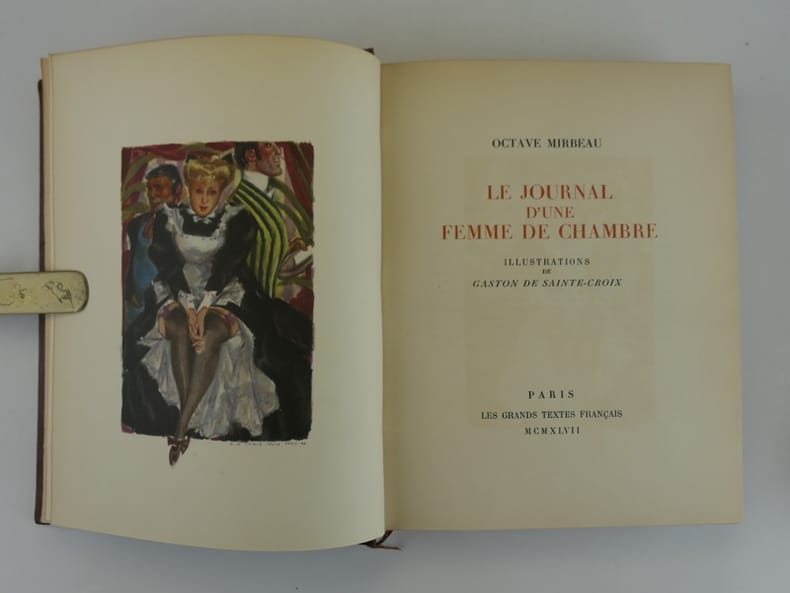
194764197Paris, Les grands textes français, 1947, in-4, demi-reliure à bandes, dos à 4 nerfs, titre à l'or, tête dorée, , 383 pages. Couverture conservée. Un des 2000 ex. sur Lana, sur un tirage de 2250 ex. 18 hors-texte en couleurs et vignettes en noir dans le texte.
190236657Charpentier | Paris 1902 | 13 x 19 cm | relié
R260167415FASQUELLE. NON DATE. In-12. Broché. Etat d'usage, Couv. légèrement passée, Dos satisfaisant, Intérieur frais. 288 pages. Bandes de papier kraft collées au dos et en bordure des plats. Etiquettes et tampons de bibliothèque.. . . . Classification Dewey : 792-Théâtre
189815627Charpentier & Fasquelle | Paris 1898 | 12 x 18.50 cm | broché
190145873Charpentier | Paris 1901 | 12 x 18.50 cm | relié
1933100141327Bibliotheque Charpentier 1933 in12. 1933. Broché.
LRB_008MIRBEAU (Octave). LETTRE AUTOGRAPHE SIGNÉE [À PAUL HERVIEU]. 1 page sur un bifeuillet de papier bleuté à en-tête imprimé « 3 boulevard Delessert », 18 × 13,5 cm. Remarquable lettre écrite en pleine Affaire Dreyfus. « [Paris, 21 février 1898] Cher ami, Vous n’avez pas à être touché de ces mots stupides sur vous. Hélas, depuis cette affaire, je ne puis plus rien faire ; je ne pourrais écrire que là-dessus, et je n’en ai pas le moyen. Aujourd’hui, à la sortie, nous avons été fortement hués et poursuivis. C’était admirable ! Mercredi je serai encore au procès. Pour le dernier jour, je ne puis abandonner cet admirable Zola. Ah ! J’aurais voulu que vous fussiez là, vendredi et samedi ! Ç’a été une chose que vous ne pouvez concevoir. Et vos yeux de voyant eussent vu le crime ! Le crime de Pellieux et de Boisdeffre ! Aussi visiblement que vous me voyez quand je suis devant vous. Ce sont de bien grands bandits. Et cet Esterhazy ! Ah ! Lui du moins, c’est un gredin magnifique ! Je vous embrasse bien tendrement. Octave Mirbeau » Cette lettre est restée inédite jusqu’en 2017, lors de la parution d’un article de Pierre Michel : « Lettres inédites d’Octave Mirbeau à Paul Hervieu », dans les « Cahiers Octave Mirbeau », n° 24, 2017, pages 163-207. Cette lettre y figure sous le numéro 51. C’est cet article qui nous permet d’apporter les précisions suivantes : — « [c]es mots stupides sur vous » : allusion à un article paru dans le Journal du 20 février. — Zola se trouve en procès depuis le 7 février et Mirbeau, qui l’accompagne chaque jour, lui tient parfois lieu de garde du corps. — « [j]e n’en ai pas le moyen » : « Les colonnes du Journal lui seraient fermées s’il y développait des analyses dreyfusardes » (Pierre Michel, article cité). — « à la sortie » : à la sortie du tribunal, où le procès de Zola s’est tenu du 7 au 23 février 1898. — « Mercredi » désigne le 23 février — il s’agit bien du dernier jour du procès de Zola.
189486567S. n. | Paris s. d. [ca 1894] | 11 x 17.50 cm | une page
189043791G. Charpentier & Cie | Paris 1890 | 12 x 19.50 cm | relié
189061937G. Charpentier & Cie | Paris 1890 | 12 x 18.50 cm | broché sous chemise et étui
19269782845239232in-8 broché. Exemplaire n°907 sur papier de Rives, collection 'Les Beaux Livres' n°32. Illustré par Fernand Siméon. | Etat : Bon état général (Ref.: REF99909)
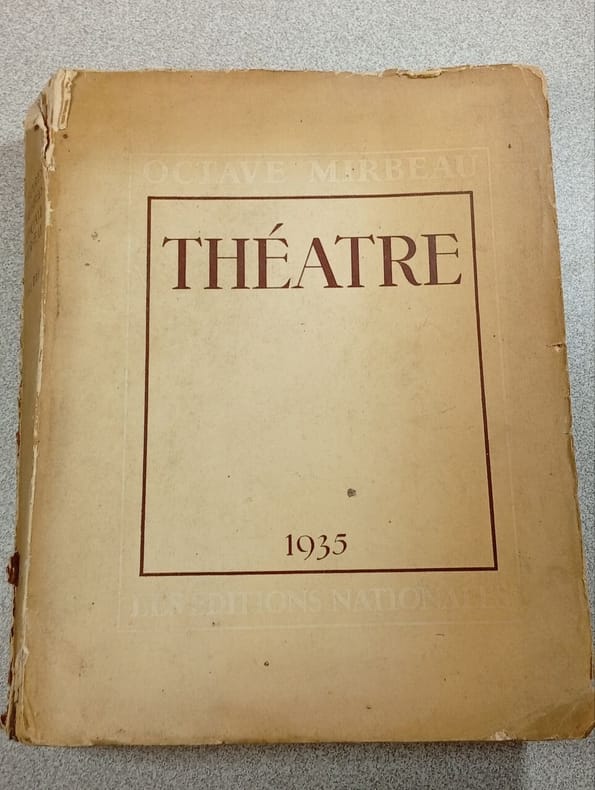
500323617Les Éditions Nationales Sans date.
192058406Flammarion | Paris 1920 | 13 x 19 cm | broché
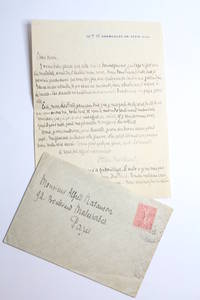
190673674Vichy 1906. Fine. Vichy 10 août 1906 11.60 x 18 cm une feuille Moving autograph letter signed by Octave Mirbeau addressed to the playwright and founder of the Revue Blanche Alfred Natanson when he had just lost his father. 18 lines in black ink on a folded sheet envelope included. ""Mon cher Fred Je ne vous ai pas écrit ; mais vous savez bien qu'il n'y a pas dans mon cur la moindre indifférence. Thadée a dû vous dire combien nous avions partagé votre douleur. Thadée a dû vous dire souvent quelle amitié profonde j'ai pour vous. Peut-être ne vous l'ai-je pas exprimée telle que je la sens mais je la sens fortement et je voudrais bien que vous la sentiez aussi un peu. C'est un gros chagrin que de ne plus être aimé de ceux qu'on aime véritablement. Vous allez partir ; et vous faîtes bien de quitter cette maison où durant plus de six mois vous avez assisté à l'horrible agonie de votre pauvre père. Tâchez de travailler pour notre joie à tous. et revenez avec une belle uvre."" ""My dear Fred I have not written to you; but you know well that there is not the slightest indifference in my heart. Thadée must have told you how much we shared your grief. Thadée must have told you often what deep friendship I have for you. Perhaps I have not expressed it to you as I feel it but I feel it strongly and I would very much like you to feel it too a little. It is a great sorrow to no longer be loved by those one truly loves. You are going to leave; and you do well to quit this house where for more than six months you witnessed the horrible agony of your poor father. Try to work for all our joy. and return with a beautiful work."". Mirbeau was particularly close to the group of the Revue Blanche since its launch in Paris in 1891. But it was since the Dreyfus affair that his intimate and lasting friendship with the Natanson brothers Thadée Alexandre and Alfred was strengthened. After aesthetic disagreements about Art Nouveau and the Nabis Mirbeau finally reunited with Thadée around 1900 in a now common inclination for the young Nabis painters of the Revue Blanche Bonnard Vallotton and Vuillard. The Revue Blanche played an essential role in France as confirmed by historian Paul-Henri Bourrelier: ""Most of the most prominent writers painters musicians politicians and intellectuals of the late 19th and early 20th centuries collaborated with it or were associated with it. Created financed and directed by the three Natanson brothers young Polish Jews with the enthusiastic complicity of their classmates from the Condorcet lycée La Revue blanche quickly became a place of debate on all subjects that stirred France. It waged political battles under the impulse of anarchists like Fénéon Mirbeau; socialists such as Blum G. Moch Péguy; Dreyfusards and founders of the League of Human Rights like Reinach and Pressensé."" unknown
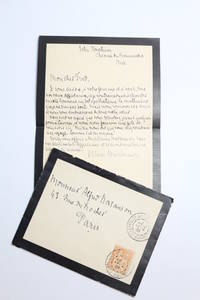
190173686s. l. cachet de Seine-et-Marne 1901. Fine. s. l. cachet de Seine-et-Marne 15 Septembre 1901 12.50 x 17.60 cm une feuille Moving autograph letter signed by Octave Mirbeau addressed to the playwright and founder of the Revue Blanche Alfred Natanson. 15 lines in black ink on a folded sheet mourning paper with black border watermarked ""JDL & cie"" envelope attached. ""Thank you for your kind letter. I already knew from Alexandre Natanson how worried you had been about my wife's condition. It is a delicious joy when one's heart is tormented to know that one has friends like you like all of you the good people of the Relai. Please tell your wife that mine was very touched by her friendship. And embrace everyone with effusion. Also tell Olga Alexandre Natanson's wife and Misia Thadée's wife that we love them tenderly and Alexandre that he is a charming friend."" Long postscript on the poor health of his wife the former actress Alice Régnault: ""Yesterday was not a good day and the wound on her arm presented a nasty appearance. Today it is a little better. But it is something to watch very closely. Movements are made a little more easily but she still suffers extremely at night at the slightest play of the muscles"". Mirbeau had been particularly close to the Revue Blanche group since its launch in Paris in 1891. But it was during the Dreyfus affair that his intimate and lasting friendship with the Natanson brothers Thadée Alexandre and Alfred was strengthened. After aesthetic disagreements over Art Nouveau and the Nabis Mirbeau finally reunited with Thadée around 1900 in a now shared inclination for the young Nabis painters of the Revue Blanche Bonnard Vallotton and Vuillard. The ""Relai"" corresponds to a former coaching inn in Villeneuve-sur-Yonne purchased by Thadée Natanson in 1897 which became a destination for all their writer and artist friends. One could encounter the Nabis painters Vuillard Vallotton Bonnard or Roussel as well as Toulouse-Lautrec. The Revue Blanche played an essential role in France as historian Paul-Henri Bourrelier confirms: ""Most of the most prominent writers painters musicians politicians intellectuals of the late nineteenth and early twentieth centuries collaborated with it or were associated with it. Created financed and directed by the three Natanson brothers young Polish Jews with the enthusiastic complicity of their fellow students from the Condorcet lycée La Revue blanche quickly became a place of debate on all the subjects that stirred France. It led political battles under the impetus of anarchists like Fénéon Mirbeau; socialists such as Blum G. Moch Péguy; Dreyfusards and founders of the League of Human Rights like Reinach and Pressensé."" unknown
190673701Cormeilles-en-Vexin 1906. Fine. Cormeilles-en-Vexin 22 août 1906 ou 1908 12.60 x 17 cm une feuille Friendly autograph letter signed by Octave Mirbeau addressed to the playwright and founder of the Revue Blanche Alfred Natanson. 12 lines in black ink on a folded sheet letterhead paper ""Cormeilles-en-VexinS.&O."" envelope included. ""Cher ami J'avais bien pensé que cette vieille bonne femme qui tape si fort sur les matelas avait du écorcher mon nom. Mais dans l'incertitude car je pouvais penser aussi que vous étiez pris avec quelqu'un de très sérieux . Ceci mon cher Fred pour vous dire que je suis parti de chez vous triste de ne pas vous avoir vu voilà tout et sans le moindre sentiment mauvais. Vous savez que j'ai pour vous une affection solide et je vous connais assez gentil pour moi pour me permettre de supposer des sottises. ."" ""Dear friend I had indeed thought that this old good woman who beats the mattresses so hard must have mangled my name. But in uncertainty for I could also think that you were busy with someone very serious . This my dear Fred to tell you that I left your house sad not to have seen you that's all and without the slightest bad feeling. You know that I have a solid affection for you and I know you well enough to be kind to me to allow myself to suppose foolish things. ."" With an amusing postscript: ""Ne prêtez pas attention à ce gribouillage. L'auto a je ne sais pas quoi j'y travaille. et n'y fait rien de bon. d'ailleurs. Et mon mécanicien se prend la tête à deux mains noires d'huile grasse ."". ""Don't pay attention to this scribbling. The car has something wrong I don't know what I'm working on it. and it's not doing any good. anyway. And my mechanic is holding his head in his two hands black with greasy oil ."". Mirbeau was particularly close to the Revue Blanche group since its launch in Paris in 1891. But it was from the Dreyfus affair that his intimate and lasting friendship with the Natanson brothers Thadée Alexandre and Alfred was strengthened. After aesthetic disagreements about Art Nouveau and the Nabis Mirbeau finally reunited with Thadée around 1900 in a now common inclination for the young Nabis painters of the Revue Blanche Bonnard Vallotton and Vuillard. The Revue Blanche played an essential role in France as confirmed by historian Paul-Henri Bourrelier: ""Most of the most prominent writers painters musicians politicians intellectuals of the late 19th and early 20th centuries collaborated with it or were associated with it. Created financed and directed by the three Natanson brothers young Polish Jews with the enthusiastic complicity of their classmates from the Condorcet lycée La Revue blanche quickly became a place of debate on all subjects that stirred France. It led political battles under the impulse of anarchists like Fénéon Mirbeau; socialists such as Blum G. Moch Péguy; Dreyfusards and founders of the League of Human Rights like Reinach and Pressensé."" unknown
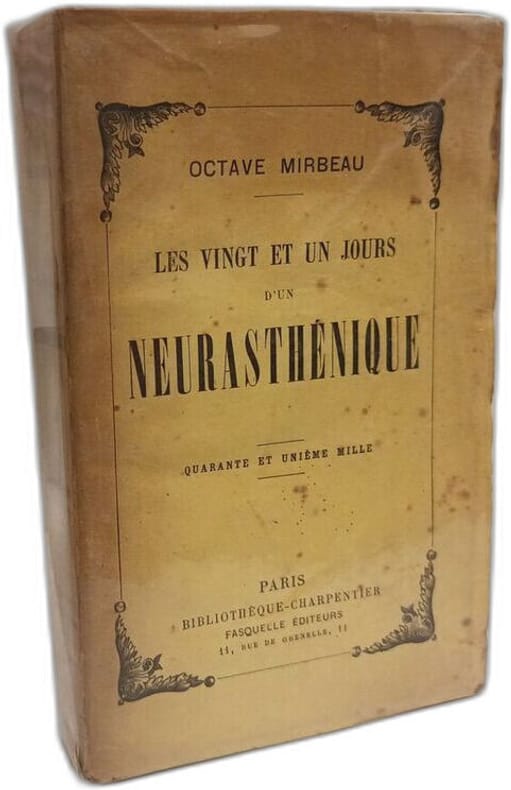
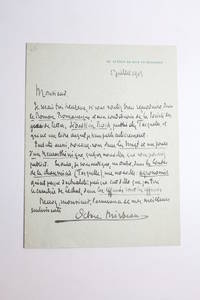
190373704s. l. Paris 1903. Fine. s. l. Paris 1er Juillet 1903 13.80 x 18.30 cm une feuille Autograph letter signed by Octave Mirbeau addressed presumably to Léon Tonnelle director of the review Le Roman Romanesque. 12 lines in black ink on a folded sheet grey paper with letterhead ""68 avenue du bois de Boulogne"". ""Monsieur je serais très heureux si vous vouliez bien reproduire dans Le Roman Romanesque et aux conditions de la Société des gens de lettres Sébastien Roch publié chez Fasquelle et qui est un livre auquel je tiens particulièrement. Peut-être aussi trouverez-vous dans Les vingt et un jours d'un neurasthénique quelques nouvelles que vous pourriez publier. En outre je vous indique en outre dans Les Contes de la Chaumière Fasquelle une nouvelle : Agronomie qui est presque d'actualité puisque c'est d'elle que j'ai tiré le caractère de Lechat dans Les Affaires sont les affaires. ."" ""Sir I would be very happy if you would kindly reproduce in Le Roman Romanesque and under the conditions of the Société des gens de lettres Sébastien Roch published by Fasquelle and which is a book to which I am particularly attached. Perhaps also you will find in Les vingt et un jours d'un neurasthénique some short stories that you could publish. Furthermore I also indicate to you in Les Contes de la Chaumière Fasquelle a short story: Agronomie which is almost topical since it is from this that I drew the character of Lechat in Les Affaires sont les affaires. ."". Octave Mirbeau published his novel Le Calvaire in issue 8 of the review le Roman Romanesque published in December 1903. The titles mentioned in the letter were ultimately not published. unknown
190173700Nice Villa Ibrahim chemin des Baumettes Nice 1901. Fine. Nice Villa Ibrahim chemin des Baumettes Nice 8 Février 1901 12.50 x 17.60 cm une feuille Friendly autograph letter signed by Octave Mirbeau addressed to the playwright and founder of the Revue Blanche Alfred Natanson some time after his marriage. 12 lines in black ink on a folded sheet mourning paper with black border watermarked ""JDL & cie"" envelope included. ""Je vous envoie à votre femme et à vous tous nos vux affectueux et je voudrais pouvoir chanter en votre honneur un bel épithalame. Le malheur est que je ne suis pas poète. Mais nous somme vos amis et nous vous embrassons de tout notre cur. Nous avions espéré que vous viendriez passer quelques jours à Cannes et nous nous faisions une fête de vous avoir ici. Misia nous dit que vous avez renoncé à ce voyage. Comme c'est ennuyeux ! ."". ""I send to your wife and to you all our affectionate wishes and I would like to be able to sing a beautiful epithalamium in your honor. The misfortune is that I am not a poet. But we are your friends and we embrace you with all our heart. We had hoped that you would come to spend a few days in Cannes and we were looking forward to having you here. Misia tells us that you have given up this trip. How annoying! ."". Mirbeau was particularly close to the Revue Blanche group since its launch in Paris in 1891. But it was from the Dreyfus affair that his intimate and lasting friendship with the Natanson brothers Thadée Alexandre and Alfred was strengthened. After aesthetic disagreements about Art Nouveau and the Nabis Mirbeau finally reunited with Thadée around 1900 in a now common inclination for the young Nabis painters of the Revue Blanche Bonnard Vallotton and Vuillard. The Revue Blanche played an essential role in France as confirmed by historian Paul-Henri Bourrelier: ""Most of the most prominent writers painters musicians politicians intellectuals of the late 19th and early 20th centuries collaborated with it or were associated with it. Created financed and directed by the three Natanson brothers young Polish Jews with the enthusiastic complicity of their classmates from the Condorcet lycée La Revue blanche quickly became a place of debate on all subjects that stirred France. It led political battles under the impulse of anarchists like Fénéon Mirbeau; socialists such as Blum G. Moch Péguy; Dreyfusards and founders of the League of Human Rights like Reinach and Pressensé."" unknown
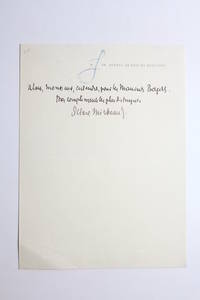
189773703s. l. Paris 1897. Fine. s. l. Paris 1897 13.50 x 18.30 cm une feuille Autograph letter signed by Octave Mirbeau. 2 lines in black ink on a folded sheet letterhead paper ""68 avenue du bois de Boulogne"". ""Alors Monsieur entendu pour les Mauvais Bergers"". The Mauvais bergers corresponds to Octave Mirbeau's tragedy a social drama performed at the Renaissance Theatre on December 15 1897 with Sarah Bernhardt and Lucien Guitry in the leading roles. unknown
0484540408.Ghardcover. Good. Access codes and supplements are not guaranteed with used items. May be an ex-library book. hardcover
1331155479.Gpaperback. Good. Access codes and supplements are not guaranteed with used items. May be an ex-library book. paperback
B9781019887561Hardback. New. hardcover
ria9783752442373_inpHardcover. New. New Book; Fast Shipping from UK; Not signed; Not First Edition; N/A hardcover
50154383like new. unknown