Leibniz, Gottfried Wilhelm,Biblio.com

1 702 résultats
6244624like new. unknown
2019133105.Gpaperback. Good. Access codes and supplements are not guaranteed with used items. May be an ex-library book. paperback
2019133113.Gpaperback. Good. Access codes and supplements are not guaranteed with used items. May be an ex-library book. paperback
2012660525.Gpaperback. Good. Access codes and supplements are not guaranteed with used items. May be an ex-library book. paperback
2012660517.Gpaperback. Good. Access codes and supplements are not guaranteed with used items. May be an ex-library book. paperback
1022535846.Gpaperback. Good. Access codes and supplements are not guaranteed with used items. May be an ex-library book. paperback
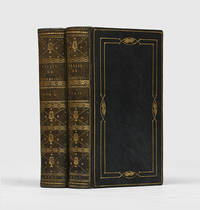
1747170287Amsterdam: Chez François Changuion 1747. The foundation text of theodicy Second edition of Jaucourt's critical edition the first to credit him as the author in a handsome 19th-century binding. Jaucourt's edition includes the Theodicy's four appendices his biography of Leibniz and a chronological catalogue of his works. The Theodicy was originally published in 1710. Jaucourt's edition first appeared in 1734. The Theodicy the only major philosophical treatise that Leibniz published during his lifetime vindicates the justice and goodness of God despite the existence of evil. Notably it includes the first statement of his famed argument that this world despite its manifest problems is nonetheless the best of all possible worlds. "Although the immediate reaction to the book was somewhat muted the Theodicy soon became commonly associated with Leibniz's name in European culture. Today Leibniz's name remains closely associated with the project that he developed most fully in the Theodicy. The neologism that Leibniz coined in the title from the Greek theos dike literally: "the justice of God" has entered the lexicon as a term describing any attempt to reconcile the goodness of God with the presence of evil in the world a project to which Leibniz had devoted a good portion of his life" Jorgensen & Newlands pp. 1-2. Louis de Jaucourt 1704-1779 a prolific Enlightenment scholar contributed over 25 per cent of the total articles for Diderot's Encyclopédie. 2 vols duodecimo 164 x 98 mm. Folding letterpress table Discours sur la conformité with divisional title and renewed collation. Title pages in red and black. Nineteenth-century green levant spines ruled lettered and with tooled fountain decoration in gilt covers with concentric borders and turn-ins in gilt pink watered silk doublures edges gilt pink silk bookmarkers. With 19th-century French ownership inscription to front free endpaper. Light bumping and rubbing faint sunning to spines and covers minor browning and foxing to endpapers slight damp staining and cockling to front doublure of vol. I: a very good copy. Ravier 431. Larry M. Jorgensen & Samuel Newlands eds New Essays on Leibniz's Theodicy 2014. unknown
1760206242Lausanne Bousquet 1760. Hardcover. G: The top and bottom of the leather spine are missing. Wear to the corners and edges of the boards. Staining to the outer margins of the pages. Remains easy to read. A leatherbound book with a decorative spine. Colorful marbled end pages. 592 pages; the textblocks are red. Text is in French. Lausanne Bousquet hardcover
1015863841.Ghardcover. Good. Access codes and supplements are not guaranteed with used items. May be an ex-library book. hardcover
201192040X.Gpaperback. Good. Access codes and supplements are not guaranteed with used items. May be an ex-library book. paperback
2011919460.Gpaperback. Good. Access codes and supplements are not guaranteed with used items. May be an ex-library book. paperback
1018492178.Ghardcover. Good. Access codes and supplements are not guaranteed with used items. May be an ex-library book. hardcover
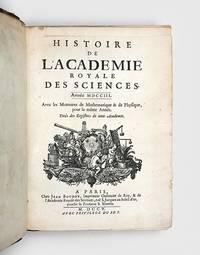
1705153285Paris: Jean Boudot 1705. The foundation of binary arithmetic First edition of this momentous volume of the journal of l'Académie Royale des Sciences containing Leibniz's invention of binary arithmetic the foundation of the electronic computer industry. Binary notation reduces all numbers to expressions involving only 0 and 1. It was a topic that had interested Leibniz for over two decades. "This explanation of binary arithmetic was the first publication on this topic to result in a significant impact on the scientific community" Glaser History of Binary and other Nondecimal Numeration p. 39. Although other mathematicians had experimented with binary previous to Leibniz including Pascal Leibniz's paper was the first to have a notable influence on scientific thought. After its publication the binary system became a popular subject of study. As modern computing is based on the binary system the paper can be seen as the basis of computational science both theoretical and in practice. Leibniz had conceived of a calculating machine based on the binary system as early as 1679 but this was never constructed. Binary arithmetic had broader implications for Leibniz beyond just its mathematical function. "In the domain of mathematics Leibniz regarded binary notation as intrinsically superior to decimal notation. Over and above this advantage however he believed that it contained the key to resolving both the problem of conceptual primitives and the problem of adequate characters. If it could be established as Leibniz speculated from about 1679 onwards that the only truly primitive concepts were those of God and Nothingness or Being and Privation then the symbols 1 and 0 would form the basis for an adequate characteristic whose simplest signs would stand in an immediate relation to the two conceptual primitives" The Cambridge Companion to Leibniz pp. 236-7. This was the second of Leibniz's great trilogy of works on mathematics and computation following Nova methodus pro maximis et minimis 1684 his independent invention of calculus and preceding Brevis descriptio machinae arithmeticae 1710 his decimal mechanical calculating machine. Also included in the volume is Bernard Le Boyer de Fontenelle's Nouvelle Arithmétique binaire pp. 58-63 written as secretary of the academy which offers an editorial comment on Leibniz's paper. 2 parts in 1 vol. quarto 245 x 173 mm. Engraved frontispiece 11 plates of 12 of which 9 folding. Recased in contemporary black morocco rebacked and recornered fragments of original spine laid down with new red morocco labels gilt border to covers enclosing gilt arms of Louis XIV marbled endpapers reinforced in hinges gilt edges. Contemporary armorial bookplate on title verso. Binding firm contents a little toned title page excised at head plate 12 the heart of the American tortoise lacking sporadic light foxing; a very good copy. Ravier 166. unknown
2011339057.Gpaperback. Good. Access codes and supplements are not guaranteed with used items. May be an ex-library book. paperback
1020091649.Ghardcover. Good. Access codes and supplements are not guaranteed with used items. May be an ex-library book. hardcover
0259976172.Gpaperback. Good. Access codes and supplements are not guaranteed with used items. May be an ex-library book. paperback
101811677X.Ghardcover. Good. Access codes and supplements are not guaranteed with used items. May be an ex-library book. hardcover
3787348484.Ghardcover. Good. Access codes and supplements are not guaranteed with used items. May be an ex-library book. hardcover
49995588like new. unknown
49995588-nnew. unknown
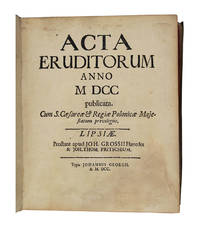
52885Lipsiae J. Grossius 1700. Small 4to 19.6 x 15.8 cm. pp. 198-208 in the complete volume for the year 1700 containing a total of 586 pp. and ten plates. Contemporary vellum binding with leather title label and gilt lettering. = Leibniz' reaction to Nicolas Fatio de Duillier at the height of the controversy between Leibniz and Newton over the invention of calculus. Up until 1693 the method of fluxions which had been invented by Newton and had been of great assistance to him in his mathematical investigations was still except to Newton and his friends a secret. Newton admirers in the Netherlands informed him that the method of fluxions had been introduced there under the name of Gottfried Leibniz's Calculus Differentialis. In 1699 Nicolas Fatio de Duillier published a tract in which he stated that Newton was by several years the first inventor of the calculus and insinuated that Leibniz had stolen the idea. It was the start of a serious controversy between Leibniz and Newton carried on by their followers for years after both famous mathematicians had died. In this article in the Acta Eruditorum Leibniz replied to Fatio de Duilleir by citing Newton's letters and the testimony that Newton had rendered to him in the Principia as proofs of his independent authorship of the method. A very good copy in contemporary vellum; ancient library stamp and superimposed cancellation stamp on verso of title small paper label with call number on bottom of spine and removed paste on inside cover. Vellum on covers discoloured first few pages age-toned but in general a nice clean copy. hardcover
GRP79966191Cambridge University Press. Used - Good. Former library copy. Pages intact with minimal writing/highlighting. The binding may be loose and creased. Dust jackets/supplements are not included. Includes library markings. Stock photo provided. Product includes identifying sticker. Better World Books: Buy Books. Do Good. Cambridge University Press unknown
200351979Cambridge University Press. New. 2003. Paperback. 0521576601 . FREE UPGRADE to Courier/Priority Shipping Upon Request IN STOCK AND IMMEDIATELY AVAILABLE FOR SHIPMENT - TEXT PRISTINE CLEAN & UNMARKED TIGHT TO SPINE - 648 pages. Book description: "Challenging Locke's views in `Essays on Human Understanding' chapter by chapter Leibniz's references to his contemporaries and his discussion of the ideas and institutions of the age make this work a fascinating and valuable document in the history of ideas. " -- with a bonus offer-- . Cambridge University Press paperback
1991x-0822954494Univ of Pittsburgh Pr 1991. Paperback. New. 1st edition. 480 pages. 9.50x6.25x0.75 inches. Univ of Pittsburgh Pr paperback
0719017025.Gpaperback. Good. Access codes and supplements are not guaranteed with used items. May be an ex-library book. paperback