3 283 résultats
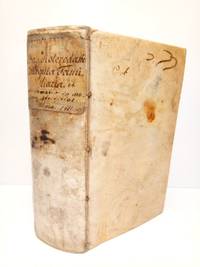
1557097858Paris: Robert Estienne 1557. Vellum. pp. 112 8; 128 16; 192 36 of 40: 2 leaves missing. 12mo. Vellum with hand-lettered spine and yapped edges with the ties missing. Each title shows the famous Estienne olive tree vignette on the title page first and last titles include a colophon. Very good. In "de Magistratibus" Fiocci lists and explains the offices of Roman priests and magistrates. This work was reprinted many times in the 15th-17th centuries. The second title which translates to "The Beauties of the Latin Language" was written in 1431 to praise the Latin language and advocate for its proper usage. The third is a reprint of Erasmus' Biblical paraphrases. All three titles were popular in the 16th century and these reprints are published by famous Parisien printer Robert Estienne who inherited the press from his father Henri in 1526: Francis I later made him the King's Printer. Robert Estienne unknown
175810202AB1758 . Wien: Joh. Thomas Trattner 1758. Gr.-8°. 8 Bll. 245 S. 21 Tafeln Halb-Kunstleder mit umlaufendem Rotschnitt Bibliotheksexemplar; Stempel auf Vorsatz Vortitel und Titelblatt; Papier altersbedingt gebräunt; stockfleckig; sonst altersgemäss gut erhalten - Angebunden: Antonius Klobusiczki de Zetteny: Materia Tentaminispublici quod ex anni huius scholastici praelectionibus quovis cui libuerit periclitante . Wien: Joh. Th. Trattner 1758. 10 Blätter. unknown
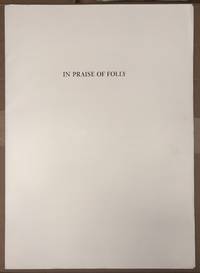
1780000010669Basileae = Basel: G. Haas ex Officina J.J. Thurneisen 1780. Later edition. Hardcover. Very Good. 8vo. 17 2-355 5 pp. Contemporary tree calf with a gold border on each board spine in six compartments with beautiful gold tooling and a red morocco label lettered in gold; all edges decoratively stained yellow. Marbled endpapers and pastedowns. Title page in Greek and Latin text in Latin. Illustrated with an engraved frontispiece portrait of Erasmus with seven full-page woodcuts and with numerous in-text woodcuts all done by Hans Holbein. With a commentary by Gerardus Listrius. A beautiful example of Erasmus' satiric essay a landmark publication in Renaissance Europe. In Praise of Folly is credited with helping to sow the future ideas of the Protestant Reformation as it parodies many superstitions of the Catholic Church. Erasmus' essay is a perfect example of dry and biting wit rich with metaphor and layered puns. Joints neatly touched up a small darkened spot on the front board. G. Haas, ex Officina J.J. Thurneisen hardcover
elala2775Amsterdam: ‘Aux Dépens De La Compagnie’ 1734. First Edition Illustrated by Bernard Picart. The first part of the work was written by reformer Erasmus Alberus who selected for critical assessment the most ‘blasphemous’ passages from the De Conformitate Vitae Beati Francisci ad Vitam Domini Jesu of Bartolomeo degli Albizzi. It was originally published anonymously as Der barfusser Monche Eulenspiegel und Alkoran in Wittenberg in 1542 with a preface by Martin Luther. The French translation by Calvinist printer Conrad Badius who erroneously attributed the whole work to Luther was published in Geneva in 1556. In his second edition 1560 Bade acknowledged his error and added a continuation. The present edition is distinguished by twenty-two fine copper engravings by Bernard Picart. The frontispiece to Volume I is composed of satirical emblems and the second folding plate depicts the mystical tree whose leaves contain the forty points of comparison between the lives of St. Francis and Jesus Christ. These two volumes are sometimes found with another work by Nicolas Vignier entitled Légende dorée ou Sommaire De L’Histoire des frères Mendians de l’Ordre de St. Dominique et de S. François Amsterdam: 1734. Brunet I 152. Cohen-de Ricci 5-6. Graesse I 64. Lewine p. 6. Rothschild II 2024 listed with another work. 2 Volumes. 12mo. pp. 9 p.l. 396; 1 p.l. 419. titles in red & black. 22 engraved plates by Bernard Picart 1 folding; incl. 2 frontis. 19th century half vellum gilt backs vellum slightly soiled outer edge of frontis. in Vol. I chipped outside plate mark few small library markings Amsterdam: ‘Aux Dépens De La Compagnie’, 1734 hardcover
164272625London: M. Flesher & R. Young . Sumptibus Adriani Vlacq 1642. First edition of this collection of the letters of Erasmus the most complete that had been compiled to date and the first printed in England; folio 2 volumes in 1 as issued; pp. 36 2146 columns pp. 37; pp. 12 968 columns 116 columns pp. 10; both titles printed in red and black; text largely in double column; engraved frontispiece portrait of Erasmus after William Marshall woodcut initials; full contemporary calf black morocco label on spine; joints cracked cords holding; frontispiece with light spotting in the margins; a good copy and while the joints are cracked the sewing structure is quite sound. An imperfect copy lacking 3K2 and 3K5 in the first part and B1 and B6 in the second part - almost certainly binder's errors. Engraved armorial bookplate of Prince Augustus Frederick Duke of Sussex 1773-1843. "Epistolarum Philippi Melancthonis" Wing M1635A has separate dated title page pagination and register and the "Auctarium epistolarum ex Thoma Moro" caption title has separate pagination and register. Includes a Life of Erasmus and selected letters of Erasmus' correspondents the reformer Philip Melancthon Thomas More and the Spanish humanist Juan Luis Vives. There were four editions of Erasmus' letters published in Basel between 1521 and 1541 each larger than the previous and no other collected edition until this London edition of 1642. This edition though not always accurate by modern standards represents a remarkable achievement in English scholarship. The editors made an exhaustive search through continental libraries for original unpublished letters as well as those which had already found their way into print. A number of the letters here have since perished and this collection preserved the most authoritative text of Erasmus' letters until the definitive edition of the Epistolae appeared in Oxford in 12 volumes 1908-58. Wing E3201 and M1635A. ESTC R218212. M. Flesher & R. Young ... Sumptibus Adriani Vlacq unknown
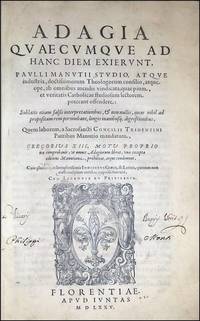
157572<p><b>FINE AND IMPORTANT ALDINE EDITION OF ERASMUS ADAGES</b>Erasmus Roterodamus. <b><i>Adagia</i></b><i> quaecumque ad hanc diem exierunt Paulli Manutii studio atque industria . ab omnibus mendis vindicata quae pium et veritatis Catholicae studiosum lectorem poterant offendere: sublatis etiam falsis interpretationibus & nonnullis . digressionibus. Quem laborem a sacrosanti Concilii Tridentini patribus Manutio mandatum Gregorius 13. motu proprio ita comprobauit vt omnes Adagiorum libros vna excepta editione Manutiana prohibeat atque condemnet. </i><i>Cum plurimis ac locupletissimis indicibus Graecis & Latinis quorum nonnulli nusquam antheac impressi fuerunt</i>. Florentiae apud Iuntas MDLXXV Florence Giunti for the Aldine Press <b>1575</b>.2° later limp <i>cartonnage</i> handwritten title and library label at spine ff. 4 columns 1454 i.e.1440 ff. 36.Giunti device at title and final leaves. Woodcut headletters. Text in Latin on two columns with some passages in Greek.Aldus Manutius' dedicatory to pope Gregory XIII.<b>Fine and important edition revised by Aldus Manutius the Younger of the renowned collection of Latin and Greek adages sayings proverbs mottos epygrams compiled by Erasmus</b>.Paul Manutius was commissioned by the Fathers of the Council of Trent to correct the work reorder purge by false interpretations and doctrinal errors in order to make this edition the only one approved by the Church the bull of Gregory XIII as stated in the title prohibits and condemns the other editions.<b>Desiderius Erasmus Roterodamus</b> 1466 – 1536 known as Erasmus of Rotterdam or simply Erasmus was a Dutch Renaissance humanist Catholic priest social critic teacher and theologian.Amongst humanists he enjoyed the sobriquet "Prince of the Humanists"; he has been called "the crowning glory of the Christian humanists". Using humanist techniques for working on texts he prepared important new Latin and Greek editions of the New Testament. These raised questions that would be influential in the Protestant Reformation and Catholic Counter-Reformation.<b>Provenance</b>: Ownership signature <i>Philippi Monti</i> at title-page beside the printer device.<b>References</b>: Renouard 220. 14. STC <i>Italian</i> 236; Adams E-443. BMC 236. CNCE 18245 & 18247.</p> Giunti for the Aldine Press paperback
1709019923London: Printed and Sold by J. Woodward in Threadneedle Street 1709. Book. Fair. Hardcover. 1st Edition. First Edition THUS. Pp. 22 xvi viii 12 171. Full red morocco five raised bands to spine gilt bordering gilt decoration to spine. front board detached. All text block edges gilt. Internally complete all plates and illustrations present. Verso of front board ex-libris of Robert Hoe and also famous book collector Cortlandt F. Bishop. Printed and Sold by J. Woodward, in Threadneedle Street Hardcover
30656Coloniæ: Martinus Gymnicus excudebat 1545. 8vo 16 632 78 pp. lprinter's woodcut device on title showing a sea horse holding a mast on the top of which is perched a crane and above the crane are the words "Discite Ivsticiam Moniti" contemporary ink signature on fly-leaf and erased early signature on title touching 2 letters occasional ink underscoring some light damp staining later vellum with yapp fore-edges upper cover slightly marked a very good copy. Bibliographie des oeuvres d'Erasme pp.299-300; Not listed in Bibliotheca Erasmiana Bruxellensis. Coloniæ: Martinus Gymnicus excudebat, 1545 hardcover
167649945Basel Genethianis 1676. 8vo. Contemp. full vellum. 2 small nicks to vellum at fronthinge. Engraved title-page and printed title-page. 7033612 pp. The printed titlepage with engraved vignette. 2 full-page engravings portrait of Erasmus by Holbein and Erasmus' Memorial Stone. With 78 textengravings by Hans Holbein engraved by Casper Merian some of which are tipped in and folded some printed in the text. Lacks the 2 portraits of Holbein the Elder and Holbein the Younger. Some leaves in the middle with faint browning in lower part. 2 of the tipped-in engravings with a bit of repair. Printed on good paper. <br/><br/><em>These are the most famous illustrations of The Praise of Folly.First edition of "ThePraise of Folly" with Hans Holbein's illustrations. The work is considered one of the most notable works of the Renaissance and played an important role in the beginnings of the Protestant Reformation. Its role stem from the foundation of critique which the essay laid against the practices of the Church and its political allies.Graesse II:495. - Brunet II:1037. </em> hardcover
17204459BB1720. 6 in 3 Bänden. Leyden Pierres Vander Aa & Boudouin Jansson Vander Aa 1720. 12°. 1 Bl. 272 S.; 4 192 S. 1 Bl.; 1 Bl. 4 358 S.; 4 394 S. 1 Bl.; 1 Bl. 4 224 S.; 4 236 S. 1 Bl. Mit 1 gest. Frontispiz 1 gest. Vignette sowie 55 gest. Textillustr. von Jacob Schijnvoet. Lederbde. d. Zt. auf 5 Bünden mit reicher Rücken- u. Stehkantenvergoldung Ecken u. Kapitale restauriert Leder etwas spröde. Erstmals in lateinischer Sprache erschienen 1518. Beilage: Kupferstich mit Portrait von Erasmus von Rotterdam von F. Bleuswyk. - Mit 6 Namenszügen dv. 3 von alter Hand auf den Titelseiten. Verbunden: Bd. III von S. 75 bis 94. die S. 267 bis 270 von Bd. I sind in Bd. V zwischen die S. 220 u. 221 eingebunden. Durchgehend stellenweise stärker gebräunt u. vereinzelt stockfleckig. unknown
171248094Ulmae Ulm: Sumptibus Danielis Bartholomaei M DCC XII 1712.- 7 h. 869 p. 11 h. y 88 p. de la segunda obra con el mismo pie de imprenta y fecha: Grabado al cobre alegórico in frontis; 8º 173 x 115 cm; Portada a dos tintas; Sig. :7 A-Z8-Aa-Zz8-Aaa-Kkk8 / a-e8 f4; Texto en latín; Enc. de la época en Pergamino rígido a la romana lomo con título rotulado a mano cortes pintados y un ex-libris grabado al cobre de "Ex Bibliotheca Christiani Friederici Schnaussii" grabado por J. B. Gans al verso de la tapa anterior.- RARO. La encuadernación firme y fuerte aunque con diversas señales del tiempo. Al verso de la tapa anterior tienenunas notas manuscritas otra pequeña notita manuscrita en la portada. Por lo demás el interior del libro se encuentra limpio y sin ninguna mancha reseñable. El grabado del frontis tiene una pequeña reparación por detrás sin importancia. El título del libro va manuscrito sobre un tejuelo de pergamino en la cabecera del lomo. Dicho esto que es preceptivo se puede considerar el libro como en muy buen estado. Este libro contiene los Coloquios una especie de manual de cultura clásica para la vida renacentista así como el famoso Elogio de la Locura con un prefacio de Tomás Moro. LITERATURA Y ESTUDIOS LITERARIOS EXTRANJEROS DE LOS SIGLOS XVI-XXI Libro en latín Danielis Bartholomaei hardcover
1638056080Wittebergæ Wittenberg : Impensis hæredum Clementis Bergeri: Wittebergæ 1638. Haeredes Clementis Bergeri publisher 1638. First Edition . Hardcover. Very Good Plus. Folio - 14 x 11 Inches Tall. Engraved frontispiece and Internal Engravings. FIRST EDITION. WITTENBERG : 1638. Hardback. Engraved title-page including portrait of author. Printed title-page in black and red. Text printed in triple columns. Text complete. Foxed. Woodcut initials; ornaments. Text in Greek; title page and preliminaries in Latin. Contemporary full brown calf-leather. Later re-spine to match. Raised bands with decorative gilt panels. Gilt lettered label to spine. Bright tight and clean. No owner name or internal markings. Usual foxing. VERY GOOD INDEED. No page numbers. Signatures: 4 leaves then A-Kkk5. SCARCE. Folio; approx. 14 x 11 inches. LARGE HEAVY BOOK; some extra postage needed. Will be well-packed for posting/shipping. Rosley Books for Antiquarian books C.H.S. Cumberland D.L.S. Everyman G. K. C. Keswick Inklings Literature MacDonald Rarities Theology and History. SCARCE. <br/> <br/> Impensis hæredum Clementis Bergeri: Wittebergæ, 1638. [ Haeredes Clementis Bergeri [publisher] hardcover
1656617675Francofurti: Sumptibus Johannis Wilhelmi Ammonii Apud Nicolaum Schumannum 1656. Full leather. 4to In slightly worn original calf. Rebacked in speckled calf contrast spine with period blind ornaments raised bands. Repaired hinges early owners' names within heavy foxing slight worming text unaffected. Otherwise in good condition. 12 776 158 pages. Francofurti: Sumptibus Johannis Wilhelmi Ammonii, Apud Nicolaum Schumannum hardcover
16381608040001Witteberg impensis haeredum C. Bergeri 1638-01-01. First Edition. Hardcover. Good. Folio. 680 pp. Modern light brown leather gilt spine 4 raised bands engraved title page additional title in red and black. Pages browned scattered spotting. <br> First edition of Erasmus Schmidt critical concordance of the New Testament in Greek surpassing the Estienne concordance of 1594. A noted German philologist and classical scholar his knowledge of the Greek language was extensive. He express the best way to understand classical Greek was not only to merely understanding the rules of the linguistic structure but from the most intimate familiarity with the language and its context. Not in BM STC C17 Ger. or Darlow and Moule. Not in Brunet or Graesse. Greek Latin. Witteberg, impensis haeredum C. Bergeri hardcover
1838025895London: Thomas Ward & Co / Society for the Promotion of Permanent and Universal Peace 1838. First Collected Edition . Full Blue Calf Gilt. Good. Stereotype Reprints Of The First Twelve Tracts Published As Pamphlets By The Society Each Newly Printed Here With 1838 Date On Title Pages For Each Tract And Catalog Of All Twelve Tracts Plus The 'New Series Of Small Tracts" On The Verso Of The Title Page Each Title Page With Price Of Two Or Three Pence. The First Tract Is Commonly Available But The Later Tracts Were Mostly Based On A Popular Theological Interpretation Of Christian Principles And Unreadable By Anyone Involved In Executive Decisions Particularly As War Had Been The Usual Basis Of Promotion And Wealth In All Socities Worldwide . Finely Bound In Polished Blue Calf Four Raised Bands Decorated In Gilt Morocco Spine Label Blind-Stamped Compartments Covers With Four Sets Of Gilt Border Rules With Ornate Gilt Embellishments At Corners Of Two Central Sets Of Rules All Edges Gilt Finely Hand-Marbled End Papers Four Wavy Gilt Lines On All Turns. Binding Worn Page Block Neatly Detached From Binding No Chips Or Tears Could Be Nicely Refurbished. Unfortunately Peace Literature Does Not Start With A Statement Of What A Government Should Hold Truly Essential And Non-Negotiable In Any Peace Negotiation Nor Discusses What Is Negotiable To The Benefit Of The Other Party; Rather Peace Literature Is Like Rules For A Playtime Tea. This Is Fitting As The Grown-Ups And The Government Just Want To Remain In Charge While Looking Good Although Actually Having No Articulable Principles Applicable To Both Parties To State Because They Know No Other Way To Achieve Popularity Or At Least Incumbency. <br/> <br/> Thomas Ward & Co / Society for the Promotion of Permanent and Universal Peace unknown
1575214172Florence: Apud Iuntas 1575. Half Bound. VG. 9 1/2 x 13. Adagia of Erasmus. His name for some reason does not appear on the title page. Ex-library copy with minimal stamps and labels. Greek and Latin text. 1453 pages plus Index of the Proverbs. Pages are in very good condition; very readable. Light foxing throughout especially on the edges. Half bound with brown leather over marbled boards. Gilt titles and decoration on the spine. Corners a little bumped and frayed. Boards and leather a little scuffed. Binding very secure. VG heavy - may require extra postage <br/> <br/> Apud Iuntas unknown
17773006455London and Paris: Barbou 1777. Joints chafed and head of spine slightly chipped. Duodecimo with a frontispiece to the first work; contemporary dark green morocco sides bordered and spine panelled in gilt all edges gilt. <p><p>The beautifully-printed Barbou edition of Utopia bound as often with the matching edition of Erasmus' Praise of Folly. </p> <p>The friendship between Sir Thomas More 1478-1535 and Erasmus 1469-1536 was one of the great scholarly alliances. More's Utopia 1516 was a revolutionary work of philosophy which inaugurated the entire tradition of the modern imaginary voyage but it was also a book to which a small coterie of his greatest friends contributed particularly including Erasmus. More also played an important part in turn in the writing of Erasmus' Moriae Enkomion - the 'praise of folly' but also a pun on the 'praise of More' - which is said to have been written whilst they were staying at More's London house. It was first published in 1511. </p> <p>This Barbou edition of both works is particularly attractive. The Barbou family was in business from the early sixteenth-century through to the beginning of the twentieth and was known in the later 1700s for their superb editions of the Latin and Greek classics not unlike a French Baskerville.</p> </p> . Barbou unknown
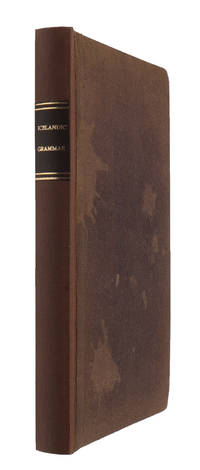
184363108London William Pickering 1843. 8vo. In contemporary cloth rebacked. With stains and repairs to boards. Inner hinges reinforced. Previous owner's name to verso of front board: "G. H. Darwin / April 1869" Charles Darwin's son. Light foxing throughout primarily affecting first leaves. VIII 272 1 pp. 1 plate. <br/><br/><em>First substantial English translation with an interisting provenance of Rask’s pioneering Old Norse grammar originally published in Danish in 1811 one of the foundational works of modern comparative linguistics. The present copy belonged to George Howard Darwin son of Charles Darwin distinguished mathematician and astronomer best known for his work on tidal theory and the evolution of the Earth–Moon system. Rask was among the earliest scholars to treat Old Norse Icelandic as a systematic and a historically grounded language rather than a curiosity of antiquarian interest. His work helped establish the methodological basis for what would become Indo-European philology. Rasmus Rask is one of the absolutely most prominent and famous Danish philologers and is very well esteemed worldwide. He was the first to systematically study the ancient Nordic languages and is the discoverer of the relations between the consonants in the Indo-European languages. This discovery served as the foundation of the rules Jacob Grimm later formulated underlying the Germanic and High-German soundshifts. In PMM Rask is identified as "one of the founders of the modern science of language." PMM 266. </em> hardcover
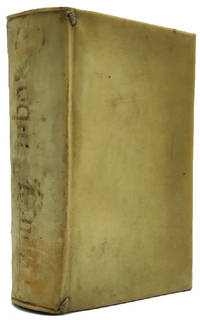
51-2099Lugduni Lyon : Apud Seb. Gryphium 1544. 16mo. 12 x 18 cm Contemporary vellum repaired with parchment. 609pp 39 pp. index.The prefatory letter is dated Feb. 26 1531.Printer's device on title page and last leaf verso. Lugduni (Lyon) : Apud Seb. Gryphium, 1544. hardcover
16516823Amsterdam: Jodocum Janssonium 1651. Hardcover — Tapa dura. 134x72mm. 5¼x2¾". Amsterdam Jodocum Janssonium 1651. En 12º 134 x 72mm. Frontispicio grabado 24 672 44 pp. 1 grabado a toda página. Encuadernación de la época en pergamino a la romana. Temprana edición de los <em>Coloquios</em> de Desiderio Erasmo que contienen un manual de enseñanza de latÃn incluyendo ejercicios y juegos de palabras con fines educativos y un documento sobre cómo la cultura clásica podrÃa servir como modelo en la vida renacentista; finalmente un folleto religioso de tintes reformistas. Buen ejemplar. Jodocum Janssonium hardcover
1962QQ0208Gregg Press 1962. ~Original full buff cloth two red gilt labels per spine. Folios 39.5 x 26.5cm. Mild marking to boards & spines and slight wear to extremities both most pronounced to vol. IIIa which also has tiny dent to cloth near spine on front board & board corners slightly pushed in. Minor rubbing to spine of some vols most obvious to vol. II. Some use-marks to page edges. Vol. I has title in French to spine 'Erasme Opera' rather than 'Erasmi Opera' with loose publisher's explanatory note to inside vol. All vols have armorial bookplates of Somerville College Oxford to inside front boards with cancelled Somerville stamps to all page edges & all front and rear endpapers. Title pages printed in red & black. Numerous illus some folding. Facsimile reprint of the 1703-1706 Leiden edition published by Pieter van der Aa Petri Vander Aa in 1715 appointed head printer for the city and its university. Vol. I has no date for reprint; other vols have 1962. Volumes: I: Quae ad institutionem literarum spectant / II: Adagia / IIIa: Epistolae / IIIb: Epistolae / IV: Quae ad morum institutionem pertinent / VII: Paraphrases in N. Testementum / VIII: Versa e patribus graecis / IX: Apologia pars 1 / X: Apologia pars 2. Lacking vols V: Quae ad pietatem instituunt & VI: Novum Testamentum. Expensive to ship overseas weighs over 30 kg.~Robust packaging. Tracking can be added to overseas orders on request. Used books are exempt from USA tariffs. Very Good/Fine. c. 1000 pp. per vol. Folio. Gregg Press Hardcover
17307551Prostant venales apud J. Brotherton ad Insigne Bibliorum Sacrorum in Vico Cornhill 1730. 8vo. First and Sole Edition thus on laid paper text in Latin with several fine woodcut head- and tail-pieces some slight age-staining mainly marginal more pronounced on a handful of leaves; contemporary marbled boards very neatly rebacked in calf to style back with four raised bands second compartment with red leather label lettered in gilt a remarkably fresh crisp clean copy. First published in 1535 the 'Ecclesiastes' is Erasmus' last and longest work a detailed treatise on preaching and the offices and duties of priesthood. O'Malley deems it 'a major monument - perhaps the major monument - in the history of sacred rhetoric. Its only rival is the De Doctrina Christiana of Augustine' Erasmus and the History of Sacred Rhetoric: The Ecclesiastes of 1535.Bray's extended 25pp introduction begins in typically exuberant fashion - 'Jesu & Omnia!' dedicating the printing to Edmund Gibson Bishop of London 1669-1748 and Edward Bishop of Coventry and Lichfield. Erasmus' famous preface revealing his responses to the deaths of More Fisher Wareham and Mountjoy is given in full. Thomas Bray 1656-1730 Commissary of Maryland and founder of SPCK did much to spread abroad knowledge of significant religious works. 'It was a great service to the cause of Christian knowledge' undertaken for no reward and with 'unspeakable labour and fatigue'.Rare. Prostant venales apud J. Brotherton, ad Insigne Bibliorum Sacrorum in Vico Cornhill, hardcover
70582Leiden Francoys van Ravelenghien 1597. 4:o. 8 4 s. med varsin helsides grav. plansch 11-13 16 s. 16 grav. planscher. Två helsides grav. planscher i pagineringen. Hårt skuren i nederkant med förlust av nedersta textraden på s. 13 delförlust av dito på s. 3 samt delförlust av kustoder på flera sidor. Fem planscher i nederkant skurna inom ram varav en med minimal bildförlust.Första tre bladen med fuktrand titelbladet bruntonat och en bläckfläck sid. 5-6 litet brännhål i marginalen sista två planscherna. Marmorerat pappersomslag från tidgt 1700-tal med bortraderad text på främre omslaget. Ur Ericsbergs bibliotek. STCN 832266361. Lipsius s. 194. Dekesel H31 med något annorlunda paginaangivelse men samma antal blad 24 stycken. Ej i Adams. Totalt 20 helsides grav. bilder med myntavbildningar varav 13 med silvermynt numrerade I-XIII och 7 med guldmynt numrerade I-VII. Detta är en förteckning över guld- och silvermynt slagna av grevarna av Flandern från början av 1200-talet till 1421. Erasmus van Houwelinghen 1524-ca 1600 var holländsk silversmed och myntsamlare. Hans egen samling som bildade grunden till denna beskrivning hamnade efter hans död i Rotterdam där en andra upplaga av boken utkom 1627. unknown
1972328186New York: Aquarius 1972. Limited. unbound. fine. Fritz Eichenberg. Rubricated title page. Large folio with 10 large loose original woodcut engravings each individually signed by Fritz Eichenberg. One page of text printed in red and black facing each woodcut. New York / Baltimore: Aquarius Press 1972. Limited edition -- Number 131 of 150 copies. Fine.<br/> <br/> Each engraving is printed on Japanese mulberry paper and signed at the lower corner by the artist.<br/> <br/> Aquarius unknown
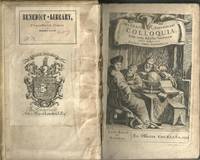
1664020084Lugduni Batavorum et Roterodami: Ex Officina Hackiana 1664. Inteira de Pergaminho. Bom / Good / Bon. In-8º190x122. 1 vol. de 12-784-18 pp. Portada gravada a buril em chapa de cobre representando Erasmo sentado a uma mesa sobre a qual está um globo e alguns livros e à sua volta três personagens que ouvem e comentam entre si o que diz o mestre. Encadernação em inteira de pergaminho Ex-libris armoriado inglês. Humanista holandês Erasmo de Roterdão foi educado com os padres augustinianos estudou teologia na Holanda e em Paris e doutorou-se em Turim em 1506. Trabalhou como perceptor privado preparando para os seus alunos uns opúsculos pedagógicos que com o tempo se converteram em importantes livros da cultura europeia. Em Itália foi discípulo de Lorenzo Valla. Viajou para Inglaterra onde foi hospede de Tomás More onde escreveu o célebre Elogio da Loucura e estudou a língua grega. Em Veneza trabalhou com Aldo Manuccio numa composição de provérbios os Adagia. Preparou uma edição grega do Novo Testamento que causou escândalo. Realizou depois diversas edições comentadas de textos clássicos. Afastando-se das posições de Lutero saíu de Basileia entretanto adepta do protestantismo e foi viver para Friburgo durante alguns anos onde escreveu estes Colloquia. Brunet II 1041 <br/> <br/> Ex Officina Hackiana unknown