75 résultats
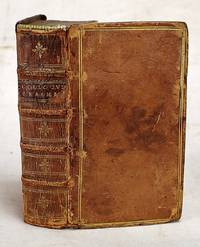
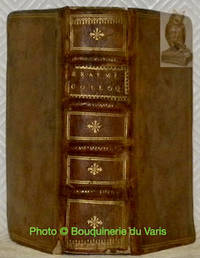
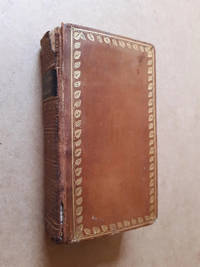
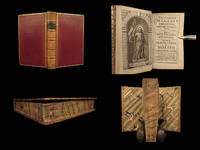
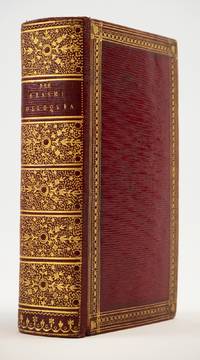
1643ST20492Lugduni Batavorum Leyden: Bonaventura Elzevier and Abraham Elzevier 1643. Second Elzevier Edition. 137 x 78 mm. 5 1/2 x 3". 12 p.l. 672 44 pp. 2 leaves. <br/> ELEGANT EARLY 19TH CENTURY RED STRAIGHT-GRAIN MOROCCO VERY ELABORATELY GILT BY BOZERIAN unsigned but see below covers framed by bead-and-star roll enclosed with double gilt fillets leaf tools at corners. smooth spine in compartments with large central fleuron of floral lancets emanating from central circlet in a richly stippled ground small circles at corners one compartment with gilt lettering cresting tulip and violet roll at foot of spine turn-ins with bead-and-star roll marbled endpapers vellum flyleaves all edges gilt. Woodcut initials headpieces and tailpieces numismatic portrait tondo fine engraved title page by C. C. Dusend showing Erasmus gazing through a telescope at the Godly orb seen through parted clouds. Willems 552; Rahir 546; USTC 1027918. For the binding: Culot "Jean Claude Bozerian" Roulette 9 Plate I and Palette 12 Plate X. Just barely perceptible rubbing to joints and extremities one leaf with tiny burn hole affecting a couple of words intermittent minor foxing negligible ink spots here and there other trivial imperfections but an extremely attractive copy the text fresh and clean and the very well-preserved binding with lustrous leather and bright gilt.<br/> <br/> This is a remarkably pretty copy of an extremely influential but generically elusive work printed by a legendary press and bound by the founder of a celebrated French binding dynasty. First published in 1524 the "Colloquia" comprise 63 conversations originally written for Erasmus' students on varied and overlapping topics but these urbane meditations soon became widely read as they covered subjects that intrigued the important thinkers of the day. Their influence was so profound that it is not saying too much to claim that they helped to speed the Reformation. Although they are difficult to classify precisely one could categorize them as including in general terms exposure of ritualistic fallacies invective against corruption within the church examination of popular imposture deploring of contemporary personal sins practical advice for laymen and miscellaneous discussion of amusing topics. In specific terms the text takes on such controversial topics as the value of pilgrimage celibacy and abstinence from meat on Fridays and other prescribed days. Erasmus' "Colloquia" was frequently published by the Elzeviers once in French and a total of nine times in Latin. The text was universally adopted for school use up through the 18th century. Although our lovely little binding is unsigned Culot firmly identifies its tools as those used by Jean-Claude Bozerian 1762-1840. He was the elder of the Bozerian brothers François is referred to as "le jeune" and was active in Paris from 1795 to about 1810. He began his career in Lyon as an apprentice bookseller printer and bookbinder eventually deciding to focus on the latter craft. Marriage to the widow of binder Pierre Boulier allowed him to establish a binding workshop in Paris where he was joined by his brother. His bindings were soon much in demand by French bibliophiles who appreciated their superior materials tasteful design and flawless execution--all characteristics that are plainly evident in the present case. Bonaventura Elzevier and Abraham Elzevier unknown
168849228Cologne disguised; Paris or the Netherlands: Adrian Le Jeune 1688. First edition. Hardcover. Very good . Duodecimo. Collation: aster.12 2aster.6 A-R12 S4 = 226 leaves. 36 415 1 blankpp. Engraved frontispiece and headpiece; woodcut lettrines head- and tailpieces; printed side notes. Contemporary calf mildly worn at extremities; gilt tooled spine with raised bands gilt lettering piece; edges sprinkled in red. Old inscription cropped from top edge title; one leaf with clean marginal tear just extending into text else fine and crisp throughout.<br /> <br /> First edition of this defense of Jansenism via the celebrated scholar of Rotterdam. Among the works reviewed by Locke for Jean Le Clerc the present title “indicated a new wave of interest in Erasmus†Mansfield. “Jean Richard 1615-1686 wanted to persuade the Roman Catholic Church that in persecuting the Jansenists it was as much in error as it had been when it denounced Erasmus. He also wanted to convince the English monarch that despite appearances to the contrary Erasmus had never adopted any stance outside the Catholic Church†van Herwaarden. The author surely intends the quotation from Cyprian at the verso of the title as a reference to both Erasmians and Jansenists: “This is always the devil’s work to destroy with lies the servants of God and defame their glorious name with false opinions†trans. Mansfield. Early modern reviews were mixed: Bayle considered it a “pity that the author. stopt at the first part of it†General Dictionary 5 1737 “Erasmus†85 note T. Burigny Vie d’Erasme Paris: 1758 judged it “. so badly done and so filled with invectives and declamations that it does not lead one to wish for the second†547; quoted in Mansfield 293n.<br /> <br /> In 1660 the French cleric Jean Richard was imprisoned by the archbishop of Rouen de Harlay a bitter opponent of Jansenism."During this personal crisis he published two works in defense of his Jansenist belief and behaviour. As we shall see there are grounds for believing that his Sentimens. was meant in part at least to achieve the same end. Nevertheless mysteries surround the work: it was published posthumously Richard died in 1686 having been prior of Beaulieu Saint-Avoie since 1673; what we have is the first part and we may only guess at how seriously the promise of a second part was intended. As it stands this is an ill-organized book repetitive with many digressions but filled with a naive enthusiasm and fascinating partly because of the evidences of a sound judgment about Erasmus partly because of the tantalizing but insoluble problem of the author’s aims. The avowed aim was proselytism. The book is dedicated -- on the eve of the Revolution of 1688 -- to James II of England a new Theodosius who is hazarding three kingdoms for the sake of the kingdom of heaven. May it help the English people to follow the king’s example in conversion to Catholicism by showing them the true character of Erasmus’ religion" Mansfield. References: Barbier 4:467. J. v. Herwaarden Between Saint James and Erasmus Studies in Late-Medieval Religious Life 598; Jöcher 3:2078; VD17 12:110664Q. For a thorough discussion see B. Mansfield Phoenix of His Age: Interpretations of Erasmus c. 1550–1750 Toronto 1979 163–174. Locke’s review appears in Bibliotheque universelle et historique VII 1688: 106-122. Adrian Le Jeune hardcover
165012687Amstelodami Amsterdam: Typis Ludovici Elzevirii 1650. Acceptable. From Elzevir the Renaissance scholar's press 1650. In 'pocket' format 3"x5" in full leather. Pictorial title page. Lower third of spine missing board detached but present. Text has been trimmed at top edge. In cloth box. Shadrach Munnings armorial bookplate and bookplate of "Collegii Sti Augustini". The great Christian humanist scholar and teacher evolved the Colloquies as a collection of dialogues on a wide variety of subjects. They began in the late 1490s as informal Latin exercises for Erasmus' own pupils. In about 1522 he began to perceive the possibilities this form might hold for continuing his campaign for the gradual enlightenment and reform of all Christendom. Typis Ludovici Elzevirii hardcover
1689290919London but Germany . 1689. Old green boards. Good covers worn old in name to ffep pages lightly toned contents very good. 12mo. 13.5x8.3 cm. Latin text. “Letters of Obscure Men†a collection of humanist satire directed at the scholastics first published in the early 16th century. Weight: 0.7 lb. Nine portrait plates. hardcover
16518563Deventer Johannes Colomp 1651. 'engraved titlepage 248 p. Contemporary cardboard Binding 12° spine is worn Rare fourth edition of the translation into Latin of Erasmus Alberus' Der Barfusser Monche Eulenspiegel und Alkoran a prose satire to which Martin Luther wrote the postscript. The first edition of the German original appeared in Wittenberg by Hans Luft in 1542 followed by the Latin translation in Frankfurt a year later. The second and third Latin edition were published resp. in 1560 and 1578. This parodic adaptation of the Liber conformitatum of the Franciscan Bartolommeo Rinonico or Albizzi of Pisa is written by Erasmus Alberus ca. 1500-1553 a German humanist reformer and poet who was born in the village of Bruchenbrücken near Frankfurt am Main. Although his father was a schoolmaster his early education was neglected. Ultimately in 1518 he found his way to the University of Wittenberg where he studied theology. He had the good fortune to attract the attention of Martin Luther and Philipp Melanchthon and subsequently became one of Luther's most active helpers. Not only did he fight for the Protestant cause as a preacher and theologian but he was almost the only member of Luther's party who was able to confront the Roman Catholics with the weapon of literary satire. After Luther's death Alberus was for a time a deacon in Wittenberg he became involved however in the political conflicts of the time. In 1552 he was appointed Generalsuperintendent at Neubrandenburg in Mecklenburg where he died on the 5th of May 1553. Deventer, Johannes Colomp unknown
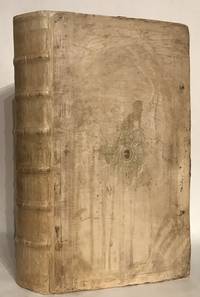
1662013144Amsterdam: Apud Ioannem Ianssonium - Johannes Janssonius 1662 Book. Good. Hardcover. 249 15 pages. The title page is engraved. In modern full vellum binding some soiling. Ink number to the front free end paper. Old ink name to the foot of the title page. Light browning and some staining and spotting to pages. Apud Ioannem Ianssonium - Johannes Janssonius hardcover
16432209030005Ex Officina Elzeviriana Lugd. Batavorum Leiden 1643. Hardcover. Good. Bound in full contemporary polished calf. 4 raised spine bands red leather spine label. Head of spine chipped. Good binding and cover. 22pp including engraved title pp. 672; pp. 44. Early marginalia on front paste down. Willems 552. Ex Officina Elzeviriana, Lugd. Batavorum [Leiden] hardcover
167052391670. : 6 The bottom edges of the front and back cover are damaged. 6 Blank pages / Frontispiece / Title Page / 470 Pages / 33 NNP / 9 Blank pages Binding: Contemporary Full Vellum 24mo Height cm: 14 CM Width cm: 8 CM Thickness cm: 4 CM hardcover
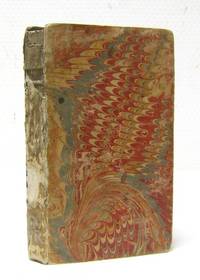
164129349<p>Desiderius Erasmus wrote Enchiridion militis Christiani as a guide for Christian discipline urging a life shaped by integrity rather than outward observance. First circulated in 1503 the work became a classic of Renaissance humanist thought read across Europe for generations. This 1641 edition was issued in Leiden by Ioannis Maire and reflects the sustained appeal of Erasmus's teachings more than a century after their first printing. The book is presented in sextodecimo format measuring 5 by 3 inches with 330 pages. Condition: Very Good. The binding with leather spine and marbled boards remains secure with some hinge wear gilt lettering visible on the spine and internally the pages are clean. Collation: 330 pp. No illustrations are present. Edition: 1641 printing. References: not cited. #29349 PHOTOS AVAILABLE UPON REQUEST.</p> officina Ioannis Maire hardcover
169994182Christopheri Salfeldii b. 1699. Hard cover. Fair/No jacket. Bin 4 Long Case. From the library of Friedrich Adolf Trendelenburg and containing his bookplate. Trendelenburg was a key influence on Soren Kierkegaard and the teacher of Franz Brentano and Wilhelm Dilthey. In Latin.<br /> <br /> Cover is heavily worn browned and soiled. Parts of spine are missing and the rest is peeling off binding but remains attached to cover boards. Spine is cracked but all pages remain attached to binding. Pages are tanned and heavily foxed but text is legible. Christopheri Salfeldii b. unknown
168550211<p>This 1685 Amsterdam edition of Desiderius Erasmus's MÅrias EnkÅmion or Stultitiæ Laus presents a Latin printing of one of the most recognized works of Renaissance humanism. First composed in 1509 the text uses satire to examine European society religious customs and intellectual traditions drawing on classical references and allegorical structure. Erasmus remains a central figure in early reformist thought and this work circulated widely across Europe in numerous editions. This compact format reflects continued readership in the seventeenth century. Provenance: Bookplates of Giles Robertson 1913–1987 20th-century British art historian and expert on the Italian Renaissance; and D.S. Robertson 1885–1961 classical scholar and the Regius Professor of Greek at the University of Cambridge on front endpaper. Good full leather binding with tight and secure text block; front cover attached only by threads front endpapers with extensive handwritten notes titled "Index Capitum" pages generally clean with minimal foxing. 16mo single volume. Collation: 8 152 pp. Illustrations: engraved title page. Edition: 1685 edition. #50211. PHOTOS AVAILABLE UPON REQUEST.</p> Henricum Wetstenium hardcover
1693960Z11Amsterdam: Ex Typographia Blaviana 1693. Leather. Very Good Indeed. 8" by 5". None stated. A collection of Latin works from the historic humanist philosopher and theologian Desidarius Erasmus bound in full vellum. A collection of works from Erasmus first published as 'Colloquia Familiaria' in 1518. With a fantastic monochrome wood engraved title page. A collection of dialogues and works by the historic late fifteenth-early sixteenth century philosopher humanist Catholic theologian Desiderius Erasmus. This collection often referred to as the 'Colloquies' features discussions on a wide variety of topics and were first intended as Latin school dialogue exercises and includes notable works such as 'Naufragium' which describes a shipwreck 'Amicitia' which is a collection of folk stories involving animals and 'Epicureus' which discusses ancient Greek philosophical movements. The register runs continuously as -6 A-Z8 Aa-Zz8 Aaa-Eee2. Collated complete. Written in the original Latin. Bound in contemporary full vellum. Bound in full contemporary vellum. Original endpapers and blanks retained. Externally very smart with handling marks and slight fading to the text to the spine. Bookplate of 'Sir John Eliot Bart' to the front pastedown with closed tears to the pastedowns. Internally firmly bound with generally clean and bright pages with minimal age toning and the odd minor spot only. Very Good Indeed Ex Typographia Blaviana hardcover
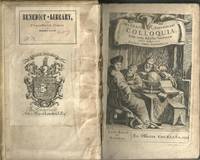
1664020084Lugduni Batavorum et Roterodami: Ex Officina Hackiana 1664. Inteira de Pergaminho. Bom / Good / Bon. In-8º190x122. 1 vol. de 12-784-18 pp. Portada gravada a buril em chapa de cobre representando Erasmo sentado a uma mesa sobre a qual está um globo e alguns livros e à sua volta três personagens que ouvem e comentam entre si o que diz o mestre. Encadernação em inteira de pergaminho Ex-libris armoriado inglês. Humanista holandês Erasmo de Roterdão foi educado com os padres augustinianos estudou teologia na Holanda e em Paris e doutorou-se em Turim em 1506. Trabalhou como perceptor privado preparando para os seus alunos uns opúsculos pedagógicos que com o tempo se converteram em importantes livros da cultura europeia. Em Itália foi discípulo de Lorenzo Valla. Viajou para Inglaterra onde foi hospede de Tomás More onde escreveu o célebre Elogio da Loucura e estudou a língua grega. Em Veneza trabalhou com Aldo Manuccio numa composição de provérbios os Adagia. Preparou uma edição grega do Novo Testamento que causou escândalo. Realizou depois diversas edições comentadas de textos clássicos. Afastando-se das posições de Lutero saíu de Basileia entretanto adepta do protestantismo e foi viver para Friburgo durante alguns anos onde escreveu estes Colloquia. Brunet II 1041 <br/> <br/> Ex Officina Hackiana unknown
16516823Amsterdam: Jodocum Janssonium 1651. Hardcover — Tapa dura. 134x72mm. 5¼x2¾". Amsterdam Jodocum Janssonium 1651. En 12º 134 x 72mm. Frontispicio grabado 24 672 44 pp. 1 grabado a toda página. Encuadernación de la época en pergamino a la romana. Temprana edición de los <em>Coloquios</em> de Desiderio Erasmo que contienen un manual de enseñanza de latÃn incluyendo ejercicios y juegos de palabras con fines educativos y un documento sobre cómo la cultura clásica podrÃa servir como modelo en la vida renacentista; finalmente un folleto religioso de tintes reformistas. Buen ejemplar. Jodocum Janssonium hardcover
16421002200012Lugundi Batavorum Ex Officina Ioannis Maire 1642. Leather Bound. Very Good. 2 volumes bound in one. Published by Lugundi Batavorum 1641 and 1642 respectively. Duodecimo. pp. 264 & 176; for a total of 440 pages. Later full mottled calf edges and joints rubbed ownership blind seal on ffep text block very good. See pictures. Latin. Lugundi Batavorum, Ex Officina Ioannis Maire hardcover
163698528Lugd. Batavorum Leiden : Ex Officina Elzeviriana 1636. 130x75mm. titre grav 11 ff - 672 44 pages bandeaux lettrines culs-de-lampe reliure veau de lÕpoque avec titre auteur fleurons encadrements et filets dors au dos quatre nerfs usures aux coiffes autrement bon tat. Tranches marbres. 259 Ex Officina Elzeviriana unknown
1636#BIBLIO-1180<p>Des. Erasmi Roterod. Colloquia nunc emendatiora; cum Coronis Apologetica Pro Colloquiis Erasmi ex ipsius scriptis quantum per otium licuit fideliter collecta a p. s. accedit ejusdem de colloquiorum vtilitate dissertatio</p><p><em>Desiderius Erasmus Roterodamus of Rotterdam - Colloquies now emendated/corrected; with an Apologia on the Usefulness of the Colloquies of Erasmus from his writings as far as leisure permitted faithfully collected by P. S. with the same dissertation on the usefulness of colloquia.<br /></em><br />Lvgd. Batavorvm: ex officina Elzeviriana <em>Leiden Netherlands: Elzevir Press</em>. Anno 1636. Believed to be first Elzevir printing. Hardback later full calf binding perhaps late 18th century or 19th century with black title label gilt-blocked title decoration and bands. Blue cloth ribbon bookmark sewn into binding. Duodecimo/12mo measures around 3" x 5 1/8" x 1 3/8". Pagination: 4 xxiv 672 44 8 pp. Title page contains woodcut of Erasmus using a telescope by Cornelius Claesz Dusend. An attractive volume.<br />Boards in good condition for age only minor scuffing and marking very clean and gilt detail vivid though a little bumping to corners and tearing to front outer corner. Spine torn at head and a little at tail extending onto hinges with some loss at head of spine a little darkening to torn areas possible signs of repair attempts. A little discolouration and a lot of rubbing to gilt detail on spine which has faded to some degree as a result. Binding firm. All page edges gilt some scuffing and dulling especially to upper edges which show some marking but mostly clean and still quite vivid to lower and fore-edges. Attractive marbled endpapers. A little writing to verso of front free endpaper. Minor light foxing and staining to preliminary and hindmost pages. A little scattered light foxing and to some pages and occasional other marking but otherwise very clean for age and very crisp with no apparent underlining marginalia etc. See pictures for further information. About the author/work: <em>Desiderius Erasmus Roterodamus; 28 October c. 1466 – 12 July 1536 commonly known in English as Erasmus of Rotterdam or simply Erasmus was a Dutch Christian humanist Catholic priest and theologian educationalist satirist and philosopher. Through his works he is considered one of the most influential thinkers of the Northern Renaissance and one of the major figures of Dutch and Western culture. </em> <em>Erasmus was an important figure in classical scholarship who wrote in a spontaneous copious and natural Latin style. As a Catholic priest developing humanist techniques for working on texts he prepared pioneering new Latin and Greek scholarly editions of the New Testament and of the Church Fathers with annotations and commentary that were immediately and vitally influential in both the Protestant Reformation and the Catholic Reformation. He also wrote On Free Will The Praise of Folly The Complaint of Peace Handbook of a Christian Knight On Civility in Children Copia: Foundations of the Abundant Style and many other popular and pedagogical works.</em> <em>Erasmus lived against the backdrop of the growing European religious reformations. He developed a biblical humanistic theology in which he advocated the religious and civil necessity both of peaceable concord and of pastoral tolerance on matters of indifference. He remained a member of the Catholic Church all his life remaining committed to reforming the church from within. He promoted what he understood as the traditional doctrine of synergism which some prominent reformers such as Martin Luther and John Calvin rejected in favour of the doctrine of monergism. His influential middle-road approach disappointed and even angered partisans in both camps.</em><br /><em>Colloquies Latin title Colloquia familiaria is one of the many works of the "Prince of Christian Humanists" Desiderius Erasmus. First published in 1518 as Latin dialogues for schoolboy exercises the work expanded over the following decades with witty but more serious and controversial content. Among other things the pages ".held up contemporary religious practices for examination in a more serious but still pervasively ironic tone" </em><em>Source: Wiki</em></p> Elzeviriana / Elzevir hardcover
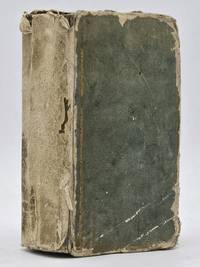
1650505202Typis Ludovici Elzeverii Elsevier 1650. Leather. GOOD. Collation complete: 8 unsigned Froben note and Author Vita A-Nn4 Oo-Pp4; Pagination: 8 589 3. 24mo sewn in 8's contemporary brown calf with gilt tooled spine. Engraved title page. Tips worn with some older reapirs headband intact tail of spine chipped ffep lost with waste vellum reinforcment stitched in now unglued. First owner's inscription to FPEP indecipherable; subsequently ex-libris Rene Louet Seigneur De La Porte with his inscriptions d. 1700 to title page verso p. 1 34 558 561 and colophon also with later 'Professors' Library' stamp from 'Grand Seminaire . Lava.' to title verso. This is NOT the 'prettier' of the two 1650 Elzevier printings listed by Willems 1110. 'Erasmus' Familiar Colloquies grew from a small collection of phrases sentences and snatches of dialogue written in Paris about 1497 to help his private pupils improve their command of Latin. Twenty years later the material was published by Johann Froben Basel 1518. It was an immediate success and was reprinted thirty times in the next four years. For the edition of March 1522 Erasmus began to add fully developed dialogues and a book designed to improve boys' use of Latin and their deportment soon became a work of literature for adults although it retained traces of its original purposes. The final Froben edition March 1533 had about sixty parts most of them dialogues. It was in the last form that the Colloquies were read and enjoyed for four centuries. For modern readers it is one of the best introductions to European society of the Renaissance and Reformation periods with lively descriptions of daily life and provocative discussions of political religious social and literary topics presented with Erasmus's characteristic wit and verve.' -- Craig Thompson introduction to the Colloquies volume of Erasmus's Collected Works. Typis Ludovici Elzeverii [Elsevier] unknown
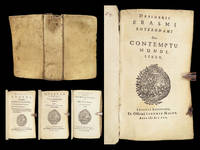
164127446<p><strong>1641 ERASMUS 1ed Contemptu Mundi Humanism Peace vs War Praise of Medicine 4in1</strong></p><p>The "<em>De Contemptu Mundi</em>" was a well-known and iconic genre of apologetic literature throughout history seeing its most frequent examples in the Middle Ages. Authors such as Petrarch Bernard de Cluny and Pope Innocent III all wrote separate examples of "<em>Contemptu Mundi</em>" in which they expressed a strong rejection of the world the materialistic nature of the world and expressed the need for Christian values.</p><p>Erasmus of Rotterdam wrote his own version of a "<em>Contemptu Mundi</em>" which was likely first published in the 1521. This work however incorporated much of Erasmus's humanist ideals rather than focusing solely on asceticism.</p><p>This 1641 printing of the works of Erasmus includes not only "<em>Contemptu</em>" but also other notable works such as</p><p><!-- if !supportLists-->· <!--endif-->"Querela Pacis" – Erasmus's plea for peace during a time of war in Europe critiques of war and hypocrisy</p><p><!-- if !supportLists-->· <!--endif-->"De Virtute Amplectenda Oratio" – treatise extoling the value of a moral life</p><p><!-- if !supportLists-->· <!--endif-->"Morte Declamatio" – Erasmus's praise of medicine celebrating physicians and exploring morality with relation to health.</p><p>Item number: #27446</p><p>Price: $599</p><p>ERASMUS of Rotterdam</p><p><strong><em>Desiderii Erasmi Roterodami De contemptu mundi. Liber</em></strong></p><p>Lugd. Batav: ex officinâ Ioannis Maire 1641. First edition.</p><p><u>Details</u>:</p><p><!-- if !supportLists-->· <!--endif-->Collation: Complete with all pages; 4 parts in 1</p><p><!-- if !supportLists-->o <!--endif-->"Contemptu" – 105 1</p><p><!-- if !supportLists-->o <!--endif-->"De virtue…" – 235 1</p><p><!-- if !supportLists-->o <!--endif-->"Querela" – 76</p><p><!-- if !supportLists-->o <!--endif-->"Consultatio" – 91 1</p><p><!-- if !supportLists-->· <!--endif-->Language: Latin</p><p><!-- if !supportLists-->· <!--endif-->Binding: Vellum; tight and secure</p><p><!-- if !supportLists-->· <!--endif-->Size: ~5.25in X 3.25in 13.5cm x 8cm</p><p>Our Guarantee:</p><p>Very Fast. Very Safe. Free Shipping Worldwide.</p><p>Customer satisfaction is our priority! Notify us with 7 days of receiving and we will offer a full refund without reservation!</p><p><u>Photos available upon request. </u></p> officinâ Ioannis Maire hardcover
167150061<p>First printed in 1512 De utraque verborum ac rerum copia by Erasmus of Rotterdam became a standard Renaissance rhetoric manual in European Latin schools. Structured in two books it sets forth numerous variations of words and ideas drawn from classical sources and humanist scholarship. The work circulated widely through the sixteenth and seventeenth centuries. This 1671 Paris edition printed Apud viduam C. Thiboust & Petrum Esclassan represents a later seventeenth century issue of the text. No provenance marks present. Near Fine; leather binding tight and secure with minimal corner wear marbled boards well preserved pages clean with light age toning and no markings. 16mo single volume 4.5 x 2.5 inches. Collation: 8 305 20 pp. Edition: 1671 Paris printing. References: Walsh on Erasmus. #50061. PHOTOS AVAILABLE UPON REQUEST.</p> C. Thiboust & Petrum Esclassan hardcover
1685221001685 1ed Erasmus of Rotterdam Enchiridion Militis Christian Knight Soldier Wars"When I have a little money I buy books; and if I have any left I buy food and clothes."― ErasmusWhile best known for his 'In Praise of Folly' and 'Colloquies' Desiderius Erasmus wrote other important works including his book "Enchiridion Militis Christiani". More commonly known as 'Handbook of the Christian Knight' this book is a guidebook for Christians on how to live a Christian life rather than just going through the practices and appearing to be living for Christ.This 1685 edition was published by John Hayes in Cambridge a fine Latin printing of a famous work of Erasmus philosophy and theology.Item number: #22100Price: $750ERASMUS of RotterdamEnchiridion militis Christiani saluberrimis praeceptis refertum . ejusdem de preparatione ad mortem liberCantabrigiae: ex officina Joh. Hayes 1685. 1st editionDetails: • Collation: complete with all pageso 400 8o Includes engraved frontispiece • Language: Latin• Binding: Leather; tight and secureo Stunning red Moroccan leather• Size: ~5.25in X 3.25in 13cm x 8cm• Rare and desirable Our Guarantee:Very Fast. Very Safe. Free Shipping Worldwide.Customer satisfaction is our priority! Notify us with 7 days of receiving and we will offer a full refund without reservation! 22100Photos available upon request. Joh. Hayes hardcover
164227140<p><strong>1642 Erasmus of Rotterdam 1ed Letters Beatus Rhenanus & Bilibaldo Dutch Humanism </strong></p><p><em>"When I have a little money I buy books; and if I have any left I buy food and clothes."</em></p><p>― Erasmus</p><p>While mostly known for involvement in the Northern Renaissance Erasmus of Rotterdam published several works on humanism and Protestant theology. Beginning in 1642 publisher Joannis Maire sought to publish an entire series of the works of Erasmus. This work '<em>Vita'</em> was the first of this series. This work and the letters therein are a reissue of the 1615 edition that was edited by the famous Dutch scholar Pieter Schrijver. '<em>Vita'</em> itself is a collection of smaller works including:</p><p><!-- if !supportLists-->· <!--endif-->Erasmus's 'Autobiography'</p><p><!-- if !supportLists-->· <!--endif-->Beatus Rhenanus 'Biography' of Erasmus</p><p><!-- if !supportLists-->· <!--endif-->Erasmus's last will and testament</p><p><!-- if !supportLists-->· <!--endif-->A plethora of letters written by Erasmus to Lambertus Grunnius Hector Deidonanus Christophorus Messia Hispanus Conradus Goclenius Mutianus Rufus Joannes de Hondt Oecolampadius Petrus Vulcanius and Helius Eobanus Hessus.</p><p>Item number: #27140</p><p>Price: $599</p><p>ERASMUS of Rotterdam</p><p><strong><em>Magni Des. Erasmi Roterodami vita ; partim ab ipsomet Erasmo partim ab amicis aequalibus fideliter descripta. Accedunt Epistolae illustres plus quam septuaginta</em></strong></p><p>Lugduni Batavorum Leiden: Ex officina Ioannis Maire 1642. First edition.</p><p><u>Details</u>:</p><p><!-- if !supportLists-->· <!--endif-->Collation: complete with all pages</p><p><!-- if !supportLists-->o <!--endif-->36 394</p><p><!-- if !supportLists-->o <!--endif-->Includes engraved title page</p><p><!-- if !supportLists-->· <!--endif-->Language: Latin</p><p><!-- if !supportLists-->· <!--endif-->Binding: Vellum; tight and secure</p><p><!-- if !supportLists-->· <!--endif-->Size: ~5.25in X 3in 13cm x 7.5cm</p><p>Our Guarantee:</p><p>Very Fast. Very Safe. Free Shipping Worldwide.</p><p>Customer satisfaction is our priority! Notify us with 7 days of receiving and we will offer a full refund without reservation!</p><p><u>Photos available upon request. </u></p> Ex officina Ioannis Maire hardcover
164620149Francofurti: Johannis Pressii 1646. 1646. First edition thus. Small folio. Title page printed in black and red illustrated with a vignette engraving. 13 pp.; 776 pp. 32 pp. Index Proverbiorum 41 pp. Typographus Lectori 53 pp. Index Proverbiorum Erasmi Jun II Cogati. . . 32 pp. Rerum et Verborum in Hoc Adagiorum Opere. Bound in full contemporary velum with six raised spinal bands; decoration blind stamped front and rear covers. Text in Latin and Greek. The velum has some typical soil but no erosion. Interior hinges very firm some light wrinkles title page. There is a light damp stain that extends up from the base at the gutter at the front materials for a maximum of about 2 1/2" tapering down to nil by the hundredth page of the text. Page toning and some foxing exists on some of the pages others not. Overall a very good book. 1st Edition. Hardcover. Very Good. Francofurti: Johannis Pressii, 1646. hardcover
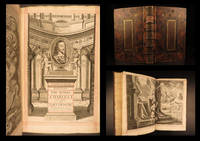
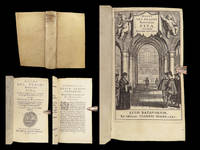
1661647Paris: Apud Claudium Thiboust 1661. Third edition. Contemporary full speckled calf gilt-tooled spine in six compartments with raised bands and gilt title “Colloq. Erasmi.†Binding is complete but well worn with rubbing edge wear and chipping at head and tail of spine; corners rounded joints starting yet sound. <br /> <br /> A mid-17th-century Parisian edition of Erasmus of Rotterdam’s famous Colloquia FamiliarÃa one of the foundational works of Renaissance humanism and early modern pedagogy. Originally written as conversational exercises for students learning Latin Erasmus’s dialogues evolved into a brilliant and witty critique of contemporary morals superstition and scholastic excess. Through satirical exchanges on everyday subjects—friendship marriage travel religion and education—Erasmus offers insight into both Christian ethics and humanist reform. The Colloquia enjoyed immense popularity for two centuries as both a language text and a guide to civility and it remains a monument of Renaissance learning style and social commentary.<br /> <br /> This 1661 edition edited by Nicolas Mercier includes scholarly notes a Latin–French life of Erasmus and extensive commentary designed for academic study. The volume opens with an elaborate engraved frontispiece portrait of Erasmus at his desk beneath cherubs holding a banner the emblematic motto Nulli cedo “I yield to no one†above him. The typography and ornamentation typify Parisian classical printing of the reign of Louis XIV with woodcut initials and headpieces throughout. The book closes with Mercier’s biographical essay Vita Desiderii Erasmi Roterodami and an index of the numerous colloquies—each a mirror of Erasmus’s wit and moral philosophy.<br /> <br /> Condition: Text block solid pages evenly toned with occasional foxing and light damp staining. Small early ink inscriptions on endpapers and title some early marginal notes. Engraved frontispiece crisp and well preserved. Overall- good. Apud Claudium Thiboust unknown
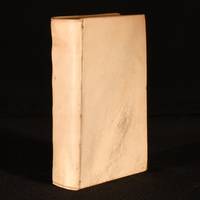
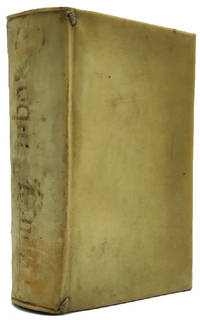
164350089Lugd. Batavorum Leiden Ex Officina Elzeviriana 1643. 12mo. Contemp. full vellum. Some browning to spine and covers. Ms title on spine. Engraved title-page mounted. 2267244 pp. Some old underlining to the first 150 pp. A faint dampstain to some upper right corners of some leaves in the middle of the book. A few scattered brownspots. Angraved medaillon of Ersamus in the text foreword. <br/><br/><em>Second Elzevier-edition the first 1636. - Willems: 552. </em> hardcover