Jonas DryanderBiblio.com
48 résultats
0366451308.Ghardcover. Good. Access codes and supplements are not guaranteed with used items. May be an ex-library book. hardcover
ria9781108069526_inpPaperback. New. New Book; Fast Shipping from UK; Not signed; Not First Edition; Between 1796 and 1800 librarian and botanist Jonas Dryander 1748–1810 published this five-volume work recording the contents of the huge scientific library belonging to the distinguished naturalist Sir Joseph Banks 1743–1820. T paperback
0428784739.Ghardcover. Good. Access codes and supplements are not guaranteed with used items. May be an ex-library book. hardcover
0428766439.Ghardcover. Good. Access codes and supplements are not guaranteed with used items. May be an ex-library book. hardcover
0366671340.Ghardcover. Good. Access codes and supplements are not guaranteed with used items. May be an ex-library book. hardcover
1862B69721Bruxelles, Société de l'histoire de Belgique 1862 xxv + 665pp.(dont les pp.274-656 contiennent des pièces justificatives), 22cm., dans la série "Société de l'histoire de Belgique. Collection de mémoires relatifs à l'histoire de Belgique" no.13, exemplaire numéroté de Monsieur Terrade: no.124, signé par le secrétaire -qui est en même temps l'éditeur- Ch.-Al. Campan, reliure cart. (plats marbrés, dos en cuir avec titre et décorations dorés, feuilles de garde marbrées, peu passée), qqs.rousseurs, sinon en bon état, B69721
1108069533.Gpaperback. Good. Access codes and supplements are not guaranteed with used items. May be an ex-library book. paperback
1108069541.Gpaperback. Good. Access codes and supplements are not guaranteed with used items. May be an ex-library book. paperback
1108069517.Gpaperback. Good. Access codes and supplements are not guaranteed with used items. May be an ex-library book. paperback
1108069525.Gpaperback. Good. Access codes and supplements are not guaranteed with used items. May be an ex-library book. paperback
3640443632.Gpaperback. Good. Access codes and supplements are not guaranteed with used items. May be an ex-library book. paperback
42636194like new. unknown
43500952-nnew. unknown
43500952like new. unknown
42636194-nnew. unknown
ria9783112365212_inpHardcover. New. New Book; Fast Shipping from UK; Not signed; Not First Edition; N/A hardcover
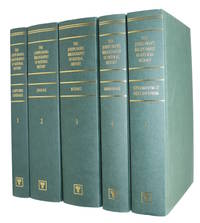
2003S53411Bristol: Thoemmes Press 2003. 4 vii 309 14; 4 xx 578 30; 4 xxiii 656 38; 4 ix 390 26; 4 ii 514 . . HB. 5 vols 8vo bds minor fading. Vg. Vol. 1: Scriptores Generales; Vol. 2: Zoologi; Vol. 3: Botanici; Vol. 4: Mineralogi; Vol. 5: Supplementum et Index Auctorum. Text Latin. Reprinted from the rare 1796-1800 edition. Lists some 28000 books held in the library of Sir Joseph Banks 1743-1820. 9781843710257 Thoemmes Press unknown
1862B114672Bruxelles, Société de l'histoire de Belgique 1862-1863 Ouvrage complet en 2 tomes (en 3 volumes physiques), xxv,665 + 537pp., 22cm., dans la série "Société de l'histoire de Belgique. Collection de mémoires relatifs à l'histoire de Belgique" no.13, reliure cart. modernes uniformes et solides (plats marbrés, dos en toile noire), texte frais sauf qqs. rares rousseurs, , bon état, peu commun, poids: 1.8kg., B114672
1798A60471London: Typis Gul. Bulmer et Soc. 1798. vii 1 309 14-index . . HB. 8vo later half calf rubbed/scuffed raised bands and leather title pieces to spine gilt. Occasional foxing. Good. Withdrawn from an institutional library with a few neat ink stamps. First edition. Scarce. This catalogue by the Swedish botanist and librarian Jonas Dryander 1748�1810 lists the personal library of Sir Joseph Banks 1743-1820 one of the most prominent figures in the scientific community during the late 18th and early 19th centuries. The catalogue was praised by many contemporaries including the botanist Sir James Edward Smith who wrote that 'a work so ingenious in design and so perfect in execution can scarcely be produced in any science'. Volume one covers the general scientific works included in Banks' library including some natural history and materia medica also includes an Addenda and Index. First volume of five published only.Soulsby 3639. Typis Gul. Bulmer et Soc. hardcover
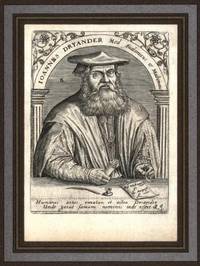
1597341801597. Monogrammist BR J.Th. de Bry Kupferstich aus J.J.Boissard Icones virorum illustrium Frankfurt 1597-99 Kupferstich 142 x 108 auf 185 x 147 mm. Johannes Eichmann genannt Dryander "am 27. Juni 1500 in Wetter in der Nähe von Marburg geboren hatte 1518 mit dem Studium der "artes" an der Universität Erfurt begonnen in Bourges und vermutlich Paris Medizin und Mathematik studiert und 1533 in Mainz die medizinische Doktorwürde erlangt. Im selben Jahr noch wandte sich der Kanzler des Landgrafen Philipp von Hessen Johannes Feige 1482 -1543 an ihn um ihn nach dem Fortgang des ersten ordentlichen Professors der Medizin an der neu gegründeten Universität Marburg Euricius Cordus 1486-1535 dessen Famulus Dryander in Erfurt gewesen war für die vakant gewordene Stelle in Marburg zu gewinnen. Die Verhandlungen scheinen sich jedoch zunächst zerschlagen zu haben. Der Leibarzt des Landgrafen Philipp Johannes Meckbach 1495-1555 wurde Dryander vorgezogen so daß dieser vorerst in Koblenz blieb wo er noch im selben Jahr am 24. Dezember seine Schrift über das Emser Bad abschloß. Erst nach der Entlassung Meckbachs wurde Dryander nach Marburg als Professor der Medizin und Mathematik berufen wo er bereits vor seinem Antritt am 1.6.1535 eine öffentliche Sektion abgehalten hatte der 1536 die zweite 1539 die dritte und 1558 die vierte folgten. Dem Vorwort des Rektors der Universität Marburg zu Dryanders Anatomielehrbuch aus dem Jahre 1536 ist zu entnehmen daß nach einer Bestimmung des Landgrafen Philipp jährlich ein bis zweimal am Leichnam von Verbrechern Anatomie gelehrt werden sollte. Auf diese Aufforderung gehen Dryanders Sektionen vom 1. Juni 1535 und 1. März 1536 zurück sie gehören zu den frühesten Zergliederungen überhaupt die in Deutschland bekannt geworden sind. Dryander betrachtete die Anatomie als Fundament der Medizin. In seiner Antrittsvorlesung die am 25. Oktober 1535 stattfand und den Auftakt sowie das Programm seiner Lehrtätigkeit bot verteidigte er mit Nachdruck das Studium der Anatomie als unentbehrliche Voraussetzung für die medizinische Praxis. Marburg die erste protestantische Hochschule 1527 gegründet das Jahr in dem Paracelsus eine neue Heilkunde proklamierte und die Bücher der scholastischen Autoren öffentlich verbrannte mußte ihm als ein gün-stiger Ort zur Verwirklichung seiner Reformideen erscheinen. So setzte sich Dryander schon zu Beginn der Marburger Amtszeit energisch und nicht ohne Erfolg für die Verbesserung des medizinischen Unterrichts ein. Er forderte eine Vorbildung in der "physica" der allgemeinen Naturgeschichte die mit einem öffentlichen Examen nachzuweisen war und verlangte die praktische Ausbildung der angehenden Medici welche die Professoren auf ihren Patientenbesuchen begleiten sollten. Die Praxis sollte generell vor den "lectionibus" den Vorrang haben nicht trockenes Bücherwissen die philologische Zergliederung klassischer Texte sollte den Studenten der Medizin leiten sondern die eigene Einsicht in die "beste Bibliothek die Natur". Dryander befaßte sich nicht nur mit der Reform des Medizinstudiums sondern auch mit Verbesserungen des Medizinalwesens. Auf seine Ver-anlassung hin wurde 1539 die Leprosenschau eingeführt. Er for-derte nicht nur die jährliche Visitation der amtlichen Apotheken sondern zugleich auch die Abschaffung der Winkelapotheken und die Beseitigung des Kurpfuscherunwesens. In der Bekämpfung der medizinischen Scharlatanerie erwies sich Dryander als ebenso uner-müdlicher Richter wie gewaltiger Wortschöpfer. Keine Gelegenheit versäumte er in derben und drastischen Ausdrücken die unerfarnen Kaelberaerzte Landstreicher und Leudbescheißer" zu beschimpfen die ihre "künstlin / hinderm ofen gelernt. . zu allen gebrechen / ein Artztnei / ein Tranck / ein Salb / ein Pflaster oder so ein ungereumpts / daß mancher das leben darob verzettet." . Neben seiner Lehr- und Forschungsarbeit praktizierte Dryander außerdem in den beiden unter seiner Leitung aus den Klöstern Haina und Merxhausen umgewandelten Landeshospitälern. Unter den Kollegen genoß er hohes Ansehen so daß er mehrfach zum Rektor gewählt wurde. Dryander lehrte bis zu seinem Tode in Marburg wo er am 20.12.1560 starb. Auf literarischem Gebiet entfaltete Dryander eine ebenso große Aktivität und Vielseitigkeit wie auf praktischem Gebiet. Er beschäftigte sich in seinen zahlreichen Publikationen Editionen und Lehrschriften nicht nur mit medizinischen Themen sondern in gleicher Weise mit mathematisch-astronomischen physikalischen geographischen kosmographischen und technischen Problemen sowie Fragen des Instrumentenbaus. Obwohl sich Dryander in den meisten Schriften als ein realistischer Beobachter zeigte ließ er sich überzeugt von der inneren Harmonie der himmlischen Planeten- und Gestirnsbewegungen mit den Zustandsänderungen der Organe und Körperteile des Menschen gelegentlich auch zu spekulativen Betrachtungen etwa der Chiromantie oder astrologischen Medizin hinreißen. Seine wichtigsten Beiträge liegen auf dem Gebiet der Anatomie. Dryan-der war einer der ersten Anatomen der seine Lehrbücher mit Illustra-tionen versah die in systematischer Anordnung den Sektionsverlauf nachzubilden versuchten. Die Holzschnitte hat wie heute angenommen wird Georg Thomas von Basel der in Marburg 1534-1578 nachweisbar ist verfertigt. Einige Abbildungen entsprechen in ihrer Konzeption ganz den Tafeln des epochemachenden die Anatomie revolutionierenden Werkes von Andreas Vesal 1514- 1564. Möglicherweise haben sie sogar die anatomischen Abbildungen in Vesals Lehrbuch beeinflußt die nach Herrlingers Auffassung "durchaus als Verbesserungen der entsprechenden Holzschnitte Dryanders angesehen werden können". Daß sich hingegen Dryander und sein Verleger Egenolph ihrerseits einiger Tafeln der "Tabulae anatomicae sex" Venedig 1538 des Vesal als Vorlage für die Anatomia mundini" Marburg 1541 bedienten ist eindeutig nachgewiesen. Vesal selbst ist das Plagiat nicht entgangen und er hat an dem Vorgehen Dryanders heftige Kritik geübt. Dryander deswegen global als .Plagiator großen Stils" zu bezeichnen dürfte nicht gerechtfertigt sein worauf schon Müller-Jahncke zu recht hingewiesen hat. Nicht nur Dryanders Abhandlung über das Emser Bad eine der frühesten Badeschriften überhaupt die zudem den ersten Versuch einer Quellenanalyse enthält stellt eine durchaus selbständige Leistung dar sondern auch die Bemühungen um die Reform der medizinischen Ausbildung und Verbesserung der Anatomie sind für seine Zeit wegweisend und bedeutsam gewesen." Irmgrad Müller Einführung 35 p. zu/ Johann Dryander/ Vom Eymsser Bade. Marburg 1981 pp.22-25 unknown
64037Typis Gul. Bulmer et Soc. Londini. 1796-1797-1799. 3 volumes of 5. Volume 2 - Zoologi : pp. xx 578 xxx Index; Volume 3 - Botanici : pp. xxiii i blank 656 xxxviii Index; Volume 4 - Mineralogi : pp. ix i blank 390 xxvi Index. All ex libris the JOJHN CRERAR LIBRARY CHICAGO with the library book-plate in each volume the title-pages with the library perforation and deaccession stamp for 1984 all titles also have the original library stamps of the Leipsig University Library plus the 'duplicate' stamp volumes 2 and 4 are in later library cloth volume 3 is in early half morocco and marbled boards all spines have the Crerar Library name and call numbers internally all are clean and unmarked except as noted. Very uncommon in commerce; only 5 records at major auctions since 1986 of which 2 of the sets were incomplete. The entire set of 5 volumes was issued in 250 copies only v.5 published in 1800 contains a list of works from the first four volumes indexed by author with a supplementary list of those items that were acquired after the publication of the previous volumes. Volume 1 the Scriptores Generalis lists books dealing with various branches of science. These two volumes are lacking from the set offered here. They have been reprinted by Cambridge University Press and are available new. Typis Gul. Bulmer et Soc. Londini. 1796-1797-1799. 3 volumes, of 5. hardcover
15377239<p><strong><em>Johannes Dryander. Annulorum trium diversi generis instrumentorum.<br /></em></strong><br />Illustrated with large woodcut of an armillary sphere on title-page and the divisional title to Regiomontanus; verso of title-page with a large woodcut of "Dryander's astronomical rings" suspended from a hand in the clouds; numerous woodcut illustrations and diagrams in text; woodcut printer's device on pi4v and verso of final leaf; several large historiated woodcut initials. Text in Latin a few passages in Greek. Slim 4to. Modern ¼-vellum using old material over marbled boards; printed paper title-label in gothic script pasted on front cover. Printed in Marburg by Eucharius Cervicornus 1537. First Edition of this important assembly of texts on a popular Renaissance astronomical instrument: the astronomical ring-dial a precursor of the equatorial. Adams D940; BM STC German p 255; Houzeau and Lancaster 2459; Honeyman Collection 930; Zinner 1661<br /><br /><br />The ring-dial was intended as a navigational aid and could be adjusted for different latitudes including according to the author the Moluccas and Hispaniola. The second part of the first treatise is entitled <em>De metiendis rebus</em> and is illustrated by various cuts showing geodetic performances. Around two thirds of Dryander's work is devoted to describing the parts of his new version of the instrument and its marking and calibration as well as its use including a lengthy section on measuring the heights of objects. <br /><br /><br />The main subject of this book the so-called annuli astronomici i.e. astronomical rings was an early astronomical instrument consisting of 3 rings each representing the celestial equator declination and the meridian. The instrument may be considered a simplified portable armillary sphere or a more complex form of astrolabe. These ring instruments can be employed for both terrestrial and celestial calculations; they can also be used as a sun dial to tell time if the approximate latitude and season is known or to tell latitude if the time is known. It also had applications in surveying. Parts of the instrument go back to devices made and used by ancient Greek astronomers. <br /><br />Title page with 2 small repaired ink-burn holes causing a loss of a few words of the imprint but the date is clearly legible and slightly affecting the woodcut on verso. Occasional light soiling; several leaves with very light and unobtrusive water-staining at bottom mainly marginal; o/w a clean wide-margined example of this interesting and scarce book. </p> Eucharius Cervicornus
1404JC122<p>/ wiens Inwoonders / Wildt / Naekt / seer Godloos / ende wreede Menschen-Eeters zijn; hoe hy selve onder de Brasilianen lange gevangen geseten heft / die hem dagelijcks dreyghden doodt te slaen en t'eeten: Oock hoe wonderbaerlijck hy door de handt des Heeren verlost is. Item / hoe de wilden Wayganna geheeten / hun daer / als onder 't gebergte de Bay de Todos los Sanctos onthouden ende geneeren / voorts waer mede sy omgaen ende Oorloge voeren. Alles Figuerlijck naer't leven af gebeelt is seer dienstig voor de gene die naer Brasilien of Farnambucque varen. tAmsterdam Gedruckt hn Jan Jacobfz Bouman opt Water tegen ober de Roozen Marcht Anno 1660.</p>_x000d_<p>In 4º de 18x145 cm com viii 72 págs. Encadernação recente inteira de pele com gravação a ouro na lombada.</p>_x000d_<p>Ilustrado com gravuras no texto abertas a talhe-doce.</p>_x000d_<p>Edição holandesa extremamente rara de um importante e muito popular relato de uma testemunha ocular sobre o Brasil do século XVI por Hans Staden ca. 1520/25-ca. 1557 ou ca. 1576 artilheiro de Hesse que serviu os portugueses no Brasil nos anos 1547-1548 e 1549-1555. Durante a maior parte de sua segunda viagem ao Brasil foi mantido prisioneiro perto do Rio de Janeiro pelos índios Tupinambá. Já fluente na língua tupi terá provavelmente adquirido um conhecimento mais íntimo dos índios do que qualquer outro escritor de sua época. A primeira parte descreve suas viagens e captura pelos índios enquanto a segunda parte a cultura e costumes destes. Conseguiu sobreviver e voltar são e salvo à Europa resgatado pelo navio corsário francês Catherine de Vatteville comandado por Guillaume Moner.</p>_x000d_<p>Os contos sensacionais de Staden sobre os 'canibais selvagens nus muito ímpios e cruéis' do Brasil publicados quando os europeus quase nada conheciam do Novo Mundo imediatamente fizeram do livro um best-seller. Embora sua visão tendenciosa dos selvagens brasileiros tenha sido a progenitora de muitas crenças europeias amplamente aceites no século XVI sobre o Novo Mundo ela também contém muitas informações provenientes das observações diretas de um observador participante familiarizado com a língua nativa. Portanto constitui uma das fontes mais importantes de factos e observações sobre os indígenas locais.</p>_x000d_<p>Andres Kolben em Marburg publicou pela primeira vez o livro de Staden em alemão em 1557 mas Christoffel Plantin em Antuérpia publicou uma tradução holandesa ilustrada com 22 xilogravuras em 1558 e o livro tornou-se ainda mais popular em holandês do que em alemão existindo cerca de vinte edições holandesas quase todas muito raras. A presente edição segue as edições de Broer Jansz de 1627 e posteriores provavelmente também sua edição de 1625 que não vimos página por página e quase linha por linha tem o mesmo agrupamento A-K4 = 40 ll. e usa as mesmas xilogravuras às vezes com danos nítidos. As 17 ilustrações em xilogravura no texto estão tão próximas mesmo nas letras de 17 das 22 da edição de 1558 de Plantin que suspeitamos que elas tenham sido impressas com os seus blocos. Plantin incluiu mais cinco não nesta ou nas edições Broer Jansz mas as duas xilogravuras maiores nas duas páginas de rosto não têm imagem correspondente na edição de Plantin e provavelmente foram cortadas para Broer Jansz embora o texto esteja dividido em duas partes e a parte dois tenha a sua própria página de título essa página de título fica no meio de um caderno H3 e as assinaturas e paginação dos cadernos continuam por todo o livro portanto as duas 'partes' não podem ter sido emitidas separadamente. O STCN registra nove edições holandesas a maioria em apenas uma ou duas cópias cada mas nenhuma entre 1638 e 1685. Localizamos apenas outras três cópias da presente edição em todo o mundo.</p>_x000d_<p>Existe uma versão portuguesa do texto de Marburgo de 1557 por Alberto Löfgren revista e anotada por Theodoro Sampaio e publicada no Rio de Janeiro em 1930 com as xilogravuras inseridas nos locais correspondentes do texto que celebrizaram a obra ilustrando os relatos sobre antropofagia.</p>_x000d_<p>Sabin Borba de Moraes ou J. C. B. não referem esta edição.</p>_x000d_<p>EN In 4º 18x145 cm. viii 72 pps.</p>_x000d_<p>Binding: Recent full calf with gilt tools on spine.</p>_x000d_<p>Illustrated with engravings from intaglio printing plates.</p>_x000d_<p>Extremely rare Dutch edition of an important and very popular eye-witness account of mid-16th-century Brazil by Hans Staden ca. 1520/25-ca. 1557 or ca. 1576 a Hessian artilleryman who served the Portuguese in Brazil in the years 1547-1548 and 1549-1555. During most of his second trip to Brazil he was held prisoner near Rio de Janeiro by the Tupinambá Indians. Already fluent in the Tupi language he probably gained a more intimate knowledge of the Indians than any other writer of his day. The first part describes his voyages and his capture by the Indians while the second part describes their culture and customs. He managed to survive and return safely to Europe rescued by the French privateer Catherine Vatteville commanded by Guillaume Moner.</p>_x000d_<p>Stadens sensational tales of the savage naked very godless and cruel cannibals of Brazil published when Europeans knew almost nothing of the New World immediately made the book a best-seller. While its biased view of the Brazilian savages was the progenitor of many widely accepted 16th-century European beliefs about the New World it also contains a wealth of information from the direct observations of a participant observer familiar with the native language. It therefore forms one of the most important sources of both facts and misperceptions about indigenous Americans.</p>_x000d_<p>Andres Kolben at Marburg first published Stadens book in German in 1557 but Christoffel Plantin in Antwerp published a Dutch translation illustrated with 22 woodcuts in 1558 and the book became even more popular in Dutch than in German going through about twenty Dutch editions nearly all very rare. The present edition follows the 1627 and later Broer Jansz. editions probably also his 1625 edition which we have not seen page for page and nearly line for line has the same collation A-K4 = 40 ll. and uses the same woodcuts sometimes with clear matching damage. The 17 woodcut illustrations in the text are so close even in their lettering to 17 of the 22 in Plantins 1558 edition that we suspect they were printed from Plantins blocks. Plantin included 5 more not in this or the Broer Jansz editions but the two larger woodcuts on the two title-pages have no corresponding image in Plantins edition and were probably cut for Broer Jansz. Although the text is divided into two parts and part two has its own title-page that title-page falls in the middle of a quire H3 and the quire signatures and pagination continue through the whole book so the two parts could not be separately issued. The STCN records nine Dutch editions mostly in only one or two copies each but none between 1638 and 1685. We have located only three other copies of the present edition worldwide./p></p>_x000d_<p>There is a Portuguese version of the 1557 Marburg text by Alberto Löfgren revised and annotated by Theodoro Sampaio and published in Rio de Janeiro in 1930 with the inserted woodcuts in the corresponding places in the text illustrating the reports of anthropophagy.</p>_x000d_<p>Unknown edition not mentioned in Sabin Borba de Moraes or J. C. B.</p> M-18-D-6 hardcover