62 résultats
174557164Amsterdam, Pierre Mortier 1745 In-12 10,5 x 17,5 cm. Reliure de l’époque pleine basane fauve marbrée, dos à 5 nerfs, caissons ornés de fers dorés, pièce de titre maroquin rouge, XXIV + 343 pp. L'eau de goudron, médicament du Moyen Âge, décrite par George Berkeley fut utilisée jusqu'au début du XXe s. Coiffes usées, coins usés, première charnière fendillé, épidermures sur les plats, intérieur jauni.
174844380Chez Henri-Albert Gosse & Comp. Good. 1748. Softcover. Good softcover. Taped spine. Heavily used but in good reading condition and intact. Text is in French. Translates to "Research on the Virtues of Tar Water." ; 4 1/2" x 6 3/4"; 331 pages . Chez Henri-Albert Gosse & Comp. paperback
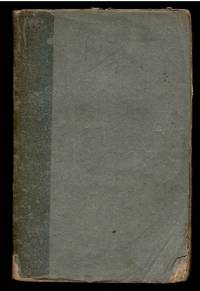
17892197A Paris, chez Durand Pere & Fils, 1789. In-8 de (4)-306-(2) pp., basane havane marbrée, dos lisse orné, pièce de titre en maroquin rouge (reliure l'époque).
174527513Amsterdam Pierre Mortier 1745
175515970Dublin: Thomas Watson 1755. Hard Cover. Fair/No Jacket. Thomas Watson1755. Leather binding. Front board missing back board partially detached 1/3 loss on spine. 370 pages 2 pages of advertisement 7 page table of contents. Pages are clean and unmarked moderately foxed throughout. Good reading/research copy. Thomas Watson hardcover
1745101753Amsterdam, Pierre Mortier, 1745, in-12, XXIV-343 pp, Basane marbrée havane, dos à nerfs orné de caissons dorés, tête rouge, Édition originale de ce traité. George Berkeley était évêque de Cloyne en Irlande. Entre autres vertus de cette "eau de goudron", l'auteur donne celle qu'il avait éprouvée lui-même contre la colique nerveuse. Minuscules épidermures, quelques rares taches et rousseurs, galeries de ver sans atteinte. Blake, 43. Wellcome, II, 149. Étiquette et tampons ex-libris de l'Institut catholique. Couverture rigide
1747206028Dublin/London: W. Innys and C. Hitch in Pater-noster-row and C. Davis in Holbourn 1747. Wear to a small portion of the upper corners of the first fifty-four pages as if nibbled by a small rodent less offensive than it sounds; a short marginal tear and library stamp to title page; small neat marginal notations; small abrasion to the front endpaper; joints and edges rubbed. 8vo 174 2pp; later morocco and marbled boards. De-accessioned from the American Antiquarian Society with the AAS stamp on the title page and initials on the spine. Among Bishop Berkeley's last works this series of "reflexions" touts the medieval remedy of tar-water made from pine tar steeped in cold water for prevention of all manner of ailments from digestive disorders and kidney stones to scurvy distemper smallpox and other illnesses. W. Innys, and C. Hitch, in Pater-noster-row, and C. Davis in Holbourn unknown
174511457AB1745. Amsterdam P. Mortier 1745. Kl.-8°. XXIV 343 S. Lederband der Zeit mit Rückenvergoldung und farbigem Rückenschild geringfügig bestoßen und berieben Gelenke mit minimalem Wurmfraß. Umlaufend roter Sprenkelschnitt. Erste Vakatseite und Schmutztitel verso mit kleiner Anhaftung am Unterrand. Titelei geringfügig lädiert am Kopfschnitt. Sonst äußerst schönes und nahezu fleckenfreies Exemplar. Blake 43; Wellcome II 149; Neu 423; Osler 1072: 'Perhaps the most remarkable work on Philosophy ever published as a chain of reflections was linked with a discussion on the virtues of tar-water.This french edition published in Amsterdam was 'quite unobtainable''Zitat des französ. Philosophen Henri Bergson. - Teer als Hausmittel lange angewandt kam als Teerwasser durch die Empfehlung des Bischofs Berkeley stark in Aufnahme s. Schelenz 590. Vgl. Ferchl 38 Poggendorff I 153 und DSB II 16. - George Berkeley 1685-1753 Bishop of Cloyne 'was a critic of the 17th- and 18th-century philosophical scientific mathematical moral political and theological ideas and an important link in the development of general philosophy between a period of Descartes and Locke and that of Hume and Kant.B.'s last major work Siris 1744 .begins as an investigation of the medicinal virtues of tar water and ends with a disquisition of Platonic philosophy' DSB; s. a. Ziegenfuß I 113 ff. unknown
174543324HB1745. Amsterdam P. Mortier 1745. Kl.-8°. XXIV 343 S. Lederband der Zeit mit Rücken- und Kantenvergoldung leicht bestoßen und berieben oberes Kapital mit kleiner Fehlstelle unterer Rücken mit montierter Bibl.-Sign. Umlaufender Rotschnitt. Schmutztitel und Titel beidseitig gestempelt oder mit handschriftlichen Anmerkungen. Sonst sehr schönes und nahezu fleckenfreies Exemplar. Blake 43; Wellcome II 149; Neu 423; Osler 1072: 'Perhaps the most remarkable work on Philosophy ever published as a chain of reflections was linked with a discussion on the virtues of tar-water.This french edition published in Amsterdam was 'quite unobtainable''Zitat des französ. Philosophen Henri Bergson. - Teer als Hausmittel lange angewandt kam als Teerwasser durch die Empfehlung des Bischofs Berkeley stark in Aufnahme s. Schelenz 590. Vgl. Ferchl 38 Poggendorff I 153 und DSB II 16. - George Berkeley 1685-1753 Bishop of Cloyne 'was a critic of the 17th- and 18th-century philosophical scientific mathematical moral political and theological ideas and an important link in the development of general philosophy between a period of Descartes and Locke and that of Hume and Kant.B.'s last major work Siris 1744 .begins as an investigation of the medicinal virtues of tar water and ends with a disquisition of Platonic philosophy' DSB; s. a. Ziegenfuß I 113 ff. unknown
1791015762London: Printed for John Stockdale Piccadilly. 1791. Hardcover. Very Good. Volume I only. Full leather with gilt title on spine; gilt ruled borders; dentelle. Spine scuffed; corners lightly worn. Starting crack to inner front hinge. Marbled endpapers. Armorial bookplate on front pastedown. Interior is clean with some occasional light foxing. pp. 2 3-271. A volume of letters by Anne Berkeley c. 1707-1786 wife of philosopher Bishop Berkeley George Berkeley addressed to Adam Gordon c. 1745-1817. The matter includes her arguments against the free-thinkers who here husband also attacked and references Shaftesbury Hume Voltaire Bolingbroke and Rousseau. In addition to addressing various theological and philosophical matters Anne largely waxes upon the importance of Christian education and morality. According to the Berkeley scholar Stefan Gordon Storrie Anne's correspondence here started around 1764 when Anne was approaching her sixties and Adam Gorden was still a young man. Volume I is divided into two parts: a the Preface by the editor Rev. Adam Gordon Rector of Hinxworth which is dated December 18 1790; and b 31 of the 41 letters by Anne Berkeley. For reference Volume II which is not offered included a the final ten letters by Anne b the ''Anniversary Addresses from a father to his son on his birthday'' by Adam Gordon and c ''Six letters to a Lady of Quality'' by the historian and Christian mystic Nathaniel Hooke. Printed for John Stockdale, Piccadilly. hardcover
1793M13879Edinburgh:: Adamus Neill 1793. 1793. 2 works in one. Small 4to. 6 52; viii 54 pp. Half-title errata. Original full gilt-stamped tree-calf dark red gilt-stamped spine labels. Very good. First work: INSCRIBED "Mr. William Berkeley from his Affectionate Friend Brother the Author." Dedicated to Nelson Berkeley. Berkeley born in Virginia educated at the University of Edinburgh submits his doctoral thesis on the human body. Both Berkeley and Minor following studied under William Robertson 1721-1793 FRSE FSA was Principal at the University a noted scholar of Scotland and its history. Second work: MINOR Charles Carolus. Disputatio medica inauguralis: de typho: quam annuente summo numine Ex Auctoritate Reverendi admodum Viri D. Gulielmi Robertson S.T.P. Academiae Edinburgenae Praefecti; necnon Amplissimi Senatus Academici consensu Et nobilissimae Facultatis Medicae decreto; pro gradu doctoris summisque in Medicina Honoribus ac Privilegiis rite et Legitime consequendis ; eruditorum examini subjicit Carolus Minor Virginiensis; Societ. Phys. Americ. Soc. Extraord. Necnon Societ. Reg. Phys. Soc. Hon. Ad diem 24. Junii hora locoque solitis. Edinburgi: Excudebat Adamus Neill cum sociis 1793. PARISH HISTORY NOTES 22: DR. CARTER BURWELL BERKELEY. Here is a brief account of the life of Carter Burwell Berkeley a devout and highly admired member of the Fork Church congregation during the early nineteenth century: He was born at Airwell Virginia on February 20 1768 and performed his early studies under the tutelage of a Mr. Bell an Irish scholar in a small log cabin near Offley Mill. His higher education was completed in 1793 with the receipt of a degree in medicine from the University of Edinburgh. / Dr. Berkeley returned to Virginia and practiced medicine from his old home until his marriage to Catherine Spotswood Carter. In the year of their wedding 1796 they built Edgewood which was to remain his residence and office well beyond her death. Each Sunday neighbors were invited to dine at Edgewood after church services and this event became a grand social and intellectual tradition along Ridge Road. / It was Dr. Berkeley's philosophy to practice faith and medicine together. One patient described waking late one night during a serious illness to find Dr. Berkeley kneeling by her bed and praying for her recovery. According to Brief Biographies of Virginia Physician by L. B. Anderson 1889 a patient was quoted as saying "We prefer Dr. Berkeley to anyone else because what he failed to accomplish by his medical skill he would secure by his prayers." / On Sunday morning November 3 1839 Dr. Berkeley was involved with his duties as chief warden when he was asked by two other doctors to visit a sick man as early as possible. "He was introduced into the room of the patient and seating himself by the bed gently grasped the wrist to feel the pulse. Not a word was uttered not a movement was made except to incline his head as was his custom during profound thought." In time the other doctors found that life has passed from the good doctor. "Thus like the faithful sentinel he fell with his armor on and in the exercise of the noble functions of his high calling." theforkchurch – Dr Carter Burwell Berkeley. Adamus Neill, 1793. unknown books
174521126Amsterdam Pierre Mortier 1745 in-12 plein-veau reliure plein veau havane in-douze (binding full calfskin duodecimo) (17 x 10,6 cm), dos 5 nerfs (spine with raised bands), décoration "or" et à froid (gilt and blind stamping decoration), titre frappé "or", pièce de titre sur fond maroquin bordeaux avec filet "or" en encadrement, roulette "or" en place des nerfs et en tête et en pied, entre-nerfs à fleuron "or" dans un encadrement d'un filet "or" avec rinceaux aux angles, nerfs légèrement frottés avec dorure légèrement estompée sur 3 nerfs ( blurred gilding), roulette "or" sur les coupes, toutes tranches lisses jaspées rouges (red edges), texte à manchette (marginal note), sans illustrations, XXIV + 343 pages , 1745 à A Amsterdam Chez Pierre Mortier Editeur,
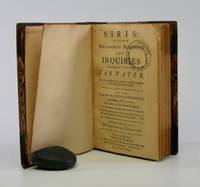
17461203210002London : Dublin printed London re-printed for W. Innys C. Hitch and M. Cooper in Paternoster-Row; and C. Davis in Holborn 1746. Hardcover. Very Good. Octavo. 192 pp. Modern brown leather gilt raised bands black leather spine label. Fine binding. Minor toning scattered spotting. <br><br> George Berkeley published Siris Philosophical Reflexions and inquiries concerning the virtues of tar-water and divers other subjects connected together and arising from one another. The early 1740's were a period of famine and epidemic in Ireland and there were no physicians in Berkeley's diocese. Berkeley took it upon himself to do what he could for the sick and settled upon tar-water as the best malady for the various ailments that he treated. Berkeley prepared tar-water by mixing pine tar with water allowing it to settle and then draining off the clear fluid for medicinal use. Siris which starts with a discussion of the virtues of tar-water for curing most diseases was the most popular of his books during his lifetime. It was widely read on the continent and in America and quickly went through several editions. Most of its readers however read it for its medical discussions and ignored the main subject of the book a chain of philosophical reflections that start with tar and end with the Trinity. In Siris Berkeley restated many of the tenets of the immaterialism of his youth but mixed them with even more speculative ideas drawing heavily on classical works. The end result is the most difficult of Berkeley's works to read although one with significant philosophical content. Subject; Hydrotherapy. [London] : Dublin printed, London re-printed, for W. Innys, C. Hitch, and M. Cooper, in Paternoster-Row; and C. Davis, in Holbor hardcover
174527379Amsterdam: Pierre Mortier 1745. perfect. Gut. XXIV 343 S. 1 Bl. Schmucklose Broschur der Zeit mit handschriftl. Rückenschild bestossen Bezug des Rückens mit Fehlstellen etwas angestaubt wenige Lagen mit Bräunungen und Wasserrand in einer Ecke teilweise nicht aufgeschnitten insgesamt aber ordentliches und breitrandiges Exemplar. Erste französische Übersetzung des Textes der zuerst 1744 in London unter dem Titel 'Siris a chain of philosophical reflexions and inquiries concerning the virtues of tar-water' erschienen war. Laut Vorwort des Übersetzers Boullier wurden für vorl. Ausgabe Ergänzungen und Korrekturen verwendet die er direkt von Berkeley aus dem Manuskript erhalten hatte. Eine vollständige deutsche Ausgabe erschien erst 1913. Berkeley 1684-1753 Theologe und als solcher seit 1734 Bischof von Cloyne Irland begründete von John Locke ausgehend 'den neueren erkenntnistheoretischen Idealismus als Immaterialismus' Eisler a.a.O. Er beeinflusste so unterschiedliche Denker wie David Hume John Stuart Mill und Ernst Mach. - Eisler Philosophen-Lexikon p. 60ff. - Ueberweg III 12. Aufl. 1924 p. 394 - Barbier IV Sp. 37 zur Identifizierung des Übersetzers. Wegen Urlaub kann Ihre Bestellung / Anfrage erst nach dem 21.06.2026 bearbeitet werden. - Because of holidays your order / question can be handled only after 06/21/2026. Pierre Mortier unknown
174638412London: in Paternoster-Row; and C. Davis in Holborn. Near Fine with no dust jacket. 1746. Leather. 88 pages; . .to which are subjoined letters from the author of SIRIS showing the medicinal properties of tar-water and the best manner of making it. A new edition complete." Later binding with calf leather over marbled boards. Fine binding. . in Paternoster-Row; and C. Davis, in Holborn hardcover
1786435266London : Harrison and Co 1786. 1st edition. Softcover. Poor copy unbound. Water stains and damage to the pages although text remains clear and legible. Pages browned creased and cracked with some loss. Physical Description; 103 pages 3 leaves of plates : illustrations. Subjects; Imaginary voyages. Utopias. Utopies. Voyages imaginaires. Voyages Imaginary. Utopian literature. London : Harrison and Co paperback
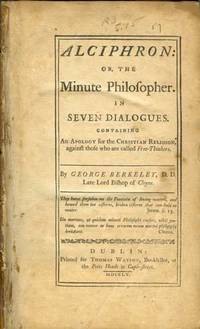
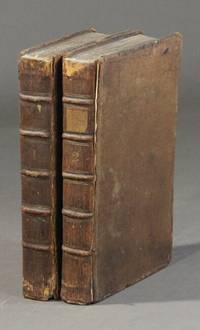
1732369350London: Printed for J. Tonson in the Strand 1732. Hardcover. Fair. Second edition. Two volumes. Octavos. Volume two includes: "An Essay Towards a New Theory of Vision" with a separate title page. Illustrated with engraved title vignettes woodcut headpieces and tailpieces including one signed tailpiece in volume one. Contemporary calf over boards edges stained red. "G: Berkeley" written in ink on front free endpaper of Vol. 1. Ex-library with bookplates and paper shelf label on spines boards are worn and detached the lower right corner of the title page in Vol. 1 is torn away effecting the final two numerals of the letterpress date and the corner of the double-ruled letterpress border; small three-digit number stamp on the bottom margin of the first Contents page in each volume else a good only sound set with scattered foxing. Both text blocks are suitable for rebinding. A classic philosophical work written when Berkeley was resident in America. ESTC T86055. Printed for J. Tonson in the Strand hardcover
174439792Dublin & London: W. Innys and C. Hitch 1744. 8vo. 174 2pp. 18th cent. calf rebacked corners worn endpapers renewed. Light toning. Bridgewater Library bookplate. New edition. W. Innys and C. Hitch unknown books
1744elala486Dublin Printed London Reprinted: For W.Innys and C.Hitch and C.Davis 1744. 1744. 8vo. pp. 174 2. contemporary mottled calf rebacked corners worn several small library rubberstamps. Second London Edition of Berkeleys most popular work an exposition of the medicinal virtues of tar-water and instructions for its use. Berkeley regarded it as a cure for virtually every ailment including fevers cancers apoplexies small-pox and scurvy and he even set up an apparatus for manufacturing it himself. It was equally beneficial he maintained for cattle and was strongly recommended to improve and sharpen the general health and intellect of infants and young children. Blake 43. Jessop 21e. Keynes 67. Kress 4685. Bib. Osleriana 1071. Wellcome II 149. Dublin Printed, London Reprinted: For W.Innys, and C.Hitch, and C.Davis, 1744. unknown
1744401896London: W. Innys and C. Hitch 1744. Second first London edition. Repairs to binding; title slightly soiled ink inscriptions in Greek on rear flyleaves a handsome copy/From the Collection of Allan B. Kirsner M.D. 8vo. 174 2 pp. Near-contemporary vellum-backed marbled boards. Berkeley's most popular work espousing the myriad uses of tar water to treat everything from fevers to cancers from infant to elderly and from human to animal. "The work begins as an investigation of the medicinal virtues of tar-water and ends with a disquisition on Platonic philosophy - a blend of science and metaphysics. While in America Berkeley experimented with tar-water for many ailments including dysentery rheumatism and asthma. The treatment proved so successful that he set up an apparatus for manufacturing it" Rootenberg. Blake 43; ESTC N12567; Keynes 64; Kress 4685; Wellcome II:149. <br/><br/> W. Innys and C. Hitch hardcover books
174752088Chez Pierre Mortier | à Amsterdam 1747 | 10 x 17 cm | relié
1732WRCLIT65559London: Printed for J. Tonson 1732. 141-356;821812215-351pp. Two volumes. Octavo. Contemporary calf. Engraved title vignettes. Three bookplates in each volume along with a faint old seminary stamp on each title scattered foxing joints a bit worn and cracked but cords sound; a good set. Second London edition of Berkeley's attempt at the refutation of the current forms of free-thinking composed while he was resident in America and including some important observations relevant to that part of the world. The second volume also includes what is functionally the fourth edition of his ESSAY TOWARDS A NEW THEORY OF VISION first published in 1709. KEYNES 17. PRINTING AND THE MIND OF MAN 176n. ESTC T86055. Printed for J. Tonson unknown books
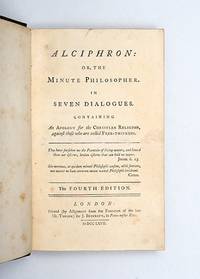
1767158145London: Printed by assignment from the executors of the late Mr. Tonson for J. Beecroft 1767. Stated fourth edition though in fact a re-issue of the third edition sheets of 1752 with a cancel title page. In Alciphron first published in 1732 Berkeley rebuts the insurgent secular intellectual trends of the early Enlightenment. Countering the views of Locke Mandeville and the third Earl of Shaftesbury who collectively manifest as the conceited free thinkers Lysicles and Alciphron Berkeley defends traditional Christianity and his own idealist epistemology. Octavo 206 x 129 mm. Nineteenth-century half calf green calf label marbled sides sprinkled edges. 19th-century bookplate of one Daniel Frazer to front pastedown. A little rubbed small chip at foot of rear joint binding firm scattered light foxing else clean slight paper fault to A8 not affecting text; a very good copy. ESTC N15774; Keynes 25; Jessop 169. unknown
173226337London: J. Tonson 1732. 2 vols. 8vo pp. 14 356; 8 218; engraved vignette title-pp.; bound with as issued An Essay towards a New Theory of Vision pp. 12 215-351; several woodcuts in the text; full contemporary calf double gilt rules on covers unlettered spines in 6 compartments volume designations in 1; some moderate chipping and cracking of the spines but all in all a good and reasonably sound set. Rothschild 372 citing the first edition of the same year: "Alciphron was written in America where Berkeley had gone to await funds which never came for his projected College in the Bermudas." <br/><br/> J. Tonson unknown books
173226337London: J. Tonson 1732. 2 vols. 8vo pp. 14 356; 8 218; engraved vignette title-pp.; bound with as issued An Essay towards a New Theory of Vision pp. 12 215-351; several woodcuts in the text; full contemporary calf double gilt rules on covers unlettered spines in 6 compartments volume designations in 1; some moderate chipping and cracking of the spines but all in all a good and reasonably sound set. Rothschild 372 citing the first edition of the same year: "Alciphron was written in America where Berkeley had gone to await funds which never came for his projected College in the Bermudas. J. Tonson unknown