Berkeley, George, Bishop of CloyneBiblio.com
62 résultats
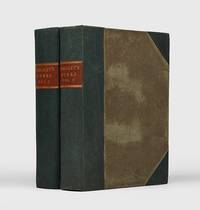
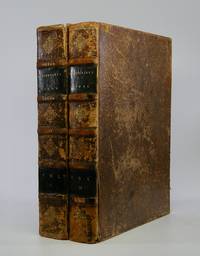
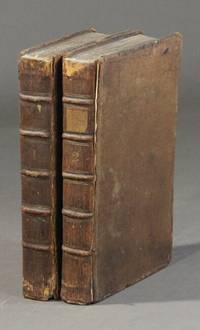
173226337London: J. Tonson 1732. 2 vols. 8vo pp. 14 356; 8 218; engraved vignette title-pp.; bound with as issued An Essay towards a New Theory of Vision pp. 12 215-351; several woodcuts in the text; full contemporary calf double gilt rules on covers unlettered spines in 6 compartments volume designations in 1; some moderate chipping and cracking of the spines but all in all a good and reasonably sound set. Rothschild 372 citing the first edition of the same year: "Alciphron was written in America where Berkeley had gone to await funds which never came for his projected College in the Bermudas. J. Tonson unknown
174511457AB1745. Amsterdam P. Mortier 1745. Kl.-8°. XXIV 343 S. Lederband der Zeit mit Rückenvergoldung und farbigem Rückenschild geringfügig bestoßen und berieben Gelenke mit minimalem Wurmfraß. Umlaufend roter Sprenkelschnitt. Erste Vakatseite und Schmutztitel verso mit kleiner Anhaftung am Unterrand. Titelei geringfügig lädiert am Kopfschnitt. Sonst äußerst schönes und nahezu fleckenfreies Exemplar. Blake 43; Wellcome II 149; Neu 423; Osler 1072: 'Perhaps the most remarkable work on Philosophy ever published as a chain of reflections was linked with a discussion on the virtues of tar-water.This french edition published in Amsterdam was 'quite unobtainable''Zitat des französ. Philosophen Henri Bergson. - Teer als Hausmittel lange angewandt kam als Teerwasser durch die Empfehlung des Bischofs Berkeley stark in Aufnahme s. Schelenz 590. Vgl. Ferchl 38 Poggendorff I 153 und DSB II 16. - George Berkeley 1685-1753 Bishop of Cloyne 'was a critic of the 17th- and 18th-century philosophical scientific mathematical moral political and theological ideas and an important link in the development of general philosophy between a period of Descartes and Locke and that of Hume and Kant.B.'s last major work Siris 1744 .begins as an investigation of the medicinal virtues of tar water and ends with a disquisition of Platonic philosophy' DSB; s. a. Ziegenfuß I 113 ff. unknown
174543324HB1745. Amsterdam P. Mortier 1745. Kl.-8°. XXIV 343 S. Lederband der Zeit mit Rücken- und Kantenvergoldung leicht bestoßen und berieben oberes Kapital mit kleiner Fehlstelle unterer Rücken mit montierter Bibl.-Sign. Umlaufender Rotschnitt. Schmutztitel und Titel beidseitig gestempelt oder mit handschriftlichen Anmerkungen. Sonst sehr schönes und nahezu fleckenfreies Exemplar. Blake 43; Wellcome II 149; Neu 423; Osler 1072: 'Perhaps the most remarkable work on Philosophy ever published as a chain of reflections was linked with a discussion on the virtues of tar-water.This french edition published in Amsterdam was 'quite unobtainable''Zitat des französ. Philosophen Henri Bergson. - Teer als Hausmittel lange angewandt kam als Teerwasser durch die Empfehlung des Bischofs Berkeley stark in Aufnahme s. Schelenz 590. Vgl. Ferchl 38 Poggendorff I 153 und DSB II 16. - George Berkeley 1685-1753 Bishop of Cloyne 'was a critic of the 17th- and 18th-century philosophical scientific mathematical moral political and theological ideas and an important link in the development of general philosophy between a period of Descartes and Locke and that of Hume and Kant.B.'s last major work Siris 1744 .begins as an investigation of the medicinal virtues of tar water and ends with a disquisition of Platonic philosophy' DSB; s. a. Ziegenfuß I 113 ff. unknown
174527379Amsterdam: Pierre Mortier 1745. perfect. Gut. XXIV 343 S. 1 Bl. Schmucklose Broschur der Zeit mit handschriftl. Rückenschild bestossen Bezug des Rückens mit Fehlstellen etwas angestaubt wenige Lagen mit Bräunungen und Wasserrand in einer Ecke teilweise nicht aufgeschnitten insgesamt aber ordentliches und breitrandiges Exemplar. Erste französische Übersetzung des Textes der zuerst 1744 in London unter dem Titel 'Siris a chain of philosophical reflexions and inquiries concerning the virtues of tar-water' erschienen war. Laut Vorwort des Übersetzers Boullier wurden für vorl. Ausgabe Ergänzungen und Korrekturen verwendet die er direkt von Berkeley aus dem Manuskript erhalten hatte. Eine vollständige deutsche Ausgabe erschien erst 1913. Berkeley 1684-1753 Theologe und als solcher seit 1734 Bischof von Cloyne Irland begründete von John Locke ausgehend 'den neueren erkenntnistheoretischen Idealismus als Immaterialismus' Eisler a.a.O. Er beeinflusste so unterschiedliche Denker wie David Hume John Stuart Mill und Ernst Mach. - Eisler Philosophen-Lexikon p. 60ff. - Ueberweg III 12. Aufl. 1924 p. 394 - Barbier IV Sp. 37 zur Identifizierung des Übersetzers. Wegen Urlaub kann Ihre Bestellung / Anfrage erst nach dem 21.06.2026 bearbeitet werden. - Because of holidays your order / question can be handled only after 06/21/2026. Pierre Mortier unknown
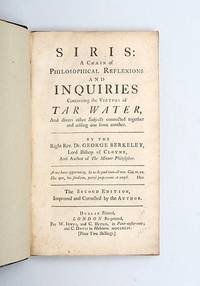
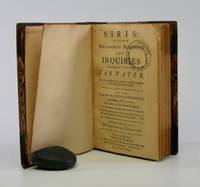
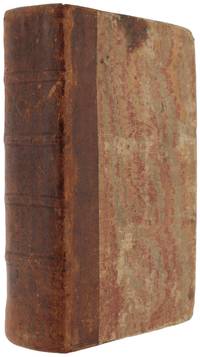
1744158069London: For W. Innys and C. Hitch and C. Davis 1744. Second London edition first published in Dublin and London earlier the same year. The work was in his lifetime by far Berkeley's most popular book. Berkeley was interested in the therapeutic properties of an infusion of tar in water and the first part of the book is indeed on the subject but he then "passes by imperceptible stages from physical to metaphysical arguments until he is fairly launched upon a general discussion of Aristotelian and Platonic philosophy. The book is written with compelling lucidity and charm and is one of Berkeley's major works though his last substantial treatise. Siris was by far his most popular work by reason of its containing a supposed remedy for most human ills the efficacy and cheapness of which was so convincingly urged by the author confidence in it being strengthened by the fact that he had experimented first upon himself. Berkeley confessed that this work caused him more thought and research than any other he had ever been engaged in" Keynes p. 116 & vi. The popularity of the work led to a series of Dublin and London editions in quick succession. This edition includes the corrections made by the author to the second Dublin edition. Octavo 196 x 116 mm. Twentieth-century quarter calf spine lettered in gilt marbled sides. Light toning to contents with a couple of ink splashes; a very good copy. ESTC T9521; Keynes Bibliography of George Berkeley 67. unknown
1744AQ18715London: Re-printed For W. Innys and C. Hitch.and C. Davis 1744. 174pp 2. Recent sheep-backed marbled paper boards contrasting red morocco lettering-piece. Lightly rubbed spine sunned. Recent book-label of John Stephens to FEP inked ownership inscription of 'Danvers Osborm 1744' to head of title-page with very occasional annotations in his hand slight loss to upper corner of leaf O1. The revised edition of George Berkeley's 1685-1753 penultimate publication an exploration of the medicinal virtues of tar-water with instructions for its use. Berkeley considered tar-water to be a cure for a plethora of ailments ranging from fevers and apoplexies to cancers and scurvy. He cites Isaac Newton in regards to his study of the solubility of salts and acids. Sir Danvers Osborn 3rd Baronet 1715-1753 politician notable for serving the cause of the House of Stuart in the Jacobite rising of 1745 and for serving as colonial governor of New York Province in 1753. ESTC T9521. Second edition improved and correct by the author. 8vo. Re-printed For W. Innys, and C. Hitch...and C. Davis hardcover
1744elala486Dublin Printed London Reprinted: For W.Innys and C.Hitch and C.Davis 1744. 1744. 8vo. pp. 174 2. contemporary mottled calf rebacked corners worn several small library rubberstamps. Second London Edition of Berkeleys most popular work an exposition of the medicinal virtues of tar-water and instructions for its use. Berkeley regarded it as a cure for virtually every ailment including fevers cancers apoplexies small-pox and scurvy and he even set up an apparatus for manufacturing it himself. It was equally beneficial he maintained for cattle and was strongly recommended to improve and sharpen the general health and intellect of infants and young children. Blake 43. Jessop 21e. Keynes 67. Kress 4685. Bib. Osleriana 1071. Wellcome II 149. Dublin Printed, London Reprinted: For W.Innys, and C.Hitch, and C.Davis, 1744. unknown
1747206028Dublin/London: W. Innys and C. Hitch in Pater-noster-row and C. Davis in Holbourn 1747. Wear to a small portion of the upper corners of the first fifty-four pages as if nibbled by a small rodent less offensive than it sounds; a short marginal tear and library stamp to title page; small neat marginal notations; small abrasion to the front endpaper; joints and edges rubbed. 8vo 174 2pp; later morocco and marbled boards. De-accessioned from the American Antiquarian Society with the AAS stamp on the title page and initials on the spine. Among Bishop Berkeley's last works this series of "reflexions" touts the medieval remedy of tar-water made from pine tar steeped in cold water for prevention of all manner of ailments from digestive disorders and kidney stones to scurvy distemper smallpox and other illnesses. W. Innys, and C. Hitch, in Pater-noster-row, and C. Davis in Holbourn unknown
17346310London: printed for Jacob Tonson 1734. First edition. <p>Rare first edition first issue of Berkeley's renowned critique of Newton and Leibniz's calculus famously described by historian Florian Cajori as "the most spectacular event of the century in the history of British mathematics." Contemporaneously bound with Berkeley's influential Theory of Vision 1733 his Defence of Free-Thinking in Mathematics 1735 and five additional pamphlets.</p>. <p>BERKELEY'S FOUNDATIONAL CRITIQUE OF THE CALCULUS</p> . <p>First edition of Berkeley's famous attack on the calculus of Newton and Leibniz which the historian Florian Cajori described as "the most spectacular event of the century in the history of British mathematics" History of the Calculus p. 57 bound with Berkeley's important Theory of Vision 1733 and Defence of Free-Thinking in Mathematics 1735 and five further pamphlets. "The Analyst is a criticism of the calculus in both its Newtonian and Leibnizian formulations arguing that the foundations of the calculus are incoherent and the reasoning employed inconsistent. Berkeley's powerful objections provoked numerous responses and the task of replying to them set the agenda for much of British mathematics in the 1730s and 1740s" Jesseph p. 121. Perhaps the most famous passage in the book p. 59 and a vivid example of Berkeley's wit is his response to the idea that fluxions could be defined using ultimate ratios of vanishing quantities: 'It must indeed be acknowledged that Newton used Fluxions like the Scaffold of a building as things to be laid aside or got rid of as soon as finite Lines were found proportional to them. But then these finite Exponents are found by the help of Fluxions. Whatever therefore is got by such Exponents and Proportions is to be ascribed to Fluxions: which must therefore be previously understood. And what are these Fluxions The Velocities of evanescent Increments And what are these same evanescent Increments They are neither finite Quantities nor Quantities infinitely small nor yet nothing. May we not call them the Ghosts of departed Quantities' Modern historians have argued that the expression 'Ghosts of departed Quantities' was intended to address both Leibnizian infinitesimals and Newtonian fluxions. "Berkeley's attack on the calculus pointed out real deficiencies . his attack was also incisive witty and infuriating. Many mathematicians were moved to try to answer it. In fact several important eighteenth-century discussions of the foundations of the calculus can be traced back to Berkeley's attack. For instance Maclaurin's monumental two-volume A Treatise ofFluxions began as a reply to Berkeley. Berkeley's attack had a more lasting effect than simply stimulating an immediate set of replies; it served to keep the question of foundations alive and under discussion and it pointed to the questions which had to be answered if a successful foundation were to be given. D'Alembert and Lazare Carnot both used some of Berkeley's arguments in their own discussions of foundations and Lagrange took Berkeley's criticisms with the utmost seriousness" Grabiner p. 27. Despite these 18th century attempts calculus was not placed on a secure foundation until around 1820 with the work of Bolzano and Cauchy on the theory of limits. The 'Infidel Mathematician' in the title is thought to be Edmund Halley 1656-1742. "As a result of the publication of The Analyst there appeared within the next seven years some thirty pamphlets and articles which attempted to remedy the situation. The first appeared in 1734 a pamphlet by James Jurin Geometry No Friend to Infidelity . Berkeley answered Jurin in 1735 in A Defence of Freethinking in Mathematics bound in the offered volume and justly asserted that the latter was attempting to defend what he did not understand. In this work Berkeley again appealed to the divergence in Newton's views - as presented in De analysi the Principia and De quadratura - to show a lack of clarity in the ides of moments fluxions and limits . In the meantime however numerous attempts some noteworthy and others insignificant were made to find new and more satisfactory forms and arguments in which to present Newton's method. By far the ablest and most famous of these was made by Colin Maclaurin. In his Treatise of Fluxions in 1744 he aimed not to alter the conceptions invlolved in Newton's fluxions but to demonstrate the validity of his method by rigorous procedures of the ancients - to deduce the new analysis from a few 'unexceptional principles'. Maclaurin professed in the preface of this work that the Analyst controversy had given occasion to his treatise" Boyer. Berkeley's Theory of Vision 1733 also bound into this volume is a follow-up and defence of his earlier Essay towards a New Theory of Vision 1709 in which he had attacked Newton's cosmology. Keynes describes the 1733 as a work "of major importance". </p> <br /> <p>"Most mathematicians who dealt with calculus techniques in the early 18th century did not worry overmuch about foundational questions. Indeed it is significant that the first intensive discussion on the foundations of the calculus was not caused by difficulties encountered in working out or applying the new techniques but by the critique of an outsider on the pretence of mathematicians that their science is based on secure foundations and therefore attains truth. The outsider was Bishop George Berkeley 1685-1753 the famous philosopher and the target of his critique is made quite clear in the title of the present work. In sharp but captivating words he exposed the vagueness of infinitely small quantities evanescent increments and their ratios higher-order differentials and higher-order fluxions para. 4: 'Now as our Sense is strained and puzzled with the perception of Objects extremely minute even so the Imagination which Faculty derives from Sense is very much strained and puzzled to frame clear Ideas of the least Particles of time or the least Increments generated therein: and much more so to comprehend the Moments or those Increments of the flowing Quantities in statu nascenti in their very first origin or beginning to exist before they become finite Particles. And it seems still more difficult to conceive the abstracted Velocities of such nascent imperfect Entities. But the Velocities of the Velocities the second third fourth and fifth Velocities &c. exceed if I mistake not all Humane Understanding. The further the Mind analyseth and pursueth these fugitive Ideas the more it is lost and bewildered; the Objects at first fleeting and minute soon vanishing out of sight. Certainly in any Sense a second or third Fluxion seems an obscure Mystery. The incipient Celerity of an incipient Celerity the nascent Augment of a nascent Augment i.e. of a thing which hath no Magnitude: Take it in which light you please the clear Conception of it will if I mistake not be found impossible whether it be so or no I appeal to the trial of every thinking Reader. And if a second Fluxion be inconceivable what are we to think of third fourth fifth Fluxions and so onward without end'</p> <br /> <p>"Further on comes the most famous quote from The analyst: 'And what are these Fluxions The Velocities of evanescent Increments And what are these same evanescent IncrementsThey are neither finite Quantities nor Quantities infinitely small nor yet nothing. May we not call them the Ghosts of departed Quantities' para. 35. Berkeley also criticised the logical inconsistency of working with small increments which first are supposed unequal to zero in order to be able to divide by them and finally are considered to be equal to zero in order to get rid of them.</p> <br /> <p>"Of course Berkeley knew that the calculus notwithstanding the unclarities of its fundamental concepts led with great success to correct conclusions. He explained this success - which led mathematicians to believe in the certainty of their science - by a compensation of errors implicit in the application of the rules of the calculus. For instance if one determines a tangent one first supposes the characteristic triangle similar to the triangle of ordinate sub-tangent and tangent which involves an error because these triangles are only approximately similar. Subsequently one applies the rules of the calculus to find the ratio dy/dx which again involves an error as the rules are derived by discarding higher-order differentials. These two errors compensate each other and thus the mathematicians arrive 'though not at Science yet at Truth For Science it cannot be called when you proceed blind-fold and arrive at the Truth not knowing how or by what means' para. 22" Grattan-Guinness pp. 88-9.</p> <br /> <p>"Aside from calling the rigor and coherence of the Newtonian fluxional calculus into question Berkeley argued that there was no useful distinction between it and the Leibnizian calculus differentialis. This charge had a significant ad hominem effect in the context of Newtonians' claims for the superior rigor of their procedures in comparison with those of the Leibnizian school. After remarking that Newton's method is 'in effect the same with that used in the calculus differentialis' because it requires a 'marvellous sharpness of Discernment to be able to distinguish between evanescent Increments and infinitesimal Differences' Section 17 Berkeley echoes the Newtonian complaints against Leibnizian infinitesimal differences by arguing that the Leibnizians make 'no manner of scruple first to supposed and secondly to reject Quantities infinitely small: with what clearness in the Apprehension and justness in the reasoning any thinking man who is not prejudiced in favour of these things may easily discern' Section 18. The result is that Newtonian criticisms of the Leibnizian calculus are turned against the calculus of fluxions itself and the foundations of the calculus are rendered obscure and burdened with apparent self-contradiction" Jesseph p. 128.</p> <br /> <p>"Berkeley's publication of The analyst took up two themes that had long been of concern to him one mathematical and the other theological. Mathematically it continued the reservations about the foundations of the calculus that Berkeley had voiced in an early essay 'Of infinites' that he presented to the Dublin Philosophical Society in 1709 and reprised in arts. 130-132 of the Principles. Theologically The analyst was part of Berkeley's battle against freethinking and his principal argument intends to show that freethinkers who deride revealed religion for its mysteries cannot consistently accept the calculus since it contains suppositions at least as extravagant and incomprehensible as anything in revealed religion. This aspect of his criticism is indicated in the full title of The analyst which characterizes the work as A Discourse addressed to an infidel mathematician; wherein it is examined whether the object principles and inferences of the modern analysis are more distinctly conceived or more evidently deduced than religious mysteries and points of faith and attributes it to 'The Author of The minute philosopher'.</p> <br /> <p>"Whether the work was directed at a specific 'infidel mathematician' is somewhat uncertain although there is evidence that Berkeley intended it for Edmond Halley. According to Berkeley's 18th-century biographer Joseph Stock the London physician Samuel Garth had declined the last rites in his final illness on the grounds that 'my friend Dr. Halley who has dealt so much in demonstration has assured me that the doctrines of Christianity are incomprehensible and the religion itself an imposture'. According to Stock Berkeley 'therefore took arms against this redoubtable dealer in demonstration and addressed the Analyst to him with a view of shewing that Mysteries in Faith were unjustly objected to by mathematicians who admitted much greater Mysteries and even falsehoods in Science of which he endeavoured to prove that the doctrine of fluxions furnished an eminent example' Stock pp. 29-30. Whomever The analyst was intended to address immediately its broader audience was unmistakably those mathematicians who regarded the calculus as a rigorous and properly founded method that compared favorably with the mysterious tenets of revealed religion" Jesseph pp. 123-4.</p> <br /> <p>"As a result of the publication of The Analyst there appeared within the next seven years some thirty pamphlets and articles which attempted to remedy the situation. The first appeared in 1734 a pamphlet by James Jurin Geometry No Friend to Infidelity . Berkeley answered Jurin in 1735 in A Defence of Freethinking in Mathematics and justly asserted that the latter was attempting to defend what he did not understand. In this work Berkeley again appealed to the divergence in Newton's views - as presented in De analysi the Principia and De quadratura - to show a lack of clarity in the ides of moments fluxions and limits. Jurin's reply in the same year in The Minute Mathematician was again evasively tautological . Berkeley now dropped out of the controversy but the unsatisfactory nature of Jurin's arguments was pointed out by Benjamin Robins in A Discourse Concerning the Nature and certainty of Sir Isaac Newton's Methods of Fluxions and of Prime and Ultimate Ratios 1735 as well as in articles in current journals . numerous attempts some noteworthy and others insignificant were made to find new and more satisfactory forms and arguments in which to present Newton's method. By far the ablest and most famous of these was made by Colin Maclaurin. In his Treatise of Fluxions in 1742 he aimed not to alter the conceptions involved in Newton's fluxions but to demonstrate the validity of his method by rigorous procedures of the ancients - to deduce the new analysis from a few 'unexceptional principles'. Maclaurin professed in the preface of this work that the Analyst controversy had given occasion to his treatise" Boyer p. 228-33.</p> <br /> <p>According to Fraser The Works of George Berkeley III 1871 p. 257 the first edition of The Analyst was published in March 1734. Almost all copies including ours have the last two of the three instances of the word 'Science' in Query 36 p. 85 corrected by hand to 'Evidence'. That this is also the case in a presentation copy in the J. M. Keynes Collection King's College Cambridge leaves Keynes notes "no doubt as to Berkeley's intention"; this correction has been made in the version printed in the Works 1784. A second edition was published at Dublin later in the same year Keynes notes that Berkeley did not leave London for Ireland until April and that two of the three errata were corrected in the Dublin edition; it was advertised on 4 June in the Dublin Journal as "just published". The two texts are not identical; e.g. in para. 5 "of a plain an infinitely little plain" in the London text is corrected to "of a plane an infinitely little plane" in the Dublin text this is not noted in the errata to the first edition. Another edition was published at London in 1754.</p> <br /> <p>"A NewTheory of Vision 1709 reckoned by Brett's History of Psychology to have been 'the most significant contribution to psychology produced in the eighteenth century' being 'the first instance of clear isolation and purely relevant discussion of a psychological topic'. The main problem examined in this work is the factors that determine our ability to see things at a distance the assumption being that the sense of vision itself is incapable of doing so. Rather seeing distant objects requires the suggestions supplied by other senses especially that of touch as well as such other experiences as visual distortion caused by failure of eye accommodation. We do not 'judge' by means of quasi-optica1 calculation of the distance of objects the traditional account of Berkeley's predecessors; rather we let one group of sensations suggest another in virtue of experience and custom. Moreover from saying that all visual sensations 'seem to be in the eye' Berkeley moves to his basic contention later generalized in his Principles of Human Knowledge 1710 that visual ideas are in our minds. Given his general doctrine that the 'being' of things amounts to their being perceived i.e. being ideas in a mind the ultimate reference is to the divine mind he infers that external space is not basic but is 'only suggested' to us by visual ideas via tactile and other ideas" DSB.</p> <br /> <p>"Critics seized upon the inconsistency that Berkeley highlights by portraying objects of touch as outside the mind while objects of vision are within the mind. In at least nine sections of the New Theory Berkeley described tactile properties as if they correspond to real substance. Although these sections were written prior to Principles Berkeley likely understood later in life how these passages undermined the essence of immaterialism. Such incongruities came to haunt him in 1732 when he republished New Theory as an appendix to a theological work called Alciphron. Later that year an abrasive critique of the republished thesis appeared as an anonymous letter in a prominent newspaper the Daily Post-Boy. After reading the critique Berkeley decided to write a supplement to New Theory of Vision clarifying why it was consistent with the philosophy articulated in Principles and Three Dialogues. His rebuttal was published the following year and was titled An Essay Towards a New Theory of Vision Vindicated and Explained. This 71-paragraph essay skirts the thorny issues of immaterialism by conceding that materialists and immaterialists cannot have an honest conversation about vision to begin with. Berkeley reaffirms the consistency of ideas as reality in New Theory by rejecting matter exists outside the mind but did so without proposing any new metaphysical argument" Margo & Harman p. 230.</p> <br /> <p>The five other pamphlets bound in this volume are: </p> <br /> <p>BERKELEY George. Siris: a chain of philosophical reflexions and inquiries concerning the virtues of tar water and divers other subjects. . A new edition with additions and emendations. London printed for W. Innys C. Hitch C. Davis 1744. </p> <br /> <p>PRIOR Thomas and George BERKELEY. An authentic narrative of the success of tar- water: In curing a great number and variety of distempers with remarks. And occasional papers relative to the subject. To which are subjoined two Letters from the author of Siris. Dublin printed by Margt. Rhames for R. Gunne 1746. </p> <br /> <p>BERKELEY George. A discourse addressed to magistrates and men in authority: occasioned by the enormous license and irreligion of the times. London J. Roberts 1738. </p> <br /> <p>LYTTELTON George Baron. The court secret: a melancholy truth. Now first translated from the original Arabic. By an adept in the oriental tongues. London T. Brown 1742. </p> <br /> <p>CAREY Henry. A learned dissertation on dumpling: its dignity antiquity and excellence. With a word upon pudding. And many other useful discoveries of great benefit to the publick. . To which are added A poetical receipt to make an oatmeal pudding by the late Mr. John Dryden. The art of making hasty pudding by the late Dr. William King. Apple-pye. A poem by Mr. Welsted. And an essay on good eating by an eminent hand. The sixth edition. London T. Read 1744. </p> <br /> <p>Analyst: Barchas 167; ESTC T21863; Richard Green 31; Stanitz 52A; Honeyman 287; Keynes 32. Theory of Vision: Keynes 4. Defence of Free-Thinking in Mathematics: Keynes 36. Keynes Bibliography of George Berkeley 138a; Richard Green 31; Sotheran I 347; Stanitz 52A; Wallis 245.42. Boyer The History of the Calculus and its Conceptual Development 1949; Cajori A History of the Conceptions of Limits and Fluxions 1919; Grattan-Guinness From the Calculus to Set Theory 1630-1910 1980; Grabiner The Origins of Cauchy's Rigorous Calculus 1981; Jesseph 'George Berkeley The Analyst 1734' pp. 121-30 in Landmark Writings in Western Mathematics 1640-1940 Grattan-Guinness ed. 2005; Margo & Harman 'George Berkeley and the New Theory of Vision' Historia Ophthalmologica Internationbalis 2 2019 pp. 227-231. Stock An Account of the Life of George Berkeley 1776.</p> <br/> <br/> Eight works in one volume 200 x 125 mm. Theory of Vision: pp .64; Analyst: pp. x 3-94 2 errata; Defence of Freethinking: pp. 71 1 blank; Siris: pp. 174 2 table of contents; Authentic Narrative: pp. 4 248 2 corrigenda et addenda; A Discourse: pp. 32; Court Secret: pp. 24; Learned Dissertation: pp ii ii 3-33 1 blank. Eighteenth-century quarter calf marbled boards spine and sides lightly rubbed hinges cracked but holding firmly some wear at extremities. printed for Jacob Tonson unknown
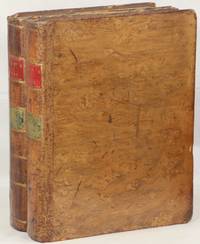
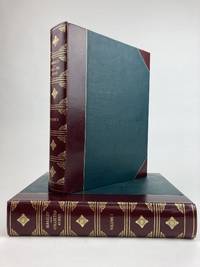
1784000014056London: G. Robinson and John Exshaw 1784. Later edition. Hardcover. Very Good. 2 vol. 4to. 7 iv-ci 3 3-646 2; 4 3-666 pp. Contemporary marbled calf with the spines in seven compartments a red and a green morocco label on each spine lettered in gold gold rules on the spines. Volume one illustrated with an engraved frontispiece portrait of Berkeley; volume two with two plates one of which is a folding plate. Both volumes with a few in-text woodcuts throughout. Completing the title page: "To which is added an account of his life and several of his letters to Thomas Prior Esq. Dean Gervais and Mr. Pope &c. &c." Keynes 143. This set contains Berkeley's most widely read works except The Theory of Vision Vindicated Advice to the Tories and Essays in the Guardian. Keynes lists the Dublin edition also published in 1784 first in his bibliography. Berkeley was the most famous proponent of immaterialism. He wrote philosophical treatises on metaphysics philosophy of mathematics perception sensation and on the philosphy of science. A large and attractive set of the philosopher's works. Corners gently rubbed through the joints renewed. An armorial bookplate and a twentieth-century bookplate on each front pastedown. G. Robinson and John Exshaw hardcover
17841352898Dublin: John Exshaw 1784. Hardcover. Quartos two volumes; VG; Rebound in half-red leather with green cloth boards and gilt lettering and ruling to spines; Boards show minimal wear to corners and bottom edges; Text-blocks have moderate age-toning and light foxing to speckled edges light shelf-wear to bottom edges and occasional light foxing to the first several pages of Volume I; Both volumes bear the library stamp of the "Training College Library Avenue Southampton"; Volume I includes a frontispiece portrait of Berkeley and Volume II includes a fold-out map prefacing the title-page; Contents: Vol. I. 4 ci 646 pages; Vol. II. iv 663 pages.<br /> <br /> Oversized books. Additional postage necessary for expedited/international orders. Economy International shipping unavailable due to size/weight restrictions. For international/expedited customers please inquire for rates.; RW consignment. Shelved in Room X. 1352898. Special Collections - Downstairs. John Exshaw hardcover
178463146London:: Printed for G. Robinson 1784. old full calf one cover detached; others weak. One cover detached and other covers nearly so; some very very slight foxing; edges of boards rubbed and worn. Folio. Engraved frontispiece portrait. Printed for G. Robinson, hardcover
1784158340Dublin: printed by John Exshaw 1784. Subjective idealism First edition first issue containing all of Berkeley's major works. This Dublin issue precedes the London issue of the same year which used the same sheets with a variant title page. The biography of Berkeley which is prefaced is a revised version of Joseph Stock's Account of the Life 1776. 2 vols quarto. Portrait frontispiece in vol. I 2 plates in vol. II of which 1 folding. Uncut in 19th-century boards recently rebacked and recornered in blue pebbled cloth. Light foxing chip at head of vol. I leaf 4M1 not affecting text. A very good copy. ESTC T142562; Keynes 142. hardcover
1784206029Dublin: John Exshaw 1784. Scattered light spotting and extraneous marks; corners of three pages in Vol. 1 torn off affecting only margins one repaired; near 19th-century marginal notes in pencil; small 1884 clipping mentioning Berkeley pasted into rear of Vol. 1; front board of Vol. 1 mostly detached but holding on by a cord; covers rubbed leather dry. Two vols. 4tos frontispiece 4 i-ci 1-646; iv 1-663; contemporary calf. A decent copy of this uncommon set. The second volume includes the folding plate illustrating an essay on plantation churches in Bermuda. Alongside John Locke Berkeley was the pre-eminent English-language philosopher of his era and among the most lucid writers of philosophical prose of any era. He spent significant time in the colonial "new world" and was intimately involved in establishing the Kings College in New York which became Columbia University. Additional postage required. John Exshaw unknown
1713140947370London: Henry Clements 1713. First Edition Third Edition. First edition first printing of George Berkeley's work of philosophy. x 166 vi 44 pp. Octavo bound in full contemporary mottled calf laced in boards. Blindstamped ruled borders red morocco title label to spine all edges speckled red. Bound together with the third edition of another work by Berkeley also published by Henry Clements in 1713: Passive Obedience Or the Christian Doctrine Of Not Resisting the Supreme Power Proved and Vindicated upon the Principles of the Law of Nature. In a Discourse Deliver'd at the College-Chapel. <p>Very Good with moderate wear to boards cracking to leather at extremities minimal chipping at head and tail of spine and rounded and bumped corners. Joints repaired leather coated with preservative. Previous owner names have been torn from free endpapers cut more carefully from upper margins of first two leaves. Several 18th century ink markings and inscription "Owner / 1720" remain on the endpapers. <p>The two books are printed on different paper stock. Three Dialogues is slightly tanned with scattered foxing to margins; Passive Obedience is heavily toned. Both books collated complete. From the library of William A. Strutz with his small bookplate to the front pastedown. <p>George Berkeley 1685 - 1753 was an Anglo-Irish philosopher and clergyman who advocated the view that objects cannot exist without being perceived. He wrote Three Dialogues in order to expand on the ideas expressed in his most notable work A Treatise Concerning the Principles of Human Knowledge. Passive Obedience is a call to obey established authorities God above all. That a third edition was published just one year after the first is testament to the intensity of Enlightenment debates about the relationships between individuals and church and state. Henry Clements unknown
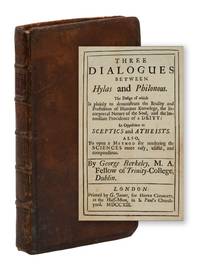
171355993London Printed by G. James for Henry Clements 1713. 8vo. Contemporary marbled full calf boards prettily rebacked in period style with gilt title-label raised bands and gilt ornamentations to spine. During the re-backing new end-papers have been inserted but the original front end-paper containing old owners' inscriptions has been preserved and is still withbound. Three old owners' names to title-page two of them crossed out. The title-page had been repaired at the outer margin affecting three letters in the last three lines of the subtitle To open a Method for rendering the/ SCIENCES more easy useful and/ compensious namely the "he" in "the" and the "d" in "and" as well as part fo the double-ruled border which has been drawn up again. The final leaf with a somewhat crode repair causing loss of some words towards the hinge. A small hole in A3 not repaired. A bit of brownspotting mostly at beginning and end. With its flaws still and overall acceptable copy of this extremely rare title. 10 166 pp. <br/><br/><em>The very scarce first edition of Berkeley's other magnum opus his great work of metaphysics second in importance only to his "Treatise Concerning the Principles of Human Knowledge" 1710. The present work is not only a popularized version of the "Treatise" though it is a fact that it was more widely studied and more easily understood - being written as an almost Platonian dialogue between Hylas Greek for "matter" - thought to be the representative for John Locke and Philonous Greek for "the lover of reason" - Berkeley's spokesman - it also constitutes a thorough and elaborated explanation of Berkeley's central ideas and the emergence of many of the principal thoughts that we now associate with him and his anti-materialist philosophy."In this Treatise which does not presuppose in the Reader any Knowledge of what was contained in the former i.e. the "Treatise" it has been my Aim to Introduce the Notions I advance into the Mind in the most easy and familiar manner; especially because they carry with them a great Opposition to the Prejudices of Philosophers which have so far prevailed against the common Sense and natural Notions of Mankind.If the principles which I here endeavour to propagate are admitted true; the Consequences which I think evidently flow from thence are that Atheism and Scepticism will be utterly destroyed many intricate Points made plain great Difficulties solved several useless Parts of Science retrenched Speculation referred to Practise and Men reduced from Paradoxes to common Sense" Preface pp. 7-8.In the present work Berkeley one of the greatest thinkers of early modern philosophy sets out to alter the direction of philosophy and set straight the boundaries of man's knowledge of himself and the world around him. He seeks to bring back man to common sense and to bring back science and knowledge to that which is essential and factual. In the present work he famously defends the idealism because of which he is still considered one of the greatest metaphysicians ever. As his "Treatise" is remembered today for the famous phrase "Esse est percipi" - to be is to be perceived - so his "Dialogues" is remembered for the introduction of the perceptual relativity argument stating that the same object can have different characteristics e.g. shape colour etc. depending on the perspective of the observer e.g. distance angle light etc. Furthermore as Berkeley had used God in the "Principles" as the CAUSE or originator of our ideas of sense in the "Dialogues" he brings God a very important step further stating that our ideas must EXIST IN God when not perceived by us thus seeing this as the warrant for the continuity of our ideas God being unchanging. This leap from claiming that God must cause our ideas to claiming that our ideas must exist in God that Berkeley thus takes in the "Dialogues" is among the most important within his philosophy guaranteeing continuous existence to physical objects. The work is considered the foremost representative of Berkeley's phenomenalism."George Berkeley Bishop of Cloyne was one of the great philosophers of the early modern period. He was a brilliant critic of his predecessors particularly Descartes Malebranche and Locke. He was a talented metaphysician famous for defending idealism that is the view that reality consists exclusively of minds and their ideas. Berkeley's system while it strikes many as counter-intuitive is strong and flexible enough to counter most objections. His most-studied works the Treatise Concerning the Principles of Human Knowledge Principles for short and Three Dialogues between Hylas and Philonous Dialogues are beautifully written and dense with the sort of arguments that delight contemporary philosophers. He was also a wide-ranging thinker with interests in religion which were fundamental to his philosophical motivations the psychology of vision mathematics physics morals economics and medicine. Although many of Berkeley's first readers greeted him with incomprehension he influenced both Hume and Kant and is much read if little followed in our own day." SEP.Berkeley published his first important philosophical work "Essay Toward a New Theory of Vision" in 1709 aged 24. The book was well-received and a second edition came out later that same year. The following year he published "A Treatise Concerning the Principles of Human Knowledge" in which he sought to lay out a complete philosophical system based on the idea that the only existing entities in the world are ideas and the mind that perceives them. The work was not very well received however. This did not affect his search for truth though and he continued the outlay of his philosophical system in his "Three Dialogues between Hylas and Philonous" which was printed in 1713. Though neither of the two works were well received and appeared in small numbers they are by far the most important and enduring of all of his works. The view that he presents in the "Dialogues" is that which he called "immaterialism" now "idealism". He considered this anti-materialism the perfect answer to and refutation of skepticism and atheism and his theories later became the foundation of much idealistic philosophy."Upon the common Principles of Philosophers we are not assured of the Existence of Things from their being perceived. And we are taught to distinguish their real Nature from that which falls under our Senses. Hence arise Scepticism and Paradoxes. It is not enough that we see and feel that we taste and smell a thing. Its true Nature its absolute external Entity is still concealed. For tho it be the Fiction of our own Brain we have made it inaccessible to all our Faculties. Sense is fallacious Reason defective. We spend our Lives in doubting of those things which other Men evidently know and believing those things which they laugh at and despise." Preface p. 6.The first edition of this important work is very difficult to find. It was published in an edition together with the "Treatise" in 1734 which though also scarce is the edition of the work that most libraries and institutions have in their holdings seeing that the first editions of both works are of even greater scarcity. We have only been able to locate three copies in libraries worldwide. </em> hardcover
174521126Amsterdam Pierre Mortier 1745 in-12 plein-veau reliure plein veau havane in-douze (binding full calfskin duodecimo) (17 x 10,6 cm), dos 5 nerfs (spine with raised bands), décoration "or" et à froid (gilt and blind stamping decoration), titre frappé "or", pièce de titre sur fond maroquin bordeaux avec filet "or" en encadrement, roulette "or" en place des nerfs et en tête et en pied, entre-nerfs à fleuron "or" dans un encadrement d'un filet "or" avec rinceaux aux angles, nerfs légèrement frottés avec dorure légèrement estompée sur 3 nerfs ( blurred gilding), roulette "or" sur les coupes, toutes tranches lisses jaspées rouges (red edges), texte à manchette (marginal note), sans illustrations, XXIV + 343 pages , 1745 à A Amsterdam Chez Pierre Mortier Editeur,
174557164Amsterdam, Pierre Mortier 1745 In-12 10,5 x 17,5 cm. Reliure de l’époque pleine basane fauve marbrée, dos à 5 nerfs, caissons ornés de fers dorés, pièce de titre maroquin rouge, XXIV + 343 pp. L'eau de goudron, médicament du Moyen Âge, décrite par George Berkeley fut utilisée jusqu'au début du XXe s. Coiffes usées, coins usés, première charnière fendillé, épidermures sur les plats, intérieur jauni.
173235809London: J. Tonson 1732. First Edition. 8vo pp. xiv 350; viii 358. Tipped to the front blank is an engraved portrait of the author by Aveline. There is an ownership signature of "Twells" in the right margin of each title-page and the note: "Given by the author" in a contemporary although unknown hand along the top margin of the title-page in volume 1. Engraved scene on each title-page. Ex-Library copy with stamps on the bottom margin of the first two pages of text. Bound in modern calf backed boards. A very good clean set. Rothschild 374. Printing and the Mind of Man 176n. First edition of Berkeley"s attempt at the refutation of the current forms of free-thinking composed while he was resident in America and including some important observations relevant to that part of the world. The second volume also includes what is functionally the third edition of his ESSAY TOWARDS A NEW THEORY OF VISION first published in 1709. Praised by Adam Smith as "one of the finest examples of philosophical analysis that is to be found either in our ownor in any other language" the New theory of vision was accepted in France by Voltaire Condillac and Diderot Keynes pp. 7-8<br/> Bishop Berkeley was an influential Irish philosopher whose primary philosophical achievement is the advancement of what has come to be called subjective idealism summed up in his dictum "Esse est percipi" "To be is to be perceived". The theory states that individuals can only directly know sensations and ideas of objects not abstractions such as "matter J. Tonson unknown books
1744401896London: W. Innys and C. Hitch 1744. Second first London edition. Repairs to binding; title slightly soiled ink inscriptions in Greek on rear flyleaves a handsome copy/From the Collection of Allan B. Kirsner M.D. 8vo. 174 2 pp. Near-contemporary vellum-backed marbled boards. Berkeley's most popular work espousing the myriad uses of tar water to treat everything from fevers to cancers from infant to elderly and from human to animal. "The work begins as an investigation of the medicinal virtues of tar-water and ends with a disquisition on Platonic philosophy - a blend of science and metaphysics. While in America Berkeley experimented with tar-water for many ailments including dysentery rheumatism and asthma. The treatment proved so successful that he set up an apparatus for manufacturing it" Rootenberg. Blake 43; ESTC N12567; Keynes 64; Kress 4685; Wellcome II:149. <br/><br/> W. Innys and C. Hitch hardcover books
1752284380London: J. & R. Tonson 1752. First. hardcover. very good. 8vo contemporary calf with leather spine label. London: J. &. R. Tonson and S. Draper 1752. First Edition<br/><br/> The book contains 11 tracts each with a separate title page & date but only one continuous pagination. The subjects include Thoughts on Tar-water Proposal for converting the Savage Americans to Christianity by a College to be erected.in Bermuda Exhortation to the Roman Catholic Clergy of Ireland Discourse to Magistrates etc.<br/><br/> J. & R. Tonson unknown books
173226337London: J. Tonson 1732. 2 vols. 8vo pp. 14 356; 8 218; engraved vignette title-pp.; bound with as issued An Essay towards a New Theory of Vision pp. 12 215-351; several woodcuts in the text; full contemporary calf double gilt rules on covers unlettered spines in 6 compartments volume designations in 1; some moderate chipping and cracking of the spines but all in all a good and reasonably sound set. Rothschild 372 citing the first edition of the same year: "Alciphron was written in America where Berkeley had gone to await funds which never came for his projected College in the Bermudas." <br/><br/> J. Tonson unknown books
1732WRCLIT35680London: Printed for J. Tonson 1732. 101-350;6358pp. Two volumes. Octavo. Contemporary calf. Engraved title vignettes. Ownership signature "J. Payne Jan. 24 1732/3" in each volume on front pastedown with authorship ascription in same hand in first as well as careful correction of the errata. Hinges cracked one board detached occasional light foxing otherwise a crisp large very nice set. First edition of Berkeley's attempt at the refutation of the current forms of free- thinking composed while he was resident in America and including some important observations relevant to that part of the world. The second volume also includes what is functionally the third edition of his ESSAY TOWARDS A NEW THEORY OF VISION first published in 1709. ROTHSCHILD 374. PRINTING AND THE MIND OF MAN 176n. ESTC T86056. Printed for J. Tonson unknown books
1732WRCLIT65559London: Printed for J. Tonson 1732. 141-356;821812215-351pp. Two volumes. Octavo. Contemporary calf. Engraved title vignettes. Three bookplates in each volume along with a faint old seminary stamp on each title scattered foxing joints a bit worn and cracked but cords sound; a good set. Second London edition of Berkeley's attempt at the refutation of the current forms of free-thinking composed while he was resident in America and including some important observations relevant to that part of the world. The second volume also includes what is functionally the fourth edition of his ESSAY TOWARDS A NEW THEORY OF VISION first published in 1709. KEYNES 17. PRINTING AND THE MIND OF MAN 176n. ESTC T86055. Printed for J. Tonson unknown books
1746WRCLIT65696Dublin Printed London Re-printed: For W. Innys C. Hitch and M. Cooper . 1746. 1742; 45-88pp. Octavo. Modern half-calf and marbled boards. Faint blindstamp and ink shelf number the latter on verso of title of The Library of the Society for the Home Study of Holy Scripture and Church History first title leaf a trace foxed otherwise a very good copy. New i.e. Third London edition of the first title Keynes's variant A1b with "A Letter to T.P. ." on the verso of the title. This copy has p. 160 misnumbered '610'. The second title is also a "New Edition" i.e. the second London edition and exhibits Keynes's second corrected state of the title leaf: 'Holbourn'. Berkeley first noticed the use of tar-infused water during his residence in America and although cautious in his initial conclusions he soon became an advocate of its use as an economical aid for the betterment of the health of the Irish people. Although by no means wanting in exposition of Berkeley's larger philosophical considerations the practical aspects of SIRIS led to its being his most popular work and the investigation of tar-water generated a significant body of pamphlet literature in response well delineated by Keynes among which Prior's work is one of the most significant. ESTC cites Bowyer's ledger in reporting the edition of the first title consisted of 1000 copies and that of the second title 2000 copies. KEYNES BERKELEY 68 & 104. ESTC T45794 & T125698. For W. Innys, C. Hitch, and M. Cooper .. hardcover books